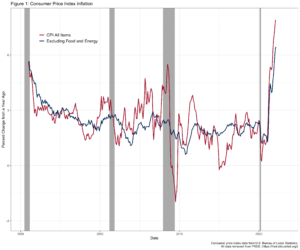
Last week, the U.S. Bureau of Labor Statistics released the consumer price index (CPI) for March 2022. The CPI is a measure of inflation that tracks changes in prices paid by consumers for a basket of goods and services. As seen in figure 1, inflation for urban consumers rose to an annualized rate of 8.5 percent in March, an increase from the 7.9 percent annual rate reported in February. This was the sixth consecutive month in which the United States has experienced inflation above 6 percent.
The largest contributors to rising inflation were increases in the prices for shelter, gasoline, and food. Housing costs make up about a third of the CPI and are pushing inflation up as shelter prices rose at an annualized rate of 5.0 percent in March.
Russia’s invasion of Ukraine is a potentially important factor to these increases as it has created a decline in the global supply of crude oil and grains that are key exports from Russia and Ukraine. The energy index of the CPI increased by 32 percent over the last year which is attributed to the rising cost of gasoline and the increased cost of food can be partially attributed to reduced grain and global fertilizer supplies. As the conflict continues, energy and grocery prices are expected to remain high.
The core inflation index, which removes volatile food and energy prices, reached an annualized 6.5 percent rate in March. The inflation growth has decelerated from February due to a decrease in the prices of used cars of 3.8 percent from the previous month. This is a signal that inflation in the goods sector may be starting to slow down. Over the past year, inflation in the goods sector had outpaced the service sector due to the abrupt shift from demand for services to goods during the pandemic. However, as people return to pre-pandemic patterns of spending, robust consumer spending, increasing wages, and supply chain bottlenecks have led to inflation becoming broad based in both the goods and services sectors. The increase in demand for travel and dining is also driving service prices up. U.S. airline fares increased 23.6 percent a year ago as demand for travel has bounced back from the pandemic.
