 By Jackie Todd, Office of Media Relations and Jonathan Veit, PSA Media Relations
Although Clemson properties across the state remained largely unscathed, some research centers in the Lowcountry were heavily impacted.
It seemed like the rain would never end. Miraculously, the storms caused by Hurricane Joaquin left Clemson’s main campus and Upstate facilities—including the South Carolina Botanical Garden—relatively unscathed.
In North Charleston, the Clemson University Restoration Institute (CURI), had minimal water intrusion. Officials at 292 Meeting Street, home of Clemson’s historical preservation program in Charleston, reported some loose ceiling tiles, but no damage to electronics or equipment. Classes were cancelled at Clemson’s Architecture Center in Charleston, but are now back in session.
Crops, centers and research impacted
Some of the university’s research education centers (REC), however, sustained major damage to the fields and research equipment. The Edisto REC in Blackville remains inundated with water and much of the research equipment and field experiments have been compromised.
Despite the damage, Edisto REC will hold its annual Cotton and Soybean Field Day with a modified program intended to help South Carolina farmers cope with flood devastation. Topics include the effects of flooding on hay and cattle production; harvesting damaged cotton and peanuts and impacts on grades; advice from cotton ginners and peanut processors on what to do with damaged crops; and reports from NRCS, FSA, Farm Bureau, and the S.C. Department of Agriculture on how they can help growers after the flood.
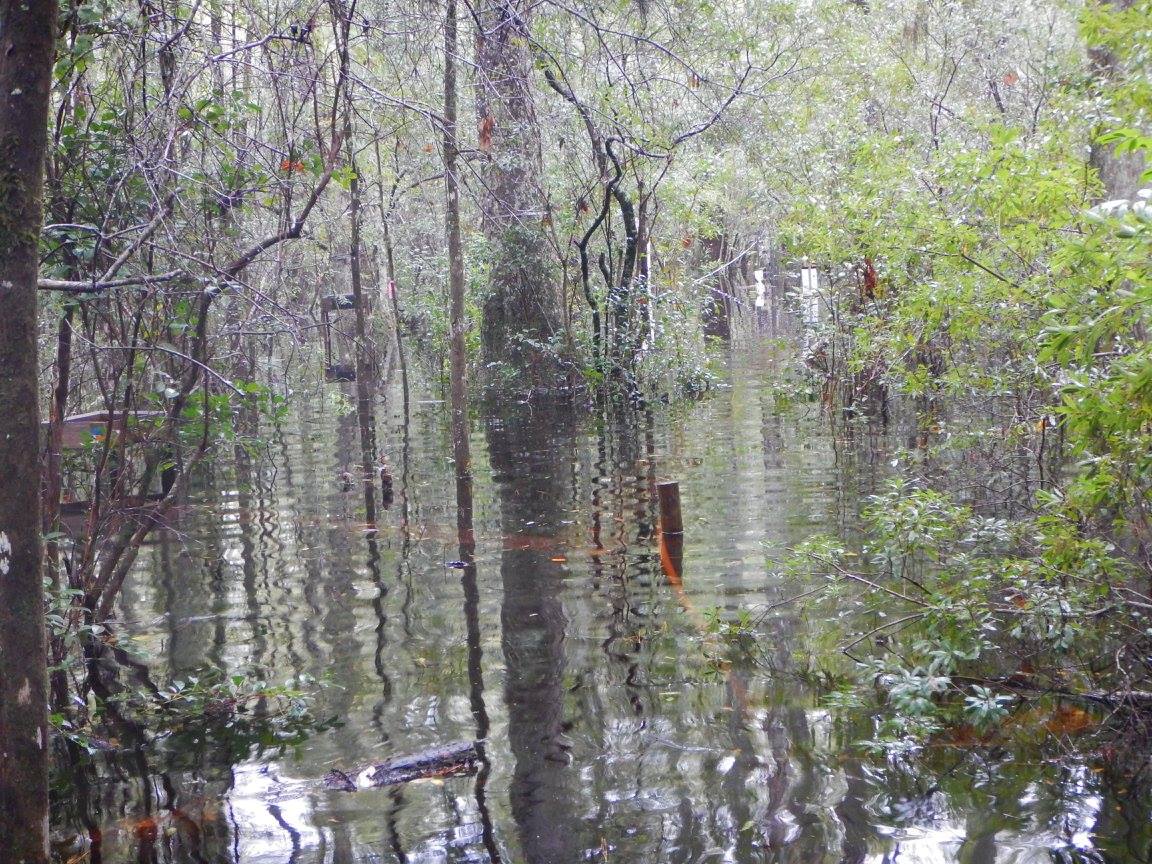
Located in Georgetown, the Belle W. Baruch Institute of Coastal Ecology and Forest Science (BICEFS) reported no major damage to buildings but possible damage to instrumentation infrastructure on several research and coastal wetlands monitoring projects, including Intelligent River, Intelligent Forest and Strawberry Swamp.
Clemson University Public Service and Agriculture (PSA) reported that a number of Cooperative Extension offices closed for a short time and a few may remain closed for an extended period.
While the Extension offices were temporarily closed, agents’ ability to help local farmers was not. Clemson PSA has posted information about flood disaster resources online and Clemson forestry agents continue their work helping with cleanup efforts, assessment and care for tree damage, and strategies to help local farmers feed their livestock.
PSA created a website with up-to-date information about its offices and facilities. The website also offers links to resources and advice on dealing with flood damage and associated issues.
A number of main campus organizations are working on relief and fundraising efforts to help flood victims. Look for a Special Inside Clemson to be sent to campus today with more details.
