PHS Abroad

French Culture – Food et plus

by Ava McNeice & Caroline Garufi

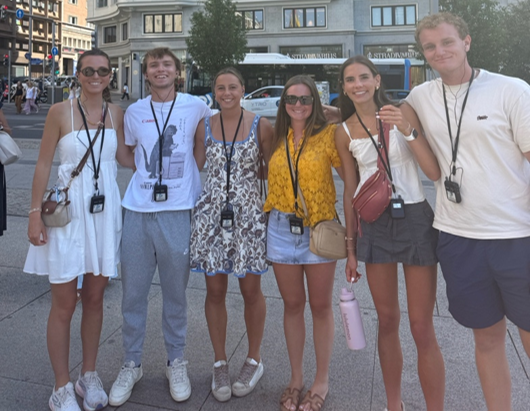
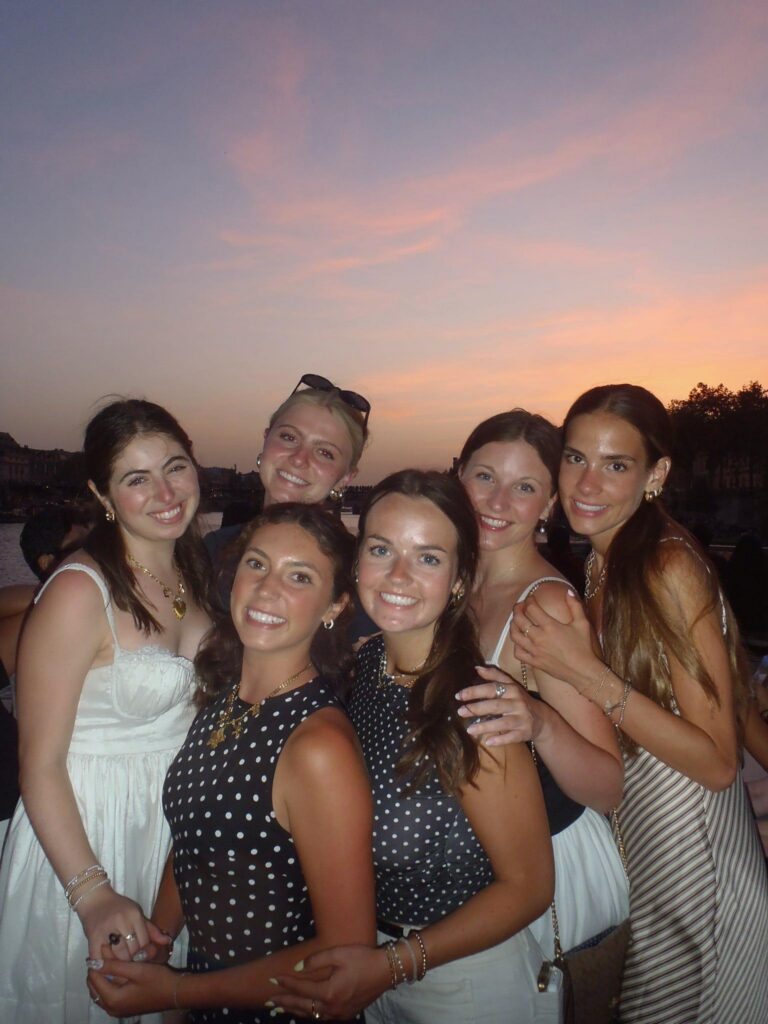
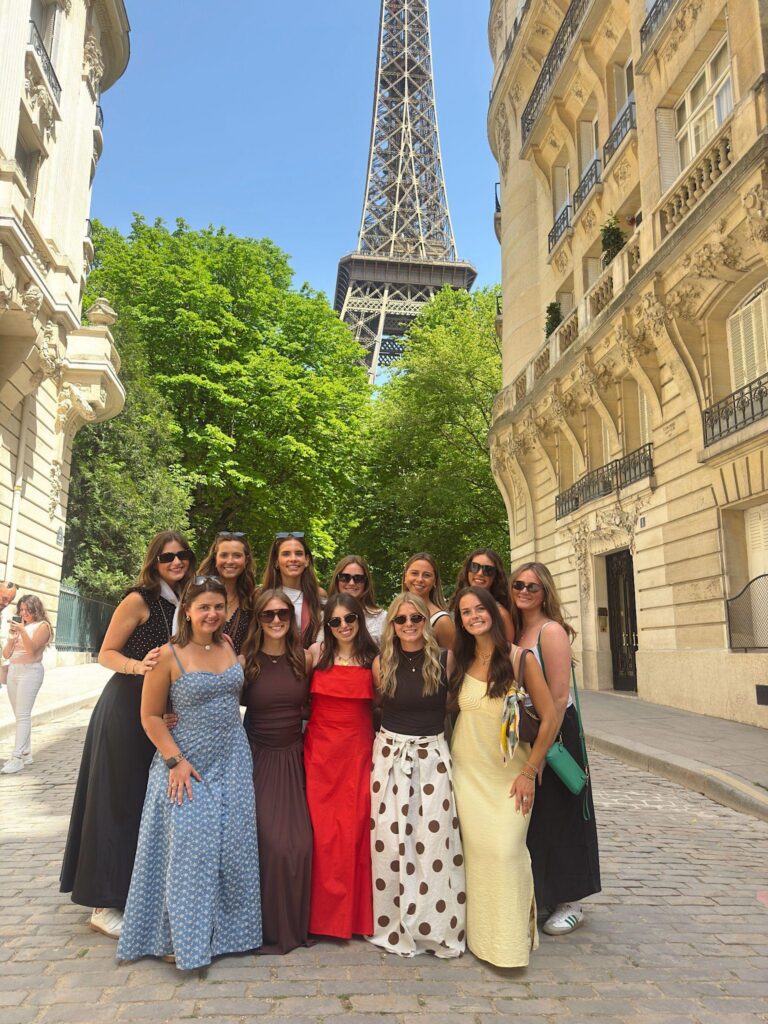
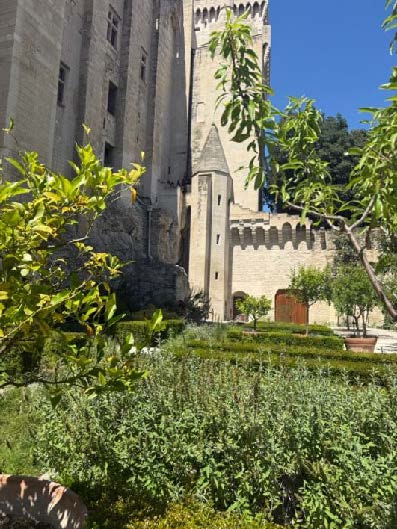
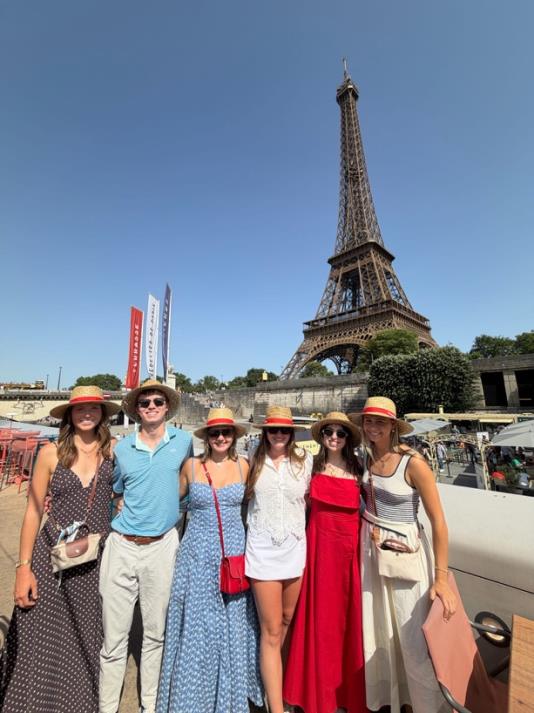
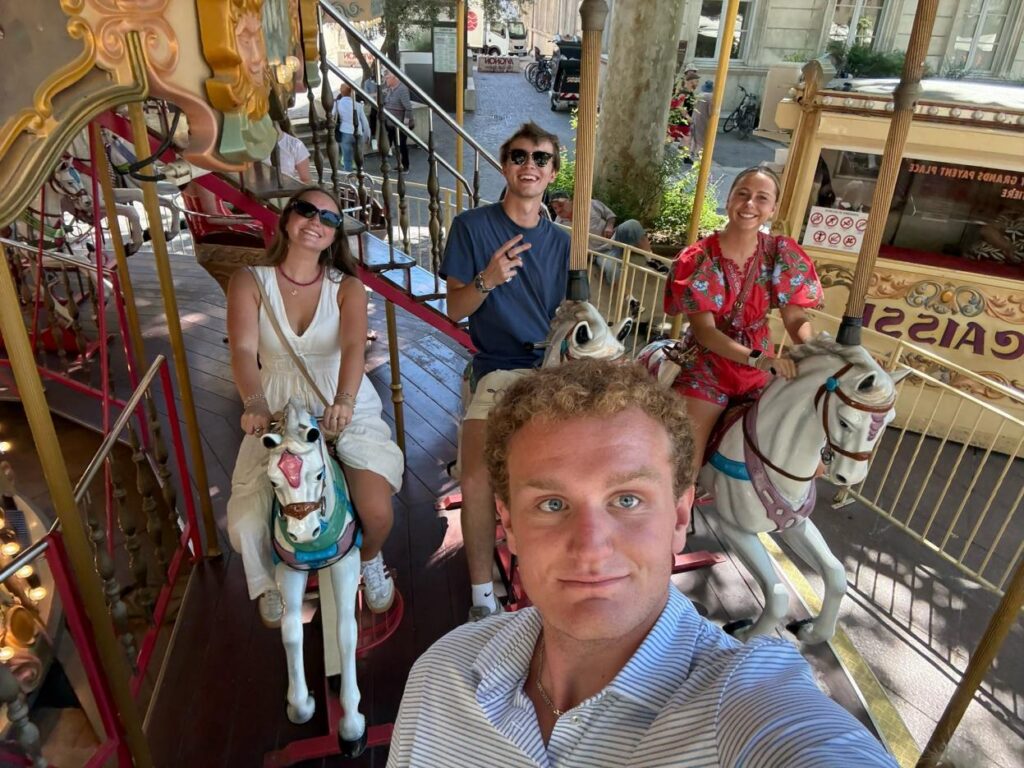
Caroline and I, along with 10 of our classmates, traveled to Paris this past weekend! Some of the many benefits of studying abroad include exploring other cultures, cities, and lifestyles. Paris is very different from our “homebase”, Aix-en-Provence, because of its international culture and large metropolitan area. We furthered our cultural education by visiting the Eiffel Tower, Arc de Triomphe, the Louvre, and other historical sights. One of the main lifestyle differences we noticed between France and the United States is the ease of public transportation. Getting from Aix-en-Provence to Paris was easy and fast by train. The drive from Aix to Paris would have been 7 and a half hours, so it is crazy that we were able to get there in only three! We did some research and found that we were going as fast as 200 miles per hour. We also took the metro, taxis, and Ubers to get around the city. Public transportation lowers the emissions put out by cars, decreases traffic, and increases walking. Below are some pictures of us exploring Paris!

In our lecture on Monday about the US healthcare system, we explored the complexities of our healthcare system and the differences between the US and France that our textbook and previous speakers pointed out. Some of these differences include insurance, lifestyle, and continuity of care. One fact that stood out to us was that the US spends the most on healthcare, but has the 59th highest life expectancy.
Today, Emilie Kassentini spoke to our program about French food culture. Caroline and I have a cooking class tonight, so this was a beneficial precursor. Emilie spoke about how the history of food leads to cultural values, beliefs, and ways of life in each part of a country. While different cities in France have different foods and ways of life, they share the history of the “Mediterranean triangle”. The Mediterranean triangle includes wheat, olives, and grapes. These foods led to common French foods, such as pasta, bread, pizza, wine, and more! The birth of agriculture and settlement led to trading, the creation of roads, and communication between societies. Emilie asked us to consider the heritage of the Mediterranean diet and its heritage worldwide.

The cooking class was a wonderful experience and I am so glad we got to do it. We made onion pies and stuffed peppers for dinner, based on French food culture of eating food in season and local. Our instructor Perrine was so insightful and she shared that cooking is her passion, so much so that she hopes to open her own restaurant in Aix. She plans to make American food at her restaurant and was asking us for all the recommendations. Ava, myself, and the rest of our group were listing places she had to try in the U.S. next to get some more inspiration. At the top of the list was fried okra, chicken minis, and the Texas Roadhouse butter. Perrine even shared some photos of the barbeque, brisket, and pulled pork she has made and it looked amazing. Looks like we will all have to come back and try it out when she opens it!

Free Weekend in France!

By Megan Storch & Claire Woynerowski


The last few days have been packed with fun, learning, food, and traveling! Not only did we have a free weekend, we started off the week with lectures and a guest speaker.

Over the weekend, we had the opportunity to travel outside of the city of Aix. Some of us chose to spend our time in the seaside town of Cassis for a day of touring the Calanques, trying local cuisine, and even learning about the vineyards there. Starting with a boat tour of the Calanques, we were able to see the towering cliffs that formed beautiful coves upon the shores of the Mediterranean. While we did not choose to hike through them, we learned that many locals will spend their weekends hiking an hour or two through the national park to spend a day upon the stunning, rocky shores. In addition to visiting Cassis, some students also traveled to the Mediterranean city of Nice and spent the weekend relaxing in the sun and exploring.

While Claire visited Cassis, a group of girls and I went to Paris for the weekend and attempted to explore the whole city in under forty-eight hours! We all made it to the train station to depart by 7:00 am and began our journey to the city. Once we arrived, we immediately bought Metro tickets for the weekend and began the day’s itinerary. First, we started with food at a cafe called “La Creme de Paris” that included a view of Notre Dame. We all ordered crepes and coffees that were absolutely amazing.

After this, we began the long day of walking to every item on our bucket list. We visited Notre Dame and Hotel de Ville before adventuring to the Luxembourg Gardens where we saw the first view of the Eiffel Tower! The garden was absolutely stunning and we got to listen to live music in the center and watch little sailboats in the pond. We walked around before heading to the Metro to catch a ride to the Eiffel Tower. Once we arrived we took pictures, then headed over to the dock for our boat tour of the city, and ended our night with dinner at Big Love. Day two was much calmer but we were still able to see the Louvre and climb the Arc de Triomphe. Finally, we grabbed some food and headed back to Aix on the train.

After arriving back in Aix, we dove straight into content about the United States healthcare system. We talked about life expectancies, healthcare spending, and the nuances of the health insurance system within the United States. We then discussed how U.S. food culture contributes to our health. Since Americans tend to eat more processed foods than other countries which may contribute to more health concerns and spending. Following the lecture we then heard from our guest speaker, Emilie Kassentini, on global food culture.


When considering global health, diet is a major factor that can determine the health outcomes of individuals. Especially when compared to the United States, diets in the south of France place more emphasis on locally sourced produce, meats, and grains. Additionally, there are fewer processed foods, and food is usually prepared in the home rather than through the purchasing of pre-cooked meals. After discussing these differences with our guest lecturer, we closed by learning the importance of taking the time daily to prepare fresh meals not only from a health perspective, but in order to preserve one’s heritage through food. Au revoir!

Our First Week

by Abigail Clum & Hannah Davis

The morning after returning to Aix-en-Provence from our two-day trip to Geneva, we had
a brief class recap to discuss what we had learned. In Switzerland we got to explore the Red
Cross museum which was a really cool experience. We also got to walk outside of the World
Health Organization and the United Nations. Geneva was very hustle and bustle when compared
to Aix which was a big change. It seemed to be more of a business hub and this is probably
because of the United Nations. We reflected on the differences between the healthcare systems in
France, Switzerland, and the United States, including how surprised we were to learn that
medical school in France is completely free. We also thought it was really surprising how
ambulance rides and emergency room visits were completely free. They also have a much longer
maternity leave than compared with the United States. Also, as a fun fact, we found out that the
following Sunday (May 25) would be a holiday in France similar to Mother’s Day in the U.S.

After class, Hannah and her roommate, Amy, spent the afternoon planning their day trip
to Cassis, France! Twelve of the girls decided to spend the night in Paris staying in two air BNBs
which took lots of planning and collaboration as well. A third of the group had a cooking class
which focused on making foods that were local to the South of France. The cooking class was
incredible and we made a stuffed tomato, beef and onion pie and had dessert. It was delicious
and such a fun experience to feel more immersed in the culture.

On Saturday morning, Hannah and Amy woke up early, had breakfast at the hotel, and
packed for the day ahead. They took a two-hour bus ride to Cassis, a picturesque port town
known for its pebble beaches and stunning calanques, which are narrow inlets surrounded by
steep limestone cliffs. After arriving, they explored the charming shops and restaurants, enjoying
the breathtaking scenery. They spent time relaxing by the beach under the warm sun, had lunch
at a local pizza restaurant, and strolled around the vibrant port area. Later, as they waited for the
bus back to Aix, they met another group of students who had also been studying abroad in the
city for several months. It was a wonderful chance to exchange tips and recommendations for the
remainder of our time in the city. Once back in Aix, the evening was quiet and peaceful, the
perfect time to reflect on the beauty of Cassis and the memorable experiences from the day. The
group that went to Paris had a whirlwind of a weekend and did pretty much everything possible
in 48 hours. We saw the Eiffel tower sparkle, the Arc de Triomphe, the Louvre, Luxembourg
Gardens and ate at so many amazing restaurants!

Geneva – Another Perspective

by Ella Mundy & Sophie Wall

Our group wasted no time and traveled to Geneva, Switzerland for a quick, but efficient, two night trip. From Aix-en-Provence, we took a bus to the train station and jumped on a high speed train that stopped in Lyon, France. This was quite chaotic as someone had taken our seats, so we had to go find free seats. Our next train took us straight to Geneva where we then walked to our hostel, City Hostel Geneva, nearby. The hostel was small, but very clean and the bathrooms were definitely a memorable experience!

On day two, we grabbed a quick breakfast at Pipo’s Cafe before meeting at the famous “broken chair” for our walking tour of Geneva. It consisted of just a croissant, which is quite the opposite of your typical American breakfast! The broken chair sculpture sits in front of the United Nations building, initially symbolizing the opposition to land mines and now serving as a reminder of our obligation to prevent armed violence. Our tour guide, Alex, then showed us some of the most famous institutions in Geneva, such as the United Nations, the International Telecommunication Union, and the Red Cross. Alex was very knowledgeable about the history of these organizations, and how they’ve contributed to solving the world’s health problems.

The front of the UN serves as an appropriate place for people to protest, which we witnessed. However, a cool fact we learned was that if a protest gets too disruptive the fountains in the square can be turned on, which clears people out. We then toured the Red Cross Museum, which does an amazing job of capturing their history and the humanitarian aid provided for victims of war. The Red Cross provides protection and support to the vulnerable, with the main goal of reducing suffering in all ways.

On our way back to the hostel, we made a pit stop at the World Health Organization, a key player in the coordination of the world’s health emergencies.

With our free time, we used the efficient and impressively clean bus and tram system to explore Old Town Geneva. We grabbed lunch at the well known Halle De Rive indoor market, and then treated ourselves to some very fancy Swiss chocolate! We then rode the Grande roue for a beautiful view of Lake Geneva and downtown. After shopping around a bit more, we headed to the John Knox Conference Center to hear from our next guest lecturer.

Our guest lecturer was Dr. Kim Lindblade. Her lecture was our favorite, and it focused on the integration of healthcare systems, and how it related to her specialty in the combat and prevention of Malaria. She spoke on many of her hands-on experiences with disease control when living in Thailand, Guatemala, and sub-Saharan Africa. We ended our night with the most expensive Mexican food we’ve ever had, which proved to be very fitting for the city of Geneva!

Our last day started early with guest lecturer Rico Bevigitia Zampetti, after breakfast at Pipo’s Cafe of course! Mr. Zampetti is the Minister Counsellor at the EU Delegation to the UN in Geneva. He discussed his work in coordinating all the EU member states so as to create and represent a common stance from the EU to be presented to the UN. His work in this allowed us to see how healthcare is handled on a worldwide scale. Finally, we packed up and caught the train back home! Switzerland was such a fun experience and hopefully we will be back soon!

A Short Trip to Geneva

by Amy Broome & Grace McDonald

Bonjour! On Tuesday, May 20th, we left Aix-en-Provence, France and took a train to Geneva, Switzerland. Besides being the home to the United Nations Office and other intergovernmental organizations, Geneva is also very well known for their chocolate. We booked a chocolate tasting tour with a local guide for our first night there. We were able to try various different fillings and to say the least, chocolate in America stands no chance in comparison. We then explored the city with our guide who took us on boat city transportation, through Jardin Anglais, Jet d’Eau, and to see many historical sites including the cathedral and town hall.

At the town hall we learned about immigration as Geneva, which used to be mainly protestant, has changed its religious landscape due to substantial immigration from France and other predominantly Catholic countries. As pictured below, the town hall was built with a diagonal ramp which we learned was done to aid in transportation when using horses. We were able to see the famous flower bed, which is usually a clock but currently a woman playing soccer as they have the Women’s EURO Cup coming up in July.

Our tour guide made us a dinner reservation for afterwards at a true “local” Swiss restaurant. At this cozy cabin we got a gigantic pot of fondue and raclette with bread, potatoes, pickles, and meat. This was most definitely the best meal of the entire trip so far! The fondue, the chocolate tasting, and seeing Jet d’Eau, the lake’s 140 meter high jet during our tour were the top three events of our arrival day!

The next morning, we woke up early and walked to a cafe near the hostel for breakfast. From there, we walked to the Palais des Nations. We met our tour guide and started our walking tour of Geneva. Our tour guide explained the history of the United Nations, UNICEF, WHO, and other organizations. It was extremely interesting to see these places and learn how they work together. Our tour guide also explained the symbolism of different structures outside the UN, such as the Broken Chair. The Broken Chair represents opposition to land mines and acts as a reminder to diplomats visiting Geneva.

After walking through the Geneva Botanical Gardens, we ended our tour along the edge of Lake Geneva, where we could see the Jet d’Eau.

In the afternoon, we had the opportunity to visit the International Museum of the Red Cross and Red Crescent. It was interesting to learn about the work of the Red Cross, their founding, and global implications on health. My favorite part of the museum was learning about their history of global campaigns. It was interesting to see posters from many different countries.

After a break for lunch and more exploring, we visited the John Knox International Center for a guest lecture. Dr. Kim Lindblade explained her career in the CDC and WHO. Dr. Lindblade works for PATH focusing on Malaria and Neglected Tropical Diseases. Au revoir!

We Made It!

by Ellie Baker & Bridget Lacerda

Bridget and I have been through this experience together, we were on the same flight out of New York to Marseille. We both started in JFK airport which took us on a flight to Paris, where we caught a flight to Marseille, where we were driven to Aix-en-Provence. Even after only five days, it is safe to say that we love France and experiencing all that it has to offer. Once we landed, we immediately adapted to the culture which involved changing eating times, altering some daily habits, and walking a lot more than we do in the United States. However, once we adjusted to our new schedules, we began to fully embrace the new culture. We met people that worked for the Institute for American Universities (IAU) who explained to us how to adjust to daily life in Aix-en-Provence, gave us a tour of their beautiful campus, and also introduced us to some amazing mentors to keep in contact with while we are there!

After our tour around the city, we got to experience our first class in France and our first guest speakers. IAU Professor Nitin Beeharry came to talk to us about his experience with moving outside of the United States to France and many aspects of the French healthcare system where we learned some amazing differences between their system and the US; especially in regards to hospital fees, insurance, and even medical school. Having him speak was a truly exceptional experience because he brought a registered nurse from a French public hospital who also was able to tell us about his working experience in Aix-en-Provence. In addition, Emmanuelle Hartmann, who is a volunteer with the United Nations International Children’s Emergency Fund (UNICEF), talked to us about the organization’s mission and her experience as a volunteer.

After spending some time in Aix-en-Provence, Ellie and I headed to Switzerland with the group. We took a train to Lyon, and then switched over to a train from Lyon to Switzerland. The train ride was very scenic and smooth. In Switzerland, we were staying in Geneva, which is home to many fascinating sights and attractions. Upon exiting the train, the group put our stuff down at the hostel, and split up to explore the city. We both managed to explore the beautiful city of Geneva and get some fondue for dinner.

While our time in Switzerland was short, we definitely made the most of it. As a group the next day, we started off with a complimentary breakfast next to the hostel. We then went on a walking tour of Geneva, and learned the history of the United Nations, other surrounding buildings related to the UN and global affairs, and global public health buildings. We then toured the Red Cross Museum, which offered many cool exhibits related to the Red Cross and public health! There were interesting exhibits such as Red Cross public health posters throughout the years, hurricane preparedness games/simulations, personal stories, and other history and interactive experiences. After the Red Cross Museum, we took another break in which we got lunch at a local market and kept sightseeing around Geneva. We then met up with the group after a few hours, and had a guest lecture from Kimberly Lindblade. Dr. Lindblade works at PATH, and has traveled to many different countries in order to help them deal with Malaria outbreaks. She discussed her experiences with helping with Malaria, and how this impacted public health. Her talk was very informative, and gave us new perspectives on how different countries handle infectious diseases.