With corn harvest now in full swing across the state, we have been getting a few calls regarding grain moisture and putting grain in the bin at a safe moisture level. Generally, we like to see corn harvested at higher moisture contents to reduce in-field losses and combine losses (18-20%) compared to dry corn (15.5% or less). With harvesting wetter grain, drying the grain to a safe moisture content is critical to ensure that it remains in good quality while in storage.
Where grain is run through a dryer and then put into the bin, we are usually in good shape. Where some questionability typically arises is when grain is put into a bin wet, and then a fan is used to dry the grain down. There are many factors that impact the ability to dry grain in the bin, such as the size of the fan, the diameter of the grain bin, the depth of the grain put into the grain bin, and outside temperature/humidity.
In short, putting dry grain in the bin is the best management practice we can recommend to ensure getting good quality grain out of the bin. Be mindful of harvest moisture, outside temps, and the CFM that your bin fans can provide in pushing air through the grain.
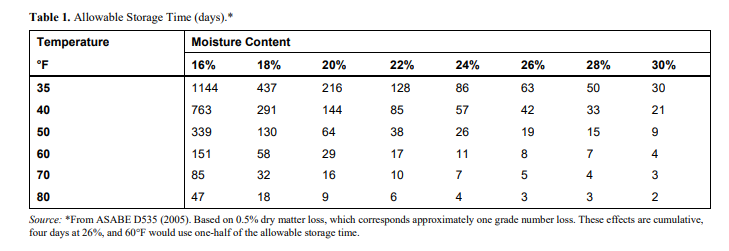
I am posting a chart below from the Clemson Corn Production Guide that provides estimates on how many days the grain can be stored safely based on the outside air temperature and grain moisture content. This chart is designed to give estimates. The main takeaway is that grain with a moisture content much higher than 16% will not store long in a grain bin without some issues in our hot August conditions. As we move into cooler temperatures this fall, the length of time we can store grain is extended.
If you have any questions about storing grain, please reach out to your local agronomy agent.
