Wood Utilization + Design Institute

Timber Engineering Design Faculty Development Workshop

JUNE 9-11, 2026

Clemson University’s Glenn Department of Civil Engineering and the Clemson Wood Utilization + Design Institute are partnering with Think Wood to host a 2.5-day, hands-on workshop for engineering faculty. The workshop will cover wood engineering and design, and strategies for incorporating this subject matter into your teaching, research and outreach. It will include presentations from guest speakers, tours of Clemson’s mass timber facilities and active dialogue among participants to equip you with effective strategies for integrating wood engineering into your work and classroom. This workshop will cover topics relevant to both light-frame and mass timber constructions. 

The workshop is all-inclusive for participants. Travel expenses, lodging and meals are funded through a generous sponsorship from Think Wood. This opportunity is only for faculty in US universities. Preference will be given to junior faculty.

Visit the Link to register.

Apply Now
Applications must be received by April 20

Sponsored by:

Presented by:


Pat Layton
WU+D Strategic Advisor

Follow us: Facebook, Linkedin, Instagram, X (Twitter)

WU+D Participates in Ribbon-Cutting for Sapphire Dispersions Facility in Greenville

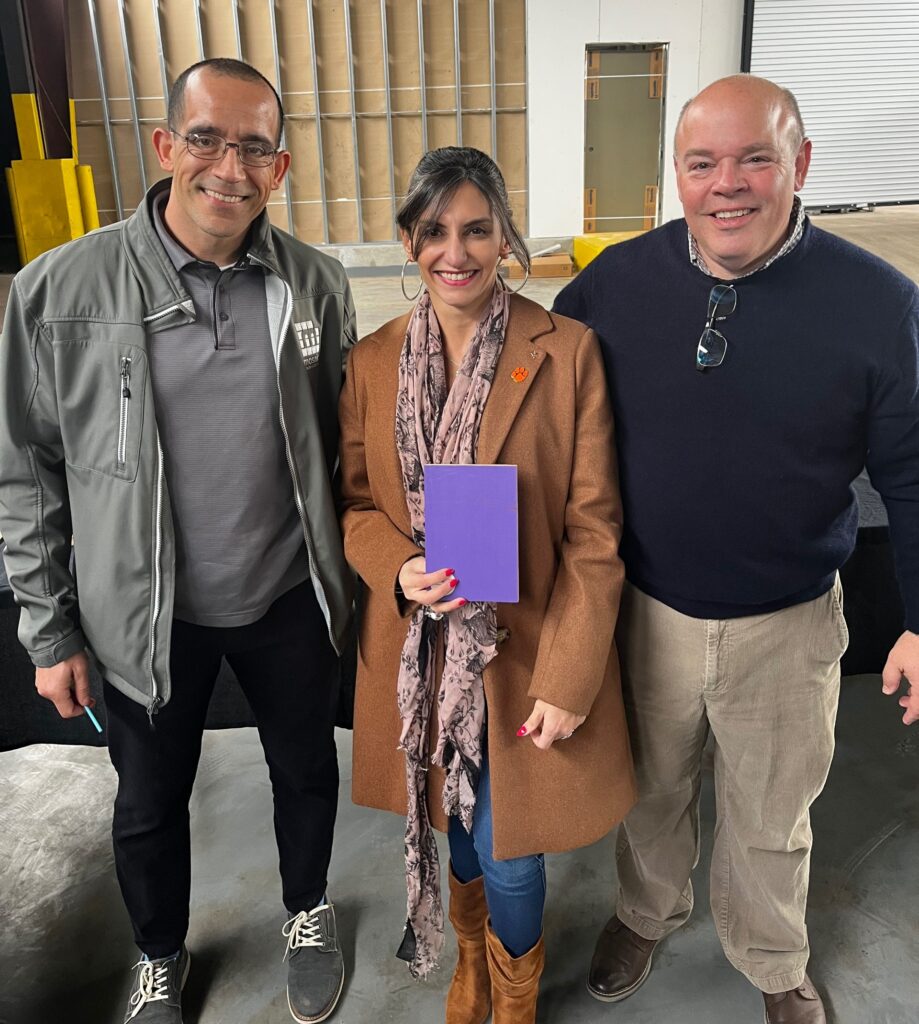
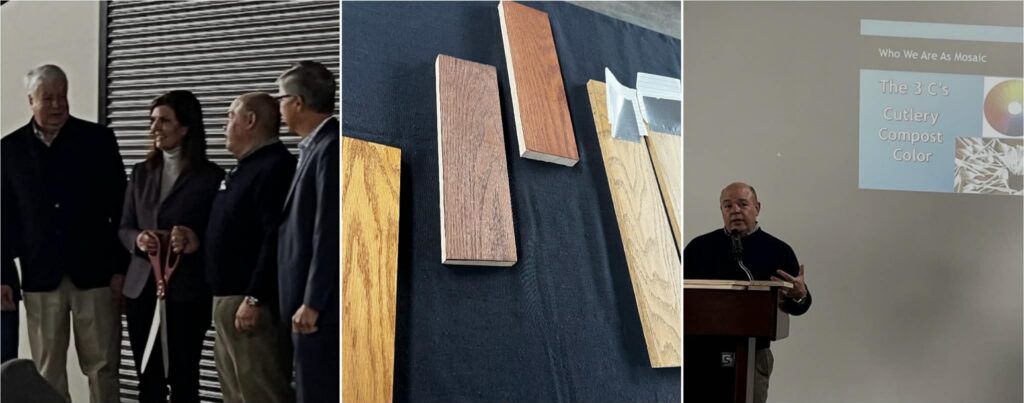
The Clemson University Wood Utilization + Design Institute (WU+D) was proud to be invited to the ribbon-cutting ceremony for Mosaic Color & Additives’ new Sapphire Dispersions facility in Greenville, South Carolina.

Lt. Governor Pamela Evette joined Mosaic leadership and regional partners to celebrate the opening of this new facility, which is focused on bringing coating production back from overseas, developing sustainable products using life-cycle analysis and greenhouse gas best practices, and advancing graphene-infused technologies.

This moment represents more than a facility opening — it reflects a shared commitment to:

• Onshoring advanced manufacturing
• Building high-value, technology-driven product platforms
• Strengthening South Carolina’s sustainable industrial base
• Creating long-term economic growth through innovation

Sapphire Dispersions was formed to bring production back to the U.S., reduce emissions, and advance next-generation materials -— a vision closely aligned with WU+D’s mission to expand markets for sustainable, bio-based and advanced materials across the state. The planned development of a Graphene Center of Excellence on the company’s campus further signals South Carolina’s growing role in high-performance materials and sustainable manufacturing innovation.

At WU+D, we believe that strengthening domestic manufacturing and developing sustainable materials solutions go hand-in-hand with rural resilience, forest sector innovation, and economic growth across South Carolina.

We look forward to continued collaboration with industry partners who are committed to building the next generation of advanced, sustainable manufacturing in our state.

In this picture: Mike WIlliam, Mosaic Color & Additives Partner, Joey Espinosa, Mosaic Color & Additives Development Chemist and Sustainability Director and M. Soledad Peresin, Clemson University, WUD Director.


Duber Garces
Grad Research Assistant
Social media & Communications, WU+D

Clemson University

Follow us: Facebook, Linkedin, Instagram, X (Twitter)

Rooted in the Future: WU+D Launches Strategic Partnership with the Clemson University Forest

The future of forest markets will not be built in isolation from forests on one side and manufacturing on the other. It will be built where stewardship, science, innovation, and markets meet.

That is why the Wood Utilization + Design (WU+D) Institute is proud to announce the launch of a strategic partnership with the Clemson University Forest a collaboration designed to tightly integrate conservation, forest management, advanced materials research, and economic development.

Where Conservation Meets Market Leadership

For generations, the Clemson University Forest has served as a living laboratory supporting research, teaching, sustainable forest management, recreation, and long-term ecological stewardship. It represents the land-grant mission at its best: balancing productivity with responsibility.

At WU+D, our mission is to translate forest resources into high-value products, resilient supply chains, and skilled workforce pathways. We connect forestry, engineering, materials science, architecture, design, and industry partners to accelerate innovation across the forest-based bioeconomy.

By bringing these two strengths together, we are creating something uniquely powerful: Instead of thinking of forests simply as timber supply, this partnership positions the forest as the starting point of a modern innovation ecosystem.

Conservation Is Not Separate from Competitiveness

The global marketplace is changing. Demand is growing for mass timber buildings and hybrid structural systems, bio-based polymers and advanced composites, circular manufacturing models, carbon-accountable materials and domestic, resilient supply chains.

At the same time, forest landowners face market pressures on traditional products, and policymakers seek climate-smart solutions that strengthen rural economies. The answer is not to separate conservation from utilization but to integrate them.

Through this partnership, the Clemson University Forest becomes a proving ground for sustainable harvesting strategies, carbon-smart management approaches, and expanded markets for low-value wood, thinning materials, and restoration residues. Healthy forests generate long-term economic value. Strong markets incentivize responsible stewardship.

When conservation and commercialization move forward together, both win. This is more than a partnership. It is a signal of where South Carolina is headed.” Peresin, the “Pat” Layton Endowed Director of the Wood Design + Design Institute said.

Rooted in the history of American land conservation, the CU Forest is an ideal system in which to develop and test a new forest economy” said Rob Baldwin, Clemson University Forest executive director and Lloyd Endowed Chair

Building South Carolina’s Forest Products Innovation Corridor

WU+D is leading the charge to develop a Forest Products Innovation Corridor one that connects working forests, research infrastructure, advanced manufacturing, and industry partners across the state.

Anchored by the Clemson University Forest, this corridor strengthens South Carolina’s position to:

  • De-risk innovation for manufacturers
  • Attract federal and private investment
  • Expand new value streams beyond legacy products
  • Strengthen rural economic resilience
  • Lead the Southeast in forest-based economic development

South Carolina already has a strong forestry sector. But leadership in the next generation of forest markets will require integration across conservation science, materials innovation, data analytics, and commercialization pathways.

This partnership accelerates that integration.

A Living Laboratory for the Next Generation

Perhaps most importantly, this collaboration transforms education. Students will not just learn about forests they will learn how forests create value.

They will see how silviculture connects to structural performance. How carbon accounting connects to market premiums. How fiber morphology influences product design. How innovation can strengthen both ecosystems and economies. Within Clemson’s own landscape, students can now experience the full lifecycle of forest-based innovation from standing trees to scalable products.

That experience is rare. And it is exactly what the future workforce demands.

Rooted in Purpose. Designed for Impact. WU+D is not a building. It is a community.

And with this partnership, that community is now deeply rooted in one of South Carolina’s most important forest assets.

By aligning conservation, applied research, product development, and commercialization, WU+D is helping define what leadership in the forest sector looks like for the next decade. South Carolina is not simply participating in the future of forest markets. With forests, innovation, and stewardship working together we are building it.


M. Soledad Peresin
WU+D director

Follow us: Facebook, Linkedin, Instagram, X (Twitter)

Advancing Mass Timber from Crisis to Global Impact

Clemson University’s Wood Utilization + Design Institute (WU+D) was founded during a period of economic disruption, when sharply declining wood prices forced many small sawmills and wood-processing facilities to close. In response, the Institute focused its early work on expanding wood-based construction markets—particularly in the commercial, non-residential sector. A central emphasis was southern yellow pine cross-laminated timber (CLT), with research addressing adhesives, fire resistance, structural performance, manufacturing standards, connections, vibration, and acceptance by engineers and architects.

Market acceptance quickly emerged as a critical challenge. Early research examined what types of buildings were likely to be constructed in the South and nationwide, and the potential scale of those markets. With one of the first grants awarded through the USDA Forest Service’s Wood Innovation funding program, WU+D developed a series of workshops and educational programs to share findings with building owners, developers, architects, and engineers. Decision-makers for public buildings within South Carolina were the primary audience.

Another group soon drew attention: the U.S. Department of Defense (DOD). The Lendlease Hotel project in Huntsville, Alabama, helped catalyze this interest, prompting a series of performance tests demonstrating that mass timber buildings could meet rigorous safety and durability standards. These tests and the research they inspired continue today.

As industry-governmental affairs groups advanced the concept of mass timber construction on military bases, Clemson recognized both the opportunity and the complexity of implementing it. Based on experience securing approval for Clemson’s first mass timber campus building, the Institute knew sustained coordination would be required. Clemson partnered with the U.S. Forest Service and the U.S. Endowment for Forestry and Communities (the Endowment) to propose a comprehensive plan. The Endowment accepted and found funding from the USDA Forest Service Wood Innovation program

A $370,000 grant from the Endowment supported Clemson University’s School of Architecture, the Glenn Department of Civil Engineering, and the Wood Utilization + Design Institute in advancing mass timber design and education through a multi-year, multi-university consortium. The project brought together architecture and engineering faculty and students, mass timber manufacturers, design and construction firms, and representatives from the Department of Defense. The goal was to promote the use of mass timber a sustainable and resilient building technology across the DOD’s more than 800 installations worldwide.

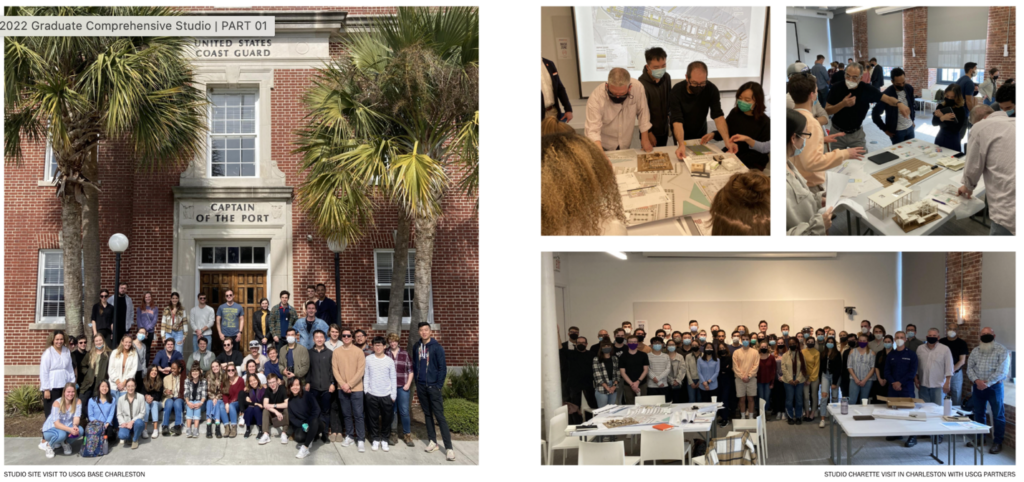
Over two years, collaborative design studios and research seminars were held across four universities: Clemson University, the University of Arkansas, the University of Oregon, and the Tallwood Design Institute at Oregon State University. A total of 104 upper-level architecture students participated in five design studios, developing mass timber proposals for military installations. Faculty and students worked directly with four DOD sites and client groups to create preliminary designs for “archetypal” mass timber buildings aligned with planned DOD projects. Participating installations included Tyndall Air Force Base (Florida); U.S. Coast Guard Atlantic Area (Charleston, South Carolina); Little Rock Air Force Base (Arkansas); and Mountain Home Air Force Base (Idaho).

The Department of Defense was selected as a partner because of its unparalleled scale and influence. With more than 600,000 buildings across thousands of locations, the DOD maintains the nation’s largest real estate portfolio and is a significant driver of sustainable and resilient construction practices. Its demanding project constraints tight schedules, complex logistics, and diverse building types—create conditions that can accelerate innovation. The DOD’s reliance on local materials and labor also supports rural economies surrounding military installations. Mass timber, with advantages in constructability, deconstructability, and integrated design, offers compelling solutions to these challenges.

At the conclusion of the design studios, students and faculty presented their work to representatives from participating installations and the U.S. Army Corps of Engineers. By 2026, the long-term impact of this work is visible in real-world projects that reflect years of research, testing, policy progress, and growing institutional commitment to sustainable construction within the Department of Defense.

On January 6, 2026, a new state-of-the-art mass timber Child Development Center broke ground at Joint Expeditionary Base Little Creek–Fort Story in Virginia Beach. The project designed by Gensler and constructed by Layton Construction in partnership with the U.S. Navy and the Defense Innovation Unit will serve Navy and Coast Guard families across the Hampton Roads region.

Similarly, on December 12, 2025, the U.S. Army Corps of Engineers broke ground at Joint Base Lewis–McChord in Washington on a five-story, 105,000-square-foot mass timber barracks designed to house 200 soldiers. The project represents a significant shift toward construction materials long used in the private sector but newly adopted by the Department of War (formerly Defense).

Collaborations formed over the past 15 years have been instrumental in advancing mass timber in the United States. While challenges remain, many of the issues first examined by WU+DI in 2010 market volatility, small-diameter wood utilization, and forest health are more urgent today, as facility closures continue and wildfire and pest risks increase.

Clemson University’s Wood Utilization + Design Institute is expanding beyond its original focus to address new products and markets for wood of all types and sizes. The guiding principle remains clear: Healthy Forest Markets = Healthy Forests. We invite partners and stakeholders to explore how collaboration continues to turn ambitious ideas into measurable impact.


Pat Layton
WU+D Strategic Advisor

Follow us: Facebook, Linkedin, Instagram, X (Twitter)

WU+D works on reactivating Technical Association of Pulp and Paper Industries (TAPPI) Student Chapter at Clemson University

WU+D and the Clemson Packaging Science Student Club have officially partnered to re-activate a Technical Association of the Pulp and Paper Industry (TAPPI) Student Chapter at Clemson University strengthening pathways between students, industry, and the future forest-based workforce.

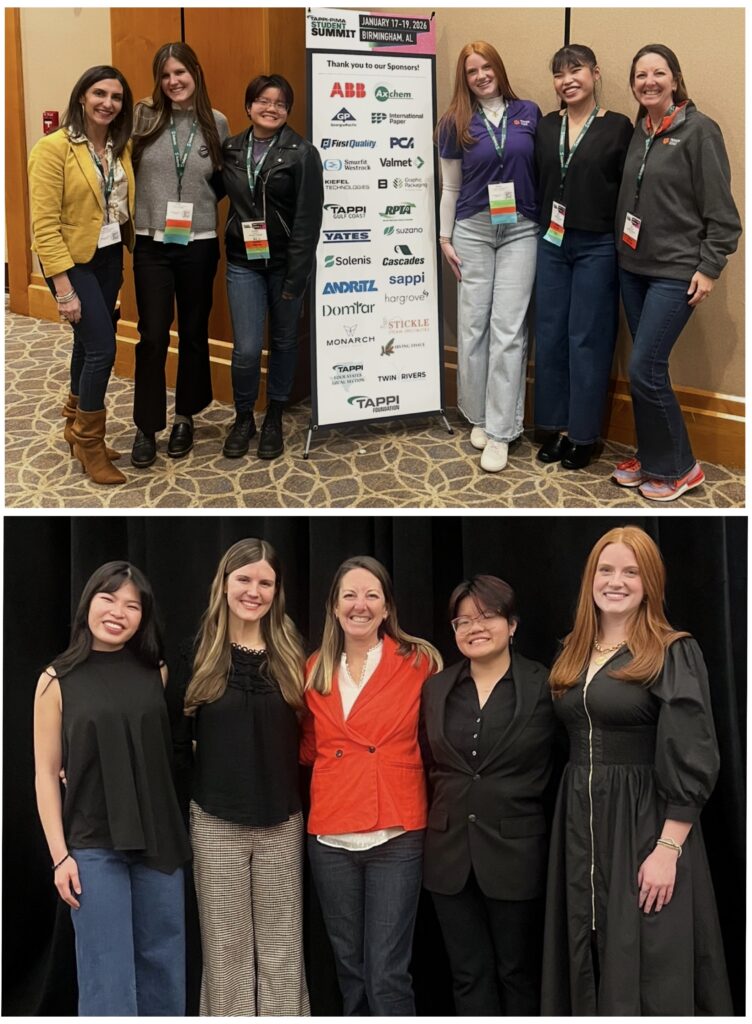
Clemson Univ. Packaging Science instructor and club advisor Lisi Campbell, along with student leaders from the Packaging Science Student Club -Hannah Dickson, Ava Beasley, Hailey Wiethoff, and Cynthia Vangelas, recently represented Clemson at the TAPPI Student Summit in Birmingham, connecting with peers and industry professionals from across the country.

This new chapter reflects WU+D’s commitment to experiential learning, industry engagement, and workforce development empowering students with leadership opportunities and real-world exposure across pulp, paper, packaging, and bio-based materials.

We are looking to support this initiative and eager to contribute to the next generation of workforce for the pulp, paper and sustainable packaging industry. Clemson TAPPI Student Chapter will be open to all Clemson students. More information on how to engage with this group coming soon!

WU+D Director actively serves in several roles with TAPPI. She is currently the Associate Editor for the TAPPI Journal, upcoming Chair for the Advanced Renewable Materials -ARM (former NANO) Technical Division and member of the TAPPI Board of Directors.

#WU+D Institute #Clemson University #TAPPI


M. Soledad Peresin
WU+D director

Follow us: Facebook, Linkedin, Instagram, X (Twitter)

APSAF Meeting in Greenville, SC

WU+D members -faculty members and students- were proud to participate in the 2026 APSAF Meeting in Greenville, SC, engaging with colleagues from across the region to discuss the future of forestry, wood utilization, and circular economy initiatives.

From research and innovation to workforce development and industry collaboration, these conversations play a critical role in advancing resilient forest-based solutions for the Southeast and beyond.

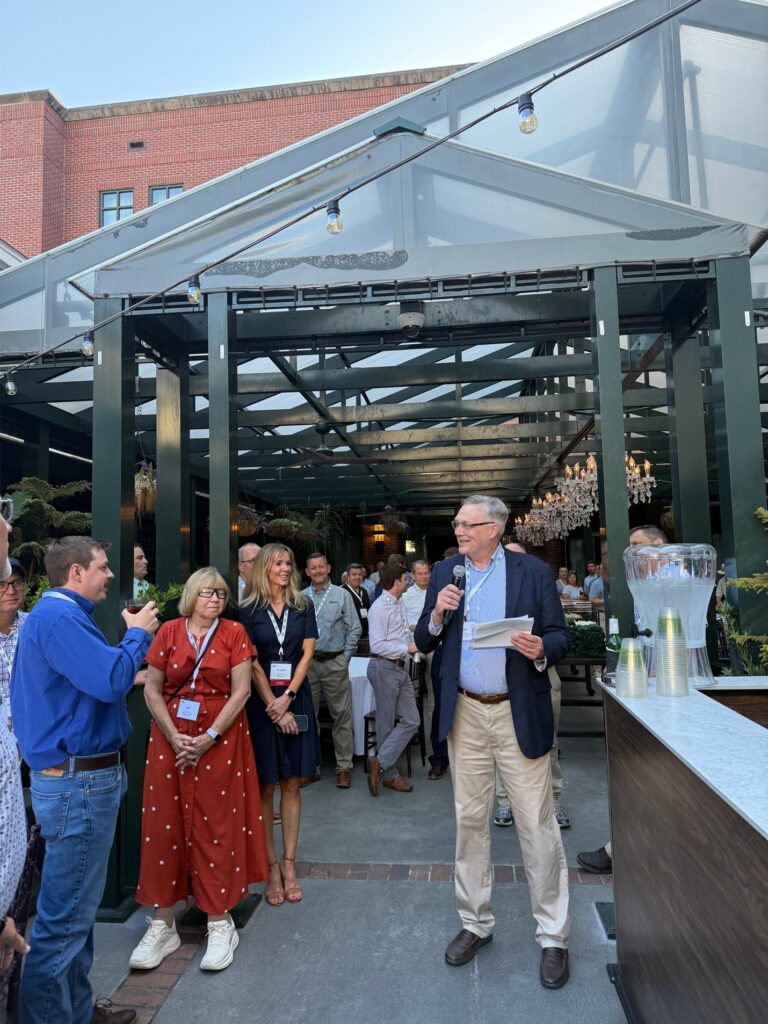
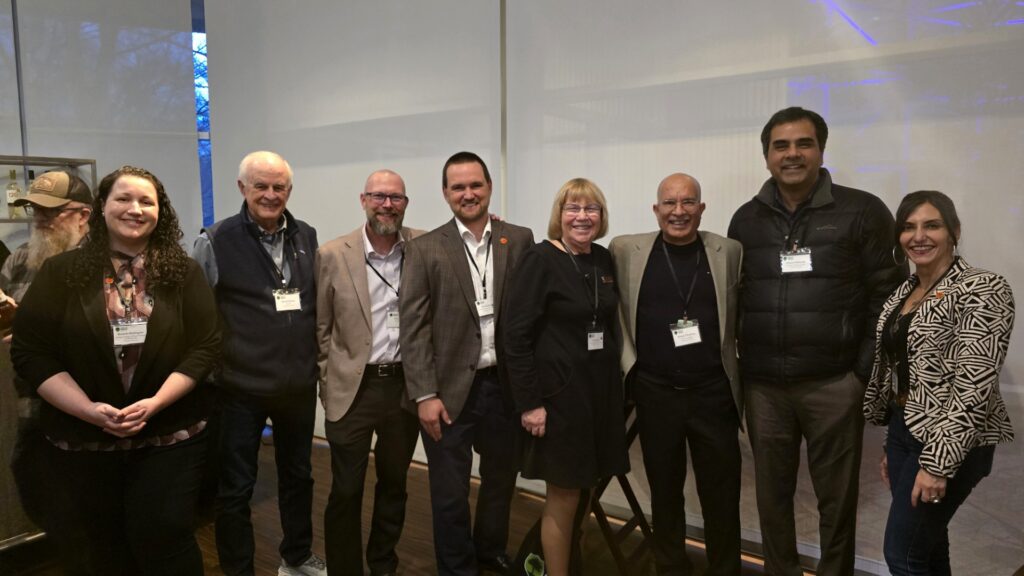
Our Strategic Advisor and former Director, Pat Layton became Golden member of APSAF and got celebrated at the meeting as well, along with other influencing personalities of the forest industry such as Gene Kodama.

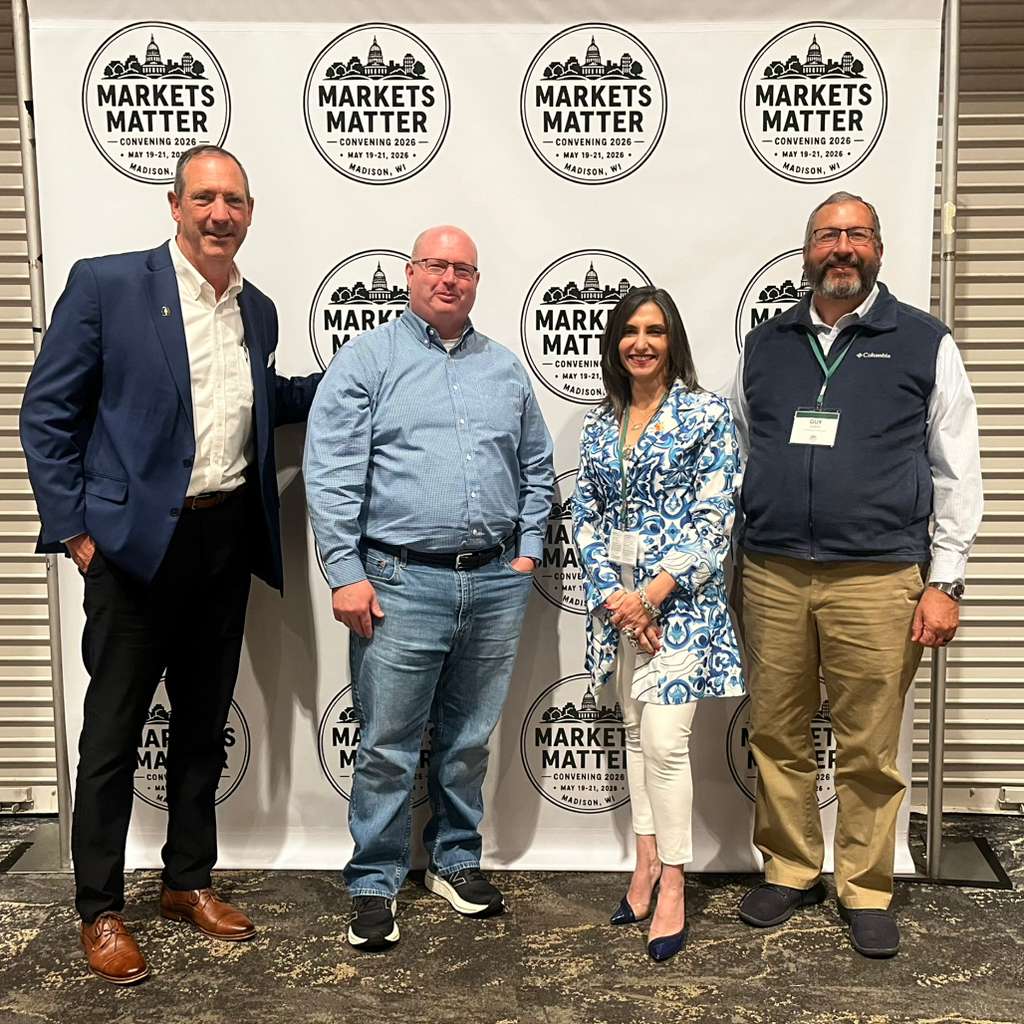
We thank the organizers and partners for fostering such a dynamic and impactful forum, and for creating meaningful opportunities to connect, learn, and collaborate. Special thanks to @Scott Phillips and Guy Sabin with the South Carolina Forestry Commission for your continuous support and engagement with the Institute initiatives.


M. Soledad Peresin
WU+D director

Follow us: Facebook, Linkedin, Instagram, X (Twitter)