College of Arts and Humanities

Message from Dean Vazsonyi — May 2021

Commencement is only the beginning
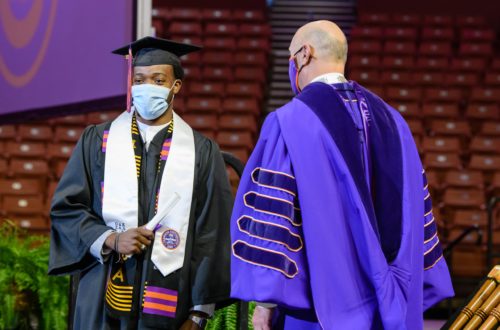
Photos of Clemson University graduates
Few milestones can compare with college graduation. Image Credit: Clemson University Relations

After a long and grueling year, we just celebrated commencement in person. It was shorter than the usual ceremony, and safety made the look and feel a bit different, but the occasion was marked, and that is important. Ritual is integral to the human experience; it is a means for us to orient ourselves and share an experience with those close and distant.

As I watched our students completing their Clemson journey, there was so much I wished to say. Although I didn’t have the chance to share my thoughts in a speech, I have a column! If I could speak to our each of our new graduates, this is what I would say:

Dear Graduates and new Clemson Alumni,

Congratulations on your achievement! You have just celebrated a milestone among many your lives, but this one is special for most of you because it marks the end of your formal education. Life is filled with milestones, but few signify as definitive an ending and beginning as this one. I can imagine that you are feeling various things right now: joy, sadness, nostalgia, anxiety, numbness, and all the mixed emotions that come with freedom.
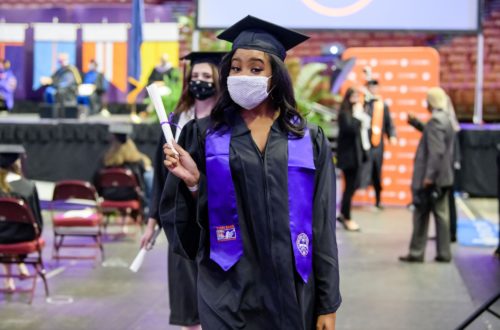
Photo of a Clemson Tiger Band graduate
A special congratulations to our hard-working Tiger Band grads! Image Credit: Clemson University Relations

While your formal education may be over, your process of learning is not. In many ways it is also just beginning. To a certain extent, learning is unavoidable. Our senses and our brains are perpetually receiving input and processing. But I encourage you to think about learning actively. Sign on to a life of learning, and learning for life.

If you were educated in our College, you were trained to make conscious learning a way of living and interacting with the world. Learning how to see and to think historically, conceptually, artistically. Learning how to read and observe, not just accepting at face value, but examining critically, scrutinizing between the lines, peering behind the scenes. The College has introduced you to the human condition in all its dynamic extremes and complexity.

Take all this with you and apply it to the world as you encounter it. Seek to learn and understand just a little bit more every day. And when you interact with people, try never to forget the individual human being behind the façade. That’s why we read literature and go to the movies—to be reminded about our common humanity in powerful and memorable ways.

And when you get the chance, travel. See the world, the people in it, what they have built over time, and the ways they live and interact.

And always take the time to go some place quiet to reflect and to think about what you have learned.

Congratulations again. Now spread your wings, and fly…

“Go Tigers!”

Nicholas Vazsonyi, Dean
College of Architecture, Arts and Humanities

Follow Dean Nicholas Vazsonyi!


Message from Dean Vazsonyi – April 2021

College initiates Conversations on Race and Reconciliation

Dear Faculty, Staff, Alumni and Friends,

This month, our College has launched an exciting and, I hope, thought-provoking and restorative initiative called Clemson Conversations on Race and Reconciliation. The concept began taking shape for me about a year ago, even before my official start as Dean on July 1, 2020. But COVID put a stop to the most important part, which is for the participants to talk to each other face to face. Something we all took for granted not so long ago.

The impulse that led me to the basic idea of the conversations series is that I have been increasingly dismayed not only at the growing divide and the accompanying tensions we see in this country, everywhere we look, but at the absence of any dialogue that might resolve anything. We seem to have lost the art of constructive talking and listening, where people with differing points of view actually sit together and communicate with each other. Being respectful and not judgmental. Admittedly, Clemson is only one very small corner of this country, but my hope for the Clemson Conversations initiative is that we can find our way to listening, hearing, understanding, and, yes, work toward reconciliation. How can we possibly move forward together and solve the many problems we face without it?

In the Fall, I met with several student groups in the College, all addressing issues in their own way. There is cNOMAS in Architecture, the WeCU initiative coming out of Performing Arts, and the Call My Name Student Advisory Board, just to name three. In December and January, I met with leaders from all of these separate initiatives to form a College Inclusion Council. At first there were six undergraduates, joined later this semester by four graduate students, including Kaitlyn Samons, President of the Clemson Graduate Student Government. We are working together to help consolidate and amplify what is already underway in the College. I hope very much that this can continue and be formalized next year.

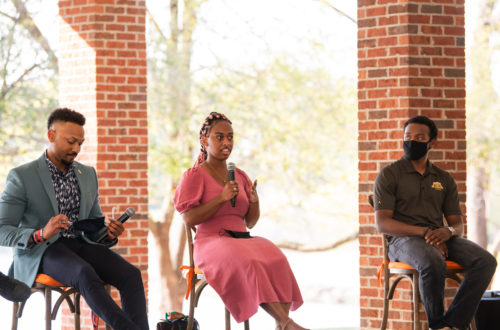
Photo of panelists for "Design, Race, and (In)Justice" event.
Adrianna Spence speaks during the recent “Design, Race, and Social (In)Justice” event. Spence is the vice president of the Clemson National Organization of Minority Architecture Students (cNOMAS). Other panelists include Nehemiah Ashford-Carroll (right), president of cNOMAS; and architect and lecturer Byron Jefferies (left).

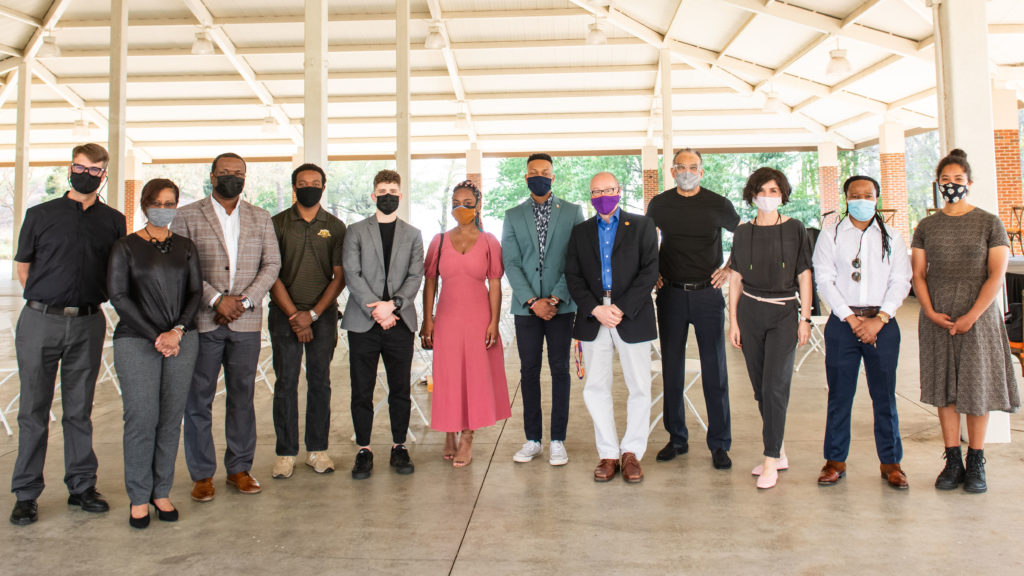
The roll-out of vaccines and the arrival of warmer weather, permitting outside gathering, finally allowed us to make a start on the Conversations initiative. First was a joint event on April 7 at the Owen Pavilion that capped a year-long Architecture series, organized by Assistant Professor of Architecture Andreea Mihalache, called “Design, Race, and Social (In)Justice.” At the event, a panel of eight speakers gathered to talk about issues moderated by Professors Mihalache and Ray Huff from our Charleston campus.

This will be followed on April 15 with a panel of seven students, faculty and staff, again at the Owen Pavilion, talking about “Clemson Family?” and moderated by yours truly. The topic was prompted by several comments I heard last summer in response to the events happening around our nation in the wake of George Floyd’s death and the resulting tensions. Many students and faculty remarked that, while the concept of the Clemson family is referenced frequently, they had never felt as though they were part of that family. It struck me immediately that this would be something to talk about in greater detail, possibly with a view to improving that situation.

For now, we are still just trying out the concept and seeing if it seems helpful and constructive. My idea is that there should be an ongoing platform facilitating open dialogue between all constituencies at Clemson, not just in our College, and possibly reaching out to the community as well. I invite you to join us as we explore the possibilities of this venture.

“Go Tigers!”

Nicholas Vazsonyi, Dean
College of Architecture, Arts and Humanities

Follow Dean Nicholas Vazsonyi!

Message from Dean Vazsonyi – March 2021

A visit to our Charleston programs, where bridges are built

Dear Faculty, Staff, Alumni and Friends,

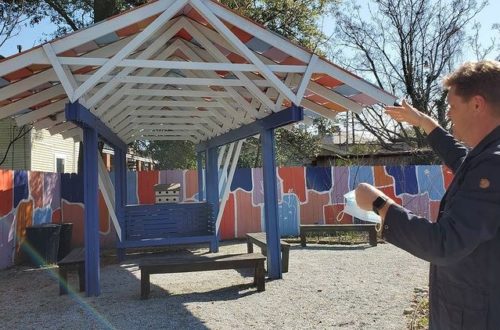
Prof. David Pastre discusses a structure designed by students in the Architecture + CommunityBUILD program in Clarleston.
Students in the College’s Architecture + CommunityBUILD program are contributing to Charleston’s high quality of life. David Pastre discusses a structure created by those students. Image Credits: Nicholas Vazsonyi

As we end the first half of the Spring 2021 semester and hopefully enjoy a little bit of a break, I thought an update of College activities might be overdue.

The big project in the Dean’s office this semester is the refresh of our College strategic plan. The previous 5-year plan is set to expire this year, so we are due to engage in the process anyway. But with a new team in place at the Dean’s office and several new department chairs, it seems like good time to assess where we are currently and think about where we want to be in 5 years. Stay tuned for updates.

Earlier this month, at long last, I finally made it to Charleston to visit our facilities and programs there, and to meet the faculty and staff who are making it work. I was in town for a little over a day, which was not a lot, but nevertheless got a sense of the exciting things happening there.

Prof. Ray Huff showed me buildings in the Historic District downtown that Clemson owns, and I got a taste of the truly amazing facility that is the Cigar Factory on Bay Street.  Prof. Jon Marcoux gave me an intense introduction to the Graduate Program in Historic Preservation.

Pastre's students are beautify neighborhood parks and gardens in Charleston by designing and building architecturally interesting and innovative structures to provide seating, shelter and storage.
David Pastre’s students are beautifying neighborhood parks and gardens in Charleston by designing and building architecturally interesting and innovative structures to provide seating, shelter and storage.

I also got to see the operations in North Charleston, meaning the Dominion Energy Innovation Center (with the world’s largest wind energy testing system), the Warren Lasch Conservation Center (which currently houses the H.L. Hunley, the first submarine to sink a ship in wartime) and the Zucker Family Graduate Education Center. While most of this complex, known as CURI (The Clemson University Restoration Institute) is the site of projects coming out of the College of Engineering, Computing and Applied Sciences (CECAS), it is also the site of the Digital Production Arts program, which is a collaboration between CECAS and our Art Department.

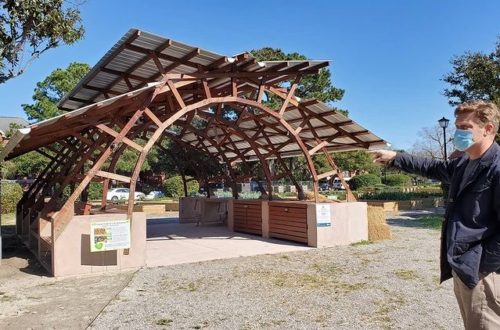
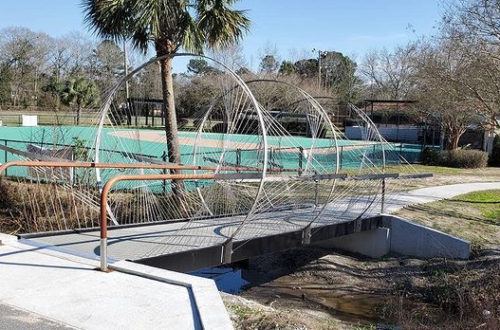
My visit to Charleston ended with a tour of the Architecture + CommunityBUILD project, the brainchild of Prof. David Pastre, who is working with his students to beautify neighborhood parks and gardens by designing and building architecturally interesting and innovative structures to provide seating, shelter and storage. I so loved this project and its results. Architecture students get to plan projects and see them through to their completion. Neighborhoods in need get some love and attention. And we all learn that beauty doesn’t have to cost more. Sometimes it is just about imagination and effort. Once we are truly through with COVID-19, I hope our College can think of more ways to do something similar, also here in the Upstate.

Pastre's students build and design figurative and literal bridges in Charleston.
Pastre’s students design and build figurative and literal bridges in Charleston.

Universities generally, not just Clemson, need to think of as many ways as possible to build bridges with the community: local, regional, national and global. This is especially true of comprehensive “Research 1” institutions, like Clemson: the elite of the elite in terms of higher education in the United States.

“Go Tigers!”

Nicholas Vazsonyi, Dean
College of Architecture, Arts and Humanities

Follow Dean Nicholas Vazsonyi!
Message from Dean Vazsonyi – February 2021

Are our kids falling behind?

Dear Faculty, Staff, Alumni and Friends,

University Singers rehears in the Brooks Center.
The Clemson University Singers rehearse, in masks and physically separated, in the Brooks Center for the Performing Arts under the direction of Anthony Bernarducci. Image Credit: Ryan Michael

Recently, I saw a conversation on social media about whether our kids are “falling behind” as a result of this past year. The conversation left me unsatisfied and a bit frustrated. But it did get me thinking about the issue. Now that there does seem to be a glimmer of light at the end of this seemingly interminable tunnel, maybe it is a good time to start reflecting on what this year+ has meant, for all of us, but especially for our children. While the original discussion on social media was limited to K-12, I think we can stretch it to include college as well. Even if college students are no longer children, they are still “our” children, if you catch my drift.

For sure, school learning these past 12 months has been affected, and affected negatively. Everyone, with no exceptions, has felt the impact. However, that impact has been spread unevenly, as usual.

But what do we mean when we say “falling behind”? Behind what? Which raises the question, what do we mean by education? It’s surely not just what we learn in the classroom. Our education begins the day we are born and continues for the remainder of our lives. We learn from our family, from our schools (formal institutions of learning), and from what we can broadly call life. At different times, each of these three takes on a greater or lesser significance. Whatever we might not have learned at school this year has been more than made up for by “life.”

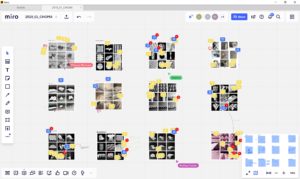
Screenshot from Joseph Choma's Architectural Foundations 1 studio.
Last August, second year Architecture students virtually “pinned-up” their work after a one-week workshop on foldable structures. The student work is from Professor Joseph Choma’s studio section for Architectural Foundations 1. Image Credit: Courtesy of Joseph Choma

One of the blessings of the modern world is that it has devised ways to shield us from the hardships imposed by nature and by our physical limitations. Distance has melted away; where there is darkness, we have light; we have heat when it is cold; cooling where there is heat. Food in constant supply, no longer affected by the seasons, an abundance unimaginable in my youth. Even the sheer nastiness of death, though still with us, has been muted by largely removing it from private homes and ceasing to make it a regular event which we all must witness.

And then came COVID-19. To remind us that we are not all-powerful. An important lesson, especially for our children, who have grown up holding in the palm of their hands a device with more power than anyone my age could ever have dreamed possible.

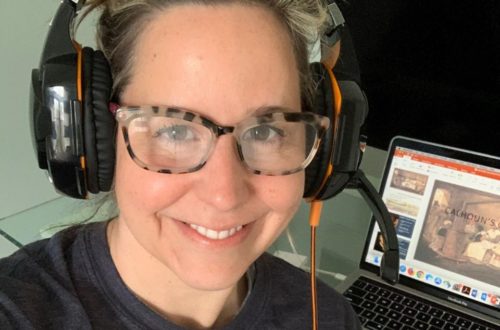
Lee Wilson, Associate Professor of History, prepares to teach an online lesson.
Lee Wilson, Associate Professor of History, prepares to teach an online class. Image Credit: Courtesy of Lee Wilson

But with all the misery, suffering, hardship, tragedy and death of this year, it has once again been a story of human triumph and resilience. Figuring out how to use the tools at our disposal to reconfigure our lives so that we could carry on. The miracle of our species is its enduring flexibility, inventiveness and creativity. This year was a lesson in precisely that. It’s also what lies at the core of our College and its mission.

The word “education” comes from the Latin verb ducere meaning to lead. E is a prefix meaning out of, so education suggests a leading out of… what? … ignorance, I suppose. The Germans use a different word: Bildung. It suggests both “building” as in formation, but Bild also means image or picture. So Bildung is building towards an idea or image of what it might mean to be a wholly formed person.

To continue the building metaphor, weathering crisis and coming out the other end strengthens our foundations and helps us stand firm against the inevitable challenges that lie ahead. Far from “falling,” I submit that we all have grown.

“Go Tigers!”

Nicholas Vazsonyi, Dean
College of Architecture, Arts and Humanities

Follow Dean Nicholas Vazsonyi!

Message from Dean Vazsonyi – December 2020

Some Reflections on Claudia Rankine’s Visit

Dear Faculty, Staff, Alumni and Friends,

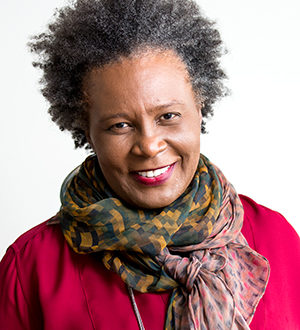
A headshot of Claudia Rankine
Claudia Rankine’s Citizen: An American Lyric was the subject of Rankine’s discussion with Clemson students in November. Image Credit: Yale University

On the evening of November 13, the award-winning poet Claudia Rankine zoomed into campus from her home in New York City and spent two hours talking primarily with our students. The event was organized by a group of faculty from the English Department, including Maya Hislop, Matt Hooley, Kimberly Manganelli, Jamie Rogers, Hannah Pittman-Goodwin, and Michael LeMahieu. It was the crowning event of a common read for English students of Rankine’s remarkable Citizen: An American Lyric (which I highly recommend, if you haven’t read it). Published in 2014, it is particularly apt and haunting in the wake of this past summer, a summer that was perhaps a watershed moment in race relations in this country. The book doesn’t belong to any fixed genre. It is more like a collage, combining anecdotes, personal recollections, poetry, reflections, journalism, and images.

It is the book’s last image I would like to ponder for the remainder of this message. Rankine ends with a painting by the 19th-century British artist, J.M.W. Turner, titled “The Slave Ship” (Original title: “Slavers Throwing Overboard the Dead and Dying, Typhoon Coming On”) (1840). It depicts the historical event in 1781 of the slave ship “Zong” caught in a terrible storm. The ship’s captain had decided to throw slaves bound for Jamaica overboard in an effort to collect insurance for cargo “lost at sea.” The event caused an uproar in England and subsequently moved Turner to portray the moment in his inimitable way.

J.M.W. Turner's "The Slave Ship."
J.M.W. Turner: “The Slave Ship” (1840).

Rankine reproduces the painting in its entirety and adds a detail from a corner showing the limb of a black person still in shackles surrounded by hungry fish. The image is grotesque and disturbing. But Rankine leaves it there without comment. The work of literature ends with an image. There are no words.

Towards the end of her presentation, Rankine talked about the painting and her thoughts. For her, it is, perhaps surprisingly, an image of hope: a white man from England more than a century and a half ago moved to express his horror at the treatment of people as though they were mere cargo.

How much has the world changed since then, I wonder.

Then Rankine added something very important: it doesn’t matter if it’s the 1800s or the 21st century. People who know something is wrong know something is wrong.

And I would like to add: the arts help us see and know when something is wrong.

Poets, artists, and composers have long held up a mirror to show us who we are. They have exposed the dystopian worlds we inhabit and towards which we are headed. They have also been able to imagine other, better, worlds towards which we must strive.

The creative arts compel us to reflect. They point out the consequences of our behavior. They also inspire hope and illuminate the way forward…

“Go Tigers!”

Nicholas Vazsonyi, Dean
College of Architecture, Arts and Humanities


Message from Dean Vazsonyi — November 2020

Dear Faculty, Staff, Alumni and Friends,

Last month, I had just begun my tour of the departments in the College, with Architecture and Art. The tour continued in October with week-long visits with City Planning and Real Estate Development (CPRED), the Nieri Family Department of Construction Science and Management (NfCSM), the Department of English, and the Department of History and Geography.

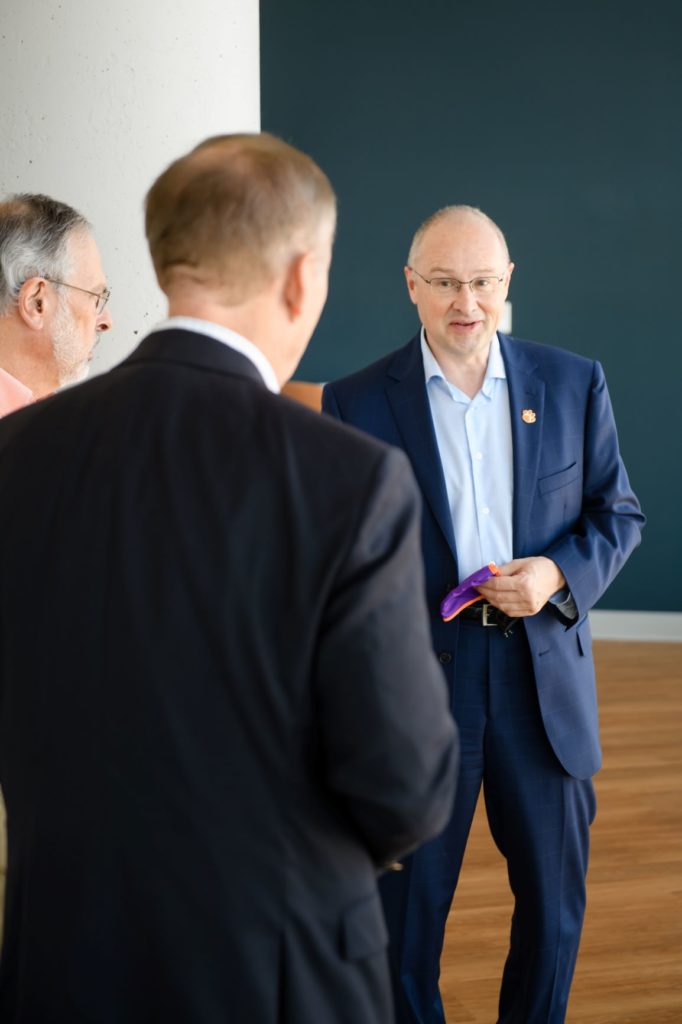
Dean Nicholas Vaszonyi chats with Greenville Mayor Knox White
Chatting with Greenville Mayor Knox White (back to camera) during my visit to the City Planning and Real Estate Development Department in downtown Greenville. Image Credit: Clemson University Relations

A full description of each visit would explode the limits of this column, but I did want to share a few highlights. The week with CPRED culminated in a day at their location in Greenville in the spectacular Greenville ONE building right in the middle of downtown. I visited an in-person class taught by Dr. Stephen Buckman and was given a tour of downtown Greenville by Dr. Barry Nocks, who recently came out of retirement to direct the program at short notice. After the tour, I met with Greenville Mayor Knox White, the guest speaker at a Real Estate class taught by Dr. Robert Benedict. The story of downtown Greenville is a testament to what City Planning and Real Estate developers can accomplish through public-private partnerships by remembering what makes a city truly livable: a commitment to human values — beauty, practicality, convenience, and sustainability. The CPRED students are fortunate to be studying in and involved with a living laboratory testing how we best organize our cities as breathing responsive environments for the people who live, work, and play there.

The high points of the visit with NfCSM were the time at the brand new Experiential Learning Construction Yard, dubbed “XL Yard,” where students get hands-on experience learning the art of construction (see attached video), and the one-day symposium organized by Department Chair Mike Jackson on “Disruptors In The Construction Industry.”

The idea of “disruption,” on its face a negative and potentially destructive force, is that it can pave the way for and propel innovation and progress. It has been a driving principle in the arts, sciences, and the humanities for the last two centuries and is why the world is and looks the way it does today.

The German author Goethe phrased it succinctly in the late 18th century, when he had Mephistopheles describe himself as “Part of that force that always wills evil and yet always produces good,” because he is “the spirit that always negates, and rightly so, because everything that arises is worthy of destruction.”

It should come as no surprise that the concept of the Faustian drive has been borrowed and repurposed by the worlds of business and construction, but it was still an eye-opening experience for me to witness the conversation. To see how saturated our College is with the humanities, from City Planning to Construction Management. Who would have thought it?

The humanities are not an optional extra, a required set of gen ed courses to put behind one as quickly as possible. They are integral to our existence on this planet. They inform how we think and why we think it.

Without the humanities, there is nothing at all but bare existence and survival of the species.

So, for this month at least, please allow me to say:

“Go Humanities!”

Nicholas Vazsonyi, Dean
College of Architecture, Arts and Humanities

Message from Dean Vazsonyi – October 2020

It’s October already, and so far, so good, it seems. As I walk around campus, my sense is that students have for the most part respected the safety guidelines. They are even wearing masks when walking alone. I also sense that many are choosing to stay home and study online rather than go in person to class, even though they are living right here in Clemson. It is not the outcome we were expecting as we pondered how best to manage the Fall semester, but it is interesting to consider what this means, both for now and for the long term.

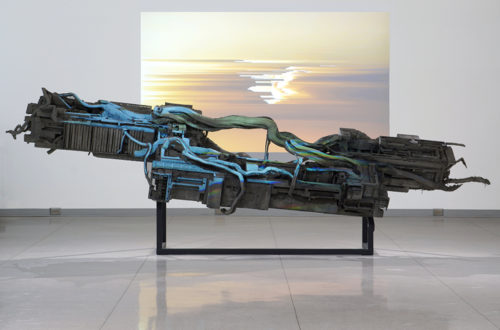
Jordan Fowler's sculptures are spotlighted in Lee Gallery.
Jordan Fowler’s “New Ruins” is the current exhibition at Lee Gallery. Image Credit: Courtesy of Jordan Fowler

The last two weeks have been very intense as I began my “get acquainted” tour of the College. The concept is to spend a week with each department in turn, starting alphabetically with the School of Architecture. During the visit weeks, I meet with leadership, faculty groups, staff, graduate and undergraduate students, and drop in on two to three classes. To the extent possible, I also tour the physical spaces and facilities as well.

My week with Architecture was an eye-opening and quite overwhelming experience. It is breathtaking to take in the wealth and diversity of the activities, and to understand the number and range of interdisciplinary and cooperative projects, both with units across campus as well as the community and the entire region. One week was surely not enough.

I visited three classes: a design course taught by Joseph Choma, a landscape architecture class taught by Lara Browning, and a graduate studio team-taught by Ulrike Heine, David Franco, George Schafer and Dan Harding. I really can’t go into the thrill of each of these classes, save to say that they were all 100% online. My sense was that each of them was completely successful in the online format and that, for instance in Dr. Choma’s design class, it allowed students to have a close-up view of the designs and the ability to critique with pinpoint accuracy in ways that would have been more cumbersome in person.

My week with the Department of Art was equally intense. I toured the facilities at the Lee complex and in Freeman Hall, and got to understand exactly the challenges faculty and students of Art face, given the restrictions of access. I also finally had my first visit to the Lee Gallery. Denise Woodward-Detrich showed me around the current exhibition, recent MFA graduate Jordan Fowler’s “New Ruins.” Since access is limited to Clemson University students and staff at this point, I am attaching a link to Jordan’s short video about his work.

Art is meant to be experienced. When there is no audience, it is like starving art of oxygen. There is also no way around the three-dimensional physicality of art in its various formats. So art is in crisis right now, and we cannot get through this moment soon enough.

I again was able to visit three classes, a contemporary art history class taught by Andrea Feeser, a digital art class taught by David Donar, and a studio taught by Valerie Zimany. Again, what I saw was exceptionally effective ways of teaching in the online format. These were rich and meaningful learning experiences, no question about it.

There is really nothing more to say, except: “Go Tigers!”

Nicholas Vazsonyi, Dean
College of Architecture, Arts and Humanities

Message From Dean Vazsonyi – September 2020

…and we’re off! The 2020-21 academic year has now commenced, and what a strange world it is. First, I must commend the faculty and students for carrying on in spite of everything and doing it, for the most part, very well indeed. That must be the Clemson spirit everyone has been telling me about.

I also need to express my admiration for the upper administration and their decision-making track record since this all began. In the past six months, I’ve had the privilege of transitioning from one university to another, and being the father of a college student at a third institution, all during this crisis. That gave me deeper insight into how the three universities handled the pandemic differently, some definitely doing it better than others. I have been consistently impressed with Clemson, which from the start avoided going with the pack and instead had the courage to chart its own course after extremely careful and thoughtful deliberation.

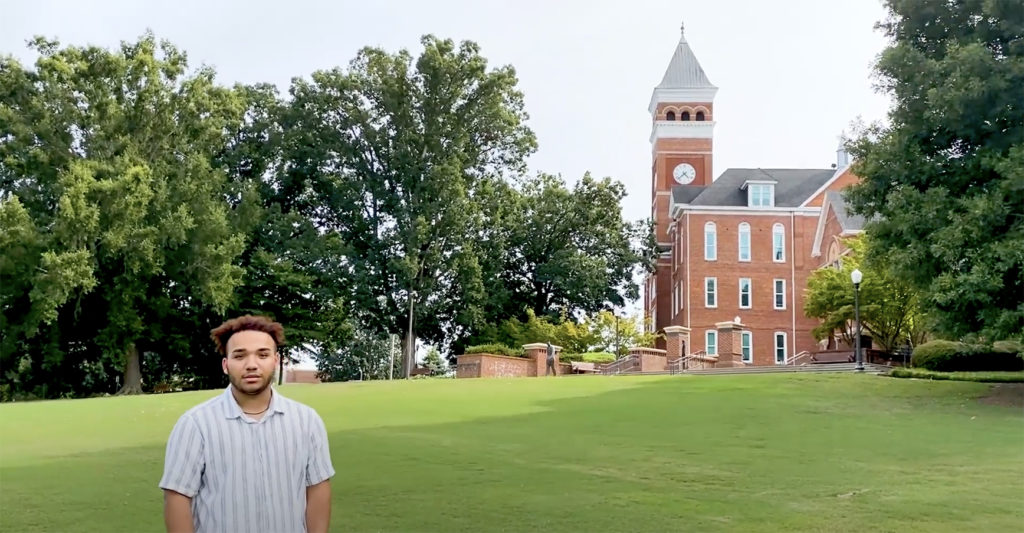
Kapreece Dorrah
“We CU” is a student-led video campaign seeking to tackle difficult conversations while promoting a richer dialogue between students at Clemson University about race and identity. Click on the video still above to view “The Hidden Pandemic” on the College’s You Tube channel. Kapreece Dorrah, above, is an English major and performing arts minor who founded “We CU” along with fellow students Lindsey Neville and TeAnna Brown.

One of the things I regret most about this current situation is that I have not yet had a chance to interact with the students. But that’s not entirely true either, because I have indeed had the opportunity to work with a handful of engaged students who are dedicated to addressing issues of race and diversity on campus and beyond.

I have been so impressed with the efforts in this College, some of which are featured in this newsletter. For instance, the latest expansion of English Professor Rhondda Robinson ThomasCall My Name” initiative continues to recover and share the stories of generations of African Americans who lived and worked on Clemson land.

And consider the recent discovery of unknown graves of enslaved people on Clemson grounds. The investigation of the African American Burial Site, which is being led by Paul Anderson, the Clemson University campus historian, came about after students Sarah Adams and Morgan Molosso expressed concerns about neglect of the African American Burial Ground within Woodland Cemetery. These same students are now organizing a task force so their peers can engage with the project.

Another student-driven initiative is the “We CU” campaign developed entirely by students with guidance from Philosophy Professor Diane Perpich and Theatre Professor Shannon Robert. One of the first results is a video poem written and performed by an English major, Kapreece Dorrah. We have shared his video on the You Tube Channel for the College of Architecture, Arts and Humanities.

I also met with a delegation from cNOMAS, the Clemson chapter of the National Organization of Minority Architecture Students, which is headed by undergraduate student Michael Urueta and under the supervision of Senior Lecturer Clarissa Mendez in the School of Architecture. For more than an hour we talked about how we can improve the situation and opportunities for minority architecture students at Clemson, about new courses that could be offered, outreach to the community, and organizing events on campus to facilitate networking regionally and nationally to help get their careers jump-started. It was a productive and uplifting conversation.

With all the negativity and violence we have been witnessing in this nation over the past weeks and months, I find it nothing short of inspiring and deeply moving to see Clemson students reacting by writing poetry, having the courage to explore and face our past, and seeking ways to build, literally. It is what we do as a College and reminds us why the arts, humanities and architecture are not optional extras but central to our existence – our moral compass. It also fills me with hope for the future, and genuinely moves me to say:

“Go Tigers!”

Nicholas Vazsonyi, Dean
College of Architecture, Arts and Humanities

Message From Dean Vazsonyi – August 2020

What a time to be starting as Dean!

On the one hand, there is feverish activity to get ready for the new academic year, to make sure we are prepared to face any situation that might occur, able to continue online entirely or begin working face to face while still taking precautions.

On the other hand, it feels as though time is standing still while we collectively hold our breath and wait for this moment to pass.

When I accepted this position back in February, only those who were really paying attention had an inkling of what might be coming. I imagined the things I would do and say to get started on the right foot and with plenty of momentum. Almost all of that is on hold now, or severely compromised. Almost all, but not everything.

We must also keep our eyes focused on the world after COVID-19.

The College of Architecture, Arts and Humanities, as I have been discovering over the last few weeks, is teeming with energy, ideas and innovation. The task that lies before us is to pool our resources and make all efforts underway count, to add up to even more than the mere sum of our parts.

One initiative I have already launched is for the College leadership to think about ways we might be able to bring our interdisciplinary programs – three undergraduate and two graduate degrees – under one roof. Creating a home for interdisciplinarity within the College would ideally serve the University community as a whole. In the months to come, you will hear more about this initiative, I hope.

Another area we will focus on this coming year is providing more support for the College’s research initiatives.

Clemson University recently became ranked as an R1: Doctoral University, signifying “very high research activity.” This is the highest research ranking offered by the Carnegie Classification of Institutions of Higher Education. Our College must do everything it can to contribute to and help maintain that coveted R1 ranking for Clemson University.

Winifred Elysse Newman
Winifred Elysse Newman is the new Acting Associate Dean of Research in the College. Image Credit: Clemson University Relations

On a related note, our Associate Dean of Research and Graduate Studies, James Spencer, has recently accepted a post at Louisiana State University – the “wrong” Tigers, for sure! While we will miss him and all that he has contributed to our College, I am pleased to announce that Professor Winifred Elysse Newman has agreed to step in on short notice to be our Acting Associate Dean of Research. Newman holds the Homer Curtis Mickel and Leona Carter Mickel Endowed Chair in the School of Architecture and is Director of the Clemson University Institute for Intelligent Materials, Systems and Environments (CU-iMSE).

This transition in leadership opens up the opportunity to reexamine our Associate Deans’ roles and our College’s overall research profile. We must find ways to increase applications for grants and fellowships, and foster a climate of research excellence. I promise to share more about this effort, too!

So, I will sign off here by wishing a great year to one and all. We will get through this and, I am sure, emerge stronger and hopefully wiser on the other side.

Nicholas Vazsonyi, Dean
College of Architecture, Arts and Humanities

May message from Interim Dean Boosinger: A look back at the year

Dear faculty, staff, students, alumni and friends,

During the nine months I have served as interim dean of the College of Architecture, Arts and Humanities, we have worked together on unfathomable challenges.

Last fall was both rewarding and exciting. It was the kind of term that we have come to expect, with students returning to campus, the arrival of new faculty and staff, and of course, all the fun things we love about the fall. Having a football program reach the national championship added to the excitement and the fellowship all of us enjoyed on weekends in the fall. The trip to New Orleans was complemented by cooler weather and our favorite holidays.

Tiger Band flutist stands on football field
Blue skies greeted the Clemson Tigers when they faced Wofford in the Military Appreciation Game on Nov. 1, 2019. Image Credit: Clemson University Relations

Given all of this, it is hard to comprehend where we find ourselves today.

By February 2020, things had begun to change rapidly. With the spread of the coronavirus throughout Asia and most of Europe, it became necessary to ask all our study abroad students to come home. At first many students asked if they could stay overseas so they could continue to enjoy their international experience, living and working in a different culture while  inspired by their instructors. It quickly became evident that everyone needed to return to the United States. This was no small task. What impressed me most about the College’s response to this challenge was our faculty and staff, who without hesitation did everything needed to bring our students home and ensure they could complete the spring semester on time. This required a lot of collaboration with the rest of the University, our international partners, the State Department and, in some cases, the airlines. We were all relieved when our students were safely back.

What happened beginning in early March was unprecedented in my lifetime. These changes in our personal lives and how universities operate will redefine higher education for months if not years to come. Not knowing how long it will take to return to anything close to normal is clearly causing considerable anxiety.

That said, our College’s programs are strong and resilient, thanks to our incredibly talented and dedicated people. It took a monumental team effort to transition to online learning, ensuring that our students could remain safe and continue their studies. As I mentioned last month, we are all in this together and we are not alone. We are receiving incredible support from the rest of the University. I’ve never seen a stronger spirit of cooperation than what I am seeing right now. All of you should take great pride in all you have accomplished in just the past few weeks.

We are all very proud of the Class of 2020, and wish all of our graduates the very best.

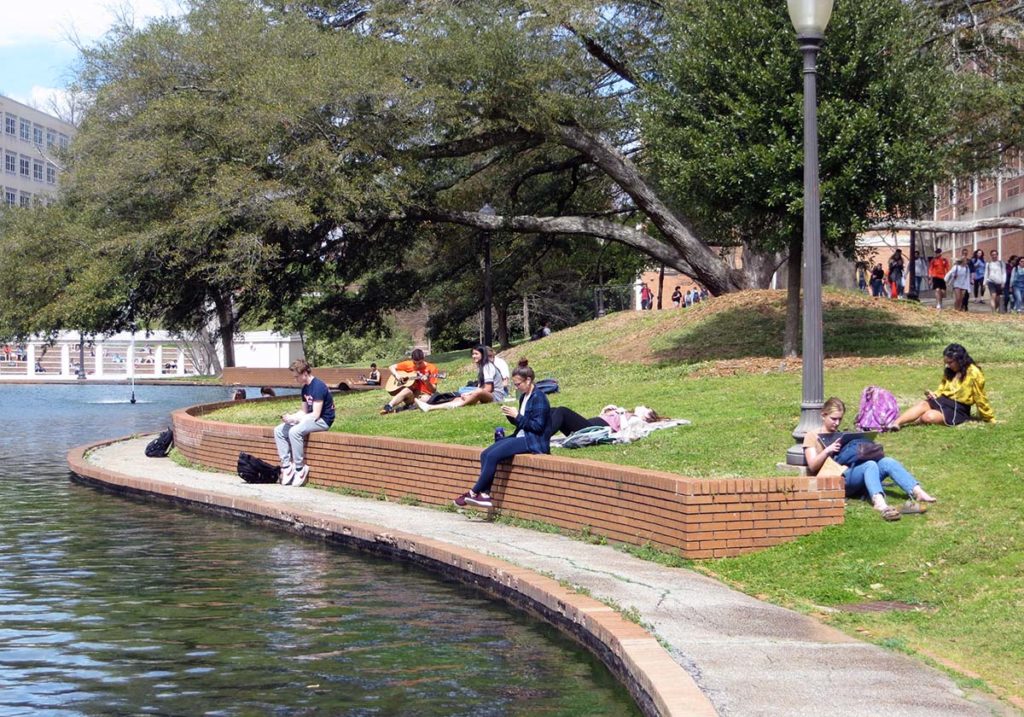
Students study outside
March 11, 2020: On campus just before spring break, all the world was a sunny day. Image Credit: College of Architecture, Arts and Humanities

It has been an honor and a privilege to serve the College as interim dean during the past year. I am very proud of all that we have accomplished, and I have truly enjoyed being a part of the college family. I can honestly say that it has been a pleasure to come to work every day, whether in person or by Zoom.

Never in my wildest dreams could I have predicted that, for the last few months of my appointment, I would be working from home.

One thing I have learned about working for universities during my career is that our work is never boring! I have told my colleagues and coworkers that hundreds of times over the years. Clearly, nothing about this year has been dull.

In July, I will try to retire one more time. Who knows what the future holds? However, I am confident it will not be boring!

Thank you all for your incredible support and friendship.

Warmest regards,

Tim