In 2025, the Center for Health Facilities Design and Testing (CHFDT) advanced its mission with remarkable momentum, delivering groundbreaking evidence-based insights that can reshape how healthcare environments are conceived, evaluated, and improved. Through innovative research, interdisciplinary collaboration, and real‑world partnerships the Center is enhancing patient safety, strengthening clinical workflows, and informing national conversations about the future of healthcare design. This past year stands as one of CHFDT’s most influential, marked by achievements that continue to elevate the standard of care and inspire transformative change across the healthcare landscape.
Major Honors & Recognition
The CHFDT earned several prestigious accolades in 2025, underscoring the Center’s leadership in evidence‑based healthcare design:
- Dr. Anjali Joseph, CHFDT Director, was named Clemson University’s 2025 Senior Researcher of the Year, recognizing her national leadership in improving patient safety and healthcare facility design.
- Professor David Allison was elected President of the American College of Healthcare Architects for the 2025–2026 term, a testament to his decades of influence in shaping the field.
- CHFDT’s collaboration with Indiana University Health received a Silver Touchstone Award from the Center for Health Design, honoring excellence in evidence‑based design research and application.
These recognitions highlight the Center’s growing impact and the exceptional leadership driving its mission forward.

CHFDT Team
Transformative Research & Design Innovation
Across 2025, CHFDT researchers advanced several groundbreaking projects that address some of healthcare’s most pressing challenges:
The EDen Room
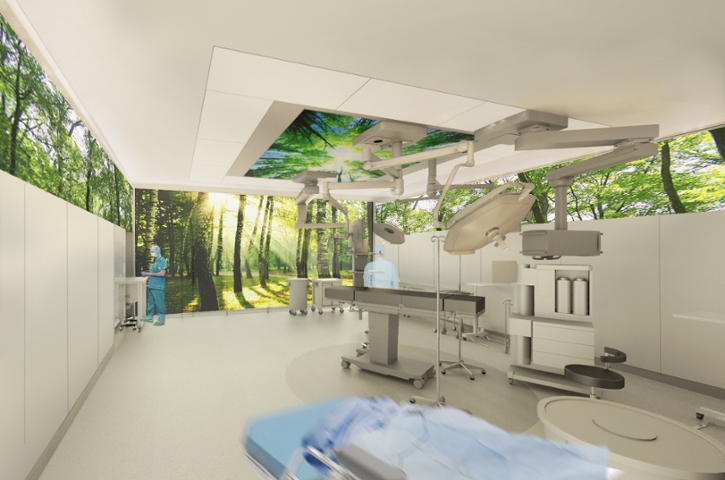
The “EDen Room” flexible exam room is designed to facilitate a quicker transition from an ED exam room for medical patients to a ligature-minimized room for MBH patients. The flexible exam room design provides an adaptable functional environment for both patient and care provider needs. The design seeks to enhance the patient’s emotional wellbeing and physical safety, while also promoting a greater sense of dignity, privacy and a better overall experience.
MBH‑Friendly Emergency Department Design Toolkit
The comprehensive MBH-Friendly ED design toolkit can serve as a resource for designers and stakeholders to help them address design and evaluation across a diverse range of emergency departments. The kit’s components will also assist teams in documenting collaborative design decisions throughout the planning, design, and construction process.
Safer Intra‑Hospital Transitions for Pediatric ICU Patients
A research initiative examining how built environments influence staff well‑being and patient safety during critical transitions within hospitals.
Conversations in the Neuro‑ICU
A qualitative exploration of how neuro‑ICU environments shape communication among providers, patients, and families—an essential component of patient‑centered care.
Each of these projects reflects CHFDT’s commitment to designing healthcare environments that improve outcomes, reduce harm, and support the people who deliver and receive care.


Celebrating the End of the Spring Semester (May 2025)
CHFDT team members had a great time celebrating the end of the spring semester with a round of miniature golf. The group enjoyed many successful putts as well as some not-so-successful shots. Through good shots and bad the team kept on smiling as they considered various sight lines and angles of attack.
Celebrating Our Graduates
The CHFDT community proudly celebrated the accomplishments of six Research Graduate Assistants who completed their degrees in 2025:
- Ph.D. in Design and the Built Environment (Architecture + Health)
Mina Shokrollahi Ardekani, Devi Soman, Monica Gripko
Mina Shokrollahi Ardekani, “Understanding Expert and Stakeholder Perspectives for Designing Autism Supportive Outpatient Waiting Environments.”
This work addresses a critical and often overlooked aspect of healthcare design, how outpatient waiting environments impact autistic children and their families. Her mixed-methods research, which included observations, surveys, and interviews with parents, children, clinicians, and designers, uncovered key environmental stressors and opportunities for improvement. The research provides evidence-informed design guidelines that promote autonomy, sensory comfort, safety, and dignity in pediatric outpatient settings.
Devi Soman, “The role of free-standing birth center physical environments in supporting culturally sensitive care experiences and maternal health outcomes for historically underrepresented communities”
This study investigates how the physical environments of free‑standing birth centers support culturally sensitive maternal care for birthing women from historically underrepresented communities. This mixed methods study used surveys, interviews, and case study analysis to identify key environmental design elements that enhance culturally responsive care and proposes evidence‑based guidelines to improve maternal experiences and reduce disparities.
Monica Gripko, “Perceived Value Incongruence in The Built Environment and Nurse Outcomes in Inpatient Behavioral and Psychiatric Care Settings: A Sequential Exploratory Mixed-Methods Study”
This sequential exploratory mixed-methods study examines how the built environment influences value congruence and job outcomes among nurses working in inpatient behavioral and psychiatric settings. Qualitative interviews with nurses from two Southeastern U.S. hospitals informed a national survey assessing the relationship between perceived environmental support for nursing values and burnout, job satisfaction, and turnover intention. Findings indicate that built environments can meaningfully reinforce or undermine nurses’ ability to provide value-aligned care, with significant implications for well-being and retention. This study’s findings suggest that perceptions of value alignment in built environments tangibly impact nurses. The built environment is one tool that healthcare organizations can use to help improve nurses’ job outcomes, increase retention, and enhance patient care.
- Master of Architecture (Architecture + Health)
Susanna Greiner, Taylor Cox - Master of Science in Architecture (Architecture + Health)
Ana Sandoval Aguilar
These graduates represent the next generation of leaders in healthcare design innovators who will carry the CHFDT’s mission into the future.

PhD Graduates (Monica Gripko & Devi Soman)

PhD Graduate (Mina Shokrollahi Ardekani with Dr. Anjali Joseph)
Research Impact by the Numbers
The Center’s productivity and partnerships in 2025 demonstrate its expanding influence:
- 18 peer‑reviewed journal articles published
- 4 active grants and sponsored research awards
- Collaborations with leading health systems and universities, including:
Indiana University Health, Prisma Health, University of South Carolina, Children’s Hospital of Atlanta, and Emory University
These accomplishments reflect a thriving research ecosystem grounded in collaboration, rigor, and real‑world impact.

Kick-off of the Fall Semester (Sept 2025)
The CHFDT team gathered at the Snow Family Outdoor Center to share some great food and fun to kick-off the beginning of the fall semester. The group enjoyed a potluck picnic and great conversation by the lake.
CHFDT LinkedIn
In 18 short months, the Center for Health Facilities Design and Testing has amassed almost 800 LinkedIn followers. In addition to the new followers, we were able to improve our outreach by 42.3% compared to last year. That is, we were able to share our content and achievements with over 9,091 netizens. It’s exciting to see so many, both nationally and internationally, interested in the innovative evidence-based work of the CHFDT.

Pumpkin Carving (Oct 2025)
The CHFDT team and friends gathered in October for the annual CHFDT pumpkin carving event. The group shared food and fun, as well as carving tips and tools. Each year team members are excited to see the new and highly creative designs that their colleagues carve into their Jack-o’-lanterns for Halloween.


“The Elephant in the Room”
As 2025 drew to a close, we reflected on a year defined by innovation, collaboration, and meaningful impact across the healthcare design landscape. Our team, partners, and students pushed boundaries to advance safer, more human-centered environments and even found joy in an unexpected creative outlet: a giant elephant mural.
Amid all the research and design reviews, something magical happened in the halls of the CHFDT: the elephant in the room became a collaborative canvas for the team. Over coffee breaks and hallway chats, members added splashes of color, patterns, and personality. Near the end of 2025, we filled in the last corner — a vibrant tapestry symbolizing our shared spirit and the beauty of collective expression.
Looking Ahead to 2026
As the CHFDT moves along through 2026, the momentum of the past year fuels even greater ambition. With new partnerships forming, research deepening, and innovation accelerating, the Center is poised to continue shaping the future of healthcare environments—one evidence‑based breakthrough at a time. Here’s to another year of discovery, collaboration, and transformative healthcare design.
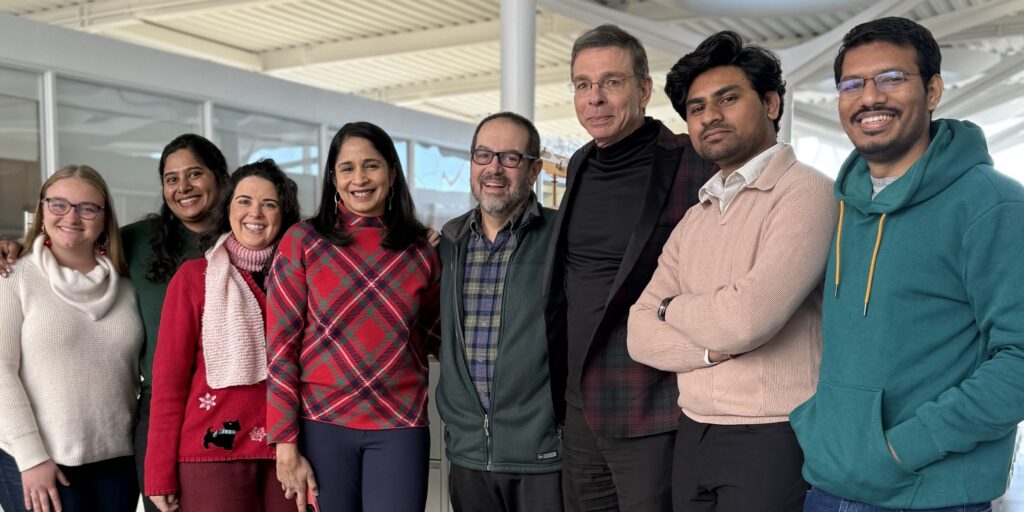
Holiday Celebration (Dec 2025)