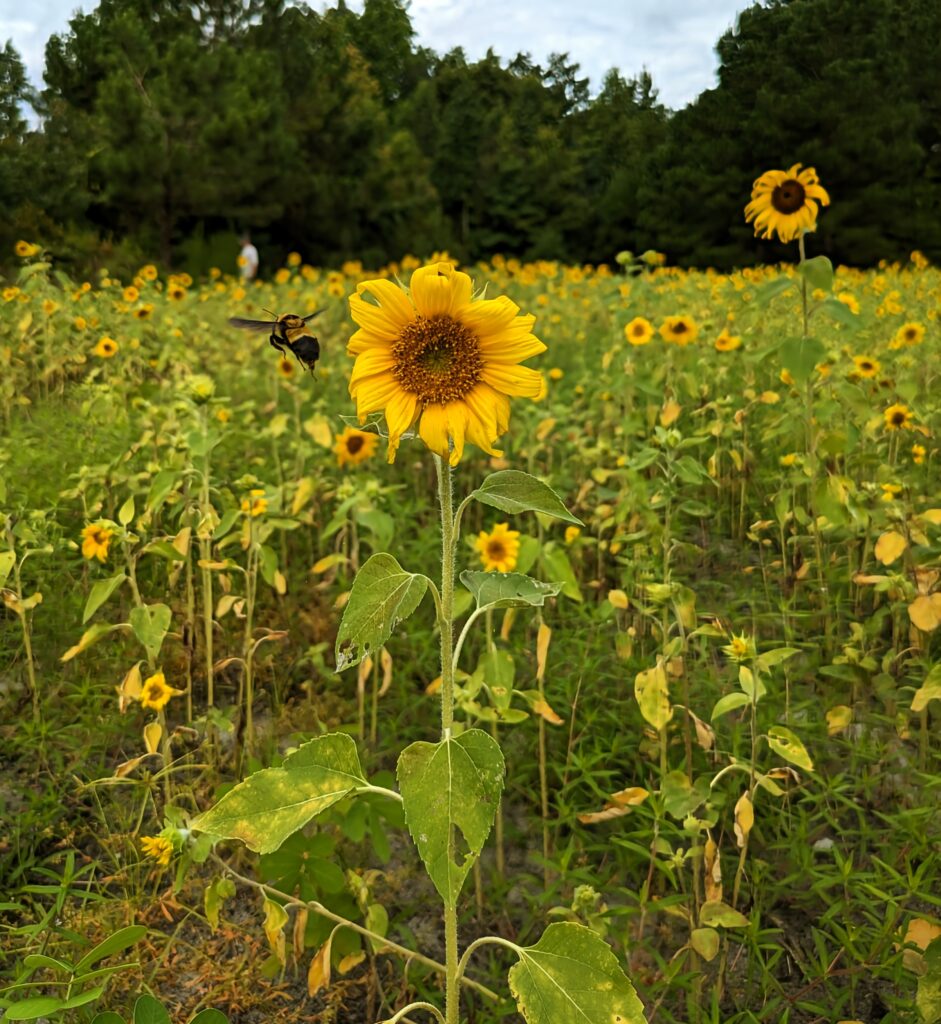
This week marks the unofficial end to summer as schools are back in session! Summer lovers, have no fear, we are actually still in summer until September 22. As you travel on our busy roads for the last half of summer, pack your patience for moving farm equipment and the increased school traffic. If you are new to the county or the South in general and are used to temperatures starting to cool in September, you may be in for a shock. The summer weather will be here for a bit longer, so stay hydrated, take frequent breaks in the shade or AC and don’t forget your sun protection!
A New 4-H Year Begins September 1!
4-H is the youth development program of Clemson Extension that empowers young people through hands-on learning. Members grow their skills, discover new interests, and build lifelong friendships while learning responsibility, leadership, and service.
What is 4-H?
- Clubs meet once a month, led by trained volunteers
- Opportunities to take part in regional and state projects
- Fun and educational overnight trips
- Contests and competitions at the regional and state level
- A place to learn by doing and celebrate achievements along the way!
2024–2025 Horry County 4-H Clubs
- Homeschool Cooking Club
- The Five H Club (Loris)
- The Golden Town 4-H Club (Aynor)
- The Green Sea Clovers Club
- STEM & Service Club (Myrtle Beach)
- The Horry County 4-H Horse Club
- The 4-H Chess Club
- The Southern Horry & Georgetown 4-H Club
- Potential new 4-H Sewing Club (Aynor)
Registration: v2.4honline.com
Do not register before September 1 or you will be added to the previous club year.
More Info: Contact Miracle Rabon at llewis2@clemson.edu or 843-333-0460
Let’s tackle some of the most frequently asked questions we have gotten this summer at the Clemson Cooperative Extension Horry County office.

With it being so hot how much should I be watering my landscape?
The simple answer is to water as needed. If your plants are green and growing, then hold off on watering until they start to show symptoms of being too dry. Drought symptoms may include but aren’t limited to wilting and changing leaf color. Additionally, symptoms of overwatering can be quite similar, so make sure to check the top 2-3 inches of soil to see if it is dry before watering. Giving plants too much water when they don’t need it can lead to disease problems and the eventual death of the plant. It is often a lot easier for a plant to recover from being too dry than staying too wet. This applies to both lawns and other plants throughout the landscape.
Should I be fertilizing or applying pesticides to the lawn this time of year?
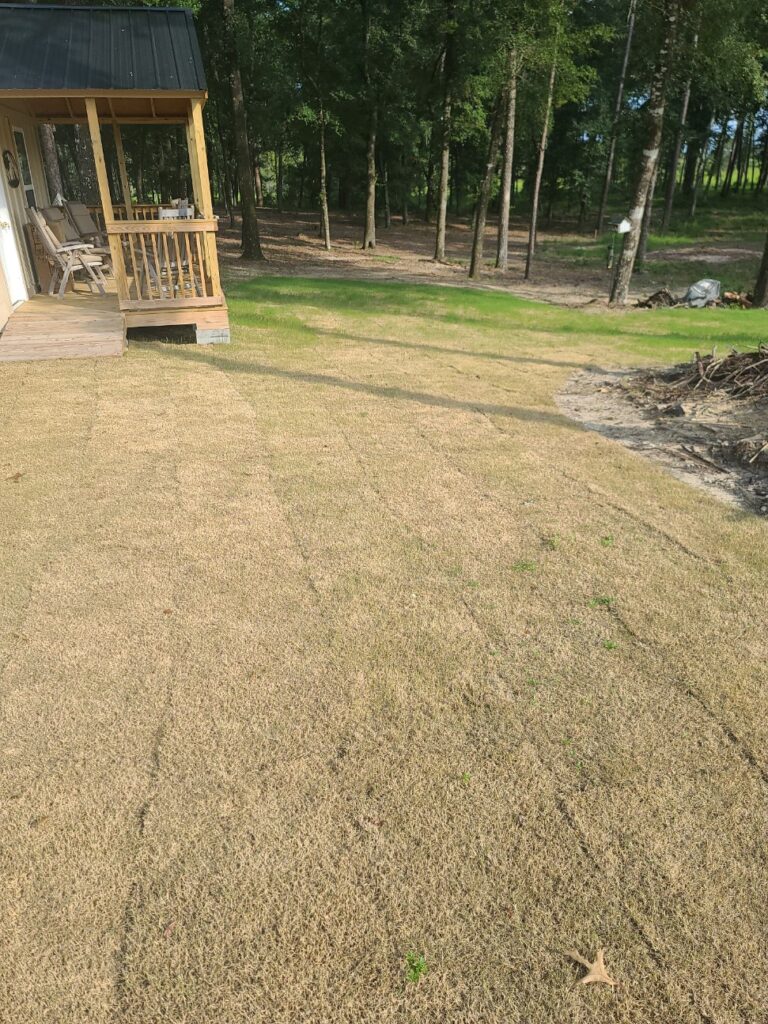
August 15th should be the cutoff date for applying fertilizers that contain nitrogen. Applying nitrogen later in the season will encourage the lawn to put on new growth at a time when it’s ready to start slowing down. This could result in damage to the lawn. Otherwise consider applying a fungicide around September to prevent fungal diseases as we move into the fall and winter. Insecticides can be used as needed for problems like fall army worms, mole crickets, and chinch bugs.
Does Horry ever get hit by hurricanes?
Yes, and we have been lucky the last couple of years. Hurricane Florence in 2018 and Hurricane Matthew in 2016 were the last two hurricanes to bring significant damage to the county. Hurricanes and tropical storms are unpredictable. They can strengthen, weaken, and change direction rather quickly. Some years are calmer or less active than others, but it’s best to be prepared for every hurricane season. Hurricane season runs from June 1 to November 30.
If you have lived on the coast your whole life and you are “used” to hurricanes, it is still important to stay diligent and prepared. The evacuation zones have recently been updated. The SC Emergency Management Department has a tool where you can enter your address to see your zone. They also have planning materials and a supplies list that you can use to be ready for when a storm hits.
Our farmers have an extra layer of preparation for hurricanes. Having a plan, maintaining inventory and production records, and taking photos or video before and after the storm are simple things that can make a huge difference. Contact our Agribusiness Agent, Charley at chmaxwe@clemson.edu to talk about hurricane prep for your specific operation.
What pests should I be scouting my hay fields for?
Fall Armyworms
- Fall Armyworms are hard to predict, extremely damaging, and can move quickly. Make sure to scout hay fields regularly and if they are found, do not wait to treat. Treatment can vary depending on how close your hay is to cutting. If you use an insecticide for control, apply it early or late in the day when the caterpillars are most active, and make sure to follow the recommendations on the label.
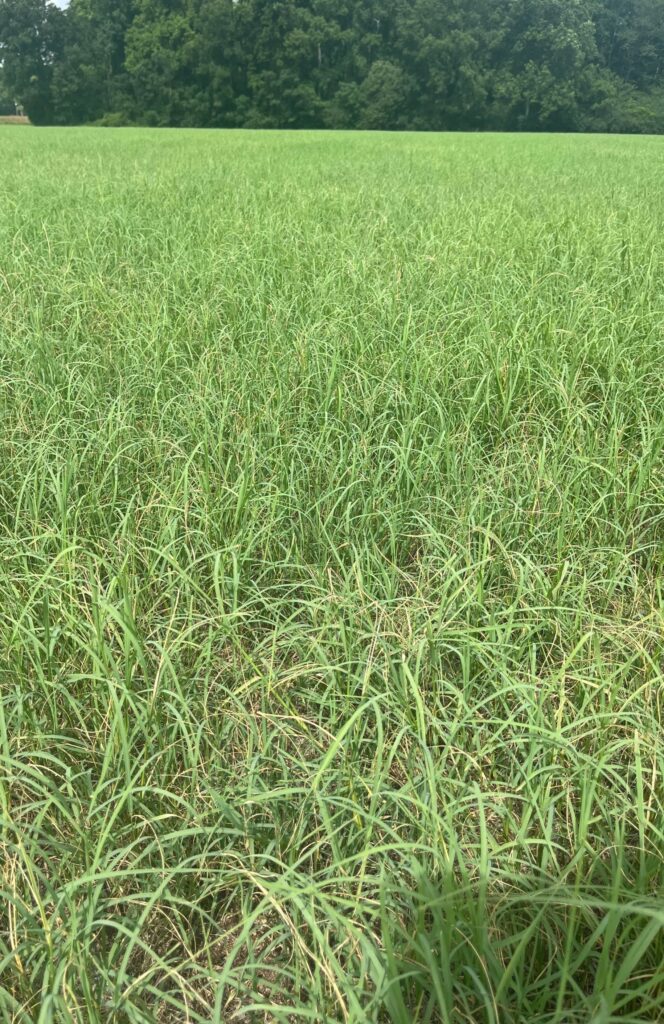
- Take extra time checking for Fall Armyworms during hot and dry summers. Some signs that your fields may have them include brown/dead grass, and birds such as egrets or geese feeding in the fields.
- There have been reports of Fall Armyworms in several counties across South Carolina already this year. For more information, visit https://www.clemson.edu/extension/pest-alerts/. This site has additional resources, a real-time map displaying sightings, and a form to report sightings. If you find Fall Armyworms in your fields, please submit a report so that we can have up-to-date information and a greater ability to assist others. Feel free to contact your local Area Livestock and Forages Extension Agent with any questions!
Bermudagrass Stem Maggots (BSM)
- BSM are hard to detect in a hay field until the damage is already done. The maggot itself is only about 1/8” long, but the damage that it leaves is unique and recognizable. After the adult fly lays its eggs, the larvae go to the node to feed (where the leaf blade emerges from the stem). As a result, the top of the plant will have a frosted appearance, and the top two-three leaves will be damaged.
- If an infestation is found in a hay field within one week of a normal harvest and the weather permits, cut and harvest ASAP. If an infestation is found in a hay field 1-3 weeks post-harvest, yield losses can be severe. Mowing and possibly baling would be a consideration. Different varieties may suffer varying yield losses.
- There is still some unknown information about BSM, and control can be difficult. The fly may be controlled by repeat applications of certain pyrethroids. Contact your local Area Livestock and Forages Extension Agent for additional information.
How do I spot root rot?
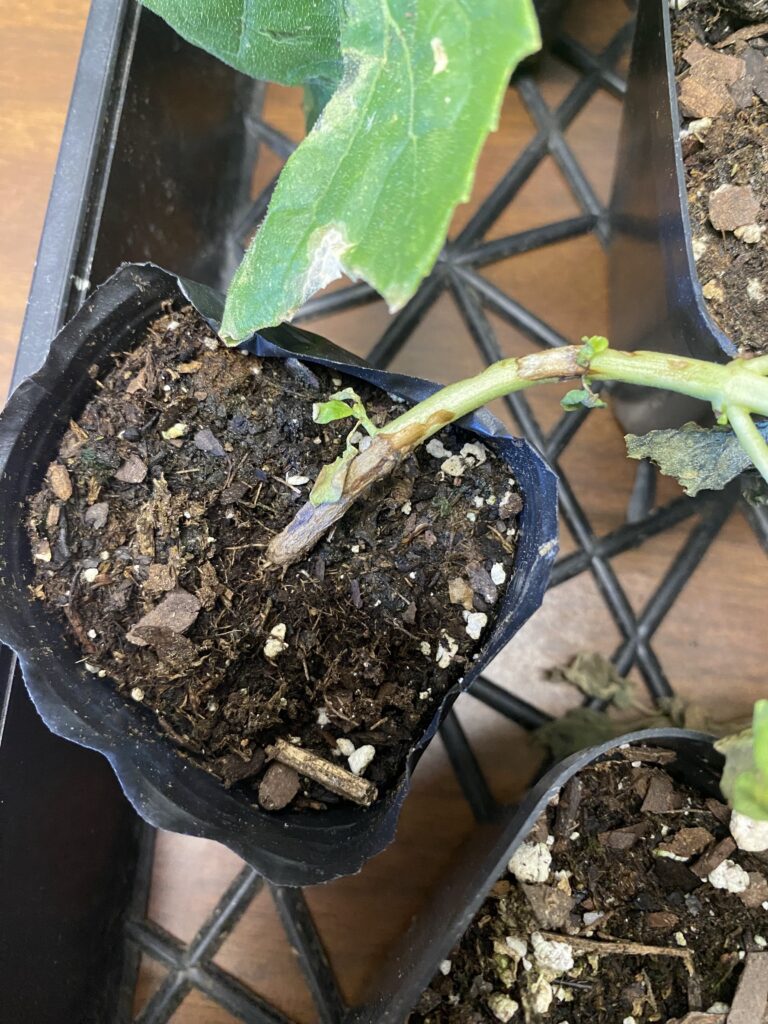
We’ve had a very wet summer this year, meaning root rot has been common. Root rot will be most prevalent in low areas with poor drainage, heavier clay soil, or nematode-infested soil because nematodes can injure roots, giving an entry way for disease.
Signs of root rot above ground may be wilted plants even after they have been watered, yellow or brown leaves, and defoliation. Look for black or brown discoloration or white mycelium on the stem at the base of the plant and just under the soil surface. Dig up the plant to inspect the roots. Avoid pulling on the plant and use a shovel instead; otherwise, rotten roots will break off and remain in the soil. The outer layer of rotten roots will “rat tail” meaning they easily peel off, exposing the white inner root. Thicker roots may be squishy and discolored.
Avoid planting in poorly drained areas and follow a 3+ year crop rotation. Many vegetables have varieties that are resistant to root rot diseases that can be found in the 2025 Vegetable Handbook. Since several root rot diseases exist, including Phytophthora, Pythium, and Fusarium, more specific management recommendations will depend on a lab diagnosis. Plants can be brought into the extension office and sent for a disease diagnosis for $20.

Can someone test my canner?
Yes, as we get towards the end of summer harvests you may have a surplus of vegetables you would like to can or preserve another way. Please reach out to our Food Systems and Safety Agent, Chase Baillie at mcinto3@clemson.edu for more information and consult the Carolina Canning webpage for online resources.
Where can I find local vegetables?
The Waccamaw Market Cooperative runs farmers markets in several locations across the counties on various days of the week. You can find the closest one to you and their schedules at https://waccamawmarkets.org/.
There are several roadside markets throughout the county. A list of the markets certified by the SC Department of Agriculture are listed as well as their location, hours and products on the Certified Roadside Markets website.
Many farms across the state and in our county offer agritourism activities throughout the summer. The SC Agritourism Association lists the farms with agritourism activities on their website and you can subscribe to their newsletter to see specific events happening across the state each month!
I want to start an agritourism operation on my farm. Where do I start?
In Horry County, agritourism falls under the rural tourism permit. The county requires a 20 acre minimum and for properties to be in a Rural Area, Rural Corridors, Rural Community, Rural Activity Center, Transitional Growth Area, Scenic & Conservation or Preserved Open Space as identified on the active future land use map. Landowners who are interested, must pay a $200 fee and complete this application with the county.
Are there any classes to learn about beekeeping?
Registration for the annual Basics of Beekeeping Hybrid Course is now open. This training offers a convenient way to learn how to keep honey bees and produce honey in South Carolina. This course combines six evening lectures delivered through our virtual classroom with a field day near you to give you hands-on experience working with live honey bee colonies. While this is an introductory course, it is very thorough and provides all of the essential knowledge needed to become a successful and self-sustaining beekeeper. It also prepares participants to take the certification exam offered by the SC Master Beekeeper Program.
This course serves as an in-service training for extension agents and staff. If you work with the extension service and would like to audit the course, please contact me directly before registering for the course.
Details about the course are in the attached flyer and can be found on the registration website at https://tinyurl.com/2025BoBCourse.