Extension Employee News

July 2024: Salesforce Update

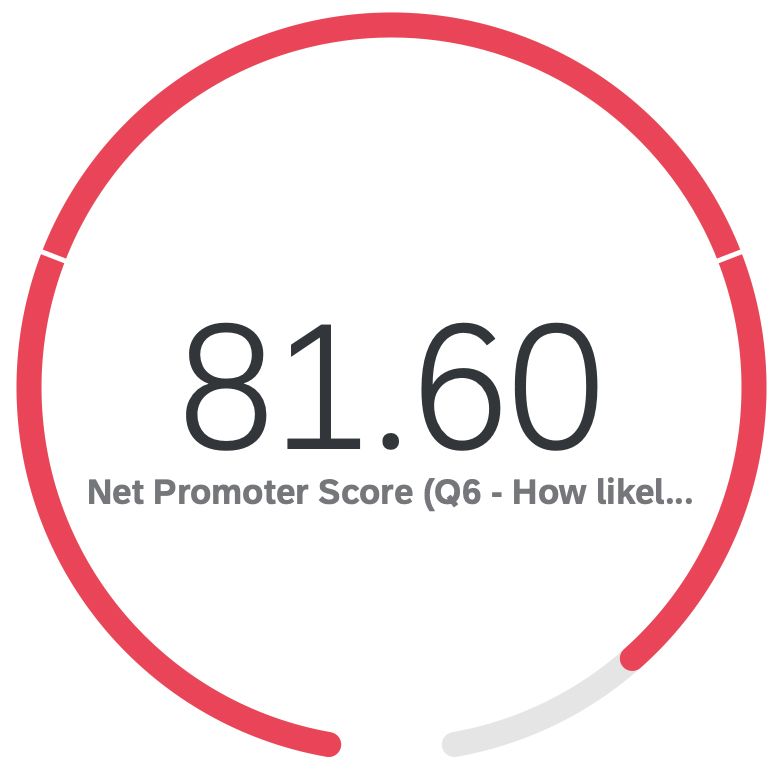
A Net Promoter Score image showing a score of 81.60.

Many of you may be aware we have a generic survey that is automated and connected to each of your programs. When your program is marked as “complete” within Salesforce, Qualtrics will send a general survey to the participants who attended. Although we have just started collecting this information, your hard work and service to your constituents are clear, with a net promoter score (NPS) of 82.

About NPS

The NPS is a widely used metric for gauging customer loyalty and satisfaction. Developed by Fred Reichheld, Bain & Company, and Satmetrix in 2003, NPS measures how likely customers are to recommend a company’s products or services to others. 

How NPS Works

Survey Question
The core of NPS is a single question: “On a scale of 0 to 10, how likely are you to recommend our company/product/service to a friend or colleague?”

Scoring
– Promoters (9–10): These are loyal enthusiasts who will keep buying and also refer others, therefore fueling growth.
–  Passives (7–8): These are satisfied but unenthusiastic customers who are vulnerable to competitive offerings.
–  Detractors (0–6): These are unhappy customers who can damage your brand through negative word-of-mouth.

Calculation
NPS is calculated by subtracting the percentage of Detractors from the percentage of Promoters. The formula is

    NPS = %Promoters − %Detractors

The score can range from -100 (if every customer is a Detractor) to +100 (if every customer is a Promoter).

Interpretation of NPS

  • NPS > 0: More Promoters than Detractors, generally considered good.
  • NPS > 50: Excellent, indicating a high level of customer loyalty.
  • NPS > 70: World-class, representing exceptional customer satisfaction and loyalty.

As you can see, an NPS of 82 is world-class customer satisfaction. Thank you for your diligent use of Salesforce, and keep up the great work!

Ongoing Training

Speaking of work, we still have more to do as we learn to better utilize the tool of Salesforce. The Salesforce team will be visiting each District in person this fall to provide hands-on training. We are also continuing to offer Salesforce office hours every Monday morning at 9:00 a.m. If you don’t have the link, please reach out to Becca Hedden at rthomp7@clemson.edu, and she will make sure you get the calendar invitation.

Salesforce

Why is Extension Implementing Salesforce?

The system will provide several key improvements including

  • Reporting: Salesforce will be replacing CUMIS for required federal and state reporting, as it is easier to use and should provide the most accurate data.
  • Comprehensive Communication: Salesforce allows different program groups to see where there may be customers or contacts in common and use that information to provide a high-quality customer experience.
  • Digital Program Files: Salesforce provides an easy-to-use platform for tracking all program files, allowing for the elimination of paper files and tracking.

What Changes Can I Expect?

While each role may be impacted a little differently, general changes you can expect include

  • Moving away from CUMIS and entering information into Salesforce for regulatory reporting.
  • Integration between EventBrite and Salesforce, requiring program information to be entered once.
  • Streamlined newsletters and communications going to customers and clients across the system.
  • Streamlined reporting workload for faculty and staff.

Identified Change Impacts

Program files

Old Way: Program case files physical files stored in the local office, pulled as requested for reporting or audit needs.
New Way: Program files are electronic, stored within Salesforce.  Easy to access for any credit, reporting or audit requirements.

Stakeholder Interaction 

Old Way: Lack of consistency and left to the individual to log history of working/helping constituents.
New Way: Interactions will allow admin staff and faculty to collaborate and maintain a record of impact, change and effort invested in helping others.

Outlook Email Client Integration

Old Way: No structured way to reference communication with specific clients as part of a record that is referenced by supporting staff/faculty in the future.  
New Way: Attribute interactions with specific records for reference in the future or to refer to another agent/specialist/administration.

Reporting

Old Way: Data manual entered in CUMIS for reporting purposes.
New Way: Attendance and civil rights information are collected automatically upon Eventbrite registration.

Data Dashboards

Old Way: No real-time summary of data from the system.
New Way: Provides real-time data/summary.