Licensing News, Renewal Information, and Regulatory Updates
Welcome to the SC Department of Pesticide Regulation’s Stakeholder Update! We’re excited to announce a new way to stay connected with DPR at Clemson University. Through this newsletter, we’ll be sharing important departmental news and timely updates for our regulated applicators and industry partners. Here’s what you need to know:
Upcoming License Renewal Timeline
Here’s when you can expect to receive your license renewal notices:
- Dealer License Renewal Notices – Mid to Late September
- Commercial & Business License Renewal Notices – Mid to Late October
- Non-Commercial Licenses issued to government agency applicators – Mid to Late September
Be on the lookout for these notices to ensure timely renewal and avoid disruptions.
Email Verification Reminder
Haven’t Verified your email address yet?
We’re modernizing how we communicate with applicators, and verified email addresses are now essential for receiving timely notifications, license updates, and renewal notices!
To Verify Your Email Address:
Visit https://qrcodes.pro/2hfcOM or scan the QR code below.

Complete the required fields and click “submit“.
Please Note: You will receive a confirmation verifying your submission is complete. It’s that simple, but very important!
SGAR Information
New guidance and safety updates are available regarding SGARs (Second Generation Anticoagulant Rodenticides). These rodenticides are under increased regulatory focus due to environmental concerns. Stay informed to ensure compliance and safety in your applications, especially for those in structural and agricultural pest control.
Verifiable Technician Training
The Verifiable Technician Training (formerly known as Registered Technician Training) requirements have been revised. These updates include curriculum adjustments and new recordkeeping expectations for supervisors.
The updated Verifiable Technician Training consists of 10 individual modules or training videos on pesticide related topics. The training includes handouts for each module that can be downloaded and are a valuable resource for the technician.
At the end of the training, there is a 25 question, open-notes exam that must be completed. Included with the exam is a certificate of completion and a SC Verifiable Technician ID Card.
The ID Card must be carried by the technician while conducting pest control activities. Each module must be reviewed, the exam completed, and the ID Card secured before work can begin as a pest control Verifiable Technician in the state of South Carolina.
The Verifiable Technician training is accessible online here through Metro Institute.
VTT – FAQs
- What is the cost of the Verifiable Technician Training (VTT)? $50. A member code is not needed.
- Does the VTT require annual retraining? Yes. Once a technician is initially trained under the new VTT material through Metro, they must undergo retraining annually. The pest control business can conduct the annual retraining within one (1) year of the tech’s initial training. The VTT slides are available to download from the DPR website (coming soon in 2025). These slides can be used for the annual retraining. The business must maintain a record of the annual retraining, which will be verified by DPR during compliance inspections.
- Are technicians trained under the old VTT material required to train under the new VTT material? The Department will continue to accept the training card of any technician trained under the old material. However, the EPA’s updated Certification of Applicators (C&T) Rule requires uncertified technicians applying RUPs to be trained. The new VTT material will train uncertified technicians applying RUPs under the supervision of a certified applicator. South Carolina has agreed to adopt and implement the EPA’s C&T Rule updates no later than 2029. However, those changes could be adopted at an earlier date.
- Does the new VTT have any completion requirements? Yes. Once a new technician initiates the new VTT through Metro, he or she will have 15 days to complete the training. Each module must be completed before advancing. All completed modules will be available for review.
- Can technicians reprint their ID cards? Yes. Technicians who have completed the new VTT can reprint their card should they misplace it. To reprint their ID card, they will need to log in to their Metro user account.
Category 6 – Credit Requirements
Right-of-Way (Cat 6) now requires earning category specific recertification credits.
Performing Right-of-way pest control includes but is not limited to pesticide applicators using or supervising the use of pesticides in the maintenance of public roads, electric powerlines, railways, or other similar areas. Licensing is mandatory in this category as per Section 27-10-1085L.
Commercial Applicators certified in Categories 3, 5, 6, and 8 must accumulate 10 CCUs in each recertification period, no less than 3 of which must be specific to each category.
Top Mistakes To Avoid
Avoid delays or issues by steering clear of these common errors:
When renewing or applying for a license, do not…
- Submit incomplete paperwork. Everyone applying for a new Commercial license must submit a completed Evidence of Financial of Responsibility (EFR) form with their application. The EFR form should be filled out, signed, and notarized by the insurance company.
- Fail to sign the paper renewal form when mailing it with a check payment. *Note: If you pay online, you do not need to sign or return the paper form.
- Forget to update your contact information. If you change employers, your address, phone number, email, or other contact details, you are required to notify DPR within 10 business days.
Regulated Pest Alert
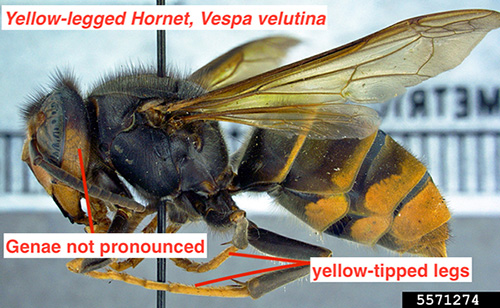
Yellow-Legged Hornet Found in Jasper and Beaufort Counties
https://www.clemson.edu/public/regulatory/plant-industry/invasive/invasive-spotlights.html
Spot It. Snap It. Report It.
Pesticide pros, like you, are key in stopping the invasive Yellow Legged Hornet (YLH), a major threat to South Carolina’s honeybees.
YLH nests are turning up in rooflines, attics, carports, even utility boxes. See one? Don’t touch it. Take a photo and report it through Clemson’s DPI reporting tool. Trained inspectors will handle removal and collect vital data.
Want to help clients or your crew ID the hornet fast? Grab free rack cards by emailing honeybeeprotection@clemson.edu.
You’re South Carolina’s first line of defense. Let’s stop YLH before it spreads.
For more information on Yellow-Legged Hornet and other non-native species, please visit the Invasive Species website.
Stay Connected
We want this newsletter to be valuable to you. If you have suggestions, feedback, or would like to see a specific topic covered, don’t hesitate to reach out.
For specific program questions, use the contact us link for a list of our program contacts!
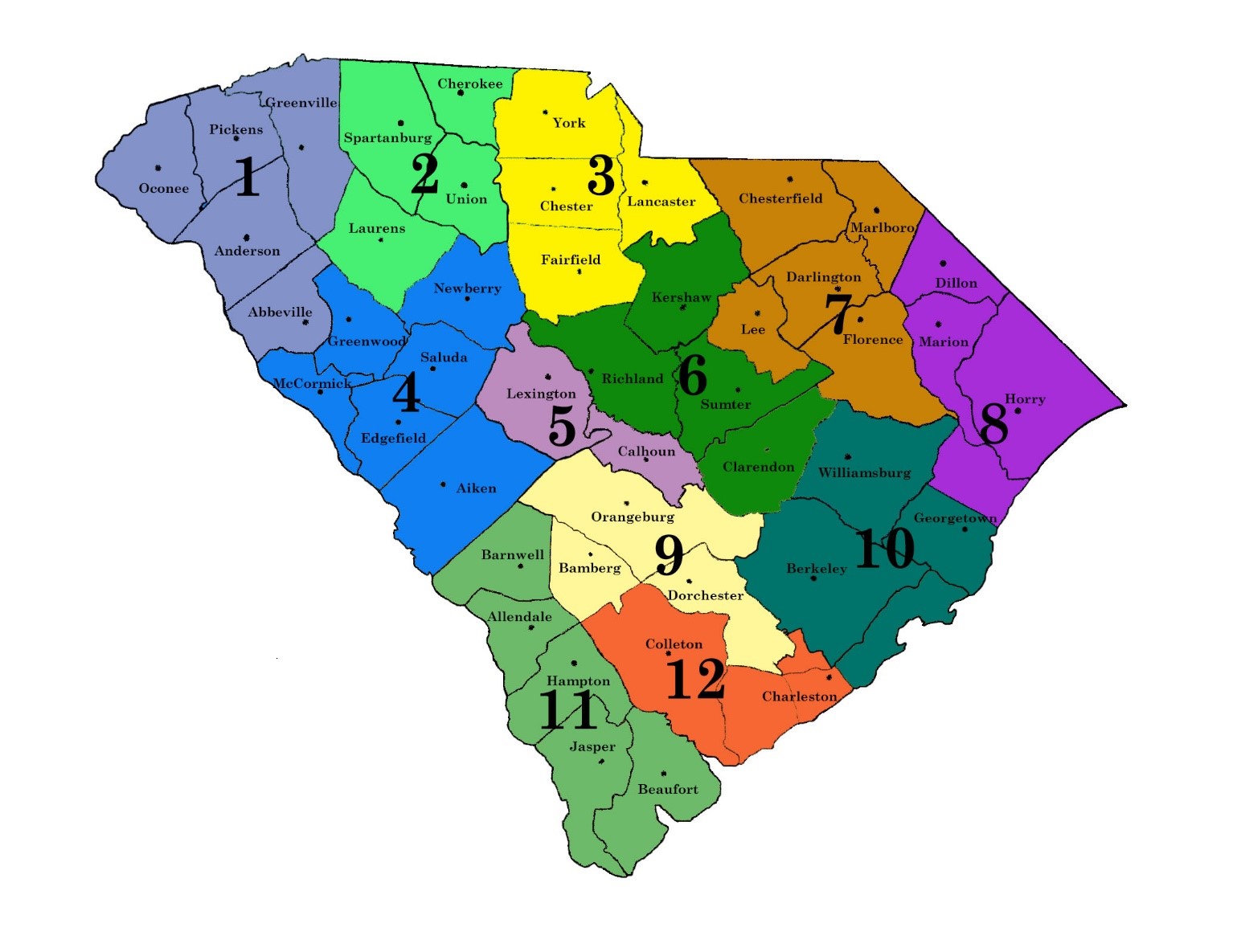
Click the link for the Regulatory Inspectors Territory Map for contact information for the DPR inspector located in your specific county.
