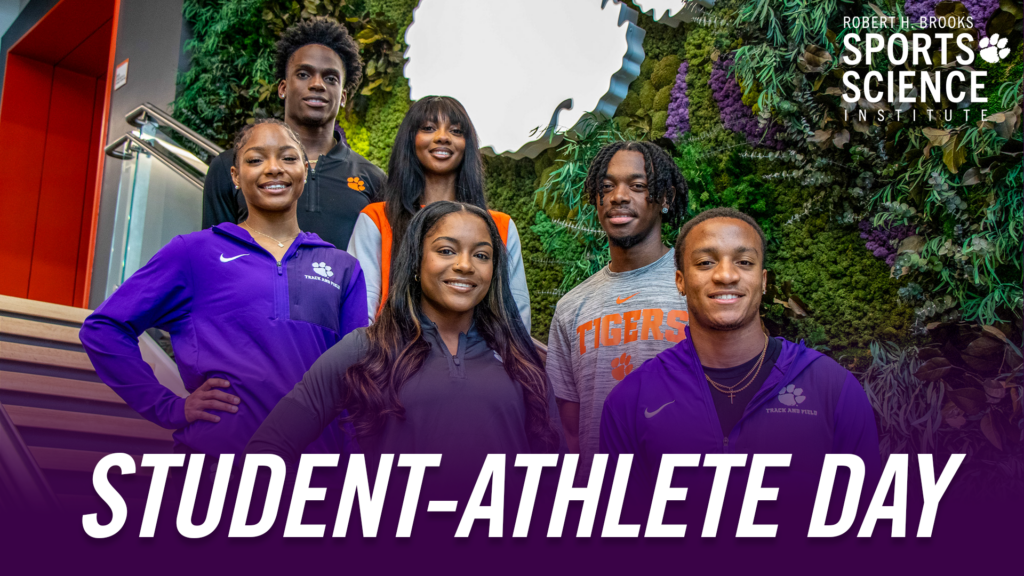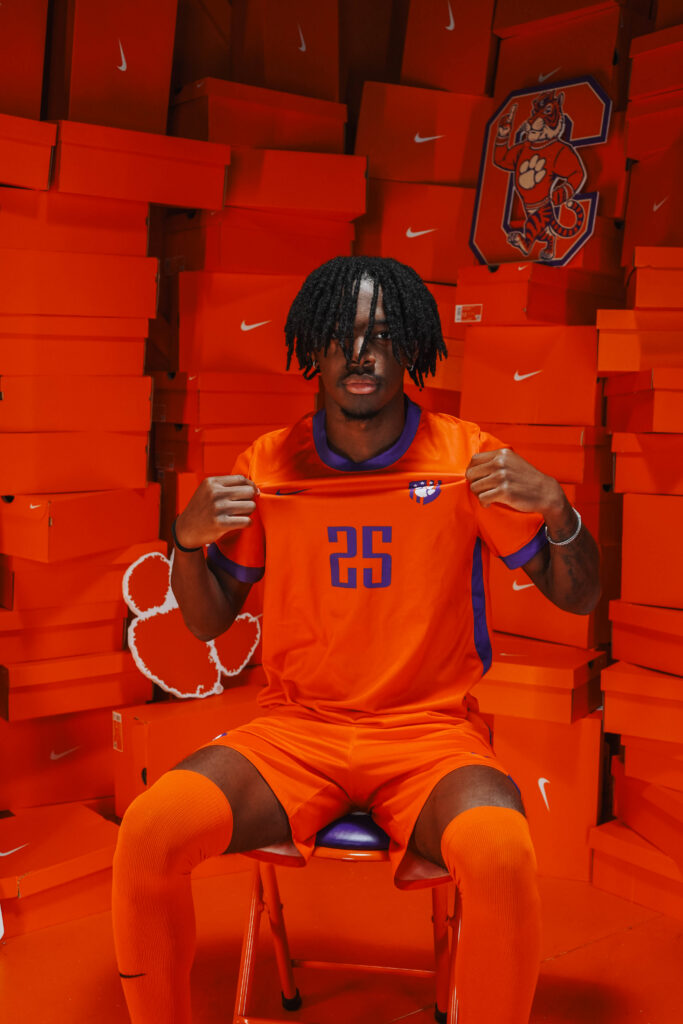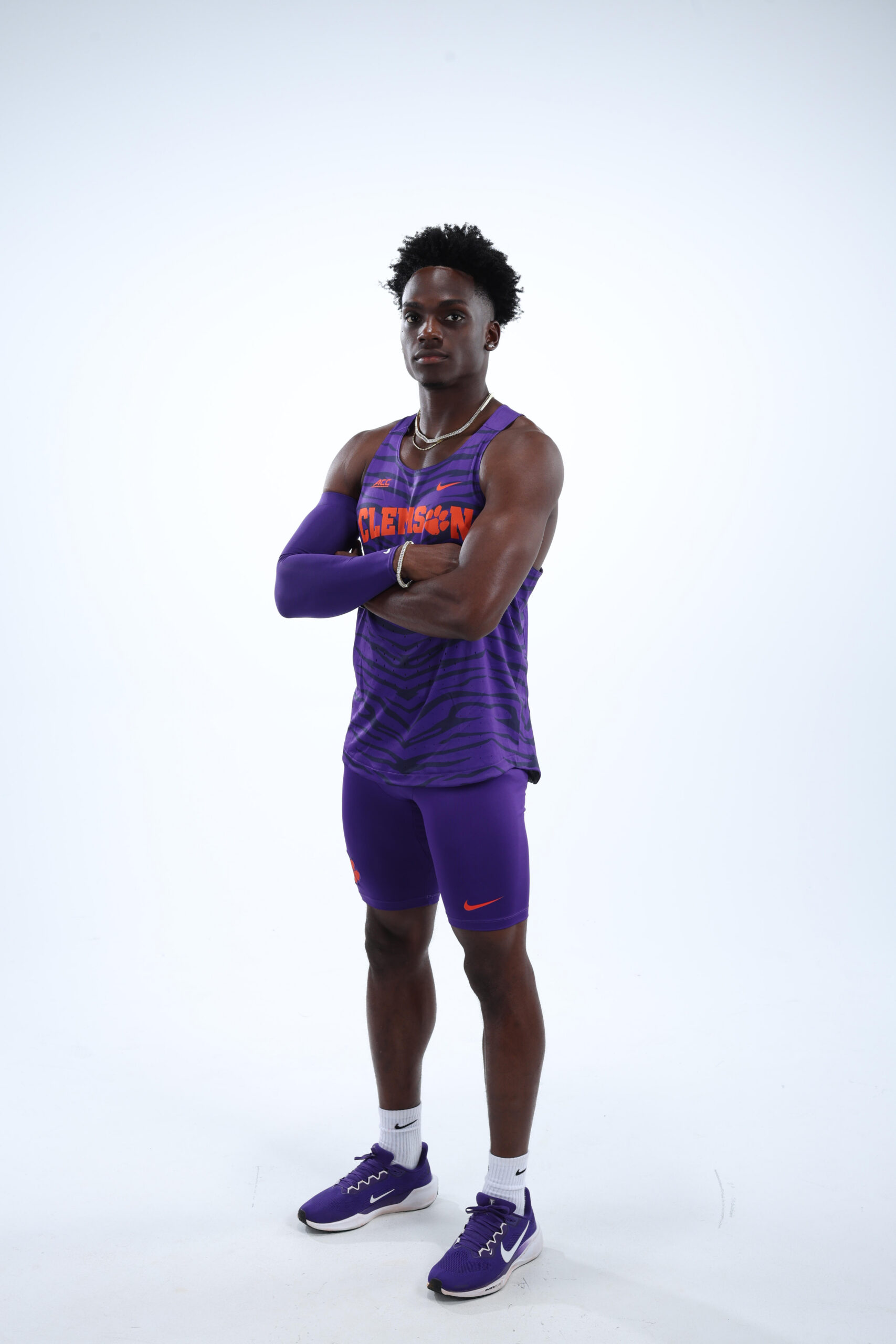
In celebration of National Girls & Women in Sports Day on February 4, the Robert H. Brooks Sports Science Institute highlights seven female student-athletes. Representing a variety of sports, these athletes share their experiences as women in sport, reflect on the role of sports science in their development, and offer advice to the next generation.
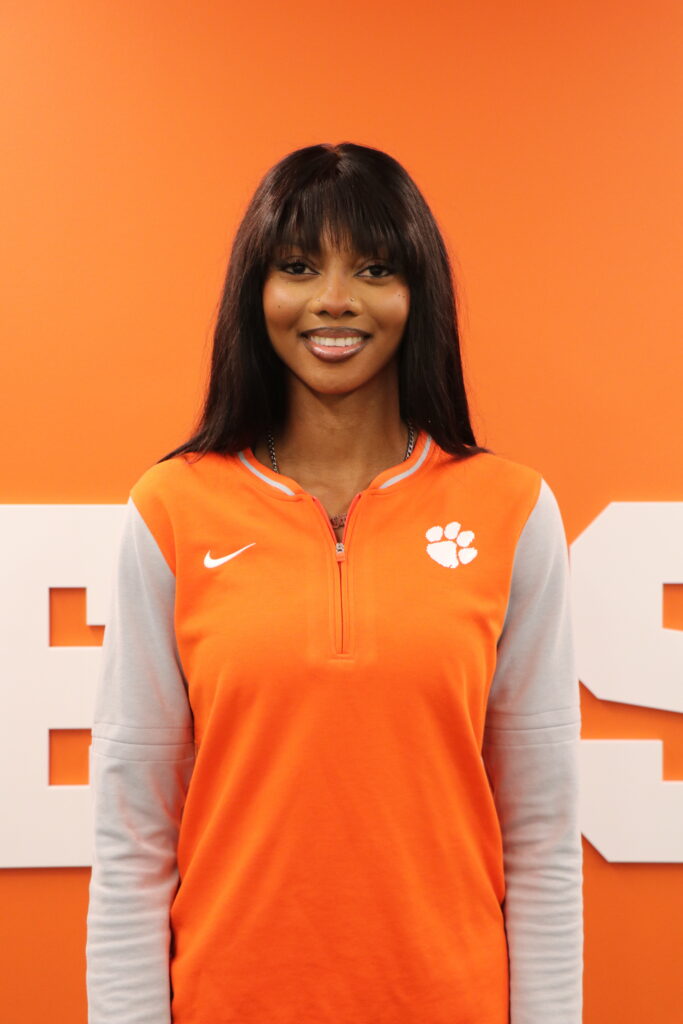
Sade Gray – Track and Field
Major: Marketing Hometown: Baton Rouge, Louisiana
What does it mean to be a woman in sports? To me, being a woman in sports means being strong, resilient, and unstoppable. It gives women the opportunity to chase goals at a high level, earn respect through work ethic, and open doors for younger girls watching. I want them to be able to think, “If she can do it, maybe I can too.”
What aspect of sports science have you found most interesting or impactful in your athletic experience? The most impactful aspect for me has been recovery and nutrition. You can train hard every day, but recovery can truly make or break performance. Getting the right nutrients to heal injuries and build power and strength has helped me put my best foot forward consistently.
What is your advice for aspiring women in sports? Believe in yourself before anyone else does. People will try to tell you who you are or limit your future, but it’s your life and your passion. Don’t give up on yourself—work hard, stay focused, and go where you are appreciated.
What has been your favorite or most interesting class taken at Clemson? One of my favorite classes has been Women’s Global Perspectives. Learning about the challenges women face around the world—especially those who don’t even have the freedom of choice—has inspired me to fully embrace the woman I’m becoming. It motivates me to pursue my dreams boldly and never let anyone take my voice.
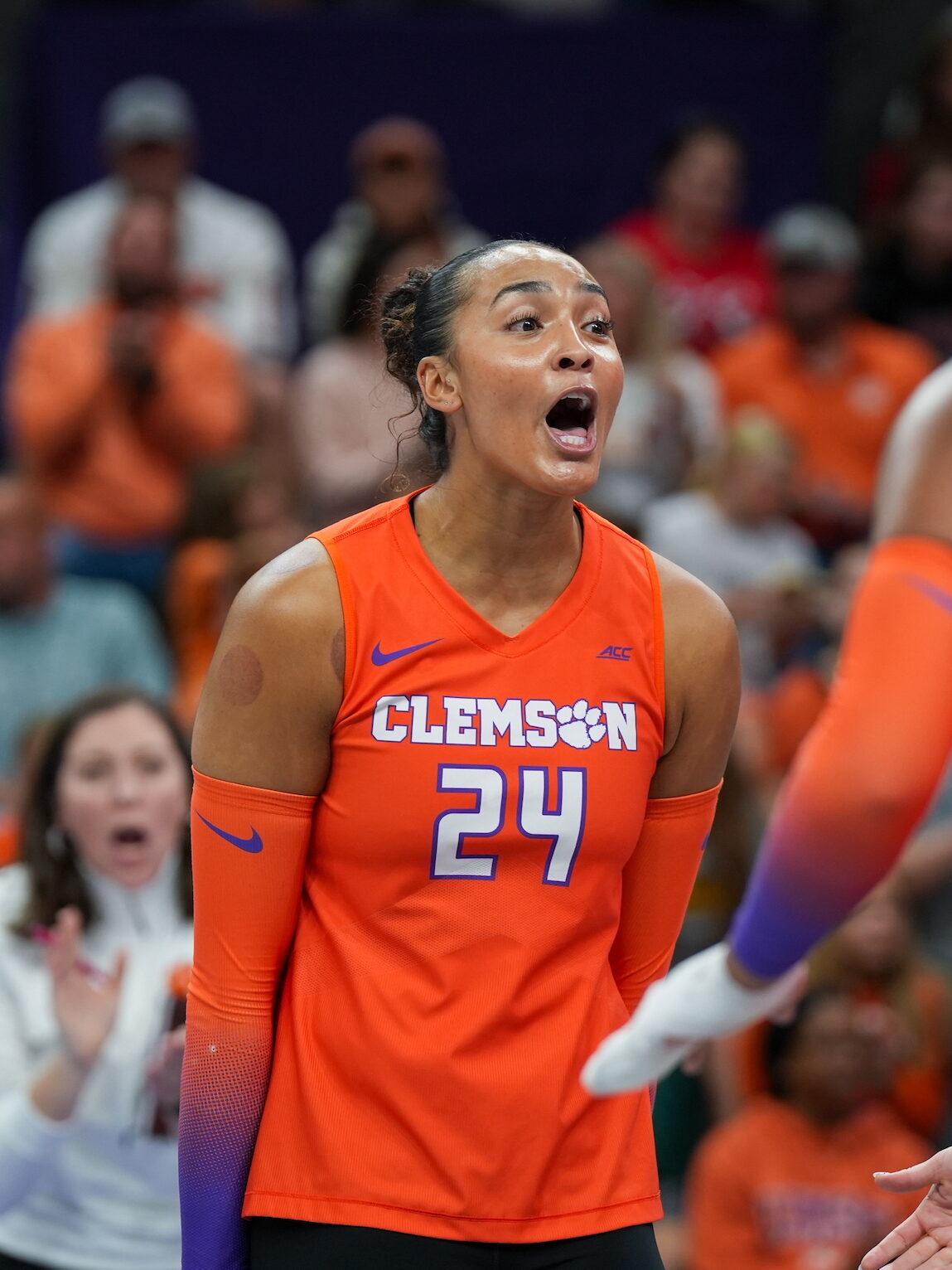
Bianca Martinez – Volleyball and Track
Major: Sociology Hometown: Omaha, Nebraska
What does it mean to be a woman in sports? For me, being a woman in sports is all about representation and feeling confident in myself. Being able to be a role model for younger female athletes and someone they can look up to and see someone living out a reality that they are dreaming about. It also means a place where I have found my confidence, and somewhere I have strived to be the best I could be, and always working towards a goal, but while still knowing who I am and my reasons for playing.
What aspect of sports science have you found most interesting or impactful in your athletic experience? Definitely has been recovery, and what specific things my body needs to be able to fully recover for another whole day of practice. I feel like being at Clemson, specifically the access we have to recovery, is absolutely amazing, and we are truly blessed here. I have learned so much about what exactly works best for me to feel my best, especially on game and competition days.
What is your advice for aspiring women in sports? My advice for aspiring women in sports is to always give yourself grace and be kind to yourself. There will be really good days and hard days, and both are part of the journey. It’s so important not to beat yourself up on the days when things don’t go as planned. Positive self-talk matters more than you realize, because the way you speak to yourself can either build your confidence or tear it down. Learning to encourage yourself the same way you would a teammate can make all the difference.
What has been your favorite or most interesting class taken at Clemson? My favorite class I’ve taken at Clemson so far is my Civil Rights History course, which I am currently enrolled in. As a Global Black Studies student, I understand how important Black history is and how critical it is that it continues to be taught accurately and intentionally. This class has helped me deepen that understanding by connecting historical movements to ongoing struggles for justice today. Professor D’Ondre Juwan Swails is also one of my favorite professors and makes the material engaging and meaningful, which makes the class genuinely exciting to be a part of.
Madison Roush – Cross Country and Track
Major: Biomedical Engineering Hometown: Greer, South Carolina
What does it mean to be a woman in sports? Being a woman in sports means having a big community of strong and inspirational women to look up to. We are all there to support one another and celebrate our accomplishments.
What aspect of sports science have you found most interesting or impactful in your athletic experience? I’ve found that the recovery aspect of running is the most interesting to me because it’s where I’ve seen the greatest success in the sport. Learning about the different ways to help muscles recover from training is fascinating, and the way my body feels after adequate recovery is night and day compared to running while not fully recovered.
What is your advice for aspiring women in sports? My biggest piece of advice is to say yes to opportunities that come your way and not be afraid to speak up and advocate for yourself. More often than not, people miss out on opportunities simply because they don’t put themselves out there or use their voice. By saying yes and asking to be involved in organizations that support women, I’ve been able to meet so many amazing and inspiring women from around the world.
What has been your favorite or most interesting class taken at Clemson? My favorite class I’ve taken at Clemson is Sports Engineering. In this course, I learned so much about the body and how it functions during training and recovery, which helped me better understand my own body and improve as a runner. It’s especially rewarding to learn material that you can directly apply to yourself, and that genuinely interests you. Dr. Harvey is also a great professor who teaches the class in an engaging way that keeps it interesting.
Tatum Short – Women’s Soccer
Major: Psychology Hometown: Las Vegas, Nevada
What does it mean to be a woman in sports? Being a woman in sports means showing up with strength, discipline, and confidence in spaces that haven’t always made room for us. It’s about resilience and showing younger girls that this path is possible and worth it.
What aspect of sports science have you found most interesting or impactful in your athletic experience? Nutrition has been the most impactful area of sports science for me because it has a direct impact on my energy, recovery, and performance on the field. Learning how to correctly fuel my body allows me to train harder, recover faster, and maintain consistency throughout the season.
What is your advice for aspiring women in sports? Believe in your abilities and don’t let anyone make you feel like you don’t belong. Work hard, stay confident, and support other women along the way.
What has been your favorite or most interesting class taken at Clemson? Women and Psychology has been the most interesting class I’ve taken at Clemson because it has taught me so much about the challenges women face around the world. It’s given me a deeper understanding of different experiences and perspectives, and how those shape women’s lives and choices.
Trinity Webb – Gymnastics
Major: Communication Hometown: Smithville, Missouri
What does it mean to be a woman in sports? Being a female athlete means a great deal to me because it represents strength, resilience, and the ability to take up space with confidence. It means embracing the pressure that comes with higher expectations and learning how to carry myself with purpose both in competition and in everyday life. As a woman in sports, I am often aware that performance is only part of how I am judged, which has pushed me to develop a strong sense of self and confidence in my identity. At the same time, being a female athlete is empowering; it gives me a voice, a platform, and the opportunity to represent younger girls who are watching and learning what is possible. For me, it means proving that women can be powerful, disciplined, and competitive while staying true to who they are and using sport to grow not only as athletes but as people.
What aspect of sports science have you found most interesting or impactful in your athletic experience? One aspect of sports science that has been most impactful in my athletic experience is nutrition, especially for female athletes. Proper fueling plays a major role in performance recovery and overall health it is often underestimated. I have learned that nutrition directly affects energy levels, injury prevention, and consistency in training. When athletes feel their bodies correctly, they are better able to recover and perform at a higher level over time. For women in sports, Understanding Nutrition has helped me view food as a tool for strength and performance rather than limitation, making it one of the most important aspects of sports science in my experience.
What is your advice for aspiring women in sports? My advice for aspiring women in sports is to trust yourself, especially during times when you may be underestimated or overlooked. There will be moments when others doubt your abilities or fail to see your potential, and learning not to let that define you is important. Confidence has to come from within, not from external validation, and that is something I am still learning myself. Growth in sports is not always linear, but believing in your worth and staying committed to your goals can make all the difference. continue to show up, work hard, and advocate for yourself, because your presence and voice matter just as much as your performance.
What has been your favorite or most interesting class taken at Clemson? My favorite class I’ve taken at Clemson has been criminal law because I enjoy learning about how the legal system works and understanding the reasoning behind laws and Court decisions. I find it interesting to see how real-life cases are analyzed and how the justice system impacts people and society, especially when it comes to justice being taken.
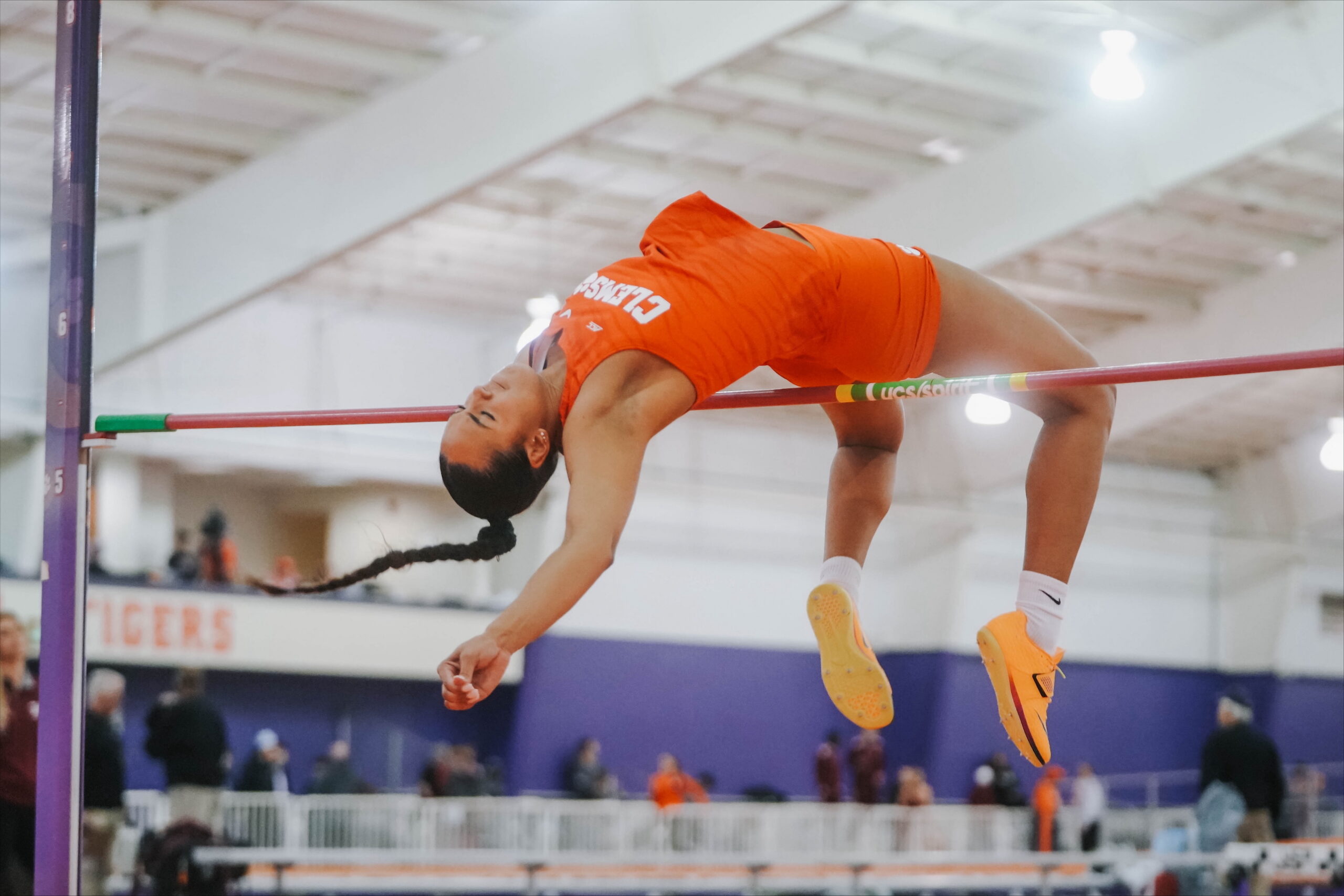
Shanque Williams – Track and Field
Major: Psychology Hometown: St. Elizabeth, Jamaica
What does it mean to be a woman in sports? Being a woman in sports means embracing both strength and vulnerability while constantly pushing myself to be better. It means overcoming challenges, proving my abilities, and staying confident in spaces where women are sometimes underestimated. As a female athlete, I take pride in representing where I come from and showing that women can be powerful, disciplined, and resilient. Competing as a woman in sports has taught me self-belief, perseverance, and the importance of using my voice and presence to inspire others.
What aspect of sports science have you found most interesting or impactful in your athletic experience? The most impactful aspect of sports science in my athletic experience has been recovery and injury prevention. Learning how proper recovery, rest, and monitoring fatigue affect performance has helped me understand that recovery is just as important as training. Paying attention to things like muscle soreness, sleep, and overall readiness has allowed me to take better care of my body, stay healthier throughout the season, and perform at a higher level during competition.
What is your advice for aspiring women in sports? My advice for aspiring women in sports is to stay persistent and never let stereotypes define your limits. There will be moments when people doubt your abilities or underestimate you, but those moments should fuel your motivation rather than discourage you. Stay committed to your goals, trust your work, and continue showing up even when it’s difficult. By staying consistent and believing in yourself, you not only prove others wrong, but you also create space for more women to be confident and successful in sports.
What has been your favorite or most interesting class taken at Clemson? My favorite and most interesting class at Clemson has been PSYC 2030: Fundamentals of Psychology. This class helped me better understand human behavior, mental processes, and how the mind influences performance. As both a psychology major and a student-athlete, the course has been especially meaningful because it connects directly to motivation, focus, and mental resilience in sports.
Oneka Wilson – Track and Field
Major: Parks, Tourism and Recreation Management Hometown: Portland, Jamaica
What does it mean to be a woman in sports? Being a woman in sports means pursuing passion and excellence while often overcoming inequality and stereotypes. It’s about empowerment, resilience, and claiming space in a traditionally male-dominated field.
What aspect of sports science have you found most interesting or impactful in your athletic experience? As a track athlete, nutrition has been the most impactful. Eating properly helps fuel training, improve recovery, and maintain consistent performance.
What is your advice for aspiring women in sports? Believe in your ability, advocate for yourself, and don’t be afraid to take up space. Stay disciplined, build a strong support system, and remember that your presence in sports matters.
What has been your favorite or most interesting class taken at Clemson? My favorite class at Clemson has been my PRTM EDGE class because I met a lot of new people and made friendships that are still strong today.
Drs. Erica Walker and Amanda Bridges’ research discovers different strategies to ensure the University’s brand colors remain consistent on athletic apparel
Most sports fans own at least one t-shirt donning the brand of their favorite team or jersey representing their favorite athlete. When they are preparing to join the crowd at a field, rink or stadium, sports fans expect their regalia to look on-brand.
According to Drs. Erica Walker and Amanda Bridges, Clemson faculty in the Department of Graphic Communications, “Branded athletic apparel is a multi-billion dollar business expanding year over year. Sports teams and their fans expect brand accuracy and durability across all types of textile-based products from clothing to home decor. Color is a vital part of a brand’s identity and printing consistent, durable and accurate brand colors across different materials can be challenging for manufacturers.”
Clemson Orange is printed on different textiles and laundered to see how true-to-brand the color of the Clemson paw remains.
The pair have examined the accuracy and durability of two Clemson brand colors, Clemson Orange and Regalia (purple), “specified by the brand as Pantone and CMYK values and measured as LAB values using a spectrophotometer, and printed on three textiles commonly used for clothing.”
Late in 2024, Walker and Bridges received international recognition for their research presented at conferences in Montreal, Canada (Color and Imaging Conference, October 2024) and Seville, Spain (International Conference of Education, Research and Innovation, November 2024). Additionally, they will present in Boulder, Colorado this March at the Technical Association of Graphic Arts (TAGA) conference.
Walker shared some of the challenges their research aimed to address.
“Orange is an especially difficult color to match in any medium,” she said. “Our eyes are pretty sensitive to variations in this color range so branded content creators have to be especially vigilant to ensure a consistent visual match.
Another challenge is the variety of materials and places that the color appears. We see Clemson Orange on the TV screen, on printed t-shirts, painted on the grass on the athletic fields, on the plastic seat backs, on metal decorative art outside, and so many other surfaces. Each backing material and process must be carefully chosen and controlled to ensure accurate brand color.”
During their investigation, the two provided opportunities for freshmen-level experiential learning with a direct-to-garment (DTG) printer and worked closely with Clemson Athletics to assess how the University’s brand colors are affected by commercial washing processes, looking at color degradation.
Walker shared advice for printers and manufacturers to achieve color accuracy and durability.
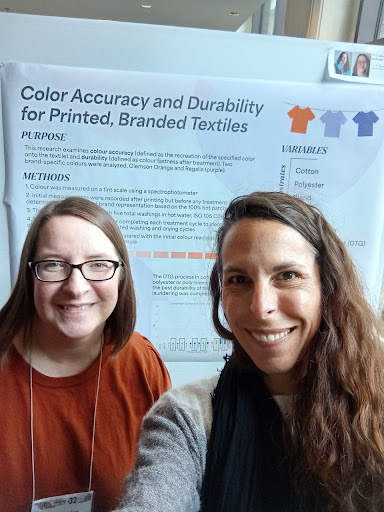
Bridges (left) and Walker (right) attended the CIC Conference in Montreal, Canada last November.
“You can never have too much quality control throughout the process. Everyone who touches the artwork or product from the beginning design to manufacturing to the sales floor has a role in ensuring brand accurate colors,” she said. “This even includes fans! How we launder brand-color products can help the colors stay accurate for longer.
There are definitely some combinations of textiles and processes that will provide more accurate colors both initially and after multiple washes, so manufacturers take that into consideration when developing new products and deciding how to manufacture them.”
At the end of the day, one question remains above all in Walker’s and Bridges’ research: How can the University engage with textile manufacturers, printers and launderers to ensure the brand stays true on apparel and other products?
“This project helped me connect my color work on screen to what the cameras actually record live—the uniforms of the players and the branded fan gear,” Walker said. “The current study attempts to back the solution up further than ColorNet, which fixed the brand colors after they were recorded on camera. Wouldn’t it be great to get the color more closely aligned both on and offscreen to provide a unified, cohesive brand experience?”
Walker has been a faculty fellow at the Robert H. Brooks Sports Science Institute for many years. The proposals she submitted for ‘director’s funding’ were reviewed and approved by RHBSSI leadership, and the Institute was pleased to fund the purchase of the DTG printer and offer financial assistance to participate in the conferences.
“It was a very [special] international conference and the first time either of us had attended it,” Walker said about CIC. “[It] would definitely be a valuable event to visit again and we really appreciate the support which allowed us to go to both CIC and TAGA this academic year.”
Rikishi Smith-Rey, faculty fellow of the Robert H. Brooks Sports Science Institute and assistant professor in Clemson University’s Department of Communication, recently founded Sport PhD, a service that seeks to make academic research centered around sports more accessible for athletes.
Smith-Rey is a former Division I athlete and youth soccer coach with extensive research experience in the sports communication and health communication fields. During her coaching years, she was able to apply her academic research to her youth athletes in a very tangible way.
“To me, translational research is so important,” Smith-Rey said. “If our research is just sitting in journals, it’s not helping those that we mean it for. I get a lot of worth out of seeing my research help.”
Rikishi Smith-Rey, a former Division I athlete, is seeking to connect athletes with research about sports to help them succeed in all walks of life.
Smith-Rey was inspired by a former athlete she coached to form Sport PhD, saying, “I still have not seen something that breaks down the knowledge that’s out there for athletes.”
Despite the extensive research on sports, Smith-Rey feels that this research is not accessible enough to athletes, especially those at the youth level. Areas of sport such as recruiting, sleep, nutrition, psychology and mental health are all topics that Smith-Rey seeks to promote to athletes in an accessible way.
Smith-Rey’s founding of Sport PhD was inspired in part by conversations with Brandon Boatwright, Ph.D., another assistant professor in the communication department at Clemson. Clemson women’s soccer student-athlete Ally Lynch has also worked as an intern with Rey this semester, and the pair have done extensive work on starting Sport PhD from the ground up.
Sport PhD has a primary mission to transform athletes into well-rounded individuals and athletes by equipping them with the knowledge and understanding they need to excel in every facet of their game.
Smith-Rey is excited to continue the work of Sport PhD as she works to widen the reach of the company.
“Sports gave me everything,” Smith-Rey added. “If I can give a little bit back to athletes so that they can understand their sport a little better, that would be super meaningful to me.”
Those interested in following the development of Sport PhD can find them on LinkedIn and Instagram.
With March marking Women’s History Month, the Clemson Athletics and sports science communities have plenty to celebrate, including several women’s varsity programs at the University, one of which is the rowing team.
Competing in its first-ever season in 1999, the Clemson women’s rowing team has an enriched history and has been a staple of Clemson Athletics for two-and-a-half decades.
After Clemson announced it was adding a varsity women’s program in 1997, two years later, the Tigers were on Lake Hartwell practicing and competing. Since then, the team has accomplished great feats and has even climbed all the way to the mountain top in NCAA competition.
One decade after being established as a program, Clemson’s Varsity 4+ team captured Clemson’s first-ever national championship at the NCAA Rowing Championships in Cherry Hill, New Jersey, in 2009.
That championship helped pave the way for future rowing athletes to attend and compete at Clemson University, two of whom are set to speak at the Robert H. Brooks Sports Science Institute’s (RHBSSI) annual lecture series later this month.
An attempt at a world record
In honor of Women’s History Month, RHBSSI is proud to be hosting Jenny D’Anthony and Anna McLean on March 26 in Freeman Hall for its annual lecture series.
The duo will speak about their ongoing preparation for the estimated 60-day trip from Monterey Bay, Calif., to Kauai, Hawaii, as a part of the World’s Toughest Row competition. From taking two-hour sleeping shifts to burning 10,000 calories a day to desalinating ocean water, D’Anthony and McLean will begin their journey across the Pacific on June 8.
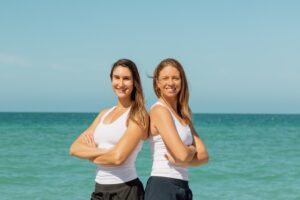
Jenny D’Anthony (left) and Anna McLean (right) are set to row the Pacific Ocean in June but will speak on Clemson University’s campus beforehand in March.
For months, the pair has been training to be the youngest and fastest female athletes to row across the Pacific Ocean. As a part of their mission, D’Anthony and McLean are raising money for the Hear Her Roar campaign, which brings awareness and financial support to Clemson’s female student-athletes.
McLean and D’Anthony were members of Clemson’s rowing team beginning in 2014 until they graduated from Clemson in 2017 and 2018, respectively. In 2022, McLean, from the United Kingdom, and D’Anthony, from the United States, formed United Row.
D’Anthony credits her time at Clemson for the person she is today and her motivation to complete the upcoming row across the Pacific.
“My Clemson experience was nothing short of incredible,” D’Anthony told Iptay. “It transformed me in ways well beyond athletics. Opening my eyes and mind to things I never thought possible. I wear the paw with pride and am grateful for the opportunity to represent and give back to my alma-mater. I am incredibly excited to immerse myself in an all-consuming challenge, where I will test my limits both physically and mentally. There are few, if any, times in life you can entirely devote your attention to one goal. This is one incredible exception.”
As for McLean, her experience as a Tiger already inspired her to row the Atlantic Ocean with her brother in 43 days, 15 hours and 22 minutes in 2019. Now, she’s onto an even bigger challenge with her best friend.
“As a student-athlete at Clemson I was able to meld my love for rowing alongside my passion for business,” McLean told Iptay. “Surrounded by such driven and highly successful students empowered me to ‘never settle’ (but) rather continue striving for more. From mornings on Lake Hartwell to months in the Atlantic Ocean, and now with dreams even bigger, conquering the Pacific, I am beyond grateful for the foundation Clemson laid and humbled to be giving back to my alma mater and supporting future generations to pursue their dreams too.”
Clemson students, faculty, alumni and community members are invited to hear D’Anthony and McLean discuss their upcoming 2,800 nautical-mile rowing competition. The talk with RHBSSI will begin at 6 p.m. EST on March 26 in the Freeman Hall auditorium, followed by a reception with food and refreshments in the Freeman Hall gallery from 7-8 p.m.
Two Robert H. Brooks Sports Science Institute faculty fellows were recently featured on Clemson University Research Foundation’s (CURF’s) social media accounts for their valuable research and work in the Clemson Headgear Impact Performance (CHIP) Laboratory.
John DesJardins, a bioengineering professor, and Greg Batt, a food, nutrition, and packaging sciences associate professor, have worked in the CHIP lab for several years, aiming to assess the faceguards on headgear in sports and improve their effectiveness and safety.
John DesJardins, middle, and Greg Batt, right, work with a student on helmet research in the CHIP laboratory.
Under Batt and DesJardins’ leadership, the CHIP lab offers unique opportunities for students interested in researching the effects of impacts on the head and neck in sports. Last year, the institute spotlighted the work of Bianca Henline, a then-senior bioengineering student who researched the effectiveness of commonly worn bull riding helmets.
The institute is proud to financially support much of the work performed in the CHIP lab as DesJardins and Batt continue to lead a team of innovative students and groundbreaking research.
A view of how Clemson University’s football team’s purple jerseys appeared on televisions around the country.
The Saturday before Thanksgiving in 2018, my family and I settle into our living room to watch the Clemson Tigers play the Duke Blue Devils. I was lucky to be able to fly home a little before the break began and was thrilled to be able to watch the football game with my family. My mom prepared for the occasion, filling the coffee table with snacks usually reserved for our Super Bowl watch party. As the camera pans to the Tigers making their run down the Hill as part of the most exciting 25 seconds in college football, my brother only makes one comment: “Oh, Duke is running down the Hill!”
Emma Mayes, a Clemson student on Dr. Walker’s research team
Of course, it wasn’t Duke. There is no way an opponent would run down the Hill at a Clemson home game. But lo and behold, it appeared that way. Clemson’s purple jerseys donned to celebrate Clemson’s “Purple Out” football game in honor of its Military Appreciation Day, appeared navy blue on the screen, a similar shade to Duke’s team colors. And it wasn’t just our TV; Clemson looked to be wearing navy blue across broadcast footage and television screens. My dad and brother had a field day, cracking jokes about how Duke was playing themselves in Death Valley.
This is not a problem limited to Clemson. This brand color discrepancy is also apparent with other teams when they play, such as the Dallas Cowboys, where their silver pants appeared green during a broadcasted game. And what is a sports team without their team colors? Unfortunately, trying to correct the brand colors means all the colors in the frame would suffer. Environmental lighting and post-production color adjustments affect the entire frame of the broadcast feed. So, while the brand color could be adjusted to appear correct, the rest of the frame would be adjusted as well, ruining other colors at the expense of fixing one.
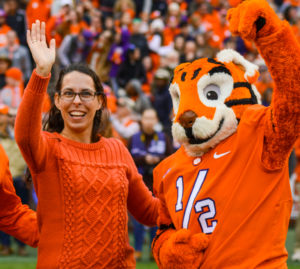
Dr. Erica Walker, a Clemson University graphic communications professor
Enter Dr. Erica Walker, a Graphic Communications professor at Clemson University, who brought together a team that asked whether the frame could be adjusted so these colors appear to brand specification, but not at the cost of the rest of the frame being adjusted as well. She partnered with the Watson in the Watt Creative Inquiry run by Dr. Hudson Smith and Dr. Carl Ehrett to work with undergraduate students to develop an AI-based solution. I ended up being one of those undergraduate students. I was thrilled to get involved with research about AI but was even more excited by this problem we would be solving, remembering that this was something my own family had commented on weeks before.
Once a week, as the ColorNet research team settles into their meeting room in the Watt Family Innovation Center and exchanges what their week looks like, Dr. Walker comes into the team room with a big smile on her face. “Hey y’all, how’s it going?” she says as she sets down her bag. It always starts the weekly meetings on a good note and the team can’t help but be excited about what they will accomplish that day.
And accomplish great things we did. With the efforts of Dr. Walker, ColorNet was developed, a patent-pending artificial intelligence (AI) technology that takes a live video feed and adjusts it frame-by-frame, pixel-by-pixel, in real-time to ensure brand color accuracy. This convolutional neural network, a type of machine learning model, was trained on numerous clips from Clemson’s football games that were manually color corrected using Adobe Premiere Pro. ColorNet learns what areas of the frame are considered brand colors and how to shift those pixels so that they appear to visually match Clemson’s brand colors without losing the distinctions between highlights and shadows and without changing the non-brand color areas.
Michelle Mayer, a Clemson student on Dr. Walker’s research team
After training the model to color correct Clemson’s orange, Pantone 165, it was time to test it. All testing took place in Littlejohn Coliseum, allowing the technology to be tested on a standard jumbotron and within the current infrastructure of a live event. The alpha test involved streaming one of Clemson’s home football games into Littlejohn and onto the jumbotron to determine if ColorNet would catch the various spots of Clemson orange in each frame and adjust these areas to be the recognizable color fans know and love. With some adjustments to the program and support provided via pizza from Dr. Walker, the alpha test proved to be a success.
The beta test took place during a live women’s basketball game, where we ran ColorNet on the jumbotron feed during the basketball game in front of a live audience of fans. The goal was to determine if ColorNet was truly targeting areas of brand color and was able to be extended to other sports or broadcast arenas. The technology proved itself once again! It correctly picked out the women’s jerseys and the splashes of Clemson orange found on the spectators in the arena. I remember walking the arena with Dr. Walker, both of us looking up at the jumbotron in wonder at what we had accomplished with ColorNet.
Our work is by no means over. The goal is to make it where we can color correct any team’s colors, not just Clemson’s. While we were able to expand ColorNet’s capabilities so it can also color correct Clemson purple along with orange, the goal is to generalize the application of the model so that it can color correct to a given color based on user input. Are we playing Alabama? Let’s correct for Crimson Tide red as well. LSU? Let’s adjust for their purple and gold. While COVID-19 makes it hard to meet and collaborate in person towards this development, the meetings are still opened the same. And the same excitement for where ColorNet will go next is tangible even through the screen, thanks to the passion of Dr. Walker.