Dr. Erica Walker uploads the RHBSSI logo to the dye sublimation printer.
By Katie Gerbasich
Walking through downtown Clemson, it’s hard to miss the sea of orange and purple. Hundreds of t-shirt designs line storefronts using different colors, fabrics, and printing techniques. Still, fans expect one thing to remain consistent: they should be able to recognize their team instantly by color alone.
Drs. Erica Walker and Amanda Bridges in Clemson’s Department of Graphic Communications have spent the past several years studying exactly that.
“Color is a vital part of a brand’s identity, and printing consistent, durable, and accurate brand colors across different materials can be challenging for manufacturers,” Walker said.
After receiving international recognition for their Clemson-branded textile research, Walker and Bridges expanded their work to include all ACC team colors. The study evaluates 64 brand colors across multiple textile types and printing methods, including dye sublimation and direct-to-film (DTF) printing, to better understand how color accuracy, durability, and material interact in athletic apparel.
“Brand colors matter, and fans recognize when their team’s colors are not representative,” Walker said.
To test this, the research compared two printing processes, dye sublimation and direct-to-film printing, across cotton, polyester, and blended fabrics. By analyzing how each method performs on different materials, the study highlights the challenges of maintaining color accuracy at scale.
The dye-sublimation printer funded by RHBSSI is located in Dr. Walker’s lab in Godfrey Hall.To begin the printing process, the RHBSSI logo is printed onto transfer paper.The paper is placed on the garment to then be heat-sealed. Finally, the film gets peeled off the t-shirt to unveil the finished garment.
Walker, a faculty fellow of Clemson’s Robert H. Brooks Sports Science Institute, has received support from the Institute throughout this work, including funding for equipment and conference participation.
The findings show that the printing method, textile type, and color family play significant roles in color accuracy. Direct-to-film printing consistently produced more accurate color results overall, while dye sublimation performed best on 100% polyester fabrics. Across both processes, some color families proved easier to reproduce than others. Neutral tones such as black and gray, along with yellow-gold hues, showed higher accuracy across processes and textile types, whereas more saturated colors posed greater challenges.
As athletic departments continue to expand the reach and value of their brands, maintaining color consistency becomes more than simply a design challenge. It becomes part of how student-athletes and fans identify with, represent, and connect to their teams.
“Ensuring that brand colors are seen accurately across mediums, processes, and materials,” Walker said, remains a central goal of the research.
By examining how printing methods and fabrics influence color accuracy, the study offers manufacturers valuable insights for delivering consistent, high-quality products. So the next time you buy a Clemson t-shirt, take a second look to see if it is actually Clemson Orange and Regalia purple.
Anthony Marino works in the Clemson Headgear Impact Performance (CHIP) Lab in Newman Hall, placing a helmet on the Hybrid III.
By Katie Gerbasich
“It’s unethical to bring people into a lab and hit them real hard in the head,” Anthony Marino likes to joke.
Fortunately for researchers, crash test dummies can take the hit.
A recent Clemson Ph.D. graduate from the Department of Bioengineering, Marino focused his dissertation on examining the effectiveness of using the Hybrid III, a crash test dummy commonly used in football helmet testing, to replicate the hit a human would take on the field.
The CHIP Lab has made major strides in helmet safety. Co-directed by Dr. John DesJardins, professor of bioengineering and director of the Robert H. Brooks Sports Science Institute (RHBSSI), and Dr. Greg Batt, a professor in the Department of Food, Nutrition and Packaging Sciences and a faculty fellow at RHBSSI, the lab focuses on improving how protective headgear is tested and developed, particularly for high-impact sports like football. The goal is to bring greater accuracy to helmet testing systems to better protect athletes from concussions and traumatic brain injuries.
How human-like is the Hybrid III neckform?
Anthony Marino successfully defended his thesis on April 3, 2026.
Marino became interested in studying the neck component of the Hybrid III because it was designed to simulate a human response to a frontal car crash, not the multi-directional impacts seen in sports.
“I saw the opportunity to look at the neck component because I thought that this crash test dummy neck that’s supposed to represent a human response to a frontal crash in a car was going to be a little different than a human response to a football impact.”
To fill the gap left by the lack of active human data, Marino used a computational model in OpenSim to replicate the lab testing.
Though the Hybrid III is commonly used in the field for helmet impact testing, Marino’s research found that, to match the dummy’s performance in controlled low-speed movements, such as neck-bending tests, a comparable human would have to be about 300% stronger.
During higher-speed impact testing, Marino found even larger differences. In one scenario, the computational model required a 1,000% increase in strength to replicate the Hybrid III’s response. Even with those increases, Marino said the computational human model could not fully replicate some of the Hybrid III’s injury metrics.
“You kind of had to create a superhuman to match our crash test dummy,” Marino said.
The findings suggest the Hybrid III may overestimate some injury metrics because its neck responds differently than a human neck, but the dummy’s durability and repeatability are why it remains the industry standard in helmet testing.
The why behind the work
Anthony Marino presents his research at the American Society of Biomechanics (ASB) Annual Conference in Pittsburgh, Pennsylvania, in September 2025.
Marino’s work provides insight into the limitations of the Hybrid III, laying the groundwork for more realistic helmet safety testing in the future.
Discovering tangible impacts is what motivates Marino. During his undergraduate studies in mechanical engineering at Auburn University, a professor introduced him to biomechanics and the idea that engineering principles could be applied to the human body.
“It’s just fascinating because the body really is a perfect machine when it’s working well, and we’re trying so hard to replicate it in other machines,” Marino said. “Then being able to see that you can directly help people, whether it’s injury prevention or rehabilitation and give people a better quality of life through engineering, completely flipped my career path.”
While the Hybrid III remains the industry standard, Marino’s findings raise important questions about how closely current testing systems reflect real human movement.
“The dummy isn’t humanlike at all, but it’s giving us data that’s protecting the player so far,” Marino said. “The device is durable and repeatable, which is the real reason it’s adopted so widely in this industry.”
A group of Bioengineering students stands with RHBSSI Director, John DesJardins, and faculty fellow Reed Gurchiek at the American Society of Biomechanics Annual Conference in Pittsburgh, Pennsylvania.
By Katie Gerbasich
As the fiscal year wraps up, we are looking back at the Clemson students the Robert H. Brooks Sports Science Institute (RHBSSI) supported through travel grants this year. Spanning three departments, this funding allowed students to attend sports conferences, competitions and experiential learning events that furthered their education and professional development.
Department of Bioengineering
In August, Bianca Henline, Sydney Savage and Abbie Underwood attended the American Society of Biomechanics (ASB) Annual Conference in Pittsburgh, Pennsylvania.
Bianca Henline also recieved an ASB Student Travel Award to support the presentation of her research.
Henline presented her thesis research, which focused on the development and application of a method for simulating commotio cordis-inducing impacts to evaluate the effectiveness of football chest protective equipment. The presentation represented the culmination of approximately 2.5 years of dedicated research with the Clemson Impact Performance of Sports Protective Equipment Creative Inquiry team, which she led.
Her most significant takeaway from the conference was learning from companies in the forensic industry.
“Before attending the conference, I had committed to a position in the forensic field, and engaging with the research and findings of others provided insight into potential applications within my own professional responsibilities,” Henline said.
Later in October, senior Bioengineering student Chloe Izant attended the Biomedical Engineering Society Conference in San Diego, California.
Department of Parks, Recreation and Tourism Management
In February, Enzo Ferriera attended the Commission on Sport Management Accreditation (COSMA) Conference in St. Augustine, Florida, where he presented research on behalf of a group of fellow Ph.D. students.
Enzo Ferriera stands before his presentation at COSMA.
Their project, Navigating Research Practices as Graduate Sport Management Students: The Issue of Miscitations in the Sport Literature, explored their experiences conducting rigorous academic research and highlighted the issues of miscitation encountered throughout the research process.
The presentation examined possible reasons for the prevalence of miscitations in research practices and literature. It offered recommendations for graduate students and faculty to strengthen research practices in sport and recreation management. The project also served as a stepping stone toward publication, as the group prepares the final version of the manuscript to increase rigor across the field.
“The RHBSSI has always been supportive of our group’s scholarship and professional development through travel grants, events on campus, and partnerships with our faculty advisors,” Ferriera said. “These avenues have certainly paved the way for us to succeed in academia and our future goals in the sport management world, as well as making it possible for our research initiatives to reach the audiences that they need so that they can create an impact on the field right away.”
Benjamin Hinckfoot presents with faculty fellow, Ashlyn Hardie, at NASSM.
In May, Benjamin Hinckfoot and Innhoo Baek attended the North American Society for Sport Management Conference (NASSM) in San Juan, Puerto Rico. Hinckfoot presented research titled Assessing Holistic Outcomes of a Short-Term Service Abroad for Intercollegiate Athletes.
Alongside Department of Automotive Engineering student, Hadley Smith, PRTM students Jenny Pinion, Emma Shurley, and George Rieger participated in a case-study competition at the Women in Motorsports Mobil 1 event in Indianapolis, Indiana, where they placed second and received a $1,500 award.
Felipe Tobar, Emma Shurley, and Jenny Pinion pose with their second-place award.
After advancing in the Lap 1 pool, which comprised 21 universities from the United States, Canada, and the United Kingdom, the team presented to five industry leaders against five other universities at the Dallara Convention Center.
Their final-lap challenge involved developing an idea for a corporation already involved in, or planning to enter, the motorsports industry to engage the rapidly growing global community of female fans, a demographic characterized by high emotional investment and purchasing power.
The group of students presents to a panel of judges as part of the Women with Drive competition.
Faculty fellows Felipe Tobar and Ashlyn Hardie served as co-advisors for the group.
“Working with these four bright students has been a joy and a testament to the fact that when we give them the tools and the opportunity to pursue their dreams, they will shine,” Tobar said.
Department of Communication
Brandon Boatwright stands with his students inside the new Emory Healthcare Studio.
Students in faculty fellow Brandon Boatwright’s COMM Sport and Social Media Class traveled to Children’s Healthcare of Atlanta Training Ground, where they watched a practice and received an exclusive tour of the new Emory Healthcare Studio, a first-of-its-kind media operations facility. The class spent the semester developing social media strategies for Atlanta United FC.
The trip allowed students to connect with their client while exploring potential careers in the sports industry.
“Seeing the new studio was truly a testament to how social media is changing the sports industry,” Katie Gerbasich, a student who attended the trip, said. “The content team at Atlanta United was able to advocate for their importance and get major funding for state-of-the-art equipment.”
Overall, the Institute was thrilled to financially support seven individual students and two student groups to attend sports conferences and events in fiscal year 2026, which began July 1, 2025 and ends June 30, 2026.
Click here to learn more about the Institute’s Clemson Student Travel Grant program. Applications are accepted on a rolling basis, here.
The Robert H. Brooks Sports Science Institute is excited to welcome two new Clemson faculty members to its cohort of Faculty Fellows.
Brook Russell, Ph.D.
Associate Professor of Applied Statistics, School of Mathematical and Statistical Sciences
Dr. Russell is an associate professor in the School of Mathematical and Statistical Sciences (SMSS), with a portion of his research and mentoring activities focusing in sports analytics and human performance. He has collaborated with Paul Hogan, Senior Assistant Football Strength and Conditioning Coach at Clemson University, to understand the extreme athleticism of football players. This collaboration has resulted in the manuscript Analyzing dependence matrices to investigate relationships between National Football League Combine event performances, published in the Journal of Quantitative Analysis in Sports in 2018. In this work, they analyzed National Football League Combine event performances using both extreme-value and non-extremes-based approaches and explored how these approaches can inform the evaluation of NFL prospects. This research was then presented at the New England Symposium on Statistics in Sports in October 2021. Dr. Russell aims to further examine the performance characteristics of elite football prospects and contribute to the growing body of research on sport performance metrics and talent evaluation.
He is also currently partnering with the Institute’s Dan Duncan Professor of Sports Marketing, Dr. Angeline Scheinbaum, to understand how sponsorships of local sporting events impact corporate community involvement.
Divya Srinivasan, Ph.D., CPE
McQueen Quattlebaum Professor of Industrial Engineering and Bioengineering
Dr. Srinivasan is the McQueen Quattlebaum Professor of Industrial Engineering and Bioengineering, and a Faculty Scholar in the Clemson University School of Health Research. She received her Ph.D. from the University of Michigan, Ann Arbor, in 2010. She worked as an EU Marie Curie Postdoctoral Fellow at the Center for Musculoskeletal Research in Sweden. She joined the Department of Industrial and Systems Engineering at Virginia Tech in 2016 and served as an assistant and associate professor there prior to joining Clemson in 2021. She currently directs the Biomechanics, Ergonomics, Safety and Training laboratories at Clemson University. She is also the director of the Clemson SHERPA Center, which focuses on human performance and worker safety/health. She has over two decades of research experience in human performance assessments, human motion modeling (including digital human modeling), injury prevention, and collaborative and wearable robotics, including exoskeletons to improve performance, health, and safety. Her research program has been funded by multiple grants from the NSF, NIOSH, NIH, and industry sponsors totaling nearly $28 million in the last 10 years, resulting in over 85 peer-reviewed journal publications and almost 200 international conference presentations to date.
This summer, the Robert H. Brooks Sports Science Institute is excited to welcome back two former interns to the team. Bringing a wide range of experience in communication and event planning, the pair will help lead preparations for the third-annual RECESS symposium while continuing to support the Institute’s mission.
Katie Gerbasich – Communications Lead
Katie Gerbasich graduated this spring from Clemson with a degree in Sports Communication. She has worked with the Institute for the previous three semesters as a writer and editor. Gerbasich hopes to pursue a master’s degree in sports analytics.
“I truly love working with this team,” Gerbasich said. “This new role will be an exciting oppurtunity to continue growing professionally.”
Lucy Hart – Events Lead
Lucy Hart recently graduated from Clemson in December with a degree in Sports Management. Since then, Hart has been working as a People Operations Intern for the Savannah Bananas on the Banana Ball World Tour, gaining hands-on experience in sports operations and event management.
“I can’t wait to come back to RHBSSI as the Events Lead once again,” Hart said. “I am excited to be back in Clemson to complete my master’s in public administration and jump back into my work with the Institute.”
As the Spring semester wraps up, interns from the Robert H. Brooks Sports Science Institute are looking back on their experiences that defined their time with the program. This semester marked the Institute’s largest intern cohort to date, including two Beyond the Game student-athlete interns. From hands-on work in content creation to collaborative storytelling, each intern contributed in unique ways while also beginning to shape their future plans.
Evy Lane – Communications Lead
My favorite moment/memory was interviewing the athletes at the Watt Performance Center and seeing all the different features.
The most valuable thing I’ve learned is that if I am not 100% confident in my skills on a certain task, asking the right people for help and continuing to learn and grow in my proficiency, I can do things I never thought I could.
This summer, I will be interning with The Variable in Winston-Salem, NC!
Sofia Cordi – Events Lead
My favorite memory this semester was seeing everything come together at our RHBSSI events after all of the behind-the-scenes planning. As Events Lead, I spent a lot of time coordinating details, organizing sign-ups, communicating with the team, and helping make sure each event ran smoothly, so it was really rewarding to see people engage with our events in person. I especially enjoyed being able to represent the Robert H. Brooks Sports Science Institute on campus and help create opportunities for students to connect with sports science in a fun and approachable way.
The most valuable thing I learned this semester was how much strong communication and organization matter when working with a team. Event planning involves so many moving parts, and this role helped me become more confident in taking initiative, solving problems, and communicating professionally with different people across campus. I also learned how important it is to stay flexible because plans can change quickly, and being able to adjust while keeping a positive attitude makes a big difference.
After graduation, I will be starting a full-time role with Total Quality Logistics in Greenville, SC. I’m excited to begin my career in recruiting and continue building on the communication, relationship-building, and leadership skills I developed through this internship. Long term, I hope to grow in the HR/recruiting field and use those skills to help create positive workplace experiences for others.
Katie Gerbasich – Writer/Editor
My favorite memory this semester was working the CUPara Soccer game. It was so inspiring to see all the work that went into the event pay off by creating an incredible experience for those kids. The energy was amazing all day. It was truly something I’ll never forget, and I was so grateful to be a part of it.
The most valuable thing I’ve learned this semester is to embrace every opportunity. This semester, I took on tasks I never thought possible, like redesigning our website. Projects like this have truly expanded my professional skill set, making me more confident in myself.
After graduation, I will be staying on with RHBSSI over the summer, then looking to start graduate school at Clemson.
Nathan Inman – Writer/Editor
The whole semester has really been my favorite memory. Getting to take charge and create an entirely new weekly motorsports series has been incredibly fun and rewarding, and it’s something I never even thought I’d be doing when I first came into the position. From interviewing countless students to traveling for hours to shoot photos, it has truly been an amazing journey!
The most valuable thing I’ve learned is you can’t succeed if you don’t try. This semester has taken a ton of effort, but it’s been completely worth it. I’ve gotten to do things I never expected, and it’s all because I had to take the initiative and put in the work.
Post-grad, I hope to work in motorsports in some capacity, whether on the business/marketing side or in journalism/broadcasting. However, that’s still a year away, and in the meantime, I’m doing everything I can to continue gaining experience. This summer I’ll be interning with The Seneca Journal, and next semester I’ll be right back here with the Institute! This semester has been such a blast, and I can’t wait to see what the next one has in store!
Katie Colton – Graphic Designer
My favorite memory of the semester was getting to hang out and meet all of the interns at the tabling event in April.
The most valuable thing I have learned this semester is being able to improve my social media graphic design skills. Also, gaining more practice and experience with Clemson’s branding guidelines for creating graphics was very valuable.
After I graduate in December, I want to work in marketing or graphic design in New York.
To round out this semester’s cohort, RHBSSI also welcomed two Beyond the Game student-athlete interns, who balanced their contributions to the Institute alongside the demands of their sport and academics. Their presence added a valuable perspective to the team and further highlighted the Institute’s commitment to supporting student-athletes in exploring opportunities beyond competition. As the semester comes to a close, the impact of this diverse group of interns will continue to shape the Institute.
Head Coach, Felipe Tobar, and Clemson Paralympic Soccer players gather at Riggs Field.
For the second year in a row, Clemson Paralympic Soccer went head-to-head in an official match against the CP (Cerebral Palsy) Soccer All-Stars at Clemson University’s Historic Riggs Field on Saturday, April 25, 2026. This event marks the second time in U.S. college history that two Cerebral Palsy soccer teams have competed against each other in a university stadium.
The match was close, with the score tied 1-1 for most of the game. But in the end, the Clemson team scored an additional goal in the second half to secure a victory.
Check out this instant replay of the game-winning goal, captured by Drew Landon Media, by Player of the Match, Shae Hammond.
Post-event surveys showed that, at the start, around 43% of attendees were unaware of the sport and, by the end of the match, over 60% of attendees’ perceptions of Paralympic athletes had positively changed. 88% of fans expressed an interest in supporting adaptive sports in the future.
“Clemson University is inarguably a trailblazer in the world of adaptive soccer,” head coach and faculty fellow of the Institute, Felipe Tobar, said.
Player of the Match, Shea Hammond, and RHBSSI Director, John DesJardins, pose with the game-winning trophy after the match.
The team at the Robert H. Brooks Sports Science Institute (RHBSSI) thanks Clemson Paralympic Soccer for involving the Institute in its activities as a sponsor.
“So much positive energy and goodwill,” RHBSSI Director John DesJardins said. “I’m so happy for the program, faculty, staff and students that it supports.”
To learn more about Clemson Paralympic Soccer within the Department of Parks, Recreation and Tourism Management at Clemson, click here.
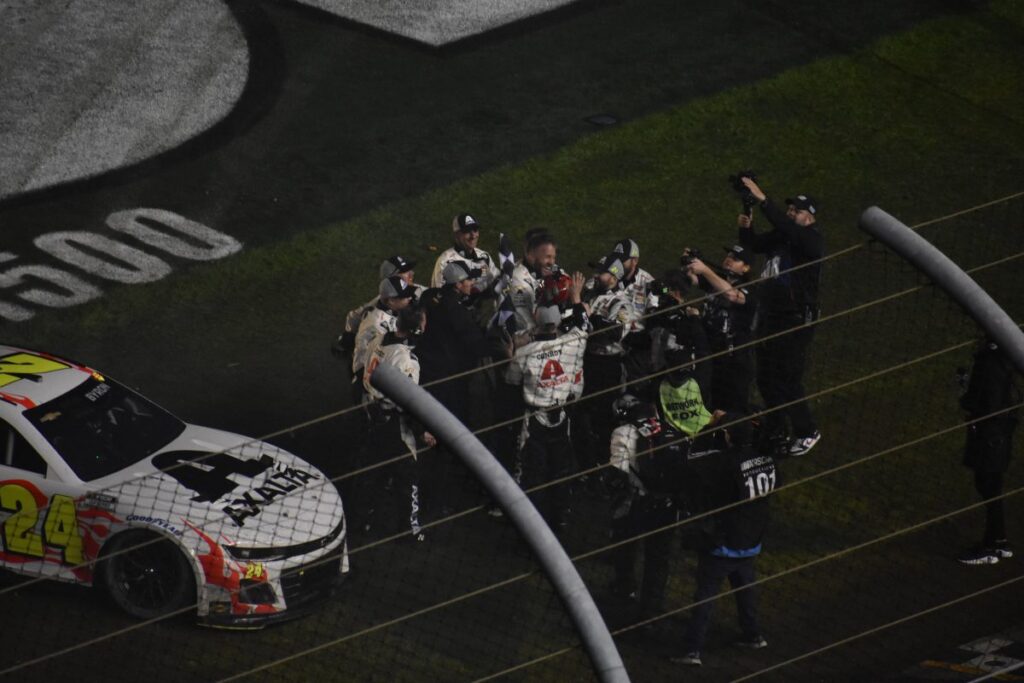
Today, RHBSSI’s first semester of the all-new Motorsports Monday is coming to an end. To wrap up the first iteration of the series, the Institute provides a synopsis of the history of motorsports at Clemson and a glimpse into what the future may look like.
RHBSSI Legacy Professor, Dr. Rob Prucka
To learn more about the topic, RHBSSI sat down with its endowed Alan Kulwicki Professor of Motorsports Engineering, Dr. Rob Prucka, from the Department of Automotive Engineering.
Prucka arrived at Clemson in 2008 as a professor in automotive engineering. Since then, he has moved through the department and now sits as the interim chair. Prior to coming to Clemson, Prucka worked with the Ford Motor Company and was a consultant for the manufacturing of racing engines. Right before he began his professorship, Prucka was offered a job in the racing industry. However, Prucka turned down that offer, believing there was something bigger in the automotive program at Clemson. Nearly 20 years later, it’s safe to say that assumption was correct.
Throughout his time with the department, he has helped lead students participating in Deep Orange, a vehicle prototype program that gives graduate students the opportunity to build a vehicle of their own. Over the course of 16 projects thus far, two have specifically involved motorsports. The first of those two projects was Deep Orange 9, which was completed in 2018 and was a Next-Generation Rallycross racecar built in partnership with Honda. This project was particularly impactful for Prucka, saying it “totally changed my career path.”
Deep Orange 9
“The director of Deep Orange left,” he added, “and I just stepped in and said, ‘either this program goes away, or I run it,’ and so I just ran it.”
Just two years later, another racecar model came out of the Deep Orange program. In 2020, graduate students completed the build of Deep Orange 12, a completely autonomous IndyCar. When the car was completed, it was taken to the historic Indianapolis Motor Speedway, home of the Indy 500, to be put to the test. Prucka mentioned that, when the car sailed off into turn 1, he wasn’t fully certain whether the car would survive.
“We weren’t really sure the whole time we were designing that car if it was ever gonna work,” he said, “because we know all the engineering and all the numbers are fine, but we weren’t sure when that thing really went into a corner at high speed, the steering would actually work.”
So, when the car went into the first turn at 140 miles per hour, Prucka braced for the worst. Instead, the car made it through completely fine, and the hard work of all the students involved in the project had paid off.
“I almost fell to the ground,” he said. “I was just so shocked, you know, all these calculations we did worked. That was just overwhelming, because it was at such a famous place, and me as an engine person, like, ‘here’s this engine we helped design,’ and it’s blasting around this track.”
With all that has been done over the last several years, it’s clear that motorsports are rooted deep in the heart of Clemson. So, what does the future look like for the years to come?
In recent years, the automotive engineering program has launched the careers of many students, as they have gone on to land jobs in motorsports shortly after graduation. Notable places past students have landed include the Cadillac Formula 1 team, Roush Yates Engines, and other various F1 and NASCAR roles. Prucka says the goal for the future is to keep the program evolving with the rest of the world, so that it can continue to produce results for its students.
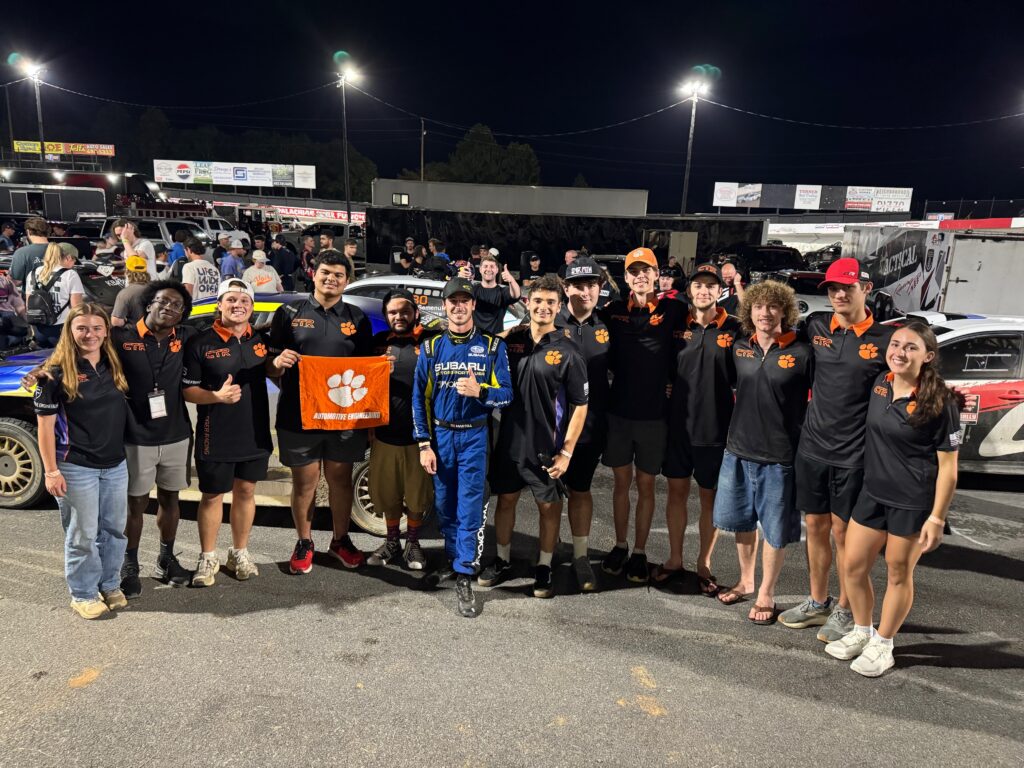
Hadley Smith on the CTR team radio as race engineer.
“I just look forward to working with students and truly trying to build this new generation of talent that needs to be out there in the industry, because they need it, right?” Prucka said. “And so, there’s a great opportunity, the industry wants to help.”
Prucka added that this all goes back to that decision he made in 2008 when he turned down the racing world and came to Clemson.
“To me, that’s the best part,” he added. “I mean, that’s why I’m in the academic world and not out in the racing world, is that I really just enjoy working with students. I feel like it’s a good fit for what I like to do.”
As Dr. Prucka continues to lead the future of motorsports at Clemson forward, he hopes he can continue to provide these students with all the opportunities their hearts desire. And if the past is any indication, those students will be in good hands.
Track and field has been a part of my life for as long as I can remember. Growing up, I watched my older sister and brother compete in high school while I was still in primary school. I didn’t fully understand everything about the sport at the time, but I knew one thing for sure, I wanted to be just like them. That early exposure planted a seed that would eventually grow into a passion and a dream. That dream became even more real when I watched my sister make the bold decision to move to another country to pursue her athletic career. Seeing her succeed showed me what was possible with hard work, sacrifice, and belief.
When it came time to choose where I wanted to continue both my academic and athletic journey, Clemson University stood out. I was fortunate to have multiple scholarship opportunities, but Clemson felt different. From the moment I stepped on campus during my recruiting visit, it felt like home. The energy of the town, the support from the people, and the overall environment made it an easy decision. Looking back now, I can confidently say it was the right choice. Clemson has exceeded my expectations in every way.
Sports have shaped my life in ways I never imagined. Moving to another country to pursue track and field was not easy, but it taught me resilience and independence. More than anything, this sport has taught me discipline. Track and field is one of the most honest sports there is—you get out exactly what you put in. There are no shortcuts, no hiding from the work. Every practice, every rep, every race reflects your effort. That honesty has helped me grow, not just as an athlete, but as a person. It has taught me lessons that go far beyond the track: consistency, accountability, and the ability to push through challenges even when things get tough.
My time at Clemson has been filled with unforgettable moments. One of the highlights of my journey so far has been earning a spot on my national team for the 2025 Pan American U23 Games. Representing my country is something I take great pride in, and it’s a moment I will never forget. Another major accomplishment has been helping my team win the ACC Championship title for the second year in a row. Achievements like these make all the hard work worth it.
Looking ahead, I have big goals both academically and athletically. I plan to complete my bachelor’s degree in psychology with a minor in business management. Beyond college, I hope to continue competing at the professional level in track and field. At the same time, I’m also interested in building a career in sales, particularly in real estate. No matter which path I take, I know the lessons I’ve learned through sports will continue to guide me toward success.
As the semester draws to a close, Clemson Formula SAE remains busy, polishing the final touches on the team’s Tiger 26 race car. With less than a month until the car takes to the track for the main competition at Michigan International Speedway, the build is officially in its final stages.
FSAE’s engine dyno, where the team maximizes the output of the car’s engine.
RHBSSI sat down with Alex Daichendt, a senior electrical engineering major and FSAE’s chief engineer, to discuss the progress made this semester and the final preparations being made before the team makes the long trek up north next month.
“We ended up with a rolling car right at the beginning of spring break,” Daichendt said. “So, it was a really, really big accomplishment for us.”
With the base of the car completed prior to the break, the team was left to focus on putting together the mechanical and electrical components. With those additions completed, the team was able to begin testing the car and ensure it was up to snuff.
Following testing, the team went back to work, focusing on potential areas for improvement to make changes.
“There’s still plenty of work to do in regards to the suspension tuning,” Daichendt added. “Hopefully, we’re getting the full aero package on the car this week for this weekend for testing, so we can get everything dialed in and what we need to be.”
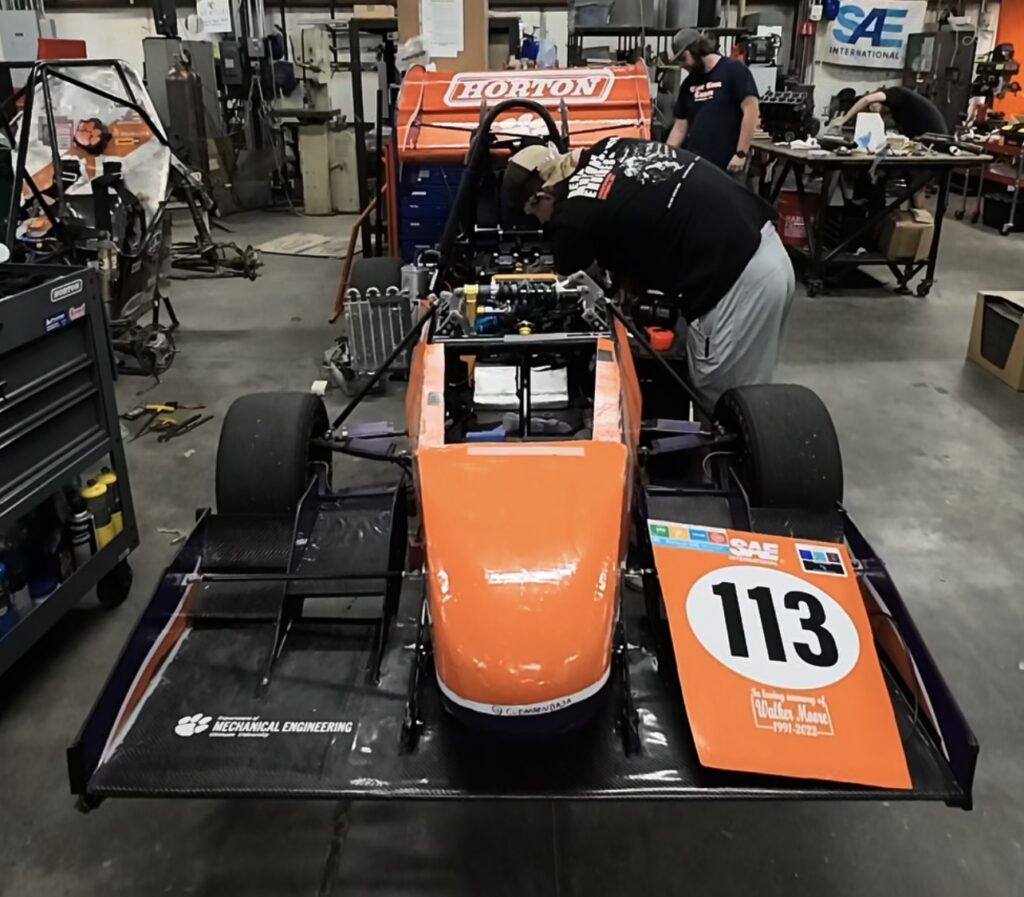
FSAE’s Tiger 26 is nearing completion, with the wrap of the team’s livery soon to be added.
With the build nearly completely put together, the finishing touches on the car will include applying the wrap of the car’s livery. Daichendt mentioned that the wrap will be in the team’s hands within the next two weeks, meaning it’ll be the end of finals before Tiger 26 reaches its final form. Daichendt added that isn’t a bad thing, though.
“It’ll really go on right before competition, which is completely fine with us,” Daichendt said about the wrap. “You know, less rock chips makes it look nice and pretty going into competition.”
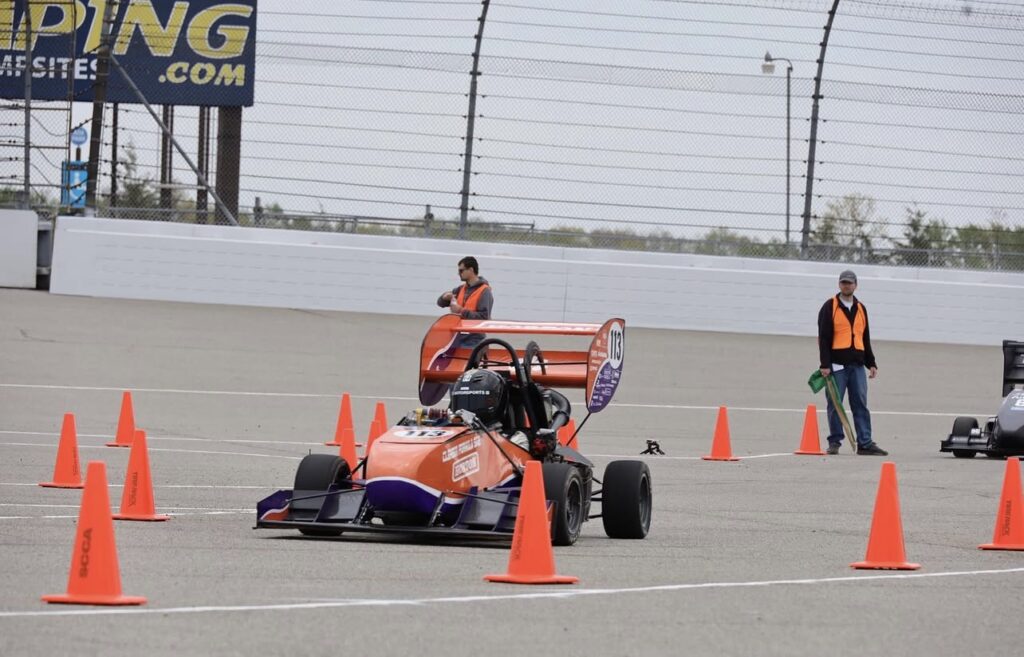
With the car nearly complete, the team is focused on May 13, when Tiger 26 will hit the track at Michigan International Speedway for a multi-day competition against roughly 100 other schools from the United States and around the globe.