The Clemson University community is invited to attend a landmark celebration of inclusive sport at the Clemson Paralympic Soccer Fest, to be held at the historic Riggs Field on April 25th. This event marks only the second time in U.S. college history that two Cerebral Palsy soccer teams have competed against each other in a university stadium.
Organized by the Clemson University Paralympic Soccer Program and presented by the Robert H. Brooks Sports Science Institute, the event promises a full morning of engagement, inclusion, and community celebration.
The day will begin with a soccer clinic for children and youth with physical and intellectual disabilities from 8:00 AM to 9:20 AM, providing participants with an opportunity to learn, play, and connect in an empowering environment.
Following the clinic, fans and families can enjoy a wide range of interactive “soccer stations” leading up to kickoff, including:
Four-square fun
Soccer golf challenges
Immersive virtual reality soccer experiences
Jumbotron games
A themed photo station
Face painting
The featured match between Clemson University Paralympic Soccer and Cerebral Palsy All Stars will kick off at 11:00 AM, showcasing elite Cerebral Palsy soccer talent in a historic setting that continues Clemson’s tradition of leadership in sport and inclusion.
At halftime, attendees will be entertained by the Clemson Rally Cats, who will perform, engage with fans, and lead interactive experiences. Spectators will also enjoy giveaways and have the chance to participate in two public halftime games.
This event represents a unique opportunity for the Clemson community to support adaptive athletics, celebrate diversity in sport, and be part of a historic moment in U.S. collegiate soccer.
Admission is free and open to the public.
For more information, please contact the Clemson University Paralympic Soccer Program at @cuparasoccer on Instagram. The Clemson University Paralympic Soccer Program is part of the Department of Parks, Recreation and Tourism Management at the College of Behavioral, Social, and Health Sciences.
Dr. Hardie sits with cohort members and South African leaders during the final Networking Day, where participants connected with key stakeholders in the sport-for-development space.
By Katie Gerbasich
In March, Dr. Ashlyn Hardie, Institute fellow from the Department of Parks, Recreation and Tourism Management, co-led the second cohort of Starting Block Accelerator in Cape Town, South Africa, with Dr. Per Svensson from Louisiana State University. This initiative is the first of its kind, designed to address the research-practice gap in cross-sector work while advancing research in the Sport for Development and Peace (SDP) sector.
Hardie describes this work in the SDP sector as “the intentional use of sport, recreation, play, and physical activity as a tool to achieve broader societal-level development goals. Often, those programmatic goals align with the United Nations Sustainable Development Goals (known as the UN SDGs), and sport offers an alternative platform to tackle community issues.”
According to the UN General Assembly and the UN Action Plan governing bodies, sport is viewed as a powerful tool for addressing key issues such as social integration, physical health and wellness, gender equality, peacebuilding, crime prevention and the development of sustainable communities.
The Starting Block Accelerator is an initiative designed and implemented by Hardie and colleagues as a week-long capacity-building business accelerator program for sport-based nonprofits. Five leaders from organizations worldwide were invited to participate, each working directly with beneficiaries in their countries to tackle issues aligned with the UN SDGs.
Dr. Hardie leads the cohort through a research-based curriculum, equipping participants with practical insights to strengthen their organizations.
“We try very intentionally to have a really diverse group of participants in each cohort because we want them to speak to their experience with different types of funders, recreational tools and their experience navigating challenges in different countries on different continents, so they are not just learning from us but also from each other,” Hardie said.
The Robert H. Brooks Sports Science Institute provided the initial seed funding in 2024 for the first-ever Starting Block Accelerator in London, England, enabling the team to gather preliminary data on the program’s effectiveness and secure support for this second round in Cape Town, South Africa.
This year’s cohort included organizations that utilize a variety of sports, including soccer, ultimate frisbee, mountain biking, wrestling and rugby, with participants representing those organizations from Brazil, Botswana, South Africa, the Czech Republic and India. Two of the five participants were female founders. One was recently named Vice President of the African Women in Sports Initiative, and the other was a former Brazilian Olympic wrestler.
The first three days of the Accelerator are curriculum-based, drawing on decades of sport-for-development research to create evidence-based pathways for management practices. For several reasons, research is challenging for practitioners to access and use. The objective of the Starting Block Accelerator is to support organizations through a research-backed curriculum that debunks misconceptions, provides networking opportunities and creates a collaborative learning environment.
“In the nonprofit world, people often rely on trial and error because they lack access to information, which can be expensive and time-consuming,” Hardie said. “We try to give them evidence-based strategies so they don’t have to just guess and repeat—research shows what is most likely to work.”
SDP leaders gather with Gorata Kgathi following her presentation on creating opportunities for women in rugby in Botswana.
On the final day of the workshop, participants attended a networking session where they practiced pitching their organizations to well-known stakeholders in the SDP sector. Cape Town is an established, global hub for SDP work. This location provided strong access to a network of established leaders in the sport-for-development space, offering valuable connections and feedback to the emerging organizations in this cohort.
Hardie spoke about the impact of the first Starting Block in London, just one year ago, stating: “We’ve had major milestones for last year’s participants either from the connections that they made out of the networking day last year or skills that they implemented from the training of the workshop. For example, multiple London participants have found new funding success over the last year, linking back to our grant writing workshop or networking day.”
Cape Town’s proximity to Mozambique also allowed Hardie to visit Lwandi Surf, a participant from the 2025 London cohort, where she gathered insights on the program’s long-term impact and next steps.
“We want to just keep empowering these organizations to really optimize whatever they’re trying to do for the people they’re trying to serve, with more financial sustainability and safety than they’re doing before.”
Hardie is also the Founder and Executive Director of the New Way Sport Fund, which provides unrestricted funding, alongside consultancy-supported funding, to selected organizations working toward sustainable solutions to organizational challenges.
“We’re not just going to buy soccer balls because they get lost or pop, “Hardie said. “But if you want to invest in something like solar panels, to solve an ongoing power issue, that’s a sustainable solution we want to help with, which a lot of funding mechanisms won’t allow.”
NWSF is funded for a 2nd cycle, with applications expected to open in mid-May of this year.
April 6 recently marked the International Day of Sport for Development and Peace. Learn more about the role sport plays in driving social change here.
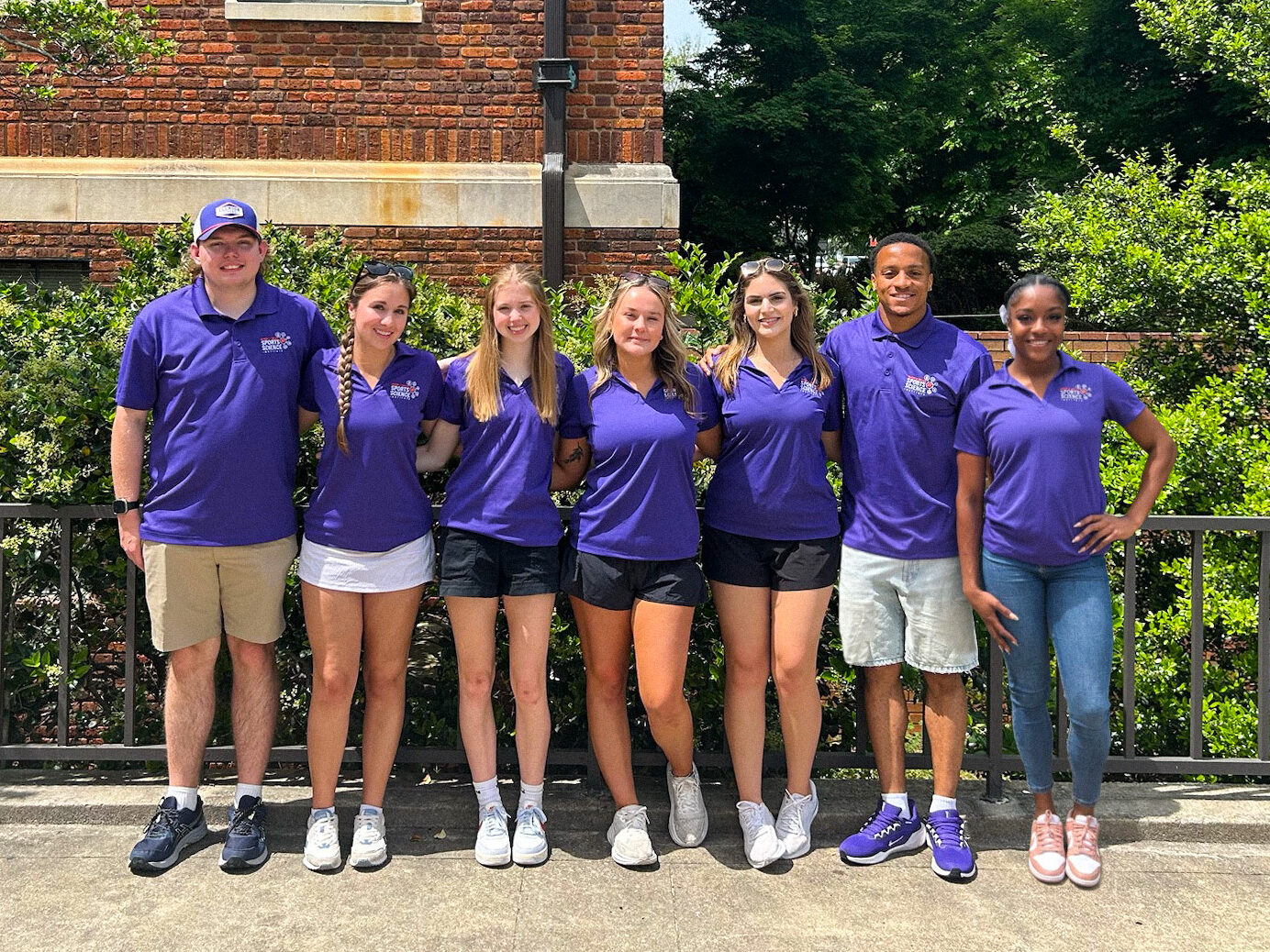
April 6 each year is National Student-Athlete Day. The Institute is proud to support Clemson student-athletes through the UPIC Beyond the Game program. Meet our spring interns and some of their colleagues from Clemson Athletics.
Malick Daouda
Sometimes being an athlete and a student at the same time can be overwhelming, but having a clear schedule and avoiding procrastination help me focus on both.
One lesson I learned is that details matter. When preparing for a game or a tournament, details like how much water you drink or what and when you eat can have a big influence on how you perform. This relates to everything in life, when you do something, make sure to do it right and to not cut corners.
Quantity is not always better than quality. With all the resources available to us here, I learned that having a structured workout plan that focuses on your personal weaknesses is better than working twice as hard as you normally would, but without the structure that can help you to truly progress without increasing the injury risk
Kevin Collins
UPIC Beyond the Game Intern
Balancing academics and athletics comes down to time management, discipline, and priorities. As a student-athlete, I treat school as part of my sport. I plan my day ahead, using a schedule that blocks out time for classes, practice, studying, and recovery. I also try to stay ahead on assignments, so I am not overwhelmed during competition weeks. Communication is important too, especially with professors and coaches. At the end of the day, I remind myself that being a student comes first, and athletics is an opportunity that supports my education.
One major lesson I have learned from sports is the importance of consistency and proper fueling. Nutrition plays a big role in performance, and I have learned that what I put into my body affects my energy, focus, and recovery. That same idea applies to school, because if I am not taking care of my body, I cannot perform well academically either. Also, being in a structured training environment has taught me accountability and discipline. Showing up every day, even when I do not feel like it, has helped me stay consistent with my studying and with handling life’s responsibilities.
One important sports science lesson every student-athlete should know is the importance of recovery. Many younger athletes focus only on training hard, but recovery is just as important as the workout itself. This includes sleep, hydration, stretching, and rest days. Without proper recovery, the body cannot repair itself, increasing the risk of injury and decreasing performance. Understanding this early can help athletes have longer careers and perform at a higher level.
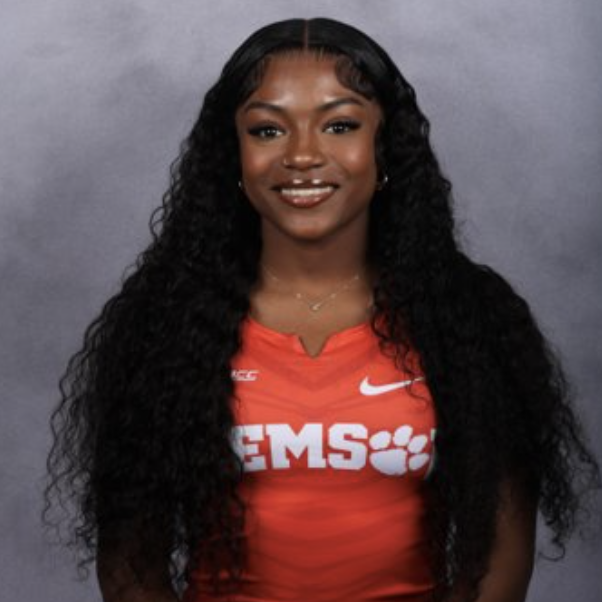
Aniyah Kitt
To me, being a student-athlete means balancing my performance on the track and in my studies. Having discipline and time management has been a huge factor in my ability to excel in both worlds.
One of my most memorable moments was my freshman year at the ACC Indoor Championship. This is when the women’s team became the Indoor Champions, and I became the 200m ACC Indoor Champion. I remember the rush of adrenaline I had and the feeling of joy and accomplishment. Knowing that not only the team’s efforts but mine as well were worth it. It felt surreal, and I was very grateful to share the experience with my teammates.
Some of the biggest lessons I have learned from sports are discipline and accountability. Being part of a team environment has taught me accountability because, although track is more of an individual sport, I still represent my team and work with them toward a common goal: winning. This mindset has helped me become more responsible and take ownership of my actions in everyday life, such as setting high expectations for myself in my schooling. I have also learned the importance of consistency and recovery. Being disciplined and taking care of my body properly after training is essential to performing at my maximum capacity while staying healthy and efficient. This includes proper hydration, sleep, and nutrition. Overall, these habits have helped me not only in my sport but also in maintaining balance and focus in other areas of my life.
I use sports science to track my splits in practice and on film and identify areas for improvement and error. This allows me to identify what I need to keep doing and working towards, and what I need to fix and strengthen. This can also be applied in the weight room to track my progression and strength. All this data helps me become the best version of myself and compete at a high level.
Daniel Kidd
Being a student-athlete means operating at a high level in multiple demanding environments simultaneously: academics, athletics and professionally while maintaining discipline, accountability, and consistency every day. It’s about managing time effectively, staying mentally resilient, and showing up even when it’s difficult.
One of my most memorable experiences was competing after working through an Achilles injury. That moment reinforced what being a truly student-athlete means to me: trusting the process, staying disciplined in recovery, and still performing under pressure. It wasn’t just about the race, but about overcoming adversity and executing when it mattered.
I use:
Split times and race modeling to assess efficiency across each segment (e.g., 0–30m, 30–80m, 80–200m)
Strength and power metrics in the weight room (force production, explosiveness)
Recovery data like soreness, fatigue, and training load to avoid overtraining
Biomechanics (posture, stride frequency, ground contact) to improve efficiency
For example, I’ve focused on staying patient through 0-30m and hitting top speed later in the race, which has directly improved my performance. Data allows me to train with intention rather than just effort.
One key lesson is: recovery is just as important as training.
Many younger athletes think improvement comes only from pushing harder, but performance actually improves during recovery. Without proper recovery, like sleep, mobility and nutrition, you increase injury risk and limit performance gains.
Understanding load management, listening to your body, and prioritizing recovery strategies (like mobility work and proper warm-ups) is what allows you to stay consistent and improve long-term.
Shanque Williams
UPIC Beyond the Game Intern
Honestly, it’s not always easy. Some days I feel like I’m rushing from class straight to practice and then trying to finish work late at night. What helps me is staying organized and not procrastinating, because once you fall behind, it gets stressful fast. Being a student-athlete has forced me to be more disciplined with my time. I’ve learned how to prioritize what needs to get done, even when I’m tired. It’s definitely a grind, but it’s made me more responsible overall.
I don’t always think about it as “sports science” in the moment, but I use it a lot without realizing it. For example, I pay attention to my times, how I feel during workouts, and how my body responds after practice. If something feels off, I know I need to adjust—whether that’s getting more rest, eating better, or changing how I train. Even small things like focusing on my form or recovery can make a big difference. It’s about training smarter, not just going hard every day.
One thing I wish more athletes understood is how important recovery is. A lot of people think working harder every day will automatically make you better, but that’s not always true. If you’re not getting enough sleep or taking care of your body, your performance is going to drop. I’ve learned that rest days, stretching, and even just listening to your body are just as important as practice. Taking care of yourself is what helps you stay consistent and improve.
Shantae Foreman
Balancing academics and athletics takes extreme discipline and focus. You have to make a lot of sacrifices: put aside a lot of things in terms of enjoyment and going out with friends; put your academics and your mental health first.
To be honest, nutrition. I had to change my diet, where and how I eat, the amount I eat, and the time I eat, and it was really challenging. But if I were younger and knew it would affect how I perform, I would have looked into it more.