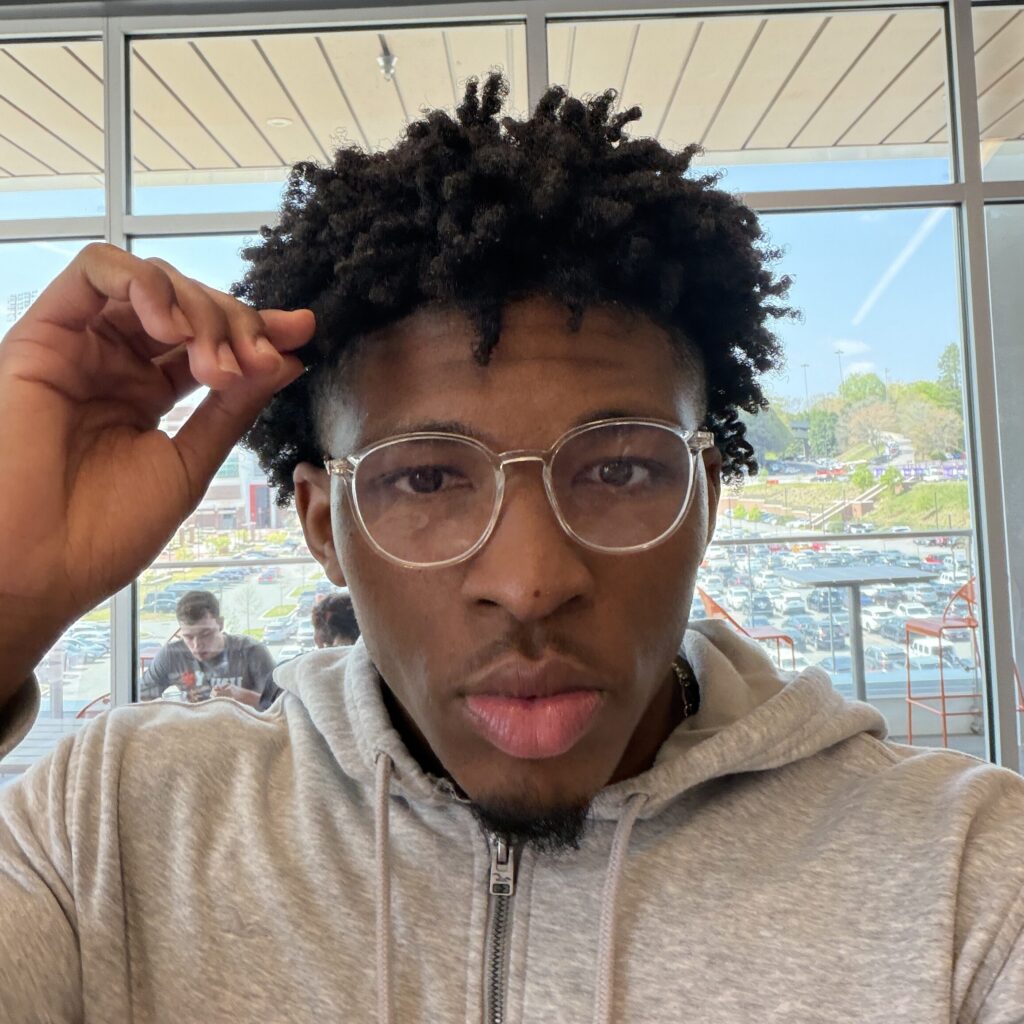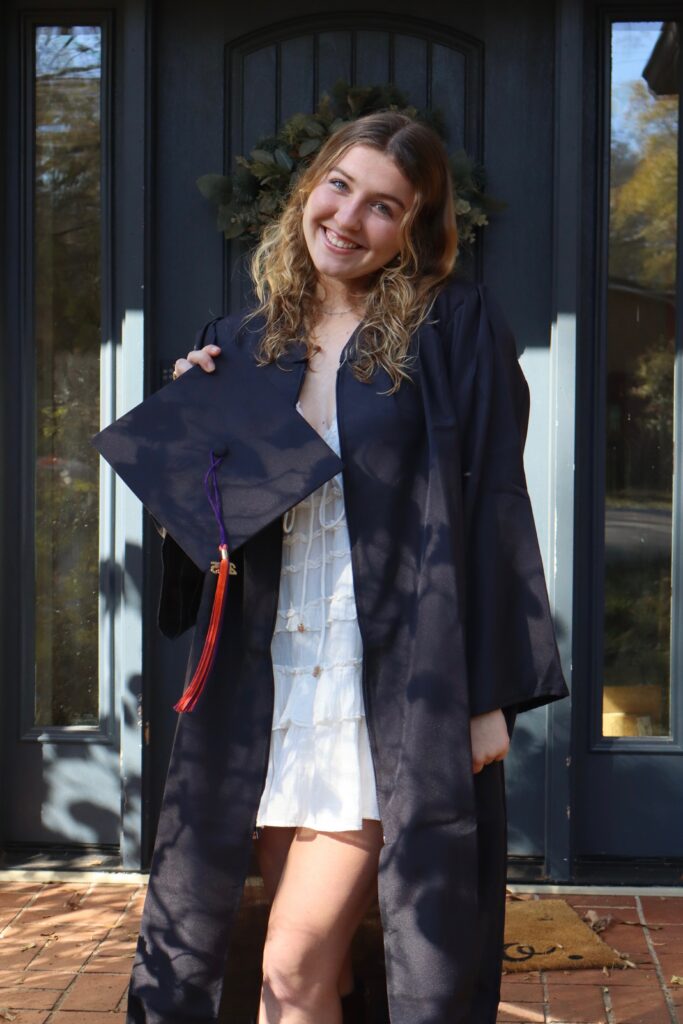
Track and field has been a part of my life for as long as I can remember. Growing up, I watched my older sister and brother compete in high school while I was still in primary school. I didn’t fully understand everything about the sport at the time, but I knew one thing for sure, I wanted to be just like them. That early exposure planted a seed that would eventually grow into a passion and a dream. That dream became even more real when I watched my sister make the bold decision to move to another country to pursue her athletic career. Seeing her succeed showed me what was possible with hard work, sacrifice, and belief.
When it came time to choose where I wanted to continue both my academic and athletic journey, Clemson University stood out. I was fortunate to have multiple scholarship opportunities, but Clemson felt different. From the moment I stepped on campus during my recruiting visit, it felt like home. The energy of the town, the support from the people, and the overall environment made it an easy decision. Looking back now, I can confidently say it was the right choice. Clemson has exceeded my expectations in every way.
Sports have shaped my life in ways I never imagined. Moving to another country to pursue track and field was not easy, but it taught me resilience and independence. More than anything, this sport has taught me discipline. Track and field is one of the most honest sports there is—you get out exactly what you put in. There are no shortcuts, no hiding from the work. Every practice, every rep, every race reflects your effort. That honesty has helped me grow, not just as an athlete, but as a person. It has taught me lessons that go far beyond the track: consistency, accountability, and the ability to push through challenges even when things get tough.
My time at Clemson has been filled with unforgettable moments. One of the highlights of my journey so far has been earning a spot on my national team for the 2025 Pan American U23 Games. Representing my country is something I take great pride in, and it’s a moment I will never forget. Another major accomplishment has been helping my team win the ACC Championship title for the second year in a row. Achievements like these make all the hard work worth it.
Looking ahead, I have big goals both academically and athletically. I plan to complete my bachelor’s degree in psychology with a minor in business management. Beyond college, I hope to continue competing at the professional level in track and field. At the same time, I’m also interested in building a career in sales, particularly in real estate. No matter which path I take, I know the lessons I’ve learned through sports will continue to guide me toward success.
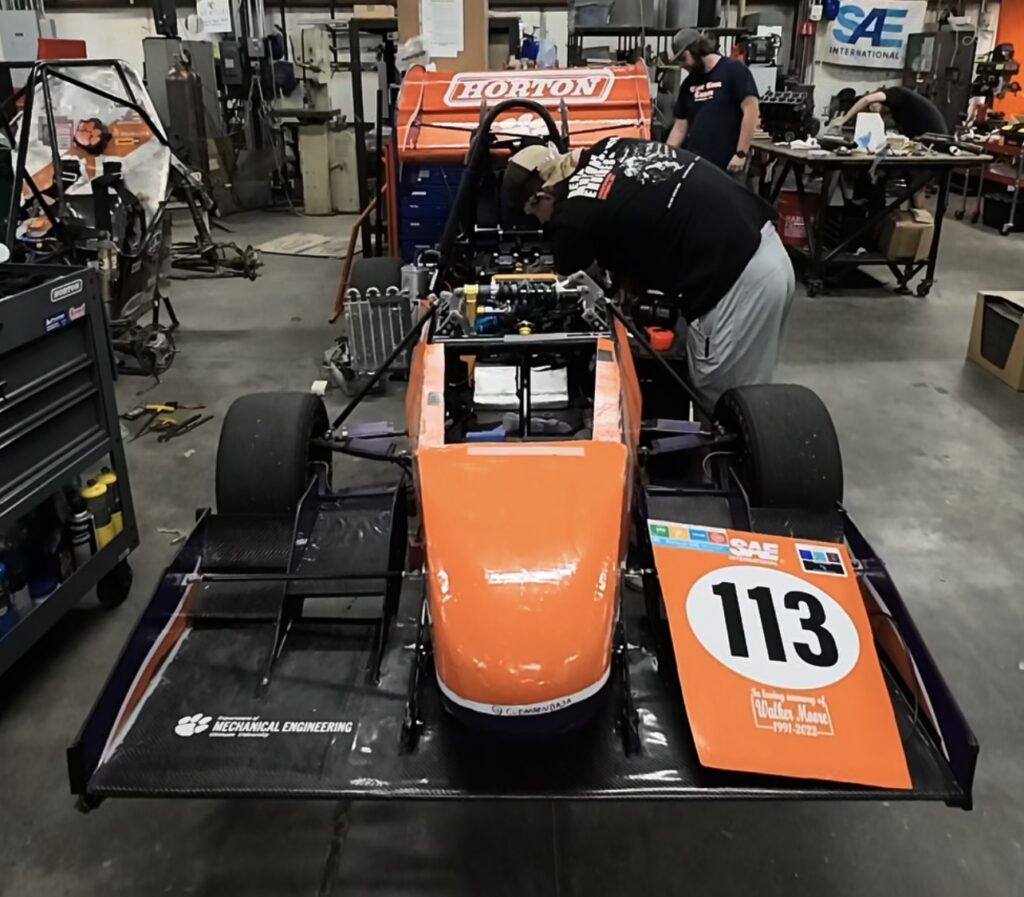
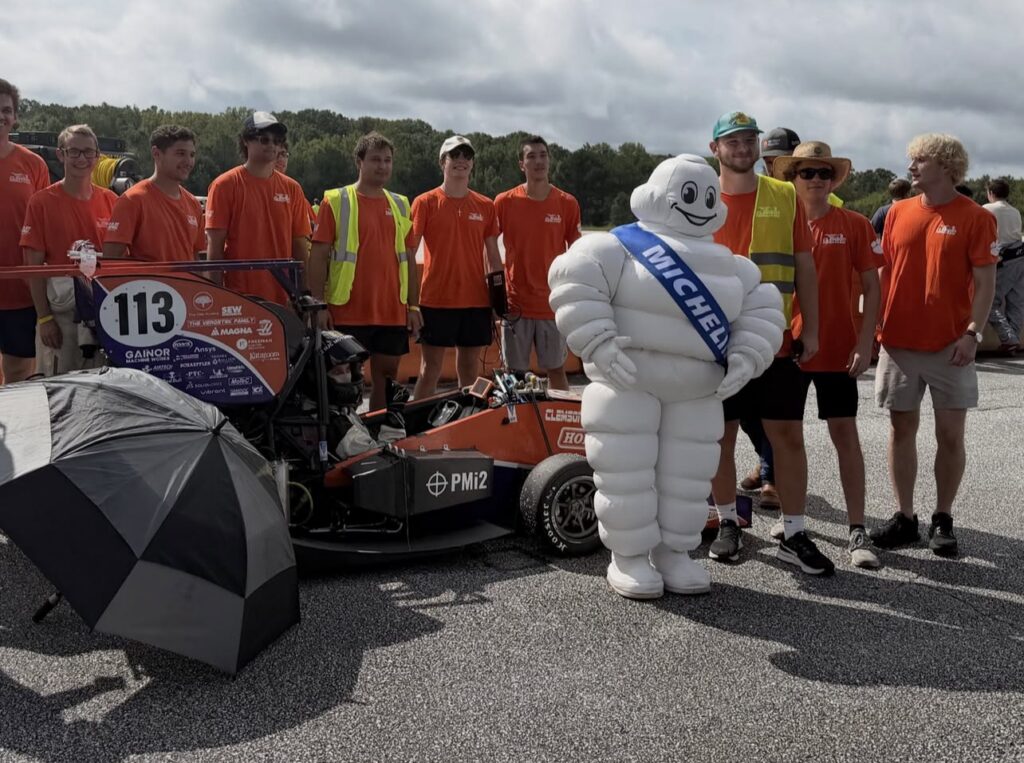
As the semester draws to a close, Clemson Formula SAE remains busy, polishing the final touches on the team’s Tiger 26 race car. With less than a month until the car takes to the track for the main competition at Michigan International Speedway, the build is officially in its final stages.
FSAE’s engine dyno, where the team maximizes the output of the car’s engine.
RHBSSI sat down with Alex Daichendt, a senior electrical engineering major and FSAE’s chief engineer, to discuss the progress made this semester and the final preparations being made before the team makes the long trek up north next month.
“We ended up with a rolling car right at the beginning of spring break,” Daichendt said. “So, it was a really, really big accomplishment for us.”
With the base of the car completed prior to the break, the team was left to focus on putting together the mechanical and electrical components. With those additions completed, the team was able to begin testing the car and ensure it was up to snuff.
Following testing, the team went back to work, focusing on potential areas for improvement to make changes.
“There’s still plenty of work to do in regards to the suspension tuning,” Daichendt added. “Hopefully, we’re getting the full aero package on the car this week for this weekend for testing, so we can get everything dialed in and what we need to be.”
FSAE’s Tiger 26 is nearing completion, with the wrap of the team’s livery soon to be added.
With the build nearly completely put together, the finishing touches on the car will include applying the wrap of the car’s livery. Daichendt mentioned that the wrap will be in the team’s hands within the next two weeks, meaning it’ll be the end of finals before Tiger 26 reaches its final form. Daichendt added that isn’t a bad thing, though.
“It’ll really go on right before competition, which is completely fine with us,” Daichendt said about the wrap. “You know, less rock chips makes it look nice and pretty going into competition.”
With the car nearly complete, the team is focused on May 13, when Tiger 26 will hit the track at Michigan International Speedway for a multi-day competition against roughly 100 other schools from the United States and around the globe.
Dr. Hardie sits with cohort members and South African leaders during the final Networking Day, where participants connected with key stakeholders in the sport-for-development space.
By Katie Gerbasich
In March, Dr. Ashlyn Hardie, Institute fellow from the Department of Parks, Recreation and Tourism Management, co-led the second cohort of Starting Block Accelerator in Cape Town, South Africa, with Dr. Per Svensson from Louisiana State University. This initiative is the first of its kind, designed to address the research-practice gap in cross-sector work while advancing research in the Sport for Development and Peace (SDP) sector.
Hardie describes this work in the SDP sector as “the intentional use of sport, recreation, play, and physical activity as a tool to achieve broader societal-level development goals. Often, those programmatic goals align with the United Nations Sustainable Development Goals (known as the UN SDGs), and sport offers an alternative platform to tackle community issues.”
According to the UN General Assembly and the UN Action Plan governing bodies, sport is viewed as a powerful tool for addressing key issues such as social integration, physical health and wellness, gender equality, peacebuilding, crime prevention and the development of sustainable communities.
The Starting Block Accelerator is an initiative designed and implemented by Hardie and colleagues as a week-long capacity-building business accelerator program for sport-based nonprofits. Five leaders from organizations worldwide were invited to participate, each working directly with beneficiaries in their countries to tackle issues aligned with the UN SDGs.
Dr. Hardie leads the cohort through a research-based curriculum, equipping participants with practical insights to strengthen their organizations.
“We try very intentionally to have a really diverse group of participants in each cohort because we want them to speak to their experience with different types of funders, recreational tools and their experience navigating challenges in different countries on different continents, so they are not just learning from us but also from each other,” Hardie said.
The Robert H. Brooks Sports Science Institute provided the initial seed funding in 2024 for the first-ever Starting Block Accelerator in London, England, enabling the team to gather preliminary data on the program’s effectiveness and secure support for this second round in Cape Town, South Africa.
This year’s cohort included organizations that utilize a variety of sports, including soccer, ultimate frisbee, mountain biking, wrestling and rugby, with participants representing those organizations from Brazil, Botswana, South Africa, the Czech Republic and India. Two of the five participants were female founders. One was recently named Vice President of the African Women in Sports Initiative, and the other was a former Brazilian Olympic wrestler.
The first three days of the Accelerator are curriculum-based, drawing on decades of sport-for-development research to create evidence-based pathways for management practices. For several reasons, research is challenging for practitioners to access and use. The objective of the Starting Block Accelerator is to support organizations through a research-backed curriculum that debunks misconceptions, provides networking opportunities and creates a collaborative learning environment.
“In the nonprofit world, people often rely on trial and error because they lack access to information, which can be expensive and time-consuming,” Hardie said. “We try to give them evidence-based strategies so they don’t have to just guess and repeat—research shows what is most likely to work.”
SDP leaders gather with Gorata Kgathi following her presentation on creating opportunities for women in rugby in Botswana.
On the final day of the workshop, participants attended a networking session where they practiced pitching their organizations to well-known stakeholders in the SDP sector. Cape Town is an established, global hub for SDP work. This location provided strong access to a network of established leaders in the sport-for-development space, offering valuable connections and feedback to the emerging organizations in this cohort.
Hardie spoke about the impact of the first Starting Block in London, just one year ago, stating: “We’ve had major milestones for last year’s participants either from the connections that they made out of the networking day last year or skills that they implemented from the training of the workshop. For example, multiple London participants have found new funding success over the last year, linking back to our grant writing workshop or networking day.”
Cape Town’s proximity to Mozambique also allowed Hardie to visit Lwandi Surf, a participant from the 2025 London cohort, where she gathered insights on the program’s long-term impact and next steps.
“We want to just keep empowering these organizations to really optimize whatever they’re trying to do for the people they’re trying to serve, with more financial sustainability and safety than they’re doing before.”
Hardie is also the Founder and Executive Director of the New Way Sport Fund, which provides unrestricted funding, alongside consultancy-supported funding, to selected organizations working toward sustainable solutions to organizational challenges.
“We’re not just going to buy soccer balls because they get lost or pop, “Hardie said. “But if you want to invest in something like solar panels, to solve an ongoing power issue, that’s a sustainable solution we want to help with, which a lot of funding mechanisms won’t allow.”
NWSF is funded for a 2nd cycle, with applications expected to open in mid-May of this year.
April 6 recently marked the International Day of Sport for Development and Peace. Learn more about the role sport plays in driving social change here.
April 6 each year is National Student-Athlete Day. The Institute is proud to support Clemson student-athletes through the UPIC Beyond the Game program. Meet our spring interns and some of their colleagues from Clemson Athletics.
Malick Daouda
Sometimes being an athlete and a student at the same time can be overwhelming, but having a clear schedule and avoiding procrastination help me focus on both.
One lesson I learned is that details matter. When preparing for a game or a tournament, details like how much water you drink or what and when you eat can have a big influence on how you perform. This relates to everything in life, when you do something, make sure to do it right and to not cut corners.
Quantity is not always better than quality. With all the resources available to us here, I learned that having a structured workout plan that focuses on your personal weaknesses is better than working twice as hard as you normally would, but without the structure that can help you to truly progress without increasing the injury risk
Kevin Collins
UPIC Beyond the Game Intern
Balancing academics and athletics comes down to time management, discipline, and priorities. As a student-athlete, I treat school as part of my sport. I plan my day ahead, using a schedule that blocks out time for classes, practice, studying, and recovery. I also try to stay ahead on assignments, so I am not overwhelmed during competition weeks. Communication is important too, especially with professors and coaches. At the end of the day, I remind myself that being a student comes first, and athletics is an opportunity that supports my education.
One major lesson I have learned from sports is the importance of consistency and proper fueling. Nutrition plays a big role in performance, and I have learned that what I put into my body affects my energy, focus, and recovery. That same idea applies to school, because if I am not taking care of my body, I cannot perform well academically either. Also, being in a structured training environment has taught me accountability and discipline. Showing up every day, even when I do not feel like it, has helped me stay consistent with my studying and with handling life’s responsibilities.
One important sports science lesson every student-athlete should know is the importance of recovery. Many younger athletes focus only on training hard, but recovery is just as important as the workout itself. This includes sleep, hydration, stretching, and rest days. Without proper recovery, the body cannot repair itself, increasing the risk of injury and decreasing performance. Understanding this early can help athletes have longer careers and perform at a higher level.
Aniyah Kitt
To me, being a student-athlete means balancing my performance on the track and in my studies. Having discipline and time management has been a huge factor in my ability to excel in both worlds.
One of my most memorable moments was my freshman year at the ACC Indoor Championship. This is when the women’s team became the Indoor Champions, and I became the 200m ACC Indoor Champion. I remember the rush of adrenaline I had and the feeling of joy and accomplishment. Knowing that not only the team’s efforts but mine as well were worth it. It felt surreal, and I was very grateful to share the experience with my teammates.
Some of the biggest lessons I have learned from sports are discipline and accountability. Being part of a team environment has taught me accountability because, although track is more of an individual sport, I still represent my team and work with them toward a common goal: winning. This mindset has helped me become more responsible and take ownership of my actions in everyday life, such as setting high expectations for myself in my schooling. I have also learned the importance of consistency and recovery. Being disciplined and taking care of my body properly after training is essential to performing at my maximum capacity while staying healthy and efficient. This includes proper hydration, sleep, and nutrition. Overall, these habits have helped me not only in my sport but also in maintaining balance and focus in other areas of my life.
I use sports science to track my splits in practice and on film and identify areas for improvement and error. This allows me to identify what I need to keep doing and working towards, and what I need to fix and strengthen. This can also be applied in the weight room to track my progression and strength. All this data helps me become the best version of myself and compete at a high level.
Daniel Kidd
Being a student-athlete means operating at a high level in multiple demanding environments simultaneously: academics, athletics and professionally while maintaining discipline, accountability, and consistency every day. It’s about managing time effectively, staying mentally resilient, and showing up even when it’s difficult.
One of my most memorable experiences was competing after working through an Achilles injury. That moment reinforced what being a truly student-athlete means to me: trusting the process, staying disciplined in recovery, and still performing under pressure. It wasn’t just about the race, but about overcoming adversity and executing when it mattered.
I use:
Split times and race modeling to assess efficiency across each segment (e.g., 0–30m, 30–80m, 80–200m)
Strength and power metrics in the weight room (force production, explosiveness)
Recovery data like soreness, fatigue, and training load to avoid overtraining
Biomechanics (posture, stride frequency, ground contact) to improve efficiency
For example, I’ve focused on staying patient through 0-30m and hitting top speed later in the race, which has directly improved my performance. Data allows me to train with intention rather than just effort.
One key lesson is: recovery is just as important as training.
Many younger athletes think improvement comes only from pushing harder, but performance actually improves during recovery. Without proper recovery, like sleep, mobility and nutrition, you increase injury risk and limit performance gains.
Understanding load management, listening to your body, and prioritizing recovery strategies (like mobility work and proper warm-ups) is what allows you to stay consistent and improve long-term.
Shanque Williams
UPIC Beyond the Game Intern
Honestly, it’s not always easy. Some days I feel like I’m rushing from class straight to practice and then trying to finish work late at night. What helps me is staying organized and not procrastinating, because once you fall behind, it gets stressful fast. Being a student-athlete has forced me to be more disciplined with my time. I’ve learned how to prioritize what needs to get done, even when I’m tired. It’s definitely a grind, but it’s made me more responsible overall.
I don’t always think about it as “sports science” in the moment, but I use it a lot without realizing it. For example, I pay attention to my times, how I feel during workouts, and how my body responds after practice. If something feels off, I know I need to adjust—whether that’s getting more rest, eating better, or changing how I train. Even small things like focusing on my form or recovery can make a big difference. It’s about training smarter, not just going hard every day.
One thing I wish more athletes understood is how important recovery is. A lot of people think working harder every day will automatically make you better, but that’s not always true. If you’re not getting enough sleep or taking care of your body, your performance is going to drop. I’ve learned that rest days, stretching, and even just listening to your body are just as important as practice. Taking care of yourself is what helps you stay consistent and improve.
Shantae Foreman
Balancing academics and athletics takes extreme discipline and focus. You have to make a lot of sacrifices: put aside a lot of things in terms of enjoyment and going out with friends; put your academics and your mental health first.
To be honest, nutrition. I had to change my diet, where and how I eat, the amount I eat, and the time I eat, and it was really challenging. But if I were younger and knew it would affect how I perform, I would have looked into it more.
A Clemson Baja student welds the chassis together.
As the semester is entering the home stretch, so too is the newest vehicle build for Clemson Baja SAE. After months of designing, the vehicle is now in its final stages of the build phase as the team prepares to compete in a competition in New York this June.
The RHBSSI sat down with Nicholas Roessler, a freshman automotive engineering major and the team’s chassis lead and head welder, to discuss how the build has progressed over the semester.
“The new build’s coming along well,” he said. “We’re kind of in the final steps of welding together our chassis. Suspension is finally getting finalized, so we can start making the suspension and figuring out where it goes on the car.”
Sparks fly as a team member welds sections of the frame together.
As the chassis lead, Roessler is responsible for ensuring the chassis meets the standards required for the vehicle to handle the rough terrain it will encounter in competition. If one thing went wrong with the chassis, it could derail the entire build.
With that in mind, Roessler said he understands the important responsibility placed upon him and is confident that the chassis will be able to handle whatever is thrown its way.
“Driver safety is the most important thing to us, 100%,” he said. “As I’m getting there, and as I’m designing the chassis, that’s the main thought. We really can’t chance having something break, and so structural integrity is definitely the most important thing.”
Roessler mentioned that throughout the semester, one particular challenge with the chassis has been making it entirely in-house. The team has primarily focused on not outsourcing any development and on making the vehicle entirely student-built.
“There’s a learning curve to kind of bending our own tubes, and there’s been a lot of mistakes actually putting the chassis together, but we’ve kind of got it figured out and on a roll,” he said.
Components are arranged on a work surface prior to assembly.
When Clemson Baja last spoke with the RHBSSI, the team focused on a brand-new test track under construction for them to test their newest build right here in Clemson. Roessler says the track will help the team ensure all the pieces are in place for the build to hold together before they compete in June.
“It’ll probably be one of the most beneficial things that has happened for Baja in a long time, he said. “We’ll be able to actually test our vehicle, and that way, if anything fails, hopefully it fails with the shop five minutes away, and not in Rochester, New York.
As the build nears completion, the team has its sights set on June 11 for its first competition in Rochester with the new vehicle.
This semester, RHBSSI is working with two track-and-field student-athlete interns through the UPIC Beyond the Game program. In recognition of National Athletic Trainer Month, we’re highlighting the people who support them behind the scenes. We spoke with their athletic trainers about what it’s like to keep athletes healthy and performing throughout the season.
Assistant Athletic Trainer; Men’s and Women’s Cross Country/Track and Field
Dayshia Davenport
A great place to start is the recovery triangle, which includes proper hydration, adequate sleep, and good nutrition. That said, each event requires different forces on the body.
Some coaches may already have their plan made and want to see what I can help with in order to make sure they can get through the training week. For example, throwers who may have a heavy-lifting day and a throwing session may need more mobility and soft-tissue work to combat soreness.
In certain cases, I discuss with the event coach at the beginning of the season, as well as throughout the season, what they would like to accomplish and what each training week looks like, so we can plan recovery and anticipate aches and pains.
I try to listen to what the athlete says their body feels like and give recommendations based on what I know is to come in the training week.
Collaborating with the coach and with support staff (strength and conditioning coaches, mental health/performance, chiropractors, massage therapists, nutritionists, etc.) is huge for this. My job is to bridge the middle between all entities of sports while also taking care of the physical needs in and out of season.
If I notice someone may not be recovering or is having a hard time with general aches and pains, I will discuss this with all parties to help set them up for success before the next competition. That can look like changing training surfaces, adjusting weight-training sessions throughout the week, encouraging certain meals after speed vs. endurance training, or encouraging the athlete to focus on mental recovery by doing something non-sports-related.
These are just some examples, but every athlete is different and requires conversations to make sure their physical and mental needs are met for the longevity of the season.
Each injury is different, so the return-to-play process can involve many variables. My biggest focus is to keep the athlete mentally locked in to getting back. I can manage the physical for the most part, but mental prep is huge.
I try to challenge my athletes each week to complete a movement they haven’t done before. This helps them feel encouraged that they are progressing despite not physically receiving imaging to monitor their progress.
If it’s a minor injury, I typically lay out a calendar and set goals for what I need to see from them to progress to the next step. I also sit with the event coach to discuss when I think they will be back and what parameters need to be met in order to return to group training. I tend to be more aggressive with in-season injuries given the timeline, so I may see that athlete multiple times a day, even on the weekend. If it’s a major injury that may affect the season, I do the same thing, but I may encourage the athlete to connect with mental health or sports performance so they don’t lose that sense of identity while away from sport.
My personality can be very sarcastic and joking, but I also try to give them the empathy they may not be giving themselves through private check-ins, if needed. Each athlete is different, which is why it’s important to build a relationship with them to know how to approach in-season injuries.
Donna Bullock
The emotional struggle that student-athletes go through while not participating in their sport.
When they don’t hesitate, mentally, emotionally and physically when you incorporate in their rehabilitation, the movement they did when they got hurt. All 3 won’t happen at once so it’s patience and repetition and confidence building. Also, when they are smiling while participating.
That student-athletes can easily recover and it doesn’t affect the other parts of their lives – socially, academically, relationships, religious – all parts of their lives
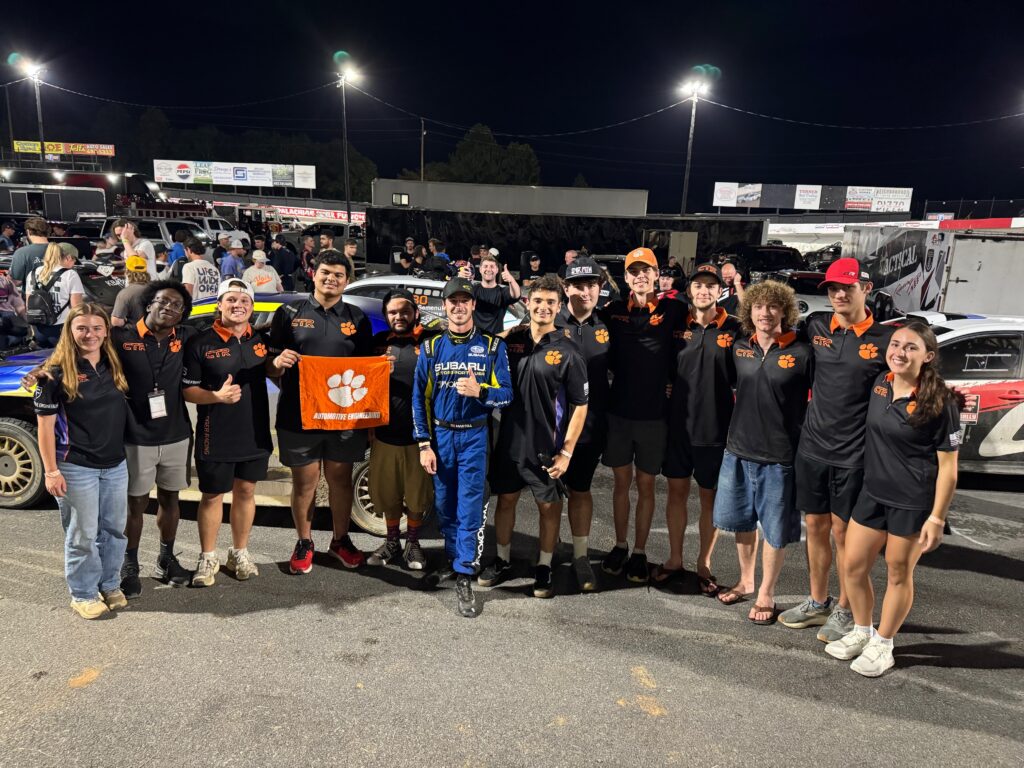
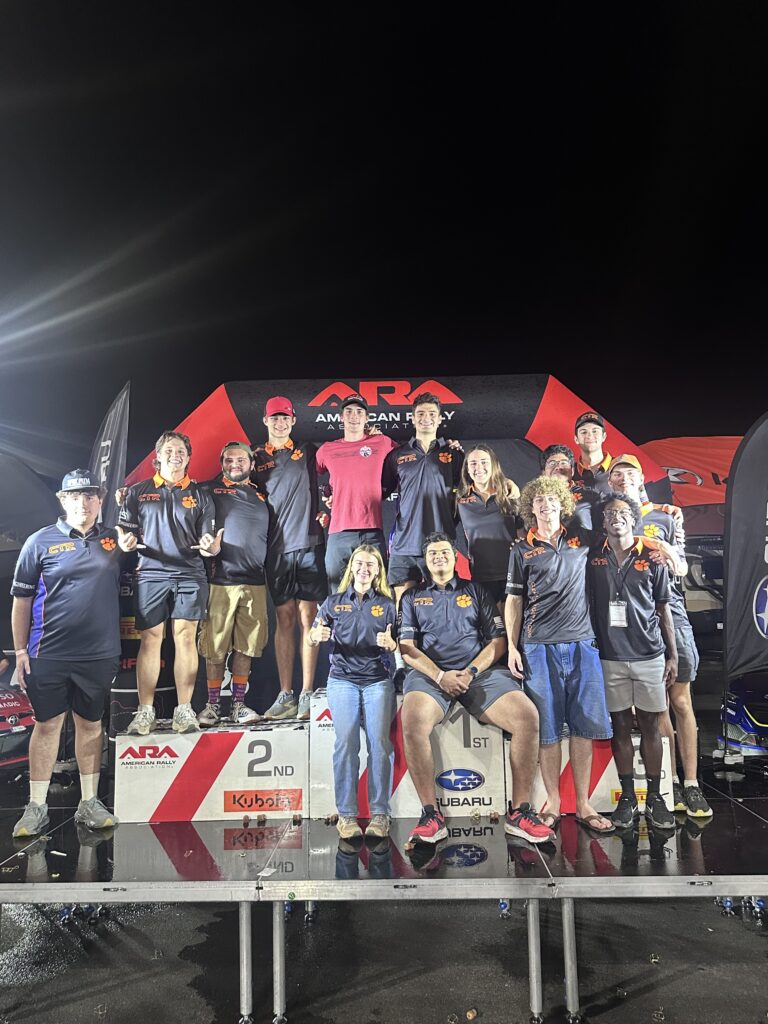
CTR team members with Clemson alumnus Dr. Shannon Kennedy
By Nathan Inman
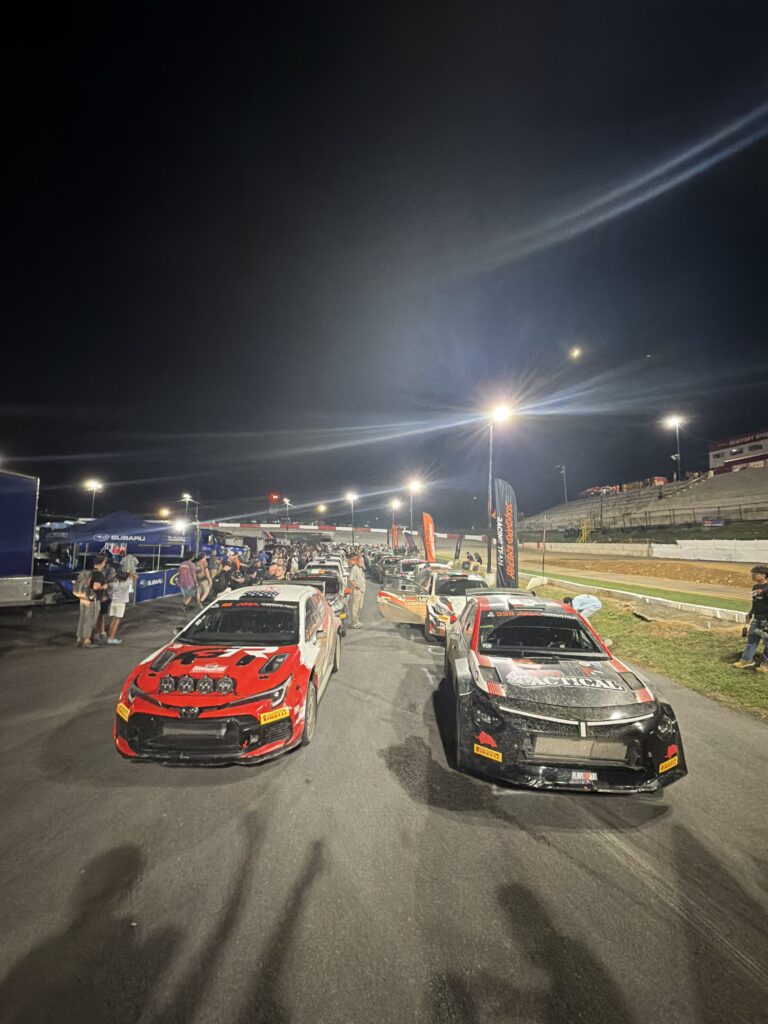
February 28 was a day that was nearly three years in the making for Clemson Tiger Racing. After being established in 2023, CTR finally ran its first-ever endurance race late last month.
It could have been easy for the team to take it easy and just log laps to gain experience, leaving car number 223 to be an afterthought to its competitors. Instead, though, everyone knew they were there. The team finished fourth in the Saturday race after a solid showing throughout the day, leaving CTR with a shot at a podium finish. Unfortunately, the team was unable to cross the finish line, as the car ran out of gas and slowed to a stop out of the final corner.
Hadley Smith on the team radio as race engineer.
While the race finished in heartbreaking fashion, the result was still one the team could be proud of. “I think we were all flabbergasted that we made it through,” said Hadley Smith, a sophomore engineering major and race engineer for CTR. “We were so incredibly excited and proud of ourselves that we made it through the first day.” The pride Smith mentioned was echoed by several of her fellow team members.
“It’s hard for me to put this feeling into words,” said Macy Jersek, graduate student and operations lead for CTR. “I’m just so happy and really proud of this team. I think we all were just thrilled to see the car finish, and to be so successful and to be competitive with our little Miata with 80 horsepower.”
Kieran Rogers prepares to enter the car for the final stint of Saturday’s race.
“I’m also very proud of everyone,” added Kieran Rogers, junior automotive engineering student who is the race engineer lead and a driver for CTR. “There’s a lot of work that went into it, so it’s very rewarding when you see we’re able to go on for as long as possible.”
As Saturday drew to a close, the focus shifted to Sunday, when the team would hit the track once more for the second race of the weekend. After the learning experience of their first race, the team was hopeful they could compete for a podium position once again.
Not only did CTR compete for a podium in Sunday’s race, and the team also led at the break after the first hour and held the lead for several hours afterwards. It appeared that CTR was going to have a shot at winning a race in its first-ever race weekend. Unfortunately, with roughly 90 minutes remaining, the car suffered a failure in the rear differential. With so little time remaining and the car extremely hot, CTR was unable to make repairs and was forced to retire from the race.
CTR leaves the pit lane following the final pit stop on Saturday.
While the end result was not what the team had hoped for, the team members had every reason to hold their heads high and mark the weekend as a success. A car fully engineered, maintained and driven by college students lasted an impressive 341 laps and nearly 13 hours throughout the two races, leaving the expectations heading into the weekend in the dust. Even more impressive was that the parts built and installed by the team stayed in shape, and the only thing that prevented the team from completing all 14 hours and potentially earning a race win or podium was one that was never touched by the students besides fluid changes, serving as a testament to the work of the mechanics.
“I think it just really shows how hard every single one of the mechanics has been working,” said Matthew Flaim, an automotive engineering graduate student, as well as driver and lead mechanic for CTR. “Just the effort that has been going in to make sure that we’re making, not only a consistent and competitive race car, but also a safe race car.”
With CTR’s first race finally in the books, the team is now looking ahead to more races and hopes to be back on track in May at Atlanta Motorsports Park. With the experience of the first race weekend and the knowledge gained from it, the sky is now the limit for the team’s future success.
At a university that prides itself on athletics and academics, there’s a group within that helps student-athletes find success on the field and in the classroom.
The Clemson Athletic Council acts as the liaison between the University’s faculty, administration and athletic departments, meeting bi-monthly to discuss important topics that student-athletes face.
Meetings are joined by Athletic Director, Graham Neff, Senior Associate Athletic Director, Matt Lombardi, and other senior members of the Athletic Department staff while allowing open discussions with members of the council throughout their meetings.
Each college elects a representative and an alternative, and the Clemson president appoints a representative from the University. Both Undergraduate and Graduate Student Government as well as Faculty, Staff and Student Senate are represented. Two student-athletes from the executive board of the Student Athlete Advisory Council (SAAC) represent all student-athletes on campus.
Jake Serra runs at a Clemson Track meet
Senior Health Sciences major and President of SAAC, Jake Serra, went from specifically focusing on his track and field career to making a bigger difference in his position as a student-athlete.
“I was thinking, how can I make an impact in another way?” Serra said. “So, that’s where the Student Athlete Advisory Committee comes in. We have one here at Clemson that, unbiased, is the best one in the nation.”
Assistant Professor of sports communication and faculty fellow of the Robert H. Brooks Sports Science Institute, Rikishi Smith-Rey, Ph.D., served on her university’s SAAC when she was a student-athlete as an undergraduate, going full circle when she was voted on last spring to represent the College of Behavioral, Social and Health Sciences as a faculty liaison.
Having a wide variety of faculty from colleges across the University and staff from the athletic department help improve communication between the academic institution and the athletic department.
Rikishi Smith-Rey, Department of Communication
“We get to bridge the two of them,” Smith-Rey said. “We get to bridge the academic institutional side to the athletic side, and SAAC is in there as well, and they’re telling us how they are getting the teams more intertwined. It’s great seeing all the different groups coming together.”
Another faculty fellow of the Robert H. Brooks Sports Science Institute and a professor of Food, Nutrition and Packaging Sciences within the College of Agriculture, Forestry and Life Sciences, Greg Batt, Ph.D., has served on the Clemson Athletic Council since the fall of 2019. He has seen important topics covered from the COVID-19 pandemic to NIL.
Committee Structure
The Clemson Athletic Council reports directly to the President with an Executive Committee that is comprised of the Chair, Vice-Chair, the chairs of three subcommittees, and the Faculty Athletic Representative (FAR), Antonis Katsiyannis, who was appointed by the President.
The Chair of Athletic Council, Mary Anne Raymond, a Professor of Marketing and Thomas F. Chapman Distinguished Professor of Leadership, creates the agendas for the meetings, communicates with both the President and Athletic Director regarding the focus of the subcommittees, and communicates any special initiatives that are directed by the President.
Meetings are led by Raymond, with updates and reports by Neff, Lombardi, SAAC, and the FAR at every meeting. New coaches, the Director of NIL, and leaders like Natalie Honnen, Executive Senior Associate AD for Student – Athlete Services and Performance, are invited to speak at Athletic Council meetings to enhance members’ understanding of the many areas the athletic department encompasses and to provide insights into areas where athletic council members can collaborate and contribute, such as the Student Athlete Wellness initiative.
The council was typically organized into three sub-committees: Academic Policies and Integrity, Student Athlete Welfare and Experience, and Administration and Communication. While all three committees serve important roles, there’s been more of an emphasis by all AC members on Student Athlete Welfare and Experience, which Batt chairs and says is the “main heartbeat” of the council.
Mary Anne Raymond, Thomas F. Chapman Distinguished Professor of Leadership, Department of Marketing
Professor of Marketing, Mary Anne Raymond, who is Chair for the Executive Committee as well, noted that the Council has shifted its focus to work on aiding the wellness of the student-athletes, who look to balance academics, athletics, and a positive social experience.
“We’re focusing on the well-being of the student-athletes,” she said. “I think that will stay for a while because there’s been so much going on with student well-being and the population’s well-being in general. Should we need to shift, or should the President have a special project, we would focus on that project as well.”
The AC brings in the likes of Serra and the Vice President of Internal Affairs with SAAC, Rose Imbesi, a senior Marketing major, as well. Both were appointed in the spring of 2024 and have served since. They provide the perspective of the student-athletes, expressing their needs and ways to improve the way they handle the academic side of their experience.
“They allow looking behind the curtain in athletics, but we are fully academics, so we understand that world,” Batt said, “so we can be liaisons for them.”
Drs. Batt and Smith-Rey are also faculty fellows with the Robert H. Brooks Sports Science Institute, and communicate these important athletic topics back to their research and educational peers at the university and nationally.
Serra and Imbesi also work towards bringing each athletic program together, allowing more communication and community between each group of student-athletes.
“My goal is really just to increase that feeling of community within athletics so you’re not just supporting your own team and seeing your own team every day,” Imbesi said, “to really bring that community together so that we are all one group of Clemson Athletics, not just separate teams.”
Issues and Outcomes
Collegiate athletics are in an interesting time with the rise of topics like NIL and the House case, meaning that the topics the Clemson Athletic Council is focusing on can vary at each meeting.
Neff and Lombardi emphasize numbers like graduation rates, retention rates and GPAs during the meetings, which have allowed Serra and Imbesi to create a solution to how student-athletes can be protected for their academics, providing support like tutoring to further their education.
Now, the protection plan has been implemented across multiple schools of the ACC, SEC and Big 10, becoming a product of the use of the Council’s meetings.
“That was something where we went to these professors in the Athletic Council,” Serra said. “I said, ‘Hey, here’s my idea. What can we take from this?’ They brought it to President Clements; they brought it to their colleges, and we were able to explode across the nation with that, but it really started here at Clemson.”
Another way that the members connect with the student-athletes is by attending lunches with various student-athletes throughout the semesters. The Clemson Athletic Council works with SACC to organize dates and times for faculty to have lunch with student-athletes, listening to their thoughts, concerns and recommendations for things that they would like to see from an academic standpoint.
Greg Batt, Department of Food, Nutrition and Packaging Sciences
“With my involvement on the Athletic Council, it gave me a real grassroots perspective of the challenges of being a student-athlete,” Batt said, “and so my involvement in the Athletic Council, I think that experience has been made richer by the fact that I get to see what it really looks like, day in and day out, for these guys trying to balance sports, academics and a college experience.”
The meetings also serve as an opportunity to correct any misinformation that may be framed throughout the University. Then, solutions about how to better communicate with faculty or student-athletes are created to bring truth into the respective spaces.
“It’s been really useful,” Imbesi said. “I think to have that communication between teachers and athletics administration, just so they know and are kind of in the loop of what’s actually happening and what’s actually going on, because there’s so much happening.”
When new head coaches are hired for a given program, they are also given a chance to speak to the Council, allowing council members to ask questions and get to know them at a personal level.
As for the future, ideas like NIL, paying athletes and well-being are topics that will not go away, but the Clemson Athletic Council will continue to overcome obstacles that are presented around the University or the country, depending on what they are.
For Serra and Imbesi, there are ideas of a ticketing plan that would incentivize undergraduate and graduate students to come to non-revenue-generating Olympic sports, looking to continue to create the community between every athletic program at Clemson.
Serra believes that the best is yet to come with SAAC and the Council as a whole.
“We’re just such a passionate group that is really willing to pioneer this new change,” he said. “A lot of this stuff that we have in mind is not out yet. It’s not, we’ll see how it goes. It’s a lot of checks and balances we have, but I think continually supporting student athletes is always going to be our number one priority.”
Clemson FSAE members with Tiger 25 at the 2025 competition in Michigan.
Clemson Formula SAE has been engineering its 2026 race car, Tiger 26, over the last several months, and the finishing touches are nearing completion. Tiger 26 will make its debut when the team hits the track at Michigan International Speedway on May 13.
Launched in 1998, Clemson FSAE is a student-run race team partnered with the College of Engineering, Computing and Applied Sciences. The organization provides students with real-life experience that cannot be replicated in the classroom, with opportunities in areas such as aerodynamics, business, chassis, electrical, powertrain and suspension. The event in May is part of the international FSAE series, which is hosted by the Society of Automotive Engineers (SAE). The series serves as a way for students to see their hard work come to life and compete with other students from around the globe.
With the annual event hosting thousands of students interested in engineering and motorsports, representatives from those industries attend the event to network with students and see what they are capable of firsthand. Peter Gaspich, suspension lead for Clemson FSAE, says that members of the organization have been able to gather connections at these events that later boosted them into roles with professional racing teams.
“One of our alumni is a performance engineer at [General Motors’] IndyCar program,” Kelly said. “We had a simulation performance engineer at Red Bull F1, and another simulation performance engineer at Alpine F1.”
Clemson FSAE team members working on the frame of Tiger 26.
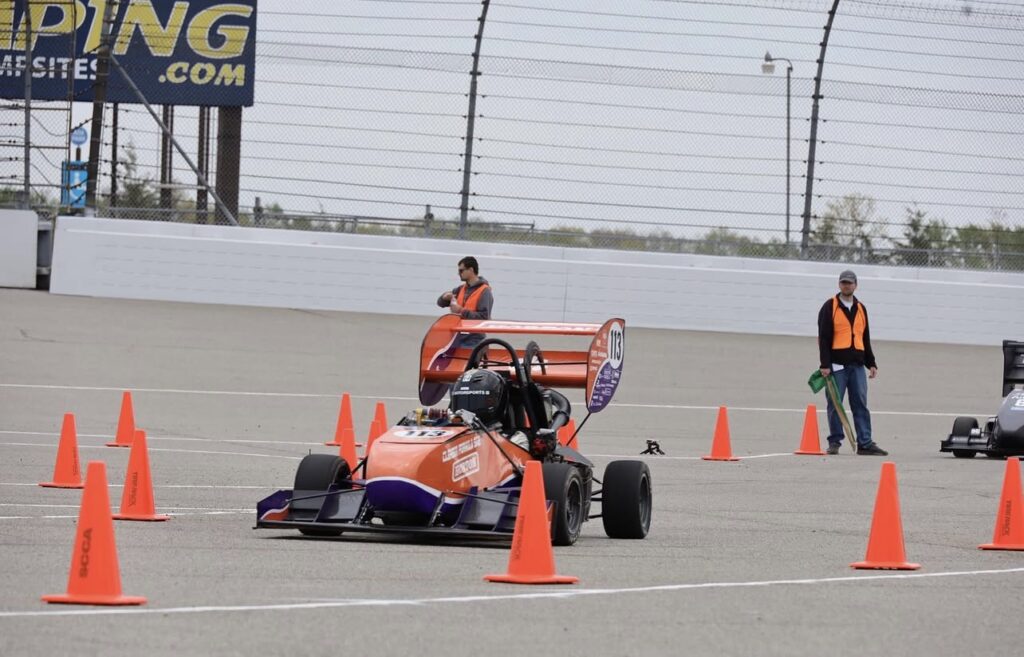
With the opportunity to meet with industry professionals at these events, the work back at the shop in Clemson becomes even more important. When the team hits the track in Michigan, they will be facing a large variety of tests, such as skid pad, acceleration, autocross and endurance. During the several months spent engineering and building the car, the team must find the happy medium of all four of those areas to ensure their ability to be competitive throughout the entire event.
Gaspich explained that in the skid pad test, the car must complete two figure 8s of constant radius, which evaluates the “steady-state cornering ability,” which is essentially testing how much grip the car is able to make in a low-speed corner. It also evaluates the team’s ability to set up the car and make the best use of the tires. The acceleration competition is more self-explanatory. The acceleration test is practically a short drag race to evaluate how the car can accelerate from being stopped. Gaspich added that on a good day, their car goes from 0 to 60 miles per hour in about 3.5 seconds and has even gotten down to around 3.3 seconds at times.
From there, the event transitions into the autocross competition. In this event, a half-mile course is set up, and the team gets two chances with two different drivers to complete one lap and set the fastest time.
“Autocross courses, especially at Michigan, are insanely difficult,” Gaspich said. “There are even some teams out there that’ll even have a professional driver, because as long as they are a student currently enrolled at your university, they are allowed to drive the car.”
Clemson FSAE on track in the 2025 event at Michigan International Speedway.
Once the autocross event is complete, the competition transitions into the final event: endurance. The endurance event is the largest test of how well the car was built and engineered. The event is 30 straight minutes of racing, and while that doesn’t sound like much, Gaspich emphasized that at the end of the day, these cars are still completely student-built and aren’t professional-grade.
The event has been a tough one for Clemson SAE in recent years, as the team has not finished the full 30 minutes since 2022. Even then, though, the car overheated and severely reduced the top speed. The team came close to finally getting the monkey off its back in last year’s event, but fate had other plans.
“We had a pretty heartbreaking finish to endurance last year,” Gaspich said. “We were doing really good in all of our events, looking to finish at least top 20. We came in after our first stint of endurance to do the driver change, and suddenly we hear over the radio, ‘guys, we’re disqualified.’”
As it turns out, the car had been leaking just a few drops of oil, and the rules for the event specify that the cars cannot leak any fluid whatsoever. As a result, the team was told their day was done, and the chance to finally finish the endurance event had been snatched away from them once again.
As Clemson FSAE completes its Tiger 26 build, the team is optimistic about their chances to run well in and complete all the events in May. When that time comes, they are ready for the challenges and look forward to getting back on track. Students interested in joining Clemson FSAE can find them on TigerQuest or visit https://www.clemsonfsae.com/join-the-team.
As the semester progresses for Clemson Baja SAE, the team is working towards building its newest vehicle for competition later this year. However, the new vehicle is not the only thing the organization is constructing this semester.
Clemson Baja SAE was founded in 1978 and is a student-run engineering organization that designs and builds custom off-road vehicles to compete in the national Baja SAE Collegiate Design Series. The organization had become dormant following the COVID-19 pandemic, but a group of eight dedicated students were determined to bring the organization back to life in 2023.
Clemson Baja SAE racing on dirt track
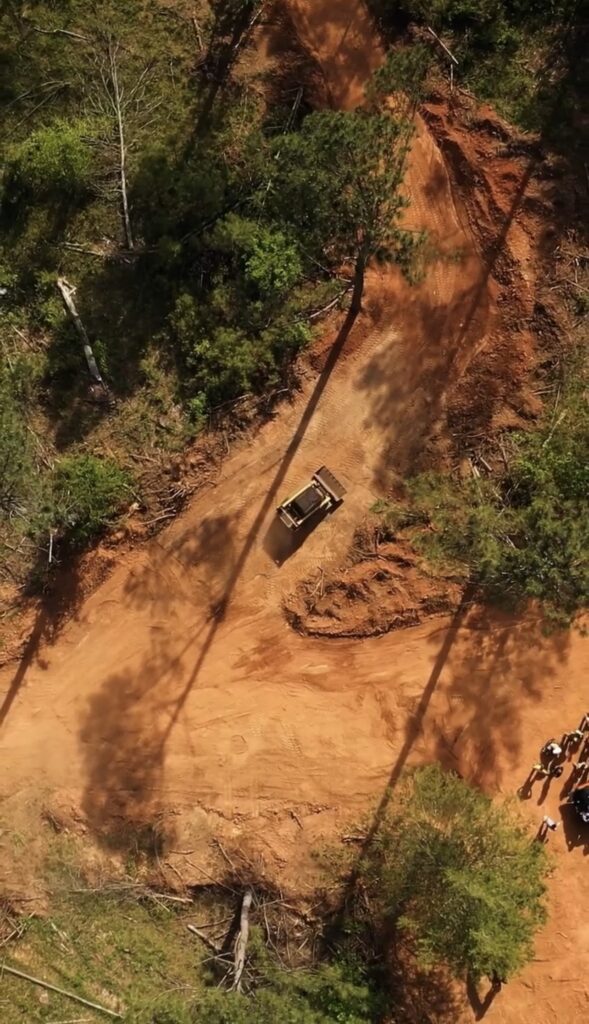
Since its revival, Baja has utilized a test track in the woods behind their race shop to ensure their student-built vehicles were primed and ready to compete. Recently, though, the track was cleared and logged, completely destroying the course and making it unusable for the race team. The occurrence left Baja without a way to test their vehicles, meaning they would be unable to be sure that there were no mechanical or safety defects before traveling for competitions. That’s when Blanchard CAT and the Department of Construction Science and Management stepped in.
“This semester, we are partnering with the Construction Science department,” Tyler Odgers, president of Baja SAE, said in an interview. “Right now, they have drone scanned the entire block and they’re designing a track on their computers.”
Odgers added that Blanchard CAT has donated equipment for the construction of the track, something that would have been unfeasible for the team to afford. Just as it does for many professional race teams, funding for Clemson Baja often comes at a premium. With the need for funding, the organization cannot focus solely on engineering and manufacturing their vehicles. Odgers says that the team has begun developing a large business team in order to afford those aforementioned costs.
Team picture with Clemson Baja SAE car
“Obviously, we need funding, right?” Odgers said. “We have a team that is essentially putting together a packet presentation that we can just go out and give to businesses. There’s a very big communications, marketing type of thing trying to get our name out there.”
Odgers went on to say that he sees opportunities for practically any major, and that “there are very few majors that I think can’t do something with us.” As the team continues to prepare for competition and the construction of its new race vehicle and test track, emphasis will still remain on the business and communications side of the organization. Any students interested in joining Clemson Baja SAE can find them on TigerQuest or go to https://cecas.clemson.edu/bajasae/join/