Sports Insight

A history of motorsports at Clemson, and a look into the future

Clemson Tiger Racing in front of CU ICAR

By Nathan Inman

Today, RHBSSI’s first semester of the all-new Motorsports Monday is coming to an end. To wrap up the first iteration of the series, the Institute provides a synopsis of the history of motorsports at Clemson and a glimpse into what the future may look like.

RHBSSI Legacy Professor, Dr. Rob Prucka

To learn more about the topic, RHBSSI sat down with its endowed Alan Kulwicki Professor of Motorsports Engineering, Dr. Rob Prucka, from the Department of Automotive Engineering. 

Prucka arrived at Clemson in 2008 as a professor in automotive engineering. Since then, he has moved through the department and now sits as the interim chair. Prior to coming to Clemson, Prucka worked with the Ford Motor Company and was a consultant for the manufacturing of racing engines. Right before he began his professorship, Prucka was offered a job in the racing industry. However, Prucka turned down that offer, believing there was something bigger in the automotive program at Clemson. Nearly 20 years later, it’s safe to say that assumption was correct.

Throughout his time with the department, he has helped lead students participating in Deep Orange, a vehicle prototype program that gives graduate students the opportunity to build a vehicle of their own. Over the course of 16 projects thus far, two have specifically involved motorsports. The first of those two projects was Deep Orange 9, which was completed in 2018 and was a Next-Generation Rallycross racecar built in partnership with Honda. This project was particularly impactful for Prucka, saying it “totally changed my career path.”

Deep Orange 9
Deep Orange 9

“The director of Deep Orange left,” he added, “and I just stepped in and said, ‘either this program goes away, or I run it,’ and so I just ran it.”

Just two years later, another racecar model came out of the Deep Orange program. In 2020, graduate students completed the build of Deep Orange 12, a completely autonomous IndyCar. When the car was completed, it was taken to the historic Indianapolis Motor Speedway, home of the Indy 500, to be put to the test. Prucka mentioned that, when the car sailed off into turn 1, he wasn’t fully certain whether the car would survive.

“We weren’t really sure the whole time we were designing that car if it was ever gonna work,” he said, “because we know all the engineering and all the numbers are fine, but we weren’t sure when that thing really went into a corner at high speed, the steering would actually work.”

So, when the car went into the first turn at 140 miles per hour, Prucka braced for the worst. Instead, the car made it through completely fine, and the hard work of all the students involved in the project had paid off.

“I almost fell to the ground,” he said. “I was just so shocked, you know, all these calculations we did worked. That was just overwhelming, because it was at such a famous place, and me as an engine person, like, ‘here’s this engine we helped design,’ and it’s blasting around this track.”

With all that has been done over the last several years, it’s clear that motorsports are rooted deep in the heart of Clemson. So, what does the future look like for the years to come?

In recent years, the automotive engineering program has launched the careers of many students, as they have gone on to land jobs in motorsports shortly after graduation. Notable places past students have landed include the Cadillac Formula 1 team, Roush Yates Engines, and other various F1 and NASCAR roles. Prucka says the goal for the future is to keep the program evolving with the rest of the world, so that it can continue to produce results for its students.
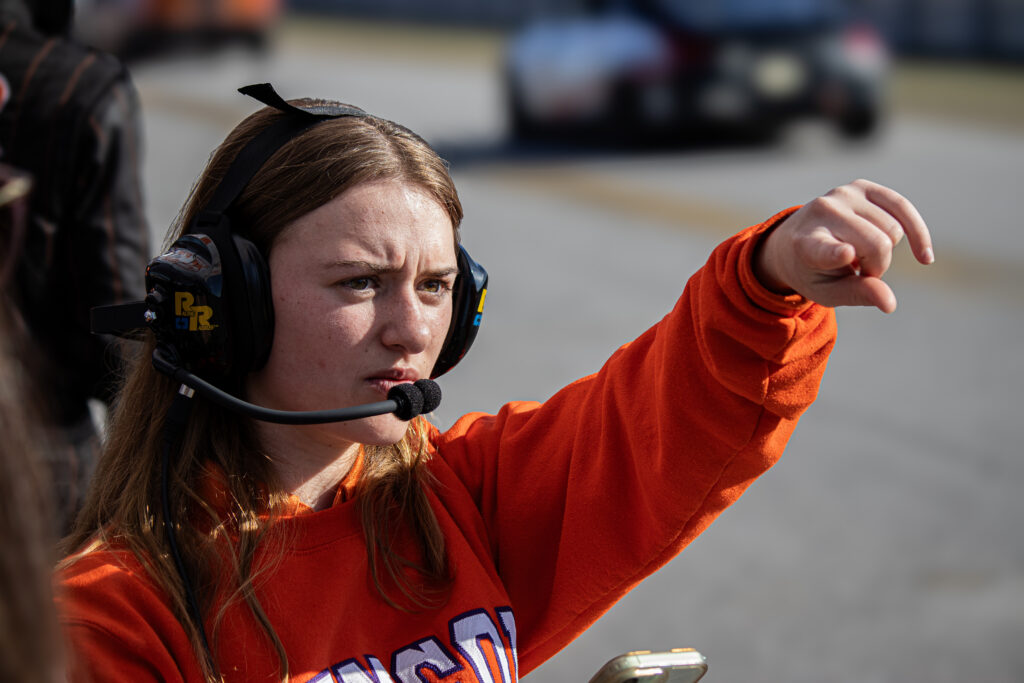
Hadley Smith on the team radio as race engineer.
Hadley Smith on the CTR team radio as race engineer.

“I just look forward to working with students and truly trying to build this new generation of talent that needs to be out there in the industry, because they need it, right?” Prucka said. “And so, there’s a great opportunity, the industry wants to help.”

Prucka added that this all goes back to that decision he made in 2008 when he turned down the racing world and came to Clemson.

“To me, that’s the best part,” he added. “I mean, that’s why I’m in the academic world and not out in the racing world, is that I really just enjoy working with students. I feel like it’s a good fit for what I like to do.”

As Dr. Prucka continues to lead the future of motorsports at Clemson forward, he hopes he can continue to provide these students with all the opportunities their hearts desire. And if the past is any indication, those students will be in good hands.

Clemson Formula SAE Tiger 26 is ready to hit the track

By Nathan Inman

As the semester draws to a close, Clemson Formula SAE remains busy, polishing the final touches on the team’s Tiger 26 race car. With less than a month until the car takes to the track for the main competition at Michigan International Speedway, the build is officially in its final stages.

FSAE's engine dyno
FSAE’s engine dyno, where the team maximizes the output of the car’s engine.

RHBSSI sat down with Alex Daichendt, a senior electrical engineering major and FSAE’s chief engineer, to discuss the progress made this semester and the final preparations being made before the team makes the long trek up north next month.

“We ended up with a rolling car right at the beginning of spring break,” Daichendt said. “So, it was a really, really big accomplishment for us.”

With the base of the car completed prior to the break, the team was left to focus on putting together the mechanical and electrical components. With those additions completed, the team was able to begin testing the car and ensure it was up to snuff. 

Following testing, the team went back to work, focusing on potential areas for improvement to make changes. 

“There’s still plenty of work to do in regards to the suspension tuning,” Daichendt added. “Hopefully, we’re getting the full aero package on the car this week for this weekend for testing, so we can get everything dialed in and what we need to be.”

FSAE's Tiger 26 nearly completed
FSAE’s Tiger 26 is nearing completion, with the wrap of the team’s livery soon to be added.

With the build nearly completely put together, the finishing touches on the car will include applying the wrap of the car’s livery. Daichendt mentioned that the wrap will be in the team’s hands within the next two weeks, meaning it’ll be the end of finals before Tiger 26 reaches its final form. Daichendt added that isn’t a bad thing, though.

“It’ll really go on right before competition, which is completely fine with us,” Daichendt said about the wrap. “You know, less rock chips makes it look nice and pretty going into competition.”

With the car nearly complete, the team is focused on May 13, when Tiger 26 will hit the track at Michigan International Speedway for a multi-day competition against roughly 100 other schools from the United States and around the globe.

Clemson professors publish work regarding the dark side of motorsports

By Nathan Inman

Of all the creatures on planet Earth, only humans are aware of their own mortality. It’s often a taboo subject in day-to-day life, but it’s especially sensitive in the world of motorsports. There’s an old adage in life that the good ones are taken way too soon, and the same could be said for motorsports. Two of the greatest racing drivers to have ever lived raced in two very different forms of motorsport — but their fates were all the same. 

On March 30, RHBSSI Faculty Fellow Dr. Felipe Tobar and a colleague from the Parks, Recreation and Tourism Department were published in the Routledge Handbook of Dark Events. Their chapter, titled “Death at play: Celebration and memorialisation of motorsport’s dead,” covers the public’s reactions to the deaths of Formula 1 driver Ayrton Senna and NASCAR driver Dale Earnhardt.

The chapter focuses on how the drivers are memorialized, both at the racetracks where they lost their lives and back in their respective hometowns. According to Dr. Tobar and Dr. Ramshaw, memorials at racetracks tend to be more somber, recognizing the dangers of motorsports. This contrasts with how the drivers are remembered in their hometowns. Compared with these memorials, others are more celebratory, focusing more on the lives the drivers lived and their identities. 

Senna’s life was taken on May 1, 1994, during the San Marino Grand Prix at Imola, Italy. At nearly 200 miles per hour, Senna’s car veered off track and slammed head-on into a concrete barrier. Upon being rushed to the hospital, Senna was declared dead shortly after, at just 34 years old. In just 10 full seasons in Formula 1, Senna had earned 41 race victories and three World Drivers’ Championships. His death remains one of the biggest “what ifs?” in racing history, as Senna likely had several more seasons ahead of him. 

According to the chapter, Senna has been memorialized at Imola in various fashions. Notably, on the tenth anniversary of his death, there was a ceremonial lap around the circuit in one of Senna’s Formula 1 cars driven by one of his former teammates. Years later, on the 25th anniversary of Senna’s death, there was “a Catholic Mass at the Tamburello curve at 2 PM (the time and exact location of Senna’s fatal accident).” Additionally, there was an exhibition at the track featuring multiple of Senna’s former race cars. This contrasts with how Senna is remembered in his hometown of São Paulo, Brazil. Shortly after his death, the Brazilian government declared three days of national mourning, and his funeral was attended by more than three million people. 

In the years since, Senna has been memorialized in numerous ways throughout São Paulo and the rest of the country. Notably, he has been recognized through the “naming of numerous racetracks, metro lines, bus stations, streets, neighborhoods, bridges and a federal highway.”

Following Senna’s death, in a twist of fate, Earnhardt would go on to win the NASCAR Winston Cup Series race later that day at Talladega. Upon exiting the car in victory lane, Earnhardt opened his post-race interview remembering Senna.

“I want to send our thoughts and prayers to the family of Ayrton Senna and all his fans,” Earnhardt said. “He was a great racer, and it’s a great shame to see him go as he did. You know, it’s tough.”

Less than a decade later, on February 18, 2001, Earnhardt was running third on the final lap of the Daytona 500. With half a lap to go, he sat behind two race cars he owned, including the No. 8 that was piloted by his son, Dale Earnhardt Jr. Attempting to fend off the rest of the pack for his drivers ahead of him, Earnhardt was turned at a high rate of speed into the turn four wall as the field raced towards the checkered flag. Earnhardt’s drivers would finish first and second, as his own car rolled down the banking and came to rest in the infield grass. Much like Senna, Earhardt was rushed to a local hospital and declared dead shortly after. In the moments following his death, NASCAR president Mike Helton made an announcement that brought the nation to a halt.

It was just five words, but they held a weight much heavier: “We have lost Dale Earnhardt.”

In the years since his death, Daytona has constructed a statue of Earnhardt winning the 1998 Daytona 500 near the track’s tour entrance, where fans often leave flowers and other memorabilia. Additionally, on years that align with the anniversary of Earnhardt’s death, fans in the stands hold out three fingers on the third lap of the event.

According to the chapter, the memorials throughout Earnhardt’s hometown of Kannapolis, North Carolina, are much more celebratory. Since 2023, the city has hosted an annual street race named the Earnhardt Outdoors Showdown. The chapter describes this as “hardly solemn,” as the event celebrates the legacy the driver left behind. Much like Daytona, Kannapolis has erected its own statue, but it is very different from the one on display at the speedway. The statue in Earnhardt’s hometown “features a statue of Earnhardt in Wrangler jeans, cowboy boots and a button‑up shirt rather than a racing suit” and is even often a site for wedding ceremonies. This exemplifies that the statue is much more celebratory than it is somber.

These variations in how drivers are memorialized showcase how hometowns mourn differently than a national audience. Regardless, whether the memorials be solemn as they are at the racetracks or celebratory as they are in the drivers’ hometowns, one thing remains certain: the lives and legacies of the drivers will forever be remembered.

Clemson Baja SAE’s 2026 vehicle build nearing completion

By Nathan Inman

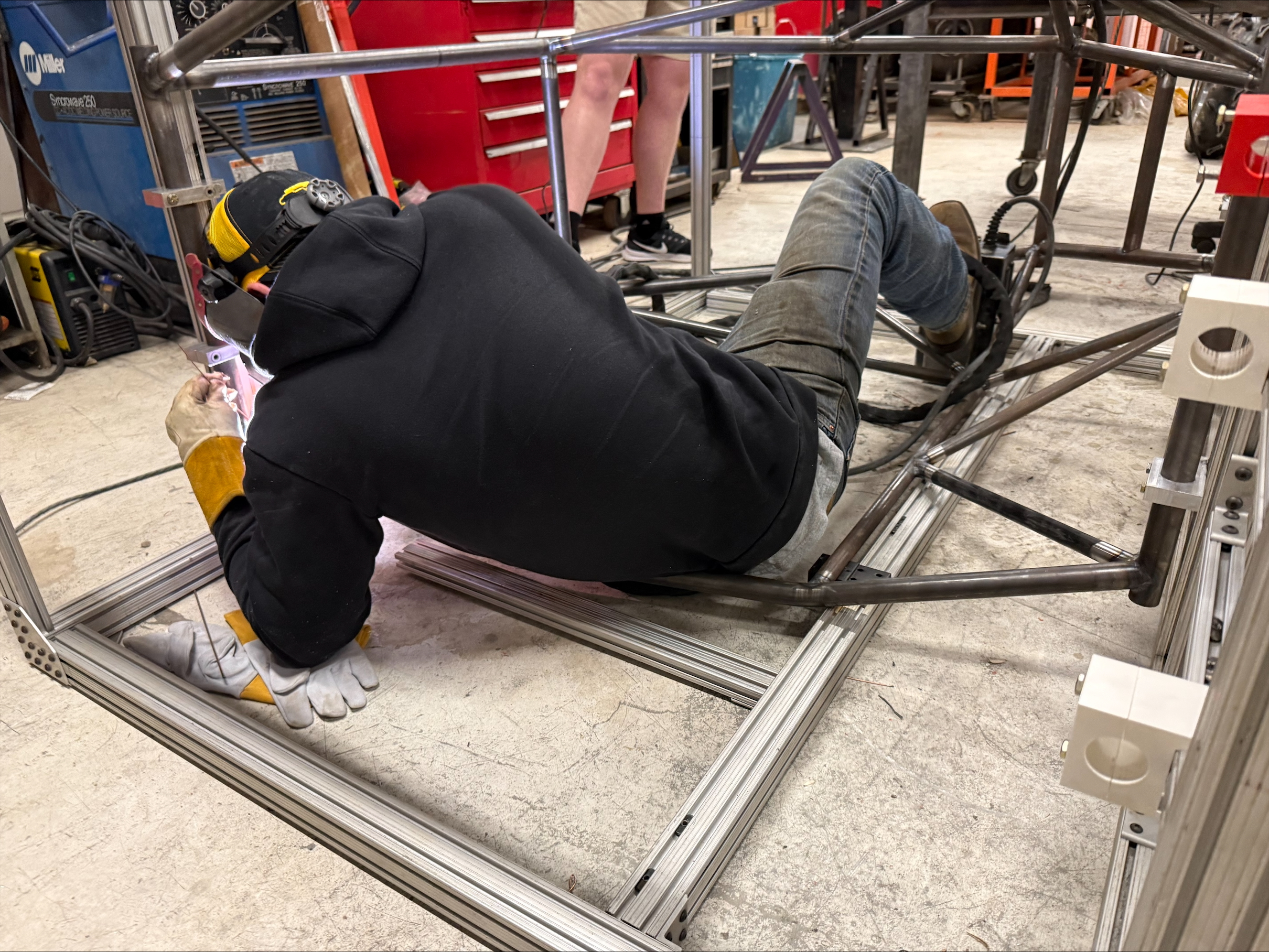
A Clemson Baja student welds the chassis together.

As the semester is entering the home stretch, so too is the newest vehicle build for Clemson Baja SAE. After months of designing, the vehicle is now in its final stages of the build phase as the team prepares to compete in a competition in New York this June.

The RHBSSI sat down with Nicholas Roessler, a freshman automotive engineering major and the team’s chassis lead and head welder, to discuss how the build has progressed over the semester.

“The new build’s coming along well,” he said. “We’re kind of in the final steps of welding together our chassis. Suspension is finally getting finalized, so we can start making the suspension and figuring out where it goes on the car.”

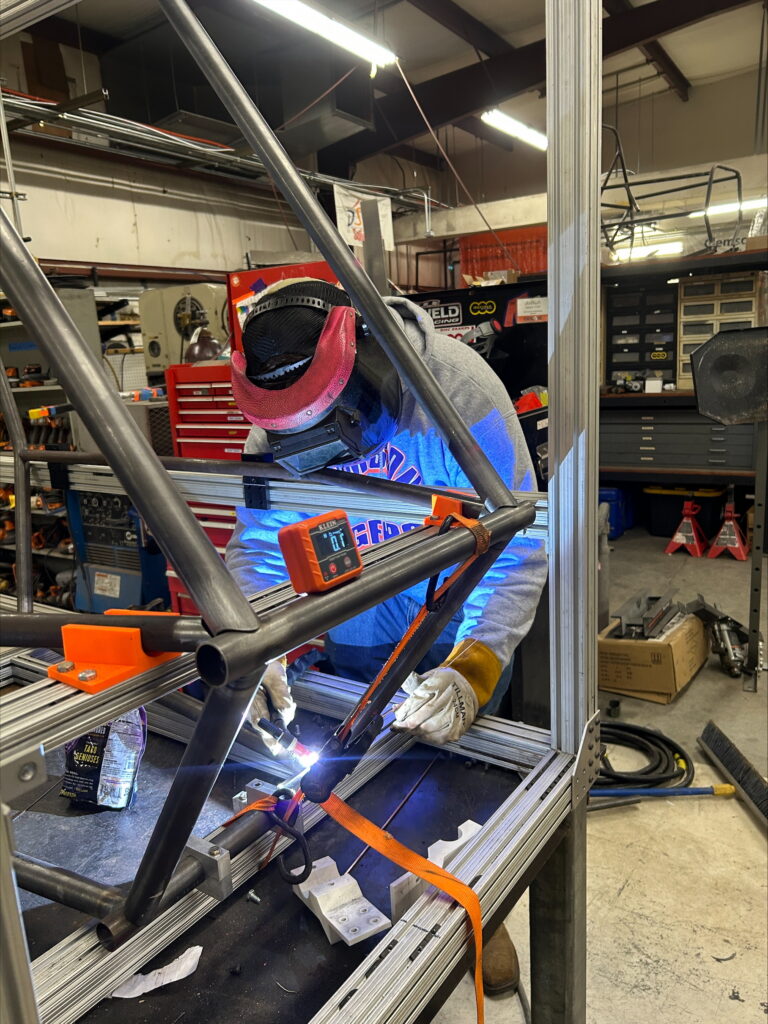
Sparks fly as a team member welds sections of the frame together.

As the chassis lead, Roessler is responsible for ensuring the chassis meets the standards required for the vehicle to handle the rough terrain it will encounter in competition. If one thing went wrong with the chassis, it could derail the entire build.

With that in mind, Roessler said he understands the important responsibility placed upon him and is confident that the chassis will be able to handle whatever is thrown its way.

“Driver safety is the most important thing to us, 100%,” he said. “As I’m getting there, and as I’m designing the chassis, that’s the main thought. We really can’t chance having something break, and so structural integrity is definitely the most important thing.”

Roessler mentioned that throughout the semester, one particular challenge with the chassis has been making it entirely in-house. The team has primarily focused on not outsourcing any development and on making the vehicle entirely student-built.

“There’s a learning curve to kind of bending our own tubes, and there’s been a lot of mistakes actually putting the chassis together, but we’ve kind of got it figured out and on a roll,” he said.

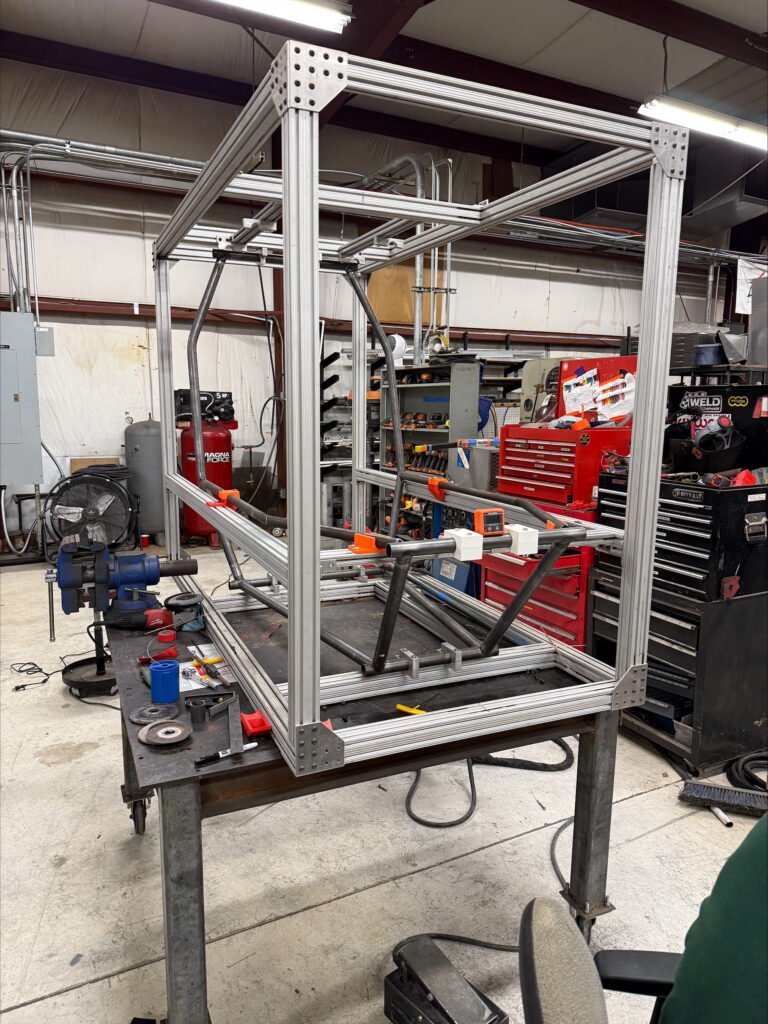
Components are arranged on a work surface prior to assembly.

When Clemson Baja last spoke with the RHBSSI, the team focused on a brand-new test track under construction for them to test their newest build right here in Clemson. Roessler says the track will help the team ensure all the pieces are in place for the build to hold together before they compete in June.

“It’ll probably be one of the most beneficial things that has happened for Baja in a long time, he said. “We’ll be able to actually test our vehicle, and that way, if anything fails, hopefully it fails with the shop five minutes away, and not in Rochester, New York.

As the build nears completion, the team has its sights set on June 11 for its first competition in Rochester with the new vehicle.

“We were all flabbergasted”: Clemson Tiger Racing members reflect on first-ever race weekend

CTR team members with Clemson alumnus Dr. Shannon Kennedy

By Nathan Inman

February 28 was a day that was nearly three years in the making for Clemson Tiger Racing. After being established in 2023, CTR finally ran its first-ever endurance race late last month.

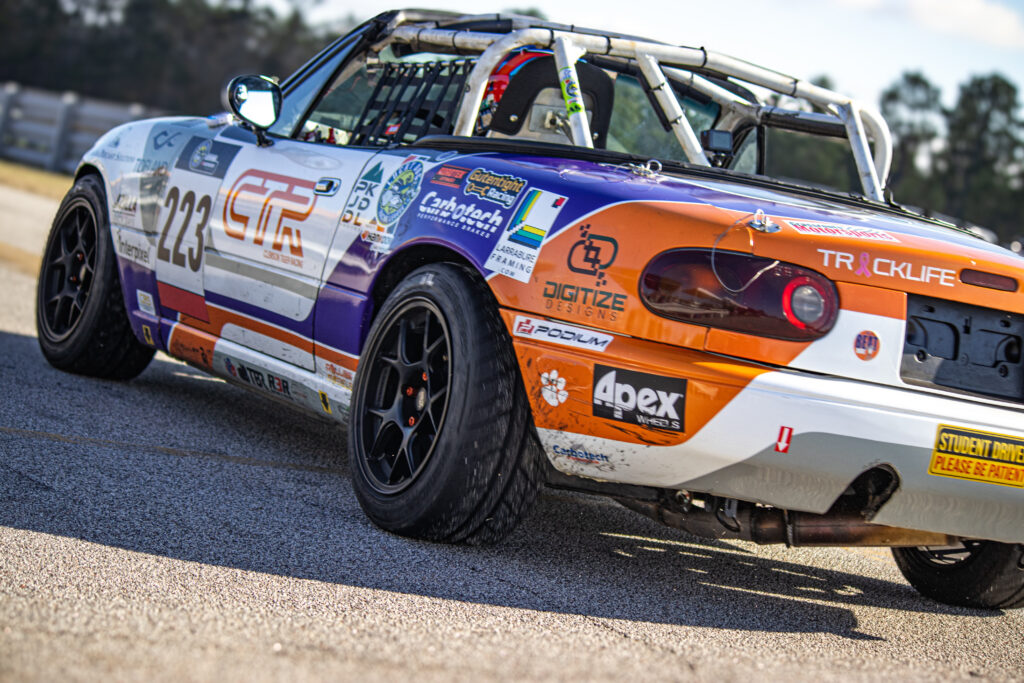
It could have been easy for the team to take it easy and just log laps to gain experience, leaving car number 223 to be an afterthought to its competitors. Instead, though, everyone knew they were there. The team finished fourth in the Saturday race after a solid showing throughout the day, leaving CTR with a shot at a podium finish. Unfortunately, the team was unable to cross the finish line, as the car ran out of gas and slowed to a stop out of the final corner.

Hadley Smith on the team radio as race engineer.

While the race finished in heartbreaking fashion, the result was still one the team could be proud of.
“I think we were all flabbergasted that we made it through,” said Hadley Smith, a sophomore engineering major and race engineer for CTR. “We were so incredibly excited and proud of ourselves that we made it through the first day.” The pride Smith mentioned was echoed by several of her fellow team members.

“It’s hard for me to put this feeling into words,” said Macy Jersek, graduate student and operations lead for CTR. “I’m just so happy and really proud of this team. I think we all were just thrilled to see the car finish, and to be so successful and to be competitive with our little Miata with 80 horsepower.”

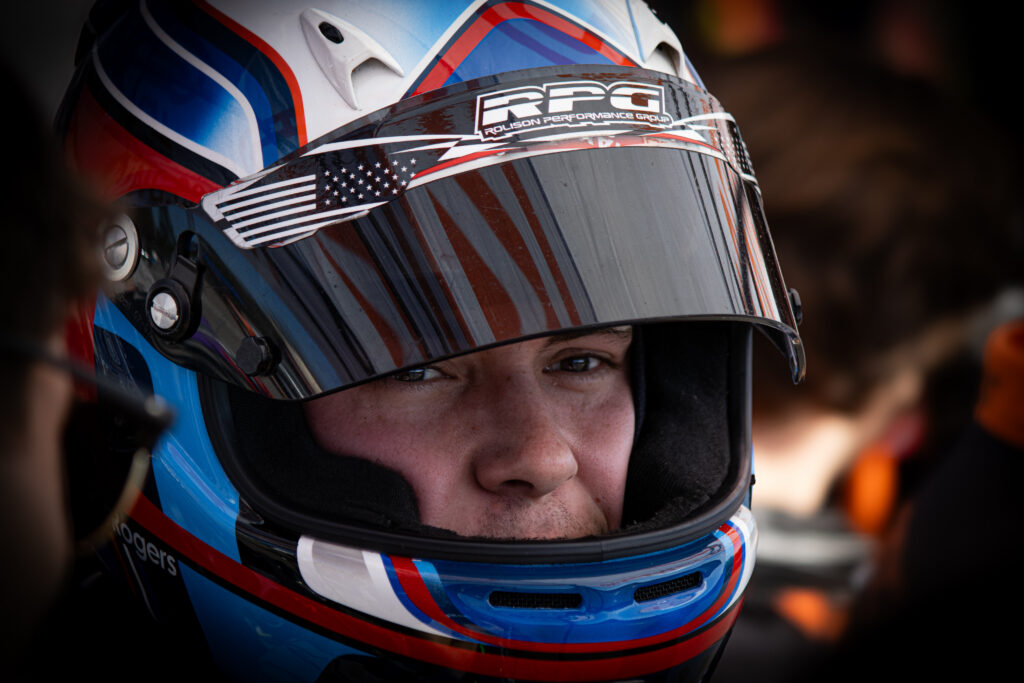
Kieran Rogers prepares to enter the car for the final stint of Saturday's race.
Kieran Rogers prepares to enter the car for the final stint of Saturday’s race.

“I’m also very proud of everyone,” added Kieran Rogers, junior automotive engineering student who is the race engineer lead and a driver for CTR. “There’s a lot of work that went into it, so it’s very rewarding when you see we’re able to go on for as long as possible.”

As Saturday drew to a close, the focus shifted to Sunday, when the team would hit the track once more for the second race of the weekend. After the learning experience of their first race, the team was hopeful they could compete for a podium position once again.

Not only did CTR compete for a podium in Sunday’s race, and the team also led at the break after the first hour and held the lead for several hours afterwards. It appeared that CTR was going to have a shot at winning a race in its first-ever race weekend. Unfortunately, with roughly 90 minutes remaining, the car suffered a failure in the rear differential. With so little time remaining and the car extremely hot, CTR was unable to make repairs and was forced to retire from the race.

CTR leaves the pit lane following the final pit stop on Saturday.

While the end result was not what the team had hoped for, the team members had every reason to hold their heads high and mark the weekend as a success. A car fully engineered, maintained and driven by college students lasted an impressive 341 laps and nearly 13 hours throughout the two races, leaving the expectations heading into the weekend in the dust. Even more impressive was that the parts built and installed by the team stayed in shape, and the only thing that prevented the team from completing all 14 hours and potentially earning a race win or podium was one that was never touched by the students besides fluid changes, serving as a testament to the work of the mechanics.

“I think it just really shows how hard every single one of the mechanics has been working,” said Matthew Flaim, an automotive engineering graduate student, as well as driver and lead mechanic for CTR. “Just the effort that has been going in to make sure that we’re making, not only a consistent and competitive race car, but also a safe race car.”

With CTR’s first race finally in the books, the team is now looking ahead to more races and hopes to be back on track in May at Atlanta Motorsports Park. With the experience of the first race weekend and the knowledge gained from it, the sky is now the limit for the team’s future success.

Clemson Formula SAE gearing up for annual spring competition

By Nathan Inman

Clemson FSAE members with Tiger 25 at the 2025 competition in Michigan.

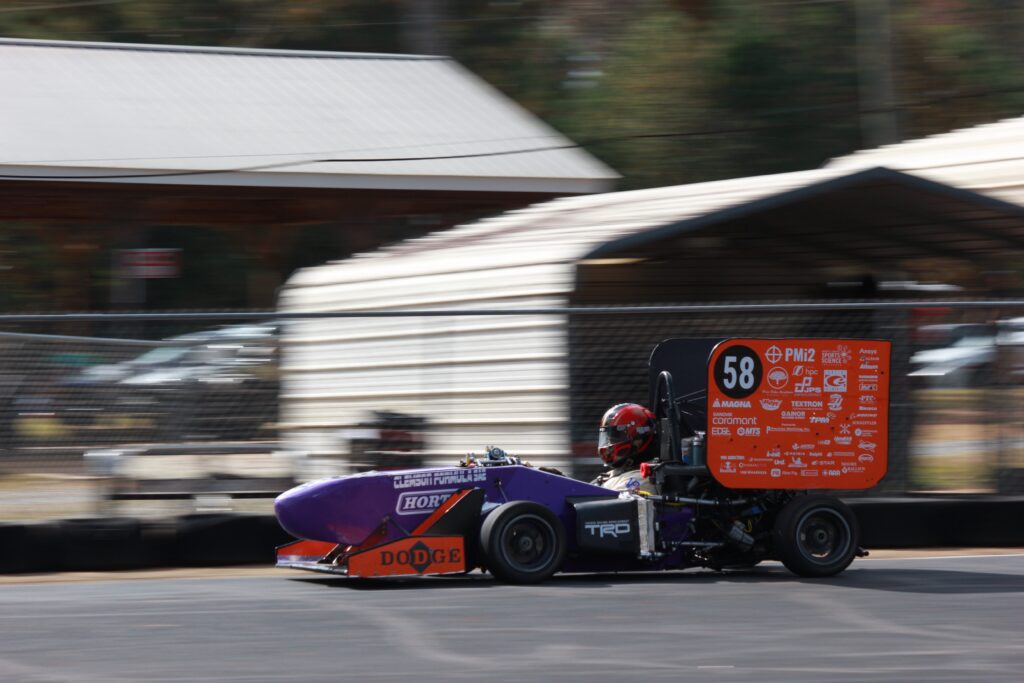
Clemson Formula SAE has been engineering its 2026 race car, Tiger 26, over the last several months, and the finishing touches are nearing completion. Tiger 26 will make its debut when the team hits the track at Michigan International Speedway on May 13.

Launched in 1998, Clemson FSAE is a student-run race team partnered with the College of Engineering, Computing and Applied Sciences. The organization provides students with real-life experience that cannot be replicated in the classroom, with opportunities in areas such as aerodynamics, business, chassis, electrical, powertrain and suspension. The event in May is part of the international FSAE series, which is hosted by the Society of Automotive Engineers (SAE). The series serves as a way for students to see their hard work come to life and compete with other students from around the globe. 

With the annual event hosting thousands of students interested in engineering and motorsports, representatives from those industries attend the event to network with students and see what they are capable of firsthand. Peter Gaspich, suspension lead for Clemson FSAE, says that members of the organization have been able to gather connections at these events that later boosted them into roles with professional racing teams.

“One of our alumni is a performance engineer at [General Motors’] IndyCar program,” Kelly said. “We had a simulation performance engineer at Red Bull F1, and another simulation performance engineer at Alpine F1.”

Clemson FSAE team members working on the frame of Tiger 26.

With the opportunity to meet with industry professionals at these events, the work back at the shop in Clemson becomes even more important. When the team hits the track in Michigan, they will be facing a large variety of tests, such as skid pad, acceleration, autocross and endurance. During the several months spent engineering and building the car, the team must find the happy medium of all four of those areas to ensure their ability to be competitive throughout the entire event.

Gaspich explained that in the skid pad test, the car must complete two figure 8s of constant radius, which evaluates the “steady-state cornering ability,” which is essentially testing how much grip the car is able to make in a low-speed corner. It also evaluates the team’s ability to set up the car and make the best use of the tires. The acceleration competition is more self-explanatory. The acceleration test is practically a short drag race to evaluate how the car can accelerate from being stopped. Gaspich added that on a good day, their car goes from 0 to 60 miles per hour in about 3.5 seconds and has even gotten down to around 3.3 seconds at times. 

From there, the event transitions into the autocross competition. In this event, a half-mile course is set up, and the team gets two chances with two different drivers to complete one lap and set the fastest time. 

“Autocross courses, especially at Michigan, are insanely difficult,” Gaspich said. “There are even some teams out there that’ll even have a professional driver, because as long as they are a student currently enrolled at your university, they are allowed to drive the car.”

Clemson FSAE on track in the 2025 event at Michigan International Speedway.

Once the autocross event is complete, the competition transitions into the final event: endurance. The endurance event is the largest test of how well the car was built and engineered. The event is 30 straight minutes of racing, and while that doesn’t sound like much, Gaspich emphasized that at the end of the day, these cars are still completely student-built and aren’t professional-grade.

The event has been a tough one for Clemson SAE in recent years, as the team has not finished the full 30 minutes since 2022. Even then, though, the car overheated and severely reduced the top speed. The team came close to finally getting the monkey off its back in last year’s event, but fate had other plans.

“We had a pretty heartbreaking finish to endurance last year,” Gaspich said. “We were doing really good in all of our events, looking to finish at least top 20. We came in after our first stint of endurance to do the driver change, and suddenly we hear over the radio, ‘guys, we’re disqualified.’” 

As it turns out, the car had been leaking just a few drops of oil, and the rules for the event specify that the cars cannot leak any fluid whatsoever. As a result, the team was told their day was done, and the chance to finally finish the endurance event had been snatched away from them once again.

As Clemson FSAE completes its Tiger 26 build, the team is optimistic about their chances to run well in and complete all the events in May. When that time comes, they are ready for the challenges and look forward to getting back on track. Students interested in joining Clemson FSAE can find them on TigerQuest or visit https://www.clemsonfsae.com/join-the-team.

Clemson Baja SAE partnering with Construction Science and Management department to construct new test track

By Nathan Inman

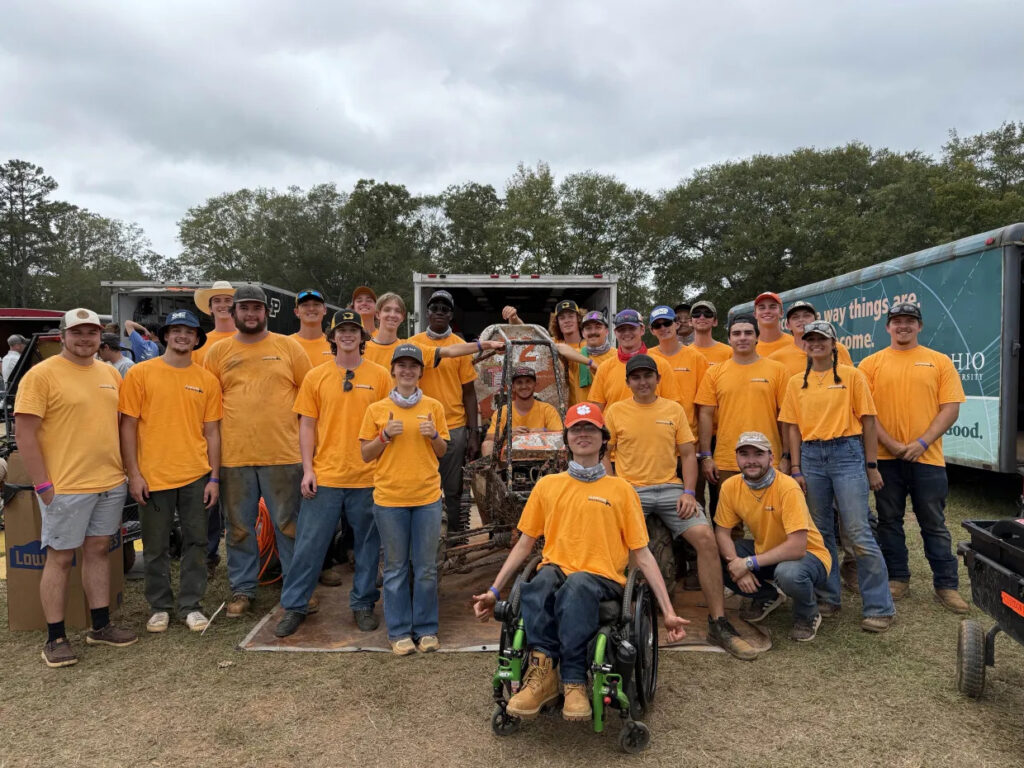
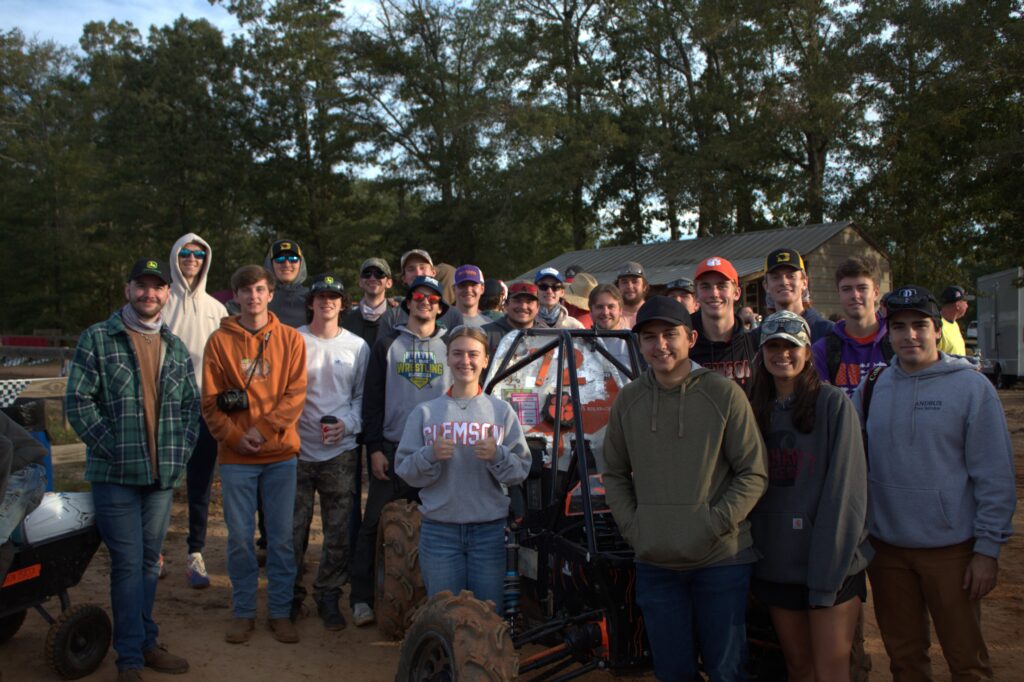
Clemson Baja SAE team picture at competition

As the semester progresses for Clemson Baja SAE, the team is working towards building its newest vehicle for competition later this year. However, the new vehicle is not the only thing the organization is constructing this semester.

Clemson Baja SAE was founded in 1978 and is a student-run engineering organization that designs and builds custom off-road vehicles to compete in the national Baja SAE Collegiate Design Series. The organization had become dormant following the COVID-19 pandemic, but a group of eight dedicated students were determined to bring the organization back to life in 2023.

Clemson Baja SAE racing on dirt track

Since its revival, Baja has utilized a test track in the woods behind their race shop to ensure their student-built vehicles were primed and ready to compete. Recently, though, the track was cleared and logged, completely destroying the course and making it unusable for the race team. The occurrence left Baja without a way to test their vehicles, meaning they would be unable to be sure that there were no mechanical or safety defects before traveling for competitions. That’s when Blanchard CAT and the Department of Construction Science and Management stepped in.

“This semester, we are partnering with the Construction Science department,” Tyler Odgers, president of Baja SAE, said in an interview. “Right now, they have drone scanned the entire block and they’re designing a track on their computers.”

Odgers added that Blanchard CAT has donated equipment for the construction of the track, something that would have been unfeasible for the team to afford. Just as it does for many professional race teams, funding for Clemson Baja often comes at a premium. With the need for funding, the organization cannot focus solely on engineering and manufacturing their vehicles. Odgers says that the team has begun developing a large business team in order to afford those aforementioned costs.

Team picture with Clemson Baja SAE car

“Obviously, we need funding, right?” Odgers said. “We have a team that is essentially putting together a packet presentation that we can just go out and give to businesses. There’s a very big communications, marketing type of thing trying to get our name out there.”

Odgers went on to say that he sees opportunities for practically any major, and that “there are very few majors that I think can’t do something with us.” As the team continues to prepare for competition and the construction of its new race vehicle and test track, emphasis will still remain on the business and communications side of the organization. Any students interested in joining Clemson Baja SAE can find them on TigerQuest or go to https://cecas.clemson.edu/bajasae/join/

Former Clemson Tiger begins NASCAR season in pursuit of third Daytona 500 victory

By Nathan Inman

The 2026 NASCAR Cup Series season kicked off in Daytona this past weekend, with the 68th running of the Daytona 500 taking place on Sunday. Among the field of 41 teams was one former Clemson Tiger pursuing a third consecutive Daytona 500 victory.

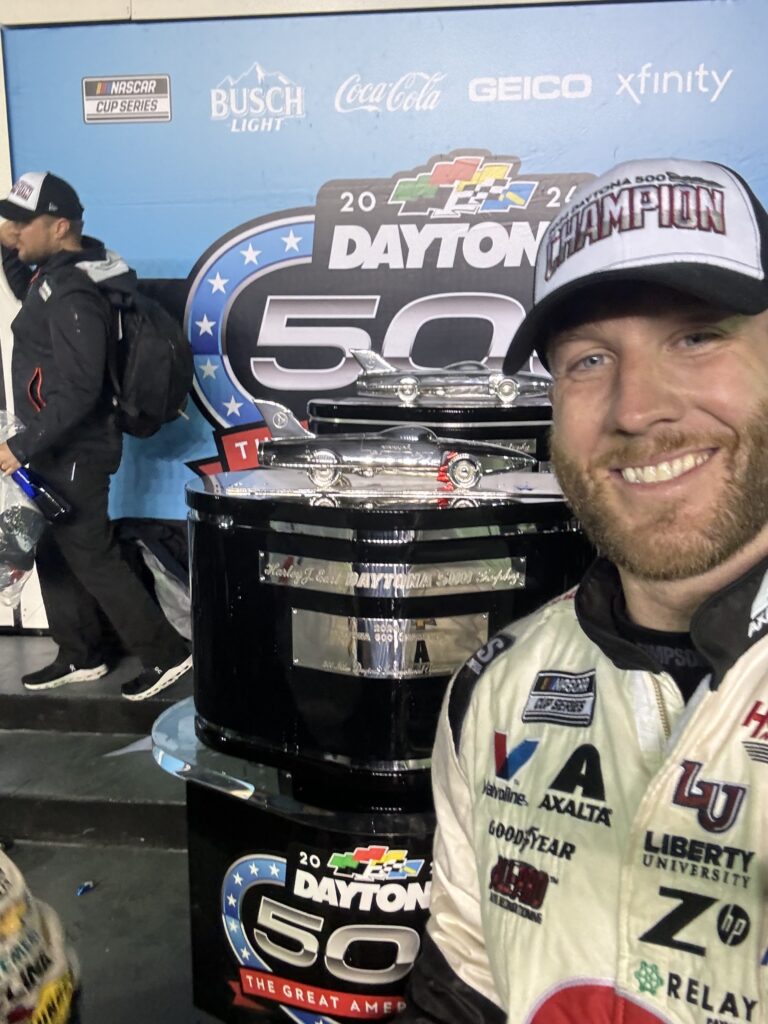
Landon Walker posing next to the Daytona 500 Harley J. Earle trophy

Landon Walker was an offensive tackle for the Tigers from 2008 until 2011 and was part of the 2010 squad that secured Dabo Swinney’s first ACC championship. Throughout his career, Walker played a total of 3,131 snaps, a record at the time, and now sits fifth on the all-time list of Clemson players. Throughout his life, Walker bled Clemson orange, as his father, Gary, was a former Clemson Tiger and part of the 1981 team that won Clemson its first National Championship.

When Walker graduated from Clemson in 2012, he had his sights set on the National Football League and intended to sign with the Cincinnati Bengals as an undrafted free agent. However, a failed physical, uncovering arthritis in his knee, brought his plans to a screeching halt. Walker eventually realized his days of playing football were behind him, but still, he refused to confine himself to a typical desk job. That’s when he received a phone call from Hendrick Motorsports.

Hendrick Motorsports is NASCAR’s most successful race team, with 320 race wins and 15 championships. Walker wasn’t being called to drive a race car – he was being asked to join the pit crew.

In a 2023 interview with The Tiger, Walker said that he was unsure of what to expect when he showed up to the team’s campus in Concord, North Carolina. 

“I really had kind of a very mild understanding of what it would be and kind of got into it with the right people at the right time,” Walker said.

Walker learned quickly that the training and preparation for pit crew members was not much different than what he had done his whole life while playing football. As he began his tryouts, he was fully prepared for the tests they threw his way.

“They were doing combines, which you do in football, and testing your running skills and your power skills. Really just an overall test to see how athletic you were.”

Landon Walker and the pit crew celebrating William Byron's Daytona 500 win
Landon Walker and the pit crew celebrating William Byron’s Daytona 500 win

After Walker completed his tryouts, the team decided they liked what they were seeing and offered him a spot on the pit crew as a fueler. He accepted the offer and joined the team in September 2012, and he has been there ever since. Walker has achieved several feats during his 13 years with Hendrick Motorsports. For many years, though, there was one that seemed to slip away from him time and time again: The Daytona 500.

That changed in 2023, when his driver, William Byron, won that year’s running of The Great American Race. A year later, Byron would win the race once again, becoming just the fifth to win the race in back-to-back years.

Landon Walker and William Byron embracing after a Daytona 500 win

“That’s a big win that everybody wants, to put that ring on your finger,” Walker said. “It’s one of the most coveted wins in our sport, kind of our Super Bowl.”

No driver has ever won the race in three consecutive years. Alas, that record still holds after this past weekend, as Byron was unable to defend his crown once more. Still, after over a decade in the sport without a win in the sport’s most coveted race, Walker cherishes the opportunity to have been part of the race-winning team twice over. 

As NASCAR revs into high gear and kicks off the 2026 season, Walker hopes to check one last box on his bucket list: becoming a NASCAR champion. There might be nine months until then, but come this November, it’s entirely possible this former Tiger might achieve just that.

Clemson Tiger Racing is hitting the track for first-ever endurance race

By Nathan Inman

Clemson Tiger Racing team with their car in front of ICAR

On January 24, the American motorsports season officially kicked off with the running of the Rolex 24 at Daytona International Speedway. Among the attendees at the event was Tyson Tucker, team principal of Clemson Tiger Racing (CTR).

CTR is Clemson’s student-run endurance motorsport team, giving students of all majors and backgrounds a chance to work on a race car, and even potentially drive one. Tucker recently sat down for an interview with the Robert H. Brooks Sports Science Institute to explain the history of the organization and give insight into what this semester looks like for the team.

CTR was founded in 2023 and has continued to grow ever since. Over the previous two years, CTR has participated in track days, which are solo test runs with no real competition, to build up to their goal of endurance racing. This month, that goal comes to fruition.

“This February will be our first ever wheel-to-wheel race,” Tucker said. “That’s kind of our biggest thing for this semester. We’ve been promising this is the point we want to get to, and now we’re actually able to do that, which is really awesome.”

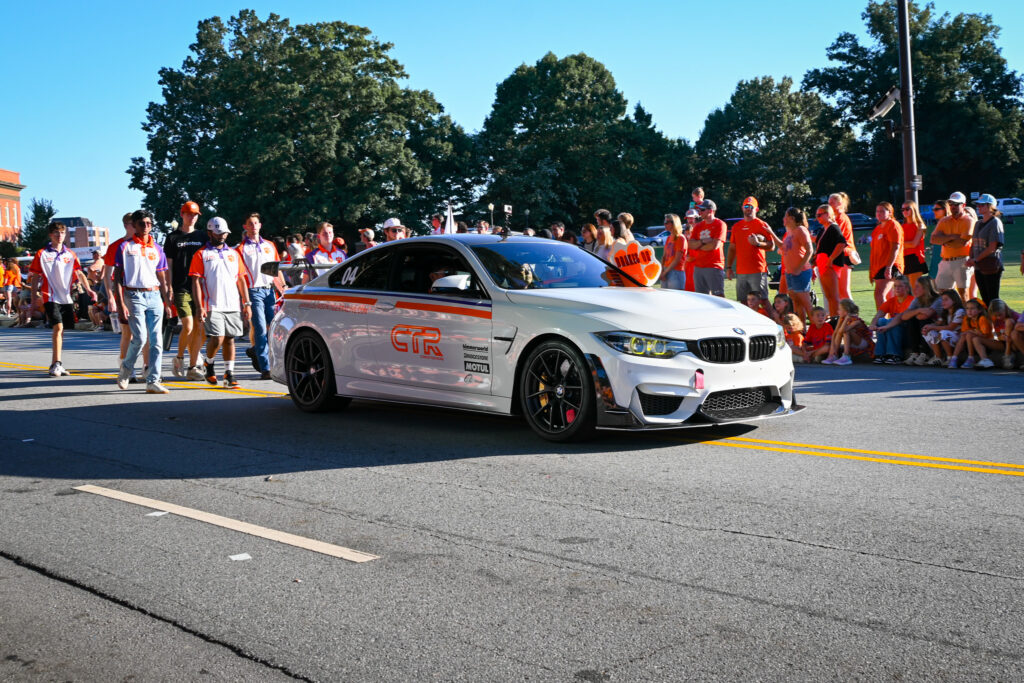
CTR car at the first friday parade
CTR car at the First Friday parade

The event will take place on February 28 at the Carolina Motorsports Park in Kershaw, South Carolina. The journey to the track has not been easy, though; as anyone familiar with the racing scene would attest to, entry into motorsports can be a costly endeavor. For that reason, teams in all facets of racing rely on sponsorship to fund their programs, and CTR is no different.

Most recently, CTR signed its newest sponsorship with Celsius to become the official energy drink of the team. Tucker explained that the continued growth of the organization is what has allowed CTR to sign deals such as this one. When he first joined the team, Tucker said there were maybe 25-30 members. As of the Spring semester, CTR is home to 100-plus students.

“It has grown immensely over the last couple of semesters, which is amazing,” Tucker added. “It’s allowed us to do a lot of really cool things, and with some of these new members we’re bringing, we’re able to reach more sponsors.”

Pictured left-to-right: Samuel Desantis, Noah Miller, Matthew Flaim, Tyson Tucker in front of their car

As the organization has grown, students with prior racing experience have been able to help prepare the team for the upcoming event. From karting to Spec Miata, there are several team members with a background in racing who hope to have the team set up for success later this month.

In addition to drivers with on-track experience, CTR is also partnered with the Collegiate Racing Series (CRS), which was co-founded by Jack Hobbs, a recent Clemson graduate and founding member of Clemson Tiger Racing. CRS partners with organizations from schools across the country, providing students with educational tools to learn about race craft, fundraising and managing a race team. Along with these resources, CRS also leases Miata race cars to student organizations to assist them in getting their program started.

With the chance to earn hands-on experience with a race team and connections to a large network within the industry through the Collegiate Racing Series, Tucker says CTR can provide amazing opportunities for students looking to find their way into motorsports. Students interested in joining or learning more about Clemson Tiger Racing can find more information on TigerQuest, or at clemsontigerracing.com.

Interview with Brooks Scholar alumnus, Peter Gaspich

By Evelyn Lane

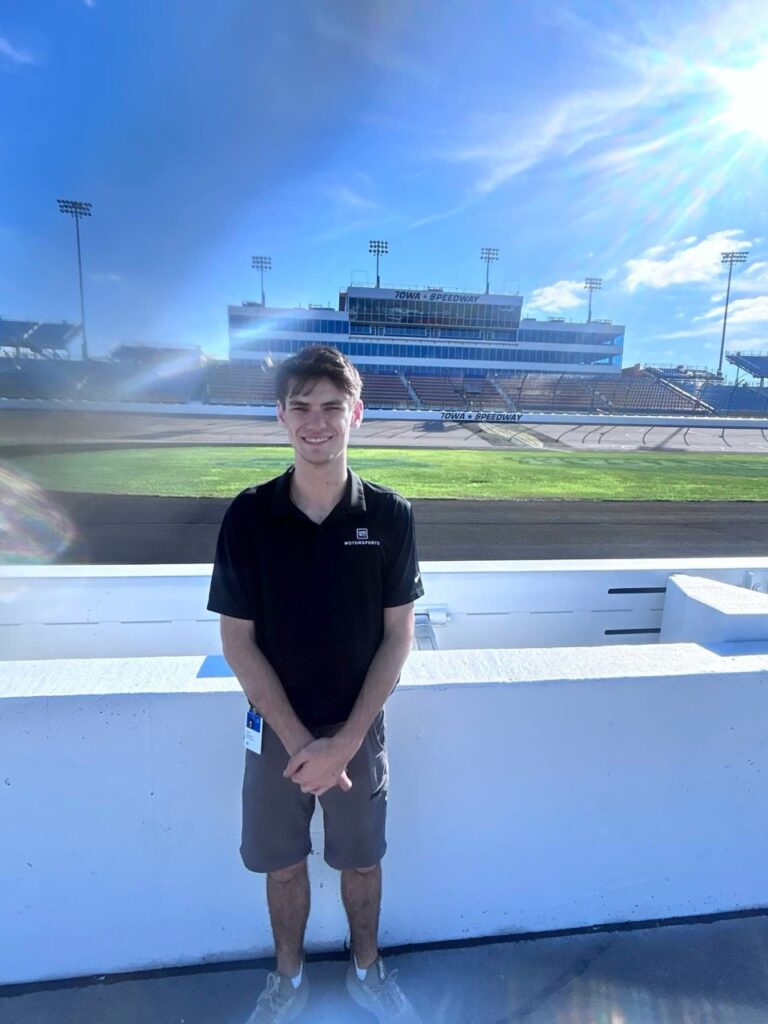
Peter Gaspich at a test session in Iowa

Peter Gaspich is a current Automotive Engineering student graduating in May 2026. He received the Markvan Bellamy Brooks Endowed Scholarship in 2024. He is currently the Suspension Division Lead for Clemson Formula SAE, leading a team of student engineers, and over the summer he was a General Motors Motorship Tires R&D Intern in Concord, North Carolina.

How have you utilized your major/concentration in sports to help you throughout internships?

Most of the skills I use today were gained from my experience as the Suspension Lead for Clemson Formula SAE. My involvement gave me valuable experience in vehicle dynamics, simulation, team management, data analysis, vehicle tuning, and so much more. Almost every skill I apply at work was gained from my experience on the team. I also have the Department of Automotive Engineering to thank to help give me the connections and interpersonal skills needed to excel in the industry.

What was your internship and where were you located?

The track in Iowa
The track in Iowa

Over the summer I was a Motorsports Tire R&D Intern at General Motors. My role involved testing, modeling, and simulating tire performance to better predict and optimize vehicle performance going into the race weekend. GM Motorsports has afforded me a unique opportunity to work in a variety of series, including NASCAR, Cadillac LMDh in IMSA/WEC, and even the brand new TWG-Cadillac F1 Team!

What advice would you give to future Brooks Scholars as they approach post-grad?

While I haven’t graduated, I would encourage anyone pursuing a career in motorsports to never be intimidated and remain dedicated to their passion. The most important factor in my success wasn’t my GPA or my proficiency in mathematics, physics, dynamics, or any other schoolwork, it was my dedication to my passion and my willingness to sacrifice my time to participate in a hands-on motorsports experience, such as Formula SAE. A crucial skill in any engineering field is knowing how to apply your knowledge, which from my experience, is a skill that cannot be learned within the limits of the classroom.