Sports Insight

Clemson Baja SAE’s 2026 vehicle build nearing completion

By Nathan Inman

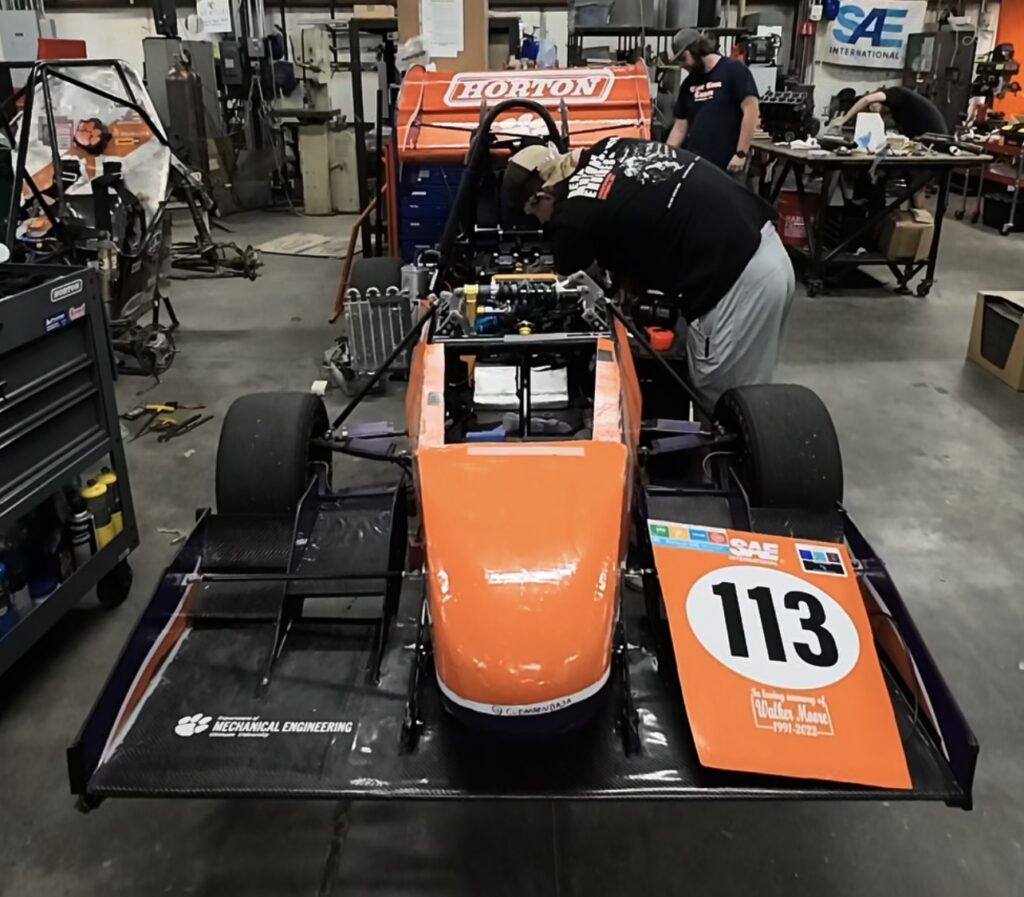
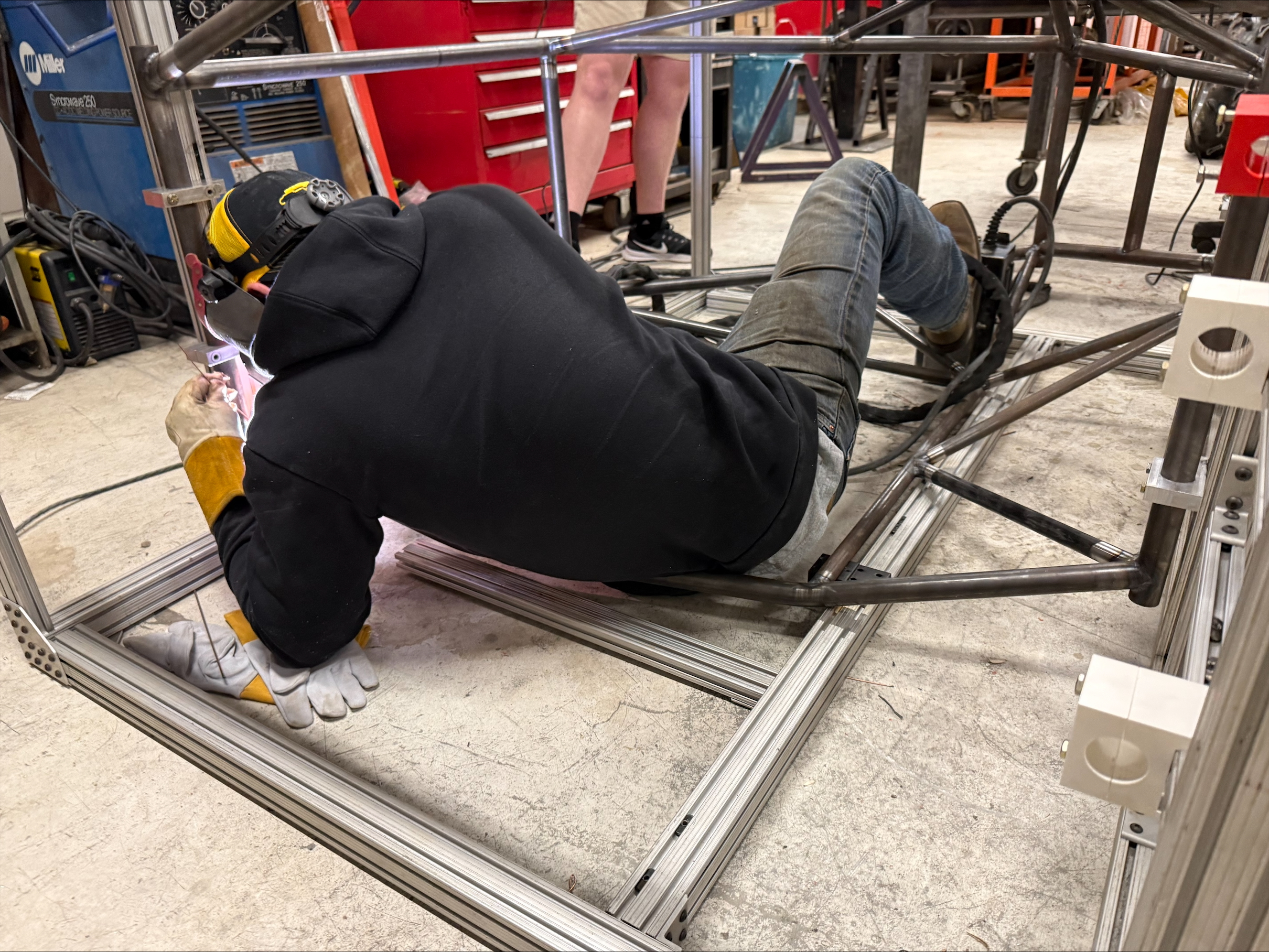
A Clemson Baja student welds the chassis together.

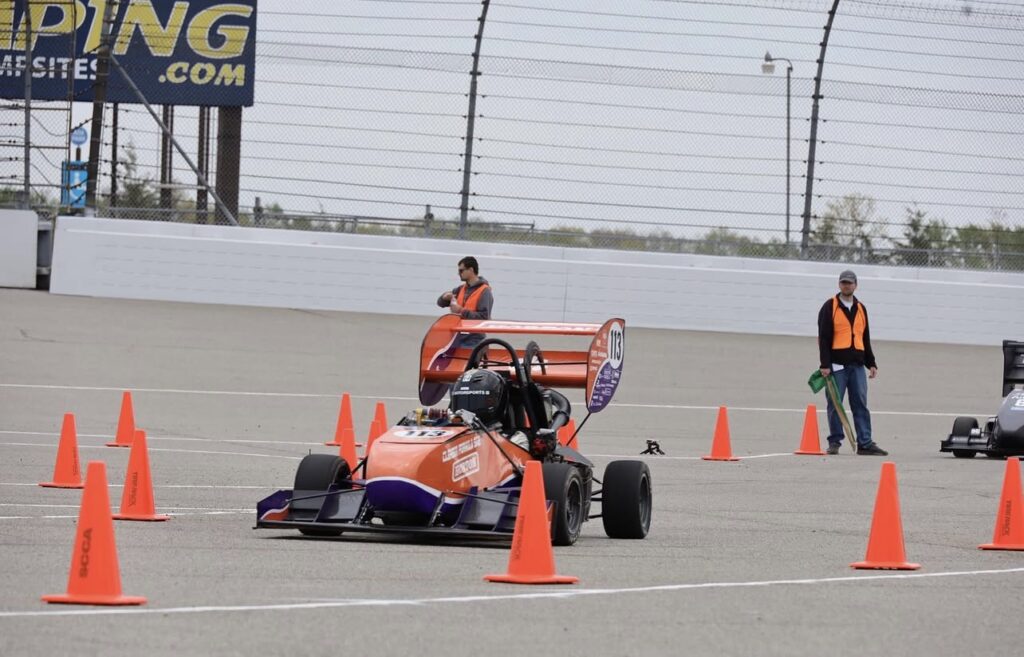
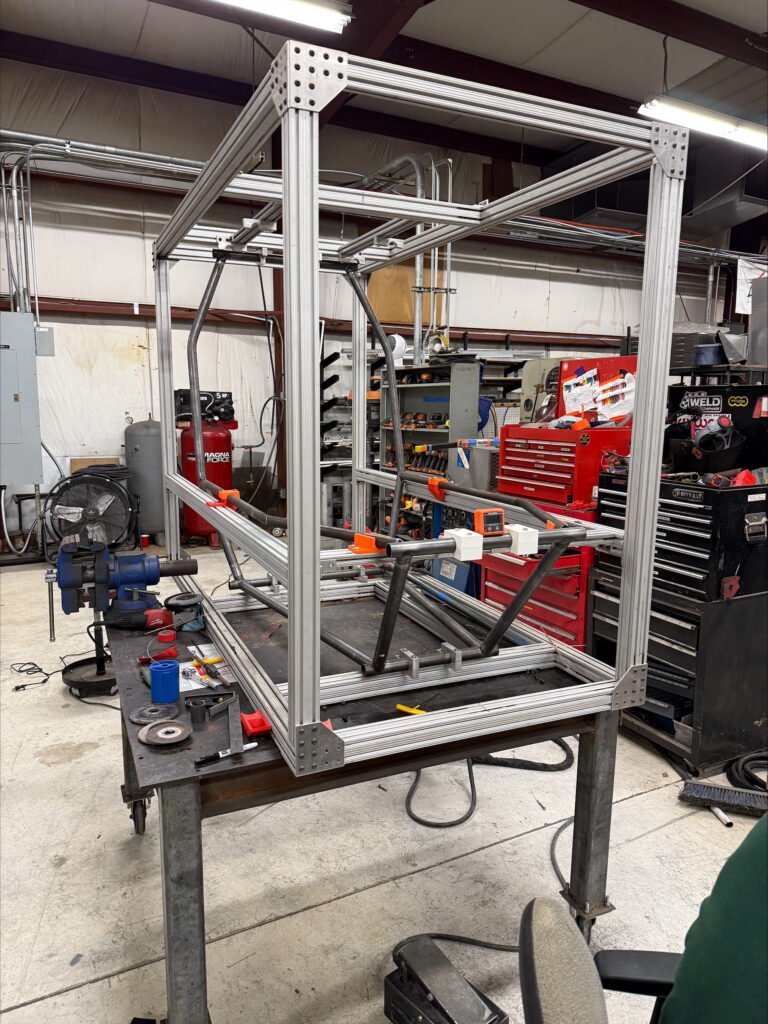
As the semester is entering the home stretch, so too is the newest vehicle build for Clemson Baja SAE. After months of designing, the vehicle is now in its final stages of the build phase as the team prepares to compete in a competition in New York this June.

The RHBSSI sat down with Nicholas Roessler, a freshman automotive engineering major and the team’s chassis lead and head welder, to discuss how the build has progressed over the semester.

“The new build’s coming along well,” he said. “We’re kind of in the final steps of welding together our chassis. Suspension is finally getting finalized, so we can start making the suspension and figuring out where it goes on the car.”

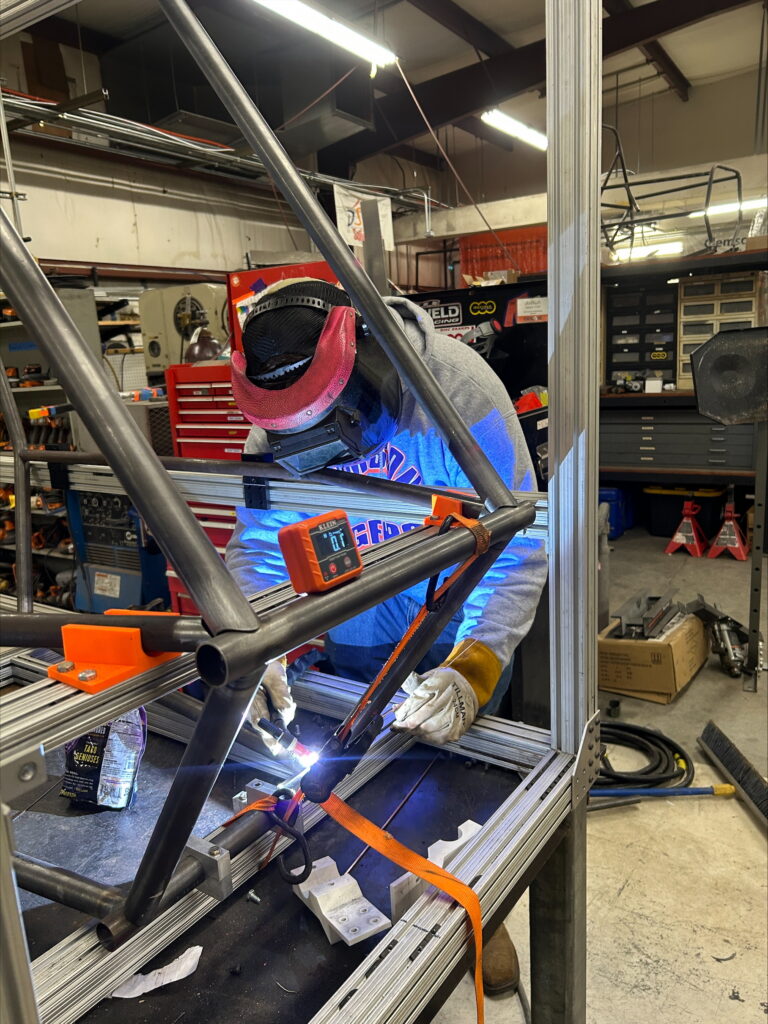
Sparks fly as a team member welds sections of the frame together.

As the chassis lead, Roessler is responsible for ensuring the chassis meets the standards required for the vehicle to handle the rough terrain it will encounter in competition. If one thing went wrong with the chassis, it could derail the entire build.

With that in mind, Roessler said he understands the important responsibility placed upon him and is confident that the chassis will be able to handle whatever is thrown its way.

“Driver safety is the most important thing to us, 100%,” he said. “As I’m getting there, and as I’m designing the chassis, that’s the main thought. We really can’t chance having something break, and so structural integrity is definitely the most important thing.”

Roessler mentioned that throughout the semester, one particular challenge with the chassis has been making it entirely in-house. The team has primarily focused on not outsourcing any development and on making the vehicle entirely student-built.

“There’s a learning curve to kind of bending our own tubes, and there’s been a lot of mistakes actually putting the chassis together, but we’ve kind of got it figured out and on a roll,” he said.

Components are arranged on a work surface prior to assembly.

When Clemson Baja last spoke with the RHBSSI, the team focused on a brand-new test track under construction for them to test their newest build right here in Clemson. Roessler says the track will help the team ensure all the pieces are in place for the build to hold together before they compete in June.

“It’ll probably be one of the most beneficial things that has happened for Baja in a long time, he said. “We’ll be able to actually test our vehicle, and that way, if anything fails, hopefully it fails with the shop five minutes away, and not in Rochester, New York.

As the build nears completion, the team has its sights set on June 11 for its first competition in Rochester with the new vehicle.

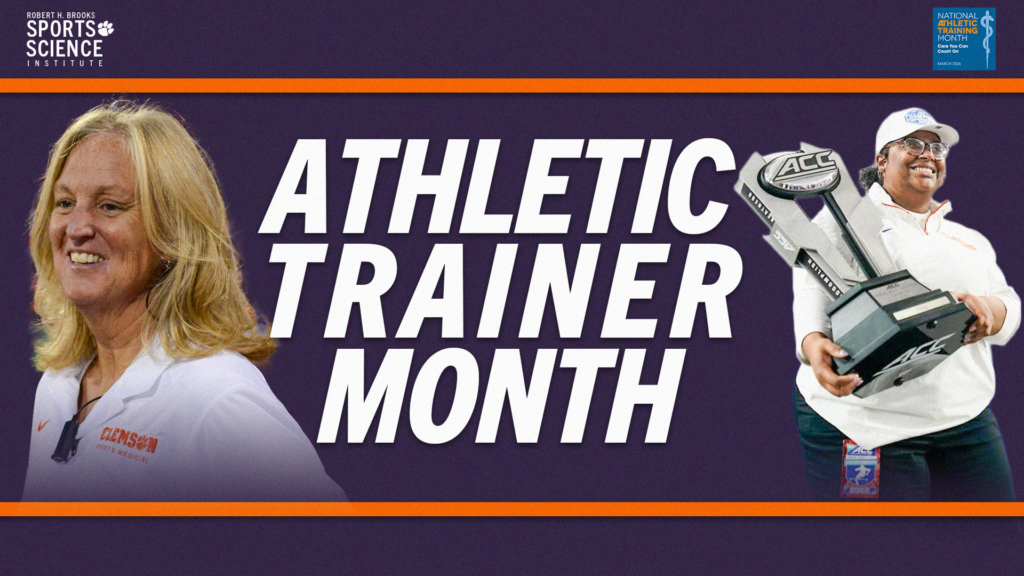
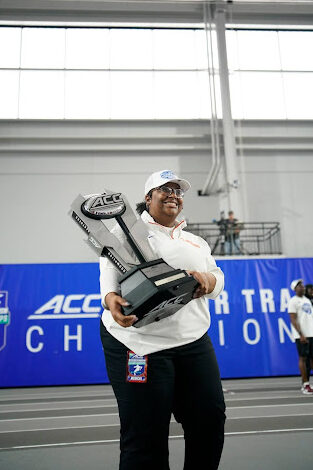
Athletic Trainer Month: Behind the scenes of Clemson Athletics

This semester, RHBSSI is working with two track-and-field student-athlete interns through the UPIC Beyond the Game program. In recognition of National Athletic Trainer Month, we’re highlighting the people who support them behind the scenes. We spoke with their athletic trainers about what it’s like to keep athletes healthy and performing throughout the season.


Assistant Athletic Trainer; Men’s and Women’s Cross Country/Track and Field

Dayshia Davenport

A great place to start is the recovery triangle, which includes proper hydration, adequate sleep, and good nutrition. That said, each event requires different forces on the body.

Some coaches may already have their plan made and want to see what I can help with in order to make sure they can get through the training week. For example, throwers who may have a heavy-lifting day and a throwing session may need more mobility and soft-tissue work to combat soreness.

In certain cases, I discuss with the event coach at the beginning of the season, as well as throughout the season, what they would like to accomplish and what each training week looks like, so we can plan recovery and anticipate aches and pains.

I try to listen to what the athlete says their body feels like and give recommendations based on what I know is to come in the training week.

I try to listen to what the athlete says their body feels like and give recommendations based on what I know is to come in the training week.


Collaborating with the coach and with support staff (strength and conditioning coaches, mental health/performance, chiropractors, massage therapists, nutritionists, etc.) is huge for this. My job is to bridge the middle between all entities of sports while also taking care of the physical needs in and out of season. 

If I notice someone may not be recovering or is having a hard time with general aches and pains, I will discuss this with all parties to help set them up for success before the next competition. That can look like changing training surfaces, adjusting weight-training sessions throughout the week, encouraging certain meals after speed vs. endurance training, or encouraging the athlete to focus on mental recovery by doing something non-sports-related.

These are just some examples, but every athlete is different and requires conversations to make sure their physical and mental needs are met for the longevity of the season. 


Each injury is different, so the return-to-play process can involve many variables. My biggest focus is to keep the athlete mentally locked in to getting back. I can manage the physical for the most part, but mental prep is huge.

I try to challenge my athletes each week to complete a movement they haven’t done before. This helps them feel encouraged that they are progressing despite not physically receiving imaging to monitor their progress.

If it’s a minor injury, I typically lay out a calendar and set goals for what I need to see from them to progress to the next step. I also sit with the event coach to discuss when I think they will be back and what parameters need to be met in order to return to group training. I tend to be more aggressive with in-season injuries given the timeline, so I may see that athlete multiple times a day, even on the weekend. If it’s a major injury that may affect the season, I do the same thing, but I may encourage the athlete to connect with mental health or sports performance so they don’t lose that sense of identity while away from sport.

My personality can be very sarcastic and joking, but I also try to give them the empathy they may not be giving themselves through private check-ins, if needed. Each athlete is different, which is why it’s important to build a relationship with them to know how to approach in-season injuries.


Donna Bullock

The emotional struggle that student-athletes go through while not participating in their sport. 


When they don’t hesitate, mentally, emotionally and physically when you incorporate in their rehabilitation, the movement they did when they got hurt. All 3 won’t happen at once so it’s patience and repetition and confidence building. Also, when they are smiling while participating.


That student-athletes can easily recover and it doesn’t affect the other parts of their lives – socially, academically, relationships, religious  – all parts of their lives


Associate Athletic Trainer

Clemson Athletic Council bridges gap between academics and athletics

By Griffin Barfield

At a university that prides itself on athletics and academics, there’s a group within that helps student-athletes find success on the field and in the classroom.

The Clemson Athletic Council acts as the liaison between the University’s faculty, administration and athletic departments, meeting bi-monthly to discuss important topics that student-athletes face.

Meetings are joined by Athletic Director, Graham Neff, Senior Associate Athletic Director, Matt Lombardi, and other senior members of the Athletic Department staff while allowing open discussions with members of the council throughout their meetings. 

Each college elects a representative and an alternative, and the Clemson president appoints a representative from the University. Both Undergraduate and Graduate Student Government as well as Faculty, Staff and Student Senate are represented. Two student-athletes from the executive board of the Student Athlete Advisory Council (SAAC) represent all student-athletes on campus. 

Jake Serra runs at a Clemson Track meet

Senior Health Sciences major and President of SAAC, Jake Serra, went from specifically focusing on his track and field career to making a bigger difference in his position as a student-athlete.

“I was thinking, how can I make an impact in another way?” Serra said. “So, that’s where the Student Athlete Advisory Committee comes in. We have one here at Clemson that, unbiased, is the best one in the nation.” 

Assistant Professor of sports communication and faculty fellow of the Robert H. Brooks Sports Science Institute, Rikishi Smith-Rey, Ph.D., served on her university’s SAAC when she was a student-athlete as an undergraduate, going full circle when she was voted on last spring to represent the College of Behavioral, Social and Health Sciences as a faculty liaison. 

Having a wide variety of faculty from colleges across the University and staff from the athletic department help improve communication between the academic institution and the athletic department. 

Rikishi Smith-Rey, Department of Communication

“We get to bridge the two of them,” Smith-Rey said. “We get to bridge the academic institutional side to the athletic side, and SAAC is in there as well, and they’re telling us how they are getting the teams more intertwined. It’s great seeing all the different groups coming together.”

Another faculty fellow of the Robert H. Brooks Sports Science Institute and a professor of Food, Nutrition and Packaging Sciences within the College of Agriculture, Forestry and Life Sciences, Greg Batt, Ph.D., has served on the Clemson Athletic Council since the fall of 2019. He has seen important topics covered from the COVID-19 pandemic to NIL. 

Committee Structure

The Clemson Athletic Council reports directly to the President with an Executive Committee that is comprised of the Chair, Vice-Chair, the chairs of three subcommittees, and the Faculty Athletic Representative (FAR), Antonis Katsiyannis, who was appointed by the President. 

The Chair of Athletic Council, Mary Anne Raymond, a Professor of Marketing and Thomas F. Chapman Distinguished Professor of Leadership, creates the agendas for the meetings, communicates with both the President and Athletic Director regarding the focus of the subcommittees, and communicates any special initiatives that are directed by the President. 

Meetings are led by Raymond, with updates and reports by Neff, Lombardi, SAAC, and the FAR at every meeting. New coaches, the Director of NIL, and leaders like Natalie Honnen, Executive Senior Associate AD for Student – Athlete Services and Performance, are invited to speak at Athletic Council meetings to enhance members’ understanding of the many areas the athletic department encompasses and to provide insights into areas where athletic council members can collaborate and contribute, such as the Student Athlete Wellness initiative. 

The council was typically organized into three sub-committees: Academic Policies and Integrity, Student Athlete Welfare and Experience, and Administration and Communication. While all three committees serve important roles, there’s been more of an emphasis by all AC members on Student Athlete Welfare and Experience, which Batt chairs and says is the “main heartbeat” of the council. 

Mary Anne Raymond, Thomas F. Chapman Distinguished Professor of Leadership, Department of Marketing

Professor of Marketing, Mary Anne Raymond, who is Chair for the Executive Committee as well, noted that the Council has shifted its focus to work on aiding the wellness of the student-athletes, who look to balance academics, athletics, and a positive social experience. 

“We’re focusing on the well-being of the student-athletes,” she said. “I think that will stay for a while because there’s been so much going on with student well-being and the population’s well-being in general. Should we need to shift, or should the President have a special project, we would focus on that project as well.”

The AC brings in the likes of Serra and the Vice President of Internal Affairs with SAAC, Rose Imbesi, a senior Marketing major, as well. Both were appointed in the spring of 2024 and have served since. They provide the perspective of the student-athletes, expressing their needs and ways to improve the way they handle the academic side of their experience. 

“They allow looking behind the curtain in athletics, but we are fully academics, so we understand that world,” Batt said, “so we can be liaisons for them.” 

Drs. Batt and Smith-Rey are also faculty fellows with the Robert H. Brooks Sports Science Institute, and communicate these important athletic topics back to their research and educational peers at the university and nationally.

Serra and Imbesi also work towards bringing each athletic program together, allowing more communication and community between each group of student-athletes. 

“My goal is really just to increase that feeling of community within athletics so you’re not just supporting your own team and seeing your own team every day,” Imbesi said, “to really bring that community together so that we are all one group of Clemson Athletics, not just separate teams.”

Issues and Outcomes

Collegiate athletics are in an interesting time with the rise of topics like NIL and the House case, meaning that the topics the Clemson Athletic Council is focusing on can vary at each meeting. 

Neff and Lombardi emphasize numbers like graduation rates, retention rates and GPAs during the meetings, which have allowed Serra and Imbesi to create a solution to how student-athletes can be protected for their academics, providing support like tutoring to further their education. 

Now, the protection plan has been implemented across multiple schools of the ACC, SEC and Big 10, becoming a product of the use of the Council’s meetings. 

“That was something where we went to these professors in the Athletic Council,” Serra said. “I said, ‘Hey, here’s my idea. What can we take from this?’ They brought it to President Clements; they brought it to their colleges, and we were able to explode across the nation with that, but it really started here at Clemson.”

Another way that the members connect with the student-athletes is by attending lunches with various student-athletes throughout the semesters. The Clemson Athletic Council works with SACC to organize dates and times for faculty to have lunch with student-athletes, listening to their thoughts, concerns and recommendations for things that they would like to see from an academic standpoint. 

Greg Batt, Department of Food, Nutrition and Packaging Sciences

“With my involvement on the Athletic Council, it gave me a real grassroots perspective of the challenges of being a student-athlete,” Batt said, “and so my involvement in the Athletic Council, I think that experience has been made richer by the fact that I get to see what it really looks like, day in and day out, for these guys trying to balance sports, academics and a college experience.”

The meetings also serve as an opportunity to correct any misinformation that may be framed throughout the University. Then, solutions about how to better communicate with faculty or student-athletes are created to bring truth into the respective spaces. 

“It’s been really useful,” Imbesi said. “I think to have that communication between teachers and athletics administration, just so they know and are kind of in the loop of what’s actually happening and what’s actually going on, because there’s so much happening.”

When new head coaches are hired for a given program, they are also given a chance to speak to the Council, allowing council members to ask questions and get to know them at a personal level. 

As for the future, ideas like NIL, paying athletes and well-being are topics that will not go away, but the Clemson Athletic Council will continue to overcome obstacles that are presented around the University or the country, depending on what they are. 

For Serra and Imbesi, there are ideas of a ticketing plan that would incentivize undergraduate and graduate students to come to non-revenue-generating Olympic sports, looking to continue to create the community between every athletic program at Clemson. 

Serra believes that the best is yet to come with SAAC and the Council as a whole. 

“We’re just such a passionate group that is really willing to pioneer this new change,” he said. “A lot of this stuff that we have in mind is not out yet. It’s not, we’ll see how it goes. It’s a lot of checks and balances we have, but I think continually supporting student athletes is always going to be our number one priority.”

Clemson Baja SAE partnering with Construction Science and Management department to construct new test track

By Nathan Inman

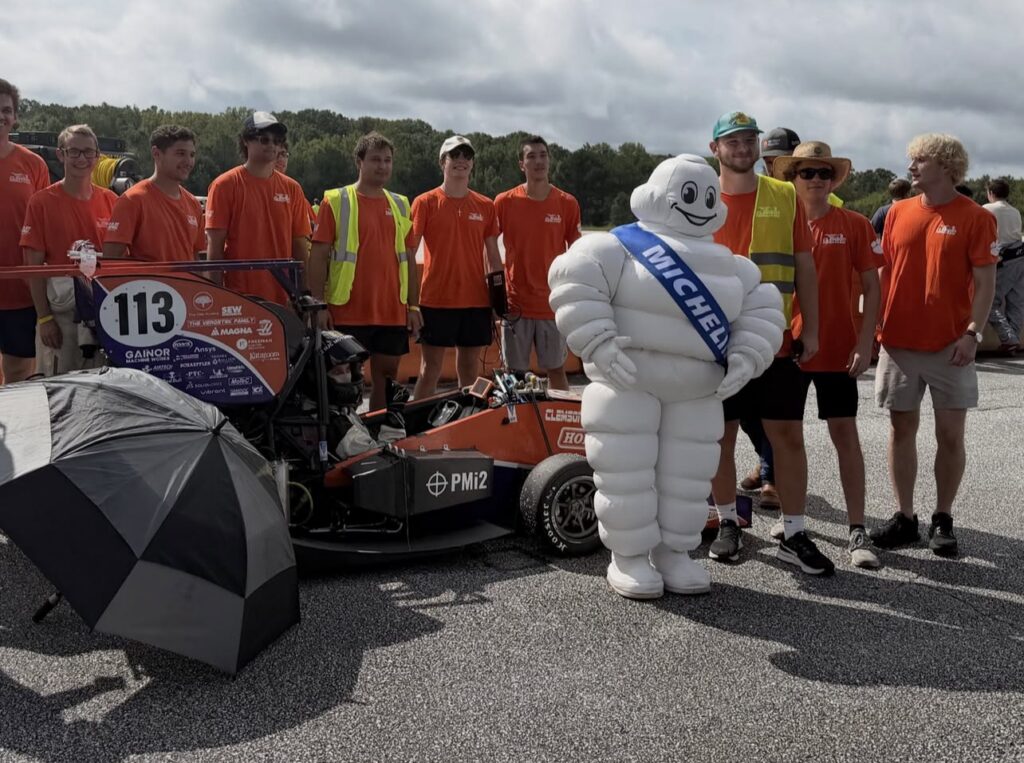
Clemson Baja SAE team picture at competition

As the semester progresses for Clemson Baja SAE, the team is working towards building its newest vehicle for competition later this year. However, the new vehicle is not the only thing the organization is constructing this semester.

Clemson Baja SAE was founded in 1978 and is a student-run engineering organization that designs and builds custom off-road vehicles to compete in the national Baja SAE Collegiate Design Series. The organization had become dormant following the COVID-19 pandemic, but a group of eight dedicated students were determined to bring the organization back to life in 2023.

Clemson Baja SAE racing on dirt track

Since its revival, Baja has utilized a test track in the woods behind their race shop to ensure their student-built vehicles were primed and ready to compete. Recently, though, the track was cleared and logged, completely destroying the course and making it unusable for the race team. The occurrence left Baja without a way to test their vehicles, meaning they would be unable to be sure that there were no mechanical or safety defects before traveling for competitions. That’s when Blanchard CAT and the Department of Construction Science and Management stepped in.

“This semester, we are partnering with the Construction Science department,” Tyler Odgers, president of Baja SAE, said in an interview. “Right now, they have drone scanned the entire block and they’re designing a track on their computers.”

Odgers added that Blanchard CAT has donated equipment for the construction of the track, something that would have been unfeasible for the team to afford. Just as it does for many professional race teams, funding for Clemson Baja often comes at a premium. With the need for funding, the organization cannot focus solely on engineering and manufacturing their vehicles. Odgers says that the team has begun developing a large business team in order to afford those aforementioned costs.

Team picture with Clemson Baja SAE car

“Obviously, we need funding, right?” Odgers said. “We have a team that is essentially putting together a packet presentation that we can just go out and give to businesses. There’s a very big communications, marketing type of thing trying to get our name out there.”

Odgers went on to say that he sees opportunities for practically any major, and that “there are very few majors that I think can’t do something with us.” As the team continues to prepare for competition and the construction of its new race vehicle and test track, emphasis will still remain on the business and communications side of the organization. Any students interested in joining Clemson Baja SAE can find them on TigerQuest or go to https://cecas.clemson.edu/bajasae/join/

National Girls & Women in Sports Day: Spotlighting women across Clemson Athletics

In celebration of National Girls & Women in Sports Day on February 4, the Robert H. Brooks Sports Science Institute highlights seven female student-athletes. Representing a variety of sports, these athletes share their experiences as women in sport, reflect on the role of sports science in their development, and offer advice to the next generation.

Sade GrayTrack and Field

Major: Marketing
Hometown: Baton Rouge, Louisiana

What does it mean to be a woman in sports?
To me, being a woman in sports means being strong, resilient, and unstoppable. It gives women the opportunity to chase goals at a high level, earn respect through work ethic, and open doors for younger girls watching. I want them to be able to think, “If she can do it, maybe I can too.”

What aspect of sports science have you found most interesting or impactful in your athletic experience?
The most impactful aspect for me has been recovery and nutrition. You can train hard every day, but recovery can truly make or break performance. Getting the right nutrients to heal injuries and build power and strength has helped me put my best foot forward consistently.

What is your advice for aspiring women in sports?
Believe in yourself before anyone else does. People will try to tell you who you are or limit your future, but it’s your life and your passion. Don’t give up on yourself—work hard, stay focused, and go where you are appreciated.

What has been your favorite or most interesting class taken at Clemson?
One of my favorite classes has been Women’s Global Perspectives. Learning about the challenges women face around the world—especially those who don’t even have the freedom of choice—has inspired me to fully embrace the woman I’m becoming. It motivates me to pursue my dreams boldly and never let anyone take my voice.

Bianca MartinezVolleyball and Track

Major: Sociology
Hometown: Omaha, Nebraska

What does it mean to be a woman in sports?
For me, being a woman in sports is all about representation and feeling confident in myself. Being able to be a role model for younger female athletes and someone they can look up to and see someone living out a reality that they are dreaming about. It also means a place where I have found my confidence, and somewhere I have strived to be the best I could be, and always working towards a goal, but while still knowing who I am and my reasons for playing.

What aspect of sports science have you found most interesting or impactful in your athletic experience?
Definitely has been recovery, and what specific things my body needs to be able to fully recover for another whole day of practice. I feel like being at Clemson, specifically the access we have to recovery, is absolutely amazing, and we are truly blessed here. I have learned so much about what exactly works best for me to feel my best, especially on game and competition days.

What is your advice for aspiring women in sports?
My advice for aspiring women in sports is to always give yourself grace and be kind to yourself. There will be really good days and hard days, and both are part of the journey. It’s so important not to beat yourself up on the days when things don’t go as planned. Positive self-talk matters more than you realize, because the way you speak to yourself can either build your confidence or tear it down. Learning to encourage yourself the same way you would a teammate can make all the difference.

What has been your favorite or most interesting class taken at Clemson?
My favorite class I’ve taken at Clemson so far is my Civil Rights History course, which I am currently enrolled in. As a Global Black Studies student, I understand how important Black history is and how critical it is that it continues to be taught accurately and intentionally. This class has helped me deepen that understanding by connecting historical movements to ongoing struggles for justice today. Professor D’Ondre Juwan Swails is also one of my favorite professors and makes the material engaging and meaningful, which makes the class genuinely exciting to be a part of.

Madison RoushCross Country and Track

Major: Biomedical Engineering
Hometown: Greer, South Carolina

What does it mean to be a woman in sports?
Being a woman in sports means having a big community of strong and inspirational women to look up to. We are all there to support one another and celebrate our accomplishments. 

What aspect of sports science have you found most interesting or impactful in your athletic experience?
I’ve found that the recovery aspect of running is the most interesting to me because it’s where I’ve seen the greatest success in the sport. Learning about the different ways to help muscles recover from training is fascinating, and the way my body feels after adequate recovery is night and day compared to running while not fully recovered.

What is your advice for aspiring women in sports?
My biggest piece of advice is to say yes to opportunities that come your way and not be afraid to speak up and advocate for yourself. More often than not, people miss out on opportunities simply because they don’t put themselves out there or use their voice. By saying yes and asking to be involved in organizations that support women, I’ve been able to meet so many amazing and inspiring women from around the world.

What has been your favorite or most interesting class taken at Clemson?
My favorite class I’ve taken at Clemson is Sports Engineering. In this course, I learned so much about the body and how it functions during training and recovery, which helped me better understand my own body and improve as a runner. It’s especially rewarding to learn material that you can directly apply to yourself, and that genuinely interests you. Dr. Harvey is also a great professor who teaches the class in an engaging way that keeps it interesting.

Tatum ShortWomen’s Soccer

Major: Psychology
Hometown: Las Vegas, Nevada

What does it mean to be a woman in sports?
Being a woman in sports means showing up with strength, discipline, and confidence in spaces that haven’t always made room for us. It’s about resilience and showing younger girls that this path is possible and worth it.

What aspect of sports science have you found most interesting or impactful in your athletic experience?
Nutrition has been the most impactful area of sports science for me because it has a direct impact on my energy, recovery, and performance on the field. Learning how to correctly fuel my body allows me to train harder, recover faster, and maintain consistency throughout the season.

What is your advice for aspiring women in sports?
Believe in your abilities and don’t let anyone make you feel like you don’t belong. Work
hard, stay confident, and support other women along the way.

What has been your favorite or most interesting class taken at Clemson?
Women and Psychology has been the most interesting class I’ve taken at Clemson
because it has taught me so much about the challenges women face around the world. It’s
given me a deeper understanding of different experiences and perspectives, and how
those shape women’s lives and choices.

Trinity WebbGymnastics

Major: Communication
Hometown: Smithville, Missouri

What does it mean to be a woman in sports?
Being a female athlete means a great deal to me because it represents strength, resilience, and the ability to take up space with confidence. It means embracing the pressure that comes with higher expectations and learning how to carry myself with purpose both in competition and in everyday life. As a woman in sports, I am often aware that performance is only part of how I am judged, which has pushed me to develop a strong sense of self and confidence in my identity. At the same time, being a female athlete is empowering; it gives me a voice, a platform, and the opportunity to represent younger girls who are watching and learning what is possible. For me, it means proving that women can be powerful, disciplined, and competitive while staying true to who they are and using sport to grow not only as athletes but as people.

What aspect of sports science have you found most interesting or impactful in your athletic experience?
One aspect of sports science that has been most impactful in my athletic experience is nutrition, especially for female athletes. Proper fueling plays a major role in performance recovery and overall health it is often underestimated. I have learned that nutrition directly affects energy levels, injury prevention, and consistency in training. When athletes feel their bodies correctly, they are better able to recover and perform at a higher level over time. For women in sports, Understanding Nutrition has helped me view food as a tool for strength and performance rather than limitation, making it one of the most important aspects of sports science in my experience.

What is your advice for aspiring women in sports?
My advice for aspiring women in sports is to trust yourself, especially during times when you may be underestimated or overlooked. There will be moments when others doubt your abilities or fail to see your potential, and learning not to let that define you is important. Confidence has to come from within, not from external validation, and that is something I am still learning myself. Growth in sports is not always linear, but believing in your worth and staying committed to your goals can make all the difference. continue to show up, work hard, and advocate for yourself, because your presence and voice matter just as much as your performance.

What has been your favorite or most interesting class taken at Clemson?
My favorite class I’ve taken at Clemson has been criminal law because I enjoy learning about how the legal system works and understanding the reasoning behind laws and Court decisions. I find it interesting to see how real-life cases are analyzed and how the justice system impacts people and society, especially when it comes to justice being taken. 

Shanque WilliamsTrack and Field

Major: Psychology
Hometown: St. Elizabeth, Jamaica

What does it mean to be a woman in sports?
Being a woman in sports means embracing both strength and vulnerability while constantly pushing myself to be better. It means overcoming challenges, proving my abilities, and staying confident in spaces where women are sometimes underestimated. As a female athlete, I take pride in representing where I come from and showing that women can be powerful, disciplined, and resilient. Competing as a woman in sports has taught me self-belief, perseverance, and the importance of using my voice and presence to inspire others.

What aspect of sports science have you found most interesting or impactful in your athletic experience?
The most impactful aspect of sports science in my athletic experience has been recovery
and injury prevention. Learning how proper recovery, rest, and monitoring fatigue affect
performance has helped me understand that recovery is just as important as training.
Paying attention to things like muscle soreness, sleep, and overall readiness has allowed
me to take better care of my body, stay healthier throughout the season, and perform at a higher level during competition.

What is your advice for aspiring women in sports?
My advice for aspiring women in sports is to stay persistent and never let stereotypes
define your limits. There will be moments when people doubt your abilities or
underestimate you, but those moments should fuel your motivation rather than discourage you. Stay committed to your goals, trust your work, and continue showing up even when it’s difficult. By staying consistent and believing in yourself, you not only prove others wrong, but you also create space for more women to be confident and successful in sports.

What has been your favorite or most interesting class taken at Clemson?
My favorite and most interesting class at Clemson has been PSYC 2030: Fundamentals
of Psychology. This class helped me better understand human behavior, mental processes, and how the mind influences performance. As both a psychology major and a student-athlete, the course has been especially meaningful because it connects directly to motivation, focus, and mental resilience in sports.

Oneka WilsonTrack and Field

Major: Parks, Tourism and Recreation Management
Hometown: Portland, Jamaica

What does it mean to be a woman in sports?
Being a woman in sports means pursuing passion and excellence while often overcoming inequality and stereotypes. It’s about empowerment, resilience, and claiming space in a traditionally male-dominated field.

What aspect of sports science have you found most interesting or impactful in your athletic experience?
As a track athlete, nutrition has been the most impactful. Eating properly helps fuel training, improve recovery, and maintain consistent performance.

What is your advice for aspiring women in sports?
Believe in your ability, advocate for yourself, and don’t be afraid to take up space. Stay disciplined, build a strong support system, and remember that your presence in sports matters.

What has been your favorite or most interesting class taken at Clemson?
My favorite class at Clemson has been my PRTM EDGE class because I met a lot of new people and made friendships that are still strong today.

RHBSSI celebrates excellence in sports science with 2025 GRIT Award recipients

The 2025 GRIT awardees (left to right) Chris Corr, Sarah Stokowski, Felipe Tobar, and Reed Gurchiek, stand with RHBSSI interim director, John DesJardins (center), at the RECESS Friday Finale.

By Katie Gerbasich

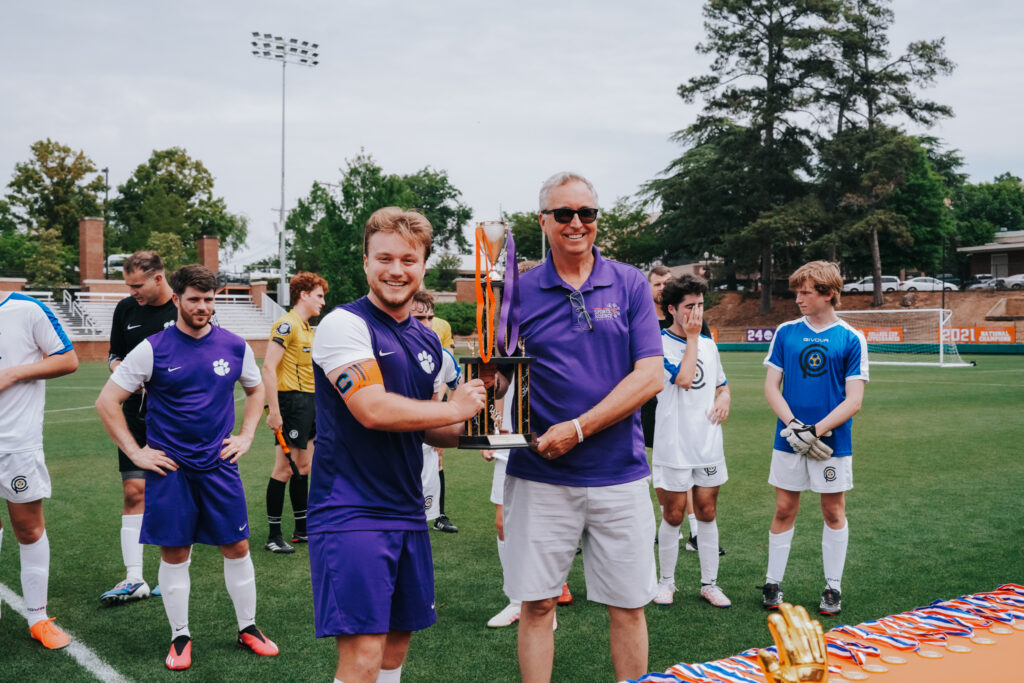
At the conclusion of Clemson University’s Research and Creative Endeavors in the Sports Sciences (RECESS) Symposium, hosted by the Robert H. Brooks Sports Science Institute the week of November 10, 2025, four Clemson faculty were honored with 2025 GRIT Awards. These awards recognize nominated individuals or groups who distinguish themselves in various areas of sports science. A trophy was presented to the following winners. 


Community and Outreach in the Sports Sciences

Felipe Tobar, Ph.D.Department of Parks, Recreation and Tourism Management

Tobar studies the intersection of sport, tourism and heritage. He also serves as the head coach of Clemson’s Paralympic Soccer Program and co-founded the Football Tourism Institute, which aims to understand football tourism at the local and global levels. 

Over the summer of 2025, Tobar travelled internationally conducting sports research. In early May, he took a group of students to Germany to study the Culture of Remembrance and Political Activism in German Football. While abroad, he conducted two research studies: one examining stickers in and around stadiums as a form of fan expression and political activism, and another exploring how German soccer clubs suppress or communicate Holocaust history.

Tobar’s inclusive and critical teaching practices earned him the 2025 Junior Tenure-Track Outstanding Teaching Award from Clemson University’s College of Behavioral, Social and Health Sciences. His commitment to experiential learning includes organizing class field trips to venues such as the Bank of America Stadium and the NASCAR Hall of Fame, facilitating networking opportunities with more than 41 sports industry professionals, and supporting undergraduate students as they participate in local sporting events.

For his dedication to both the Clemson and global community, the Institute has awarded Felipe Tobar with the GRIT Award for Community and Outreach in the Sports Sciences for the 2025-26 academic year. 

“He is richly deserving of this award,” commended Greg Ramshaw, Ph.D., Tobar’s colleague in the Department of Parks, Recreation and Tourism Management.


Research in the Sports Sciences

Chris Corr, Ph.D.​Department of Educational and Organizational Leadership Development, Athletic Leadership Program

Corr’s scholarly research examines the institutional and organizational settings of collegiate athletics, with attention to the impact and outcomes of participation on various stakeholders. He serves as the executive director of the College Sport Research Institute and is the program manager for the Commission on Sport Management Accreditation.

“Dr. Chris Corr exemplifies the spirit of the GRIT Award in Research in Sports Sciences through his exceptional productivity, interdisciplinary collaboration and measurable impact on the study and practice of sport,” Sarah Stokowski, Corr’s colleague in the College of Education, said. 

Over the past three years, Corr has produced an extraordinary body of scholarship, authoring or co-authoring more than 70 peer-reviewed journal articles, multiple book chapters, and numerous presentations at national and international conferences. 

In a recent article, Corr explored public sentiment surrounding Clemson University’s decision to proceed with a football game the day after Hurricane Helene. The case highlighted the importance of organizational transparency when confronting crises.

Corr’s work has consistently been supported by competitive funding sources, including RHBSSI, the NCAA, the Commission on Sport Management Accreditation (COSMA), and USA Ultimate, demonstrating the quality and applicability of his research. 

“Equally important, Dr. Corr’s collaborative spirit enriches Clemson’s research environment,” Stokowski said. “He actively mentors graduate and undergraduate students, co-authors with emerging scholars, and engages in applied projects that extend Clemson’s land-grant mission.”


Student Engagement in the Sports Sciences

Sarah Stokowski, Ph.D.​Department of Educational and Organizational Leadership Development, Athletic Leadership Program

Recognized for her unwavering commitment to student success, Sarah Stokowski, Ph.D., has made an impact on graduate education and student engagement within the Athletic Leadership program. She has supervised more than 75 doctoral students across both the Higher Education and P12 concentrations. 

“Dr. Stokowski is unbelievably passionate and committed to student learning and success,” noted her colleague from the College of Education, Chris Corr, Ph.D. “She is tremendously caring and committed to students’ scholarly achievement, and students walk away from her research methods course with a tangible academic publication and, more importantly for their professional development, an in-depth understanding of the research process. 

Her commitment to publishing with students has led many graduate students to continue their education by pursuing terminal degrees. 

“While Dr. Stokowski is an all-around tremendous scholar and influential member of the campus community, her commitment to student excellence and achievement is to be marveled at,” Corr said.In addition to her mentorship efforts, Stokowski was awarded a 2025 ESPN Research Fellowship by the University of Nevada, Las Vegas International Gaming Institute (IGI). Through this fellowship, she will research how student-athletes perceive and engage with online sports betting content. To learn more about her work, click here.


Friend of the Institute

Reed Gurchiek, Ph.D.​Department of Bioengineering

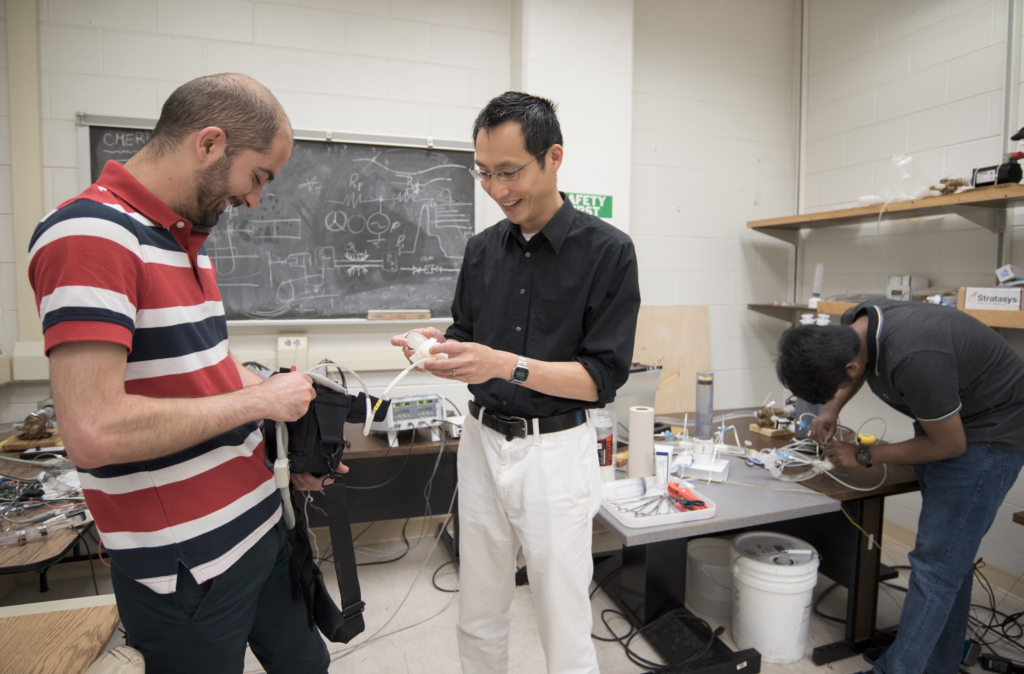
Gurchiek is the principal investigator in the Human Movement Biomechanics Lab (HuMBL), where his team uses standard motion capture technologies for human movement analysis and biomechanics. 

A recent project, funded by RHBSSI, involved developing a passive assistive hamstring device to support muscle recovery. Read more about the work here.

Gurchiek has also been integral in collaborating with the Institute on plans for the University’s new human performance center on the ground floor of the student wellness center, which has recently broken ground.

“The Institute is very appreciative to Dr. Gurchiek for his continued leadership in the development of this new facility that will bring human performance research at Clemson to national prominence,” said John DesJardins, Ph.D., director of the Institute.

An ‘AWSM’ opportunity empowering Clemson women in sports media

Members of AWSM gather outside the Nieri Family Student-Athlete Enrichment Center’s studio before conducting their photoshoot in October.

By Katie Gerbasich

‘Awesome’ is now a four-letter word for many female students: AWSM, or the Association of Women in Sports Media. AWSM is dedicated to empowering and supporting women interested in sports media. The Clemson chapter, advised by Department of Communication Assistant Professor and Robert H. Brooks Sports Science Institute Faculty Fellow Rikishi Smith-Rey, Ph.D., is part of the nationally recognized AWSM network of schools. 

“I’m really excited to be with them now, because I feel like I have a lot to bring to them, whether it’s sharing my network or what I know about sport and media,” Smith-Rey said. 

Department of Communication student Erin Mason has always had a passion for supporting women in sports. She joined AWSM as a first-year student, dreaming of the day she could work in the industry.

Erin Mason, AWSM president, stands on the field at the Tax Slayer Bowl in 2023.

“Growing up around sports, I saw how male-dominated the field was and witnessed women in sports be doubted and pushed to the side,” Mason said. “Seeing this made me want to make a positive impact on women in the industry and women looking to break into the industry.” 

 She initially described the club in her first year as having only a couple of meetings a semester, featuring guest speakers. Now, as president, she has helped AWSM expand. 

“Watching this club grow over the years has been truly amazing,” Mason said. “Now, AWSM has over 140 active members, bi-weekly meetings, as well as drop-in meetings and other events. We provide professional development opportunities & resources consistently to all active members.”

A highlight for Mason has been the launch of its new athletic credentialing program last semester. Members now have the opportunity to apply for an accredited photo or press pass for athletic events. Following the event, members must promptly create and publish media.

The organization worked with Jeff Kallin, Senior Associate Athletic Director for Communications, to establish the importance of getting students in front of cameras and working with cameras in front of coaches. Additionally, having to learn what the sports world is like, with a quick turnaround on product time. AWSM covered 46 events across 55 different credentialed members last semester. 

Kendall Lampman sits in the press box as a credentialed member for AWSM at the Clemson vs FSU football game. Lampman got to ask head coach Dabo Swinney a question during the post-game press conference.

 “It’s a competitive process to be able to get a pass, but we have someone at every single sporting event,” Smith-Rey said. 

Community Outreach Chair, Caity Eng, has been managing the credentialing experience.

“Our members have put in so much hard work, and it has been so wonderful to see them shine, whether it is their first sports photography or reporting experience, or to expand their current skills and portfolio,” Eng said. 

“Seeing and hearing about everyone’s passion for sports media and their time working on the sidelines and the press box has been so fulfilling.”

Last semester, the club participated in a professional photoshoot utilizing the Nieri Family Student-Athlete Enrichment Center’s studio. Members received a camera workshop before the event. Exclusive experiences like this are what Smith-Rey believes make the organization unique. 

“These students wouldn’t ever really have that opportunity if this association didn’t exist,” Smith-Rey said. “I love that it’s specific to females to give them a voice and a chance to grow.” 

Female students across all majors can connect through the common thread of sport. 

“You see business students talking with sports communication students, talking with engineering students, and it’s a really cool way for them to be like, ‘Oh, I didn’t think we had anything in common, but you love sports, and I love sports,’” Smith-Rey said.

Looking ahead, the organization hopes to continue strengthening its relationship with Clemson Athletics to make a greater impact on students’ professional development and the community. 

“In such a male-dominated field, women in sports must stick together, support one another no matter what, and unite on issues that pertain to us,” Mason said. “As female representation continues to grow in the sports industry, I hope to be a voice and supportive figure for women in the industry.”

Meet RHBSSI’s student interns for Spring 2026

By Katie Gerbasich

Happy New Year, from the Robert H. Brooks Sports Science Institute. For the Spring 2026 semester, RHBSSI welcomed three new and two returning student interns. Additionally, through the UPIC Beyond the Game program, two student-athlete interns will join the group. These students bring a multitude of experiences that will help drive new ideas that support the Institute’s mission. 

Evy Lane, Communications Lead

Evy Lane is a senior Marketing major and Spanish minor from Piedmont, South Carolina. In her fourth semester with the Institute, she will serve as the Communications Lead, which entails creating a content calendar and editing or posting blogs across RHBSSI social media handles. Lane has two cats, Otto and Lottie, whom she adores dearly.

Katie Gerbasich, Writer/Editor

Katie Gerbasich is a senior Sports Communication major and Women’s Leadership minor from Houston, Texas. In her third semester with the Institute, she will be assisting the team in detailing the stories of sports science endeavors. Gerbasich has prior experience with Clemson Baseball’s Sports Analytics team and has written sports articles for Tiger View Media.

Nathan Inman, Writer/Editor

Nathan Inman is a junior double majoring in Sports Communication and Marketing from Spartanburg, South Carolina. He has been involved with The Tiger student newspaper for three years and was recently appointed Assistant Sports Editor. This semester, Inman looks forward to continuing to grow as a writer and collaborating with the rest of the team.

Sofia Cordi, Events Lead

Sofia Cordi is a senior at Clemson University pursuing a B.S. in Management with an emphasis in Human Resources, a concentration in Entrepreneurship, and a Global Leadership Certificate. She serves as the Events Lead intern for The Robert H. Brooks Sports Science Institute, where she supports the planning and execution of events that foster collaboration, innovation, and community engagement across sports science and performance disciplines.

Previously, Sofia worked with Incora Health, a women’s health startup developing patented smart earrings that capture real-time biodata, where she supported community engagement, content strategy, and cross-functional initiatives. Her experience also includes work with Kognitos, a generative AI company in healthcare automation, and Clemson’s Brook T. Smith Launchpad. Sofia is passionate about innovation, strategic planning, and building meaningful connections through events and community-focused initiatives.

Katie Colton, Graphic Designer

Katie Colton is a Graphic Communications major with a minor in Brand Communications from York, South Carolina. This past year, she worked with Clemson Creative Inquiry and Undergraduate Research’s Decipher Magazine. Colton traveled to Italy over winter break.

Shanque Williams, Beyond the Game Intern

Shanque Williams is a sophomore Psychology major with a minor in Business Management. Williams is a track and field athlete from Jamaica. She’s excited to meet the team and begin working.

Kevin Collins, Beyond the Game Intern

Kevin Collins is a senior Economics major with a Minor in Business Administration from Waldorf, Maryland. He competes in shorts sprints with track and field.

Clemson professor’s NIL research cited in Tennessee legislation

By Katie Gerbasich

Kathryn Kisska-Schulze, J.D., LL.M., a Robert H. Brooks Sports Science Institute Faculty Fellow and the Elliott Davis Associate Professor in the School of Accountancy in The Wilbur O. and Ann Powers College of Business, recently published work on athlete name, image and likeness (NIL) rights that was relied upon by the Tennessee legislature in 2025. Her article, An Evolving Landscape: Name, Image and Likeness Rights in High School Athletes, co-authored by Adam Epstein from Central Michigan University and Nathaniel Grow from Indiana University, was cited as a research reference and practice aid in drafting Tenn. Code Ann. § 47-25-1103, which addresses NIL rights.

The article examines the evolving NIL landscape for high school student-athletes, identifying potential financial risks and proposing a framework to better protect minor student-athletes entering endorsement agreements.

“This honor showcases the impact our research can have on major state legislative interests,” Kissaka-Schulze said.

In spring 2024, Kisska-Schulze launched the School of Accountancy’s first undergraduate sports law course. She also teaches a graduate sports law course for the College of Business’ Master of Science in Sports Business and Analytics program.

Kisska-Schulze has served as chair of the Sports and Entertainment Law Section of the Academy of Legal Studies in Business, represents the College of Business on Clemson University’s Faculty Athletic Council, and was recently named a Brooks Sports Science Institute Fellow.

Campbell professor publishes timely study on drug of concern

Individuals who suffer from chronic pain have increasingly come to rely on kratom, a Southeast Asian plant whose principal psychoactive alkaloids, mitragynine and 7-hydroxymitragynine (7-OH), may soon become Schedule I Controlled Substances in the United States. The two compounds bind to, and partially activate, opioid receptors in the brain.

Bryan Denham, Ph.D., Charlie Campbell endowed professor of sports communication, Clemson University Department of Communication

“People in Southeast Asia have long relied on teas brewed from kratom leaves not only to manage pain but to ease the symptoms of opiate withdrawal,” said Bryan E. Denham, Ph.D., Campbell Professor of Sports Communication in the Department of Communication at Clemson. “Although kratom is not entirely safe, it appears to be less hazardous than concentrated, synthetic versions of 7-OH, manufactured by unscrupulous firms. Synthetics are sold at gas stations and vape stores and are packaged to attract the attention of high-school and college-aged individuals.”

Denham’s study appears in the Journal of Substance Use and addresses the extent to which kratom use correlates with health concerns and signs of dependency on other substances. One finding showed that individuals struggling to quit prescription pain relievers were more than four times as likely as others to have used kratom, a substance the Drug Enforcement Administration (DEA) considers “drug of concern.” In July 2025, the Food and Drug Administration (FDA) advised the DEA to add mitragynine and 7-OH to the list of Controlled Substances, and the DEA is currently considering that recommendation.

“It will be interesting to see what the DEA chooses to do in the coming months,” Denham said. “It announced plans in 2016 to ban mitragynine and 7-OH, but it received significant pushback from kratom users. This time, the FDA has made it a point to state plainly that its recommendation does not include the kratom plant itself. It is primarily interested in the two alkaloids and especially the hazardous synthetic products. A trade group, the American Kratom Association, has endorsed the recommended actions on mitragynine and 7-OH.”

Denham studies the media, health, and policy aspects of substance use in sport and society. He said that in sport, athletes have used kratom to increase energy and to recuperate from intense exercise. Some athletes believe it enhances their focus during competition, and some experiment with it for pain relief. Technically, kratom is not a banned substance, but the United States Anti-Doping Agency advises athletes to avoid using it given potential side effects. Athletes and non-athletes alike should appreciate that kratom is a drug, not a dietary supplement, and they should be aware of manipulative labels on synthetic substances.

In addition to his study in the Journal of Substance Use, Denham has examined the agenda-building function of mass media on kratom policy, exploring how coverage in major national news outlets and regional news organizations has impacted regulatory action. Denham said the Tampa Bay Times, in particular, has examined kratom use in depth, and its reporting has impacted coverage elsewhere in addition to policy conversations at the state and national levels.