By Griffin Barfield
At a university that prides itself on athletics and academics, there’s a group within that helps student-athletes find success on the field and in the classroom.
The Clemson Athletic Council acts as the liaison between the University’s faculty, administration and athletic departments, meeting bi-monthly to discuss important topics that student-athletes face.
Meetings are joined by Athletic Director, Graham Neff, Senior Associate Athletic Director, Matt Lombardi, and other senior members of the Athletic Department staff while allowing open discussions with members of the council throughout their meetings.
Each college elects a representative and an alternative, and the Clemson president appoints a representative from the University. Both Undergraduate and Graduate Student Government as well as Faculty, Staff and Student Senate are represented. Two student-athletes from the executive board of the Student Athlete Advisory Council (SAAC) represent all student-athletes on campus.

Senior Health Sciences major and President of SAAC, Jake Serra, went from specifically focusing on his track and field career to making a bigger difference in his position as a student-athlete.
“I was thinking, how can I make an impact in another way?” Serra said. “So, that’s where the Student Athlete Advisory Committee comes in. We have one here at Clemson that, unbiased, is the best one in the nation.”
Assistant Professor of sports communication and faculty fellow of the Robert H. Brooks Sports Science Institute, Rikishi Smith-Rey, Ph.D., served on her university’s SAAC when she was a student-athlete as an undergraduate, going full circle when she was voted on last spring to represent the College of Behavioral, Social and Health Sciences as a faculty liaison.
Having a wide variety of faculty from colleges across the University and staff from the athletic department help improve communication between the academic institution and the athletic department.

“We get to bridge the two of them,” Smith-Rey said. “We get to bridge the academic institutional side to the athletic side, and SAAC is in there as well, and they’re telling us how they are getting the teams more intertwined. It’s great seeing all the different groups coming together.”
Another faculty fellow of the Robert H. Brooks Sports Science Institute and a professor of Food, Nutrition and Packaging Sciences within the College of Agriculture, Forestry and Life Sciences, Greg Batt, Ph.D., has served on the Clemson Athletic Council since the fall of 2019. He has seen important topics covered from the COVID-19 pandemic to NIL.
Committee Structure
The Clemson Athletic Council reports directly to the President with an Executive Committee that is comprised of the Chair, Vice-Chair, the chairs of three subcommittees, and the Faculty Athletic Representative (FAR), Antonis Katsiyannis, who was appointed by the President.
The Chair of Athletic Council, Mary Anne Raymond, a Professor of Marketing and Thomas F. Chapman Distinguished Professor of Leadership, creates the agendas for the meetings, communicates with both the President and Athletic Director regarding the focus of the subcommittees, and communicates any special initiatives that are directed by the President.
Meetings are led by Raymond, with updates and reports by Neff, Lombardi, SAAC, and the FAR at every meeting. New coaches, the Director of NIL, and leaders like Natalie Honnen, Executive Senior Associate AD for Student – Athlete Services and Performance, are invited to speak at Athletic Council meetings to enhance members’ understanding of the many areas the athletic department encompasses and to provide insights into areas where athletic council members can collaborate and contribute, such as the Student Athlete Wellness initiative.
The council was typically organized into three sub-committees: Academic Policies and Integrity, Student Athlete Welfare and Experience, and Administration and Communication. While all three committees serve important roles, there’s been more of an emphasis by all AC members on Student Athlete Welfare and Experience, which Batt chairs and says is the “main heartbeat” of the council.
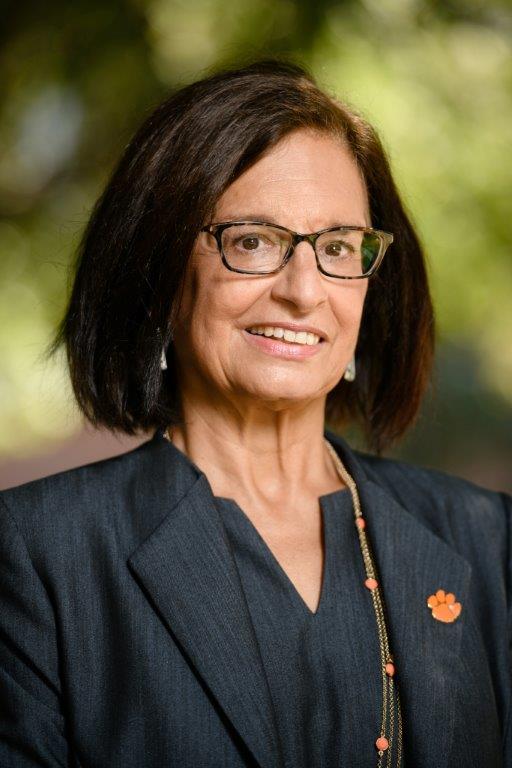
Professor of Marketing, Mary Anne Raymond, who is Chair for the Executive Committee as well, noted that the Council has shifted its focus to work on aiding the wellness of the student-athletes, who look to balance academics, athletics, and a positive social experience.
“We’re focusing on the well-being of the student-athletes,” she said. “I think that will stay for a while because there’s been so much going on with student well-being and the population’s well-being in general. Should we need to shift, or should the President have a special project, we would focus on that project as well.”
The AC brings in the likes of Serra and the Vice President of Internal Affairs with SAAC, Rose Imbesi, a senior Marketing major, as well. Both were appointed in the spring of 2024 and have served since. They provide the perspective of the student-athletes, expressing their needs and ways to improve the way they handle the academic side of their experience.
“They allow looking behind the curtain in athletics, but we are fully academics, so we understand that world,” Batt said, “so we can be liaisons for them.”
Drs. Batt and Smith-Rey are also faculty fellows with the Robert H. Brooks Sports Science Institute, and communicate these important athletic topics back to their research and educational peers at the university and nationally.
Serra and Imbesi also work towards bringing each athletic program together, allowing more communication and community between each group of student-athletes.
“My goal is really just to increase that feeling of community within athletics so you’re not just supporting your own team and seeing your own team every day,” Imbesi said, “to really bring that community together so that we are all one group of Clemson Athletics, not just separate teams.”
Issues and Outcomes
Collegiate athletics are in an interesting time with the rise of topics like NIL and the House case, meaning that the topics the Clemson Athletic Council is focusing on can vary at each meeting.
Neff and Lombardi emphasize numbers like graduation rates, retention rates and GPAs during the meetings, which have allowed Serra and Imbesi to create a solution to how student-athletes can be protected for their academics, providing support like tutoring to further their education.
Now, the protection plan has been implemented across multiple schools of the ACC, SEC and Big 10, becoming a product of the use of the Council’s meetings.
“That was something where we went to these professors in the Athletic Council,” Serra said. “I said, ‘Hey, here’s my idea. What can we take from this?’ They brought it to President Clements; they brought it to their colleges, and we were able to explode across the nation with that, but it really started here at Clemson.”
Another way that the members connect with the student-athletes is by attending lunches with various student-athletes throughout the semesters. The Clemson Athletic Council works with SACC to organize dates and times for faculty to have lunch with student-athletes, listening to their thoughts, concerns and recommendations for things that they would like to see from an academic standpoint.

“With my involvement on the Athletic Council, it gave me a real grassroots perspective of the challenges of being a student-athlete,” Batt said, “and so my involvement in the Athletic Council, I think that experience has been made richer by the fact that I get to see what it really looks like, day in and day out, for these guys trying to balance sports, academics and a college experience.”
The meetings also serve as an opportunity to correct any misinformation that may be framed throughout the University. Then, solutions about how to better communicate with faculty or student-athletes are created to bring truth into the respective spaces.
“It’s been really useful,” Imbesi said. “I think to have that communication between teachers and athletics administration, just so they know and are kind of in the loop of what’s actually happening and what’s actually going on, because there’s so much happening.”
When new head coaches are hired for a given program, they are also given a chance to speak to the Council, allowing council members to ask questions and get to know them at a personal level.
As for the future, ideas like NIL, paying athletes and well-being are topics that will not go away, but the Clemson Athletic Council will continue to overcome obstacles that are presented around the University or the country, depending on what they are.
For Serra and Imbesi, there are ideas of a ticketing plan that would incentivize undergraduate and graduate students to come to non-revenue-generating Olympic sports, looking to continue to create the community between every athletic program at Clemson.
Serra believes that the best is yet to come with SAAC and the Council as a whole.
“We’re just such a passionate group that is really willing to pioneer this new change,” he said. “A lot of this stuff that we have in mind is not out yet. It’s not, we’ll see how it goes. It’s a lot of checks and balances we have, but I think continually supporting student athletes is always going to be our number one priority.”
