With the Fall semester coming to an end, we are sad to say goodbye to two valuable interns, Griffin Barfield and Lucy Hard, who will be graduating this December, but luckily, interns Katie Gerbasich and Evy Lane have signed on for another semester with the Institute. From writing articles and designing graphics to testing grip strength and hosting lab tours, these interns have impacted every corner of the Institute.
GRIFFIN BARFIELD
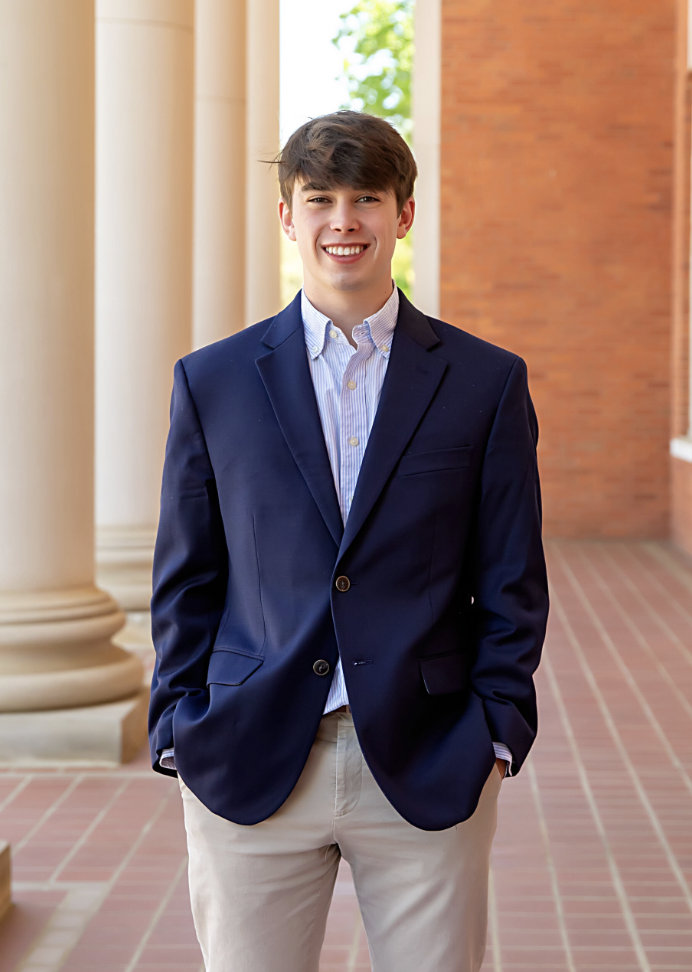
Griffin Barfield is a senior Sports Communication major and Spanish minor from Oceanport, New Jersey, and was the Institute’s Co-Writing and Editing Lead this semester.
“My experience with RHBSSI has helped me grow as an intern,” Barfield said. “Professionally, the Institute helped me understand my role in group work, assisted with my confidence when interviewing faculty and students, and allowed me to form positive relationships with all of the people that I worked closely with over the course of the last two semesters. It’s been an honor to represent them, and I’m excited to see the work that is presented with the next group in the spring!”
After graduating, Griffin plans to work with the Clemson Tigers on Sports Illustrated, where he will transition into a full-time beat writer role, assisting and managing their website and social media platforms to drive engagement. Moving forward, Griffin intends to interview and apply for positions at various sports clubs and franchises nationwide. The Institute wishes Griffin the best of luck!
LUCY HART
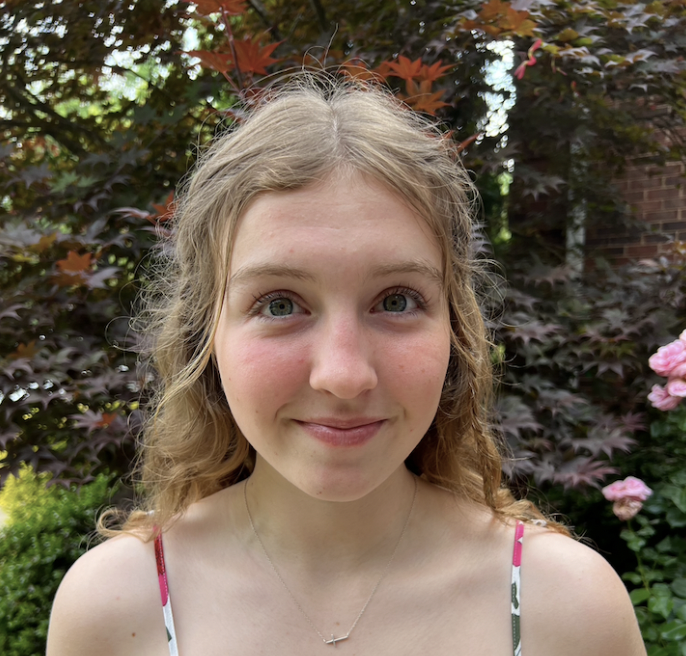
Lucy Hart is a senior Sports Management major with a double minor in Youth Development and Business Administration from Rock Hill, South Carolina , and was the Institute’s Events Lead this semester.
“Interning for the Institute has been an incredibly valuable experience for me,” Hart mentions. “Being able to plan and execute events like the RECESS symposium will go a long way in my professional development skills, and I am grateful for the opportunity to work with such a supportive team!”
Post-graduation, Lucy has secured an internship in Savannah, Georgia, managing part-time employees for an exhibition baseball team. She plans to return to Clemson to pursue a Master’s in Public Administration after her internship. Although we are sad to see her leave the RHBSSI, we are excited to have her back on campus in the future!
KATIE GERBASICH
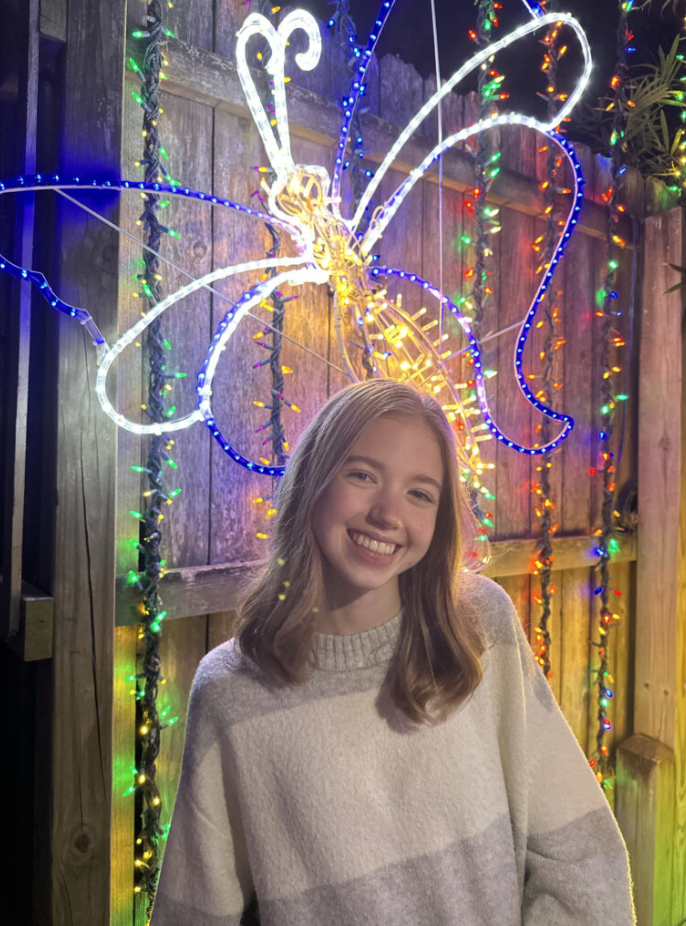
Katie Gerbasich is a senior Sports Communication major and Women’s Leadership minor from Houston, Texas, and was the Institute’s Co-Writing and Editing Lead.
“I think this semester has truly expanded my skillset. While I loved the research writing I did, I also worked with new design programs, video, and other social media aspects that I had never used before.”
Katie will continue to stay with the Institute next semester as a writer. “I plan to graduate in May, so I’m so excited to finish out my Clemson journey with the amazing people here.”
EVELYN LANE
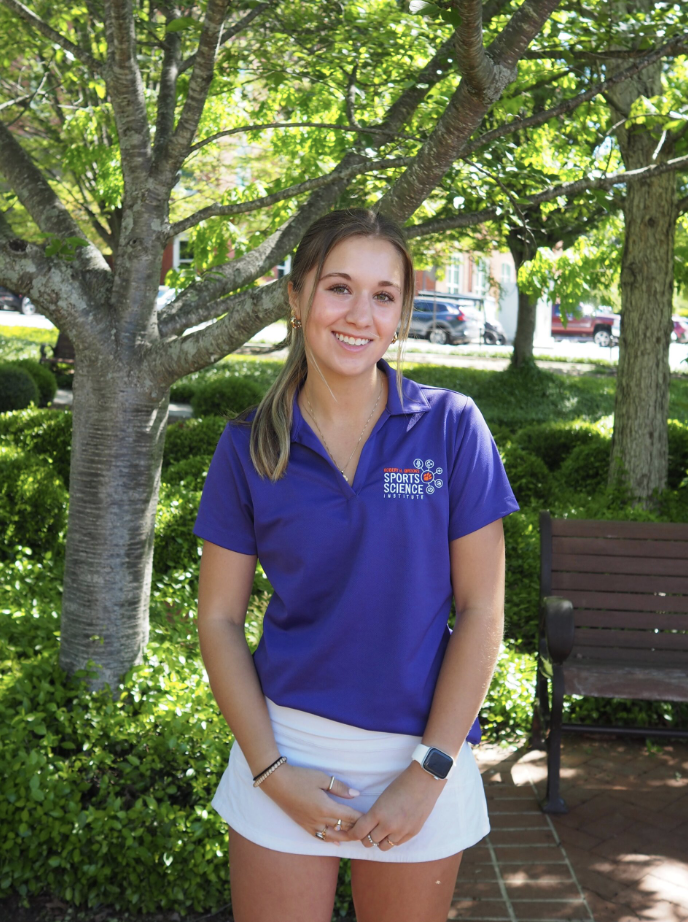
Evelyn Lane is a senior Marketing major and Spanish minor from Piedmont, South Carolina, and she was the Institute’s Communication Lead this semester.
“My experience with the RHBSSI has shaped me in so many ways,” she says. “As this is my third semester, I have had the opportunity to work with numerous interns from diverse backgrounds and skill sets, which has taught me how to grow and adapt in my teamwork skills depending on what each person needs from me.” She also notes, “I am thrilled to continue with the Institute and look forward to learning from future interns and further developing myself.”
Evelyn will also be staying on with the Institute for her fourth semester, making her the longest-serving intern in recent RHBSSI history!
Division 1 student-athletes already battle the complexities of balancing classes with practices and a social life. When medical conditions emerge, the situation is elevated to a new level. Using funding from the Robert H. Brooks Sports Science Institute (RHBSSI), Department of Communication faculty and RHBSSI fellows, Brandon Boatwright, Ph.D., and Rikishi Simith-Rey, Ph.D., are conducting an exploratory study, hoping to illuminate student-athletes’ challenges as they compete at a high level while managing chronic illnesses and autoimmune diseases.
Brandon Boatwright, Ph.D.
His own journey with an autoimmune disease inspired Boatwright. After a conversation with former Division Ⅰ athlete, Smith-Rey, the idea for the study was born. The two are now working with students Marissa Bennett and Ava Quallen, from the Departments of Communication and Health Science, respectively, to find ways to assist these athletes.
“Life as a student-athlete is complicated and complex already, but to feel like you’re fighting against your own body in the context of being a college student and trying to navigate your schedule builds the stresses of all that,” Boatwright said.
A key point in the research has been identifying what resources are available for these individuals. There is a fluctuation in availability among Division Ⅰ programs, and an even greater disparity when comparing Division Ⅰ to Division Ⅱ.
“When we think about resources here at Clemson, student-athletes have some of the best stuff, but not everyone goes to Clemson,” Smith-Rey said. “Not everyone, even if you are D1, has the same resources, so how can we identify what resources student athletes need? What ways can we assist them in communicating their needs to other stakeholders in their lives?”
Rikishi Simith-Rey, Ph.D.
The study is currently in the data collection process. The team has spoken with different student-athletes across various sports with Type 1 Diabetes, rheumatoid arthritis, and Crohn’s disease, among other illnesses.
“The folks we have spoken with have been incredible people and athletes competing at such a super high level,” Boatwright said. “They are just incredible people for having to deal with the things that they have dealt with and still preserving.”
Smith-Rey commends these interviews for being a space where these student-athletes feel seen. Often, chronic illnesses or autoimmune diseases have an element of invisibility that makes communication a challenge.
After speaking with the team, these athletes feel like someone understands their unique story. Boatwright shared a narrative about an athlete with Rheumatoid Arthritis.
“They would just have to wake up and tell players, teammates, coaches or someone that it’s not gonna happen because I can’t get out of bed,” Boatwright said. “‘I physically just can not sit up enough to get out of bed. It’s just one of those days.’”
Athletic programs and teams can become better advocates by better understanding the challenges these athletes face due to their medical conditions.
“We can be that support button right now,” Smith-Rey said. “Someone is speaking up for you and looking for ways to assist you in this.”
If you are or were an athlete who competed at the Division Ⅰ to Division Ⅱ level, are no more than five years removed from your sport, and were diagnosed with a chronic illness or autoimmune disease before competing in college, click here to set up an interview.
Melody Chambers graduated from Clemson in 2024 with a B.S. in Marketing and minors in Sports Communication and Brand Communications. She received the Markvan Bellamy Brooks Endowed Scholarship in 2024. During her time at Clemson, she worked with the Clemson University Athletic Department as a Clemson University Marketing Intern and a Client Services Intern.
How have you utilized your major/concentration in sports to help your career?
My degree has been invaluable in building the foundation for my career in sports. Courses like Sports Marketing I & II with Amanda Cooper Fine taught me the strategy behind brand partnerships, fan engagement, and sponsorship activation – all concepts I apply daily. Those classes, paired with real-world projects integrated into other core courses, helped me develop both the hard and soft skills needed to succeed in the industry.
What is your current role, where, and what do you do?
Melody Chambers assisting an in-stadium experience for fans
I am the Coordinator of Partnership Activation for the Milwaukee Brewers. I manage key relationships between our corporate partners and the club, helping bring their brands to life through on-site activations, in-stadium experiences, and community initiatives that connect with Brewers fans and the greater Milwaukee community.
What was your journey like since graduating from Clemson?
After graduating from Clemson, I pursued my MBA from the University of South Florida while working as a Partnerships Fellow with the Tampa Bay Lighting. I joined the Milwaukee Brewers full-time in July of 2025, where I now support our Partnership Activation team during an exciting time for the organization.
What advice would you give to future Brooks scholars as they approach post-grad?
Be confident in your journey and trust the timing of your path. Take the time to build genuine relationships, ask thoughtful questions, and stay open to opportunities that stretch you beyond your comfort zone. Lastly, keep showing up with curiosity, humility, and gratitude; it will take you farther than you ever expect.
Scarlett Lawhorne graduated from Clemson in 2021 with a degree in Recreational Therapy. She received the Markvan Bellamy Brooks Endowed Scholarship in 2020. During her time at Clemson, she interned with Clemson Campus Recreation as a fitness assistant and a recreation specialist to help grow her skills in the recreational therapy field.
How have you utilized your major/concentration in sports to help your career?
Recreational therapy enhances my role by helping me design inclusive programs that support physical, emotional, and social well-being. I use therapeutic recreation techniques to adapt activities so that individuals of all abilities can participate fully and confidently. Whether it’s through adaptive sports, inclusive camps, or community events, I focus on creating environments where everyone feels valued and engaged. This approach strengthens community connections and aligns with the core mission of parks and recreation — to serve all.
What is your current role and where are you located?
As the Adaptive and Inclusive Recreation Coordinator for Pasco County Parks, Recreation and Natural Recourses in Florida, I use recreational therapy to design and deliver programs that promote inclusion, wellness, and community connection. Through the P.A.I.R. program’s five pillars — Adaptive Recreation, Para Sports, RECreate Your Mind: Mental Health Awareness, Cultural and Consciousness Programming, and Accessible Recreation — I apply therapeutic recreation strategies to meet diverse needs and remove barriers to participation. Recreational therapy is not just a tool — it’s the foundation for building a more inclusive parks and recreation system.
What was your journey like since graduating from Clemson?
Since graduating, I’ve had the privilege of working with Pasco County Parks, Recreation, and Natural Resources, where I’ve grown both personally and professionally. Starting my career here allowed me to dive directly into inclusive programming and community engagement. Over the years, I’ve developed and led initiatives through the P.A.I.R. program, focusing on accessibility, adaptive sports, mental health, and cultural awareness. Along the way, I’ve built strong relationships with coworkers, community partners, and participants — all of whom have shaped and inspired my work. It’s been a rewarding journey rooted in service, innovation, and a passion for creating spaces where everyone belongs.
What advice would you give to future Brooks Scholars as they approach post-grad?
As you step into your career, stay open to learning and lean into every opportunity to grow — even the small ones. Build genuine connections with your coworkers and community; those relationships will become your greatest support system and source of inspiration. Don’t be afraid to ask questions, try new things, and advocate for inclusion wherever you go. Most importantly, remember that your passion and purpose will guide you — trust it. Keep learning, stay curious, and remember: impact often starts with simply being present.
Michael Cloer graduated from Clemson in 2023 with a dual bachelor’s in mechanical engineering and math, with a minor in computer science. He received the Markvan Bellamy Brooks Endowed Scholarship in 2022. He wanted to arm himself with the tools to develop and utilize physically-informed models of vehicle performance.
How have you utilized your major/concentration in sports to help your career?
My dual engineering and math background provided the analytical foundation essential for simulation work in Formula 1. The mathematical modeling skills and engineering principles directly translate to vehicle dynamics simulation and performance optimization.
What is your current role and where are you located?
I work as a simulation performance engineer at Oracle Red Bull Racing, where I develop and run computational models to optimize car performance. I look most closely at using our simulations to understand the operational envelope of the vehicle, and to identify the important factors in future car development.
What was your journey like since graduating from Clemson?
After graduating from Clemson, I moved from the United States to the UK to pursue my master’s in Motorsports Engineering at Cranfield University.
What advice would you give to future Brooks Scholars as they approach post-grad?
I would advise people to form a clear picture of what their goals are in the short and long term, so that they can concentrate their efforts on walking that path. Having this clarity helps you make strategic decisions about your education and career moves.
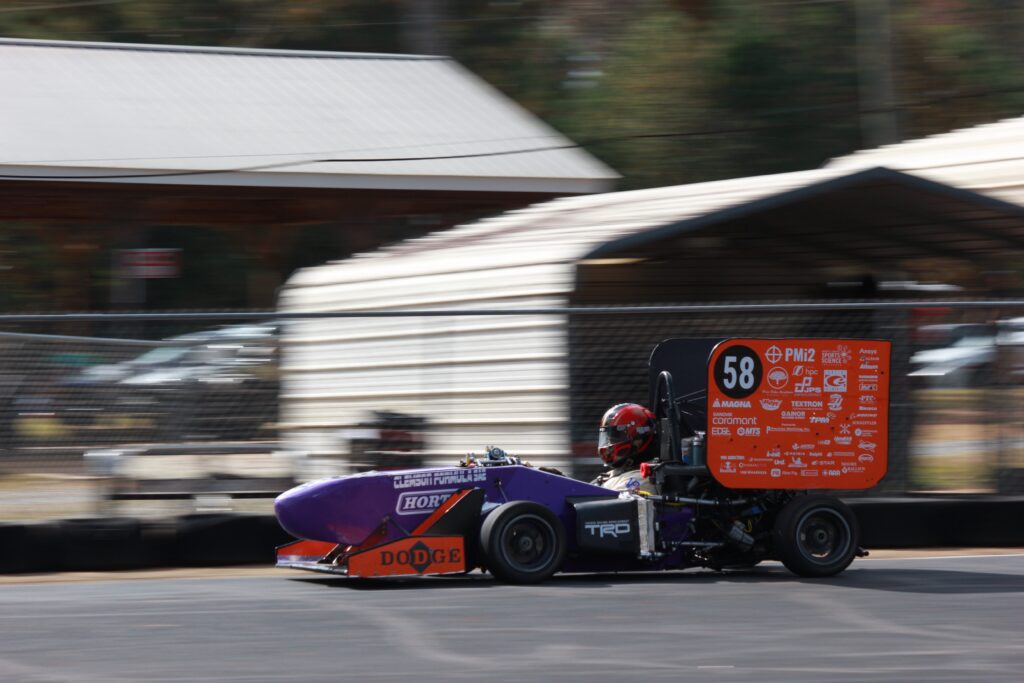
Peter Gaspich is a current Automotive Engineering student graduating in May 2026. He received the Markvan Bellamy Brooks Endowed Scholarship in 2024. He is currently the Suspension Division Lead for Clemson Formula SAE, leading a team of student engineers, and over the summer he was a General Motors Motorship Tires R&D Intern in Concord, North Carolina.
How have you utilized your major/concentration in sports to help you throughout internships?
Most of the skills I use today were gained from my experience as the Suspension Lead for Clemson Formula SAE. My involvement gave me valuable experience in vehicle dynamics, simulation, team management, data analysis, vehicle tuning, and so much more. Almost every skill I apply at work was gained from my experience on the team. I also have the Department of Automotive Engineering to thank to help give me the connections and interpersonal skills needed to excel in the industry.
What was your internship and where were you located?
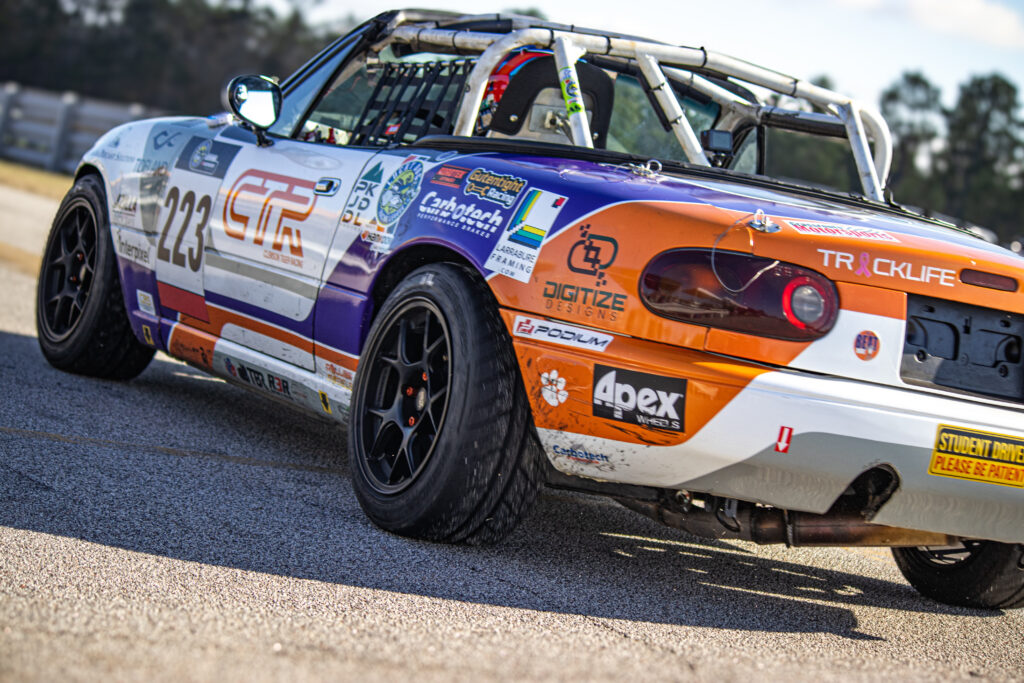
The track in Iowa
Over the summer I was a Motorsports Tire R&D Intern at General Motors. My role involved testing, modeling, and simulating tire performance to better predict and optimize vehicle performance going into the race weekend. GM Motorsports has afforded me a unique opportunity to work in a variety of series, including NASCAR, Cadillac LMDh in IMSA/WEC, and even the brand new TWG-Cadillac F1 Team!
What advice would you give to future Brooks Scholars as they approach post-grad?
While I haven’t graduated, I would encourage anyone pursuing a career in motorsports to never be intimidated and remain dedicated to their passion. The most important factor in my success wasn’t my GPA or my proficiency in mathematics, physics, dynamics, or any other schoolwork, it was my dedication to my passion and my willingness to sacrifice my time to participate in a hands-on motorsports experience, such as Formula SAE. A crucial skill in any engineering field is knowing how to apply your knowledge, which from my experience, is a skill that cannot be learned within the limits of the classroom.
RHBSSI team (from left to right) Dr. John DesJardins, Evelyn Lane, Maria Pocorobba, and Kayla Rogers
By Evelyn Lane
As the Summer semester comes to an end, the interns of the Robert H. Brooks Sport Science Institute share the opportunities and projects they had, as well as giving us a peek as to what they will be doing in the Fall semester. As the summer team was small and spread across the country for much of the semester, these interns were thrust into new and exciting roles and successfully tackled new challenges and tasks in order to uphold the RHBSSI mission and goals.
Maria Pocorobba
Maria Pocorobba is a senior communications major and business and brand communication minor from Albany, New York, who was the Institute’s content creator this summer. She assisted enhancing Institute manuals, designing content, and creating logos for the Robert H. Brooks Sports Science Institute to help communicate effectively with their audience and future interns.
“Working with the Robert H. Brooks Sports Science Institute this summer has been an incredible learning experience. One of my favorite projects was designing the new logo and branding materials for the Institute’s fall research symposium – RECESS. I also had the opportunity to contribute to social media content and assist with the Institute’s promotional video,” Pocorobba said. “Each project challenged me to think creatively, adapt quickly, and sharpen my design skills. It’s been a pleasure to work with such a supportive team, and I’m excited to watch the Institute continue to grow and thrive this year.”
In the Fall semester, Pocorobba will be working with Clemson Athletics as both a Graphic Design Intern and a Marketing/Fan Experience Intern. These positions will help her further develop her creative design skills, gain hands-on experience in the sports industry, and play a meaningful role in enhancing the Clemson fan experience, “I’m grateful for the opportunity to contribute to such a passionate and talented athletic department!”
Evelyn Lane
Evelyn Lane is a senior marketing major and Spanish minor from Piedmont, South Carolina, and was the Institute’s communications lead this summer. She helped format, create and enhance the Insitute’s sports science content through their social channels, along with analyzing analytics to help grow their online presence. She also partook in interviewing RHBSSI faculty fellows and alumni to develop the Sports Insight blog posts highlighiting their research, travels, and career endeavors.
“Getting to continue to work with the Institute this summer has helped me grow in so many different facets of my life and develop new skillsets. Having to take on the role of writing blog posts was so scary at first but I am so thankful now that I tackled it head on,” Lane said. “I got to speak to various members of RHBSSI Faculty Fellows and learn more about their travels around the world which was such an enriching experience for me. I was so lucky to get to learn and write about their stories, because along with learning new things about sports research around the world, I also was able to develop my writing skills and learn how to turn a messy blurb of notes into a cohesive and engaging story for the audience. I am so grateful for the new opportunities I got this summer and will take the skills I learned with me in the future.”
In the Fall semester, Lane will continue with the Institue for a third semester as the communications lead. She is excited to continue growing her communication skills along with learning from her future peers and working with them to enhance and uphold the Institute’s mission.
Throughout the 2025 summer, Robert H. Brooks Sports Science Institute Faculty Fellow and Assistant Professor in the Department of Parks, Recreation and Tourism Management, Dr. Felipe Tobar, has been conducting sport research around the world. From Clemson to Germany, Australia and Taiwan, Tobar has taken his passion for soccer and research on the intersection of sport, tourism, history, events, politics, and technology across the world.
Holocaust remembrance connected to German soccer culture
Tobar with members of the Alle zusammen – voran 03! initiative
In early May, Tobar took a group of students from Clemson to Germany to study “the Culture of Remembrance and Political Activism in German Football.” The first stop was Berlin, where they toured the city and its remembrance sites to help students understand that the impact of the Holocaust was not solely confined to concentration camps, but weaved into daily life, including soccer. They also attended the Babelsberg 03 vs. FC Carl Zeiss Jena match and witnessed the “Alle zusammen – voran 03!” initiative (“All Together – Leading 03!”), which is a campaign working to eliminate barriers in the stadium and in the way people think about inclusion in soccer between players with and without disabilities.
The next stop was Bremen, where the group walked around the city learning about the systematic use of forced labor under the Nazi regime and how the local community was fully aware of all crimes, and how political engagement in soccer is a necessity. After the walking tour, they visited Bunker Valentin, which was a Nazi-era submarine bunker, where they reflected on how to understand the victims in the eyes of soccer to present them as fans who never got to support their club again. They also got to tour Werder Bremen and retrace the Nazi-era history. After that tour, they got to witness the Werder Bremen vs RB Leipzig game and interact with locals.
Tobar and hisstudy abroad group at FC St. Pauli
After Bremen, they visited Hamburg, Dortmund, and Cologne, where they visited the FC St. Pauli Museum, HSV Museum, Borussia Dortmund, and the FC Köln Stadium. Not only did they get to experience German culture through soccer matches and stadium and museum tours, but they also gained a deeper understanding of how players, directors, and fans were important in helping build a culture of remembrance.
“Football clubs have the power, and the social responsibility, to remember, speak out, and act.” – Dr. Felipe Tobar
Their last stop was in Munich, where they played street soccer with locals and learned how the game of soccer at any level can teach important values that immigrant youth can take with them throughout their lives and help them adapt to new communities. The group then visited the FC Bayern Museum and reflected on how Bayern players and directors were affected by Nazi ideologies and how Munich played a central role in Hitler’s rise. The students also presented social media campaigns they had created focusing on topics such as racism, religious intolerance, and intersectionality in soccer.
During and after the trip, Tobar initiated two different studies. The first is about stickers. He noticed that around the soccer stadiums, there were stickers everywhere. These can easily be overlooked, but when he looked at these, he saw a version of fan expression, fans communicating their social and political beliefs and how German soccer culture is a vehicle of political activism. The second is a study focused on the benefits of teaching Holocaust history and how German soccer clubs can collaborate with remembrance centers and former concentration camps to attract new audiences and use soccer’s influence to communicate Holocaust history and ensure that it never happens again.
Presentations abroad
Tobar and colleague presenting research at the National Taichung University of Education
Tobar was invited as a visiting researcher and teacher to the National Taichung University of Education in Taiwan, where he had the opportunity to speak at three different undergraduate courses. He shared his experiences working with Paralympic soccer athletes and the importance of respect. He also presented his teaching philosophy, which is one where it is important to promote kindness and learning to create more engaged and curious students.
In Australia, he presented at the 16th International Conference on Sport and Society at Monash University in Melbourne. He presented his paper about English soccer stadiums, specifically Liverpool FC and how the presence of tourists and their use of mobile phones affect the local supporters’ match-day experiences. Through this study, he found that the presence of football tourists and their online engagement can be disruptive to the local football culture. He plans to share these results with both club and English Premier League teams in the future.
American and European soccer research
The Clemson Paralympic Soccer team during their first match
During Clemson’s first-ever Paralympic soccer match, Tobar conducted a survey to understand the perception of players with disabilities. He discovered that 84% of participants had changed their opinions positively towards para-athletes. He also surveyed the perceptions and attitudes of long-term volunteers towards people with disabilities.
Additionally, Tobar has two studies where he focuses on soccer and environmental sustainability. The first follows his attendance at the UEFA EURO, where the institution implemented a €29.6 million investment in environmental, social and governance (ESG) initiatives. The tournament achieved a 21% reduction in emissions compared to initial forecasts, largely through measures like encouraging public transport and minimizing flights. This study was focused on whether these changes towards sustainability changed fan behavior after the championship.
The second was focused on the Clemson Women’s Soccer team. In 2024, Tobar accompanied the team to Spain, where they observed how facilities and clubs tackle climate change. Now that a year has passed, he is asking 19 players and two managers if they have changed their behaviors and show that the players can have a voice and help others become more environmentally friendly.
The documentary
Tobar and colleague speaking on their documentary in Colombia
Tobar has recently launched his documentary called “The Match That Not Every Club Wants to Play.” This documentary takes viewers to Spain, showing the Real Madrid soccer club and how it attempted to keep its role in the Spanish Civil War a secret. It also takes us to FC St. Pauli in Germany, where the club is a symbol of resistance, and where the fans demand accountability for the club’s Nazi-era past.
Just like Tobar, this documentary is making its way around the world. It debuted at the Tercer Tiempo-Festival Mundial de Cine Futbolero in Bogotá, Colombia, where his father is from. There, he received a “Special Mention” for the quality of the production and thought-provoking investigation. Additionally, it was the first film in six years to have a full-house at the viewing.
Soon, the documentary will be shown at the Sports & Entertainment Film Festival in Birmingham, Alabama, the Festigol, Festival de Cine + Futbol, in Santiago, Chile, and at the Paladino D’Oro in Palermo, Italy, which is the world’s oldest sport film festival.
Coming up…
Following his first documentary, Tobar is in the process of developing another around the unspoken functions of Weserstadion in Bremen during the Nazi regime. The Nazis took it and used Eastern European slaves to build military defense structures. The stadium also facilitated the distribution of furniture from Jewish houses, and even today, much of this furniture is still not found.
Additionally, Tobar is studying how cultures influence how coaches coach their players. He plans to interview professional and collegiate coaches to understand how culture shapes play style. His brother is a coach for the most important Division One team in Ecuador, which is inspiring this study.
He is also working with Master’s students and colleagues from Colombia, Spain, and Chile to take a look at paralympic soccer and analyze how countries organize offensively and defensively. They are asking the question, “What is the best way to win games?” Paralympic players expend three times more energy than normal players, so they work to prove that the best paralympic teams play zone, which allows more conservation of energy, versus a man-to-man structure.
Samantha Moody graduated from Clemson University in May 2022 with a major in Marketing and double minor in Spanish and Human Resource Management. She received the Markvan Bellamy Brooks Endowed Scholarship in 2020. Throughout her time at Clemson she invested her time in many activities such as the Sales Innovation Program (SIP) and interned with Clemson’s Athletic Marketing Department.
How have you utilized your major/concentration in sports to help your career?
Marketing is a highly versatile field, and the Clemson curriculum equipped me with a broad skillset applicable across many industries. One key lesson I took away was that marketing graduates aren’t confined to a single career path. That flexibility has served me well in my role as an insurance broker, where I get to wear many hats daily. Whether it’s using my “sales” hat to build rapport with clients, my “creative” hat to design insurance solutions for complex risks, or my “analytical” hat to interpret market trends and loss data — the foundation I built at Clemson continues to support me in all aspects of my work.
What is your current role and where are you located?
I’m currently an Insurance Broker at Lockton Companies in Charlotte, NC. I specialize in placing commercial property and casualty insurance for private equity-backed companies, working across a diverse range of industries including marketing agencies, youth sports organizations, restaurants, manufacturers, retailers and everything inbetween!
Outside of my core responsibilities, I’m actively involved in Lockton’s internal initiatives. I serve on both the Charlotte and Southeast regional Women in Lockton committees and am a member of the “Best Place to Work” committee — a title Lockton has proudly held for 16 consecutive years.
What has your journey been like since graduating from Clemson?
It’s been an exciting and fast-paced journey! I started my career at Lockton just two weeks after graduation and haven’t looked back. Outside of work, I enjoy staying active through golf running and fitness classes , exploring Charlotte’s restaurant and brewery scene, and staying connected with the Clemson community. I currently serve on the Alumni Board of the Charlotte Clemson Club as the Student/Young Alumni Chair as well as the alumni advisor for Kappa Kappa Gamma’s Vice President of Organization.
What advice would you give to future Brooks Scholars as they approach post-grad?
My biggest advice is to remember that your passion for sports can live on in any career. While I work in insurance, I’ve found ways to stay connected to the sports world through my clients, company events, and personal life.
Clemson prepares you so well for the post -grad world, so leverage your Clemson Alumni network and never lose your love for Orange and Purple! Go Tigers!
Jack Kamsickas graduated from Clemson in August 2024 with a double major in Management and Parks, Recreation and Tourism Management with a PGA Golf Management concentration. He received the Markvan Bellamy Brooks Endowed Scholarship in 2023. Throughout his time at Clemson he utilized his concentration in PGA Golf Management to thrive as a PGA intern in Massachusetts, New York, and Pennsylvania.
How have you utilized your major/concentration in sports to help your career?
My concentration in PGA Golf Management taught me how to become proficient in a variety of skills, which helps me be a good teammate in a variety of environments. At Clemson, I learned how to be a sponge with an open mind, and it has helped me learn from as many different opportunities as I can. The skills I learned at Clemson set me up for immediate success after graduation.
What is your current role and where are you located?
My current role is a Seasonal PGA Assistant Golf Professional at The Country Club in Brookline, MA, and the Hole-In-The-Wall Golf Club in Naples, FL. I spend 6 months of the year at each location.
What has your journey been like since graduating from Clemson?
Since graduating from Clemson, I have worked in Florida and Massachusetts, learning about different sizes and types of golf operations while expanding my network too. My goal is to eventually become a Head Golf Professional or Director of Golf.
What advice would you give to future Brooks Scholars as they approach post-grad?
My biggest advice is to take advantage of as many networking opportunities that the college provides. Relationships you build at Clemson will help you in ways that you least expect, and resurface in times you least expect them down the road. Some of my strongest professional connections started in college!