According to recent reports, South Carolina is home to seven of the top twenty most hurricane-vulnerable counties. In order of vulnerability, they include Charleston, Horry, Beaufort, Berkeley and Dorchester counties, with Charleston and Horry counties ranking third and fourth nationally, respectively.
There are many factors that go into hurricane frequency and strength. They include ocean temperature, atmospheric temperature, air moisture, and wind speed and direction. Other factors are the El Nino Southern Oscillation, known as ENSO, and Atlantic Multidecadal Oscillation, known as AMO.
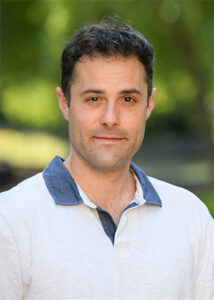
Today on Earthly, Jonathan interviews Prakash Khedun. Khedun is a Clemson University climate resilience specialist.
He is going to prime us for hurricane season by helping us better understand some of the weather elements that influence the frequency and power of these storms.
Show Notes
 The Environmental Protection Agency recently announced new drinking water limits on a category of chemicals called polyfluoroalkyl substances, or PFAS.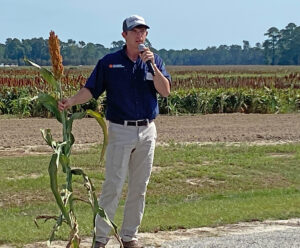
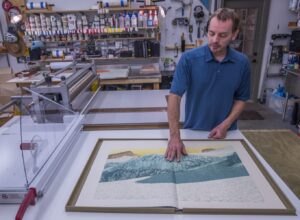 Humans have forever turned to nature for artistic inspiration. The earliest cave paintings are at least 64,000 years old and depict images of wild animals, landscapes, and even the heavens. More recently, photographer Ansel Adams, poet Wendell Berry, sculptor Andy Goldsworthy, and movie director Werner Herzog have all produced great art by musing on the material world.
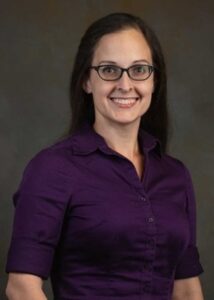
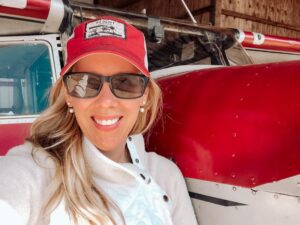 Kimberly Metris is not just an academic but also a licensed commercial pilot. One day while piloting skydivers to their jump altitude, Metris could see the Saharan dust plume over Upstate South Carolina and had a research epiphany to see what genetic matter was flying around in the sky. In this episode of Earthly, I talk to Metris about that epiphany, her work monitoring the skies for genetic matter, how she designed and constructed her own instrumentation, and what she found. She’ll also talk about next steps for her research.