History

Digital History Ph.D. Students Secure Positions Before Graduation

The Department of History and Geography is proud to announce that two students in Clemson’s Digital History Ph.D. program have accepted positions this year, both before completing their degrees.
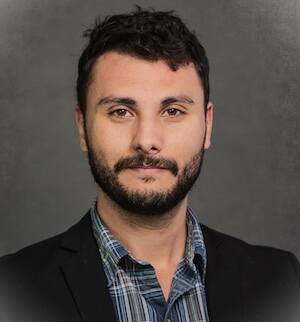
Lucas Avelar has been appointed Lecturer at Ball State University, where he will teach digital history. He will continue work on his dissertation while teaching.

Luc arrives at Ball State with considerable experience in collaborative digital scholarship. While at Clemson he attended the NEH-funded Archives as Data Institute at Columbia University, and he served as one of the 2024 Andrew W. Mellon Data Fellows for Freedom on the Move. Based at Cornell University, Freedom on the Move is a public history and digital humanities project that recovers and shares the stories of enslaved people in North America who resisted bondage by escaping. It centers on the thousands of advertisements enslavers placed in newspapers from the colonial era through the Civil War, records that are often the only surviving trace of an individual’s life, and through crowdsourced transcription it turns those fragments into a free database available to descendants, educators, researchers, and the public. The fellowship, which fulfilled the program’s internship requirement, gave Luc a summer of sustained work with historical records at scale and with the interpretive and ethical questions such work raises. He carries that experience into the classroom with him.

Megha Khanna has joined See What I Mean as an Associate. The firm consults with nonprofits, foundations, and networks on strategic planning, applied research, and organizational change, and Megha brings to it both her research training and her experience working with immigrant and diaspora communities.

An instructor at Clemson and a Ph.D. candidate writing on gender, public health, and colonial India, Megha will continue work on her dissertation while at the firm. She completed her internship with the South Asian American Policy & Research Institute, where she served as the Democracy and Civic Engagement Intern, and has also worked with the Ministry of External Affairs in India. That applied policy experience, together with the computational methods she developed in the program, among them data visualization and GIS, prepares her well for the research and assessment work the firm carries out for its clients.

Placements of this kind, secured before graduation, speak to the hard work of these students and of the training they have pursued here. Clemson’s Digital History Ph.D. pairs traditional historical methods with digital and computational ones and asks every student to complete an internship, an approach meant to prepare graduates for careers within the academy and beyond it.

The department congratulates Luc and Megha and looks forward to following their work. We are so proud of you both!

Recent Books from History Department Faculty

As we begin a new academic year, the Department of History and Geography is proud to celebrate three books published by our faculty over the past year, including work by two colleagues recently tenured and promoted to Associate Professor.

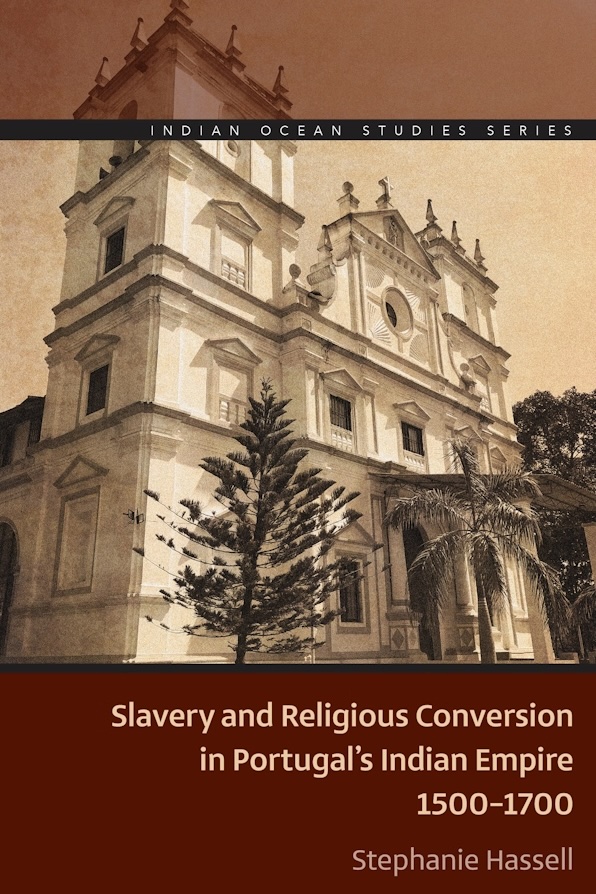
Stephanie Hassell, recently tenured and promoted to Associate Professor, is the author of Slavery and Religious Conversion in Portugal’s Indian Empire, 1500-1700 (Ohio University Press). The book examines how enslaved Africans and Asians were part of the larger Portuguese project of building and maintaining a Catholic empire in the Indian Ocean. Responsible for the conversion of their enslaved dependents to Catholicism, slaveholders became religious stewards whose spiritual duties helped expand the Christian population. That converted population was treated as part of the imperial security apparatus, imagined as loyal allies against neighboring Muslim states, even as Catholicism conveyed rights, enabled agency, and provoked struggles within households. Hassell shows that the making of a Catholic empire was a contested process bound up in the complex relationships between enslaved individuals, their enslavers, and the Church.

Rod Andrew Jr., Professor of History and Alumni Master Teacher and a retired colonel in the U.S. Marine Corps Reserve, is the author of The Marines’ Fight for Survival: War, Politics, and Institutional Crisis, 1945-1952 (University Press of Kansas). Just after World War II, leaders in the other services and the Truman Administration launched a determined effort to abolish the Marine Corps or to cut its role back so severely that it would become irrelevant. Through politicking, intrigue, leaked classified documents, deceit, and extreme moral courage, key Marine officers and their supporters barely staved off the crippling of the Corps through 1950. Andrew argues that only the outstanding performance of the Marines in the first year of the Korean War saved the Corps and anchored the place it holds today in the national defense structure. The book has been named co-recipient of the General Wallace M. Greene Jr. Award from the Marine Corps Heritage Foundation.

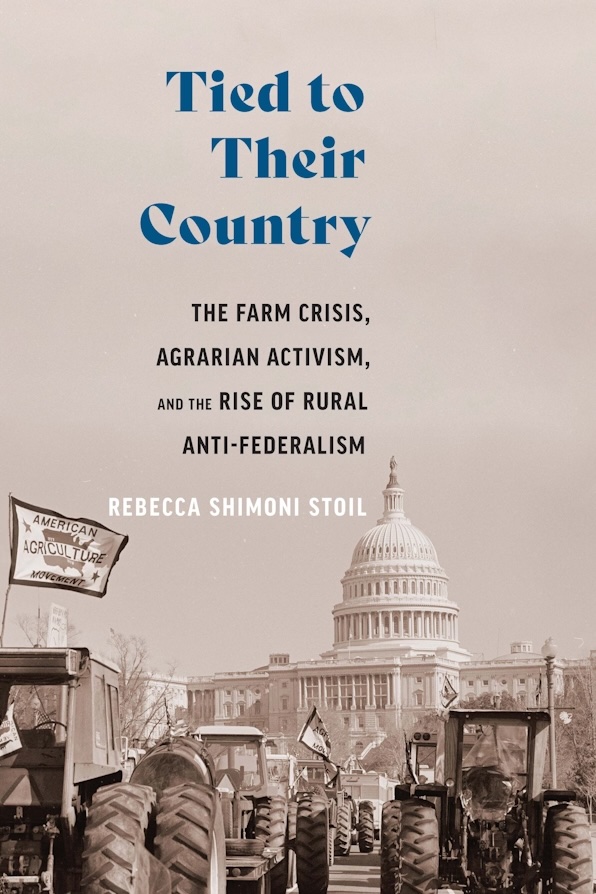
Rebecca Shimoni Stoil, newly tenured as Associate Professor, is the author of Tied to Their Country: The Farm Crisis, Agrarian Activism, and the Rise of Rural Anti-Federalism (University of Nebraska Press). In the book she examines the Farm Crisis of the 1970s and 1980s and its lasting political consequences. As banks collapsed, Main Street storefronts closed, and small towns emptied, what began as an agricultural crisis enveloped all of rural America. Stoil argues that the collapse of rural society during those years helps explain why anti-federal sentiment runs so deep across rural America today, even as many farmers are now beneficiaries of federal programs. Tracing both the immediate upheaval and its long aftermath, she shows how disparate groups coalesced around an ideology of rural anti-federalism.

Please join us in congratulating Professors Hassell, Andrew, and Stoil on these remarkable achievements.

Zoom Information Sessions for Fall 2026

Thinking about applying to Clemson’s groundbreaking Digital History Ph.D. program? Join us for one of our upcoming virtual information sessions!

We will be hosting several informational Zoom sessions in Fall 2026 for prospective applicants to the Digital History Ph.D. program. These sessions will cover program requirements, application tips, and frequently asked questions—and will include time for open Q&A with the program director.

Upcoming Sessions:

  • September 29th, 4:00 PM Eastern
  • October 22nd, 4:00 PM Eastern
  • November 10th, 4:00 PM Eastern
  • December 7th, 12:00 PM Eastern

Whether you’re curious about our innovative curriculum, want to learn about funding opportunities, or have questions about what makes digital history unique, these sessions are designed to help you navigate the application process and determine if our program is the right fit for your academic and career goals.

Please complete the form below to register your interest. A Zoom link and additional details will be sent by the Director of Graduate Studies ahead of each session.

Register Here

Can’t make any of these times? Feel free to reach out to the Director of Graduate Studies directly at dhphd@clemson.edu with your questions.

Applications for Fall 2027 admission are due January 15, 2027.

Clemson History Alum Wins Prestigious Southern History Book Award

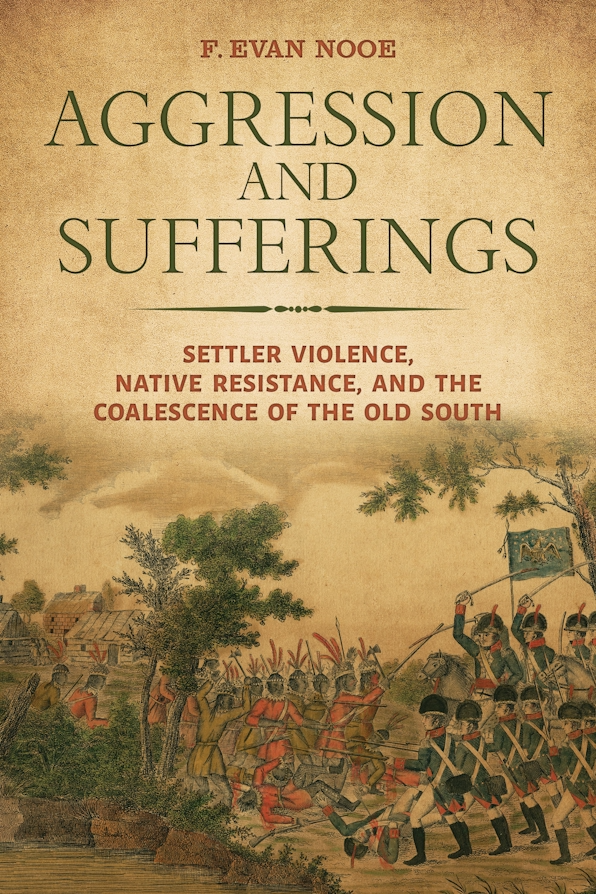
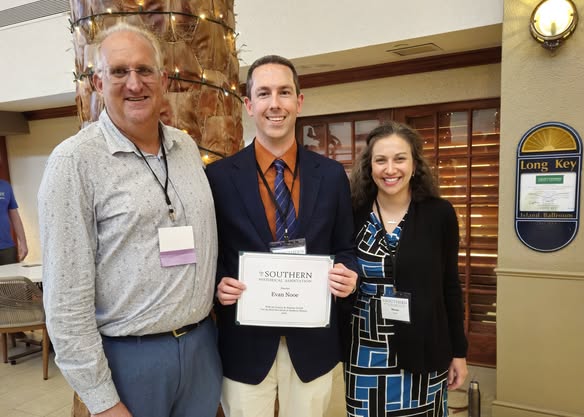
The Department of History and Geography is proud to announce that Dr. Evan Nooe, who earned his M.A. in History from Clemson, has won the Francis B. Simkins Award from the Southern Historical Association. The award recognizes his book Aggression and Sufferings: Settler Violence, Native Resistance, and the Coalescence of the Old South, published by the University of Alabama Press.

The Simkins Award is one of the most prestigious honors in the field of southern history, recognizing the best first book published in the field over a two-year period. Nooe’s book examines the interactions between white settlers and Indigenous peoples in the early South.

Focusing on South Carolina, Florida, Tennessee, Georgia, and Alabama, the book explores how different systems of justice and violence functioned in the region during the colonial and early national periods. Nooe examines how white southerners remembered and narrated these interactions, and how these narratives influenced the development of regional identity in the antebellum period and beyond.

After completing his M.A. at Clemson, Nooe went on to earn his Ph.D. at the University of Mississippi. He is currently an Assistant Professor of History at the University of South Carolina Lancaster, where he continues his research on early southern history and Indigenous histories.

The Department of History and Geography congratulates Dr. Nooe on this well-deserved recognition.

Ph.D. Student Cecilia Barnard Wins Prestigious Graduate Prize

The Department of History and Geography is delighted to announce that Cecilia Barnard, a doctoral student in Clemson’s Digital History Ph.D. program, has been awarded the Nancy Rupprecht Memorial Graduate Student Prize by the European History Section of the Southern Historical Association.

The prize, which recognizes the best graduate student paper in European Women’s History, was awarded for Barnard’s paper “Ite’s Beetle: Gender and Motherhood in the Shifting Religious Landscape of Ireland from the Eleventh to the Thirteenth Century.” Barnard originally presented this research at the 60th International Congress on Medieval Studies in the panel “Who Is She? Medieval Responses to Shifting Ideas of Womanhood.”

The Nancy Rupprecht Memorial Graduate Student Prize honors the legacy of Dr. Nancy Rupprecht, a distinguished historian of the Holocaust, World War II, and the Hitler Youth who was deeply committed to supporting European Women’s History and graduate studies. The prize is awarded annually by the European History Section (EHS), the oldest professional association of historians focusing on European History in the United States, founded in 1955 as an affiliate society of the Southern Historical Association.

Zoom Information Sessions for Fall 2025

Thinking about applying to Clemson’s groundbreaking Digital History Ph.D. program? Join us for one of our upcoming virtual information sessions!

We will be hosting several informational Zoom sessions in Fall 2025 for prospective applicants to the Digital History Ph.D. program. These sessions will cover program requirements, application tips, and frequently asked questions—and will include time for open Q&A with the program directors.

Upcoming Sessions:

  • October 3rd, 3:00 PM Eastern
  • October 21st, 4:00 PM Eastern
  • November 18th, 4:00 PM Eastern
  • December 15th, 12:00 PM Eastern

Whether you’re curious about our innovative curriculum, want to learn about funding opportunities, or have questions about what makes digital history unique, these sessions are designed to help you navigate the application process and determine if our program is the right fit for your academic and career goals.

Please complete the form below to register your interest. A Zoom link and additional details will be sent by one of the Ph.D. directors ahead of each session.

Register Here

Can’t make any of these times? Feel free to reach out to our program directors directly at dhphd@clemson.edu with your questions.

Applications for Fall 2026 admission are due January 15, 2026.

Ph.D. Student Amber Edwards Named Editorial Fellow with “Sharing Stories from 1977” Project

The Department of History is proud to share that Amber Edwards, a first-year student in the Ph.D. Program in Digital History, has been selected as an inaugural editorial fellow for the national digital history project Sharing Stories from 1977: Putting the National Women’s Conference on the Map.

Amber is one of only twenty graduate students chosen from across the country for this competitive fellowship. Funded by a multi-institutional collaborative led by the University of Houston, Sharing Stories from 1977 is a major digital public history initiative that recovers and amplifies the voices and experiences of those who participated in the 1977 National Women’s Conference in Houston. The project brings together scholars, students, and community members to create a rich and accessible digital resource documenting the conference and its ongoing legacies.

Amber recently completed her first year in Clemson’s Digital History Ph.D. program and works under the direction of Dr. Amanda Regan. Her research interests lie at the intersection of women’s history, political history, and the digital humanities. She is especially interested in how digital tools can help uncover hidden narratives within the historical record. You can learn more about her work at amberedwards.net.

As a fellow, Amber will work with one of the project’s editorial teams from September 2025 to July 2026, participating in workshops, virtual editorial pods, and hands-on digital publishing. Her selection reflects her strong commitment to women’s history, her experience with digital humanities, and her promise as a scholar and editor.

Please join us in congratulating Amber on this exciting achievement!

Ph.D. Students Edwards and Knipp Win Research Funding

Digital History Ph.D. Students Amber Edwards and Hallie Knipp have both won Summer Research Fellowships from Clemson University’s Humanities Hub!

Amber Edwards, a first year Digital History Ph.D. student, received funding to conduct archival research at Bowling Green State University’s Browne Library for Pop Culture Studies and the Rock & Roll Hall of Fame Library and Archive. Edwards is a 20th Century U.S. historian of women, gender and sexuality – specifically interested in the music culture of the ‘60s and ‘70s in the context of radical feminism and mass American culture. These archives house a variety of zines – non-professional magazines often associated with fan culture of rock music and its offshoots – including some focused on the counterculture and feminism of the ‘60s and ‘70s. Edwards is seeking to analyze how the gender consciousness of hippie women is portrayed within zines alongside the music and culture to explore where content covering hippie culture might intersect with publications expressing radical feminist ideology.

Hallie Knipp, a third year Digital History Ph.D. student, received funding to support research for her dissertation project, Mountain Labors: Contraceptives and Eugenics in Kentucky, 1915-1945. This research explores how birth control programs in early 20th-century Appalachia were shaped by intersecting forces of social reform, public health, and eugenics. Organizations like the Kentucky Birth Control League (KBCL) expanded reproductive healthcare access, but often with troubling motivations—especially through partnerships with eugenicists who sought to control who could and couldn’t access contraception. While some efforts empowered rural women, others targeted vulnerable populations, reinforcing racial and class-based hierarchies. With the support of this grant, Knipp will conduct archival research at the University of Kentucky and the Kentucky Historical Society, examining key collections such as the Alice Lloyd Caney Creek Community Center papers and the Family Planning in Kentucky collection. By mapping the geographic spread of these programs, this study will reveal the lived experiences of women affected by these initiatives—whether as reformers, patients, or those resisting imposed policies. This work sheds light on the complex history of reproductive healthcare in Appalachia and its lasting impact.

Caroline Dunn Publishes New Book entitled “Ladies-in-Waiting In Medieval England”

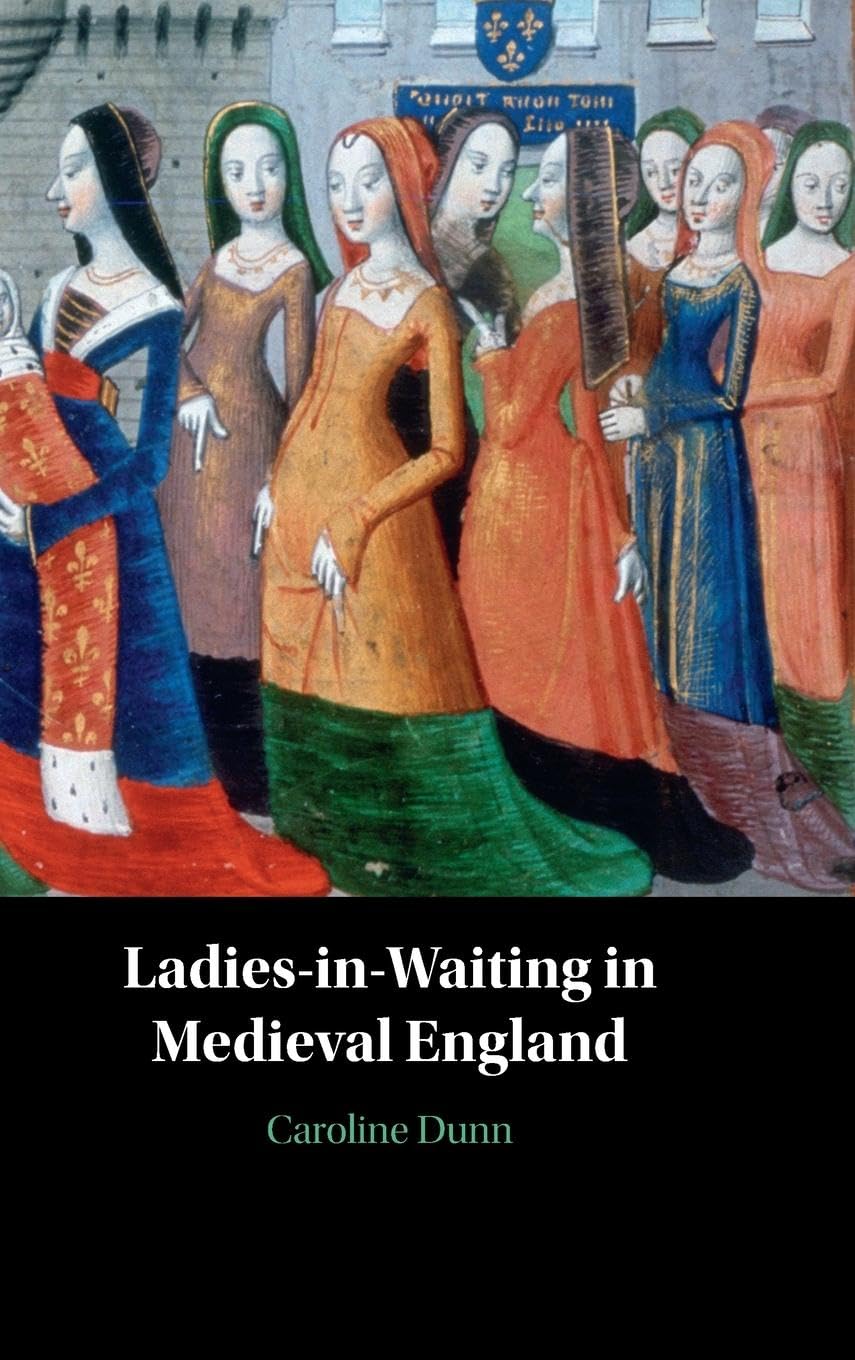
Congratulations to Professor Caroline Dunn on the publication of her new book, Ladies-in-Waiting In Medieval England. The book examines female attendants who served queens and aristocratic women during the late medieval period. Using a unique set of primary source based statistics, Caroline Dunn reveals that the lady-in-waiting was far more than a pretty girl sewing in the queen’s chamber while seeking to catch the eye of an eligible bachelor. Ladies-in-waiting witnessed major historical events of the era and were sophisticated players who earned significant rewards. They had both family and personal interests to advance – through employment they linked kin and court, and through marriage they built bridges between families. Whether royal or aristocratic, ladies-in-waiting worked within gendered spaces, building female-dominated social networks, while also operating within a masculine milieu that offered courtiers of both sexes access to power. Working from a range of sources wider than the subjective anecdote, Dunn presents the first scholarly treatment of medieval English ladies-in-waiting.

Professor Dunn’s book can be purchased here. Use the code LME2024 for a 20% discount!

Ph.D. Student Candy Boatwright Wins Research Fellowship

First year Ph.D. student Candace Boatwright has won the Lewis P. Jones Research Fellowship in South Carolina History from the Caroliniana Library at the University of South Carolina. The award will fund Boatwright’s research into the social and political history of Unionism in upstate South Carolina. The Lewis P. Jones Fellowship provides researchers who are researching South Carolina History with the opportunity to conduct research at the South Caroliniana Library.