International Services releases the fall 2015 schedule of programs for the Clemson Is Global series, and all Clemson faculty and staff are invited to participate. This semester’s programs will allow you to explore best practices for intercultural communication, practice forming the sounds in common Chinese names, and enhance your knowledge of international student requirements and processes. If you work closely with international students and scholars, then you won’t want to miss this opportunity to enhance your skills and knowledge. To reserve your spot, please complete the form linked below the session(s) you plan to attend below.
Communicating with Intercultural Competence
3-4:30 p.m., Friday, Oct. 30
E-304 Martin Hall
An interactive training exercise designed to increase intercultural awareness and introduce specific communication strategies.
Names are an important part of everyone’s identity. If someone pronounces your name correctly, you feel acknowledged and accepted. Come join us and learn how to pronounce common Chinese names.
By Jackie Todd, Office of Media Relations and Jonathan Veit, PSA Media Relations
Although Clemson properties across the state remained largely unscathed, some research centers in the Lowcountry were heavily impacted.
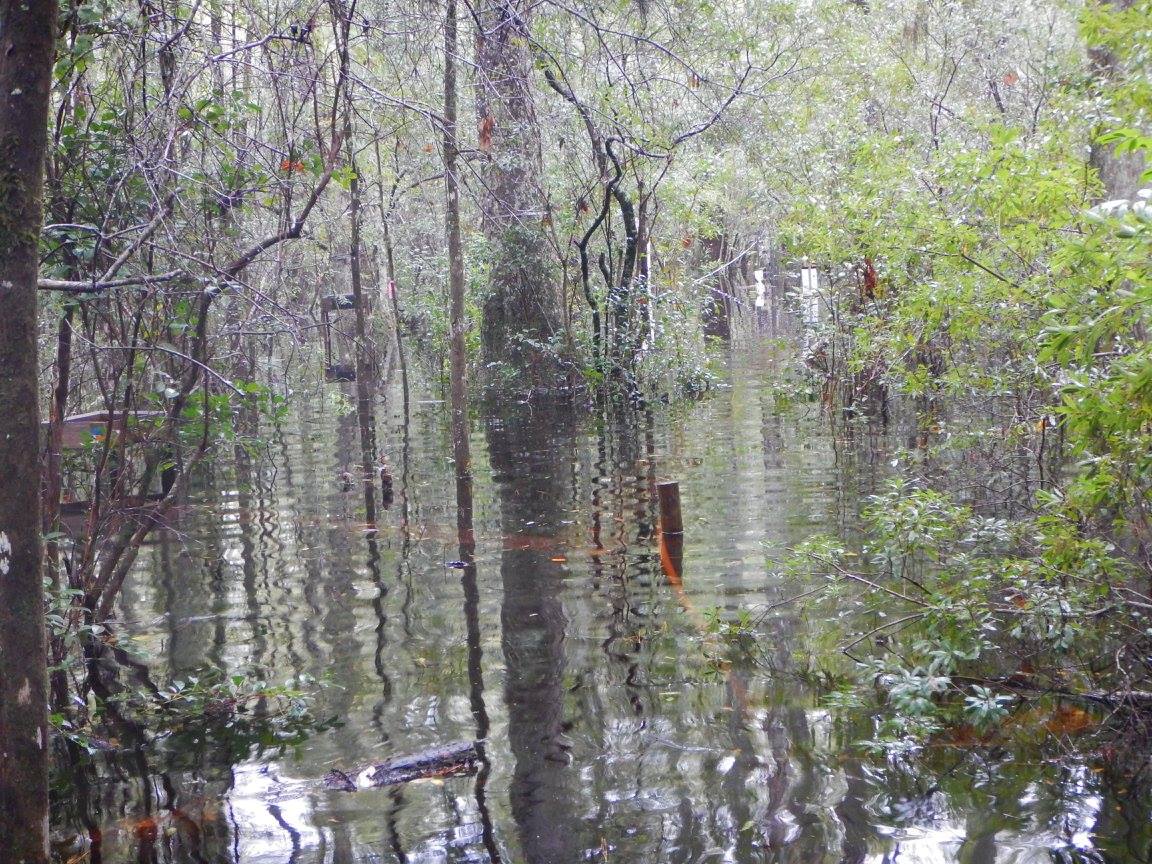
It seemed like the rain would never end. Miraculously, the storms caused by Hurricane Joaquin left Clemson’s main campus and Upstate facilities—including the South Carolina Botanical Garden—relatively unscathed.
In North Charleston, the Clemson University Restoration Institute(CURI), had minimal water intrusion. Officials at 292 Meeting Street, home of Clemson’s historical preservation program in Charleston, reported some loose ceiling tiles, but no damage to electronics or equipment. Classes were cancelled at Clemson’s Architecture Center in Charleston, but are now back in session.
Crops, centers and research impacted
Some of the university’s research education centers (REC), however, sustained major damage to the fields and research equipment. The Edisto REC in Blackville remains inundated with water and much of the research equipment and field experiments have been compromised.
Despite the damage, Edisto REC will hold its annual Cotton and Soybean Field Day with a modified program intended to help South Carolina farmers cope with flood devastation. Topics include the effects of flooding on hay and cattle production; harvesting damaged cotton and peanuts and impacts on grades; advice from cotton ginners and peanut processors on what to do with damaged crops; and reports from NRCS, FSA, Farm Bureau, and the S.C. Department of Agriculture on how they can help growers after the flood.
Located in Georgetown, the Belle W. Baruch Institute of Coastal Ecology and Forest Science (BICEFS) reported no major damage to buildings but possible damage to instrumentation infrastructure on several research and coastal wetlands monitoring projects, including Intelligent River, Intelligent Forest and Strawberry Swamp.
Clemson University Public Service and Agriculture (PSA) reported that a number of Cooperative Extension offices closed for a short time and a few may remain closed for an extended period.
While the Extension offices were temporarily closed, agents’ ability to help local farmers was not. Clemson PSA has posted information about flood disaster resources online and Clemson forestry agents continue their work helping with cleanup efforts, assessment and care for tree damage, and strategies to help local farmers feed their livestock.
PSA created a website with up-to-date information about its offices and facilities. The website also offers links to resources and advice on dealing with flood damage and associated issues.
A number of main campus organizations are working on relief and fundraising efforts to help flood victims. Look for a Special Inside Clemson to be sent to campus today with more details.
By Shawn Knight,
Graduate Assistant for LGBTQ Community Development, M.Ed. Student, Counselor Education, Class of 2016
Clemson University will host the fifth annual National Coming Out Week from Oct. 5-11. Themed “Hand in Hand, We Support National Coming Out Week,” the university will hold a series of events for faculty, staff, students, and the community to come together and show their support of the LGBTQ+ community.
The events have been planned collaboratively by the Harvey & Lucinda Gantt Multicultural Center and the Clemson Gay-Straight Alliance.
“National Coming Out Week is a great opportunity for the Clemson Family to come show their support of the LGBTQ community, no matter how they identify.” said Courtney McKeive, Clemson Gay-Straight Alliance president.
The schedule of events include:
Monday, Oct. 5: Krispy Kreme Donut Fundraiser, 9 a.m. – noon in the University Union Loggia
Tuesday, Oct. 6: I’m Gay…and Religious: Speaker’s Bureau, 7 p.m. in McKissick Theatre. This panel will bring in people with different religious backgrounds and viewpoints to start the conversation about one of the most highly criticized identity intersections (religion and sexuality).
Wednesday, Oct. 7: National Coming Out Day Festival 10 a.m. – 2 p.m. on the North Green. Stop by at any point during the festival to grab a snow cone, take some pictures, play a yard game, and visit campus resources. Guests are also invited to place a handprint on a banner of support.
Thursday, Oct. 8: Hot Wings & Hot Topics: Supporting Coming Out, 5 p.m. in Meeting Room A. This event will allow participants to talk informally about how they have been supported or supported others through their coming out process. And, of course, chicken wings are provided.
Friday: Oct. 9, Ally Training 8:30 a.m – 12:30 p.m in the Stadium Suites classroom. Ally training is the staple LGBTQ+ education program at Clemson University. Many participants show their “graduation” through the Ally Sticker. Pre-register at clemson.edu/ganttreg
Sunday, Oct. 10: Carpool to Atlanta Pride. The CGSA will coordinate rides to Atlanta to see the pride parade and festival. Follow them on Twitter @ClemsonGSA or email cgsa@clemson.edu for more on this.
For more information on this week of programming, please email Shawn Knight at smknigh@clemson.edu or call 864-656-3174.
Clemson University will become tobacco-free on Jan. 1, 2016. The new policy has been approved by the university’s administrative council based on input from a task force comprised of faculty, staff, undergraduate and graduate students and community representatives.
“We want to improve the health of our student and employee populations by decreasing rates of tobacco use and by reducing unwanted exposure to tobacco smoke for non-tobacco users on university property,” said George W. Clay, executive director of Student Health Services and chair of the Tobacco-Free task force.
All forms of tobacco and smoke-related products will be prohibited under the policy. Along with cigarettes, the ban includes chewing tobacco, smokeless tobacco and electronic cigarettes.
The policy applies to all university faculty, staff, students and visitors and will be in place for all Clemson campuses, as well as university-owned and leased facilities.
Nearly 1,600 colleges and universities have tobacco-free policies, including TriCounty Technical College, Anderson University, the University of South Carolina, the University of Arkansas, the University of Florida and the University of Kentucky.
Choose to be healthy
For those who want to quit smoking, this might be the perfect time. Clemson offers its faculty, staff and students a number of smoking cessation resources.
One of those resources is the Quit for Life program, free to State Health Plan subscribers. Quit for Life encourages participants to live tobacco-free by using “the 4 essential practices” of living without tobacco. The initiative pairs participants with a “Quit Coach,” who provides support and assistance, a “Web Coach,” where participants can complete online activities and track progress.
According to the Joseph F. Sullivan Center, quitting the use of tobacco products improves your health within minutes, even if you’ve used them for years. The center’s “CU Quit” program helps faculty and staff move toward that goal through counseling and customized treatment plans. The “CU Quit” program is also offered to students through Redfern Health Center.
Visit www.clemson.edu/tobaccofree for more information about the tobacco-free policy, a list of frequently asked questions and answers, and online links to tobacco cessation resources.
Clemson University President James P. Clements today announced the appointment of a Diversity Advisory Council to provide strategic guidance to the president, chief diversity officer and other administrators and help set priorities on diversity initiatives.
Members, and their respective constituent groups, include:
Roy Jones, Ph.D., President’s Commission on the Status of Black Faculty and Staff;
Tina White, Staff Senate and Commission on the Status of Women;
Blair Durkee, LGBTQ Task Force;
Reginald Hawthorne, Campus Climate Task Force;
Alondra DeSantiago, Latino Task Force;
Vincent Hsu, Council on Diversity Affairs;
A.D. Carson, Black Graduate Student Association;
Amith Maroli, International Student Association;
Racquel Collier, Black Student Union;
Josh Bell, Alumni Association;
Sam Wigley, Student Veterans Association;
Joe Holloway, Campus Ministers;
Stephanie Ellison, Department of Athletics;
Jim McCubbin, Ph.D., Faculty Senate;
Jeremy King, Ph.D., Presidential Faculty Fellow;
Sharon Nagy, Ph.D., vice provost for Global Engagement;
Margaret Camp, director of Student Disability Services.
The council will play a key advisory role in developing a comprehensive diversity plan for the university. Interim Chief Diversity Officer Max Allen will chair the council and he will continue to serve as an ex-officio member on an ongoing basis. Other ex-officio members are Almeda Jacks, vice president for Student Affairs, and Leslie Doss of the Office of Diversity.
Earlier this year, Clements announced the creation of the Diversity Advisory Council, which would be comprised of a broad-based of constituents to collaborate, prioritize and make recommendations on issues, ideas and concerns regarding diversity and inclusive excellence at Clemson.
“I want to thank these individuals for agreeing to serve Clemson University in this capacity,” Clements said. “Their work will make a positive difference for our students, faculty, staff and alumni — now and in the future.”
Leadership for diversity and inclusive excellence initiatives is the focus of an announcement made today (Aug. 24) by Clemson University President James P. Clements.
Effectively immediately, Chief of Staff Max Allen will take on additional responsibilities as interim chief diversity officer (CDO) while a national search for a permanent CDO to replace Leon Wiles, who retired earlier this summer, continues.
“Max is a tremendous leader and a highly capable administrator who will bring stability and progressive leadership to our diversity efforts during this period of transition,” Clements said. “It’s important that our diversity and inclusive excellence initiatives continue to move forward in a strategic way. It is my strong desire for this effort to be directly connected to the president’s office as we develop a comprehensive plan to enhance inclusion throughout the campus.”
Clemson University is committed to increasing the diversity of our faculty, staff, students and the administration, while increasing our efforts to promote cultural awareness and ensuring that all members of the Clemson family are respected, appreciated and valued. An assessment of all existing diversity initiatives is underway to enhance coordination and effectiveness at the university. A Diversity Advisory Council that will advise President Clements on various diversity efforts will be announced soon.
Construction continues with projects on much of Clemson’s main campus with temporary closures and parking spot relocations. But officials say with short-term pain, there is a lot of gain.
“I realize that major construction projects create temporary inconveniences, but the long-term results will be worth it,” said President Jim Clements during Tuesday’s Convocation address.
The construction, part of the university’s capital building campaign, is the largest in Clemson’s history and addresses facility needs as well as the needs of a growing student population.
Officials report that over the next five years, the projects will result in about one and half million square feet of additional or renovated space.
One facility construction project is now complete. Contractor M.B. Kahn this past week completed its work on Freeman Hall, which adds 24,000 square feet of office and classroom space to the building.
University Housing and Dining reports that the Core Campus project will begin to take shape during the fall semester. Associate Director of Projects James Bonney said that the building’s steel skeleton should be complete mid semester and workers will begin to install the façade on the buildings.
The majority of the Douthit Hills construction work scheduled for the fall semester will occur on the central and east sides of the site. Bonney said there may be some traffic delays along S.C. Highway 93 near Newman and Cherry Roads as a new road is built, which will connect the north neighborhood to the Newman Road and Hwy. 93 intersection. Once completed, Daniel Drive will be closed for construction. Bonney said this will likely take place at the end of this year or beginning of 2016. Additionally, Daniel Drive and Martin will be closed for repairs Aug. 25 and 26.
Although most construction activities on these large-scale projects will be contained inside the project’s site fence, duct banks will be dug along the side of some campus roads to access underground utilities.
Some other smaller-scale projects include:
Hardin Hall/Brackett Hall ADA sidewalk: A five-foot walk/ramp will be open on the Brackett side; however, the remainder of the area will be blocked off and under construction until mid-October.
Cooper Plaza level brick paver project: There will be no access to the plaza level until end of August.
Hendrix Center outdoor patio: The sidewalk from McMillan Road to the Hendrix Center, across the street from Redfern Health Center will be blocked through mid-October. However, the sidewalk that borders McMillan Road will be open.
Electrical duct bank: This affects Calhoun Drive from Brackett Hall to Riggs Hall. Traffic will temporarily be restricted to one lane only and parking will be available on one side of the street.
Clean energy and advanced manufacturing seem like future concepts. But the future is now at Clemson where research and development of new technologies are attracting the attention—and respect—of those who seek to invest in those innovations.
One of those “investors” is the United States Department of Energy (DOE). And its representative had great things to say about Clemson.
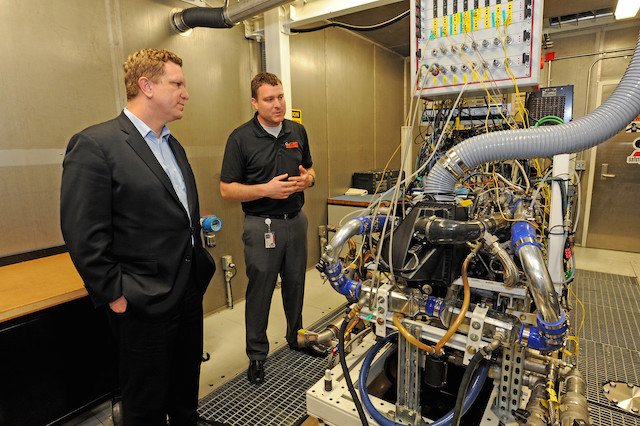
“The whole region is on fire in terms of advanced manufacturing and clean energy and you’re a big part of that,” said David Danielson, assistant secretary for energy efficiency and renewable energy. “I think you’re at the epicenter of that.”
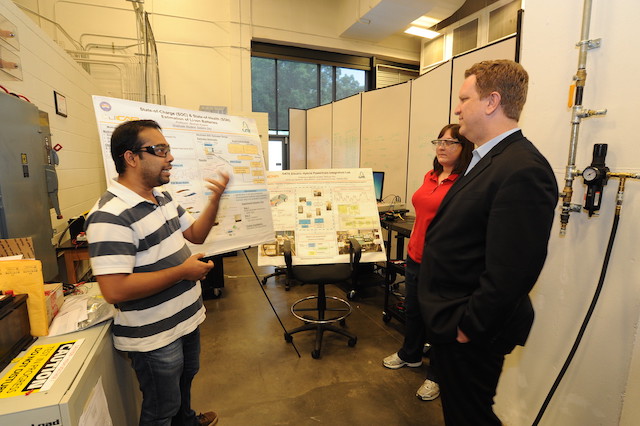
Danielson stopped at CU-ICAR last week as part of his Clean Energy Manufacturing Initiative Southeast U.S. tour to learn more about Clemson’s involvement in this area and to seek input on how the DOE can assist the region in developing technologies to push what he called “our clean energy economy” forward in the nation.
And Danielson liked what he saw.
“If I look at what you’re doing with the eGrid, with CU-ICAR and other efforts, I really think that you’re mapping a path forward that we’re going to see the rest of the nation take on in a very short order,” he said. “Walking around here at CU-ICAR, I’m blown away. I’m so excited by the work you’re doing and I couldn’t be prouder that the DOE is one of your sponsors.”
According to Danielson, there’s a growing appreciation of advanced manufacturing and clean energy. The clean energy market, which the DOE assistant secretary said was in the billions last year, is expected to increase into the billions in the next five to ten years.
With rising labor costs overseas, a focus on reduced CO2 emissions and a growing appreciation of advanced manufacturing technologies, it’s a prime time for the U.S. to bring back the manufacturing jobs that it lost in past years.
Melur Ramasubramanian thought it was important for the DOE to understand Clemson’s commitment to this research. Ramasubramanian, the D. W. Reynolds Distinguished Professor and Department Chair of the university’s Department of Mechanical Engineering, helped to organize Danielson’s visit.
“This is a national priority,” Ramasubramanian explained. “Large scale federal funding is being directed to this area. DOE has awarded large National Network for Manufacturing Innovation (NNMI) Institutes and plans to invest in three additional institutes.
Ramasubramanian said that it is strategically important for Clemson to be at the forefront of this area and position itself to win one of these institutes.
“Clean energy-related manufacturing offers the best chance for us to win, given our strengths.”
Parking permit fees for faculty, staff and students on Clemson’s main campus will rise effective Aug. 16.
Parking permit fees are tied to a salary tier system. Employees with higher salaries pay more for parking permits. The Aug. 16 fee increase follows the same tier system and ranges from a 33-cent increase per paycheck to a $2.08 increase per paycheck for those on the highest tier. Another tier has also been added for top wage earners. Those who earn more than $90,000 annually will see the highest increase.
But not everyone will pay more for parking.
“Those whose annual salaries are $30,000 or less will see no fee increase,” said Dan Hofmann, director of Parking and Transportation Services.
The increase is the first for faculty and staff in more than a decade and the first for students since 2009 according to Hofmann.
“The last time faculty and staff saw parking permit prices go up was 2003,” he said. “We’ve invested in new parking technologies and made major improvements to improve our parking infrastructure since then.”
Some of the most recent improvements cited include the addition of “visitor-friendly” solar powered multi-space parking meters that provide dedicated visitor spaces. In the past, visitors were permitted to park in employee spaces for free, but are now required to use the dedicated visitor spots.
Other improvements include the addition of the new E-21 employee parking lot, an eco-friendly 200-space lot near the Cherry and Perimeter roads intersection. The heavily used Sikes and Sirrine employee parking lots were renovated and the Brooks Center parking lot was redesigned, adding 50 spaces. A number of main campus parking lots now boast LED lighting, which Hofmann said supports the sustainability goals of the university, saves money and enhances safety. Parking lot “loops” have also been installed in 10 student commuter lots allowing students to access parking space availability for more than 4,200 spaces through their smartphones using the my.Clemson app. Hofmann hopes to expand this to employee lots in the future.
Hofmann is adding more employee parking spaces to the main campus.
“We’re about to sign a lease with Holy Trinity Church, which will give us up to 40 additional employee spaces in the church’s lot, right across the street from Mell Hall. And the temporary gravel area right outside of Clemson House is currently being repaved, so that will open up additional employee spaces,” he said.
Future plans include the creation of over 1,000 parking spaces for the Douthit Hills project as well as the creation of two satellite parking lots. Hofmann said that a 650-space lot on the east side of campus and a 188-space lot on the west side is still in the beginning stages, but once completed, will be accessible to faculty, staff and students.
The increase was approved by Clemson’s Administrative Council and presented to the faculty and staff senates as well and the university’s undergraduate and graduate student governments.
“We know that increases are not popular, but most employees will pay an additional average of 50 cents per paycheck,” he said. “It’s a small price to pay for the magnitude of improvements that we are implementing on campus.“
Faculty, staff, students and visitors who come to Clemson this summer will see the future being built right before their eyes.
Meanwhile, progress doesn’t come without a little inconvenience. To accommodate the work being done and for the safety of those on campus, Clemson will temporarily close some roads, divert traffic and relocate some parking spots. (Note: Deep breaths, it will all be ok, really.)
Take a look at some of the upgrades that will improve Clemson’s main campus:
Northwest campus
A chiller plant will be constructed along Highway 93, which will add plant capacity for planned future growth on the west sector of campus and will mitigate risks associated with outages due to an aging central utility infrastructure. The new energy plant will also provide supplemental capacity for central campus growth estimated at more than 450,000 square feet including essential facilities such as the Core Campus housing development, the Watt Family Innovation Center, the Freeman Hall addition as well as new athletic facilities.
Parkway Drive will close until June 1 as workers repave the street. Faculty and staff will be able to park in 45 additional spaces, which are now available on Daniel Drive (behind Clemson House) and 60 temporary employee parking spaces at Calhoun Courts (off of S.C. Highway 93 across from the President’s House).
Plans for a satellite parking lot are underway. The lot will be built near the intersection of S.C. Highway 93 and Highway 76. The lot will be accessible through Highway 76 and is expected to offer 200 additional employee spaces.
The brick plaza under the Library Bridge will be closed so that workers can replace the brick pavers.
Lightsey Bridge Apartments will undergo upgrades and renovations.
A new roof will be installed at the Brooks Center and the Fluor Daniel building.
The picnic tables in the front of the Hendrix Student Center will be removed to allow better access to the building. Workers will build an outdoor plaza on the Southwest Corner of Hendrix. The new area will include 60 tables and chairs.
Work continues throughout campus on various repairs on the aging electrical infrastructure. To support these changes, the main campus will have brief, localized power outages and some traffic detours as workers dig “duct banks” (essentially a big hole in the street) to install and replace underground utilities and wiring.
This work precedes a five-year $75M electrical distribution system upgrade project that will begin next year.
“We want to construct a state-of-the-art electrical system that can auto switch power to minimize the impact of localized outages ” said Clemson’s Chief Facilities Officer Bob Wells. “It’s short-term pain for a lot of gain.”
Resources
Click here to access a PowerPoint that gives information on summer projects at Clemson’s main campus.
The facilities department maintains a calendar that lists road closures, outages and other construction disruptions. Access that calendar here or visit the facilities department Web page.