The Parks, Recreation and Tourism Management (PRTM) Blog

Leader of the Golden Gate National Parks Conservancy wins innovative achievement award

Chris Lehnertz, President and CEO of the Golden Gate National Parks Conservancy, was recently honored with the Fran P. Mainella Award by the Clemson University Institute for Parks in recognition of her long-standing commitment to diversity and inclusion in our nation’s parks.
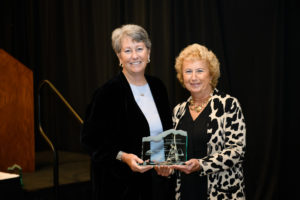
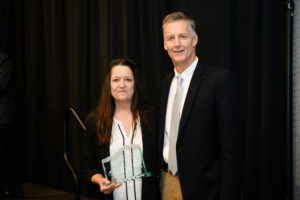
Chris Lehnertz (left) receives with her award’s namesake, former National Park Service Director Fran Mainella, at the Hartzog awards ceremony.
Chris Lehnertz (left) receives her award from its namesake, former National Park Service Director Fran Mainella, at the Hartzog awards ceremony.

The institute presents the annual awards program, which is named for George B. Hartzog Jr., the seventh director of the National Park Service, to showcase leading figures in the field of conservation. Specific awards were named after visionary leaders that Hartzog respected and admired. Award recipients are following in Hartzog’s footsteps by making significant contributions to the management of parks and preservation of our natural, historical, and cultural heritage.

The Fran P. Mainella Award is named in appreciation of the dynamic career of Fran Mainella, the first female director of the National Park Service. The award recognizes sustained and innovative achievement by a woman in the management of America’s natural, historic and cultural heritage.

Brett Wright, dean emeritus of Clemson University’s college of behavioral, social and health sciences, presented the award to Ms. Lehnertz at a ceremony on October 22. According to Dr. Wright, Lehnertz has a passion for making parks relevant, accessible, inclusive and welcoming for all.

“Recognizing that 36 percent of our national parks are now in urban areas, Chris is committed to advancing the role these sites can play in supporting civic needs such as education and literacy, wellness and urban quality of life,” continues Dr. Wright. “She’s worked hard throughout her career to bring different perspectives, people and communities to our parks, to make these public lands and our nation as a whole, stronger and more united.”

Lehnertz has also made inclusion of the Bay Area’s more than seven million residents a focus of her new role as president and CEO of the Golden Gate National Parks Conservancy.

“As the nonprofit partner of the National Park Service (NPS) at the GGNRA, the Parks Conservancy is committed to amplifying the park’s inclusion efforts,” she says. “I believe parks can spark powerful change. With community partners, we offer education and literacy programming, health and wellness activities, and youth leadership programs to serve our local residents.”

Lehnertz started her park career as deputy superintendent at Yellowstone National Park, later serving as the regional director for the Pacific West Region, and superintendent at both Golden Gate National Recreation Area and Grand Canyon National Park. She successfully led several complex and challenging projects and issues, and was also deeply involved in multiple strategic planning efforts, many of which have resulted in crucial park accomplishments like the addition of lands to Joshua Tree National Park, policy on the Revisiting Leopold Report (2012) for resource stewardship in the 21st century, a modern and sustainable design for a new transcanyon waterline at Grand Canyon National Park and plans for an Inter-tribal cultural site at Desert View in Grand Canyon. She also played a role in the addition of four new units to the national park system – César E. Chávez National Monument, Honouliuli National Monument, Tule Springs Fossil Beds National Monument, and the Manhattan Project National Historical Park.

Before her work with the NPS, Chris fulfilled her passion for protecting the natural world in posts at the US Environmental Protection Agency, the US Fish & Wildlife Service, the US Forest Service, and the Colorado Division of Wildlife. Throughout her career, she has worked to establish a people-first culture. She served five years on the NPS Safety Leadership Council, resulting in a new national system of safety designed to improve safety, health, and wellness in every park unit and for every NPS program. She has focused her career on establishing a culture of respect and inclusion in spaces where people could be safe, feel secure, and find support.

###

The Clemson University Institute for Parks (CUIP) provides research, education, training, and outreach that enhances the management of the world’s parks and protected areas. It accomplishes this by providing park and protected area managers with innovative research to support science-based decision-making; and by developing current and future leaders in the park movement by providing interdisciplinary and transformative education and training programs. The Institute currently consists of 35 Fellows and 8 Scholars working on park-related research.

The Golden Gate National Parks Conservancy is the primary nonprofit partner of the National Park Service (NPS) at the Golden Gate National Recreation Area (GGNRA). The GGNRA spans nearly 84,000 acres, preserves nationally significant cultural sites such as Alcatraz and Fort Point, and is part of the UNESCO Golden Gate Biosphere reserve that includes vital marine, coastal, and upland resources at Muir Woods, Crissy Field and the Marin Headlands.

Visit the CUIP website for more information about the George B. Hartzog, Jr. Environmental Awards program and its recipients.
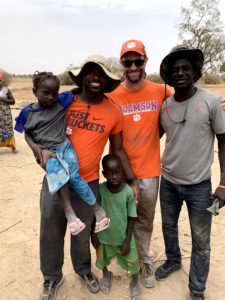
Wonder What Helps Youth Succeed? This Clemson Researcher Can Help with That.

Clemson youth development researcher and Associate Professor Dr. Ed Bowers has always had a natural curiosity about other people and cultures, particularly why people do what they do.

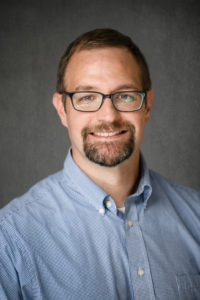
Clemson youth development researcher and Associate Professor Dr. Ed Bowers.

“I’ve always been interested in how people think and act in different environments and situations, and how the cultural context they live in can influence their beliefs and behaviors,” he says.

That curiosity is taking him all over the world. Over the course of his career so far, he’s visited more a dozen countries and taught in Dublin as part of an international service program, experiencing different cultures and perspectives wherever he goes.

When he visits a new place, he pays close attention to things most travelers are not likely to typically consider, such as what strengths young people need to develop in order to succeed, and how they may differ from what success may look like at home.

“It’s a habit at this point. People and our motivations are more complex than you might think,” he says. “For example, if you’re living in a remote area without ready access to core services such as education, health care or transportation, you’re going to see different measures of success than someone who is living in a major urban center.”

Dr. Bowers carries that curiosity to his research, which asks similar questions, but through a focus on positive youth development, and how youth-adult relationships can influence what goes right in the lives of children and adolescents. His work helps us figure out what every parent asks themselves at some point – why did my child do that? And do they have the characteristics and support they need to be successful in life?

His research also focuses on the strengths of youth, instead of negative behaviors. Bowers says this is because even though there is a widespread belief that the teen years are marked by ‘storm and stress,’ most teenagers are actually doing relatively well.

“Youth do make bad decisions, and there are reasons for that, but they also give to charities, care about people, and have sympathy and empathy for others,” he says. “Teenagers can contribute in positive ways to their communities. Building on these youth strengths rather than focusing on their deficits is a more effective way to promote thriving in young people.”

In 2015, Dr. Bowers and several of his academic colleagues explored measures that can help define positive skills and growth in a book they edited together about promoting positive youth development. The book shares a model that people working in positive youth development commonly use to measure a child’s strengths, called the Five Cs – competence, confidence, caring, compassion and character.

Dr. Bowers helped contribute to that model by examining youth responses from across the country to create a measure focused on what a thriving teenager looks like in a community, asking questions about skills or things that they do that demonstrate success.

Dr. Bowers is applying youth development models to youth in other countries and environments to determine how measures of success may need to be adjusted, depending on where youth live.
Dr. Bowers is applying positive youth development models in other countries and environments to determine how measures of youth success may need to be adjusted, depending on where youth live.

Character, for example, can be measured by doing the right thing, having integrity and valuing diversity. Caring, on the other hand, is assessed by whether or not the teenager is bothered by seeing bad things happen to people, or if they want to step in and help.

Dr. Bowers is now working with colleagues in other universities and community organizations to apply that model to youth in other countries and environments, so they can determine how measures of success may need to be adjusted, depending on where and how youth live.

“For example, when measuring competence, a First Nations teenager living in a remote area in Canada’s Northwest Territories needs to have certain skills to succeed that would make no sense to a suburban kid in Boston,” he says. “We’re drilling deeper into the measures to find out exactly what skills are necessary in their specific contexts, to ensure the model can adapt to reflect their unique situations.”

How does one find out what measures work for certain groups of people? According to Dr. Bowers, the first step is asking them. Right now, he’s working with Maasai Mara University in Kenya, Oregon State University, and the University of South Carolina on a Templeton World Charity Foundation funded project to develop a new tool that youth workers will be able use to assess character strengths among Kenyan youth. The project is one of only 14 funded from over 150 applications spanning 55 countries around the globe, and involves interviews with 60 youth and 15 adults to get a sense of what measures are most important for youth living in different environments.

“Within Nairobi, there are teenagers living more traditional lives and street kids who are working towards very different ideas of success,” he says. “The challenge is to develop a model that can be tailored to specifically measure what skills and supports they need to be successful in their specific context of their shared community.”

The instrument they develop will be tested on a sample of 450 youths to establish its validity, relevance and ease of use. Dr. Bowers says the impact of this new tool will be far-reaching.

“This project is not just building a tool for one community,” he says. “It’s also building capacity for youth workers and scholars to conduct high quality research and become a hub for youth development in that area of the African continent.”

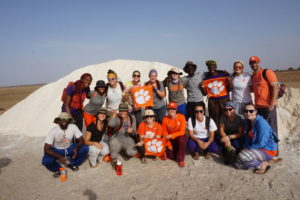
Ed Bowers (back row, right) in Senegal last June with student-athletes and staff that participated in a school build trek organized by buildOn.

Dr. Bowers is also using other opportunities to identify new avenues for applied research to benefit young people. In June he traveled to Senegal with a group of Clemson student-athletes and staff on a school construction project organized by buildOn, a non-profit organization that constructs a new school every two days in some of the economically poorest countries around the world. Now he’s working with YDL program graduate and buildOn Community Engagement Manager Aled Hollingworth to apply their experiences to the development of innovative service-learning opportunities. Next fall, Dr. Bowers also plans to co-teach an international virtual exchange course with a colleague in Vietnam. The course will bring together students from Clemson with students at Ho Chi Minh City Open University to explore the role of digital media in the lives of young people from different cultures.

He says that projects like the Kenyan initiative, service-learning study abroad experiences like the Senegal trip, and virtual exchanges are key to gathering the input needed to tailor youth development measurement tools for global communities. These experiences are equally important for students looking to enter the youth development field.

“Finding ways to get students out in these different cultures conducting field work is the best way to build their skills to see development from a systems perspective, extend our reach, and continue to build capacity in communities they visit,” he says. “Exchanges can also make a big difference, by connecting youth development students from other countries with our students to engage in discussions about best practices, and then identify ways to best promote thriving in diverse communities. Our goal is to encourage positive youth development in a global society.”


Kansas State park management and conservation associate professor wins academic leadership award

Dr. Ryan Sharp, associate professor in the park management and conservation program at Kansas State University, was recently honored with the Benton H. Box Award by the Clemson University Institute for Parks in recognition of his academic and instructional leadership in the environmental field.

Dr. Ryan Sharp shared this year's Benton H. Box award with Dr. Steve Trombolak.
Dr. Ryan Sharp shared this year’s Benton H. Box award with Dr. Steve Trombolak.

The institute presents the annual awards program, which is named for George B. Hartzog Jr., the seventh director of the National Park Service, to showcase leading figures in the field of conservation. Specific awards were named after visionary leaders that Hartzog respected and admired. Award recipients are following in Hartzog’s footsteps by making significant contributions to the management of parks and preservation of our natural, historical, and cultural heritage.

The Benton H. Box Award recognizes academic professionals that exemplify Dr. Box’s distinguished career as an educator and administrator. Dr. Sharp shared this year’s award with Stephen C. Trombulak, Professor Emeritus of biology and biosphere studies at Middlebury College, for leadership in preserving our natural environment and inspiring in students the quest for knowledge and the development of an environmental ethic.

Matt Brownlee, associate professor of parks, recreation and tourism management at Clemson University, presented the award to Dr. Sharp at a ceremony on October 22. According to Dr. Brownlee, Dr. Sharp’s focus on finding solutions to complicated and multi-faceted management research problems in American parks, coupled with his ability to connect with park managers, is unmatched.

“I’ve had the great privilege of collaborating on a number of different research endeavors with Dr. Sharp, working in parks from Alaska to Georgia,” he says. “His ability to translate complicated academic theory and research approaches into pragmatic solutions is unrivalled in the research community.”

Dr. Sharp obtained his PhD in natural resources, recreation & tourism from the Warnell School of Forestry and Natural Resources at the University of Georgia, his M.Ed. from Georgia College in outdoor recreation, and a BS in education from the State University of New York at Cortland. He was also part of the inaugural group of fellows for the George Wright Society’s Park Break program (now offered as a partnership between the Society and Institute for Parks), which brings a diverse set of graduate students to national parks for a week-long service-based learning experience. He’s since become an active champion for the program, helping to plan, fund, and administer severalpark break excursions. He was also designated an Institute for Parks scholar in April 2019 in recognition of his long history of working in park science.

Dr. Brownlee (left) with members of the Box family and Dr. Sharp’s Benton H. Box award.
Dr. Brownlee (left) with members of the Box family and Dr. Sharp’s Benton H. Box award. Dr. Sharp was unable to attend the ceremony.

Throughout his teaching career, Dr. Sharp has always found ways to get his students out into the field, to provide hands-on experiences and opportunities to connect with park professionals. He also includes a service component in his field courses, in hopes of instilling the value of contributing to their communities. Dr. Sharp’s students at Kansas State University have participated in projects across the U.S., such as Grand Canyon National Park, Theodore Roosevelt National Park, Ozark National Scenic Riverways, and Cumberland Island National Seashore.

“Ryan needs parks and, respectfully, parks need Ryan,” continues Brownlee. “We are lucky to have him in this world.”

###

The Clemson University Institute for Parks (CUIP) provides research, education, training, and outreach that enhances the management of the world’s parks and protected areas. It accomplishes this by providing park and protected area managers with innovative research to support science-based decision-making; and by developing current and future leaders in the park movement by providing interdisciplinary and transformative education and training programs. The Institute currently consists of 35 Fellows and 8 Scholars, including Dr. Sharp, working on park-related research.

Visit the CUIP website for more information about the George B. Hartzog, Jr. Environmental Awards program and its recipients.
Blue Ridge Parkway Foundation Chief Executive Officer wins prestigious award for championing natural and cultural heritage

Dr. Carolyn Ward, Chief Executive Officer of the Blue Ridge Parkway Foundation, was recently honored with the William C. Everhart Award by the Clemson University Institute for Parks in recognition of sustained achievements that provide creative insights and that foster an appreciation of our natural and cultural heritage.

 File name “Hartzog Luncheon and Lecture_Ward3.jpg” – Dr. Ward with Dr. Powell after receiving her William C. Everhart award.
File name “Hartzog Luncheon and Lecture_Ward3.jpg” – Dr. Ward with Dr. Powell after receiving her William C. Everhart award.

The institute presents the annual awards program, which is named for George B. Hartzog Jr., the seventh director of the National Park Service, to showcase leading figures in the field of conservation. The awards are named for visionary leaders who make significant contributions to the management of parks and preservation of our natural, historical, and cultural heritage.

Dr. Ward received the William C. Everhart Award because of her longstanding commitment to connecting people to our country’s natural and cultural places and resources, and her contributions to the field of interpretation.

Bob Powell, director of the Institute for Parks, presented the award to Dr. Ward at a ceremony on October 22. According to Dr. Powell, Ward’s passionate leadership in the interpretation field has been instrumental in ensuring the field is evidence-based and moving forward.

“For many years, the philosophies and principles underlying the profession of interpretation have largely been followed based on faith and were largely untested,” he says. “She is a longstanding champion for the importance of research in informing the interpretation field as it evolves to meet the needs of the 21st century public.”

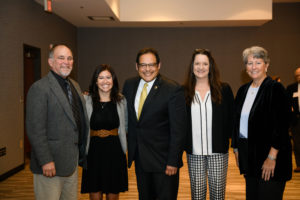
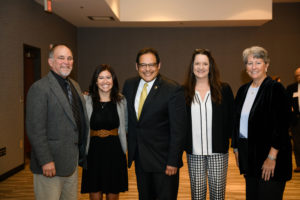
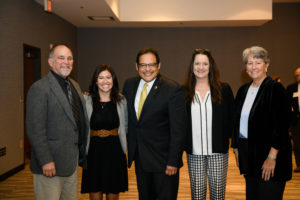
Dr. Ward (second from right) with fellow Hartzog award winners (l to r) Dr. Steven Trombulak, Dr. Jennifer Thomsen, David Vela and Chris Lehnertz.

Dr. Ward’s distinguished career has spanned three decades, from field interpreter at Hungry Mother State Park to CEO of the Blue Ridge Parkway Foundation, the primary philanthropic partner to the Blue Ridge Parkway. With more visitors than Yellowstone, Yosemite, and the Grand Canyon combined, the Blue Ridge Parkway is one of the most visited units of the National Park Service. Under Ward’s leadership, the foundation has provided over $14 million to support programs and projects that continue to help preserve and protect the parkway.

Dr. Ward was born in the Blue Ridge Mountains in Southwestern Virginia, graduated from Emory and Henry College, and received her master’s degree and PhD from Virginia Tech in Forestry. She is a decorated professor and award-winning researcher and author whose life’s work has been dedicated to building bridges and making connections. While working at Humboldt State University, Ward grew a modern and comprehensive interpretive program and conducted field research across the country. In 2009, she launched the ‘Kids in Parks’ program in partnership with the Blue Ridge Parkway and Blue Ridge Parkway Foundation, which unites National Park Service, state parks, community groups, the Eastern Band of Cherokee, and nonprofit organizations around the goal of getting more kids moving outdoors and connected to public lands. The Kids in Parks program now features 200 trails in 12 states and has facilitated over one million adventures for kids and families.

“Dr. Ward’s sustained leadership, grit and determination has left a lasting legacy across the US and the World and has positively influenced countless agencies, managers, interpreters, as well as the general public,” continues Dr. Powell. “Carolyn is an important and powerful role model that has blazed a trail of success in a field that has been traditionally male dominated. I cannot think of a more deserving recipient for this award.”

###

The Clemson University Institute for Parks (CUIP) provides research, education, training, and outreach that enhances the management of the world’s parks and protected areas. It accomplishes this by providing park and protected area managers with innovative research to support science-based decision-making; and by developing current and future leaders in the park movement by providing interdisciplinary and transformative education and training programs. The Institute currently consists of 35 Fellows and 8 Scholars working on park-related research.

Visit the CUIP website for more information about the George B. Hartzog, Jr. Environmental Awards program and its recipients.
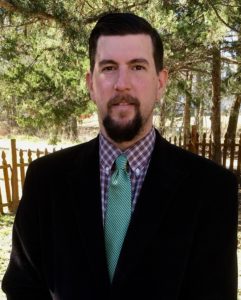
Middlebury professor emeritus wins academic leadership award

Dr. Steve Trombulak, professor emeritus of biology and environmental studies at Middlebury College, was recently honored with the Benton H. Box Award by the Clemson University Institute for Parks in recognition of his academic and instructional leadership in the environmental field.

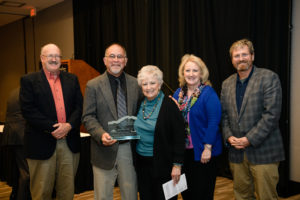
Dr. Trombulak (second from left) with members of the Box family and Dr. Rob Baldwin (right).

The institute presents the annual awards program, which is named for George B. Hartzog Jr., the seventh director of the National Park Service, to showcase leading figures in the field of conservation. Specific awards were named after visionary leaders that Hartzog respected and admired. Award recipients are following in Hartzog’s footsteps by making significant contributions to the management of parks and preservation of our natural, historical, and cultural heritage.

The Benton H. Box Award recognizes academic professionals that exemplify Dr. Box’s distinguished career as an educator and administrator. Dr. Trombulak shared this year’s award with Ryan L. Sharp, associate professor in the park management and conservation program at Kansas State University, for leadership in preserving our natural environment and inspiring in students the quest for knowledge and the development of an environmental ethic.

Robert Baldwin, endowed chair and professor of conservation biology at Clemson University, presented the award to Dr. Trombulak at a ceremony on October 22. According to Dr. Baldwin, Dr. Trombulak is a force for science-based landscape level management in the northeast United States and Canada.

“He has published over 90 scientific articles, many with Middlebury students, and his review of the ecological effects of roads has been cited 3,000 times,” he says. “For a single paper, that’s like winning the Heisman Trophy.”

Dr. Trombulak is a conservation biologist and landscape ecologist. He earned his BA in biology at UCLA and his PhD in zoology at the University of Washington in Seattle. He began his research career focusing on population and community ecology, including studies on elevational distributions of pinyon pines in the Mohave desert, territorial behavior of hummingbirds in the tropical dry forests of Costa Rica, thermoregulation of desert-dwelling beetles in the Great Basin Desert, competition between montane chipmunks in the Cascade Mountains of the Pacific Northwest, and phenotypic plasticity in life-history strategies of montane ground squirrels in both the Cascade and Sierra Nevada Mountains.

Dr. Trombulak with fellow Hartzog award winners (l to r) Dr. Jennifer Thomsen, David Vela, Dr. Carolyn Ward and Chris Lehnertz.

At Middlebury College, he developed a diverse and highly successful teaching program in conservation biology, vertebrate natural history, and environmental science.  His research program also expanded beyond ecology to embrace both conservation biology – with an emphasis on protected areas, conservation planning, and wildlands – as well as science pedagogy. He retired in June after 34 years in the field.

“I am so pleased that Steve has been recognized this award,” continues Baldwin. “Steve, like Dean Box, has set an example as a teacher and scholar, he has fostered learning environments as an administrator and also an environmental ethic, both in his community and abroad.”

###

The Clemson University Institute for Parks (CUIP) provides research, education, training, and outreach that enhances the management of the world’s parks and protected areas. It accomplishes this by providing park and protected area managers with innovative research to support science-based decision-making; and by developing current and future leaders in the park movement by providing interdisciplinary and transformative education and training programs. The Institute currently consists of 35 Fellows and 8 Scholars, including Dr. Trombulak, working on park-related research.

Visit the CUIP website for more information about the George B. Hartzog, Jr. Environmental Awards program and its recipients.
University of Montana assistant professor wins award for outstanding academic achievement

Dr. Jenn Thomsen, assistant professor of parks, recreation and tourism management at the University of Montana, was recently honored with the Dwight A. Holder Award by the Clemson University Institute for Parks in recognition of her outstanding work as a conservation researcher and teacher in the environmental field.

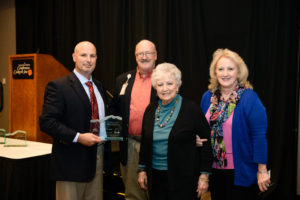
Dr. Thomsen and Clemson Parks, Recreation and Tourism Management Department Chair Dr. Wayne Freimund.

The institute presents the annual awards program, which is named for George B. Hartzog Jr., the seventh director of the National Park Service, to showcase leading figures in the field of conservation. Specific awards were named after visionary leaders that Hartzog respected and admired. Award recipients are following in Hartzog’s footsteps by making significant contributions to the management of parks and preservation of our natural, historical and cultural heritage.

The Dwight A. Holder Award recognizes academic professionals that exemplify Mr. Holder’s illustrious career as an entrepreneur and public servant, which included leading South Carolina’s parks to a new era of service. Dr. Thomsen received this award for outstanding work and sustained achievement that fosters understanding, wise use and conservation of natural and cultural resources.

Wayne Freimund, chair of the parks, recreation and tourism management department at Clemson University, presented the award to Dr. Thomsen at a ceremony on October 22. According to Dr. Freimund, Thomsen has made a significant impact on the conservation field at a relatively young age.

“Jenn already has an impressive publication and teaching record, with a research focus that requires her to pull groups together on almost intractable issues, such as livelihood versus wildlife population management,” he says. “She does it masterfully, with an unparalleled ability to find the glue that holds several different collaborators together.”

Dr. Thomsen graduated with her M.S. in Wildlife Biology from Clemson University, where she also earned her PhD in parks and conservation area management. Her research largely focuses on stakeholder collaboration associated with large landscape conservation, sustainable tourism and protected area management. Her work has involved partnerships with the Center for Large Landscape Conservation and the IUCN Connectivity and Transboundary Specialist groups to conduct surveys addressing the challenges, opportunities and outcomes associated with stakeholder collaboration and how these groups evolve over time in their transboundary ecosystem management. She also contributes to UNESCO’s biosphere reserve network and serves on the National MAB Committee.

Dr. Thomsen with fellow Hartzog award winners (l to r) Dr. Steve Trombulak, David Vela, Dr. Carolyn Ward and Chris Lehnertz.
Dr. Thomsen (second from left) with fellow Hartzog award winners (l to r) Dr. Steve Trombulak, David Vela, Dr. Carolyn Ward and Chris Lehnertz.

Her work in sustainable tourism and protected area management focuses on the management of resources that balances the environmental, social/cultural and economic needs of diverse stakeholders. Her research explores unique types of tourism, such as voluntourism in Peru and Haiti, whitewater ecotourism in Bhutan and safari hunting tourism in Botswana. She’s conducted research for the US Forest Service and National Park Service and is part of the INSAKA collaborative group that brings together partners of African universities to address social-ecological issues. Dr. Thomsen is passionate about her teaching and field experiences for students, and about engaging the next generation of conservation and protected area leaders.

“Jenn’s students love her, and her faculty and collaborators love working with her,” continues Dr. Freimund. “And now as the recipient of this year’s Dwight A. Holder award, she can be rest assured that her alma mater feels the same way. I can’t wait to see where she takes her already-impressive career.”

###

The Clemson University Institute for Parks (CUIP) provides research, education, training, and outreach that enhances the management of the world’s parks and protected areas. It accomplishes this by providing park and protected area managers with innovative research to support science-based decision-making; and by developing current and future leaders in the park movement by providing interdisciplinary and transformative education and training programs. The Institute currently consists of 35 Fellows and 8 Scholars working on park-related research.

Visit the CUIP website for more information about the George B. Hartzog, Jr. Environmental Awards program and its recipients.