Keeping private applicators informed, safe, and compliant.
Fall 2025 – Issue 1
Welcome to DPR Focus – Private Applicators. This newsletter from the SC Department of Pesticide Regulation at Clemson University is designed specifically to keep private pesticide applicators informed, safe, and compliant. Here, you’ll find updates on licensing requirements, regulatory changes, safety considerations, and emerging pest issues that directly affect your work. Our goal is to provide you with practical guidance, important reminders, and resources to help you stay certified and protect your operation, your community, and the environment.
Recertification Timeline:
Where We Are & What You Need
South Carolina pesticide applicator licenses are issued on a five-year block system. To maintain an active license, private applicators must complete continuing certification requirements within each block. This ensures that applicators remain up to date on current regulations, safety standards, and best practices for pesticide use.
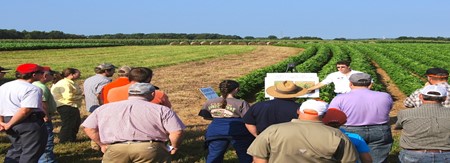
Photo credit: DPR Achieves, source unknown
Current Cycle
- The current recertification block for Private Applicators runs from Jan 1, 2025 – Dec 31, 2029.
- During this period, private applicators must earn a minimum of 5 Continuing Certification Units (CCUs).
- CCUs may be obtained through DPR-approved training sessions, workshops, or online courses.
- At ALL DPR-approved trainings, you’ll scan a QR code to ensure your CCUs are correctly reported to DPR.
- NOTE: It’s important to carry your current license card with you to all training sessions! If you fail to accurately report your license number at a training, you will not receive credit for attending.
Email Verification – Stay Connected with DPR
Having a verified email address on file with DPR ensures that applicators receive important updates, training opportunities, license renewal notices, and regulatory alerts quickly and efficiently. Email is the fastest way for DPR to communicate with you, especially as new rules and changes take place.
To Verify Your Email Address:
Visit https://qrcodes.pro/2hfcOM or scan the QR code below.

Complete the required fields and click “submit“.
Please Note: You will receive a confirmation verifying your submission is complete. It’s that simple, but very important!
Second Generation Anticoagulant Rodenticides (SGARs)
Second Generation Anticoagulant Rodenticides (SGARs) are a group of rodent control products designed to be highly effective, but they also pose elevated risks to non-target wildlife, pets, and even livestock through secondary poisoning. Because of these risks, SGARs have been the focus of increased regulation at both the federal and state levels.
Implications for Private Applicators
Private applicators who manage farms, poultry houses, or other agricultural facilities should be aware of these restrictions. While SGARs can be a powerful tool for rodent control, they must be used only in compliance with label directions and with an awareness of the risks to non-target species. Misuse of SGARs can result not only in environmental harm but also in civil penalties for applicators.
UAV-Aerial Applicators: How to Become Licensed
Thinking about aerial application? Learn what it takes to get licensed, including both FAA requirements and SC DPR’s certification process. Plus, see how upcoming federal changes could impact private aerial applicators.
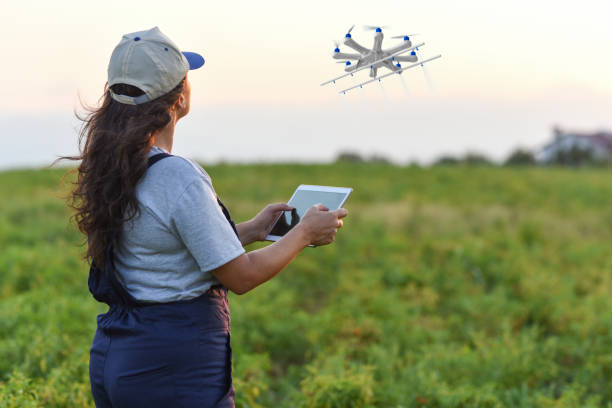
Photo credit: 2025 iStock by Getty Images
Private applicators who wish to use drones or unmanned aerial vehicles (UAVs) for pesticide applications must meet both federal FAA requirements and SC Department of Pesticide Regulation (DPR) licensing requirements.
FAA Component
- The certification required to operate UAVs that weigh less than 55 pounds is 14 CFR Part 107.
- Applicators applying pesticides must also operate under 14 CFR Part 137 of the FAA regulations.
- 14CFR Part 137 is a certificate that allows for dispensing economic poisons.
- The FAA defines an economic poison as any substance that acts as a pesticides, plant regulator, or defoliant.
- A business entity can hold the 14 CFR Part 137 certificate and have several applicators operating under the company’s Part 137 certification.
- The operator of the UAV will be required to pass a skills and knowledge test.
- The UAV itself must be registered with the FAA and will be assigned a registration number.
Disclaimer: All information provided concerning FAA requirements is for informational purposes only. Applicators must contact the FAA directly for exact guidance with FAA regulations.
SC DPR Component
- Applicators must pass the South Carolina Pesticide Applicator Core Exam.
- Applicators seeking aerial certification must also pass the Category 11 – Aerial Pest Control Exam.
- Mandatory Category Exams may also apply depending on the type of pest control activity being conducted, such as
- Category 3 – Ornamental & Turf
- Category 5 – Aquatic
- Category 6 – Right-of-Way
- Category 7A – Structural
- Category 8 – Public Health
DPR provides these examinations. Registration is available online through Metro Institute, which offers both in-person testing at approved testing centers and online remote proctored exams. Links for registration, fees, and study materials are available on the DPR website.
Commercial application of pesticides without the proper licensing can result in civil penalties, underscoring the importance of complying with all regulatory requirements.
Recent changes to federal aerial application regulations (C&T Rule) will eventually require Private Applicators to meet the same certification and documentation criteria as Commercial Applicators. South Carolina has agreed to adopt and implement the EPA’s C&T Rule updates no later than 2029. However, these changes could be adopted at an earlier date.
Looking Ahead
With upcoming changes to federal regulations concerning aerial applications, Private Applicators should begin planning now to ensure they are prepared. DPR plans to publish an informational bulletin, “How to Become a Licensed UAV Pesticide Applicator“, as a resource to assist both commercial and private applicators in navigating the process in the near future.
Fumigation Updates – C&T Plan
Fumigation is considered one of the most hazardous types of pesticide applications because of the toxicity and volatility of fumigant products. For this reason, fumigation has always required higher levels of training, certification, and oversight. Recent updates to the federal Certification & Training (C&T) Plan have brought changes that directly affect applicators in South Carolina.
What Has Changed
- Enhanced Training & Certification: Applicators using fumigants must complete additional training and pass certification exams specific to fumigation categories.
- Supervision Requirements: Direct supervision requirements for non-certified applicators using fumigants have become stricter, with certified applicants required to be more actively involved in the application.
- Recordkeeping & Documentation: Applicators are required to keep detailed records of fumigant use, including site information, products applied, and safety procedures.
- Restricted Use Pesticides (RUPs): Many fumigants remain classified as RUPs, meaning only certified applicators or those under their supervision may purchase and apply them.
Impact on Private Applicators
For most private applicators, fumigation is not a common practice. However, those who do fumigate, particularly in agricultural storage or structural settings, must understand that the new C&T Plan changes increase both the training burden and the recordkeeping responsibilities. Private applicators considering fumigation should carefully consider whether they need to become certified in the fumigation category, or if contracting with a licensed commercial applicator is more appropriate.
Looking Ahead
The SC Department of Pesticide Regulation (DPR) will continue to update training materials and guidance as these changes are phased in. Private applicators are encouraged to:
- Stay informed through DPR communications.
- Review whether fumigation activities fall within their operations.
- Plan for additional certification if fumigation will be part of their pesticide management program.
Regulated Pest Alert
Yellow-Legged Hornet Found in Jasper and Beaufort Counties
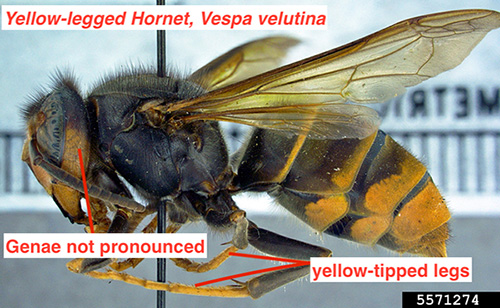
Photo credit: CU DPI
The Yellow-legged Hornet (Vespa velutina) is an invasive species recently detected in Jasper and Beaufort counties and a potential threat to agriculture, pollinators, and public health. Native to Southeast Asia, this hornet is known for its aggressive foraging on honeybees and other pollinating insects, making it a serious concern for crop production and ecosystem balance.
Why It Matters to Private Applicators
- Pollinator Impact: Yellow-legged hornets prey heavily on honeybees, weakening colonies that are critical for pollination of fruits, vegetables, and row crops.
- Agricultural Risk: Reduced pollination could directly affect crop yields for private farms across South Carolina.
- Human and Animal Safety: While not typically aggressive unless provoked, these hornets will defend their nests vigorously, posing risks to farm workers, families, and livestock.
What to Do if You Suspect a Sighting
- Do Not Disturb the Nest: Do not touch the nest, but take a photo.
- Report Immediately: Report it through Clemson’s DPI reporting tool. Trained inspectors will handle removal and collect vital data.
- Protect Your Property: Monitor for unusual hornet activity around hives, crops, or structures.
You’re South Carolina’s first line of defense. Let’s stop YLH before it spreads.
Stay Certified, Stay Informed, Stay Safe

As pesticide regulations evolve, it is more important than ever for SC Private Applicators to stay current with certification requirements, emerging pest issues, and safe application practices.
Your role as a licensed private applicator is critical to protecting agriculture, the environment, and public health in South Carolina. By staying proactive, informed, and compliant, you help safeguard the future of farming and pesticide use in our state.
For more information, resources, and updates, visit the Department of Pesticide Regulation website, your local County Extension office, or email dprpa@clemson.edu.
