In my last blog post, I wrote about the wonder and excitement of my first trip to a carnivorous wetland. In this second part of the blog, I’ll share how to bring a small piece of this unique southeastern native landscape into the classroom. Building a carnivorous bog with students is a fun way to explore topics such as ecosystems, plant adaptations, energy cycles and evolutionary biology.
Engage: Get Students Excited about Carnivorous Plants
Ask your students, “Why do some plants eat insects?” This simple question is sure to spark curiosity and lead to discussions about plant survival and adaptation.
To reinforce engagement, I like the Carnivores in the Classroom Lesson Plans provided by the International Carnivorous Plant Society. These free, K–12 resources, designed by educators who have received ICPS Classroom Grants, include age-appropriate investigations and activities suitable for classroom use.
Explore: Investigate the Ecosystem
Carnivorous wetlands are nutrient-poor, acidic habitats that formed thousands of years ago. Some, like the Carolina Bay wetlands, are located in shallow, sandy, and wet depressions. Whereas bogs are full of peat moss and decaying plant matter. Both are primarily fed by rain. Because the soils are so low in nutrients, plants in these habitats have evolved remarkable adaptations to survive in these conditions.
Help students investigate how these plants access the nutrients they need. The following videos provide explanations that bring these adaptations to life:
- “Carnivorous Plants and Their Traps: Plant Adaptations”, from the Huntington Botanical Gardens, introduces students to how carnivorous plants around the world have evolved specialized traps to capture and digest their prey.
- “Wild Wednesday: Carnivorous Plants” by Friends of Coastal South Carolina takes students on an exploration of a native South Carolina carnivorous bog. Students will observe as a pitcher plant is dissected on camera, revealing numerous partially digested insects inside.
After watching the videos, students can continue to discuss the similarities and differences that they notice between the different traps and how these adaptations help the plants survive in nutrient-poor environments. This might lead to further exploration of other environmental challenges that plants face in a bog ecosystem. As part of this exploration, it’s essential to emphasize that collecting wild carnivorous plants in South Carolina is illegal without a permit, which highlights a larger conversation about the importance of conservation ethics in science education.
Explain: Bring the Bog into the Classroom
Once students understand how bog ecosystems function, it’s time to build their own indoor bog terrarium! Before you get started, review the how-to videos we filmed with fellow native plant enthusiast and Tri-County Master Gardener Nancy Padgett. These videos walk you through creating a bog terrarium step by step, from choosing your container and media to planting and caring for your carnivorous plants indoors. For planning purposes, each video is around 10 minutes long.
Gather all necessary materials to ensure a smooth and low-stress setup before purchasing plants. Refer to the additional resources section for local and online nurseries that specialize in carnivorous plants.
Here is what you’ll need:
- A 20-gallon aquarium or glass container large enough for airflow and humidity retention.
- A full-spectrum LED grow light on a timer (12–14 hours daily). The International Carnivorous Plant Society offers an in-depth explanation of why using LED lighting is essential.
- Growing media can be purchased premixed or made with equal parts sphagnum peat moss and perlite or play sand (without added fertilizers).
- Water tight container such as a plastic tote for mixing growing media with water.
- Perlite for drainage. Challenge students to calculate how much they will need for your container. Use this volume calculator for younger students.
- Dust masks for safely handling the perlite.
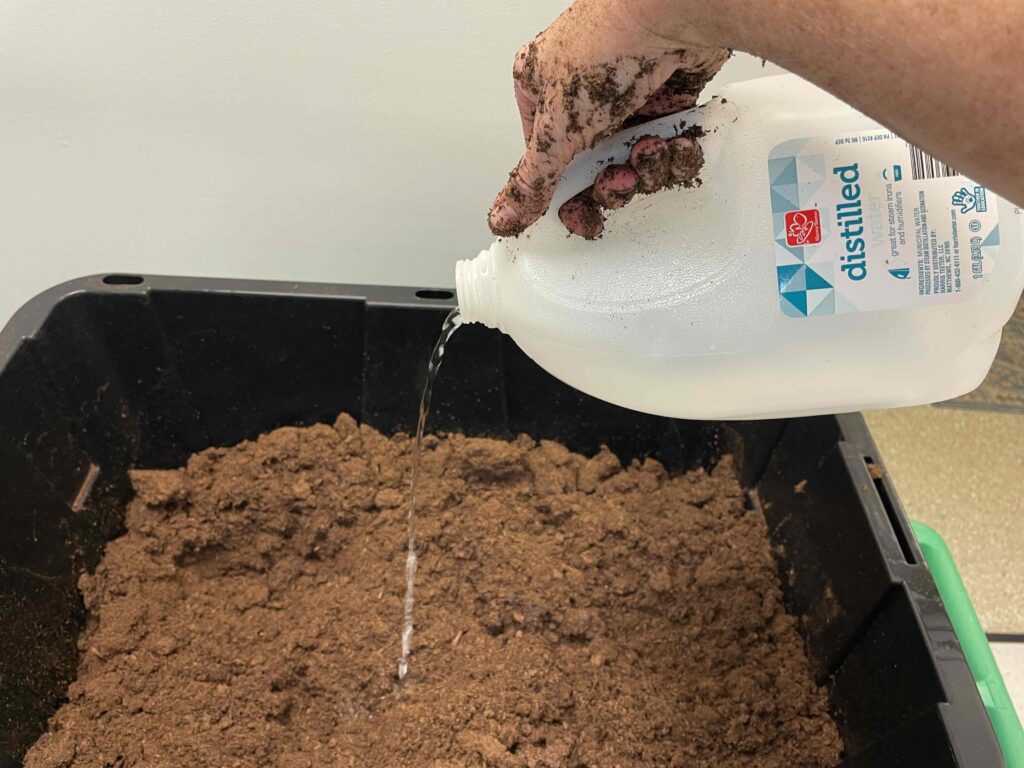
- Rain or distilled water (tap water contains harmful minerals). Water filter pitchers that reduce the total dissolved solids (TDS) to zero or nearly zero from tap water may also be used.
- Chopstick, ruler or other tool for planting delicate plants.
- Watering can or clean spray bottle for distilled water.
- Carnivorous plants such as pitcher plants, sundews, Venus flytraps, butterworts, and bladderworts. You may also find bog-dwelling companion plants that are not carnivorous, such as orange milkwort, bog orchids, sphagnum moss, and cranberries.


As a final note, I’d like to emphasize a few maintenance tips that were also covered in the instructional videos. Temperate carnivorous plant species require a dormancy period of at least 45 days at temperatures below 45°F. They can overwinter outdoors or in a refrigerator in moist growing media. Feed sparingly; these plants need only a few live insects per season, if any. Keep the soil consistently moist but not waterlogged or submerged. Adjust the cover or airflow if leaves begin to show signs of drying or mold. With proper care and maintenance, your classroom bog terrarium will serve as a living laboratory for years to come!
Evaluate: Reflect and Extend Learning
There are endless opportunities for students to document observations, record data, and create art related to their classroom bog terrarium. I like the mazes, coloring sheets, and puzzles on the ICPS Teacher Resources page. Plant Adaptations of Carnivorous Plants, provided by KidsGardening.org, offers a full lesson plan with activities and extensions suitable for each grade range.
Additional Resources
Learn more about ICPS Classroom Grants https://www.carnivorousplants.org/education/ClassroomGrants
Find additional ICPS Activities and Educational Resources https://www.carnivorousplants.org/education
Rainwater Harvesting Systems Guidance for Schoolyard Applications Factsheet | HGIC 1729
Students can learn more about carnivorous plant species by visiting KidsGardening.org “Carnivorous Plants”.
South Carolina Native Plant Society’s native nursery map is a valuable resource for locating nurseries that specialize in selling native plants.
Hunter Flytraps is a South Carolina-based nursery that also ships nationwide.
Other online nurseries include Carnivorous Plant Nursery, Predatory Plants, California Carnivores, and Sarracenia Northwest.

Edited by Amy L. Dabbs, School & Community Gardening Cooridinator, Master Extension Associate, Clemson Extension
