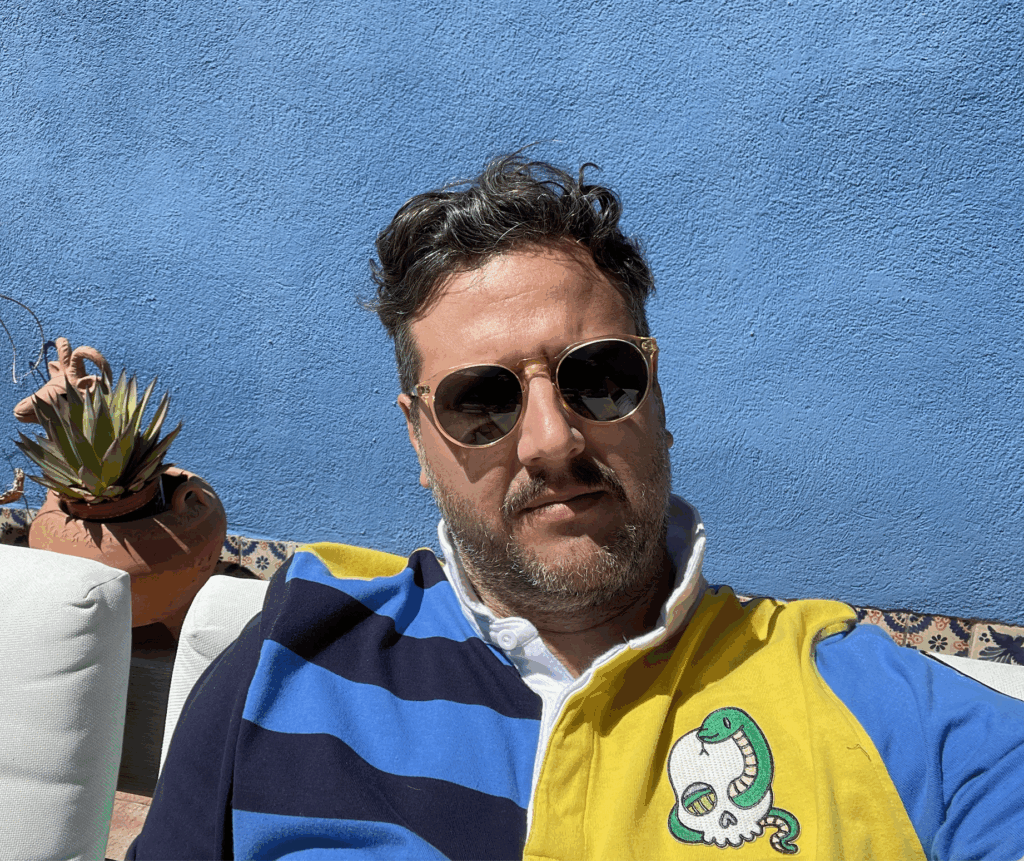
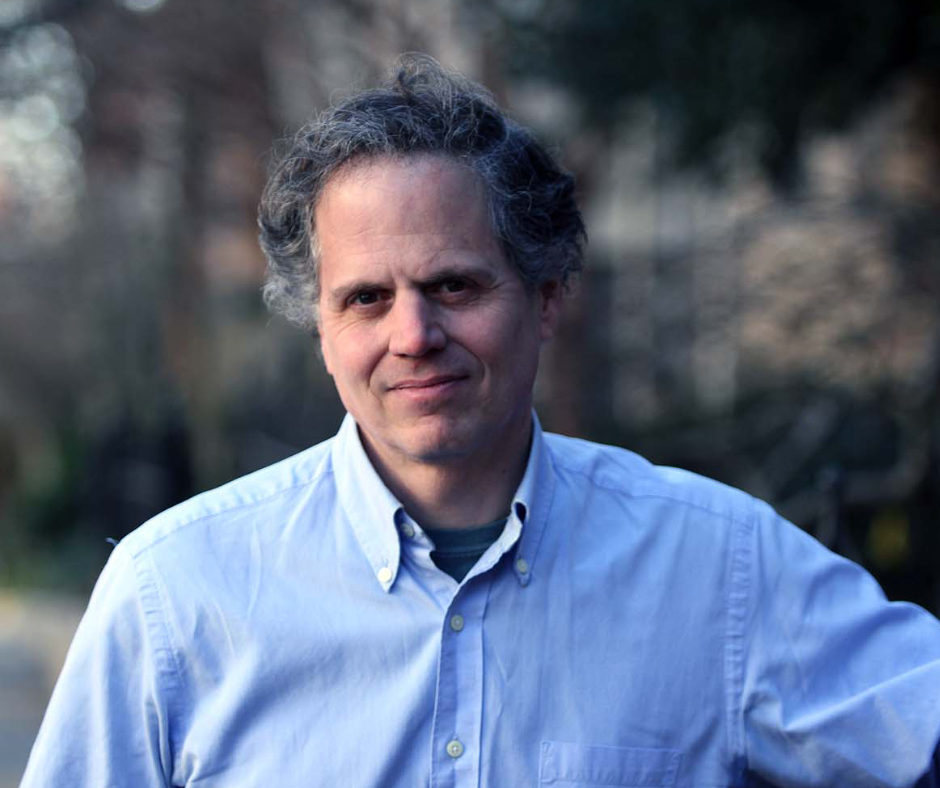
Steve Caldes, father, foodie, freelancer and our creative non-fiction editor teaches journalism at California State Univ,ersity, Chico, where his wife is also a professor. If you play your cards right, he might just tell you the secret to his famous BBQ sauce he learned while an undergraduate at Clemson University.
Tell us a little bit about you and your life right now.
Welp, I’m a father of two (six year old Elka and two year old Wells), a partner to one (Dr. Jenny Malkowski who teaches at the same university), and an Associate Professor in the Journalism Department at California State University, Chico (aka Chico State). Academically, I’ve been writing a bit lately about mis-/dis-information and how (in this post-truth, emotional-propaganda-laden world) well-told (often false) stories have become more powerful than facts, and how there’s now more than ever a need for increased literacy around how stories are told (sold) and function so we can stop being so easily manipulated by this form of compelling propaganda. Like, if we can get people to better see the gears at work they might not be so susceptible to the machine.) But I also write a lot about food for some local magazines. I’m sorta food obsessed – it’s history and influence on culture and politics, but also just like, how great cooking food for family and friends is and how cooking is the most delicious way of telling someone you love and care about them. The vinegar-based BBQ sauce my friends pine for regularly, I first learned (from my then girlfriend’s father) when I was at Clemson.
How was your undergraduate experience as a Clemson student
Clemson holds very fond memories for me. I made friends there that I still talk to (well, text with) daily! And some of the professors I met there’s ones like Keith Lee Morris! – literally changed my life, and I’m proud to count them as friends, too. (I wrote a lot about how integral Clemson in general and the English Dept in particular were to me/my professional life in an old issue of the alumni magazine Clemson World. It was called “The Yes that Changed My LIfe” if you’re interested.
It was at Clemson where I learned I loved…learning. High school felt like a place where I had to memorize information regardless of if I was interested in it or not. But at Clemson, even in my GEs to some extent, I was encouraged to follow my curiosities. One of the reasons I graduated with two minors was simply because I just could not stop taking History classes. Every semester in the last few years I’d tack on a History class just because. I was never disappointed. And this mindset – be curious! Quench that curiosity with reading and class and more questions – helped me flourish as both a person (curiosity makes people more interesting!) and a student. In high school I was a “fine” student, but from Clemson on I always graduated with honors. There were people–friends and faculty–that believed in me at Clemson. They helped me believe more in myself, and any success I’ve had (which might seem miniature to most, but means a lot to me) stems from these integral years in western SC.
How did you end up in the New Mexico State MFA program and how did that expand your craft?
I ended up at NMSU because – yup, you guessed it – because of Clemson. I believe it was fall of my senior year and the English Dept was hosting a writing series that brought the author Antonya Nelson to campus. Nelson was a big deal to me at the time; I was reading and writing and studying short stories and she was one of the top practitioners. I remember I was even doing a report on one of her short stories for a project in my Philosophy of Death and Dying class I was taking when I learned of her visit. I remember she gave a reading – that eentranced – came to our creative writing workshop–where knowledge was dropped – and then a few of us got invited to have lunch with her. I was my usual energetic ball of joy and was just excited at how lucky I felt. This author I spent all year reading was suddenly, like, eating a sandwich with me! It just felt so…cool. Then, a few days or so later, either Keith or his former ENGL colleague Brock Clarke told me that Nelson suggested I apply to the NMSU MFA program. She hadn’t read my writing that weekend–not that I remember, anyway – but had (at least this is the story I got) mentioned that the faculty at NMSU was as interested in young writers’ motivation and attitude as much as they were writing chops. I guess she thought I might be a good person to have in a cohort. A year later, when I was applying for MFAs, I completed quick a few applications, but there was only one I was truly interested in: NMSU.
NMSU was everything. The sheer talent at the time I was there: Nelson, Robert Boswell, Kevin McIlvoy, Chris Bachelder, and Connie Voisine to name a few. The effort they put into my work and writing instruction. I remember once I turned a ≈15-pg story in to a Robert Boswell workshop and received over 20-pgs in notes! And Nelson dropped so many little tips – one I still think about and “use” today. Chris Bachelder was a rising star at the time – his satire is on par with anyone working today, George Saunders included! – but what I got most from his was how personable and hard-working he was. In my mind he was who I wanted to be, but also someone I got to have a lunch burrito on campus with. It was also here that I started writing more creative nonfiction/literary journalism. Monica Torres taught a CNF course that opened my eyes to the power of true-story-telling.
McSweeney’s was a big part of your start in getting your name out there, how was that experience?
Yeah, in the early 2000s, when the internet was mostly full of hope and connection, McSweeney’s were the funny, semi-dorks in the corner poking fun and punching up. At Clemson I read Dave Eggers’ A Heartbreaking Work of Staggering Genius (which kinda blew my head off for a minute there; I believe he was also one of the original founders of McSweeney’s) and started going to the website daily. The way they messed with form, took big swings in the area of meta-fiction, and just wanted to make some high-minded cracks really spoke to my inner silliness. It was like a Harvard Lampoon, but for the whole world. Smart and funny, funny and smart…that was my wheelhouse. My first few publications with them felt like an airplane taking off. I’m sure a few beers were had in celebration
Switching topics to SCR, as our Creative Non-Fiction Editor, what makes a piece interesting for you? What current or older trends excite you in a non-fiction piece?
This is such a huge question. I’ve been thinking about…and writing about…this a lot these days. I think I’ve come up with something short that sums it up. At the SCR, we’re looking for CNF pieces OF CONSEQUENCE. I know, I know, super vague. (Isn’t all writing supposed to be important?) I guess I might venture to say that quality CNF pieces are equally of consequence to the writer AND the reader. To accomplish this, good CNF should be about TWO THINGS…the personal story, of course, but also something bigger, more universal, something connected to, er…humanity. It’s gotta SAY something bigger, something connected to the story but also outside of it. I don’t care about YOUR time at, say, cheerleading camp, UNLESS it’s teaching me about the world I live in also! If that makes sense. That said, I’m uninterested in being lectured to. I need room to breathe and make up my own mind – as any reader wants – but I need to believe that the author is USING this one story to tell us something that’s more…difficult, abstract, etc.
But also, sometimes, there’s just a voice or an energy that grabs me. We have a piece coming out next fall I think that, at first, read a bit like the blogging of a woman at the end of her rope, just barely hanging on to mind in this increasingly superficial world. There were so many times reading this where I was like, Where is this going? But I couldn’t put it down…the voice just kept me hooked. And soon enough, at about the 8,000 word mark, I started to see that more “universal theme” rise. I’m so happy I kept reading…
So yes, the story can be about you and your life, but it shouldn’t be FOR you. Write for the reader. Write to help them. Life is complex and lonely and so fully of the unknown. Try to give them some small sliver of truth they can hang their hat on.
Is there any advice you would give a creative fiction writer wanting to dip their toes into creative non-fiction?
I’m pretty sure everything in life is about DOING IT! I was someone–perhaps I still am – who is so busy figuring out why I’m NOT the guy, why this WON’T work, why I haven’t read enough, learned enough, done enough, etc. – that I talk myself (or at least did) so much. I watch my kids now…they complain about not being able to ride a bike. And I ask, Well, have you tried? “Not really,” they answer. Well then there’s your problem! 🙂 Seriously, though, just do it. And also read the stuff you want to write. I finally picked up the collected nonfiction of John Gregory Dunne and of all the things I like about it, the way it inspires me to write is perhaps my favorite!
Kurt Olsson, who was featured in our Fall 2023 issue for his poems “Note to an Old Friend” and “Heart Like a Dog,” will be reading for an in-person and virtual audience at 2PM on November 22nd at Woodland Pattern in Milwaukee, WI. Kurt’s most recent book of poetry was released in September and is titled “The Unnumbered Anniversaries.”
Click here for more information regarding this reading and how to join virtually.
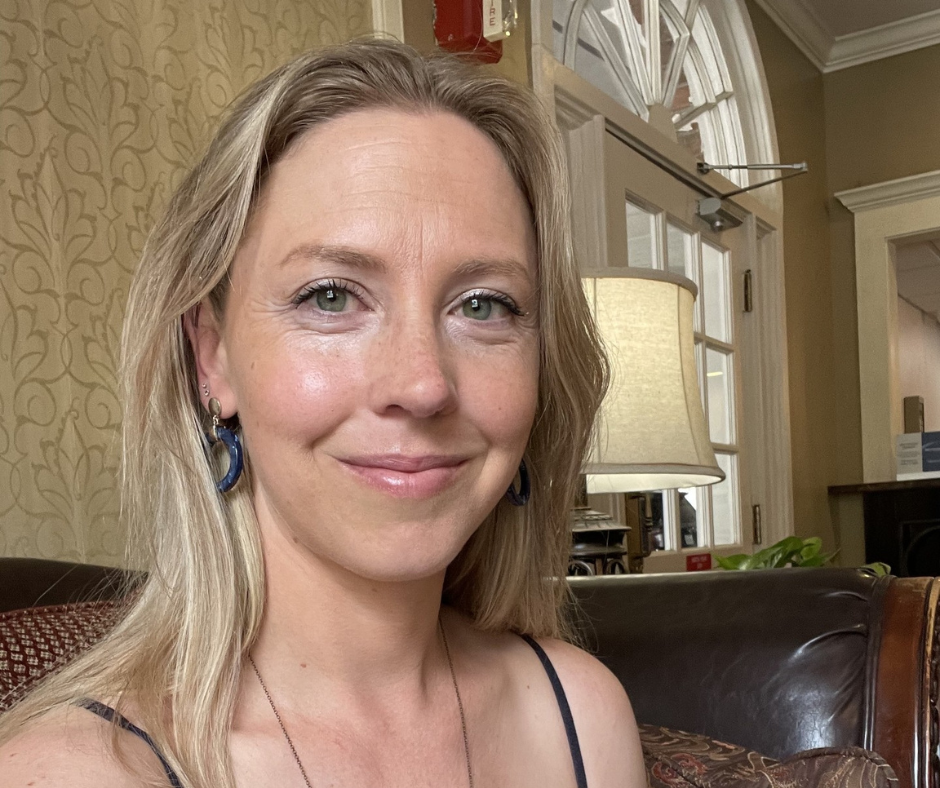
Writer, educator and quilter Caroline Rash was born and raised in Clemson, South Carolina but currently resides in New Jersey. She holds an MFA from Rutgers-Camden and serves as an associate editor at the South Carolina Review.
What does your writing process look like? My writing process is slow and steady with many, many drafts of each piece. As a new parent, I steal moments to write whenever I can, always keeping in mind to release my expectations for the first draft. Every wrong word and sloppy line is necessary to move towards the final piece. Editing and revision must be a separate process you worry about when the time comes—and you can’t revise a blank page. If I’m really stuck or unmotivated, I ask my friends to trade drafts and provide each other with accountability.
What do you hope readers take away from your work? I hope readers feel their own questions, moments of vulnerability, intimacy (with other people or the environment) and grief mirrored in my work. I hope my poems are a place of rest where the reader can sit with ambiguity and uncertainty.
Do you find your writing grows out of lived experience, research or imagination—or some blend of the three? My writing grows out of lived experience refracted through the imagination. I deeply admire the poetry of Federico Garcia Lorca and the strangeness of his poetic imagery. My chapbook includes a series of sonnets where I imagine these birds—that were literally stealing our home’s window screens for their nests—eventually invade and take back our house as their own. Poetry is meant to elevate our experiences, even the mundane, and crystallize emotions in a way that echoes for the reader long after they’ve set the poem aside. In a good poem, you can create a kind of mythical sense that connects to a diverse audience, who have lived very different life experiences, by extending a moment through surprising images and thoughtful rhythms.
What authors/poets or books have inspired you the most throughout your journey? I deeply admire the poetry of Federico Garcia Lorca and the strangeness of his poetic imagery. I reread Poet in New York when I’m stuck and my own writing feels stale. Likewise, Roberto Bolano creates haunting atmospheres that draw me back to reread his novels over and over again. Seamus Heaney wrote my favorite poem, “Postscript.” Marie Howe, Jack Gilbert, and Ai have been poets who have helped me write about grief. The list could go on. There’s a poem or poet for every stage of life, every moment.
We are so excited about your new collection of poetry Because the Bullet Arrives! Can you tell us a bit about the collection? My debut chapbook Because the bullet arrives reckons with suffering and uncertainty in an age of noise, grief and contradiction. What do we place our faith in? What does resilience (for humans and our planet) look like? What does survival cost? Written over the course of a decade, the poems are grounded in Southern/ Appalachian culture and ecology.
Do you have any upcoming events (anything) we should be on the lookout for? Events in Philly and NYC to come! All upcoming events are linked at CarolineRash.com.
Literary fun fact? Both my dad, Ron Rash, and my partner, Joseph Turkot, are also published authors.
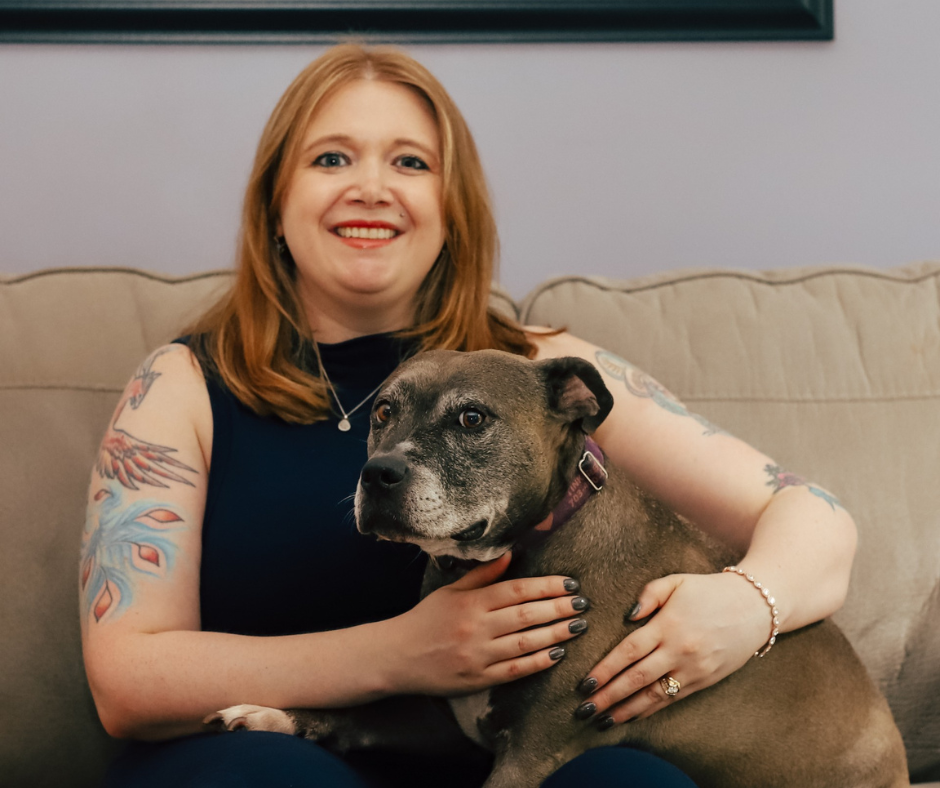
Stevie Edwards, PhD is the poetry editor of The South Carolina Review and an assistant professor in the Department of English at Clemson University, where she teaches creative writing, poetry, and women’s literature. She lives in South Carolina with her spouse and three rescue dogs: Tinkerbell, Peaches, and Rufus.
Stevie received her PhD from the University of North Texas and MFA from Cornell. Her poems have appeared in Poetry, American Poetry Review, TriQuarterly, and The Southern Review among others. She is the author of the poetry books/chapbooks Quiet Armor, Sadness Workshop, Humanly, and Good Grief.
What are you currently reading and who is a favorite poet of yours? For the month of August, I read a poetry book a day as part of the #sealeychallenge. Today’s book is I Do Know Some Things by Richard Siken, one of my favorite poets. Some of my other favorite poets are Ada Limón, Natalie Diaz, Patricia Smith, Diane Seuss, and Marie Howe.
What motivates and inspires your poetry? I tend to use poetry to process and reflect on my life, its sadnesses, rages, joys, and boredoms.
What are major themes that consistently come up in your work? My work often has feminist themes and explores the topics of trauma and mental health.
Do you have a few words to say to the next generation of poets? Don’t lose your voice to trends.
Do you have any upcoming publications we should look out for? My fourth book, The Weather Inside,is coming out in Spring 2026 from University of Arkansas Press as part of the Miller Williams Poetry Series and was selected by Patricia Smith (one of my favorite poets!) for publication.
That’s so exciting! What do you hope readers get out of The Weather Inside? One message the book carries is that it’s possible to start over, even when your life is in shambles. The poems in this collection hold space for discussing hard topics, like struggling with mental illness, alcoholism, and trauma. I hope I can make some people who are struggling feel a little less alone.
Literary fun fact? When I was twenty, I helped write part of a law for the European Union on insurance and reinsurance reform.
Keep a look on our socials for the cover release and information on the publication of Stevie’s The Weather Inside!
Each year, SCR presents the Ronald Moran Prize for the best fiction and poetry submissions of the year. This year’s poetry winner is María Esquinca for her poem “Dream In Which I Return Home,” published in SCR’s Spring 2024 56.2 Issue.
One of our assistant editors, Sage Short, interviewed María Esquinca about dreams – worldly, metaphorical, and lyrical. The two also spoke (via email) about María’s new book of poems Where Heaven Sinks, which, in the words of University of Nevada Press, is “an experimental collection set against the backdrop of El Paso and Ciudad Juárez, weaving fragmented verses, striking imagery and bold typography to confront the brutal realities of immigration and identity.”
The interview had been lightly edited for clarity and consistency.
SS – In “Dream In Which I Return Home” [the SCR prize-winning poem], we get so many literally dream-like images and language (the moon screeches / vomits indigo / you cup palmfuls of dirt / swallow grime and good earth / pink paisley curtains spill / out of your parents’ / bedroom window / like a butchered tongue). The poem spans only one sentence accompanied by fantastic punchy line breaks, often enjambed in a way that makes me believe in the double entendre (out of your parents’). How do you make decisions regarding form and language? Do ideas of borderlands surround language in your poems?
ME – First of all, thank you for such a thoughtful question and for such an intentional reading of that poem. I think about form a lot, I often want the poem to augment the meaning of the poem. I’m a reader that gets excited by collections with poems that span various forms both traditional and experimental, and so I think that is reflected in my own choices. I came from a journalism background before studying poetry. Journalism is a form of writing bound by very specific stylistic rules. So, when I arrived at poetry I felt freed by the open page, the lack of rules was exciting to me. So I find freedom and play in form. It’s often the thing I struggle with the most as well, because sometimes I’m trying to fit the poem into different containers before I find the right one. In this poem in particular, I wanted the form to augment the surreal/dream aspect of this poem, I used it to help me enjamb the lines in surprising ways. In terms of the language, because this poem is set in a dream landscape, I wanted to use images and words that were both grounded in the real world, like a house, curtains, rooms, but then juxtaposed with the sorts of unexpected images that come out of a dream, so then for example the moon “vomits indigo.” I was thinking how can I use imagery/language to take this poem into a dream landscape? Lastly, because I am a person that grew up in a border town, bridges, walls, borders often are part of the poetry because they are a reflection of my experience. Both my literal experience, the place I am writing about, but also beyond that, in a more philosophical or fundamental way, as a fronteriza, it’s a part of experiencing the word that is inherently a part of me. And I’m often thinking of the ways in which I can also create those borders in my poems. The border is always informing my poetry.
SS – As a Xicana fronteriza and abolitionist, what are your biggest concerns when you’re writing poems? Do you find these identity categories influencing your work always or often? Are dreamscapes or the denial of them (but this is not a dream) a way for you to discover or shape your poems?
ME – As a Xicana, fronteriza, and abolitionist, my biggest concern is the liberation and freedom of Black, Brown and Indigenous people. I wrote this collection during Donald Trump’s first term, and it will come out during his second term, where we already have, within a few months of this administration, witnessed the further obliteration of human rights, the U.S. continuing to participate and facilitate the genocide of Palestinian people, the repression of student activists—just today, I read reports of ICE attempting to enter schools and arrest children as young as three. So yes, the categories I used to identify myself absolutely influence my work. People are dying every day in this country, and beyond, because of U.S. policy. I have a responsibility to use my art for the liberation of my people. Although not all my poems are explicitly political, my larger purpose will always be to be of service to my people. My biggest dream is that poetry can alchemize a reader for change. It is not enough, because the only thing that will save us is to organize, but poems are sparks. I believe in the transformative power of poetry.
SS – Dreams are often depicted in a shining light, including the idea of the Americandream. What do you have to say about the concept of dreams in either of these ideas in poetry?
ME – Dreams have always been something present in my life, and I’ve always been fascinated by the surreal aspect of dream, as well as being influenced by a long legacy of surrealism/magical realism in Latin America. I think dreams are like portals. They allow us to access the psyche and other wordly, I found myself visiting dreamscapes to explain the unexplainable. As I was writing this collection, dreams allowed me to put into language and image the horror of what I was seeing during Donald Trump’s first term. By entering the dream, we can also enter nightmares. They contain multitudes. The “American Dream” is like this too. As immigrant children, we’re told this is the country that our parents chose for us to have a better life, the land of opportunity, the melting pot, we get sold and told all these ideas about how welcoming this country is. But as we grow older, the American Dream distorts and becomes a nightmare. The same country that benefits from our labor, skills, life, is the same country that is perfectly okay with killing us.
SS – What are you currently dreaming about?
ME – I’m always dreaming of the worlds we will create when fascism is obliterated. I’m dreaming of a world with no borders, of no prisons, of free colleges and universities. I’m dreaming of my people dancing under the rain, drinking the sun, laughing like sparkles. I’m dreaming of Palestinian children going to a classroom that isn’t blown up.
SS – Your book Where Heaven Sinks is forthcoming from the University of Nevada Press after winning the 2024 Andrés Montoya Poetry Prize. How would you describe the collection?
ME – I would describe my forthcoming collection as a love letter to El Paso and my people. It took me about six years of applying to book contests to get this book out. I would have never imagined it would be chosen by Juan Felipe Herrera, for a prize to honor Andrés Montoya’s legacy. A poet who was my age when he passed away. A poet who also dearly loved his people, who is a poetic predecessor I am still learning from. I am so honored and full of gratitude.
Where Heaven Sinks is now available on the University of Nevada Press website and Amazon and is described as a tribute to those who have endured and a call to challenge the systems that oppress, a love letter, a memorial for those lost and a testament to the transformative power of language.
In conversation with her father, Ron Rash, South Carolina Review associate editor Caroline Rash will be reading from and presenting her new book of poetry, Because the Bullet Arrives at Hub City Bookshop in Spartanburg and The Pendleton Bookshop in Pendelton next week. Both events will have book signing.
The South Carolina Review’s Spring 2025 57.2 Issue is completed and on its way to subscribers and ready for purchasing. Dive into bold poetry and cant-put-down fiction by writers like G.D. Holloway, Nate Marshall, Fara Abouzeid and Elizabeth Farren.
Emma Grace Connelly is an architecture major that’s found herself immersed in English classes as well. When she’s not playing with 3D printers and Exacto knives, she’s typing away at a novel or posting about it on her writing page. She’ll start pursuing her Master’s in architecture at Clemson this fall.
Tori Jackson
Tori Jackson is a graduate English student and humanitarian activist. Her interests in editing and publishing come from a deeper love of writing and unveiling the power of words. In the future, she’d like to become an established author and expand her local nonprofit, the South Carolina Upstate Humanitarian Hub, that aims to create third spaces where art and writing act as common ground for connection and unity within the community. In addition, Tori is applying her skills from The South Carolina Review to the group newsletter which consists of student writing, think pieces, and current events. She looks forward to the chance to be a full time editor of her own literary magazine!
Serena Johnson
This is Serena! She is an aspiring editor and major foodie, and is wholly incapable of liking anything in a casual capacity (her current obsessions are Arcane and Tracy Deonn’s The Legendborn Cycle). These days, she spends about sixteen hours a day curating Pinterest boards for various fictional works and the remaining eight hours eating, missing her dog (he’s at home with her lovely family), and hoping the cat distribution system will bless her. She is a junior English major at Clemson with a dual minor in creative writing and brand communications.
Kristen Huynh
Kristen Huynh is a senior English major who loves reading fantasy, writing literary fiction, watching period dramas, and baking when she has deadlines to meet. Some of her permanent obsessions are Bridgerton, Percy Jackson, and Pinterest. This fall, she’ll be starting law school at UofSC (don’t worry—once a tiger, always a tiger!), unless she decides to fulfill that café-bookstore-bakery dream instead.
Brett Porter
Brett is a sophomore English major at Clemson from Massachusetts. In his free time, he enjoys reading, playing sports, and fishing. His favorite author is Kurt Vonnegut who ignited his love for reading and writing. Besides that, he loves to play fantasy football and has won a total of four league championships with his friends. Brett believes that an otter best resembles his personality and aspires to be one when he grows up.
Caroline Anderson
Caroline Anderson is a senior English major from New York, though her accent and attitude only come out every once in a while. Caroline enjoys reading and correcting other people’s grammar. She is situationally a big enthusiast of the Oxford comma but limits herself to only correcting it every other day. Caroline’s favorite author is Mary Shelley, and she is currently planning her move to Galway to get her Master’s Degree.
Rachel Bertram
Rachel Bertram is a DJ at Clemson’s alternative radio station, WSBF-FM. They spend their free time playing guitar, pickling veggies, and writing letters they will never send. They are inspired by the living room routine from The Perks of Being a Wallflower, one-liner Letterboxd reviews, and sitting beside large bodies of water.
Ashtyn Goff
Meet Ashtyn! She’s an English grad student who spends all of her time reading young adult literature. In other words, she never got over The Hunger Games and has found a way to make that her personality. She runs a book-related Instagram and YouTube channel where she makes her book obsession everyone else’s problem. She recently discovered a love for fan art and always has a Pinterest tab open. She also adores soul-crushing movies or anything with Christian Bale in it. Speaking of Christian Bale, she loves Little Women and currently has eight editions of the book on her shelves. Outside of fangirling, Ashtyn enjoys national parks, cute dogs, and crocheting—oh, and SCR, of course.
Ella Kindt
Ella Kindt is a poet and graduating English major with a crippling houseplant addiction. She’s pursuing an MFA in poetry at North Carolina State University in the fall of 2025. She spends her free time playing guitar, singing off-key and reading gothic horror novels. Her current favorite song is Katya’s verse in “Read You, Wrote You” from the finale of RuPaul’s Drag Race All Stars season 2. She’s obsessed with the color green.
Makenzie Anderson
Makenzie Anderson is a writer from South Carolina. In May 2025, she will graduate from Clemson University with a B.A. in English and a minor in poetry. She will attend Virginia Tech’s MFA Poetry program in the fall of 2025. Her poetry explores girlhood and womanhood, sapphic identity, and familial relations. She channels her southernness while simultaneously addressing coastal South Carolina’s haunting and alienating powers in her writing. She also adores hummingbirds and the color lavender.
Jennifer Terry
Jennifer Terry is a graduating MA in English student who enjoys reading, writing, and playing The Sims 4. She is currently obsessed with all of her friends’ dogs and loves the color pink. Jennifer lives for weird stories and poetry that deals with grief and loss. Sometimes she wishes she was a worm.