Clemson Visual Arts

Tickets Currently On Sale for Clemson’s Signature Town and Gown Event, Passport to the Arts

Constant Contact Graphic - CompressedMedia Release

CLEMSON — Clemson University and the city of Clemson will host the popular and unique celebration of the arts with the signature town-gown event “Passport to the Arts” 6-9:30 p.m. Friday, March 6.

Tickets are available for the discounted rate of $30 by purchasing online at www.clemsonpassport.org until March 1. AfteArtsTour_078-3115057934-Or that, the price goes to $40. The ticket price includes transportation, food, drink and entertainment.

Now, in its 5th year, the Passport to the Arts continues to be an exciting and popular “Town and Gown” event. Join the Center for Visual Arts-Lee Gallery and The Arts Center of Clemson for an evening of fine art, entertainers, live music, drinks and exceptional food showcased at four different locations.

Clemson Area Transit (CAT) offers transportation for the Passport to the Arts tour. All buses feature entertainment, making the ride to each venue a destination in itself. The locations this year include The Arts Center, CAT bus facility, the Lee Gallery and Charles K. Cheezem OLLI Education Center in the Patrick Square Town Center.

Attendees will have the opportunity to view over 200 works of art by over 80 artists. Many of the pieces are on sale and being debuted for the first time in the four gallery venues.

Come see why this signature event has become a favorite to bring friends and experience premier art, featured live entertainment, and a unique shopping experience all while enjoying a variety of appetizers and drinks.

END

ArtsTour_070-3115057783-OPassport to the Arts sponsors

Passport to the Arts would like to thank this year’s local sponsors: Carolina Real Estate, Clemson Area Transit, Clemson Downs, Forthill Dentistry, Morris Business, Patrick Square, Prosthodontics Issaqueena Pediatric Dentistry, Trehel, Wells Fargo, Wendy’s for providing needed support for the arts in the Clemson community.

More information

For more information about Passport to the Arts, visit www.clemsonpassport.org, the Facebook page, facebook.com/PassportToTheArtsInClemson. To learn more about the visual arts in the area, contact Clemson University Lee Gallery Director, Denise Woodward-Detrich, woodwaw@clemson.edu or contact Arts Center of Clemson Director, Tommye Hurst, tommye.hurst@explorearts.org

Celebrated local artist, John Acorn featured in exhibition at Brooks Center

John Acorn

PENDLETON — John Acorn stands on the ground floor of his art studio in Pendleton, mid-afternoon sunlight slanting through windows to reveal dozens of abstract projects in progress: giant foil-wrapped sculptures of a hand and a fish, a ring of sliced bread made of wood.

He prepares to give a tour of his studio, the modified two-story garage beside his home filled with work from his career as a professional artist and longtime chair of Clemson University’s art department. He dips into that archive for his latest exhibition, “Trailer Nails and Fish Heads,” on display at the Brooks Center for the Performing Arts through May 1.

Sand Dollar - Head On and Side View

Denise Woodward-Detrich stands alongside Acorn as he pulls out a handful of the trailer nails that make up the exhibit. Director of Clemson University’s Lee Gallery, Woodward-Detrich was responsible for identifying Acorn’s work as a good fit for an exhibition at the Brooks Center.

“I was familiar with several bodies of work John has created,” she says, “and I felt his trailer nail pieces had not been that widely showcased in the area. The Brooks Center was a great opportunity for both the artist and patrons.”

Each piece in the exhibition is aquatically themed: canvases decked with trailer nails form portraits of sand dollars, feathers and fossils; metal fish head sculptures lurk on makeshift surfaces. The trailer nails were specially ordered in bulk by Acorn years ago, and the fish heads were created at a fabrication plant and based on his own wooden sculptures. Woodward-Detrich admires the elegant simplicity of the exhibit, but notes that it “also gives the viewer a lot to consider in regards to our relationship to nature.”

This is the third exhibition organized by Woodward-Detrich and Susan Kaplar, Brooks Center business manager and current art major.

Kaplar fell in love with Acorn’s work immediately during a tour of his studio.

“I love the ocean, shells and sea creatures and the serenity I feel when I’m there,” she says.

She had also seen similar trailer nail artwork by Acorn at the Anderson Arts Center and took it as a sign. The themes of his work, “a new life for something at the end of its life cycle,” also resonated with her.

“He saw art emerge from discarded, broken things,” Kaplar says. “That’s powerful. I hope viewers will realize that no matter where they are in their life, they can give themselves another chance to be something useful and beautiful.”

Fish Head 1

Both agree that the Brooks Center offers a huge opportunity for collaboration between the departments of art and performing arts.

“The Brooks Center provides another venue for visual arts outside the ‘whitebox’ of the Lee Gallery,” Woodward-Detrich says. “It’s an ideal partnership. Our Brooks Center exhibitions have an extended showing so patrons are able to appreciate them many times during the year.”

Kaplar says, “It bridges all areas of arts on campus by offering opportunities for interdisciplinary exercises and outreach.”

A self-proclaimed “art educator,” the Brooks Center showing offers Acorn what he constantly seeks: new audiences. His work is familiar to most, even those who have never heard his name. Acorn is responsible for hundreds of sculptures and large-scale installations that populate business and municipal buildings across the Upstate, including the Hampton III Gallery in Taylors and the Fine Arts Center of Greenville. His work has been showcased in venues as prosaic as small-town hardware stores and as prestigious as big-city museums. He also has a story for every piece and venue.

When asked where he finds inspiration, Acorn reveals he refrains from that term. “I talk more about ‘source’ of the artwork,” he says. “I’ve always told students: if you sit around waiting to be inspired to make artwork, you’re going to do a lot of sitting around. The way you make artwork is you start making it!”

Acorn’s sources are various. He does not seek them out, nor does he care where he finds them.

“It’s whatever I’m bouncing off of, whateverFish Head 2 I’m reading, seeing,” he says.

Sometimes the spark is an article in LIFE magazine; other times, newspapers and television.

One of his most prominent motifs is the “Camouflage Man,” which was spurred by an advertisement in the Anderson Independent Mail for a camouflage hunting suit. He shows dozens of larger-than-life Camouflage Man sculptures, lined up like an army in formation.

Nearby is one of his fish head sculptures. Acorn says the pieces in this series were inspired by Pablo Picasso’s famous painting, “Guernica.”

Spanning the entire the left side of the room is an enormous charm bracelet, which he created after giving his granddaughter a (normal-sized) charm bracelet as a gift. His sources truly have no limits.

If Acorn’s studio resembles a workshop, it is not by happenstance. His introduction to art came during his formative years in New Jersey, when he was in fifth-grade shop class. He says he essentially uses the same technology in creating his artwork now as he did in elementary school. The creative spirit of that class, in which he used a variety of hardware store materials for his creations, lit a fire for the rest of his academic career.

Acorn’s guidance counselor balked when he told him he wanted to pursue art in college. “He did his best to convince me not to be an artist,” Acorn recalls. “He got out all his books about how much money I would make.”

The counselor’s plea failed. Acorn matriculated to Montclair State University, where he earned a Bachelor of Arts in fine arts before receiving a Master of Fine Arts at Cranbrook Academy of Art near Detroit. During his final year of graduate school, he presented an exhibition as part of his coursework. At the same time, architect and Clemson University Dean of Architecture Harlan E. McClure was in town for a conference and happened upon it. He liked Acorn’s work and phoned him to schedule a job interview. Dressed in sweatshirt and blue jeans while loading his belongings into his 1955 station wagon, Acorn told McClure, “If you take me just like I am, I’d be pleased to talk with you.”

That suited McClure fine. After their meeting, Acorn was beyond impressed. He had already been offered a job at Buffalo State University, but chose Clemson instead. During the winter, he jokes, he is reminded of the rightness of his decision.

Acorn would join the faculty in 1961 and become chair of the department of art in 1976, a position he would hold until retirement in 1997. In 1998, he was given the prestigious Elizabeth O’Neill Verner Award, which is bestowed by the South Carolina Arts Commission as “the highest honor the state gives in the arts.” He also received Clemson University’s Distinguished Emeriti Award in 2010.

As the sun begins to dip behind the trees, Acorn goes to his car and retrieves another fish head. This one, he says, was created by a talented young fabricator based on Acorn’s design, and he has decided to submit it for an exhibition as a jointly created work.

Retired for almost two decades, Acorn shows no sign of stopping. As “Trailer Nails and Fish Heads” proves, he is always striving for new ways to bring art to the people.

“Trailer Nails and Fish Heads” is free and open to the public in the lobby of the Brooks Center for the Performing Arts from 1 to 5 p.m. on weekdays and before evening performances.

END

by  , Brooks Center for the Performing Arts

Community Supported Arts (CSArt) Shares Now Available

CSArt Spring 2015 Team_31 share artist group

The Clemson Community Supported Art (CSArt) program has launched the second season of its new initiative that allows the community to connect with Clemson art students while engaging in a unique art-shopping experience.

The program places a new spin on the now familiar “Community Supported Agriculture” format, which provides fresh produce to customers who buy a “share” from a local farmer each season. Clemson’s CSArt program aims to create the same market for fresh, handcrafted artwork.

With the purchase of one share, a customer or “shareholder” receives five different artworks created by Clemson art students in a specially packaged crate. This season the theme “Atmosphere: A Ceramic Sampler” represents a multiple approach to ceramic vessel forms and surfaces.  Each season’s share is juried by a respected professional in the arts. The current share was selected by Alan Ethridge, the executive director of the Metropolitan Arts Council (MAC) in Greenville, SC. CSArt is selling a total of 25 shares this spring at $125 per share.

This initiative has created a pathway making student artwork accessible to the community.

“My team members and I have faced the challenge of successfully building a brand and creating a desirable way to purchase original pieces for which the community has responded favorably,” said Hannah Hunt ’16, marketing major and art minor.

The initiative began with a Creative Inquiry (CI) team led by Valerie Zimany, assistant professor of art. An instrumental function to learning how to successfully run this program as a potential business was researching strategies, determining net profit outcome  as well as looking at successes of CSArt programs in galleries, art studios and art centers.

“This initiative provides students with an entrepreneurial learning opportunity – many of our graduates go on to work for institutions, non-profits, galleries and more,” said Zimany.

“The real-world marketing and administration skills they acquire through participating in CSArt program gives students tangible experience to enhance their studio-based portfolio upon graduation.”

Proceeds from the shares will allow these students to continue research and to present Clemson’s CSArt program at national conferences.

“I gained experience with web design as well as how to market my team and myself which is crucial to learn as an artist,” said Hallie Shafer ’16, visual arts major.

“It was insightful to see how I potentially would  be able to transition from academia to sustaining myself in the art world.”

Fall 2014 CSArt CI Whole Team Group ShotOn Monday, April 20 shareholders will meet the artists and pick up shares at the CSArt Pick-Up event, 5:30 – 7:30 p.m. in the Acorn Gallery located on the ground floor of Lee Hall II, 323 Fernow Street.

While mingling with the student artists and enjoying refreshments at the event, the CSArt shareholders also will be privy  to an exclusive preview and allowed to purchase additional ceramic pieces early from the popular Spring Ceramics Studio Sale, which will open to the public on Wednesday, April 22, 10 a.m. – 5 p.m. With only a few shares left, the public is encouraged to purchase quickly.

For more information, visit www.clemson-csa.org.

Animating the Great Canadian Landscape by David Donar – Feb. 9

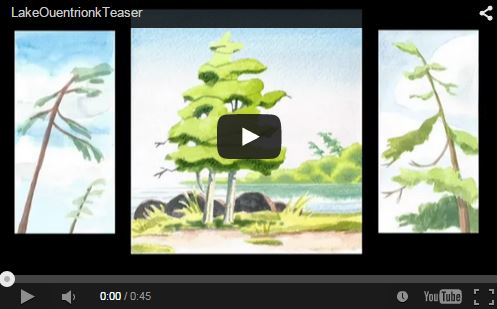
David Donar Video

Monday, Feb. 9

6 p.m.

1-100 Lee Hall 


Animating the great Canadian Landscape

Creative research methods within the dynamic environment of Lake Simcoe, Ontario, Canada.

While on sabbatical last March, David Donar was invited to do a presentation at Vancouver’s Emily Carr Institute of Art and Design, one of the premiere visual art schools in North America.

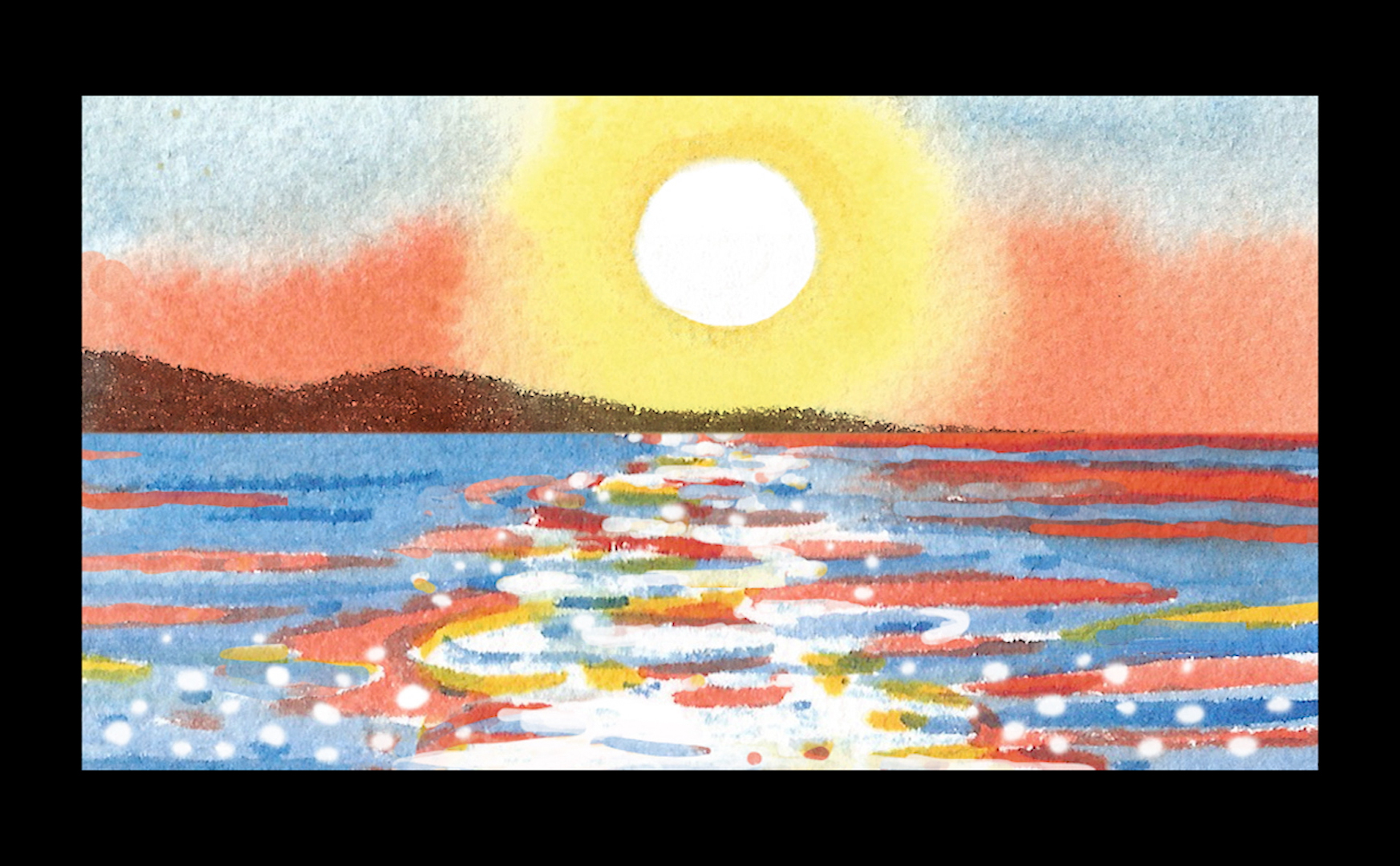
David spent an entire season on location studying the various aspects of Lake Simcoe, located one hour north of Toronto, Ontario. He documented the environment through traditional and digital media using watercolors with tablet touch screen applications to capture light, color and seasonal transitions. “My goal was to develop a higher awareness of this fragile ecology in particular the endangered White Pine as well as celebrate this region before the European settlement prior to the 18th century.  Within the tradition of the Group of Seven landscape artists like Tom Thompson and Lawren Harris, and inspired by Impressionist Claude Monet, I have a strong desire to capture this dynamic environment by direct immersion and observation.”

In addition to his work, David will discuss the challenges in finding the right balance between the arts and sciences, how to implement it into a digital arts education and how it can lead into new research opportunities for students, faculty and staff.

David Donar

Bio

David Donar is an Associate Professor at Clemson University teaching, story and animation within the Digital Production Arts program.  He is an alumni of California Institute of the Arts (CalArts) and taught and help developed the Bachelor’s of Animation degree at Sheridan Institute in Toronto, Canada.   David’s career spans many different venues, industry, and medium including Disney Interactive and TV, Cartoon Network, Nickelodeon, and Mondo Media.

His films have aired on MTV, PBS and the Independent Film Channel and screened in art festivals like Spoleto, Bumbershoot, Brooklyn Museum of Art and film festivals throughout the world.

Website: https://donarfilms.wordpress.com