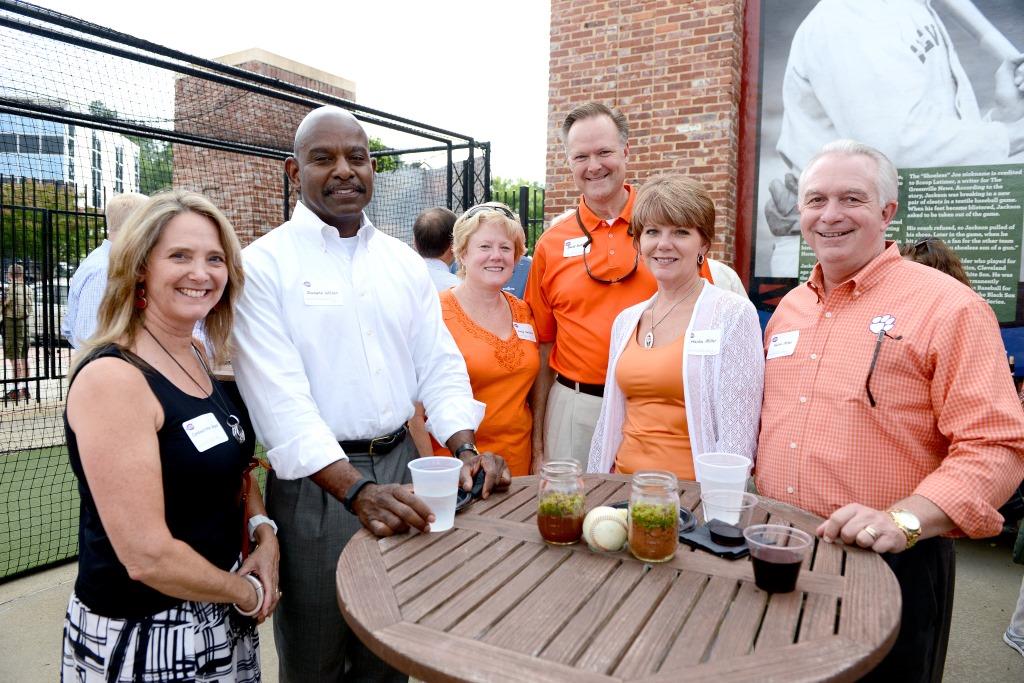
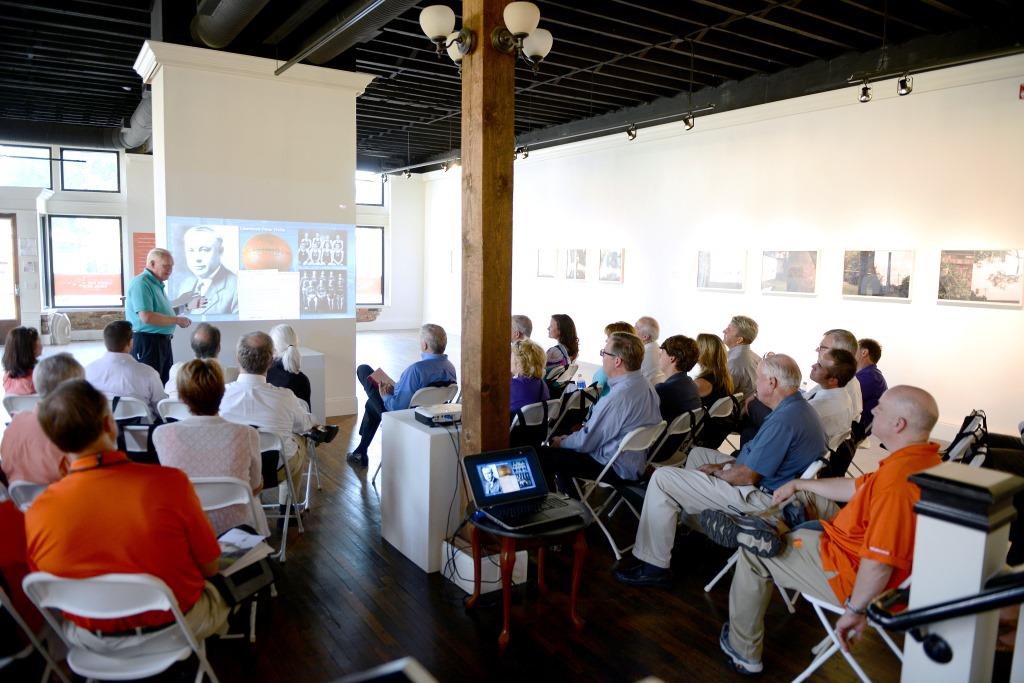
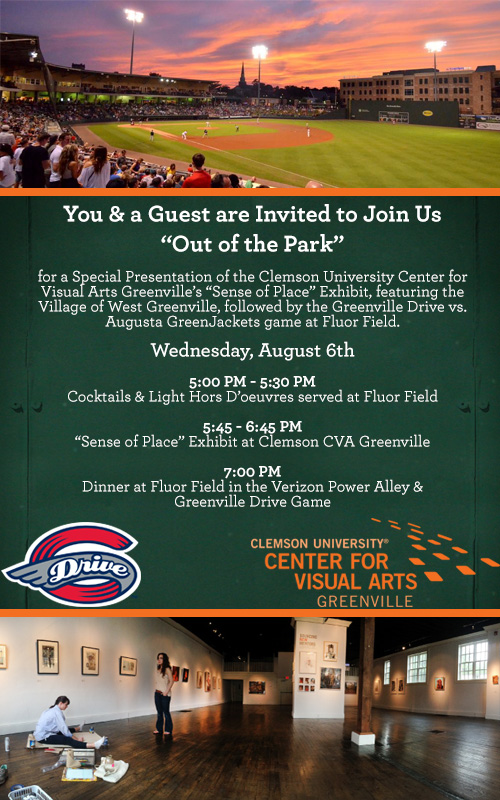
This inaugural partnership seeks to expose our Clemson visual arts supporters to the environs of the lovely Fluor Field and to our wonderful neighbors, the Greenville Drive baseball organization. It was a one of a kind event bridging Greenville arts and athletics.
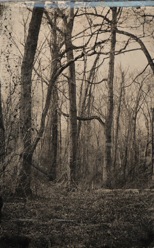
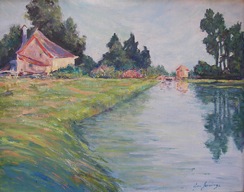
Friends of the CVA began their evening at a ballpark meet and greet reception. From the ballpark they were chauffeured via the Greenville Drive’s trolley a short distance to the Center for Visual Arts – Greenville gallery in the Village of West Greenville where guests were treated to a tour and a private viewing of the powerful Sense of Place: Picturing West Greenville exhibit curated by nationally and internationally recognized editor of Fraction Magazine, David Bram. Local historian Don Koonce offered insights about the history of Greenville’s mill villages, with particular emphasis on profound impact these teams and their players had on the history of baseball.
Friends of the CVA chauffeured by Greenville Drive Trolley
After visiting CVA-Greenville, guests returned to Fluor Field via the Greenville Drive’s trolleys for a special gourmet reception. Guests also enjoyed the baseball game as the Greenville Drive swept the Augusta Green Jackets.
A special thanks to the Greenville Drive for being such wonderful neighbors with the CVA-Greenville at Clemson University and their willingness to expand relationships, programs and initiatives for the community that will make Greenville a better place to live, work, play and of course, enjoy the arts.
Plans are underway to have more joint events with the Greenville Drive. For more information regarding how you can belong to the Friends of the Center for Visual Arts and be part of enjoyable art activities and events, please sign up online todayor email visualarts@clemson.edu.
CLEMSON – MFA (Master of Fine Arts) at Clemson University ranks 12th among public institutions as one of the nation’s leading “Top Art Schools” according to GraduatePrograms.com.
Graduateprograms.com assigns 15 ranking categories to each graduate program at each graduate school. Rankings are based on student ratings and cover a variety of student topics, such as academic competitiveness, career support, financial aid, and quality of network. The program ranking covers a period from September 1, 2012 to April 15, 2014.
This ranking comes on the heels of recent published findings shedding light on the impact of arts education on the nation’s economy. The March 2014 article released by the Chronicle of Higher Education entitled, “Who knew? The arts education fuels the economy” states that in December 2013, the National Endowment for the Arts in partnership with the U.S. Bureau of Economic Analysis released preliminary estimates from the nation’s first Arts and Cultural Production Satellite Account. The account is meant to trace the relationship of arts and cultural industries, goods, and services to the nation’s ultimate measure of economic growth, its gross domestic product. The findings showcase the total economic output (gross revenue and expenses) for arts education. In 2011, the most recent year for which data are available was $104-billion.
The article goes on to mention arts education added $7.6-billion to the nation’s GDP. For every dollar consumers spent on arts education, an additional 56 cents was generated elsewhere in the U.S. economy.
The Partnership for 21st Century Skills, a coalition of business and education leaders and policy makers, found, for example, that education in the arts helps instill the curiosity, creativity, imagination, and capacity for evaluation that are perceived as vital to a productive U.S. work force. Additionally, the Chronicle of Higher Education highlights the 2010 IBM report based on face-to-face interviews with more than 1,500 CEO’s worldwide, concluded that “creativity trumps other leadership characteristics” needed in a CEO.
“The Department of Art and the Center for Visual Arts at Clemson University is seen as one of the leading collaborators on campus because our students intersect with all five colleges and will be working in the future with the athletic department through our public art program,” remarks Department of Art Chair, Greg Shelnutt. “This cross disciplinary interaction allows students to experience a well-rounded real world approach to learning through interfacing with other disciplines outside of fine arts such as technology, science, math and business.”
MFA candidates experience rigorous studio activity and strong conceptual development is the main ingredients for success in the program. The course of study focuses on production or artwork in the studio, exposure to contemporary art history issues, professional practice, and the development of a body of artwork. The program culminates in an exhibition with a written thesis defended in an oral examination. This method provides graduates with a deeper understanding of historical as well as contemporary art which prepares for life as a working artist in a 21st century culture.
Because artists require highly specialized work space and equipment the fine Arts graduate students are given a studio area with 24 hours a day, seven day a week access. In addition, candidates have access to well-equipped studios in the discipline areas: ceramics, drawing, painting, photography, printmaking, and sculpture.
The importance for the arts began with the institutions founder, Thomas Green Clemson. As an accomplished painter as well as an art advocate, Clemson’s vision of having a university where the arts are integrated into the fabric of the university is evident through historical records. In 1859, he addressed the Washington Art Association where he said that “The beautiful arts – the magic bonds which unites all ages and nations.”
END
About the Center for Visual Arts
The Center for Visual Arts (CVA) at Clemson University is where students, visitors and scholars explore contemporary perspectives in art and culture through research, outreach programming and studio practice. With a mission to engage and render visible the creative process, the CVA is a dynamic intellectual and physical environment where art is created, exhibited and interpreted. It educates through academic research and practice with art at its core, drawing upon varied disciplines to examine critically cultural issues and artistic concerns.
Though there is not a physical building for this center, the majority of the activities for the Center of Visual Arts are generated out of Lee Hall on the Clemson University campus. For more information, visit www.clemson.edu/cva.
CLEMSON – One of Artisphere 2014’s largest exhibits will show how Clemson University is bringing together technology and art to create cars, movie special effects and 3D computer programs, while inspiring the next generation of engineers, scientists and artists.
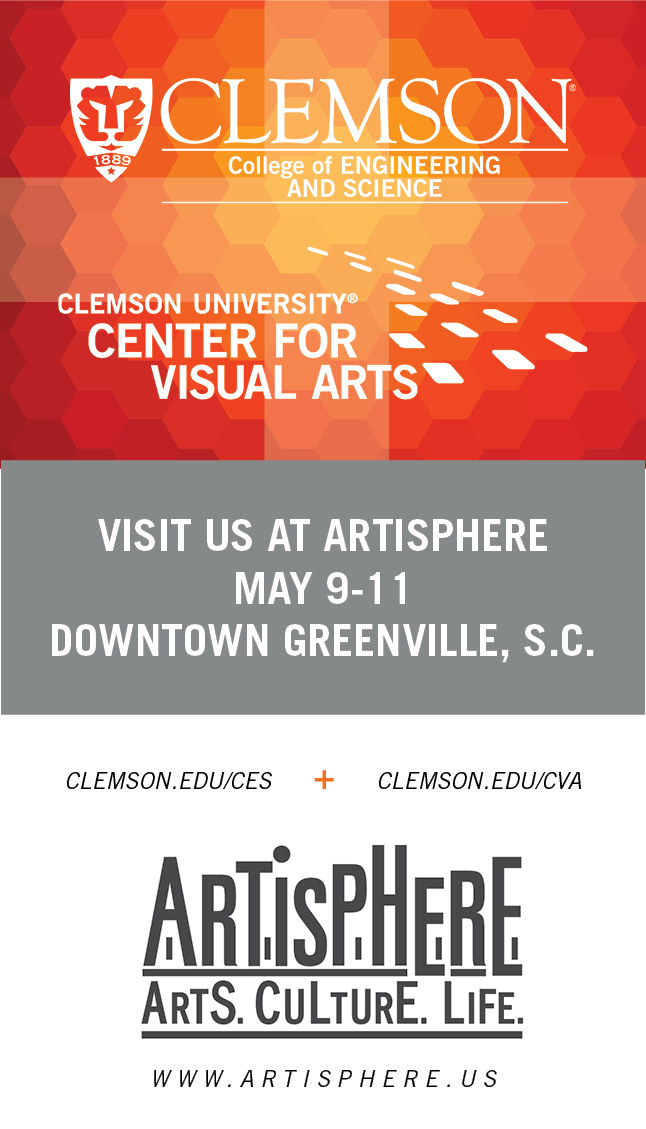
The College of Engineering and Science will have a major exhibit at Artisphere for the first time in the festival’s 10-year history.
The tent measures 40-by-120 feet and will be at the corner of Broad and Main streets in downtown Greenville.
This year’s festival goes from May 9-11.
Anand Gramopadhye, the college’s dean, said Clemson’s exhibit will offer a unique presence that allows visitors to explore how technology and art can lead to playful innovation.
“We often find the most unusual and inspiring creativity at the intersection of different disciplines,” he said. “We’re excited to give people hands-on experience that will leave them inspired.”
The exhibit is called the “Clemson University STEAM Tent: Exploring Technology and Art.” STEAM stands for science, technology, engineering, art and math.
“I am really excited about the addition of Clemson’s STEAM Exhibit to this year’s festival programming,” said Kerry Murphy, Artisphere’s executive director.
“We are always looking for ways to enhance the patron experience, and this exhibit offers something that’s both innovative and unique.”
The college’s exhibit won’t be the only Clemson presence at Artisphere this year. Art students and alumni representing the Clemson University Center for Visual Arts and the Department of Art will also be featured at the festival under the tent as well as under a separate tent located on Art Demonstration Row. These students and alumni will be giving demonstrations in ceramics, printmaking and creating art using technology.
“At Clemson, we believe that creative collaboration between different areas of the University is crucial to our success,” said Richard Goodstein, dean of the College of Architecture, Arts and Humanities and member of the Artisphere Board of Directors. “We are thrilled to see art and science working together so beautifully and with such imagination.”
Highlights under the STEAM Tent include:
CU-ICAR: Deep Orange
Visitors will have a chance to see a concept car created by students.
Graduate students seeking degrees in automotive engineering build a new prototype vehicle each year at the Clemson University-International Center for Automotive Research (CU-ICAR).
What may come as a surprise, though, is that the engineering challenge begins with students from the Art Center College of Design in Pasadena, Calif.
The art-center students create the initial design and work closely with engineers to refine it.
Digital Production Arts
Students will show animated works throughout the weekend and share their experiences with the Clemson program Digital Production Arts (DPA).
The program combines artistic skill and technical expertise to create dramatic visual effects for film, television and games. Alumni have worked on several hit movies, including “Frozen.”
Students in the program explore digital animation and 3D graphics.
Visitors will learn a sequence of steps in real life and then program a computer character to do the same as part of what researchers call VENVI, or “virtual environment interactions.” The activity involves a full-size dance floor.
Research suggests that moving the body can help students learn, a concept known as “embodied cognition.”
A Clemson team has begun a research project that seeks to answer some of the questions that surround the concept, while inspiring fifth- and sixth-grade girls to study computer science and other technological fields in which women are underrepresented.
Viewers will step into a dark room with a glowing box of water containing moving silhouettes.
When the viewer touches the water, their actions will be recorded until they remove their hands.
The silhouette of each participant will then be played over top of the rest of the silhouettes and the viewer will become part of the piece. It was designed by Nate Newsome, a Clemson Bachelor of Fine Arts graduate and Ph.D. student.
Emagine
Clemson’s outreach program, Emagine, will be hosting workshops for K-12 students throughout the weekend, providing hands-on projects that combine design and engineering in an applied context.
Highlights under the Center for Visual Arts located on Art Demonstration Row:
Demonstrations
A group of selected Clemson Master of Fine Arts graduate candidate students will be demonstrating several ceramic and printmaking techniques throughout the weekend.
Participants will have an opportunity to learn about the basic techniques of printmaking and the many techniques, tools and materials used to create art work using a printing press.
The demonstrations in ceramics are designed to show observers how an artist uses clay to create functional art as well as sculptural pieces, using a variety of techniques.
Artisphere attendees are encouraged to use the hashtag #CUArtisphere to share photos displaying hands on interaction with the Clemson University tents.
Dean Rick Goodstein welcomes Will to Lead Executive Committee to CVA-Greenville
On Thursday, March 27 the Clemson’s Will to Lead Executive Committee Members made a special visit to CVA-Greenville. Dean Rick Goodstein welcomed the members to the satellite facility and shared with the group the connections the College of Architecture Arts and Humanities has with the Greenville ONE building. He introduced Art Department Chair, Greg Shelnutt and welcomed him to say a few words about the Center for Visual Arts and and the Art Department.
Thank you for joining us this afternoon. My name is Greg Shelnutt and I’m the Chair of the Art Department at Clemson University. Recently, I had a conversation with a very wise man at a Greenville Chamber of Commerce meeting. He told me how very important the arts were as an economic driver. Who made such a wise statement? You guessed it…our President, Jim Clements. I walked away from that encounter knowing that our University had hired a man who, like his predecessors, understood the importance of incorporating the arts. It was a great feeling.
Coincidentally, an article that just came out in this month’s Chronicle of Higher Education entitled, “Who knew? The arts education fuels the economy” also noted the important, but hard to measure, economic value of an arts education. This was published on the heels of the following study:
“In December, in partnership with the National Endowment for the Arts, the U.S. Bureau of Economic Analysis released preliminary estimates from the nation’s first Arts and Cultural Production Satellite Account. The account traces the relationship of arts and cultural industries, goods, and services to the GDP.
The findings were impressive:
– In 2011, arts education added $7.6-billion to the nation’s GDP.
– For every dollar consumers spend on arts education, an additional 56 cents is generated elsewhere in the U.S. economy.”
It’s not just arts enthusiasts like me who feel this way. The article goes onto to unveil that “The Partnership for 21st-Century Skills, a coalition of business and education leaders and policy makers, found, for example, that education in the arts helps instill the curiosity, creativity, imagination and capacity for evaluation that are perceived as vital to a productive U.S. work force.
Additionally, IBM, in a 2010 report based on face-to-face interviews with more than 1,500 CEOs worldwide, concluded that creativity trumps other leadership characteristics.”
I might be preaching to choir with all of you about the importance of the arts. Within this committee there is
Neill Cameron who helped lead a student branding research project for the Friends of the CVA,
Hack Trammell who is a donor to the CVA and his wife, Cheryl who sits on our board of directors,
Joe Turner who continues to be one of our lead donors to the CVA’s Celebration and whose wife, Cathy serves on the planning committee for this event, and
former President, Phil Prince, who is a CVA board member.
President James F. Barker, a founding member of the Center for Visual Arts
Then there’s of course, Jim and Marcia Barker who founded the Friends of the CVA. Marcia has sat on our board of directors since it began in 1999 and continues to help with the Celebration. We are grateful to the Barkers for their on-going support.
Even our setting demonstrates that Clemson University is embracing the arts through being in Greenville. The CVA-Greenville is already beginning to make positive changes in this city, but before I share with you about this space, let me bring you up to speed and share with you the journey we’ve taken to get us here today.
The importance for the arts at Clemson goes back to Thomas Green Clemson’s vision of having a “high seminary of learning” with his will clearly requiring that art remain, quite literally, at the center of the campus in Fort Hill. As an accomplished painter, an avid art collector, and an eloquent arts advocate, Clemson addressed the Washington Art Association in 1859, proclaiming “The beautiful arts [are] the magic bonds which unites all ages and nations.”
Fast forward to 1958 when Lee Hall was built to house design and architecture students. Shortly after, the first visual arts faculty was hired and the Lee Gallery was created. However, it wasn’t until 1973 when Clemson granted its first Master of Fine Arts degree in Art to Jeanet Dreskin. A long-time Greenville resident, Jeanet is significant to us not only because she was our first arts graduate, but because of her many accomplishments. Throughout her on-going, 70-year career as an artist, she has had work shown in The White House, and is represented in permanent collections throughout Europe and the US including the Smithsonian’s American Art Museum. We just celebrated the 40th anniversary of our MFA program on campus with a stunning exhibition of Jeanet’s work.
In the late 80’s our first BFA’s graduated, and a few years later President Deno Curris had the foresight to create the Art Partnership out of the Office of the President. This initiative laid the foundation for a public art program on campus.
In the late 90’s President Barker continued a vision to shape the arts at Clemson by creating the Friends of the Lee Gallery, which became Friends of the Center for Arts, funding the Lee Gallery out of the Office of the President with a matched gift. In early 2000, the CVA board was created and Trustee, Patti McAbee took a leadership position on the board.
In July 2006, Board of Trustees approved a proposal for a new Center for Visual Arts building, and, shortly afterwards, plans for a Center for Visual Arts building were on the list of Clemson University’s top five building priorities. In the following years, $180,000 was raised through the Celebration event. All of these dollars were spent on laying the groundwork for development of the CVA as a stand-alone world-class facility.
This facility was designed to surpass many top 20 institutional facilities in the country and was slated to be built between Lee and the Brooks Center for Performing Arts: a metaphorical and literal bridge to the arts. We embarked on a feasibility study, and architectural building plans were drawn up. Sadly, the Global Fiscal Crisis forced the institution to shift its priorities. In 2011, the design won the Unbuilt Award from the South Carolina Chapter of the AIA. Developing that physical facility, however, still remains our dream. With a vision this potent, we stand ready to put this world-class facility back on the priority list.
There are many other accomplishments that you may reference on the timeline board, but let me fast-forward to January 2013 when the Board of Trustees approved the space for the CVA-Greenville as one of the four Greenville hubs. With the help of Dean Rick Goodstein, Rob Porter and Dan Harding, we secured a $100,000 grant from the Community Foundation of Greenville that serves to pay the salary for one staff person, for programming within this space for the upcoming year, etc. The facility is a generous, albeit a temporary agreement with Richard and Gwen Heusel, with hopes that they will gift the building to Clemson University so we may continue this bold venture into economic redevelopment through the arts.
I believe it’s important to clarify that the CVA-Greenville is our satellite facility and not our actual center. The CVA serves as the umbrella for all visual art activities at Clemson University. Although there is not a physical building for this center as of yet, the majority of activities for the CVA are generated out of the Lee Hall building located on the main campus.
If you are wondering, “What makes up the CVA?” Well, it has many facets:
The Art Department that houses our nationally accredited BFA and MFA degree programs
Art Department Chair, Greg Shelnutt
Many galleries such as
Our flagship gallery, The Lee Gallery,
The Acorn Gallery,
The Dean’s Gallery in Strode Tower, and this space,
The CVA-Greenville satellite facility.
We also have collaborative special exhibits, showcases and on-going partnerships with
The James F. Martin Conference Center and Inn,
Sikes Hall,
The Brooks Center for Performing Arts and
CU-ICAR…just to name a few.
The Center for Visual Arts also houses the Clemson Architectural Foundation’s permanent collection of hundreds of Modern and Contemporary works of art.
We work closely with the Friends of the CVA, a group of donors, patrons and volunteers who support the visual arts by helping to create opportunities for art students and provide support for programs and events hosted for the broader University community throughout the year. We also offer a robust slate of guest lectures given by regional, national and internationally recognized leaders in the arts.
I’d also like to highlight our “for students, by students” Atelier InSite Creative Inquiry project that implements public artwork on the Clemson University Campus. It capitalizes on a cross-disciplinary and inclusive approach that is predominantly student driven. I invite you to attend the unveiling of its very first public art project in the Life Sciences building on April 25.
All of these efforts continue to support our mission “to engage and render visible the creative process.”
So you’ve heard me mention some of our campus collaborations, but what you really need to understand is that the CVA and Art Department is the leader, bar-none, for collaborations throughout campus. In fact, we are the only academic unit on campus that can say we’ve extensively collaborated or will collaborate with all of the colleges on campus as well as athletics.
Some exciting collaborations to highlight are: working with the College of Engineering and Science with the importance of STEAM at Artisphere this May, helping run Passport to the Arts, Clemson University’s and the City of Clemson’s premier “Town and Gown” event, hosting an international visiting artist with Women’s Studies, creating exhibits for the OLLI building at Patrick Square, creating student art pieces for the Spiro Institute’s “Innovation Spirit Award” and the president’s personal gifts as well as providing future public art in the Watt Family Innovation Center, CU-ICAR; Greenville ONE, the West End Zone, and the future basketball facility.
However, our collaborations are not limited to Clemson entities. In fact, we have formed partnerships with NYC galleries, Duke University, ETV, with the City of Greenville and this surrounding neighborhood as well as all throughout South Carolina.
If you happen to be in Greenville for Artisphere, I encourage you to stop by our tent as well as to visit us over in the Engineering and Science tent where we can show you how art and science support one another. And, if you happen to be walking by the Greenville ONE building leading up to Artisphere and the week of the event, be sure to look at the huge CertusBank digital media wall for our repeating 30-second video spotlights about the CVA and the Art Department.
CVA-Greenville Program Coordinator, Gene Ellenberg gives a tour of the facility
Before I finish I think it’s important to recognize the staff that I work with that help make your visit here possible today; Denise Woodward-Detrich, Director of the Lee Gallery, Meredith Mims McTigue, our Marketing and Public Relations Director, and Gene Ellenberg, Program Coordinator for the CVA-Greenville. Gene is going to take you on a tour of the space and as you walk around he’ll tell you the history of the building as well as some of the many activities that have taken place in the short seven months we’ve been tenants of this building.
Finally, two things. First, I’d like to invite all of you to attend our Celebration 2014, fundraiser on Saturday, April 5, at 6:30 pm in the Madren Center. Proceeds from the fundraiser support undergraduate internships, graduate and undergraduate research and residency programs, and student generated curatorial projects. It’s also a great way to get some exquisite art for gifts and the walls of your homes and offices. Second, I want to express my gratitude to you for being here today and sharing your time with us. I understand that all of you are volunteers and that your time is valuable to your coworkers and loved ones. I deeply appreciate that you choose to serve Clemson University in this way. You play a hugely important role in guiding our future and for that, I thank you.
The Clemson University Center (CVA) for Visual Arts – Lee Gallery and The Arts Center of Clemson will host the popular and unique celebration of the arts with the signature “Town and Gown” event Passport to the Arts 5:30 – 9:30 p.m. Friday, March 7.
Tickets are available for $30 at www.clemsonpassport.org until Saturday. After that, the price goes to $40. The ticket price includes transportation, food, drink and entertainment.
This year marks the fourth collaboration between the Clemson University Center for Visual Arts–Lee Gallery and The Arts Center of Clemson to provide participants with a tour of fine art, entertainers, live music, drinks and food showcased at four different locations.
Clemson Area Transit (CAT) offers transportation for the Passport to the Arts tour. All buses feature entertainment, making the ride to each venue a destination in itself.
The event locations include the Center for Visual Arts–Lee Gallery on the Clemson campus, The Arts Center, CAT and the 2014 location The Charles K. Cheezem OLLI Education Center in Patrick Square.
Attendees will be viewing several art works being debuted for the first time in the four gallery venues, including an oil portrait of former Mayor Larry Abernathy on display at the CAT facility. Additional highlights from this year’s event will be catering provided by Rick Erwin of Clemson at the Patrick Square venue. The restaurant in Patrick Square’s Town Center is the first venture for Rick Erwin in the Clemson market. Restaurant construction completion is scheduled for fall 2014.
END
Passport to the Arts sponsors
Passport to the Arts would like to thank this year’s sponsors: Blue Ridge Electric Coop, Carolina Real Estate, Merrill Lynch-Willis Candela Group, Morris Business Solutions, Oconee Medical Center, Signarama in Anderson, Wells Fargo, Wendy’s and Tom Winkopp for providing needed support for the arts in the Clemson community.
More information
For more information about Passport to the Arts, visit www.clemsonpassport.org or the Facebook fan page facebook.com/PassportToTheArtsInClemson. To learn more about the visual arts in the area, contact Clemson University Center for Visual Arts-Lee Gallery Director Denise Wooward-Detrich, go to visualarts@clemson.edu and www.clemson.edu/cva or contact Arts Center of Clemson Director Tommye Hurst, tommye.hurst@explorearts.org and visit www.explorearts.org.
The Annual Ceramic Bowl Sale held by the Clemson Ceramic Association student organization with the assistance of the Center for Visual Arts (CVA) saw one of the largest crowds to date. Assistant Professor of Art in Ceramics, Valerie Zimany reported 500 ceramic pieces were created and approximately 450 sold during the sale.
The Clemson University ceramic events continue to be one of the most popular academically based sales embraced by the Clemson community members as well as Clemson alumni, students, staff, and faculty from all disciplines. As a result, proceeds from the sale will allow the Clemson Art Department to bring visiting artists to campus as well as aid undergraduate and graduate art students with travel costs to the National Council on Education for the Ceramic Arts (NCECA) conference held March 19-22, 2014 in Milwaukee, WI. This conference typically attracts 6,000 attendees. Not only will Clemson art students be attending this conference, but they will be presenters during the topical discussion portion of the conference. The Clemson Art Department’s continued success in gaining recognition is reflected by Master of Fine Art candidate, Nina Kawar’s work being selected by a jury of nationally-renowned artists for inclusion in the NCECA National Juried Student Exhibition.
“Through the conference, students are exposed to contemporary ceramics exhibitions, lectures, and panels,” Zimany said referring to the importance of the conference launching and advancing art student careers, “They also make important contacts with peers from other institutions and network for post-graduation opportunities geared toward graduate programs, artist residencies, internships, and jobs.”
Zimany who is a recipient of The U.S. Department of Education’s Fulbright-Hays Faculty Research Abroad grant will be a featured presenter at the conference and will be giving a lecture on her research titled, “Porcelain Fever: Contemporary Artists and Kutani Now.”
The next ceramics sale will be held April 23, 2014 and will offer a broader selection of ceramics. The spring sale serves as a more accurate reflection of what students are creating and producing as a result of their studies.
The corridor outside of the Center for Visual Arts (CVA) Lee Gallery is bustling. People are crowding around long tables with an impressive spread; the line trails out the door. Buyers and enthusiasts reach and grab, examine and admire, some even stand and guard their chosen piece while a friend runs to get more cash. It is a wonder nothing breaks. Down the expanse of the hallway, delicate plates, hearty bowls, rustic, earthenware cups, and mugs that hug the hand, are stocked deep. At the end of the day, only a few – if any– will remain. Members of the local community, Friends of the CVA, students, faculty, and staff from all over campus and across departments have convened for the Annual Ceramic Bowl Sale… and of course, to experience the best minestrone of their life.
The Annual Ceramic Bowl Sale is put on by the student organization, the Clemson Ceramics Association. With the purchase of every cup, bowl or mug – comes a free lunch of homemade soup and warm bread – a midweek break, a hot meal, and a masterpiece souvenir for the meager price of a lunch. The sale’s proceeds go to raise money for the annual National Council on Education for the Ceramic Arts (NCECA) conference. To attend a national conference of this prestige is a once in a lifetime experience for many of these ceramic emphasis students. Assistant Professor of Art in Ceramics, Valerie Zimany, talks about the unique opportunities this council brings to the students, “through the conference, students are exposed to contemporary ceramics exhibitions, lectures, and panels. They also make important contacts with peers from other institutions and network for post-graduation opportunities at non-profit booths geared toward graduate programs, artist residencies, and internships.” This year, Zimany, will be featured as a special guest lecturer for her research titled “Porcelain Fever: Contemporary Artists and Kutani Now.” MFA student, Nina Kawar, also will be recognized for being accepted into the competitive NCECA National Juried Student Exhibition.
Students from every level of ceramics throw themselves into weeks of intensive studio to turn out hundreds of functional ceramic pieces for this tradition. Graduate students, Nina Kawar, Brent Pafford, and Lindsey Elsey have work in the Annual Ceramic Bowl Sale. Nina’s thesis work is more sculptural and references the botanical; every curve is kissed by a folded pedaled form, “focusing on creating an environment for the viewer to engage in the works physical qualities that reflect the self and the barriers or defenses we project in social interactions.” Brent’s thesis work “investigates the intimate, haptic, and assembled social conditions in which individuals encounter the work” and the social interactions people respond with to the work, sparking his Mug Exchange project that “seeks to engage with participants through the reciprocal nature of alternative exchange such as a barter system, to raise questions of labor, value, and worth.” Lindsey Elsey is a new addition to the MFA ceramicists and her functional pieces promise an exciting new avenue of work for the department. Her forms are draped with grace and their structure has a classical elegance.
Each work in this manifold emanates the diversity of the artists’ hands. Whether bisque or glazed, every form, divot, and handle has character. Whether it will hold warm winter chowder, cereal, ice cream, pasta, or perhaps a morning cup of joe or night time tea, be sure to come by the ceramic sale to pick out your one of a kind bowl.
The sale will be November 20 located in the Lee Hallway in front of the Center for Visual Arts Lee at Clemson University 12 noon to 5 p.m. Soup will be served between noon to 1 p.m.
November 2 and 3 marks the weekend of the annual Greenville Open Studios, presented by the Metropolitan Arts Council. This weekend features 124 local visual artists, and opens their studios to the public. We are proud to announce that Clemson’s Center for Visual Arts (CVA) is well represented, with Open Studios highlighting seven alumni, Eric Benjamin, Suzanne Bodson, Alexia Timberlake Boyd, Kim Dick, Jeanet S. Dreskin, Jo Carol Mitchell-Rogers, and Blake Smith, and one former CVA board member, Ann Jennings. As you are enjoying the Open Studios, we encourage you to seek out these Clemson alumni and friends with the opportunity to experience their artwork.
1738 E. North Street,
Greenville, SC 29607(864) 640-7000
fineartsalliance@gmail.com www.ericbenjaminstudios.com
Directions:
From N. Main St turn right on E. Park Ave. Continue over Stone Ave/Laurens Rd. Park becomes E. North St. #1738 is on the right, just past the elementary school.
Suzanne Bodson
Flurry of Flight
Studio 12B
12B Lois Avenue
Greenville, SC 29611
864-373-5349
sbodson@yahoo.com
Directions:
From S. Main St. take Pendleton St approximately one mile into the Village of West Greenville’s arts district. Turn right onto Lois Ave. Studio will be on the right, a parking lot is located to the left of the building.
Alexia Timberlake Boyd
Working the Black Seam
ArtBomb Studio
1320 Pendleton Street
Greenville, SC 29611
864-220-3131
alexia.timberlake@gmail.com alexiatimberlakeboyd.com
Directions:
From S. Main St take Pendleton St approximately one mile into the Village of West Greenville’s arts district. ArtBomb is on the right.
Kim Dick
Seized
ArtBomb Studio
320 Pendleton Street
Greenville, SC 29611
864-320-0903
contact.kim.dick@gmail.com www.kimdick.com
Directions:
From S. Main St take Pendleton St approximately one mile into the Village of West Greenville’s arts district. ArtBomb is on the right.
Jeanet Dreskin
Sere: Mini A VII
60 Lake Forest Drive
Greenville, SC 29609
864-906-8412
jeanet@dreskin.net www.hamptoniiigallery.com
Directions:
From downtown Greenville, take Wade Hampton to traffic light at Chick Springs intersection. Turn left onto Chick Springs Rd. Keep right, go 1/2 mile to Twin Lake Rd. Turn right, go one block on Twin Lake Rd. Turn right onto Lake Forest Dr. #60 is on the right. Walk down the drive to the patio, which leads to the studio.
Jo Carol Mitchell-Rogers
A Sense of Place
ArtBomb Studio
1320 Pendleton Street
Greenville, SC 29611
(864) 220-3131
jocarol@charter.net www.jcm-r.com
Directions:
From S. Main St take Pendleton St approximately one mile into the Village of West Greenville’s arts district. ArtBomb is on the right.
Blake Smith
Over Growth
Art Bomb Studio
1320 Pendleton Street
Greenville, SC 29611
864-245-0067
mudhillpottery@gmail.com www.mudhillpottery.blogspot.com
Directions:
From downtown Greenville, take Wade Hampton (Hwy. 29) north to Fairview Rd/Old Rutherford Rd. Stay left at the fork. At the traffic light turn left onto Locust Hill Rd. Turn left onto Sunrise Dr. #201 is on the right.
Take Augusta St to Riverside Dr (Blythe Elementary School on right). Turn left on to Riverside Dr. Go through the 4-way stop at Riverside and Byrd. Studio on corner of next block.
L to R: John Boyer, Bechtler Museum of Modern Art; Carlos Evans, Spoleto Festival USA; Dr. Cheryl Richards (guest moderator); Dr. Lawrence J. Wheeler, North Carolina Museum of Art; Todd A. McDonald, Clemson University.
Todd A. McDonald was invited as an expert to share insight on the upcoming “Arts in the Carolinas” episode of the Carolina Business Review television show.
The episode explores the importance of the arts in education, how the arts are used as a catalyst for business recruitment and how the arts support STEM education. The episode also addresses the state of public funding for the arts.
McDonald is an art department faculty member and represents the department as well as the Center for Visual Arts at Clemson University. He is joined by an esteemed panel of experts: John Boyer, Bechtler Museum of Modern Art; Carlos Evans, Spoleto Festival USA; Todd A. McDonald, Clemson University; Dr. Lawrence J. Wheeler, North Carolina Museum of Art.
The “Arts in the Carolinas” episode can we viewed Thursday, July 11 at 9:30 p.m. on ETV South Carolina Channel, Wednesday, July 17 at 5 p.m. on ETV World, Friday, July 19 at 6 p.m. on ETV World and Sunday, August 4 at 1 p.m. on ETV.
Did you miss the episode on TV? Not to worry. You can watch it online.
For more information about the Center for Visual Arts at Clemson University, please visit: www.clemson.edu/cva.
About the Center for Visual Arts
The Center for Visual Arts (CVA) at Clemson University is where students, visitors and scholars explore contemporary perspectives in art and culture through research, outreach programming and studio practice. With a mission to engage and render visible the creative process, the CVA is a dynamic intellectual and physical environment where art is created, exhibited and interpreted. It educates through academic research and practice with art at its core, drawing upon varied disciplines to examine critically cultural issues and artistic concerns.
The CVA serves as the umbrella for visual arts activities at Clemson University. There is not a physical building for this center as of yet. The majority of activities for the CVA are generated out of Lee Hall.
About Carolina Business Review
For over 20 years, the Carolina Business Review has been a way to initiate dialogue for public policy challenges. Carolina Business Review has become the most widely watched source for business and public policy issues across the Region. Carolina Business Review is made possible by partnerships with UNCTV, ETV and PBS Charlotte and regional Public Broadcasting organizations to produce a weekly, 30-minute dialogue that can been seen on 22 PBS affiliates throughout North and South Carolina.
The Center for Visual Arts at Clemson University is a proud sponsor of the 2013 Artisphere in downtown Greenville this year. We have faculty and students involved with this community event. Candidates from our M.F.A. program, David Gerhard and Laken Bridges will be giving demonstrations. Gerhard was even quoted in a latest press release about Artisphere. Click to the article link from the Greenville News Online or read the article below.
Artisphere returns with new features
Changes aim to keep festival fresh, interesting
Greenville’s big visual arts festival, Artisphere, returns on Friday with a host of new features.
An expanded demonstration area, a juried exhibition of student work, expanded activities for children and a series of how-to talks all are a part of this year’s festival, said Artisphere executive director Kerry Murphy.
New, too, are Friday’s festival hours, from noon until 8 p.m. In the past, the festival didn’t start until 4 p.m. on opening day.
Artisphere will continue with its usual hours on Saturday (10 a.m. to 8 p.m.) and Sunday, May 12 (11 a.m. to 6 p.m.).
Now in its ninth year, Artisphere draws tens of thousands to downtown Greenville to browse for art and enjoy food, live music and activities for children.
At the center of the festival are the 120 booths featuring the work of artists from around the nation. Of the artists featured this year, more than half are attending the festival for the first time, Murphy said.
Among the new features is a Demo/DIY (Do It Yourself) Stage, with artists creating and talking about ceramic making, painting, weaving, monoprinting and jewelry.
The DIY Stage will be located on Main Street near the entrance to Falls Park.
“We did some demonstrations on that stage last year, but we also featured some musicians,” Murphy said. “This year it’s dedicated solely to demonstrators. There’s a full slate of activities planned. One thing that fascinates me is a smart-phone art demonstration by David Gerhard of Clemson University. You can learn how to create art on a smart phone.”
In addition, Artisphere will feature a new juried art exhibition by Greenville County high school students, with prizes for the best work, Murphy said.
The exhibition, to be located under a tent in the courtyard of the downtown Marriott, will involve 14 Greenville high schools and include 200 or more works of art, Murphy said.
Artisphere also will be sending local professional artists into some schools to offer guidance, said Murphy.
The festival is increasingly trying to bring teen artists into the fold. The event has long featured activities for younger children through its Kidsphere attraction.
“We’re trying to reach out to the schools,” Murphy said. “We want them to be more involved.”
Also new to the festival will be talks on topics such as home light design and how to buy art with confidence, Murphy said.
“We’re really trying to be more accessible and engage all different types of art enthusiasts,” Murphy said.
The Kidsphere section of Artisphere will offer expanded activities for children, including basket weaving, creating paper laterns, painting watercolor masks, building splatter sculptures and decorating ceramic tiles.
“Artisphere is never the same festival twice,” said Judith Aughtry, president of the festival’s board of directors. “But it consistently provides the rare opportunity to meet top-notch visual and performing artists in a unique atmosphere, and it always promises to be a special experience.”
Artisphere earned record sales last year for participating artists and won top accolades from nationally recognized publications, Murphy said.
In 2012, the 120 artists involved in the outdoor festival reported an average of $5,865 in sales over the three-day event.
That represents an increase from 2011 of about 16 percent, or $800 on average for each artist.
The festival placed No. 7, meanwhile, in the Fine Art category in Greg Lawler’s annual Art Fair Sourcebook, a ranking of the top 600 art shows across the nation.
The event also placed No. 10 in the Fine Craft category. Those rankings were based largely on artist sales.
“Those rankings are definitely something the artists and the art buyers look to when the artists are applying to shows and the buyers are seeking shows to visit throughout the country,” Murphy said.
Strong sales results encourage accomplished artists nationwide to apply for the festival, potentially boosting the quality and variety of artworks available every year at the event.
For this year’s festival, 854 artists applied from 41 states.