Clemson Visual Arts

Art Students Reflect Through End of the Year Exhibition

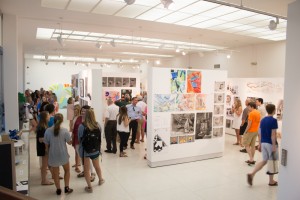
Art FoundationsAs the spring semester came to a close, Art Foundations students at Clemson University installed pieces in the Center for Visual Arts – Lee Gallery and a reception drew faculty, staff, friends and family to enjoy the wide range of unique student art. This exciting event celebrating the hard work of these students is invaluable to the creative growth process.

The Art Foundations end of the year visual review provides art students the opportunity to achieve preparing and organizing a display of artwork in a professional manner. It also allows students time to reflect upon the work created in the first few years as an art major in order to prepare for moving forward through the department of art curriculum.

Any undergraduate art student who has completed all four studio foundation courses is invited to participate. The department of art classifies Art Foundations I, Art Foundations II, Foundation Drawing I and Foundation Drawing II to be the four classes required to complete this fundamental phase. Every student submits eight to ten works of art of their choosing, keeping in mind the idea of displaying a cohesive collection of the best work to date. The students also submit a written statement analyzing their collections.

View video

View photos

About The Center for Visual Arts
The Center for Visual Arts (CVA) at Clemson University is where students, visitors and scholars explore contemporary perspectives in art and culture through research, outreach programming and studio practice. With a mission to engage and render visible the creative process, the CVA is a dynamic intellectual and physical environment where art is created, exhibited and interpreted. It educates through academic research and practice with art at its core, drawing upon varied disciplines to examine critically cultural issues and artistic concerns.

Student art in bloom this spring at Center for Visual Arts

Media Release

Student Art in Bloom

CLEMSON — Clemson University visual art students will be on full display this spring in the Clemson University Center for Visual Art’s (CVA) gallery spaces.

The second half of the semester features a calendar full of student exhibitions. Both Bachelor of Fine Arts (BFA) and Master of Fine Arts (MFA) graduating students present a comprehensive show of work weeks prior to graduation. These exhibits are a special time for visual art students, allowing them to reflect on the transformational experience Clemson has provided and choose pieces that best personify the student’s creative achievements.

BFA senior exhibits and MFA thesis exhibits showcase the culmination of year-long research endeavors. Visual Arts students go through a series of critiques aimed at helping build a body of work of the students’ choosing. The public is invited to join the conversation by attending the artist talks, followed by the artists’ receptions. Join the CVA this spring to see the next generation of art in bloom.

Diminishing Connections (MFA)
March 25, 9 a.m.–4:30 p.m.,Lee Gallery

Our existence is experienced through the container of the body and how that relates to others and the world around us. M.J. King investigates this existence through one’s physical embodiment, studying surface of skin and relationships. Looking to the state of being or having been, the body becomes a vessel and a need to preserve that memory and connection emerges. Mary Cooke examines the relationship between humans and nature experienced within the domestic realm. Her labyrinthine amalgamation of manufactured nature and domestic signifiers leads viewers on a circuitous journey through the familiar but unnatural.

Artist Talks and Reception
March 25, 6–8 p.m.

On the Way/Far and Away (MFA)
March 28–April 1, 9 a.m.–4:30 p.m., Lee Gallery

This solo exhibition of MFA thesis work by En Iwamura features a walk-in installation of large-scale ceramic sculptures and drawings that explore interrelated themes of an epic journey. Layered elements of Japanese gardens and theater, as well as Manga and popular culture, combine to heighten the impression of a distant and vast unfamiliar world.

Artist Talks and Reception
April 1, 6-8 p.m.

Inside Out (BFA)
April 4–8, 9 a.m.–4:30 p.m., Lee Gallery

Daily we explore the balance of our inner and outward selves. We interact with our outer surroundings and come in touch with our inner presence. These relationships draw oneself in to explore the intimacy and harmony between interactions, nature and our own. Through drawing, painting, ceramics and photo we have chosen to research these relationships and what type of imprint they will make. Exhibiting artists include Laddie Neil, Alisha Petersen, Summer Stanley, Emily Tucker and Simone Wilson.

Artist Talks and Reception
April 8, 6–8 p.m.

Sempiternal Flesh (BFA)
April 11–15, 9 a.m.–4:30 p.m., Lee Gallery

Flesh is finite, lacking and conditional by nature, though it desires preservation. Human beings share a longing to know what might change if we experience our own flesh in a state of divine sempiternity. As we search for this existence, we encounter the barriers of our temporal flesh and natural tendencies to alleviate realities in perverse behaviors. We, as artists, intend to translate these ideologies to viewers in a way that is relatable, but not necessarily comforting. Allowing the viewer to concoct an individual conclusion is where beauty begins incubation. Exhibiting artists include Libby Davis, Jessie Helmrich, David Lamm, Lexi Mathis.

Artist Talks and Reception
April 15, 6–8 p.m.

Turn it Up to Eleven (BFA)
April 11–15, 9 a.m.–4:30 p.m., Acorn Gallery

An alternative approach to storytelling, Turn it Up to Eleven combines narrative with a critique of contemporary culture. Through a nuanced cast of characters in a fictional setting, the collection offers voyeuristic insight into the grit and glamour of the music industry. A look into the world of these imaginary musicians reveals a lifestyle that has only three rules: Make it passionate. Make it heavy. Turn it up to 11. Work by Victoria Watkins.

Artist Talks, April 15, 6–6:30 p.m., Lee Gallery
Reception, April 15, 6:30–8 p.m., Acorn Gallery

Embrace.Exchange.Connect. (BFA)
April 18–22, 9 a.m.–4:30 p.m., Lee Gallery

As artists we are embracing the simplest aspects of life, exchanging ideas across cultures and communities, and connecting people through our work. By taking forgotten moments into our studio practices and elevating them, we are directing focus to the overlooked; embracing the mundane and bringing it to the forefront of the mind. Through an array of disciplines, we encompass these concepts and individually interpret them. Participating artists include Parker Barfield, Caitlin Gurley-Cullen, Rachel Rinker, Torrean Smith and Ella Wesly.

Artist Talks and Reception
April 22, 6–8 p.m.

The exhibition, artist talks and reception are free to the public because of the support given to the Center for Visual Arts.

END

The Center for Visual Arts
The Center for Visual Arts (CVA) at Clemson University is where students, visitors and scholars explore contemporary perspectives in art and culture through research, outreach programming and studio practice. With a mission to engage and render visible the creative process, the CVA is a dynamic intellectual and physical environment where art is created, exhibited and interpreted. It educates through academic research and practice with art at its core, drawing upon varied disciplines to examine critically cultural issues and artistic concerns.

Clemson’s signature town-gown event tickets almost sold out, ‘Passport to the Arts,’ 2016

Media Release

Passport SquareCLEMSON — Clemson University and the city of Clemson will host the popular and unique celebration of the arts with the signature town-gown event “Passport to the Arts” 6-9:30 p.m. March 4.

Now, in its sixth year, the always sold out Passport to the Arts continues to be an exciting and popular “Town and Gown” event. Join the Center for Visual Arts (CVA) – Lee Gallery and the Arts Center of Clemson as they host an evening full of art, entertainers, live music, drinks and exceptional food showcased at four different locations.

This year, City and University leaders have embraced this comprehensive event to highlight the incredible local talent housed in the small college town of Clemson, S.C. Currently ranked no. 1 in the nation for “Town Gown Relations” by the Princeton Review, Clemson has supported this event that is truly an exceptional evening showcasing the beauty of this nationally renowned relationship.

Attendees receive a “Passport” at an announced starting location, and stamp their books at several venues as they travel through Clemson on provided transportation. There will be an opportunity to view more than 200 works of art by more than 80 artists. Many of the pieces are on sale and being debuted for the first time in the four gallery venues. Additional highlights from this year’s event will be catering provided by Rick Erwin of Clemson at the Patrick Square Town Center venue.

2016 Passport to the Arts1At each new venue, a new batch of local food, music, art, and creativity will be on display. During Passport to the Arts, entertainment is at every turn — even on the shuttle; local musicians greet participants with their talents as you travel through Clemson. This innovative combination of art and entertainment has made Passport to the Arts the “Town and Gown” event of the year.

Clemson Area Transit (CAT) offers transportation for the Passport to the Arts tour. All shuttles feature entertainment, making the ride to each venue a destination in itself. The locations this year include The Arts Center of Clemson, the Clemson Area Transit facility, the Center for Visual Arts (CVA) – Lee Gallery at Clemson University and Charles K. Cheezem Education Center, home of the Osher Lifelong Learning Institute (OLLI) in the Patrick Square Town Center.

Passport the Arts is proud to announce a new partnership with United Methodist Church’s College Ministry, Clemson Wesley. Students of this ministry are offering childcare for children of parents attending the Clemson Passport to the Arts from 5:30 to 10 p.m. Rates are $20 per child with a cap at $50 per family. Contact Abby Barnett at barnet7@g.clemson.edu for more details. Funds received for this service will help support spring break missions trips to the Island of Eleuthera and Miami, Fl.

Only a few tickets for Passport to the Arts are $40 at clemsonpassport.org. The ticket price includes transportation, food, drink and entertainment. This event anticipates another sold out event this year so the public is encouraged to purchase their tickets as soon as possible.

For more information contact CVA Marketing and Public Relations Director, Meredith Mims McTigue, mmims@clemson.edu.

END

Event partners and sponsors

The following businesses Passport to the Arts2and individual sponsors made this event possible:

Carolina Real Estate, Charles K. Cheezem Education Center, Clemson Area Transit, Clemson Downs, Clemson Home, Clemson University, Clements Electrical, Inc., Edward Jones-Lee Woods and Jim Hill of Clemson, Greg Shelnutt and Family, Osher Lifelong Learning Institute (OLLI), Patrick Square, PrintSmart, Rick Erwin’s of Clemson, Tom Winkopp Realtor/Developer, LLC, United Methodist Church’s College Ministry, Wells Fargo, The Willis Candela Group of Wells Fargo Advisors, LLC., Wendys.

Exhibition Features Works by Department of Art Faculty

Department of Art Faculty ExhibitClemson University in Clemson, SC, will present the Clemson University Department of Art Faculty Exhibit, featuring works by the Clemson University faculty, Oct. 5 – Nov. 12. Guests are invited to interact with the exhibiting artists and hear about the work during the Artist Talk to take place Oct. 8, at 2:30 p.m. and Oct. 28, at 11 a.m. An exhibit reception will be held on Oct. 8, 6–8pm in the Center for Visual Arts – Lee Gallery, 1–101 Lee Hall.

The participating artists include: printmaker Todd Anderson, sculptor David Detrich, digital media artist David Donar, sculptor Joey Manson, painter Todd McDonald, digital media artist Christina Nguyen Hung, sculptor Greg Shelnutt, functional ceramicist Denise Woodward-Detrich, photographer Anderson Wrangle, drawer Kathleen Thum, and sculptural ceramicist Valerie Zimany.

Relationships dominate our human experience. These experiences shape us into who we are as individuals and how we interact with the rest of our environment as a society. This existence between ourselves and our environment is a constant balancing act of impacting and being impacted by the vast conglomeration of experiences.

Having the faculty’s work accessible in the gallery adds a new dimension to the teaching environment at Clemson University, allowing students and visitors to see into the thoughts of the artists. In this exhibition, the work prompts questions to the viewer of human engagement in natural, societal, and personal environments.

The work of David Donar, Kathleen Thum, Todd Anderson, and Joey Manson turn our view outward into the natural world. David Donar uses a mixture of traditional and new media to explore the landscape before human influence. In his film, he looks at Lake Ouentironk, also known as Lake Simcoe, a fresh water lake north of Toronto, Ontario. Through the use of watercolor painting he creates “vibrant and moving picture to capture the various seasons as well as the fluid changes of water, land, and sky” to render for the viewer an area as it was over four-hundred years ago.

Interested in the human species’ relationship to the earth, Kathleen Thum examines complex relationships between nature and humans through the use of intricate line. The tubules are given a life of their own as she examines how they might be affected by pressure, gravity, fluids, and gases. In her current work, she specifically examines the relationship a species has with its environment, and how environmental changes cause species to flourish or perish. In the case of the relationship humans have with Earth’s natural resources, she asks: “Are we, as a human species, at our maximum Carrying Capacity in regards to the earth’s natural resources?”

Through the work of Todd Anderson, the viewer is challenged to make a connection between themselves as part of the human population and the greater environment. Where Thum studies natural resources, Anderson makes a study of human impact on the environment by documenting the retreating glaciers of Waterton-Glacier International Peace Park in Alberta, Canada and Montana, US. Over the course of his documentation he has seen 25 glaciers reduced to 18 since 2010. Expected to disappear by 2020, Anderson seeks to use his field data of sketches, watercolors, and photographs to create original fine art woodblock prints. He hopes The Last Glacier “will serve as a historical record of this momentous time of change within the park and offer unique insights into the larger issue of climate change”.

Joey Manson works with industrial materials to make large scale sculptures that embody organic qualities. These abstracted representations of our present environments, technological and natural, become “an exploration of our built, social, and environmental constructs”, says Manson.

Following is an examination of our social environment by Valerie Zimany, Greg Shelnutt, Anderson Wrangle, and David Detrich. With the use of sculpture and ceramics, they pull apart and clash together cultural elements.

Valerie Zimany’s bright colors and imagery clash on the softer surfaces of her ceramic sculptures, where she uses these “forced relationships” to “question compatibility.” After graduating with a BFA from the University of the Arts, Philadelphia, PA, Zimany went on to study at Kanazawa College of Art as a “Fellow” in Kanazawa, Japan. With a foot in these two backgrounds, Zimany uses her work to study how these cultures intersect. “In my current work,” she says, “I visually examine complex relationships between the East and West, nature and technology, and intimate and public worlds.”

The work of Greg Shelnutt has a narrative quality inviting the viewer to “question accepted notions about culture.” His use of materials such as metal and wood give a rustic quality and depth to his work. The storytelling these objects provide shifts between subtlety or forwardness. He couples recognizable objects in American culture with strong phrases, sparking conversation with his viewers. “As an academic artist living in South Carolina,” he says, “–I feel that part of my obligation to the profession is to engage with the broad public.”

Similarly, Anderson Wrangle uses black and white photography to document a moment that will forever impact our history.

David Detrich describes what drives his work as “paradoxical tensions that are created when oppositions find a common ground.” Using color wheels and swatch groups, he creates an interesting narrative of color and poetry. Detrich asks, “How is aesthetic taste derived?” Is it experienced intuitively or learned by an external force? Contrasting commercial design with high art practices, the viewer is invited to discover what drives their taste.

Todd McDonald, Denise WoodwardDetrich, and Christina Nguyen-Hung turn the viewers attention from the outside world of nature and culture, and into the more intimate realm of home and self.

Through his vibrant paintings, Todd McDonald explores how humans perceive their environment and how this perception has evolved to include digital media as a lens. He catalogues the change in perception through painting, one of the original lenses for which humans recorded their environment. McDonald says, “As methods of image making evolve we are confronted with new visual qualities that affect the way we see and consequently create models of ‘our world’.”

Fascinated with the idea of utility, Denise Woodward-Detrich investigates the interaction between functional objects and our day-to-day activities. In a study of balance, her beautifully glazed ceramics take on interesting shapes as they equally embody functional, visual, and tactile intrigue.

Christina Nguyen-Hung zooms the scope of her study to microscopic levels. As an interdisciplinary artist who combines electronic and biological media, she is interested in thinking about “material relationships between the individual (human body) and its environment in new ways.” To explore these relationships, Nguyen-Hung uses a common chicken egg and its mutable properties to study how common household items can transform the egg through what she describes as “little kitchen science.”

Lee Gallery hours are 9 a.m.-4:30 p.m. Monday-Thursday.

The exhibition, artist talks and reception are free to the public because of the generous support given to the Center for Visual Arts.

END

About the Center for Visual Arts

The Center for Visual Arts (CVA) at Clemson University is where students, visitors and scholars explore contemporary perspectives in art and culture through research, outreach programming and studio practice. With a mission to engage and render visible the creative process, the CVA is a dynamic intellectual and physical environment where art is created, exhibited and interpreted. It educates through academic research and practice with art at its core, drawing upon varied disciplines to examine critically cultural issues and artistic concerns.

Clemson Center for Visual Arts opens new exhibition venue at Greenville ONE

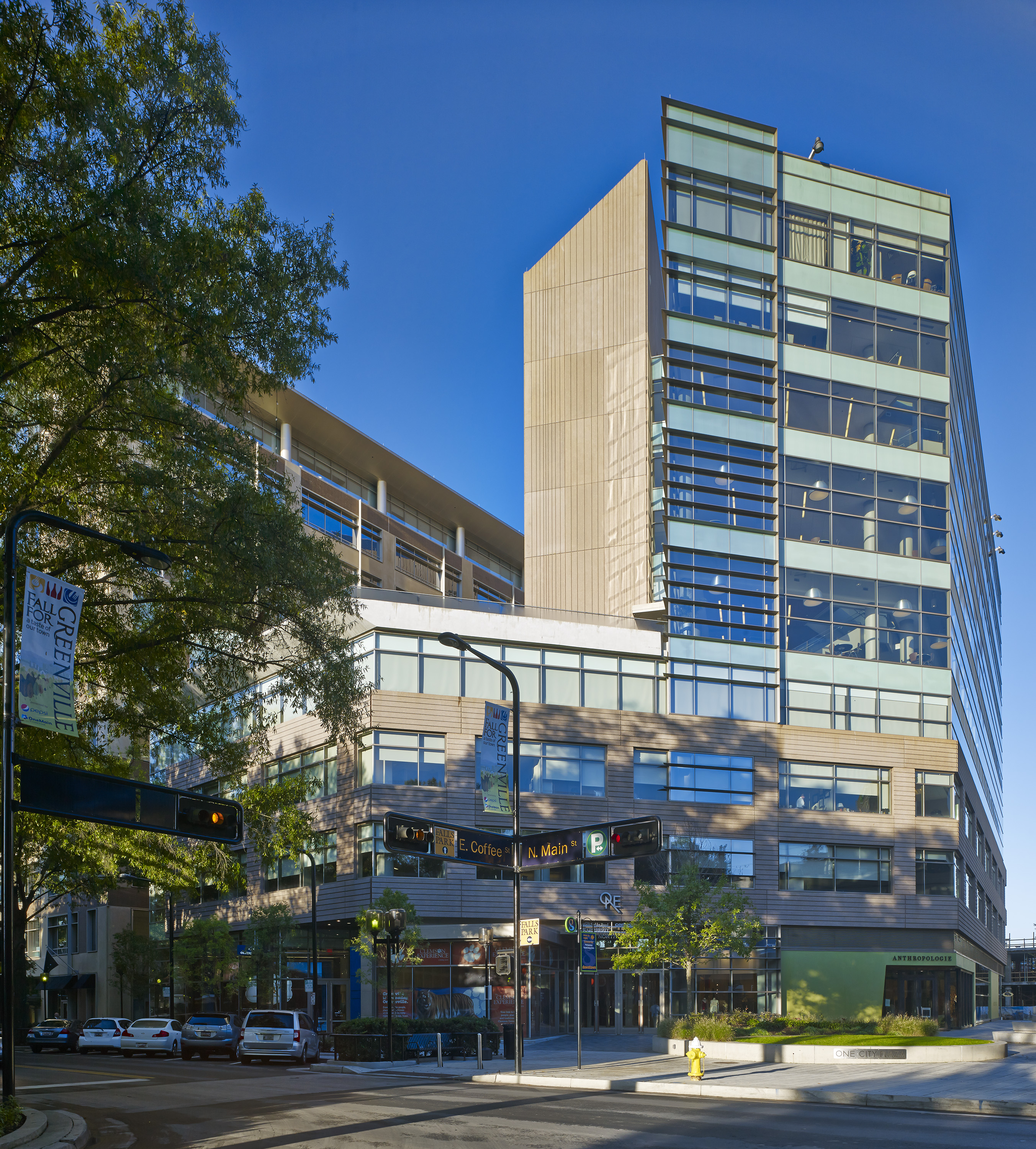
Greenville ONEGREENVILLE — The Clemson University Center for Visual Arts in Greenville will open the Southeast Regional Juried Photographic Exhibit Oct. 2 on the fifth floor of the Greenville ONE building. The show is the first exhibition in the ONE building and launches a new venue for the center.

The Southeast Regional Juried Photographic Exhibit also launches a new partnership between the Center for Visual Arts in Greenville and Clemson’s Master of Business Administration program to bring the center’s art outreach activities into the heart of downtown Greenville.

“It is with great enthusiasm that we embrace this new exhibition space in Greenville ONE and we’re grateful to the folks in the MBA program for their interests and their collaborative spirit in opening their doors to this partnership,” said Greg Shelnutt, chair of the Clemson University art department. “Having a place to grow our presence in Greenville where Clemson students interact with the arts community is a welcomed opportunity.”

The new agreement also allows the Center for Visual Arts in Greenville an opportunity to hold artist talks, workshops and receptions related to the current and future exhibits in the ONE building.

“The MBA program is very excited to partner with the Center for Visual Arts to share Clemson’s facility at Greenville ONE with a wider audience,” said Greg Pickett, senior associate dean in the College of Business and Behavioral Science. “I’m looking forward to experiencing the various exhibits and I think they are going to add a new life to our already vibrant location and provide a wonderful way for Clemson to engage with downtown Greenville.”

For the past two years, the Center for Visual Arts has operated a satellite facility in Greenville in leased space in the Village of West Greenville.

“We are grateful to Richard and Gwen Heusel for leasing us space for two years in the Village of West Greenville,” said Richard Goodstein, dean of the College of Architecture, Arts and Humanities. “It was a great experience to be part of — and contribute to — that vibrant emerging arts community. We are also extremely grateful to the Community Foundation of Greenville for the $100,000 grant that made it possible for us to consider bringing Clemson Art to Greenville.”

Earlier this month, the Center for Visual Arts in Greenville announced a five-part SmART Series at five venues in the Village of West Greenville.

“The goal of the SmART Series is to celebrate art and business expertise to the community at large,” said Shelnutt. Moving the series to five different venues in the Village of West Greenville not only showcases the Village but is representative of a more nimble approach to exhibition and programming for the Center for Visual Arts.”

Art exhibition showcases Clemson alumna at Brooks Center

By Thomas Hudgins, Brooks Center for the Performing Arts

Hilary Siber Headshot

CLEMSON — A Clemson alumna’s artworks will be presented by the Clemson University Center for Visual Arts in the lobby of the Brooks Center for the Performing Arts this fall, from Tuesday, Sept. 8, through Dec. 4.

The seeds of Hilary Siber’s love for art and landscape were planted early. As a child in Ohio, Siber remembers drawing trees and solving jigsaw puzzles. Flash-forward several years, and she found herself exercising those same artistic muscles pursuing a degree in architectural design at the Maryland Institute College of Art.

“I was fortunate enough to work in the design field for several years after graduation, but visual problem-solving soon became a puzzle that pulled me toward creating fine art,” she said. “I am forever challenged by the visual mode of communication. It seems to elude language while simultaneously creating a new one.”

She enrolled in Clemson’s Master of Fine Arts program in the art department. There, she “began to understand that creating paintings is two-fold: I am putting a puzzle together while presenting one to my viewers.”

Those artistic puzzles will be on display with her new exhibition, “Shifting Ground.”

Shifting Ground opens on the heels of Siber’s thesis exhibition, which, she said, “reflected on the grief and emotion of the death of my father.”

In contrast, this oil-on-canvas collection focuses on “universal landscapes that suggest unknown outcomes, unstable grounds and shifting panoramas.” Her landscapes are not literal, but rather subjective interpretations that she believes “model accurate representations of the rational and irrational landscapes of our emotions, experiences and intellect.”

Siber’s work has been exhibited both regionally and internationally: at the Piccolo Spoleto Festival in Charleston; the Nelson Gallery in in Lexington, Virginia; and the Art Museum of Nanjing University in China, along with several other places in South Carolina and North Carolina.

Susan Kaplar, business manager at the Brooks Center and current Bachelor of Fine Arts student has admired Siber’s work for awhile.

When A Body Breaks - Oil on Canvas by Hilary Siber

She and Denise Woodward-Detrich, director of the Lee Gallery at Clemson, approached Siber several months ago with the idea of a solo exhibition in the Brooks Center lobby.

“We’ve seen her style and we thought anything she does will be a good fit for our audience,” Kaplar said. The exhibition includes works created since January, including two pieces originally from her master’s thesis exhibition and now on loan from private collections.

When patrons attend the exhibition, Kaplar hopes it will be a time for deep self-reflection.

“I hope it will encourage people to look within themselves, to engage in inner contemplation.”

Siber’s wish is that people see an opportunity to consider both the here-and-now and the everlasting.

“I hope that viewing these paintings conjures up a consideration for the temporal,” she said. “Perhaps by contemplating our finitude and flux, we are more apt to consider what is infinite and never-changing.”

Shifting Ground is open from 1 to 5 p.m. on weekdays and before all Brooks Center performances. An artist talk will be held before the 7:30 p.m. performance of the National Dance Company of Siberia at 6 p.m. Oct. 29, followed by a reception at 6:30 p.m.

Clemson lecturer to host free community poetry workshop in Greenville


Our Place in the South - Kathleen NalleyGREENVILLE —Kathleen Nalley, poet and lecturer of literature and writing at Clemson University, will host the second free poetry workshop of the summer on August 10 in Greenville. The workshop, entitled “Our Place in the South,” will be 6–8 p.m. at the Center for Visual Arts–Greenville (CVA-G) in the Village of West Greenville, 1278 Pendleton St, Greenville, S.C. The community is invited to explore their creativity and express thoughts through poetry.

The workshop will pair with the current exhibit at the CVA–G, “West Greenville in Print.” This exhibit showcases print work of drawings created by West Greenville residents. Each print uniquely shows what the Village of West Greenville means to each respective artist. “Our Place in the South” offers an opportunity to do the same through the written word.

This particular workshop focuses on the arts and community engagement in Greenville’s west side neighborhoods.  Nalley will lead participants in contemplating the notion of place through the medium of poetry.  Questions like, “What is place?” “What makes place significant?” and “Does place define identity?” will be explored.  Additionally, workshop attendees will discuss the role of place in work by renowned authors such as Nikky Finney, Ray McManus, Natasha Trethewey, and Ron Rash, among others.  Other workshop elements will include an interactive and collaborative poetry-writing activity.  Participants will begin to write their own poems that focus on how Greenville has contributed to their own notion of place, and how their views shape perceptions of Southern identity and culture.

Images and poems can be viewed until Aug. 28 in the Center for Visual Arts-Greenville satellite facility in the Village of West Greenville, 1278 Pendleton St. The center is open 10:30 a.m.-5:30 p.m. Tuesdays-Saturdays.

The workshops and exhibit are free and open to the public because of donations from supporters and gifts given by Richard and Gwen Heusel, the Community Foundation of Greenville and The Graham Foundation.

For more information regarding the exhibits at the Clemson University Center for Visual Arts-Greenville (CVA-G), contact Kara Blanken Soper at kblank2@clemson.edu.

END

Kathleen Nalley
Kathleen Nalley is the author of Nesting Doll (winner of the S.C. Poetry Initiative Prize), andAmerican Sycamore (Finishing Line Press). Her poetry has recently appeared in Night Block,The Bitter Southerner, Melancholy Hyperbole, and Night Owl, as well as in the Kakalak 2014 Anthology. She holds an MFA from Converse College, is a frequent contributor to Town andedible Upcountry magazines, and teaches literature and writing at Clemson University.

The Center for Visual Arts
The Center for Visual Arts (CVA) at Clemson University is where students, visitors and scholars explore contemporary perspectives in art and culture through research, outreach programming and studio practice. With a mission to engage and render visible the creative process, the CVA is a dynamic intellectual and physical environment where art is created, exhibited and interpreted. It educates through academic research and practice with art at its core, drawing upon varied disciplines to examine critically cultural issues and artistic concerns. The Center for Visual Arts-Greenville (CVA-G) is a satellite of the Center for Visual Arts at Clemson University, which serves as the umbrella for all visual art activities at the university. Though there is not a physical building for this center, the majority of the activities for the Center of Visual Arts are generated out of Lee Hall on the Clemson University campus. For more information, visit clemson.edu/cva.

Collaborative poetry workshop in Greenville hosted by renowned local poet

Glenis RedmondGREENVILLE — The art exhibition “West Greenville in Print” integrates a literary component by collaborating with accomplished local poets. The first poetry workshop, “Praising West Greenville” at 9 a.m. Wednesday with Glenis Redmond, invites anyone who lives, works or plays in Greenville’s west side to share their stories along with NEXT High School students participating in this poetry activity.

Through the workshop, attendees will learn how to write praise poetry as a way to reflect on their sense of place and how their identities have been shaped by the communities and neighborhoods in which they live.

Many of the poems will be recorded and turned into spoken word to play in the gallery space during First Fridays and exhibition viewing hours.

The “West Greenville in Print” exhibition showcases the images created in collaborative printmaking workshops given by The Printshop. Prints displayed are the creation of local residents and students participating in summer camp students at Legacy Charter School, the Center for Educational Equity and the Mill Village Farms.

Images and poems can be viewed until Aug. 28 in the Center for Visual Arts-Greenville satellite facility in the Village of West Greenville, 1278 Pendleton St. The center is open 10:30 a.m.-5:30 p.m. Tuesdays-Saturdays.

The workshops and exhibit are free and open to the public because of donations from supporters and gifts given by Richard and Gwen Heusel, the Community Foundation of Greenville and The Graham Foundation.

For more information regarding the exhibits at the Clemson University Center for Visual Arts-Greenville (CVA-G), contact Kara Blanken Soper at kblank2@clemson.edu.

END

Glenis Redmond
Glenis Redmond lives in Charlotte and Greenville. She travels all over the state and the country as a road poet with two posts as the poet-in-residence at The Peace Center for the Performing Arts and at the State Theatre in New Brunswick, New Jersey This year she served as the mentor poet for the National Student Poets Program. She prepared student poets to read at the Library of Congress, the Department of Education and for First Lady Michelle Obama at The White House. Redmond is a Cave Canem Fellow, a North Carolina Literary Fellowship Recipient and a Kennedy Center Teaching Artist.

The Center for Visual Arts
The Center for Visual Arts (CVA) at Clemson University is where students, visitors and scholars explore contemporary perspectives in art and culture through research, outreach programming and studio practice. With a mission to engage and render visible the creative process, the CVA is a dynamic intellectual and physical environment where art is created, exhibited and interpreted. It educates through academic research and practice with art at its core, drawing upon varied disciplines to examine critically cultural issues and artistic concerns. The Center for Visual Arts-Greenville (CVA-G) is a satellite of the Center for Visual Arts at Clemson University, which serves as the umbrella for all visual art activities at the university. Though there is not a physical building for this center, the majority of the activities for the Center of Visual Arts are generated out of Lee Hall on the Clemson University campus. For more information, visit clemson.edu/cva.

Clemson University’s STEAM exhibit heats things up at Artisphere

by Jeannie Davis, College of Architecture, Arts and Humanities

Students make sculptures out of straws and paperclips in Clemson University's STEAM tent at Artisphere.

Wait. What? That’s right, Skittles. Clemson’s innovative STEAM exhibits were educational and inspiring, but most of all, fun. And many folks thought so. Festival organizers estimate more than 75,000 people visited the tent during the three-day event. Kids of all ages were making art in the name of science, or science in the name of the art, depending on your point of view. STEAM is a national trend to fuse the arts with  STEM, which stands for science, technology, engineering and math.

At the festival’s midpoint, two Clemson deans announced the formation of a new Clemson STEAM Network. Charged with coordinating and facilitating STEAM initiatives at the University, the  new network is already thriving, with a diverse group of faculty, staff members and students and more on the way.

“When we circulated the initial call to see if anyone at Clemson was interested in serving on a collaborative STEAM network, the response was immediate and overwhelming,” said Richard Goodstein, dean of the College of Architecture, Arts and Humanities. “And with Artisphere as our launch pad, interest has blossomed in the community as well.”

Artisphere is nationally ranked as one of the top arts festivals in the United States and has proven to be a great place for Clemson to connect with the community. Throughout the three-day event, parents and educators reached out to the University repeatedly with ideas and suggestions and questions about STEAM initiatives.

“How can we get involved?” was the refrain for three packed days.

“It’s gratifying when we hit the mark so well and when we connect with each other in such a meaningful way,” said Anand Gramopadhye, dean of the College of Engineering and Science. “I have no doubt that we are on the horizon of seeing some truly unique and inventive collaborations at Clemson University.”

How you can get involved:

Contact Alexa Woodward woodwa6@clemson.edu or Shannon Robert shanrob@clemson.edu for partnership opportunities or to be added to the STEAM Network mailing list.

Read more about the recent STEAM exhibits here:

http://www.clemson.edu/steam/

View photos from Artisphere 2015:

https://www.flickr.com/photos/clemsonuniversity/sets/72157649779368143/

Robots to join artists at Artisphere in Greenville

Media Release

GREENVILLE — The arts festival that begins its 11th year this weekend has always filled downtown Greenville with the work of painters and sculptors, but something not human will join the crowd on Main Street this year: robots.

Clemson University artists will demonstrate ceramic techniques May 8-10 at Artisphere in downtown Greenville.

Clemson University’s exhibit at Artisphere will include two types of robots that draw, several activities and an announcement about a new partnership that could change how students learn at the university and beyond.

Visitors also will be able to see what they can build with common items, such as paper clips and cardboard tubes. Participants then will add their inventions to one continuously changing sculpture.

Clemson’s exhibit will be at Main and Broad streets and will be open regular festival hours May 8-10. All activities are free and open to the public.

The exhibit is part of an effort at Clemson and across the nation to ensure that the arts remain an important part of education as a growing number of students gravitate to science, technology, engineering and math (STEM).

In the exhibit’s main event, two university deans will announce the launch of the Clemson University STEAM network.

As part of the network, 32 faculty and staff members are coming together to find new ways of adding an “A” for the arts into the STEM mix.

It could mean new classes and study-abroad opportunities for Clemson students and programs that extend into the K-12 system. Some of those programs could involve the activities that Clemson will have at Artisphere.

Anand Gramopadhye, dean of the College of Engineering and Science, said that the arts can help inspire creativity and recruit a more diverse mix of students to engineering and the sciences.

Visitors to Clemson University's STEAM exhibit will be invited to learn dance steps and then go to a computer to program an animated character to do them.

“The intersection of art and STEM has a long history,” he said. “The Duomo cathedral in Florence, Italy, was so big and so important it helped start a whole new era of art and construction engineering. Doors created by Lorenzo Ghiberti represent great work of art that revolutionized metalwork.

“Likewise, Taj Mahal is considered both an artistic splendor and a civil engineering jewel.”

Rick Goodstein, dean of the College of Architecture, Arts and Humanities, said that the arts help students develop empathy and creative thought.

“The arts not only help individuals lead richer, more well-rounded lives but also give them a competitive advantage,” he said. “Good leaders understand empathy, and creativity is crucial to innovation.

“The STEAM Network is an example of the creative collaboration between different areas of the university that is crucial to the success of our students, the university and the nation.”

The Tiger will be back in downtown Greenville for Artisphere 2015.

Also at Clemson’s exhibit, the public can:

  • Code “Scribbler Robots” to draw in an elevated sandbox
  • Perform dance steps in real-life and then program an animated character to do the same
  • Use audio files and a cell phone to draw with a robot
  • See how light wavelengths affect pigment on fabric, M&M’s and other items
  • Create a design with a web-based “morphing tool,” then print it to take home
  • Admire the inspiring and powerful pictures that show science as art
  • Learn about the Indigo Pine home students are creating from interlocking plywood
  • Hear a sculptor describe how math and science are used to create 3D art
  • Watch artists demonstrate printmaking and ceramic techniques used to create functional and sculptural art

“We’re glad to have Clemson’s STEAM exhibit back for another year of festival programming,” said Kerry Murphy, Artisphere’s executive director.

“Last year, it enhanced the patron experience by offering something that’s both innovative and unique. I’m looking forward to seeing the new slate of activities.”

END

Do you know a Child That Would Like to be an Art Detective?

Art Detective

Art Detective is a collaboration between the Brooks Center for the Performing Arts and the Center for Visual Arts. Young art detectives can explore the abstract exhibit, Echoes: Decoding the Shape of Future Recollections, currently housed in the Brooks Center Lobby through art projects and games.

Students and families may check out book bags from the Box Office after Tri-ART performances and Monday-Friday, 1-5 pm. These book bags will be stuffed with Art Detective activities and instructions. More information can be found here.


Media Release

‘Echoes,’ activities for children showcase abstract art in Brooks Center Lobby


CLEMSON — Last February, Brooks Center Business Manager Susan Kaplar partnered with Denise Woodward-Detrich of the Center for Visual Arts to assemble an exhibit titled “Tempos” that was displayed in the Brooks Center lobby. The endeavor was the result of her work with the University’s Staff Development Program and allowed her to explore her love of visual art.

Fast-forward seven months. Kaplar, who first developed an affinity for visual art in college, is now enrolled at Clemson as an art major while remaining the Brooks Center’s business manager. She credits Tempos with giving her a “nudge” to pursue her degree, and she has joined with Woodward-Detrich once again on a new exhibit: “Echoes: Decoding the Shape of Future Recollections.”

The new exhibition features abstract art from different artists and eras.

“Initially it was Denise and I deciding on what type of exhibit to have for fall semester,” Kaplar said. “Jackie Kuntz was Denise’s graduate student assistant, and so Denise assigned her the task of researching the available artwork from the Clemson Advancement Foundation, which is held in storage within Lee Hall. I also mentioned that Brooks Center Coordinator Sarah Edison expressed an interest in being involved with the project.” The exhibit’s mission is to prepare young children for encounters with abstract art later in their lives, and to help them think imaginatively and critically about what they see.

The title “Echoes” stemmed from the fact that the artwork spans four decades but remains relevant: Echoes of past generations of artists still speak to new generations of viewers.

“We want children to be able to make sense of and enjoy abstract art when they visit art galleries as adults,” Kaplar says, “which is why the subtitle is Decoding the Shape of Future Recollections. We want them to be able to engage with this genre instead of automatically saying, ‘I don’t get this.’”

The exhibit, now on display in the lobby, is the result of months of planning. Work began in July, when Kaplar and Woodward-Detrich started sifting through abstract work in the Foundation’s collection. They came across work that was decades old and had been in storage for years. South Carolina artists such as John O’Neil, Edward Yaghjian, Carl Blair, and David Freeman are represented here, as well as two artists, Bill Seitz and Robert Hunter, who were art professors at Clemson University.

The most difficult part was finding a common theme from the available artwork, Kaplar said. After she and Woodward-Detrich earmarked around 40 pieces, they brought in Kuntz to help whittle down that figure to between 15 and 20, and shared their ideas with each other through Powerpoint. Sarah Edison was invited to the next meeting as the group members discussed themes, pieces that really stuck with them, and possible activities. They met at Lee Hall to visually arrange the art and eliminate some due to condition, size, and other factors. The remaining works were transported to the Brooks Center Lobby, where space constraints reduced the exhibit’s number to 11.

Each piece was selected based on the overall theme of shapes. “While abstract art can take many forms,” Kaplar said, “we wanted to choose pieces that were conducive to teaching kids the basic elements of abstraction.”

The exhibit is organized from most literal to most abstract. Viewers begin with a painting in which they may most readily identify physical objects (Supermarket by Ben Shahn) to a work that requires the most interpretation of the artist’s intent (Sophie’s Parlor by David Freeman).

There have been two children’s activities in conjunction with the exhibit so far. One was an art creation exercise using shapes to build original works of abstract art. The other was a movement exercise, conducted under the direction of theatre assistant professor Kerrie Seymour and her acting class. They led children who attended a Bill and Donna Eskridge Tri-ART Series event in a movement-based exploration of the art pieces using the children’s own interpretations of the work.

“Viewpoints,” the name of the method Seymour used in the activities, “is a physical approach to theatre and staging,” she said. “So much of what I teach in my acting classes is a more inside-out or psychological approach, examining the objectives, needs, thoughts, history and relationships of a character.”

Therefore, the “physical approach” to theater often does not receive as much class time. This activity was a perfect opportunity for her students to explore physicality.

“I find that when you start to play around with ‘Viewpoints’ and other physical entryways into the work, it does open up a new window of creativity and freedom for many actors. Suddenly, the work can go beyond words and that can really allow many actors to play in a new way.  It forces them out of their literal minds and pushes them to explore uncharted territory.”

Not only is this beneficial for college theater students, but for young students as well. Seymour believes “Viewpoints” is a valuable way to respond theatrically to artwork “because so much of the experience of looking at art, for me at least, calls up so many of the viewpoints: spatial relationship, shape, repetition. Sometimes you look at a piece of art and it just seems still, other times a still image can give the sensation of movement, and suddenly you are thinking about the concept of tempo, whether you know it or not.”

Seymour and her students will reconvene on 5 p.m. Friday, Nov. 14, the lobby for more movement work.

“I find that both my students and the children that have responded to the art in the Brooks Lobby have enjoyed the liberty of creating with fearlessness, and have experienced that wonderful moment of giving yourself permission to play and move and respond,” she says. “When work can go beyond words, I think many of us are loosed from that fear of not ‘saying the right answer.’ Suddenly you are just working with an organic response within your body, and how can that sort of response be wrong?  It just can’t.”

Tri-ART students pose with

Also occurring this month is an activity hatched by Brooks Center Coordinator Sarah Edison. Through Monday, Dec. 1, young students may participate in an exciting activity called “Art Detective” during Box Office hours (Monday through Friday; 1 to 5 p.m.), and before and after Tri-ART morning performances in the Brooks Center Lobby.

The idea for the activity came to Edison while deciding on a title for the exhibit. “We were talking about the title and the word ‘decoding’ came up,” she said. “I thought about the theme of educating kids, and said, ‘Well, who decodes things?’ I also remembered pretending to be a spy or detective when I was younger and thought this would be a fun concept!”

Students’ mission, should they choose to accept it, is to check out book bags from the Box Office containing supplies for various activities listed on a “Secret Mission” objectives sheet. Among these objectives are drawing and writing assignments in response to the displayed artwork.

“We often underestimate children as an audience for any type of art,” Edison says. “The kids are so creative. They come up with 50 different responses to the works. We kind of lose that as we get older, so I hope the whole family, not just children, finds different ways of looking at art.”

Kaplar has been overwhelmed by the positive response from patrons, employees, children, parents, and students. “I’m pleased we have another successful exhibit in the Brooks Center Lobby,” she said.

List of pieces/artists on display:

  • “Supermarket” by Ben Shahn
  • “Landshark” by Antoine Predock
  • “Master Cleaners” by Edward Yaghjan
  • “Summer Landscape II” by A. Stanick
  • “Summer” by Walter Hollis Stevens
  • “Signs of the Treegarth of Orthanc” by John O’Neil
  • “The Secret of a Guilty Cloud” by Bill Seitz
  • “Metamorphosis De Crigo” by Manley
  • “Unknown” by Robert Hunter
  • “Barron Briar II” by Carl Blair
  • “Sophie’s Parlor” by David Freeman

The Colors of Indigo

by Neil Caudle


Andrea Feeser has lifted the history of indigo into the air, where the oxygen can reach it. Her new book,Red, White, and Black Make Blue: Indigo in the Fabric of Colonial South Carolina Life, tells a new kind of indigo story, in multiple hues.

Making it real

Kendra Johnson, a costume designer and associate professor in performing arts (photo above by Craig Mahaffey), researched, designed, and sewed this woolen skirt, dyed with indigo, to illustrate a type of garment worn by eighteenth-century slaves and poor whites. Johnson, whose academic research investigates African-American clothing during the antebellum period, says that clothing signified status, even among different groups of slaves.

“On huge plantations like Drayton Hall or Middleton, slaves had their own class system, and it was very strict,” she says. “If you were a weaver, for example, you didn’t get together with someone who worked in the field. And those differences in class were reflected in their clothing. But on the smaller plantations in the upstate, slaves usually did several jobs, so you wouldn’t see as many differences in the clothing.”

This year, Johnson and her students will be researching the clothes worn at historic Fort Hill, now a part of Clemson’s campus. To recreate the clothing of slaves, the team will research the work people did and build garments true to the times, simulating wear and tear.

“It’s called distressing,” Johnson says. “Let’s say I’m doing a skirt for a particular slave. I would need to know what her job was, and what kind of movements she would have done, and then I would dye the skirt and distress it, make it dirty where it would have been dirty, at the hem, for instance. Or it may have been faded and worn at the knees, if she had done a lot of squatting or kneeling.”

Johnson gets plenty of practice imagining life at Fort Hill.

“When I walk by Fort Hill, I wonder what life was like back then,” she says. “I try to imagine it from what I know—especially the labor involved, but also the weather and everything else, even the smells. That’s how you make it seem real.”

A descendent of Eliza Lucas Pinckney attends to her legacy.

The Civil War’s fiery rampage through South Carolina destroyed many of the documents, paintings, and other artifacts that could have borne witness to the colonial past. Lacking those records, families preserved their histories as best they could, in stories they tended as carefully as they tended the last of their heirlooms.

One of those heirlooms is an indigo-patterned wrap designed by Eliza Lucas Pinckney and woven on her plantation. Today, that wrap belongs to Tim Drake (photo above by Patrick Wright), a direct descendent of Eliza Lucas Pinckney through her son, General Charles Cotesworth Pinckney, a statesman and delegate to the Constitutional Convention. Drake inherited the wrap, along with a handheld fan and several other items, from his grandmother, Azalee Mitchell Drake. Tim Drake says that the trunk’s contents had been carefully labeled many years before, probably in the late 1800s or early 1900s, on scraps of yellowed paper pinned to the heirlooms.

“She called them ‘vestiges of aristocracy,’” Drake says.

For the past twenty years, Drake has worked as a volunteer director with the Pendleton Historic Foundation, which manages Charles Cotesworth Pinckney’s summer house, Woodburn, one of the few remaining treasures from a family fortune built largely on indigo. “I like history,” Drake says, “and I think it’s important to preserve a record of the past.”

In his other job, Drake manages state programs for Clemson’s Department of Pesticide Regulation. With the welfare of people and crops on his mind, he depends upon data and documented facts. So he understands the historians’ preference for solid documentation. But for the early history of indigo in South Carolina, Drake relies upon a different kind of source: stories from his extended family.

“What I learned from them is anecdotal,” he says, “so if you ask me to prove it with some kind of record, I can’t.”

The ring of truth

But to Drake, the family stories ring true. For one thing, they don’t always track with conventional wisdom or the biases of their time; nor do they sugarcoat the past. “Some of the slave-holding Pinckneys,” he says firmly, “were not kind to their slaves.”

While much of what Drake absorbed from family stories confirms historians’ accounts of the indigo era and Eliza Lucas Pinckney’s starring role, the stories also fill some gaps. Historians speculate, for instance, that the knowledge of indigo cultivation and dye making came from Africa, with slaves. Drake’s family stories do not equivocate on this point. Eliza Lucas, they say, got the idea for growing indigo by watching slaves grow it and make dye for their own use. She gradually built, on a commercial scale, an enterprise she learned from them.

Because official documents typically cited husbands, not wives, as the responsible parties in matters of property and business, some accounts describe Charles Pinckney, Eliza’s husband, as a prominent planter and credit him with much of the couple’s success with rice and indigo. But Drake’s family told a different story, he says. “Charles was a lawyer and spent most of his time in town. Eliza was the one who knew about agriculture. The plantations were hers, and she was the one who ran them. And she was the person most responsible for building the Pinckney family fortune.”

Even though there is no tangible evidence that planters grew indigo as far west as Pendleton or Clemson, Drake heard about experiments with indigo at Woodburn Plantation from two of his distant relatives and local historians, David Watson and “Punch” Hunter of Pendleton. The lack of a written record, Drake points out, does not mean that indigo never grew in western South Carolina. If experiments with indigo failed, or if people were growing it only for local use, there might not have been any record at all. “I think they were growing it here,” he says. “Indigo was a part of their way of life.”

As stories of that way of life came down through the generations, there was no figure more inspirational than Eliza Lucas, the daring young entrepreneur who would build a mighty industry in commerce with Britain and then reject British rule to give her allegiance to a revolutionary army marching off to war in uniforms of indigo blue.

“She was a woman of the future,” Drake says. “She had a lot of agricultural knowledge, which was highly unusual for that time. And she was one of the people who became nation builders. I admire her.”

Tim Drake is state programs manager in theDepartment of Pesticide Regulation, part of Public Service Activities at Clemson. He is also secretary of the board of directors of the Pendleton Historic Foundation, which manages two historic houses, Ashtabula and Woodburn.

Karen Hall may have overdone the blue.

“My mother tried to put me in blue all the time, so of course I hated blue as a child, but I love it now. I can’t get enough of it. I take a look at my wardrobe and say, ‘Okay, what else besides blue do you have?’”

Some of that wardrobe she colored herself, with indigo dye. She has grown the plant in her backyard garden and extracted the dye, using a method that is hundreds, if not thousands, of years old. But Hall, who has a Ph.D. in plant physiology, has been learning both the art and the science of indigo dye.

Indigo plants—there are more than twenty species used for making dye, Hall says—do not have a stream of blue pigment running like blood through their veins. So squeezing an indigo plant will not yield a single drop of blue. But in their leaves, indigo plants conceal a molecule called indican that bonds, as the plant breaks down through fermentation, with another molecule released from the same plant. The bond yields a substance called leuco indigo, or white indigo. Leuco is not yet blue, but it’s a step in the right direction.

Hall can see the stuff, which is a pale, patchy, eerie green in the fermentation water, after she’s rotted the plants for a day or two. She draws the mixture off into another pot and adjusts the pH upward to enable what chemists call reduction, a change in the molecule’s number of electrons. Without this reduction and its flip side, oxidation, leuco indigo will not yield a dye. So Hall adds lime and beats the fermenting liquid sludge with a paddle to feed it air. As she paddles, indigo settles to the bottom of the pot as a muddy sediment. She leaves the settled indigo, draws off the liquid, and beats at the mixture again.

“You can tell by the color of the water that you’ve got leuco in it,” she says. “So as long as you’re getting that color, you keep repeating the steps. The last time I made indigo dye, I did that six times, at least, beating for fifteen minutes at a time, until I got tired and gave up.”

Colonial planters and their slaves weren’t making a few cakes of dye from a small patch of indigo plants; they were harvesting whole fields of the stuff and processing batch after batch, day after day, in giant vats, in the hottest months of summer. “So you can imagine with a vat that’s as big as this room is, it was probably an all-day process to add oxygen and get that indigo to fall out of solution,” Hall says.

Predictably unpredictable blues

After Hall dries the indigo sediment into a hard, chalky cake, she grinds it to powder and adds water and a chemical called thiox—not urine, which was the solvent of choice in colonial times—to make the dye. In her dye vats at home, she colors various fabrics and garments, experimenting with patterns and tints. Some plants yield blues with a blush of red; others trend toward purple. The darkest shades require dunking and airing the cloth multiple times. And with indigo, as with other natural dyes, the results are unpredictable. The plant’s genetic variations, climate and soil, and many other variables influence the ultimate color.

“I can use the same formula every time I make a vat, but its properties vary,” Hall says, laughing. “But the chemists who have synthesized it to dye our blue jeans today, they’ve got it worked out.”

Producing and using natural indigo is messy, smelly, and tiring, Hall says; it is also addictive. She blames her mother for getting her hooked. “My mom is a dyer and weaver, and for many years she did some natural dyes and also a lot of chemical dyes. I was teaching a class called Ethnobotany for Teachers, through a program where I used to work, so I asked my mom to please come to teach my students about indigo. So that’s how I learned, from watching her teach the teachers.”

Hall the dyer’s daughter had learned the how-to, but Hall the scientist wanted to know a lot more. “I was trying to figure out chemically what was really going on in front of our eyes,” she says.

Even though indigo is one of the world’s oldest and most popular dyes, there was not much information available about its chemistry, Hall says. She had to dig through lab reports, texts, and journal articles to figure out the chemical sequence behind the dye. In the process, she gained an appreciation for just how technically challenging producing indigo would have been in the colonial period. The necessary expertise was considerable, Hall says, and may well have come from Africa, along with the slaves.

“To me, this is an excellent demonstration that an enslaved person does not mean a dumb person,” Hall says. “From an intellectual perspective, this is a complicated dye. It takes expert knowledge in order to understand how to grow it, how to make it, and how to use it. And that’s a story that should be celebrated, despite the fact that the history is tied to something so awful.”

At the time of this writing, Karen Hall was the director of the South Carolina Master Naturalist Program and state coordinator of the South Carolina Master Gardener Program, and a faculty member in the Department of Forestry and Natural Resources,College of Agriculture, Forestry, and Life Sciences. Currently, she is an applied ecologist with theBotanical Research Institute of Texas. For more about Hall’s experiments with indigo and dyeing, see her website, www.chaoticgardening.com.

About the dye

(from Karen Hall’s course material for teachers)

Indigo must be chemically reduced before it can be used in dyeing. As ground indigo is added to an alkaline vat with a reducing compound (thiourea dioxide, hydrosulfite, diothionite, or others), it quickly transforms into leuco indigo—or white indigo— a soluble salt. In a dye vat, the liquid is amber green or yellowish green. After the cloth is immersed in the dye bath and then raised into the air, the indigo white salt compound exchanges its bond with the salt for a bond with the fiber as it oxidizes into the familiar blue indigo. In this form, the dye is relatively permanent but lightly bound with the fiber in the cloth. Indigo doesn’t penetrate cellulose fibers very deeply. It mostly attaches to the frayed edges of microfibrils, cellulose strands wound into a cable-like structure. Blue jeans fade not only because they have lost some indigo but because friction has exposed the inner, whiter parts of the cellulose microfibril. Animal, plant, and some synthetic fibers can be dyed with indigo, but the cloth must first go through a chemical scouring to fray the fiber slightly so that indigo can penetrate; the chemical scouring also removes any of the chemical treatments used on modern fabrics.

The caustic chemicals used to reduce indigo dye are hazardous, and in factories during the eighteenth and nineteenth centuries, accidents injured or killed many workers.

Download Karen Hall’s Indigo Recipe.PDF.

How red and black and white made blue.

The story we’ve heard is quite pretty: Eliza Lucas, an adventuresome young woman of sixteen, arrives in the low country from Antigua, takes charge of her father’s plantations as he careers abroad, and nurtures the seeds of a mighty industry that transforms the landscape of South Carolina and bathes all of Britain and its colonies in blue.

The plant itself is pretty: a shrub with frond-like branches, seedpods curved like tiny smiles, and delicate, coral-pink flowers.

But indigo did not surrender blue without a fight. Slaves had to plant it, weed it, and coax it through cold spells in spring. When the summer swelter thrummed with insects, slaves would pick pests from the indigo leaves. When the shrub grew tall and bushy and heavy with with sap, the slaves would hack it down and lug it on their backs, heave it into giant vats, pound it to pulp, cover it with water, and weigh it down with stones to make it rot.

Putrefaction was not pretty. Neighbors complained of the stench. The odor of rot was so great it could nauseate slaves as they beat at the mixture with large, wooden paddles, feeding air to the sludge.

And the dye itself, dried and packed and sold in cakes or sock-like canvass bags, was useless until it was ground to a powder and doused with urine. Stirred into water, it slouched into a splotchy, pea-green soup with a yellow-green fluorescent sheen.

But when the dye master dipped into this soup a swath of fabric, and raised it to the air, the sopping cloth began to blush a living blue. Oxygen was the final ingredient, the kiss that brought color to life.

Andrea Feeser has lifted the history of indigo into the air, where the oxygen can reach it. Her new book, Red, White, and Black Make Blue: Indigo in the Fabric of Colonial South Carolina Life, tells a new kind of indigo story, in multiple hues.

The art and the facts

This is not Feeser’s first case of the blues. At the University of Hawaii, she coauthored a book about Waikiki, where, in local memory and art, blue bubbles up from the grays of concrete jungles and flows like water from the past. When she left Hawaii and came to Clemson, in 2002, having never before lived in the South, Feeser found a different landscape, a different culture, and a new sort of blue. Here, where agriculture had long shaped the land and its history, she came across a charming story. It was about a young woman, a mere teenager, who had started the second largest staple for South Carolina in colonial times.

“That’s the popular story,” Feeser says, “that Eliza Lucas Pinckney was responsible for the indigo boom. She is, in fact, the first woman inducted into the South Carolina Business Hall of Fame, and that was in nineteen eighty-nine—late recognition, but recognition nonetheless. So I began to investigate that history.”

Feeser is not, strictly speaking, a historian, but she excavates the historical record to understand the meaning of place. Her experience as an art historian and artist helps her interpret the art as well as the facts of artifacts, and what they meant to the people who made them and used them. In the introduction of her book, she describes confronting a particular artifact that would haunt her as she wrote:

While visiting the Museum of London, I was captivated by a garment that prominently featured blue: a gorgeous eighteenth-century silk brocade dress alive with a rhythmic dance of flowering vines. My eyes were drawn in particular to delicate blue blooms scattered amidst the profusion of leaves and petals, and for a moment, I felt transported to a field of azure blossoms.

Beside her, a schoolgirl broke the spell, muttering, with her nose to the glass of the display case, “A ghost must be wearing that dress.”

Feeser understood what she meant. There was no mannequin, no model. The dress held an absence, a ghost.

An heirloom alive with light

The enchanting, shawl-like wrap caught the team in its spell, stitched them together into the fabric of the indigo story. As soon as Tim Drake unfurled the wrap and draped it on Andrea Feeser’s shoulders, she knew that the piece was a treasure. Eliza Lucas Pinckney, the woman most responsible for South Carolina’s indigo industry, had wrapped herself in a silken shawl whose needlework rendered the indigo plant—not in blue, but in sublimely subtle white on white. It was the stylized form of the living plant itself, and not its dye, that she chose to wear.

Feeser knew that the wrap, for its value as both history and art, should be preserved as an image, documented for her book and for anyone who could not see it firsthand. She also knew just the photographer for that kind of assignment: her colleague in the Department of Art, Anderson Wrangle (to see more of his work, take a look at Pictures from an Expedition).

Very soon, Wrangle was learning not only the garment but the history and science behind it. Karen Hall explained the botany, the chemistry, and the methods for making an indigo dye. He met Kendra Johnson and photographed the skirt she had made.

“It was terrific,” Wrangle says. “They drew me into their project, made me a part of the team.”

Photographing the wrap proved difficult, at first. It was six feet long and very sheer. “I had never photographed anything like it before,” he says. “It was so old and fine, it had a presence. I wanted to create something more than a document. I wanted people to see it and feel it the way I did.”

He tried shooting the wrap from several angles, but none of them satisfied him. He constructed a scaffold in his studio, covered it with protective fabric, and draped the wrap to hang vertically. “I had to experiment with the lighting, moving it around,” he says. “Finally, I got the light to shine through the fabric like light through glass. All of a sudden, it came alive.”

I imagined a disembodied presence that wanted to be felt, reaching out to the land of the living from the realm of the dead and trying desperately to say something to those of us on this side of the grave.

Later, in the midst of her indigo project, Feeser and two colleagues, Karen Hall and Kendra Johnson, were presenting a lecture one evening when a man came forward from the audience and draped a wrap across Feeser’s shoulders. The man was Tim Drake, manager of the historic Woodburn Plantation and a descendent of Eliza Lucas Pinckney. Eliza, Fesser says, had designed the garment herself, sometime around 1752. For that moment, Feeser occupied the absence, feeling the drape of old fabric alive with a tracery of indigo plants.

“It is a beautiful, openwork silk wrap,” Feeser says, “and she decorated it with indigo plants. It was a moment of disbelief that we had access to this spectacular garment. It was extraordinary.”

Beyond the spotlight

We have no idea what Eliza Lucas looked like. We have no paintings or drawings from life, no detailed descriptions. But when the drama of indigo opens, the spotlight shines on her. And deservedly so, Feeser says. Eliza Lucas was a remarkable woman. When her father left her in charge of his holdings and returned to Antigua, she learned not only to thrive in her strange new land but to manage it and build an industry within it, all the while probing the low country’s natural history as a botanist would, recording its marvels, conducting experiments, and corresponding with scientists about what she observed. Widowed at age thirty-six from Charles Pinckney, a prominent public official, Eliza Lucas Pinckney continued to manage vast holdings, and, despite her long and lucrative ties with England, became an ardent patriot of the revolution and the new American republic. When she died, in 1793, President George Washington was one of her pallbearers.

This was indeed a lovely story, but Feeser chose to look beyond the spotlight, to learn about Eliza Lucas’s supporting cast. Who was the figure behind her, mostly obscured by the dark? His name was Quash, a mullato slave. The record tells us, Feeser says, only a little about him. He may have been a driver, a kind of foreman who managed the slaves and took day-to-day charge of the indigo enterprise, from planting seed to packing finished cakes of dye. He was, by all accounts, an accomplished carpenter. He built the sturdy wooden vats that held the indigo. After Eliza married Charles Pinckney, Quash continued to serve them, on the plantation but also in town. He helped build for them in Charles Towne a grand house worthy of their standing among the elite of their time.

Every successful indigo plantation probably had a Quash or two, and planters took pains to keep such experts on the job, coercing or rewarding them, trying to prevent their defections to rival plantations in Florida, where the Spanish were promising freedom to workers who could help them gain ground against their enemy, Britain. Quash was one of those who stayed. Perhaps for his loyalty as well as his contributions, Quash won his freedom and was christened William Johnson. Eventually, he would buy two of his children out of slavery, oversee his own plantation, and manage his own slaves.

Eliza and Charles Pinckney were leaders among the low-country elite, but they were not the only white planters promoting Carolina indigo. Henry Laurens, a prominent merchant, slave trader, and planter of the time, promoted and defended the crop. Alexander Garden advanced the botanical knowledge about it. And James Crockatt lobbied the British government for laws that would subsidize indigo imports from the colony. We know about these men, and their way of life, because they composed the record. We have their letters and notebooks, their accounts of transactions, their pamphlets and public arguments. On occasion, such men saw fit to mention, in writing, a slave as essential as Quash. But legions of other slaves, bought and sold and mastered, are mostly absent from the record.

Reading the absence

So Feeser ventured farther into the darkness, piecing together obscure details unearthed from the archives, detecting the presence of slaves who supplied not only the toil but the knowledge of growing and using a difficult crop. To understand their contributions, Feeser examined every scrap of evidence she could find—a dye vat that survives from the period, for instance, and drawings depicting indigo production. The drawings probably had their own sort of bias, she says, having been rendered by whites, but they suggest the heavy toil and technical demands of indigo production. You couldn’t just toss the plants into a vat and wait for them to rot. The reeking soup had to be moved from vat to vat, aerated, and dosed with just the right amount of caustic lye or lime. Any misstep in the process could spoil the dye.

“It’s rather extraordinary to imagine the physical labor and also the expertise that went into this process,” Feeser says.

With her colleagues—Karen Hall, an ethnobotanist, and Kendra Johnson, a costume designer with an expertise in slave clothing—Feeser launched her own experiment with indigo. The plan was to sow and raise a crop of indigo at Woodburn Plantation, just a few miles from the Clemson campus, and then to turn the crop into dye, as Lucas Pinckney and her slaves had done. There is no evidence that planters ever grew indigo commercially as far west as Clemson, Feeser says, but the team decided to give it a try. Tim Drake gave his okay, and the group went to work. Matt Rink, a sculptor and Clemson alumnus, built a small-scale set of wooden vats, which are now on display at the plantation. Johnson researched the dress of slaves during the period and created a skirt like those the women would have worn. And Karen Hall mastered the process of making and using indigo dye.

But the crop itself failed to thrive, and Hall cites several reasons. “Number one, faculty members don’t have a lot of time to be there to help it along,” she says. “Number two, that land is pretty used up. It was cottoned to death, and it was red clay we were planting in. So it probably needed a lot more help than I gave it.”

Feeser and her colleagues lacked plants to process into dye, but they did glean some insight into Eliza Lucas’s early struggles with the crop. In a letter to her father, on June 4, 1741, Lucas described how a frost killed most of her seedlings, the first time she planted the indigo seeds he had sent her from Antigua:

I wrote you in [a] former letter we had a fine Crop of Indigo Seed upon the ground, and since informed you the frost took it before it was dry. I picked out the best of it and had it planted but there is not more than a hundred bushes of is come up which proves the more unluckey as you have sent a man to make it. I make no doubt Indigo will prove a very valuable Commodity in time if we could have the seed from the west Indias [in] time enough to plant the latter end of March, that the seed might be dry enough to gather before our frost. I am sorry we lost this season.

A few plants survived to make seed, and over the next several years Eliza Lucas and her slaves established productive crops, shared seeds with her neighbors, and proved that indigo could thrive in the low country

The other race of slaves

Some, perhaps most, of the slaves on the Lucas plantations were African. But Feeser found evidence that others were not. Especially in the early years of the indigo boom, Native Americans also worked on plantations as slaves, she says. Feeser found records referring to mustees—a term for people who were part black and part Indian—in the Lucas Pinckney household.

“In fact,” Feeser says, “one of their slaves was named Indian Peter, and for all I know he may have been all Native American.”

On the topic of enslaved Native Americans, and their contribution to the indigo industry, the stories have been rather quiet, Feeser says. “Indian slavery, frankly, is not discussed as much as it should be in South Carolina’s history. I suppose that may be because the numbers pale, alongside those of African slaves. And part of what happened is that those Indian slaves who were enslaved earlier in the colony’s history often intermarried with African slaves.”

As she tracked the scant evidence through a thicket of colonial records, Feeser realized not only that native slaves probably helped produce the indigo but that free Native Americans were trading for indigo garments and cloth. Dyed fabrics and garments came back to the colony in shipments of provisions and trade goods. For natives and Africans alike, clothing dyed with indigo had special significance.

“There were things they could communicate about their own power and agency through what they wore,” Feeser says, “and that blue was a part of that.”

Native Americans favored cloth and ready-made garments from Britain, trading deerskins that found their way into gloves and breeches back in England. “When you look at trade records from the period, you can see that quite a lot of what the Native Americans got was dyed blue,” Feeser says.

Blue Stroud, a type of cloth made in the Stroud area of Gloucestershire, was one of the natives’ favored materials for match coats, a kind of mantle or a wrap worn around the shoulders, and in a belted garment similar to a loincloth.

“I don’t mean to suggest that they were taking on purely European modes of dress,” Feeser says. “They were enhancing and making their own textiles and garments, which is true of what slaves were doing too, as much as possible.”

The power of pigment

Today, we take pigment for granted. Modern chemistry and commerce supply, at low cost, any color we desire. But in the colonial period, pigment came dear. It was difficult to find and extract, and difficult to use. The most cherished red, cochineal, required that people collect by hand teeny-tiny bugs from cactus plants. Like gemstones or precious metals, well-colored fabrics asserted one’s standing in the social order. Sports fans, decked out in the colors of their teams, have something in common with eighteenth-century consumers. The passion for color was serious business, Feeser says, and blue was the most popular color of all.

As indigo planters shipped more cakes and canvas bags of dye from the colony, and British manufacturers stepped up production of textiles, the once-scarce blue, an emblem of nobility in the imported silks and fine woolens of the upper crust, began to spill downward through the classes, Feeser says, into the common cloth of working-class families and then into the coarser goods of servants, too. Indignant “blue bloods” from the gentry complained that ordinary folk were dressing above their station, threatening the social order.

In the colony, the social status signified by clothing was a matter of law. The 1740 Slave Code specified how much a master could spend to clothe a slave and what types of fabric a slave could wear.

But by midcentury, blue was out of the bag, and, on both sides of the Atlantic, indigo wove its way into the culture. The records of John Dart, a merchant and the commissary general for South Carolina, show that his office distributed indigo seed to settlers headed for the frontier and supplied British-made fabric and clothing to people in every walk of life, including poor and wealthy whites, sovereign Native Americans, and slaves. Many of those goods, Feeser says, had been dyed in England with indigo produced in South Carolina. The colony’s indigo traveled a circuit, making fortunes at both ends of the loop.

A smear campaign

Not every British merchant was happy with the boom. Carolina indigo faced a smear campaign by opponents with a vested interest in dyes imported from French and Spanish colonies in the Caribbean and Central America. These more southerly climes, the critics argued, offered the optimum growing conditions and hard-won expertise that South Carolina lacked.

Carolina indigo, they claimed, would always be inferior.

The public relations war over indigo reminds Feeser of a similar clash over wine two centuries later: During the 1960s and ’70s, the European wine establishment and its U.S. importers used an almost identical campaign to discredit their new competition from upstart American vintners.

Feeser acknowledges that not all Carolina indigo came from scrupulous planters with high standards, but some of it did, and she suspects that the good stuff was probably equivalent to the best from Britain’s rivals. British manufacturers may even have padded their profits by substituting Carolina dye for the more expensive French or Spanish versions, assuming that no one would know the difference.

“I’m convinced that South Carolina indigo was in every type of textile that was made at the time,” Feeser says. “It’s actually really hard to figure out whether something was dyed with Spanish, French, or what they called Carolina indigo.”

Whatever the merits of the smear campaign, colonial Britain generally bought the notion that Carolina indigo was second-rate, a poor man’s substitute for the real thing. “So the bulk of it wound up in cloth that made its way to the lower echelons of society,” Feeser says.

Beyond the reach of rice

As indigo transformed the clothing of British common folk, Native Americans, and African slaves, it also began to transform the landscape of colonial South Carolina. From the beginning of the colony, rice had been king, the staple that built fortunes in Charles Towne and other British settlements. But rice needed low, soggy ground and rarely thrived outside the coastal zone. The first experiments with indigo, by planters including Eliza Lucas, took root in low-country rice plantations, on patches of high ground unsuitable for rice. Indigo, the planters hoped, would help them exploit off-season labor as well as unused land. From the planter’s point of view, this makes good practical sense: Keep the workforce busy when it’s not working rice.

But Karen Hall, Feeser’s collaborator who studies people’s relationship with plants, has a different take. “The slaves were already having to grow their own food,” she says, “so adding indigo was probably adding insult to injury for them.”

For planters and merchants, though, indigo was a money-maker. The crop soon outstripped its low-country knolls and rises, and planters moved inland, clearing and sowing new fields. From the late 1740s until the Revolutionary War, the colony surged westward on an indigo tide.

“That meant the land itself was transformed in order to accommodate plantations and farmsteads,” Feeser says. “But it also meant that the Native Americans increasingly were pushed out of areas that had been their homeland, and more slave labor was brought into the colonies. So indigo was part, and I would say a big part, of the ultimate transformation of South Carolina from a place known for what was possible in the low country to a place known for what was possible in the midlands and upstate areas too.”

The great dispossession

Feeser documents a long series of trades, concessions, alliances, skirmishes, and wars in which the colonists outmaneuvered or overpowered the natives, forcing them out of their hunting grounds and farms. At first, commerce and cunning were the primary instruments of land acquisition. British officials, keen to avoid a bloody conflict with the natives, frowned on the outright theft of native land. So colonists acquired Native American tracts in trade for manufactured goods, especially textiles, or by agreeing to protect a tribe from its enemies.

But as the number of colonists increased and appetites for indigo profits grew voracious, whites began taking land by force, carving out farmsteads and large plantations, working the land with African slaves. As dispossessed natives left their homelands, heading toward some reservation or distant frontier, many of them probably wore garments dyed indigo blue. And the slaves and white farmers who replaced them? They wore indigo, too.

The indigo boom continued to expand across the state until the Revolutionary War, which brought a halt to indigo exports to England. During and after the war, India came to dominate the world’s indigo production, and South Carolina’s indigo era was over. By that time, Feeser says, indigo had already left an indelible mark on the land and its people.

Today, slavery is long gone. The indigo industry is long gone. But their absence remains almost palpable, like that ghostlike absence in the dress Feeser saw in the Museum of London.

“Indigo became our state color a few years ago,” she says. “I wanted people to know about all of the colors that contributed to that blue, metaphorically speaking. When we look at blue in South Carolina today, I am hoping we can see the red and the black alongside the white. These are the colors that made the blue.”

Indigo Flowers
Indigo Flowers
The indigo plant itself is pretty: a shrub with frond-like branches, seedpods curved like tiny smiles, and delicate, coral-pink flowers. Photo by Karen Hall.
Fermenting IndigoIndigo FlowersIndigo GrainsIndigo SkirtAndrea FeeserA Cherokee visit to LondonThe Old PlantationSlaves making dye from indigo.WoodburnTim DrakeEliza Lucas Pinckney’s Indigo-Patterned WrapA Small-Scale Set of Wooden VatsIndigo PlantsIndigo Flowers

Andrea Feeser is an associate professor of art and architectural history in the College of Architecture, Art, and Humanities. At the time of this writing, Karen Hall was the director of the South Carolina Master Naturalist Program and state coordinator of the South Carolina Master Gardener Program, and a faculty member in the Department of Forestry and Natural Resources, College of Agriculture, Forestry, and Life Sciences. Kendra Johnson is an associate professor of theater, specializing in costume design and costume technology,Department of Performing Arts, College of Architecture, Art, and Humanities.

Feeser’s book, Red, White, and Black Make Blue: Indigo in the Fabric of Colonial South Carolina Life, is scheduled for release in November from the University of Georgia Press.

, , , , , , , , ,, , , , , , ,