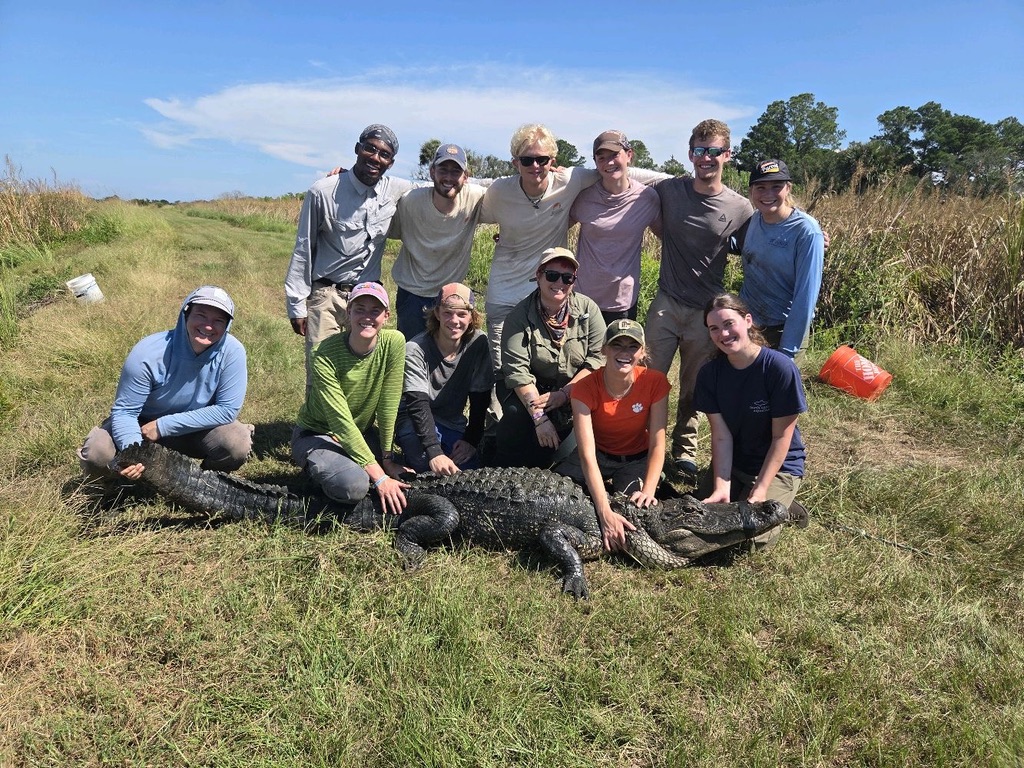
This Creative Inquiry focuses on analyzing the diet contents of the American alligator (Alligator mississippiensis) to understand how different contaminants, such as microplastics and PFAS, impact aquatic systems and the animals that rely on them.
During their semesterly trip, students gain field experience and practice safe capture and handling skills, pit tagging, scute clipping, gastric lavage (stomach pumping), and venipuncture.
Back in the Clemson lab, students process hunter-harvested stomachs, weigh and record the contents. Because different plastics contain varying chemical components, they may have different effects, including cancer, birth defects, and blockages.
Identifying and quantifying microplastics found in stomach samples contributes to Ph.D. candidate Miriam Boucher’s research, which aims to understand the toxicological impacts of plastic on wildlife and ecosystems.