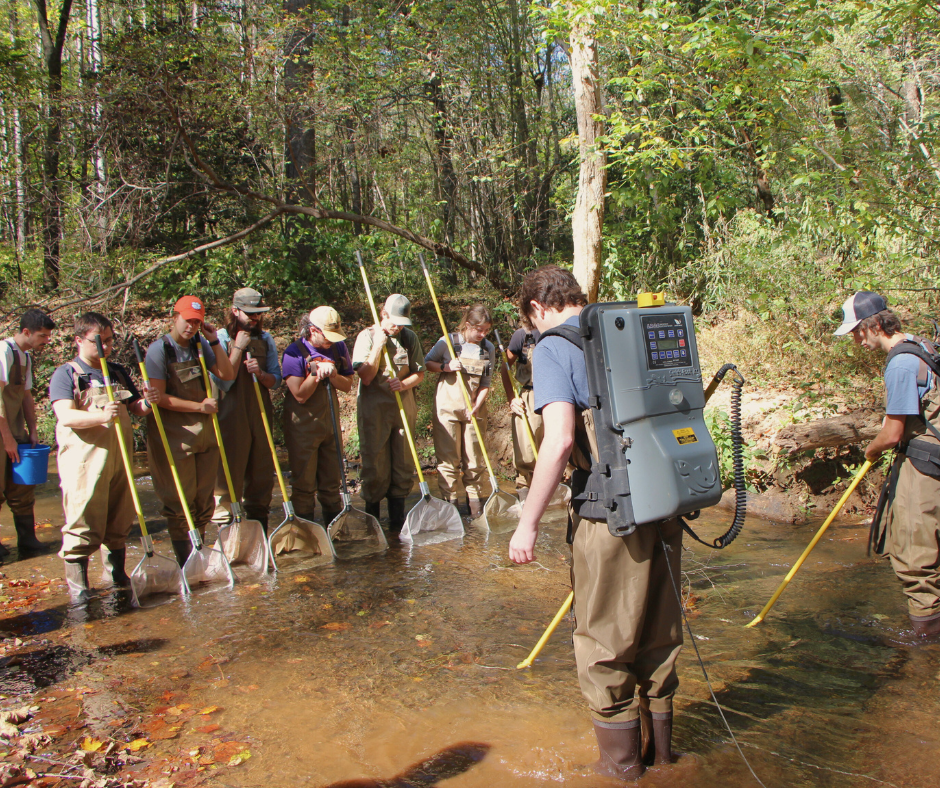
Last month, Dr. Brandon Peoples and his WFB 4770 class took their learning beyond the classroom and into the Clemson Experimental Forest for a hands-on electrofishing field trip.
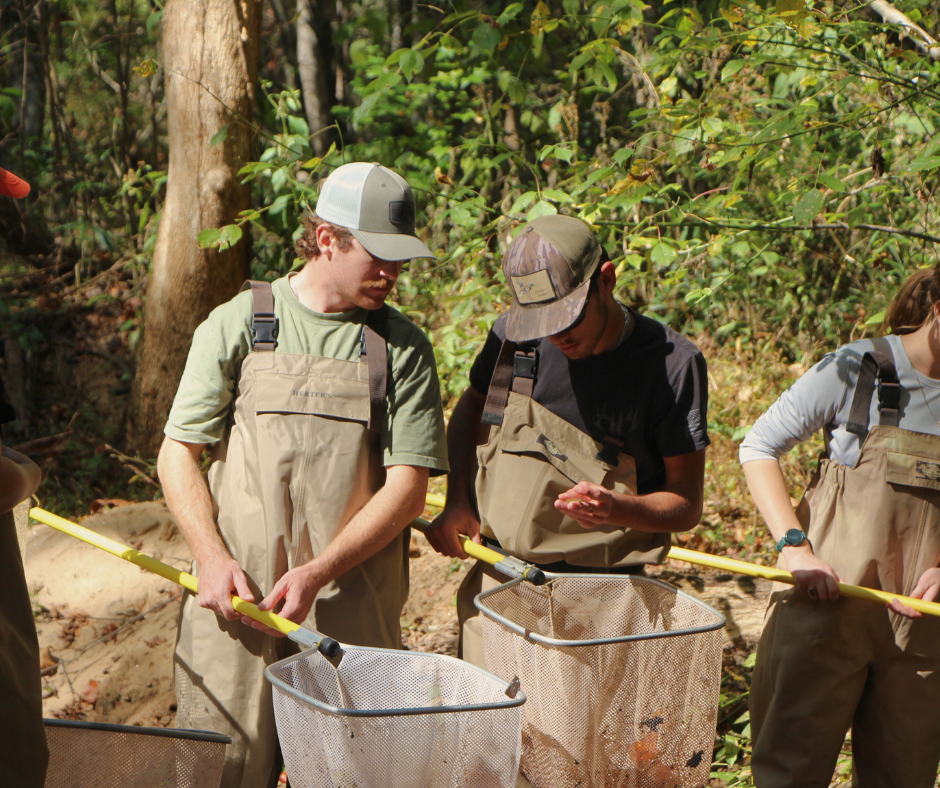
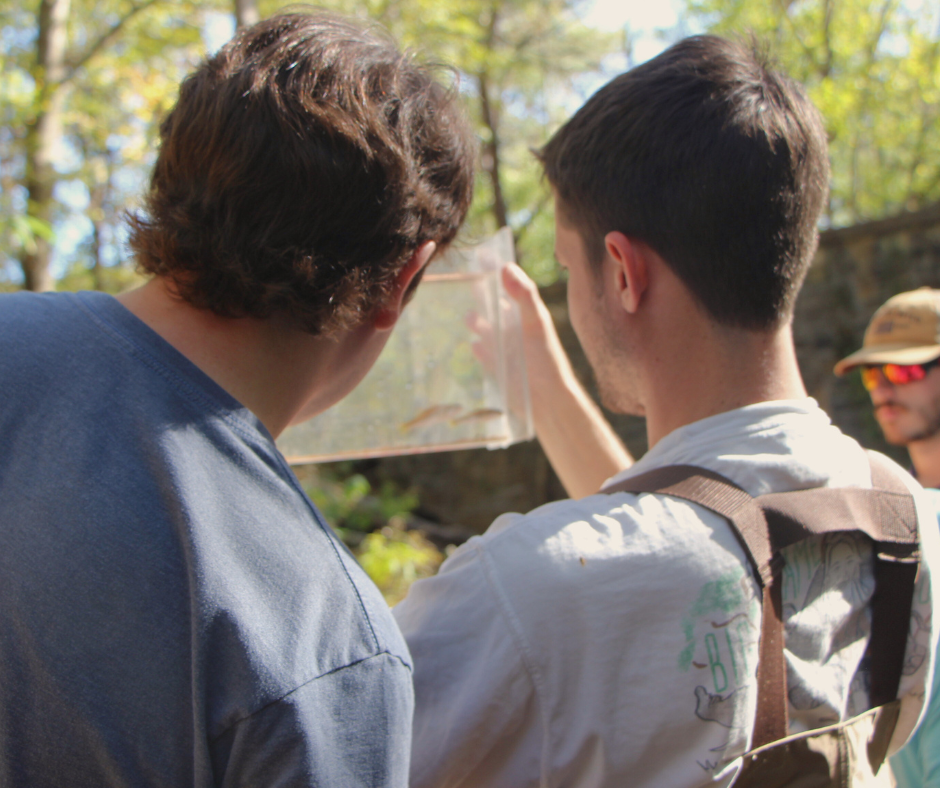
Using specialized backpack units, students generated a mild electrical current that temporarily stuns fish without causing harm, allowing for safe and efficient collection. Working together, the class collected and identified more than ten different fish species, gaining a closer look at the biodiversity within local freshwater ecosystems.
This experience was a great example of hands-on, sustainable learning in the field. It gave students the opportunity to connect classroom concepts with real-world applications while emphasizing the importance of safe and ethical collection methods to ensure research is conducted responsibly and with respect for the environment.
Experiential learning opportunities like this one help prepare students for future careers in wildlife and fisheries biology, equipping them with practical skills, teamwork experience, and a deeper appreciation for the balance between scientific discovery and environmental stewardship.