Thoughts of climate change usually entails rising sea levels, melting ice caps in the Arctic and extreme storms. Who knew it could also reshape where India’s deadliest snakes live, leading to millions of people finding themselves living in high-risk snakebite zones?
A newly published study in Nature’s Scientific Reports, led by an international research team that included Clemson University’s Jim Anderson, director of the James C. Kennedy Waterfowl and Wetlands Conservation Center and Baruch Institute of Coastal Ecology and Forest Science, and doctoral candidate Akshit Suthar, highlights how climate change may reshape venomous snake distribution, potentially increasing snakebite risk in vulnerable regions.
Snakes, like most reptiles, depend on environmental temperature and humidity to survive. When the weather changes, as with weakened monsoons, longer dry seasons and warmer nights, the snakes must find more suitable conditions to survive.
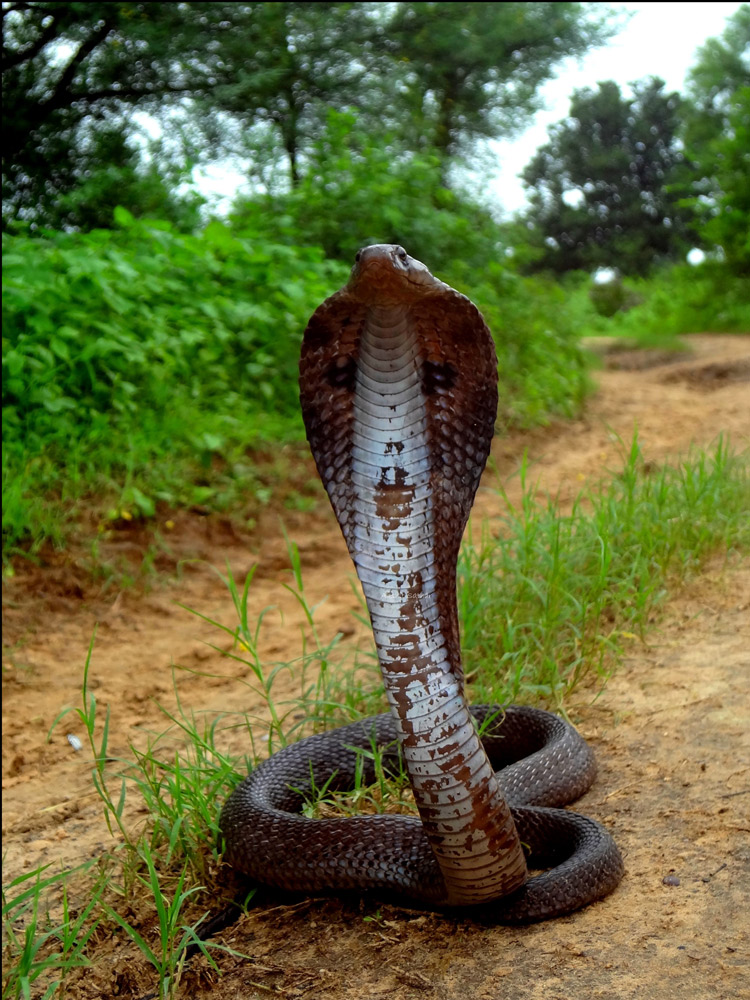
The research team, which also included members from India and Germany, conducted the first nationwide assessment of climate-driven distributional shifts for 30 venomous snake species across India, focusing particularly on the “big four” – the common krait, Indian or spectacled cobra, Russell’s viper and saw-scaled viper. Those four are responsible for the majority of India’s serious snakebites, causing 46,000-60,000 deaths each year.
The researchers used species distribution models and high-resolution climate date to predict how suitable habitats for venomous snakes may change under future climate scenarios between 2050-2070. The results showed northward and elevational shifts in venomous snake hotspots with emerging areas of suitability in northern, northeast and central India. Some southern regions may see contraction.
Researchers also linked predicted habitat for the big four species with state-level snakebite incidence data, which revealed a significant positive relationship between climatic suitability and snakebit occurrence. The finding suggests that climate-driven shifts may translate into new or intensified human-snake conflict zones.
“These results highlight how climate change can indirectly shape public health risks through wildlife redistribution,” Suthar said. “By identifying where venomous snake hotspots and snakebite risk may increase in the future, we can help anticipate and mitigate those risks.”
