
April 12, 2017
March 28, 2016
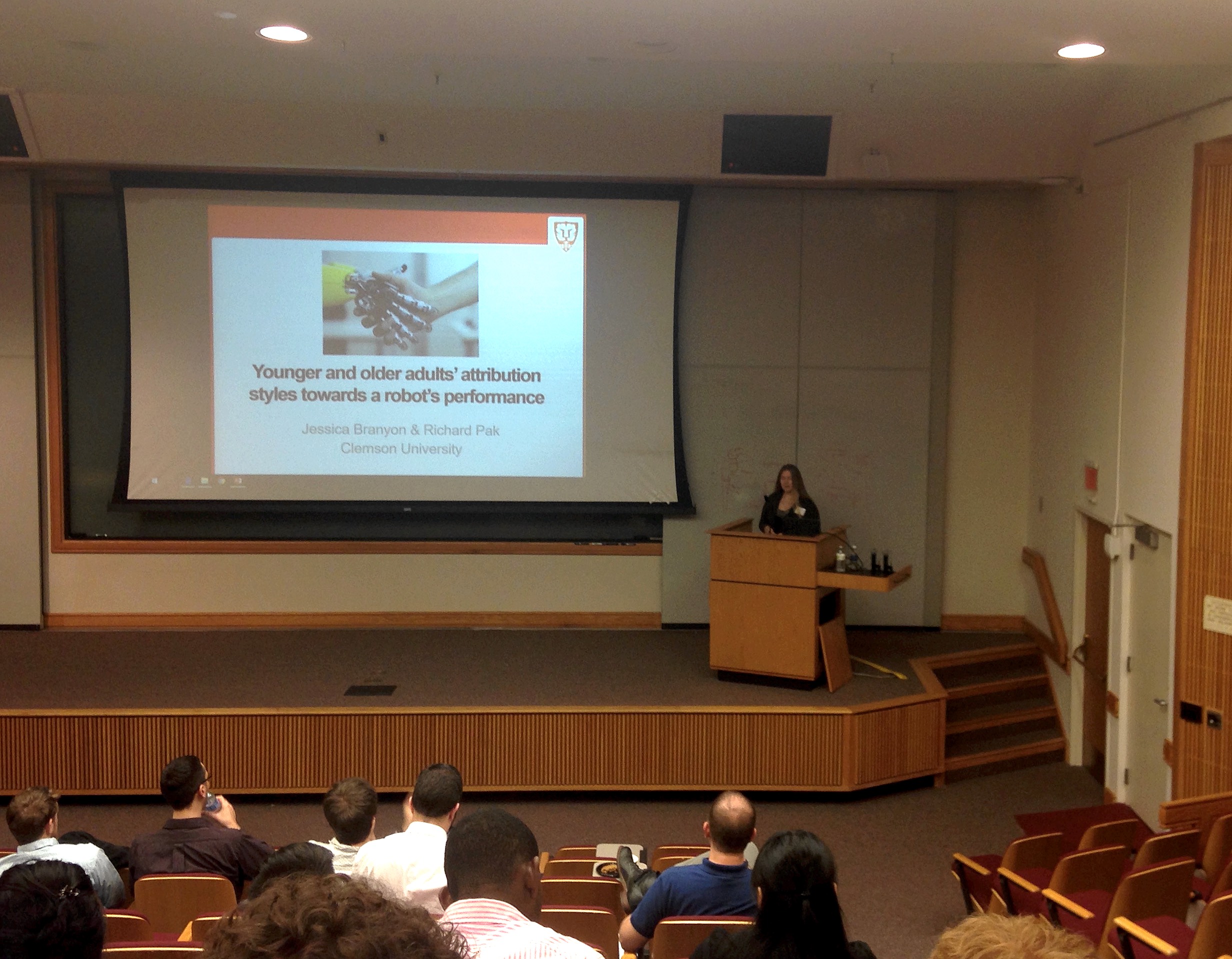
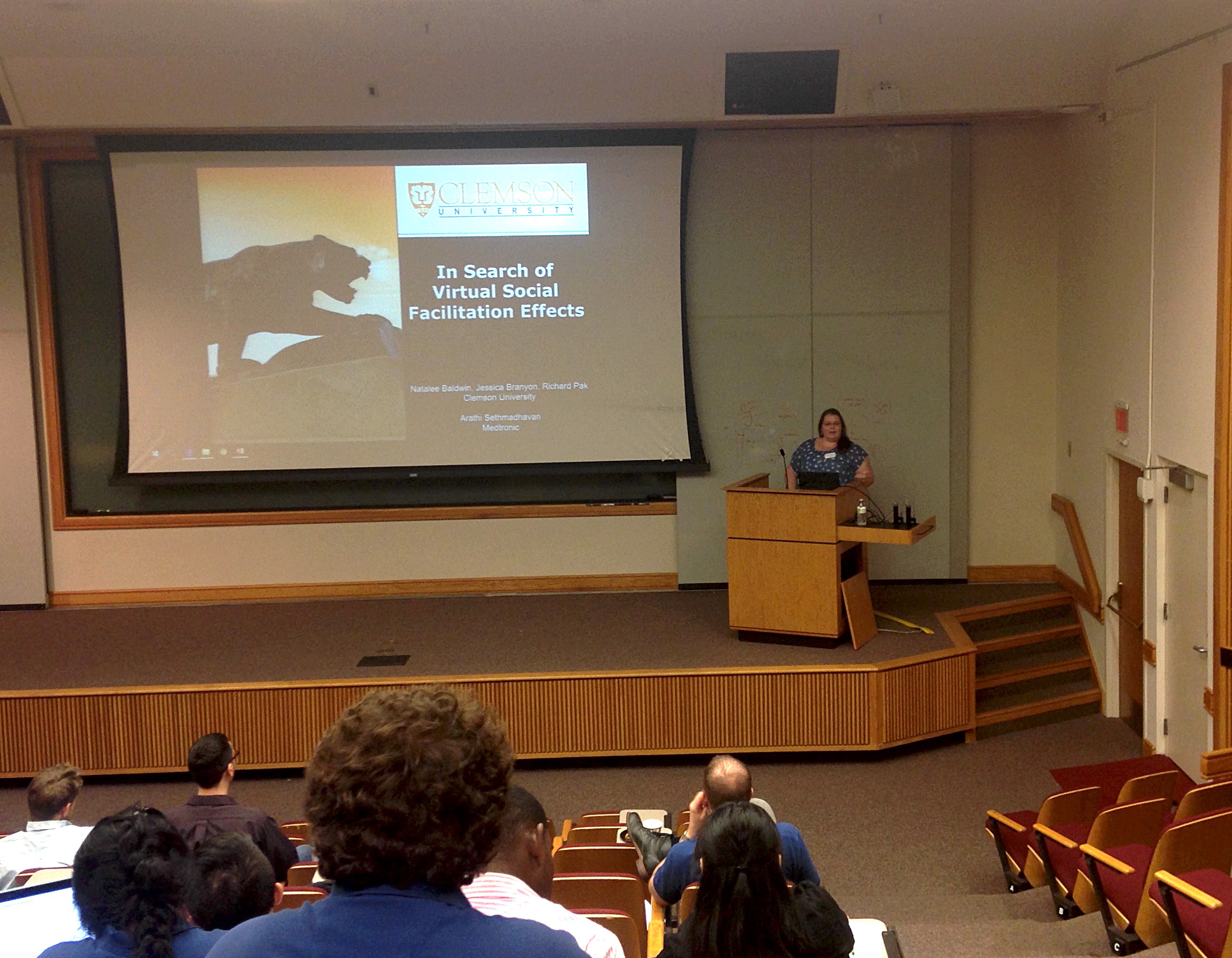
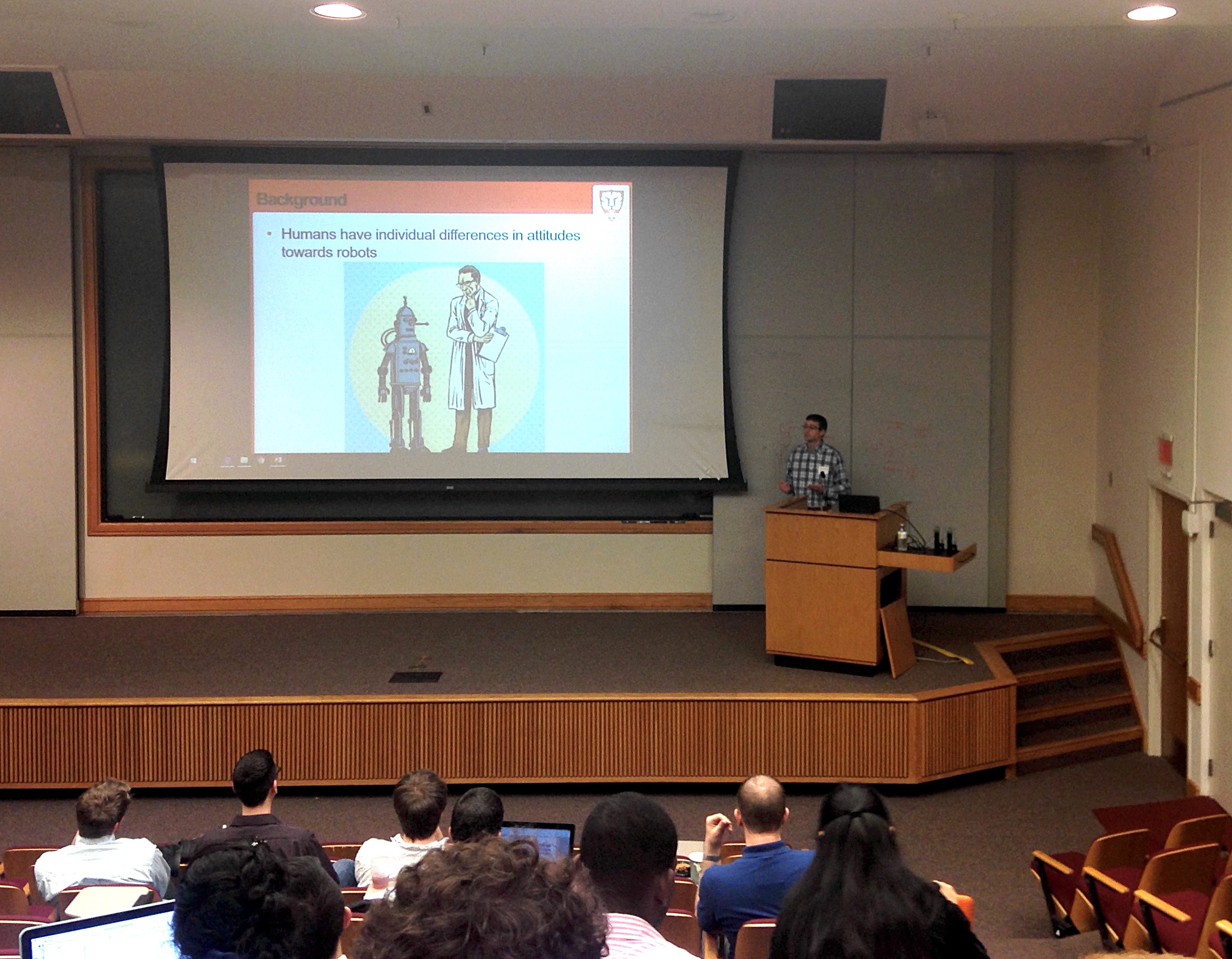
The students recently presented their work at the Duke Robotics Student Symposium, held at Duke University on March 28th.
March 16, 2016
Title: The Effects of Age and Working Memory Demands on Automation-Induced Complacency
Committee: Dr. Richard Pak (Chair), Dr. Kelly Caine, and Dr. Patrick Rosopa
When: Tuesday, March 22, 2016 at 10:30am
Where: Brackett Hall, Room 419
Abstract: Complacency refers to a type of automation use expressed as insufficient monitoring and verification of automated functions. Previous studies have attempted to identify the age-related factors that influence complacency during interaction with automation. However, little is known about the role of age-related differences in working memory capacity and its connection to complacent behaviors. The current study examined whether working memory demand of an automated task and age-related differences in cognitive ability influence complacency. Working memory demand was manipulated in the task with two degrees of automation (i.e., information and decision). A younger and older age group was included to observe the effects of differences in working memory capacity on performance in a targeting task using an automated aid. The results of the study show that younger and older adults did not significantly differ in complacent behavior for information or decision automation. Also, individual differences in working memory capacity did not predict complacency in the automated task. However, these findings do not disprove the role of working memory in automation-induced complacency. Both age groups were more complacent with automation that had less working memory demand. Our findings suggest systems that utilize both higher and lower degrees of automation could limit over-dependence. These results provide implications for the design of automated interfaces.
August 25, 2014
Title of Thesis: The Effects of Age and Working Memory Demands on Automation-Induced Complacency
Thesis Advisor: Dr. Richard Pak
Thesis Committee Members: Dr. Richard Pak, Dr. Patrick Rosopa, and Dr. Kelly Caine
Date, Time, and Location: Monday, August 4th at 10:00 a.m., Brackett 419
Abstract:
Complacency refers to a type of automation use expressed as insufficient monitoring and verification of automated functions. Previous studies have attempted to identify the age-related factors that influence complacency during interaction with automation. However, little is known about the role of age-related differences in working memory capacity and its connection to complacent behaviors. The current study aims to examine whether working memory demand of an automated task and age-related differences in cognitive ability influence complacency. Higher degrees of automation (DOA) have been shown to reduce cognitive workload and may be used to manipulate working memory demand of a task. Thus, we hypothesize that a lower DOA (i.e. information acquisition stage with lower level) will demand more working memory than a higher DOA (i.e. decision selection stage with higher level) and that a lower DOA will result in a greater difference in complacency between age groups than a higher DOA.

