Nicholas Gregorich from the Department of Chemical and Biomolecular Engineering won first place at Clemson University’s Three Minute Thesis (3MT) competition on November 8, 2019.
Nicholas won the PhD candidate category for his presentation, “Green Filtration for Cleaner Water.” He is advised by Dr. Eric Davis. Nick will go on to represent Clemson at the March 2020 Conference of Southern Graduate Schools (CSGS) 3MT competition in Birmingham, Alabama.
3MT is a research communication competition that challenges research higher degree students to present a compelling oration on their thesis and its significance in just three minutes in language appropriate to a non-specialist audience. Graduate students from all colleges at Clemson competed in preliminary rounds before all coming together for the finalist competition.
The Department of Chemical and Biomolecular Engineering welcomes Dr. Heather Kulik, an Associate Professor in the Department of Chemical Engineering at Massachusetts Institute of Technology. Dr. Kulik’s seminar titled, “Accelerating the computational discovery of catalyst design rules and exceptions with machine learning” will be held in 100 Earle Hall on Thursday, November 21st from 2:00 to 3:00 pm.
Over the past decade, first-principles computation has emerged as a powerful complement to experiment in the discovery of new catalysts and materials. In many cases, computation has excelled most in distilling rules for catalyst structure-property relationships in well defined spaces such as bulk metals into descriptors or linear free energy relationships. More development is needed of computational tools for them to show the same promise in emerging catalytic materials such as single-site metal-organic framework catalysts or single atom catalysts that have increased promise of atom economy and selectivity. In this talk, I will outline our efforts to accelerate first-principles (i.e., with density functional theory, or DFT) screening of open-shell transition metal catalysts with a focus on challenging reactions (e.g., selective partial hydrocarbon oxidation). We have developed tools that not only automate simulation but can be autonomously driven by decision engines that predict which simulations are most promising to be carried out. We also develop neural network machine learning models to accelerate prediction of catalyst reaction energetics and properties at a fraction of the cost of DFT. Paired with new estimates of when such models are reliable, I will show how we rapidly evaluate properties of 10k-100k catalysts in a fraction of the time that conventional first-principles simulation would require. We use such tools to accelerate the identification of design rules and exceptions to expectations when applied to the wider space of emerging single-atom and single-site catalysts.
Clemson University Ph.D. student Allison Domhoff and Eric Davis, assistant professor of chemical and biomolecular engineering, use an electron microscope to analyze nanometer-sized particles.
CLEMSON — Clemson University Ph.D. student Allison Domhoff has received a $25,000 Hitachi High Technologies Electron Microscopy Fellowship to support research aimed at making energy grid-scale batteries more efficient and cost-effective.
Domhoff, a chemical and biomolecular engineering student, is working to develop nanocomposite materials for batteries that support energy generation at large wind and solar farms. The technology could reduce the cost of renewable energies, thus making them more prevalent in utility portfolios.
“These are like extremely large car batteries, 15 or 20 feet tall. They would store energy produced by wind and solar farms so during the night or when winds aren’t blowing, you could still harvest energy,” said Eric Davis, Domhoff’s faculty adviser and an assistant professor of chemical and biomolecular engineering.
Electron microscopy allows Domhoff to research nanometer-sized particles in the battery’s membrane so she can manipulate its surface chemistries to improve battery life and performance.
Domhoff has presented nationally at meetings of the American Chemistry Society (ACS) and the American Institute of Chemical Engineers (AIChE). She received a prestigious Graduate Research Fellowship from the National Science Foundation and is one of 10 finalists for the national AIChE Excellence in Graduate Polymer Research Award, which will be announced in November.
Domhoff, who expects to graduate in May, hopes to continue her research in the private sector. She earned her undergraduate degree at Duquesne University in Pittsburgh before attending Clemson for Ph.D. studies.
“Clemson has all of the big-school funding and resources, but it’s a relatively small department so you get the one-on-one mentoring and collaboration,” she said.
Allison Domhoff receives the fellowship during an award ceremony. From left: Douglas Hirt, associate dean for research and graduate studies in the College of Engineering, Computing and Applied Sciences; Phil Bryson, vice president and general manager of the Nanotechnology Systems Division at Hitachi High Technologies America Inc.; Domhoff; and Tanju Karanfil, Clemson University vice president for research.
Hitachi High Technologies America Inc. established the fellowship in 2014. Domhoff is the sixth recipient.
Hitachi High Technologies helped establish the university’s Electron Microscope Facility in the mid-1990s. It has steadily grown with Hitachi’s support and is housed at the Advanced Materials Research Laboratory (AMRL) in Anderson County about 15 minutes from Clemson’s main campus.
“Ms. Domhoff is clearly performing groundbreaking research and it appears likely that her work will be highly impactful. We at Hitachi are very happy that the electron microscopes at AMRL have been able to play an integral role in enabling Allison’s research,” said Phil Bryson, vice president and general manager of the Nanotechnology Systems Division at Hitachi High Technologies.
In the past year, the Electron Microscopy Facility at Clemson as added some of Hitachi’s most advanced microscopes.
“Our longstanding relationship with Hitachi has provided Clemson faculty and students with one of the nation’s premiere microscopy labs in which to learn and conduct research,” said Tanju Karanfil, Clemson vice president for research.
The facility is also used by the private sector for product development in the state’s automotive, aerospace, medical, electronics, textile and energy industries, among others.
“Our partnership with Hitachi has created a truly unique facility in the Southeast, which has greatly benefitted not only research and education at Clemson, but also product development and innovation in the private sector that will fuel the South Carolina economy,” said Electron Microscope Facility director Laxmikant Saraf. “I greatly appreciate Hitachi’s support.”
Douglas Hirt, associate dean for research and graduate studies in the College of Engineering, Computing and Applied Sciences, thanked Hitachi High Technologies America Inc. for supporting the college’s students.
“These fellowships help enable our students to conduct cutting-edge research with the help of some of the best electron microscopes in the world,” Hirt said. “I congratulate Allison on winning this year’s fellowship. It is a well-deserved honor and a reflection of the quality of work she is doing under the guidance of Dr. Eric Davis.”
The Department of Chemical and Biomolecular Engineering welcomes Dr. Sumit Sharma, an Assistant Professor in the Department of Chemical and Biomolecular Engineering at Ohio University. Dr. Sharma’s seminar titled, “Molecular Simulations of Adsorption and Self-Assembly of Surfactants on Metal Surfaces” will be held in 100 Earle Hall on November 7th from 2:00 to 3:00 pm.
Adsorption of surfactants is a facile way of adjusting interfacial properties of metals, which has applications in electrochemistry, corrosion inhibition, heterogeneous catalysis and synthesis of anisotropic metal nanoparticles. The traditional viewpoint is that the adsorption of surfactant molecules on metals is driven by a strong affinity of the polar head group of surfactants for metals, and that surfactant molecules adsorb in a planar self-assembled monolayer (SAM). By employing atomistic and coarse-grained molecular simulations as well as statistical mechanics theory, we show that the traditional viewpoint is imprecise on many fronts. We demonstrate that the hydrophobic interactions between alkyl tails of surfactants play an active role in the adsorption process. Surfactants adsorb in various morphologies (planar SAM, cylinders and spheres) depending on their molecular geometry. Furthermore, adsorption free energy profiles of surfactants are function their aggregation state in the bulk phase – while the molecules infinite dilution strongly adsorb on to metals with no free energy barrier, surfactant micelles experience a long-range free energy barrier from the metal surface. Surfactant molecules strongly adsorb by disintegrating on the metal surface. From the knowledge of free energy profiles of surfactants at air-water and metal-water interface, we design new surfactant molecules that are expected to have better corrosion inhibition properties.
Dr. Sumit Sharma earned PhD in Chemical Engineering from Columbia University and was a post-doctoral research fellow at Princeton University. Prior to joining Ohio University, he worked as a Yield and Integration Engineer at Intel corporation. His research interests are in molecular simulations and statistical mechanics theory of soft matter, including proteins, polymers and surfactants.
The Department of Chemical and Biomolecular Engineering welcomes Dr. Abhyudai Singh, an Associate Professor in the Departments of Electrical and Computer Engineering, Biomedical Engineering, Mathematical Sciences, and Center for Bioinformatics and Computational Biology. Dr. Singh’s seminar titled, “Systems Biology in Single Cells: A Tale of Two Viruses” will be held in 100 Earle Hall on October 10th from 2:00 to 3:00 pm.
In the noisy cellular environment, expression of genes has been shown to be stochastic across organisms ranging from prokaryotic to human cells. Stochastic expression manifests as cell-to-cell variability in the levels of RNAs/proteins, in spite of the fact that cells are genetically identical and are exposed to the same environment. Development of computationally tractable frameworks for modeling stochastic fluctuations in gene product levels is essential to understand how noise at the cellular level affects biological function and phenotype. I will introduce state-of-the-art computational tools for stochastic modeling, analysis and inferences of biomolecular circuits. Mathematical methods will be combined with experiments to study infection dynamics of two viral systems in single cells. First, I will show how stochastic expression of proteins results in intercellular lysis time and viral burst size variations in the bacterial virus, lambda phage. Next, I will describe our efforts in stochastic analysis of the Human Immunodeficiency Virus (HIV) genetic circuitry. Our results show that HIV encodes a noisy promoter and stochastic expression of key viral regulatory proteins can drive HIV into latency, a drug-resistant state of the virus.
Abhyudai Singh earned his bachelor’s degree in mechanical engineering from the Indian Institute of Technology in Kanpur, India. He received master’s degrees in both mechanical and electrical & computer engineering from Michigan State University, and a master’s degree in ecology, evolution and marine biology from University of California Santa Barbara (UCSB). After earning his doctoral degree in electrical & computer engineering in 2008, also from UCSB, he completed postdoctoral work in UC San Diego’s Department of Chemistry and Biochemistry. From 2011 to 2017 he was an Assistant Professor in the Departments of Electrical & Computer Engineering, Biomedical Engineering and Mathematical Sciences at the University of Delaware, and was promoted to Associate Professor in 2017. The research interests of Abhyudai Singh are in dynamics, control, and identification of biomedical systems with applications to systems/synthetic biology and neuroscience.
The Department of Chemical and Biomolecular Engineering welcomes Dr. Connie B. Roth, an Associate Professor in the Department of Physics at Emory University. Dr. Roth’s seminar titled, “Local Property Changes Near Interfaces in Nanostructured Polymer Blends and Films” will be held in 100 Earle Hall on October 3rd from 2:00 to 3:00 pm.
Nanostructured morphologies with extensive interfaces have become the hallmark of high performance multicomponent materials. Understanding how local material properties change near interfaces is clearly crucial to designing an optimized morphology to create the correct global macroscopic characteristics desired from an amalgam of these local effects. Contrary to the traditional textbook paradigm, our group has recently demonstrated that local dynamical properties across polymer domains can become strongly coupled upon welding of two dissimilar polymer interfaces creating broad gradients in local material properties. Using a localized fluorescence technique, we have investigated how the local glass transition temperature Tg(z) changes across interfaces between two polymers with widely different bulk glass transition temperatures Tgbulk. Starting with a single interface between two semi-infinite domains (ΔTgbulk ≈ 80 K), we show that broad profiles in local Tg(z) across dissimilar polymer-polymer interfaces are established, spanning hundreds of nanometers and observed to be asymmetric relative to the composition profile. A key finding of these results is the observation that the broad coupling of dynamics across the dissimilar polymer-polymer interface only occurs if this interface is welded together by annealing to equilibrium. Efforts to understand what factors during polymer interface formation cause these broad profiles in local Tg(z) find that chain connectivity appears to be surprisingly important. This is confirmed by measurements near silica substrates with tethered chains where low grafting densities (~10 vol% tethered chains) are observed to cause large +50 K increases in local Tg. We now explore what property changes take place in multilayer systems during interface annealing using different experimental techniques with the goal of understanding how interfaces mediate dynamical coupling across dissimilar polymer domains.
Connie B. Roth, an Associate Professor of Physics at Emory University, received her Ph.D. and M.Sc. in Physics from the University of Guelph, Canada. Following postdoctoral positions at Simon Frazier University, Vancouver, and Northwestern University, Chicago, Dr. Roth joined Emory’s faculty in 2007. Prof. Roth has received a NSF CAREER Award, ACS PRF Doctoral New Investigator grant, was the 2009 recipient of the Division of Polymer Physics (DPOLY) UKPPG Polymer Lecture Exchange from the American Physical Society (APS), and most recently received the 2019 Fellow Award from the North American Thermal Analysis Society. She is serving as the DPOLY Program Chair for the 2020 APS meeting.
Paul Alongi, College of Engineering, Computing and Applied Sciences
August 28, 2019
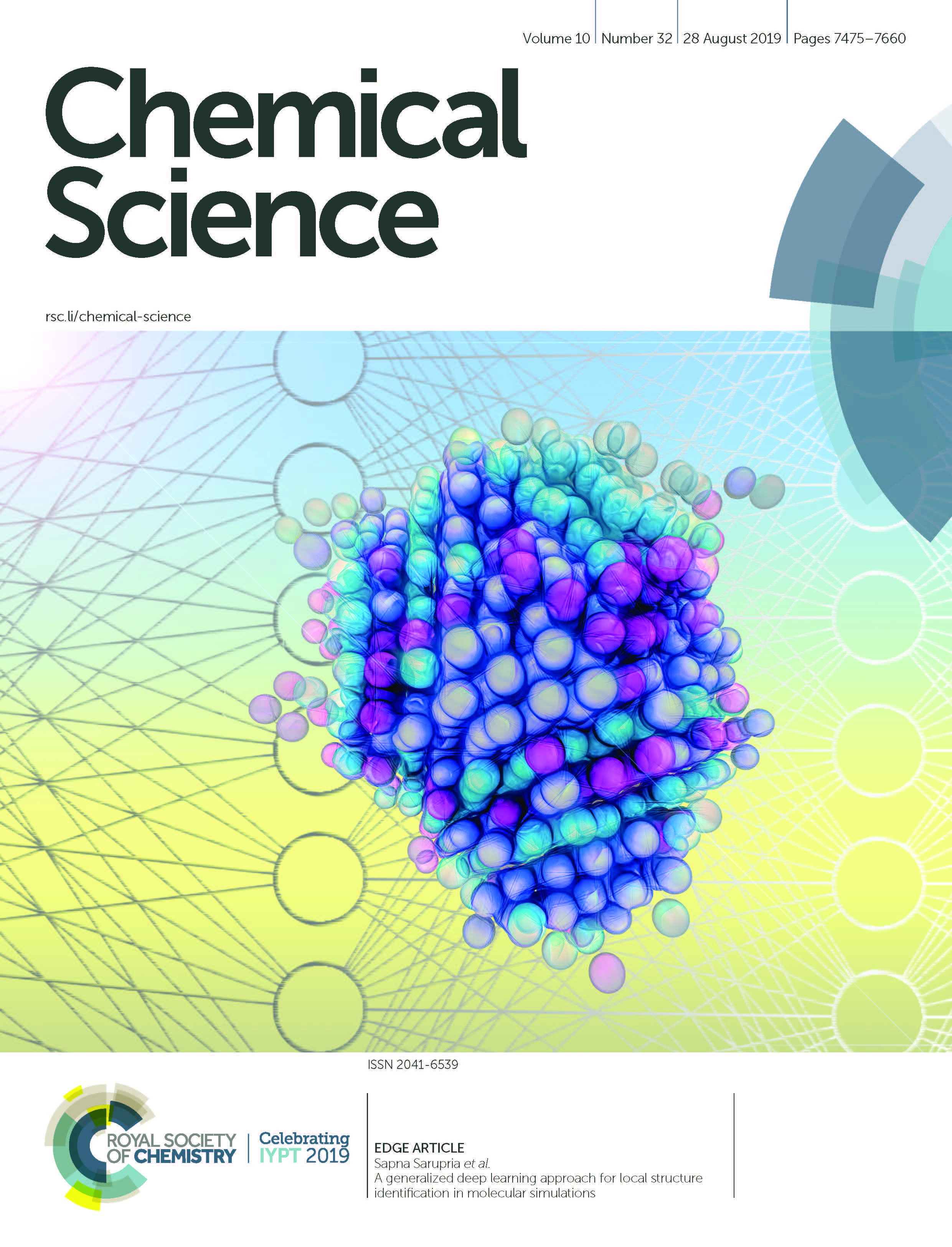
Like so many great projects, the research that earned Ryan DeFever and Steven Hall three awards and a spot in a respected academic journal was fueled in part by coffee. “Steven and I had probably 25 walks to Starbucks and back– at least–during the course of this research,” DeFever said. “There was a lot of chatting and bouncing ideas off each other.”
Sapna Sarupria (center) meets in her office with graduate students Ryan Defever and Steven Hall
DeFever and Hall were part of a team that had its research published this year in the journal Chemical Science. Their experience underscores how interdisciplinary research — sometimes enhanced by caffeine– energizes the educational experience that creates the next generation of engineers.
The team showed that the same machine-learning techniques that allow self-driving cars to see obstacles can be used to identify nano-sized structures of atoms and molecules, a tool that could help advance a wide range of research. Read the full article here.
The students involved in the recently published research were guided by two faculty members, Sapna Sarupria and Melissa Smith. Dr. Sarupria, an Associate Professor in Chemical and Biomolecular Engineering, was the project leader.
Sarupria said that she was lucky to have DeFever and Hall working in her lab. “Students, especially those who are creative and brave, are important to research,” she said. “They do the work, but they’re also the ones who come up with ideas and motivate you,” Sarupria said. “These are my research collaborators– they are my true science collaborators, and they keep my energy going.”
Sarupria, DeFever and Hall collaborated on the research with Smith, associate professor of electrical and computer engineering, and her former student, Colin Targonski. Smith said that she and Targonski contributed their machine-learning techniques and experience in applying them appropriately. Just as important as the scientific discoveries, she said, is teaching students to collaborate across disciplines.
“I come from a national laboratory background where that is everyday practice,” said Smith, a former research associate at Oak Ridge National Laboratory. “That is why they make these big discoveries and extend science in big leaps and bounds. They work in an interdisciplinary team, rather than working with their own kind all the time.”
Targonski graduated in May with a master’s degree in computer engineering and now lives in New York, where he works as a machine-learning engineer at JP Morgan Chase & Co.
“This work was exciting because it offered an entirely new domain to work in– applying machine learning algorithms to molecular dynamics,” Targonski said of his work at Clemson. “We are especially excited about the state-of-the-art results we were able to achieve by using algorithms developed for the computer vision domain and adapting them to the computational chemistry domain.”
The research also helped DeFever earn a Ph.D. DeFever, who is from Greenville, graduated in August with his doctoral degree in chemical engineering.
When he crossed the stage at the hooding ceremony, he had two prominent awards under his belt, again thanks in part to the research. He received Clemson University’s Outstanding Graduate Researcher Award, and the Chemical Computing Group Excellence Award from the American Chemical Society’s Division of Computers in Chemistry.
DeFever is now considering whether to stay in academia as a post-doctoral researcher or pursue a job involving machine learning in industry or a national lab.
Hall, who is from Anderson, began the research as an undergraduate and is now a first-year Ph.D. student in chemical engineering. He also took home an honor based on the research, winning a best poster competition at July’s Rare Events Workshop at the Indian Institute of Science, Bengaluru.
Part of what made the research stand out is how fast it went. The team went from idea to published paper in about a year, with most of the work occurring in the final six months.
DeFever said one of his favorite parts of the research was that it involved lots of coding. Most of the time, he said, was spent debugging code.
“The idea always is quick, but the implementation is long and tedious,” he said. “You get that moment where it all falls into place and it clicks and it works. And that brings you back for more because it’s thrilling when that happens. It’s worth a lot.”
Chemical and Biomolecular Department researchers Drs. David Bruce, Christopher Kitchens, and Mark Thies were among those honored this year for securing patents in 2018. Other departments represented included automotive engineering, bioengineering, and environmental engineering. Among the 16 patents issued to Clemson University researchers in 2018 were technologies for improving on-site building construction with a sustainable building system, purifying lignins, and self-healing polymer coatings that inhibit corrosion of metal substrates.
Drs. Thies and Bruce received a patent on “Solvent and Recovery Process for Lignin.” The technology developed by Profs. Thies and Bruce in conjunction with Dr. Adam Klett, a doctoral graduate of the ChBE department, enables renewable lignin, the most abundant aromatic polymer produced in nature, to be recovered at high purities and with low metals content from process fluids that are routinely generated during the conversion of trees into pulp and paper products. These purified lignin products are finding uses as polyurethane foams, building materials, and carbon fiber precursors, to name just a few.
Dr. Kitchens was recently awarded a patent on technology to build Micro-Electromechanical Systems (MEMS) devices from nanocrystals derived from renewable cellulose biomass, including cotton or trees. This technology was developed in collaboration with Profs. Virginia Davis and Robert Ashurst at Auburn University and funded by the National Science Foundation. The MEMS industry is a $20 Billion industry that has enabled the miniaturization of technology that we have become reliant upon. MEMS devices are currently fabricated from silicon by an energy intensive process that uses large quantities of hazardous chemicals. This technology provides an entirely new material with similar performance characteristics but is renewable, more sustainable, non-toxic, and biocompatible. These attributes have the potential to revolutionize the MEMS industry and open the doors to new applications, especially in the biomedical field. The title of this patent is “Microdevices and Methods of Manufacture.”
The patent recipients were honored at the annual Patent Award Ceremony hosted by the Clemson University Research Foundation (CURF), which facilitates technology transfer at Clemson University.
In addition to the Patent Awards, Inventor’s Club Awards were presented to inventors who had licensed or otherwise commercialized their technologies in 2018.
The Patent Awards honor and celebrate the drive for research and innovation at Clemson University by showcasing the 16 patents issued for the calendar year 2018. This year’s 16 patents add to CURF’s portfolio of 166 issued patents inventions available for licensing. The awards program honored innovators in areas such as agriculture, bioengineering and materials sciences.
CURF also recognized KIYATEC Inc. for being one of 20 startups from across the country selected to participate in The University Innovation and Entrepreneurship Showcase that took place on Capitol Hill on April 10.
Chris Gesswein, executive director of CURF, congratulates award recipients on their hard work and significant contributions to the Clemson University research enterprise.
“At CURF, we have the unique opportunity to work with Clemson’s most innovative minds. This networking event is our way of recognizing the accomplishments and hard work of Clemson inventors,” said Chris Gesswein, executive director of CURF. “It’s an honor to celebrate these researchers and the contributions they have made to innovation. Congratulations to all of the inventors for their drive and commitment to academic research.”
Guest speaker Doug Kim, member of Kim and Lahey Law Firm, presented on the topic of “Making your research relevant and interesting to industry partners.”
CURF and the Division of Research work together to support Clemson-affiliated inventors and entrepreneurs through patent protection, marketing, education, material transfer, and license negotiation services.
For a complete list of patents received in 2018, click here.
For a list of Inventor’s Club Award recipients, click here.
Dr. Davis (center) is shown assisting students in his research lab.
Written by Paul Alongi, College of Engineering, Computing and Applied Sciences
Assistant Professor, Dr. Eric Davis has launched a new research project with the help of a $566,359 CAREER award from the National Science Foundation. Dr. Davis is joining the quest to create a battery that would help utilities introduce more renewable energy to the electrical grid and reduce the consumption of fossil fuels.
His goal is to develop new materials that would reduce the cost of large-scale energy storage technologies, such as redox flow batteries. Davis is beginning his research as growing concern about climate change leads to new curbs on greenhouse-gas emissions across the country. California set a goal last year to rely solely on zero-emission energy sources for electricity by 2045. Minnesota, New Mexico, New York and Washington are also considering carbon-reducing legislation.
Developing better batteries would help address one of the central challenges holding back more widespread adoption of solar and wind power. If renewable energy is going to compete with fossil fuels on cost, utilities are going to need an economical way to store the energy they harvest from the sun and wind. These energy reserves could then be tapped when the sun and wind are unavailable for power generation.
Davis plans to focus on the nanocomposite materials that are used to make the membranes that go inside utility-scale batteries. Those membranes account for about 30-40 percent of battery cost, he said.
“A better understanding of the physics of the materials could lead to membranes made of lower-cost materials,” Davis said. “I think that by moving away from these expensive materials into something much cheaper, you start to bring this technology to the forefront,” he said. “People will start to open their eyes and say, ‘Wow, we can get similar results from something that costs about the same as what we’re doing now but has a significantly lower environmental impact.’”
Funding through the CAREER award supports five years of research. David Bruce, chair of the Department of Chemical and Biomolecular Engineering at Clemson, said CAREER awards are among the nation’s highest honors for junior faculty members. “CAREER awards are highly competitive, and Dr. Davis is richly deserving,” Bruce said. “He exemplifies the role of teacher-scholar through education and research and the integration of the two.”
Also as part of the CAREER award, Davis has developed an educational plan aimed at recruiting and developing the next generation of scientists ready to tackle challenges in polymer science.
His plan includes developing a STEM-based afterschool program at Seneca Middle School.
At Clemson, Davis plans to establish a state-of-the-art polymer characterization lab. He plans to recruit undergraduate researchers from Clemson’s PEER and WISE program and other initiatives that support students who are underrepresented in engineering and science. Further, he plans to incorporate his research findings into a new elective course for seniors and graduate students.
The Department of Chemical and Biomolecular Engineering welcomes Dr. Belinda Akpa, an Assistant Professor in the Department of Integrated Synthetic and Systems Biology at North Carolina State University. Dr. Akpa’s seminar titled, “Machine Learning in ‘Tiny Data’ Biology” will be held in 100 Earle Hall on September 5th from 2:00 to 3:00 pm.
The challenge of determining model parameters is a major hurdle in the development of biological models. Parameters can only be accurately estimated with adequate data, and the amount of data required grows with the number of model parameters. Models that attempt to bridge the length-scales of biological hierarchy (gene-protein-cell-tissue-organism) are particularly challenging to parameterize, as the complexity both within and across scales generates an explosion of model terms. Direct measurement of the relevant quantities is likewise often difficult to achieve. However, many critical questions in biology require that we connect dynamic molecular interactions to their emergent physiological outcomes and do so quantitatively.
In my group, we frequently wrangle with models whose complexity outstrips the available data. We model with the intention of proposing novel hypotheses and driving targeted experimental strategies to hasten discovery of causal mechanisms. This means that we typically enter collaborative research efforts at a stage where there is little quantitative data, and further data collection may be hampered by limited resources, ethical constraints, or simply a lack of clarity as to which measurements are most likely to shed light on mechanisms of interest. To identify plausible model parameters in these cases, we have found machine learning approaches to be of considerable value.
Machine learning is not just a ‘big data’ concept; rather, the field offers methods that can be used to explore valid quantitative relationships even in complex systems where data is qualitative or extremely limited. In this seminar, I will highlight two case studies in which we have developed algorithms to parameterize multi-scale models from qualitative and heterogeneous data. The first explores a critical dynamic function in plants: stoma opening as mediated by regulated vacuole fusion. The second addresses a potential role of signaling pathway crosstalk in determining phenotype plasticity in intestinal stem cells. In both cases, our qualitative-to-quantitative modeling approaches have provided testable, mechanistic hypotheses that have inspired new experimental strategies.
Dr Belinda S Akpa holds a BA, MEng, and doctorate in Chemical Engineering from the University of Cambridge (UK). A highly interdisciplinary researcher, her current interest is in developing mathematical frameworks that integrate scarce and heterogeneous data to connect molecular phenomena to dynamic physiological outcomes. Dr. Akpa is broadly interested in mathematical biology, but more specifically in how mechanistic mathematical models can be used to inform targeted experimental strategies. By necessity, these efforts explore the limits of what one can learn from empirical observations and mathematical models, both independently and in integrative studies.