Historic Preservation

We Have Moved!

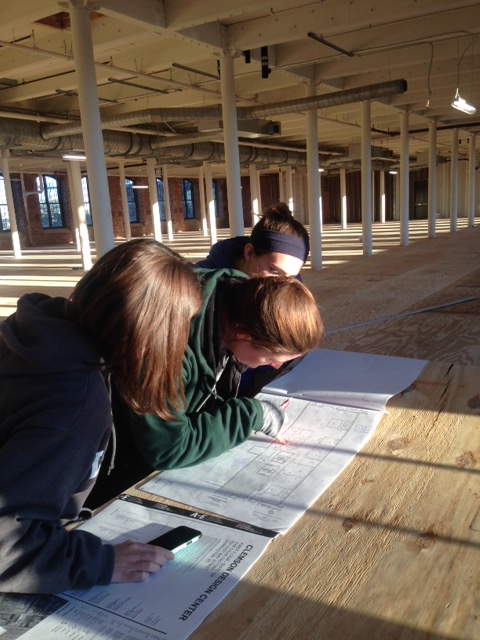
We boxed up the contents of our old home at 292 Meeting Street and moved labs, studios, offices to our new home in the historic Cigar Factory on East Bay Street.  Built in 1882 as a textile mill, the large five story brick building at 701 East Bay operated as a cigar factory employing 1,400 through most of the 20th century.  Abandoned and empty for a decade, the Cigar Factory is today a successful rehabilitation that houses retail and commercial offices on the ground floor and offices above.  The MSHP program occupies the second floor of the building with Clemson’s other Charleston-based design programs.  Come see us!

firstyearstudioclemsonconservationlab   FullSizeRender    FullSizeRender

MSHP 2016 Summer Internships

The MSHP Class of 2017 has the first year of graduate school behind them and they are off to various internships across the country. From preservation architecture firms to non-profits to national parks, see where our students are working this summer:

Jennifer Baehr – Weese Langley Weese Architects LTD, Chicago, IL

Jessica Cantrell –Historic Vehicles Association, Allentown, PA ; The Oaklands Mansion in Murfreesboro, TN

Cassie Cline – Historic Charleston Foundation, Charleston, SC

Caroline Darnell – NCPE Sequoia and Kings Canyon National Park Internship

Alena Franco – Warren Lasch Conservation Center, Charleston, SC

Rachael Freels – Clemson University/College of Charleston Graduate Program in HP, Charleston, SC

Kirsten Freeman – Lyndhurst, National Trust Site, Tarrytown, NY

Morgan Granger – Richard Marks Restoration, Charleston, SC

Clayton Johnson – Edgewood Builders, Inc., Charleston, SC

Jen Leeds – National Park Service, Historic Preservation Training Center, Frederick, MD

Kymberly Mattern – United Building Envelope Restoration, Manassas Park, VA

Meg Olson – Richard Marks Restoration, Charleston, SC

Ben Walker – Bennett Preservation Engineering, Inc., Charleston, SC

Second Year Student to Present at American Institute of Conservation Conference in May

http://aics44thannualmeeting2016.sched.org/event/6dyz

MSHP moves to The Cigar Factory

IMG_0727Many of you may have already heard that our program will be moving from our current location at 292 Meeting Street to new quarters on the second floor of the Cigar Factory on East Bay Street. As we plan for relocation, we wanted to announce what we know about the building, our place in it, and when you can expect to hear about us packing and unpacking.

Built in the early 1880s as a textile mill, the Cigar Factory was damaged in the earthquake of 1886 and then repurposed as a factory for making cigars. At its busiest, the factory employed 1,400, many of the workers residing the neighborhood hugs the factory and spills toward Meeting Street (America Street is the principal north-south street in this neighborhood). A labor strike following WWII saw the protest song “We Shall Overcome” used for the first time there. Factory operations ceased in 1974 and a long period of vacancies alternating with failed schemes and partial use ended when an investment group took on rehabilitation of the building for office use, using rehabilitation tax credits as part of their funding mechanism. Long story made short: we will occupy a floor of an historic building that has an interesting back story.

Clemson will lease 24,000 square feet of usable space at the Cigar Factory. Our program, CAC.C (the school of architecture’s Charleston outpost, and a PhD program in Architecture&Health will move in this summer. There is also space for a proposed MS in urban design and for landscape architecture programs.

We’re now at work refining plans for the upfit of this space to meet our needs. MSHP space in the Cigar Factory will include two studios, faculty offices, seminar rooms, storage, AV/IT storage, and new shiny laboratories. Our small library will be melded with CAC.C’s and be housed in a small on-site library (which will be placed in the tower that once housed the factory’s elevator). A 100-seat classroom will give us a venue for lectures and other public programs. Display alcoves that face into our studios are being designed for our architectural fragments collection. We’ll post plans once they are approved.

Look for reports via Facebook as upfit proceeds!

MSHP travels to Cuba

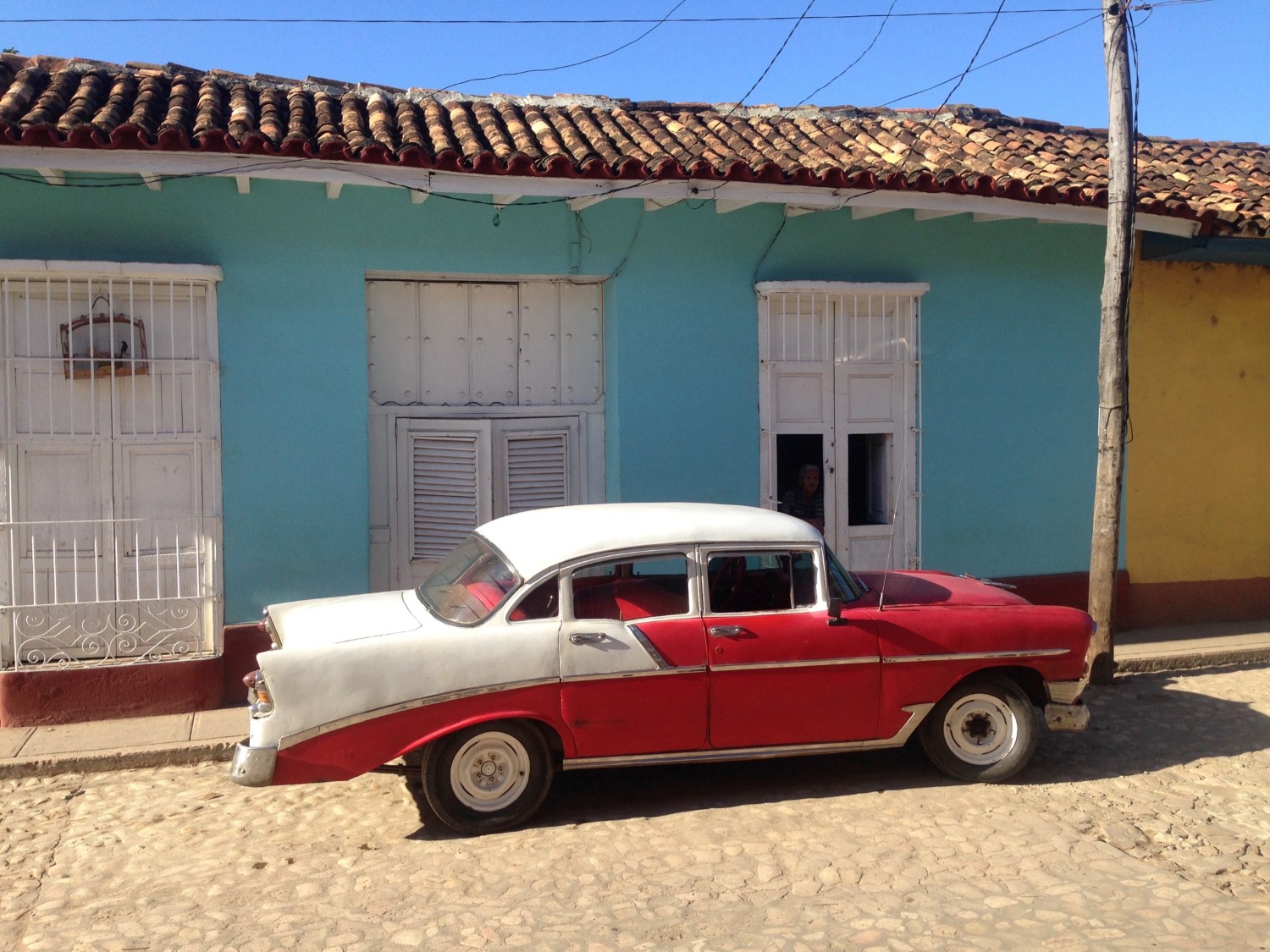
Picture44In mid December a small delegation from the MSHP program and the Warren Lasch Conservation Center visited Cuba to explore possible collaborative projects there. The group spent five days in Havana and two in Trinidad, a World Heritage City founded in 1512 and located on Cuba’s south coast. Meetings with planners, historians, university faculty, administrators of craft training programs and some members of Cuba’s emerging entrepreneurial community punctuated field visits to historic buildings and sites. The group returned with the understanding that Cuba is poised at the brink of significant change, much of it energized by rapidly expanding tourism, that will have significant implications for the conservation of historic sites and building.

Read More:

http://www.postandcourier.com/article/20160324/PC16/160329683/1006/from-clemson-to-cuba-partnership-could-see-study-historic-preservation-of-buildings-culture

http://newsstand.clemson.edu/mediarelations/clemson-scientists-seek-to-partner-with-cubans-to-conserve-preserve-cultural-heritage/

Second Year Student To Present at Dyanmic Cities Conference

DYNAMIC CITY FLYERWe are thrilled to announce that second-year Meredith Wilson will be presenting at the Dynamic Cities Conference at Boston University in April. Her paper analyzes the current downtown revitalization efforts in Meridian, Mississippi as a case study for better understanding the use of preservation theories and practices in the revitalization of small-city downtowns.

ABSTRACT: Can the Center Hold?: Grappling with the decline of a small-city downtown, in Meridian, Mississippi
Meridian, Mississippi, is a poster child for the Post-War Era decline of America’s downtowns. The center city has been in steady decline since the rise of automobile culture and the opening of Meridian’s first suburban mall in the 1970s. The “white flight” endemic to many American cities has exacerbated the problem.
This study analyzes how a historic preservation ethic may better inform the economic development of a downtown with an emphasis on establishing best practices for other small American cities, where Meridian will serve as a case study. In focusing on a small, southern city, this paper fortifies a weak area in the study of preservation best practices related to downtown revitalization, which has focused on larger cities outside the Mid-South region. It examines the preservation policies within Meridian’s 2004 Downtown Redevelopment Plan, 2009 Comprehensive Plan, and other official city planning documents. It gauges the importance placed on preservation in city planning, as well as to what degree preservation policies are actually carried out.
Meridian’s revitalization efforts focus on large development projects devoted to entertainment and tourism: the restoration of the Grand Opera House, the upcoming redevelopment of an abandoned Art Deco office building into a hotel, and the construction of the Mississippi Arts and Entertainment Center (MAEC), slated to open in 2017. While these first two projects are preservation-minded, the MAEC project has resulted in the demolition of the historic Hotel Meridian (1907). Collectively these projects ignore the traditional business and residential functions that truly anchor a historic downtown. This study examines the current success of these projects, and others in similar cities, to encourage sustainable development of the downtown core. Specifically, the study will suggest how historic preservation, incremental development, and diverse services and functions can improve downtown revitalization efforts in Meridian and comparable cities.

Finals Week Begins with memorable HSR Presentation

IMG_9420We have officially kicked off finals week with the Historic Structures Report class presentation this morning. The class has spent the semester researching, studying, and analyzing the Wideman-Hanvey Homestead that dates back to the Revolutionary War. The family of the current owners purchased the property in 1888 and the house and accompanying land have remained in the family ever since. Fourteen members of the Hanvey family traveled to Charleston this morning to attend our students’ presentation and learn more about their family homestead. It was a special morning and great start to the week.

2015 Frances Benjamin Johnson Photography Awards

Honorable Mention Awardees:

Alena Franco- Sense of Place Photograph
Jennifer Leeds - Detail Photograph
Jennifer Leeds – Detail Photograph
Jen Leeds - Sense of Place Photograph
Jen Leeds – Sense of Place Photograph

First Place Awardees:

Rachael Freels - Best Technical Elevation Photograph
Rachael Freels – Best Technical Elevation Photograph
Morgan Granger- Best Sense of Place Photograph
Benjamin Walker – Best Detail Photograph

Advanced Conservation Class to Present at 2016 Historic Mortars Conference

groupatsheldonThe Advanced Conservation Class led by Frances Ford submitted an abstract on their conservation work at Old Sheldon Church in Yemassee, South Carolina. This week the abstract was accepted and the class was invited to present their findings at the 2016 Historic Mortars Conference in Santorini, Greece next October.

Hybrid methodologies for mortar analysis, a digital view from the Carolina Lowcountry
Abstract: Emerging digital documentation technologies facilitate conservation assessments of historic sites and structures. What we term ‘hybrid methodologies’, these approaches merge traditional onsite inspection and conservation analyses with the new digital abilities to analyze and visualize historic structures. To explore these new approaches, Clemson conservators undertook concurrent digital documentation and conditions assessment at Old Sheldon Church Ruins in Yemassee, South Carolina.  The site was laser scanned using a FARO Focus 330 system which accurately and efficiently documented both the ruins’ form and existing conditions.  The system merged raw point cloud data with high resolution color photographs, resulting in a colorized 3D model that is accurate within two millimeters.  At the same time conservators identified and notated mortar campaigns through on-site visual inspection. In all, eight separate mortar campaigns were identified that were then mapped onto the 3D model.  Laboratory analysis of samples identified as the earliest lime mortar campaign found on site was conducted.  The laboratory process included standard acid wash, gravimetric and optical microscopy analysis. This hybrid process combines standard analysis and assessment procedures with cutting-edge digital technologies that pushes the field of historic mortar analysis forward.

Professors Hudgins and Leifeste present paper at SESAH annual meeting in San Antonio

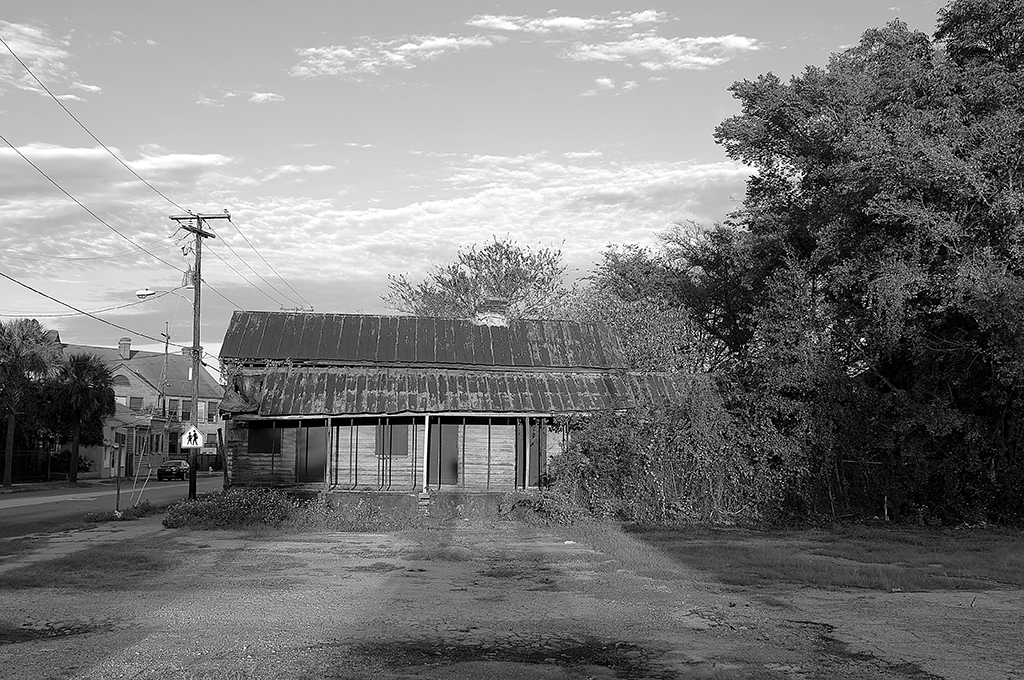
During the spring 2015 semester, MSHP students in the First Year Preservation Studio assessed the condition of the ruins of the Progressive Club on John’s Island  in Charleston County.  Building on the results of this investigation, Professors Hudgins and Leifeste presented a paper entitled Race and Ruin: The Progressive Club and the Challenge of Preserving a Significant Place with a Tenuous Architecture at the annual meeting of the Southeast Chapter of the Society of Architectural Historians on October 15.
 
Now a roofless ruin, the Progressive Club on John’s Island, South Carolina housed a vital community center from 1963 to 1972 that was fundamental to the advancement of the local African American community and important for the Civil Rights Movement nationally.  The “Citizenship School” developed here in response to local needs for literacy training, political empowerment, and employment networking became a model spread throughout the South.  The Progressive Club served basic community needs as a grocery store, childcare center and meeting space, and it and its members provided transportation and lodging opportunities for African Americans traveling during the era of segregated public accommodations.  The founder of the Club, Esau Jenkins, is a notable national figure in the pursuit of civil rights justice.  What Jenkins and his collaborators contributed to the social, cultural, and political transformation of the late twentieth-century South is wildly out of scale with this modest building.  The Progressive Club is, in short, one of those ordinary places where extraordinary people made history in a building now little appreciated for its historical significance and the connection it provides to that history.  How do preservationists and public historians deal with places whose significance resides in intangible contexts and in historic events that left few indelible architectural signatures?  How should preservationists proceed when historically significant places are neither particularly evocative, nor architecturally compelling, nor, in the case of the Progressive Club, especially stable?

The memorialization of ruins in the South Carolina Lowcountry is determined by who cares for them, the sources of the ruin’s significance, the scale, aesthetic qualities and specific conditions of deterioration of the ruin.  Long- tended ruins in the South Carolina Lowcountry include the Bennett Rice Mill Façade, Old Fort Dorchester, Peachtree Plantation, Pon Pon Chapel, and Sheldon Church Ruins.  Each represents a different manner of treatment and interpretation.  Each ruin serves a different role in connecting Lowcountry communities to shared pasts.  These antebellum ruins were raised with materials and by building methods more durable than those used in the construction of the Progressive Club, however.  These architectural differences reflect historical inequities and present contemporary technical challenges.  This aspect of the Progressive Club speaks to larger challenges of preserving late twentieth-century vernacular buildings.

Furthermore, the Progressive Club differs from many other ruins in that the community has declared its intention to preserve and interpret the legacy the ruin embodies.  Should preservation take the form of an emphasis on a living legacy with a reconstruction or replacement building to support the social and programmatic functions under the next generation of the Club or should preservation take the form of stabilization and conservation of the ruins?  The Progressive Club, at this current phase of preservation planning, raises more questions than answers.  In challenging a traditional assumption that architectural value determines preservation treatment, the Preservation Club is a provocative case study of how important historical narratives may live on through remaining architectural fabric whether monumental and mundane.

Meredith Wilson and Team Present 59 Church Street Documentation Package to Historic Charleston Foundation

Meredith presentingSecond-Year student Meredith Wilson, along with her classmate Michelle Thompson and alumna Amy Elizabeth Uebel, presented the results of the documentation of 59 Church Street, the Thomas Rose House, she coordinated during her summer internship at a gathering of Historic Charleston Foundation staff, historic preservationists, and realtors on September 22.

Following her presentation of how the documentation team assemble for the 59 Church street project carried out its work, Wilson presented full sets of documentation photographs, HABS-level drawings of the houses, and a history of the house to Cathy Forrester, owner of the house, Helen Geer, a member of Historic Charleston Foundation’s board of directors and agent-in-charge of William Means Company, and the Margaretta Childs Archive at Historic Charleston Foundation.  Meredith will be entering her drawings of 59 Church in the 2016 Holland Prize Competition.

The Thomas Rose House is one of Charleston’s oldest surviving eighteenth-century dwellings.  Restored in 1929, the house was later purchased by Connecticut architectural historian Henry Philip Staats and his wife Juliette, both active in the formation of Historic Charleston Foundation.  They and their descendants have owned the house for more than 80 years and maintained it with few changed over that period.  The house is thus a remarkable time capsule of of restoration practice and interior furnishings, an important aspect of this documentation effort.

MSHP Student Brent Fortenberry to Present Paper

Second Year student Brent Fortenberry will present a paper entitled “Stone, Timber, and Lime: Combining Archaeological, Architectural, and Conservation Science Research Strategies at the Gardener’s Cottage, Southampton Bermuda” at CHAT, Contemporary and Historical Archaeology in Theory at the University of Sheffield, UK in late October.

ABSTRACT: Scholars from different disciplines often collaborate on the ‘big questions’ of the past, the broad processes of a region, or time period. Still too while crossdisciplinary perspectives are championed by scholars from across the academy often these approaches fall short of productive interdisciplinarity. Far rarer are the moments when scholars from various fields work together on a single site. Such collaborations provide genuine opportunities to push forward our knowledge of the past. One such opportunity took place at the Gardener’s Cottage site in Southampton Bermuda. Here archaeologists, architectural historians, and conservation scientists worker together to better understand the experiences of enslaved African in the site’s rockcut cellar.In doing so they combined approaches to the past that consider material culture, the built environment, spatial patterning, as well as architectural framing and finish. The strength of such an approach is that it envelopes differing ways of knowing and analyzing the material culture in pursuit of a more nuanced understanding of the past. This paper will explore how differing data sets and theoretical perspectives have enriched our understanding of enslaved life at the site and more widely on the island of Bermuda, and in a comparative Atlantic world.

MSHP Students Awarded 2015 Holland Prize Honorable Mention

Amber Anderson and Sarah Sanders, both members of the MSHP class of 2015, garnered an Honorable Mention award for their entry in the 2015 Holland Prize, an annual competition open to both students and professionals that  recognizes the best single-sheet measured drawing of an historic site, structure, or landscape prepared to the standards and guidelines of the Historic American Buildings Survey (HABS), Historic American Engineering Record (HAER), or Historic American Landscapes Survey (HALS). The prize is intended to increase awareness, knowledge, and appreciation of historic resources throughout the United States while adding to the permanent HABS, HAER, and HALS collection at the Library of Congress, and to encourage the submission of drawings among professionals and students.  By requiring only a single sheet, the competition challenges the delineator to capture the essence of the site through the presentation of key features that reflect its significance.

Anderson and Sanders submitted documentation drawings of the ruins of Pon Pon Chapel, an eighteenth-century chapel of ease located in Colleton County near Jacksonboro, South Carolina.  This chapel and its graveyard provide a link to early eighteenth-century Anglican activity and the proliferation of chapels of ease through the South Carolina Lowcountry that served the religions needs of the inhabitants of the region’s plantation hinterlands. This project grew out of a documentation assignment in Professor Amalia Leifeste’s Preservation Studio course.

http://www.nps.gov/hdp/competitions/holland_winners.htm

MSHP Students Place Third in 2015 Peterson Prize Competiton

Documentation drawings that the MSHP class of 2015 started during their first semester have won recognition in the Peterson Prize competition.  A student competition of measured drawings, the Charles E. Peterson Prize is presented jointly by the Historic American Buildings Survey (HABS) of the National Park Service, the Athenaeum of Philadelphia, and the American Institute of Architects. The annual competition, currently in its 33rd year, honors Charles E. Peterson, FAIA (1906-2004), a founder of the HABS program, and is intended to heighten awareness about historic buildings in the United States and to augment the HABS collection of measured drawings at the Library of Congress.

The MSHP entry for 2015 was the Charles Augustus Magwood House at 61-63 Smith Street in Harleston Village, one of Charleston’s historic boroughs.  Recently purchased by a conservation-minded owner, the house is part of an important group constructed in this neighborhood in the first decades of the nineteenth century.  The documentation drawings from which this winning entry were compiled are helping guide the restoration of the house.

MSHP Alum Presents Paper at 2015 Vernacular Architecture Forum conference in Chicago

Laural Bartlett, MSHP class of 2013 now working as an architectural historian for the CRM firm SEARCH, Inc., presented a paper that summarizes the results of an independent research project at the annual meeting and conference of the Vernacular Architecture Forum in Chicago.

Florida Prison Road Camps: The Architecture of Necessity, Segregation, and Settlement
Laurel Bartlett, MSHP

ABSTRACT:At the turn of the twentieth century most of the Florida interior was still impassable swamp and marshland. The decline of rail transportation, the evolution of the automobile, and the desire for accessibility precipitated the creation of the Florida State Road Department in 1917. Convict labor was used to clear the path for the majority of the roads still in use today, but little is known of the institutional architecture associated with the road construction. This paper examines the Florida Road Camp system and the transition from impermanent to permanent architecture while exploring the understated, and often overlooked, role of imprisoned workers on the transportation infrastructure of Florida.
Known as Road Camps, these moveable penitentiaries were constructed not for rehabilitation but for the benefit of the State of Florida. Many of these camps were built adjacent to the road projects and a large number of these structures fell to demolition because of the impermanency of their construction. Historical records show that the Florida State Road Department used a combination of moveable camps and permanent camps, the architecture of which evolved over time with the changing need of the Road Department. Early camps were a combination of moveable metal cages and tents. As construction progressed the road camps transitioned to more permanent maintenance facilities consisting of frame and masonry vernacular structures. By 1954, there were approximately 30 road camps, including 11 permanent camps. The camps developed into fenced complexes that included guard towers, an infirmary, a mess hall, officer’s quarters, prisoner’s quarters, a sweatbox, and various storage buildings. By the 1950s and 1960s as projects became more complex, construction contracts were given to engineering firms and the convict labor force transitioned into a maintenance role.
Florida Prison Road Camps are a vernacular form of institutional architecture and represent not only the legacy of segregation, but also the role that impermanent institutional architecture played in developing Florida. Today, the remaining road camps are beginning to require more intensive documentation to ensure their long-term preservation. The purpose of this research was to examine historical records to pinpoint the locations of permanent camps, identify the remaining extant structures and their conditions, identify how and where each type of construction was used, and track the progression in the change of architecture. As these resources continue to deteriorate and face demolition, a more comprehensive understanding of the construction of the camps and their historical significance will help transportation engineers develop more appropriate preservation strategies.

MSHP Graduates to Attend 1st International SEAHA Conference

Our most recent graduates were invited to present their work on the conservation of Battery Jasper at the 1st International Conference on Science and Engineering in Arts, Heritage and Archaeology (SEAHA) this July at the University College London.

The conservation of Battery Jasper represents the first collaborative effort between the Clemson University/College of Charleston Graduate Program in Historic Preservation, the Warren Lasch Conservation Center, an innovative research facility that specializes in the conservation of metal artifacts, and the United States National Parks Service. This project was the culmination of the materials conservation segment of a two-year Master’s program. The project consisted of devising and executing a stabilization plan for the cast iron and steel components of Battery Jasper in Sullivan’s Island, South Carolina. Battery Jasper, an example of an Endicott coastal defense system, dates from 1896 and is currently owned and operated by the U.S. National Parks Service. Endicott System batteries are an often-undervalued and underfunded component of cultural heritage in the United States, a concern that is compounded by the difficulties that surround their conservation. Conservation efforts focused on the unstable metal components of the battery’s shell hoist system, the most significant portion of the battery. Previous protective coatings failed due to continual exposure to the coastal environment. The chosen treatment method utilized the ThermaTech high-pressure steam system, a tool developed for use on masonry but used successfully by the Warren Lasch Conservation Center on metal objects in similar contexts. The ThermaTech system effectively removes existing coatings without damaging the corroded metal’s fragile surface. The bare metal was recoated with an epoxy base and polyurethane finish coat. The successful conservation of Battery Jasper is a step forward in the development of relationships between academic, scientific, and governmental heritage institutions.

Summer Internships

With the spring semester successfully behind them, First Years have begun to depart for summer internships:

Jane Ashburn – Warren Lasch Conservation Center, Charleston, SC
Amanda Brown – Bennett Preservation Engineering, Charleston, SC
Naomi Doddington – Historic American Buildings Survey of the Heritage Documentation Programs, National Parks Service, Washington, D.C.
John Evangelist – Joseph Pell Lombardi Architecture, New York, NY
Brent Fortenberry – Warren Lasch Conservation Center, Charleston, SC
Jessica Fortney – Minnesota Historical Society, St. Paul, MN
Haley Schriber – Stratford Hall, VA
Anna Simpkins – Ebey’s Landing National Historic Reserve, Coupeville, WA
Jean Stoll – Page & Turnball: Historic Preservation Architecture, San Francisco, CA
Michelle Thompson – Historic Charleston Foundation, Charleston, SC
Rachel Walling – Maine Preservation, Portland, ME
Meghan White – Mount Vernon, VA
Meredith Wilson – Clemson University/College of Charleston Graduate Program in Historic Preservation, Charleston, SC