July 2026 Yellow-Legged Hornet Update: Report Nests
Introduction
Our goal is to keep you informed about the Yellow-legged Hornet (YLH) infestation in South Carolina. Supportive community relationships are essential to the success of detecting, tracking, and removing this pest. This update is being issued to collaborators, communities, and stakeholders, and we invite you to share this information with anyone who may be affected by our operations.
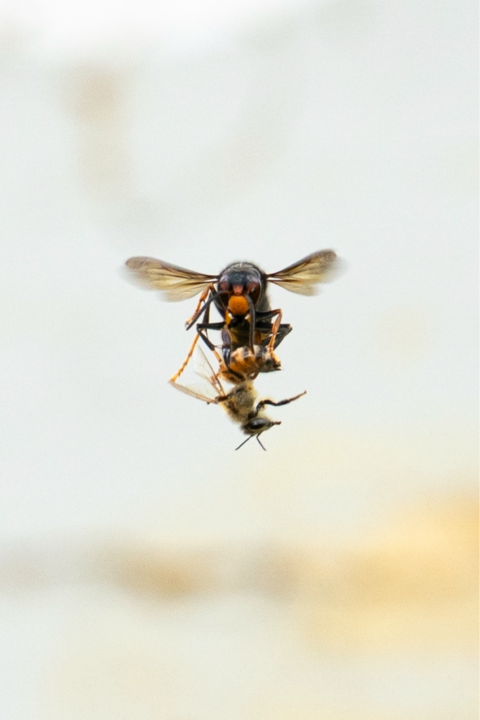
Photo Description: Image of the Yellow-legged Hornet hawking a honeybee from an apiary located in Beaufort County, South Carolina. Hawking is a predatory behavior that the Yellow-legged hornet. YLH hovers near the entrances of honeybee hives, where it waits to capture bees as return for foraging. Photo credit: Sean Rayford; The New York Times.
Background
What happened? In August 2023, Vespa velutina, Yellow-Legged Hornet (YLH) was detected in the United States for the first time near Savannah, GA, less than five miles from the South Carolina-Georgia border. In Spring 2024, several YLH queens and one embryo nest were found in Beaufort County; worker detections continued through summer.
Why do we care? Yellow-Legged Hornets prey on honeybees, causing reduced foraging and colony failure. This impact would result in reduced honey and other honeybee products and reduced crop production due to decreased pollination by honeybees and native pollinators.
What are we doing? With the Support of USDA APHIS, Clemson’s Honeybee Protection Program is surveying for YLH focusing on detecting workers and finding nests within a wide area around the initial detections. Baited traps are used to initially detect hornets, followed by tracking live hornets to narrow down the nest search area. Eradication focuses on locating and destroying nests including queens. Nests should ideally be destroyed by late summer or very early fall before new queens are actively mating and dispersing. Nest destruction will continue throughout the fall and early winter.
What does it look like?
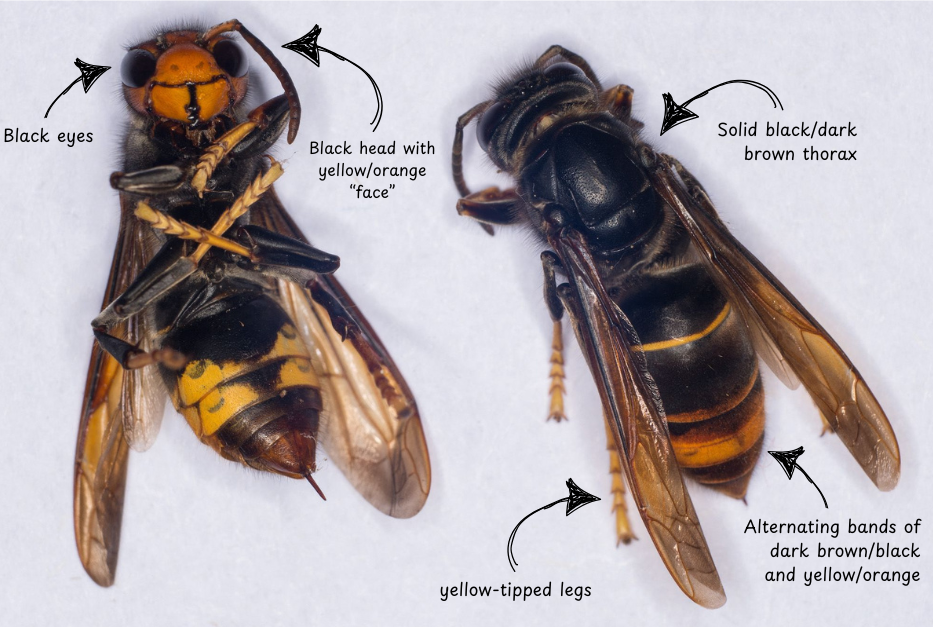
- Body length: Ranges from 0.7 – 1.0 inches
- Colorations:
- Head: Mostly black with some front-facing yellow/orange; Black eyes
- Thorax: Mostly solid black/dark brown
- Abdomen: Alternating bands of dark brown/black and yellow/orange
- Legs: Brown or black near the body, ending in yellow segments
Life Cycle

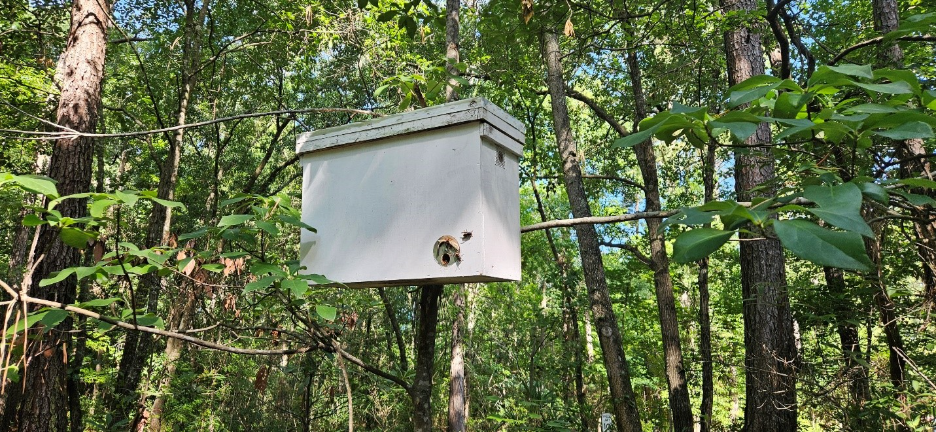
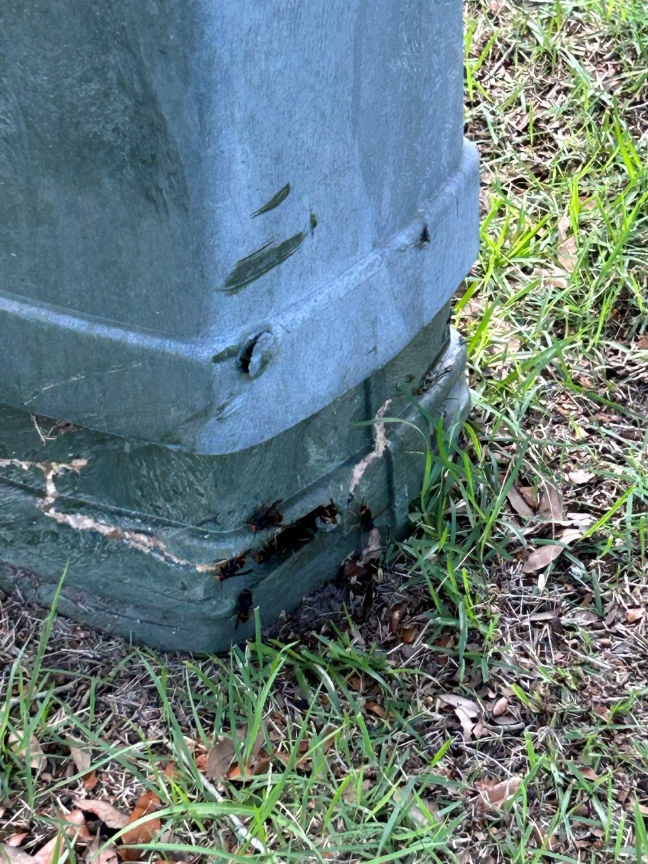
Photo Description: Primary nests can be established in hidden locations such as garden sheds, birdhouses, utility boxes, barns, honeybee swarm boxes. As worker numbers increase, the colony will often abandon the primary nest and relocate to a larger site, frequently high in a tree canopy or other elevated location. The primary nest serves as a temporary nursery and is usually abandoned once the secondary nest becomes established. Photo credits: CU DPI Brad Cavin and CU DPI Miguel Martinez.
YLH By the Numbers – 2026 Stats as of 07/14/2026
- 4,300 traps are set in Allendale, Beaufort, Berkeley, Charleston, Cherokee, Chester, Colleton, Dorchester, Jasper, Hampton, Lancaster, Union, and York Counties
- 32,758 trap services have been completed
- 2,885 traps are currently in the Low-Country District
- 1,415 traps are currently in the York District
- 199 Embryo nests have been removed in the Low-Country
- 199 Primary nests have been removed in the Low-Country
- 11 Secondary nests have been removed or scheduled for removal in the Low-Country
- 2 Embryo nests have been removed in the Up-Country
- 1 Primary nest has been removed in the Up-Country
- 30 Queens have been caught in traps placed in the Up-Country District
- 4,000+ Queens have been caught in traps placed in the Low-Country District
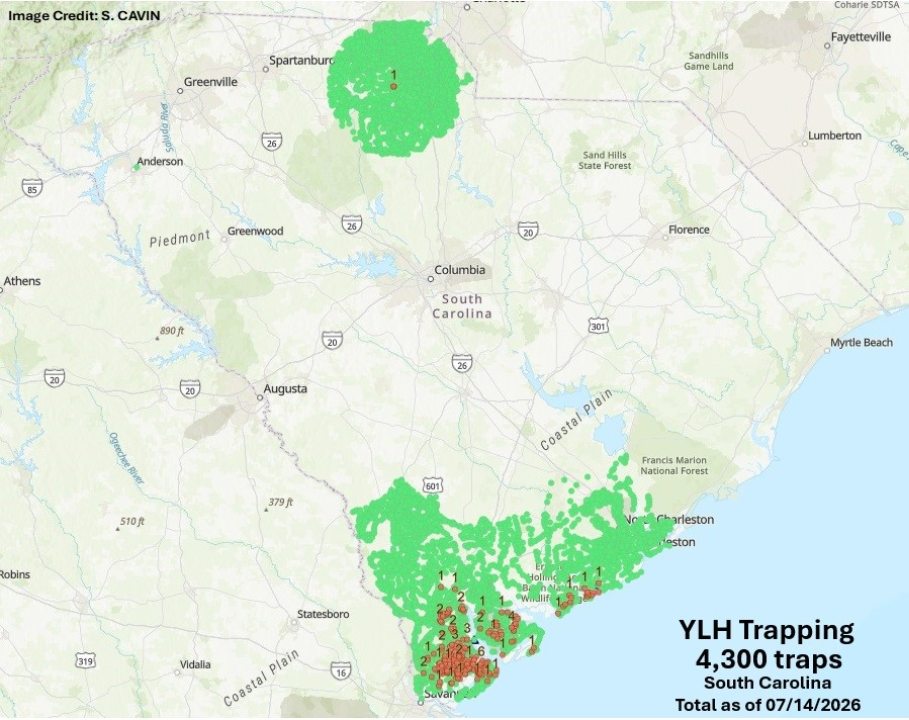
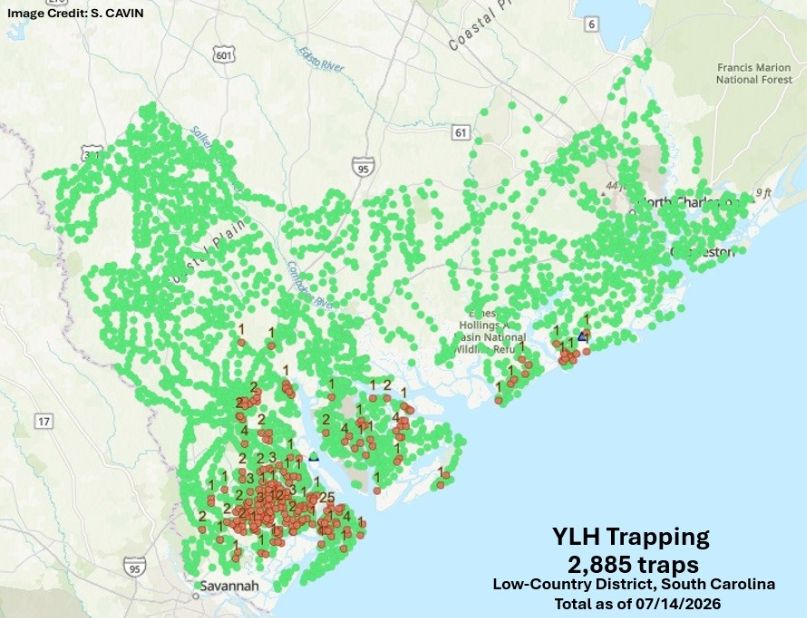
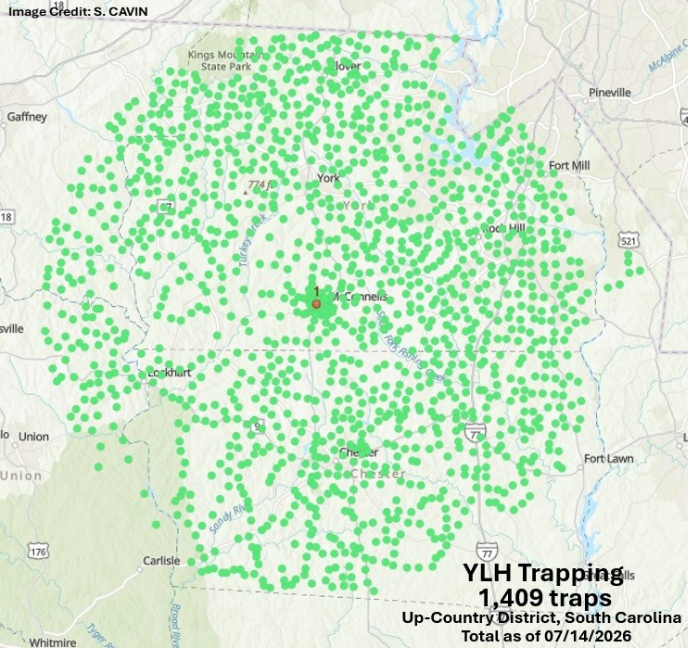
Image descriptions: The above maps are the current YLH trapping areas in the Low-Country and the Up-Country of South Carolina. Image credits: CU DPI Brad Cavin
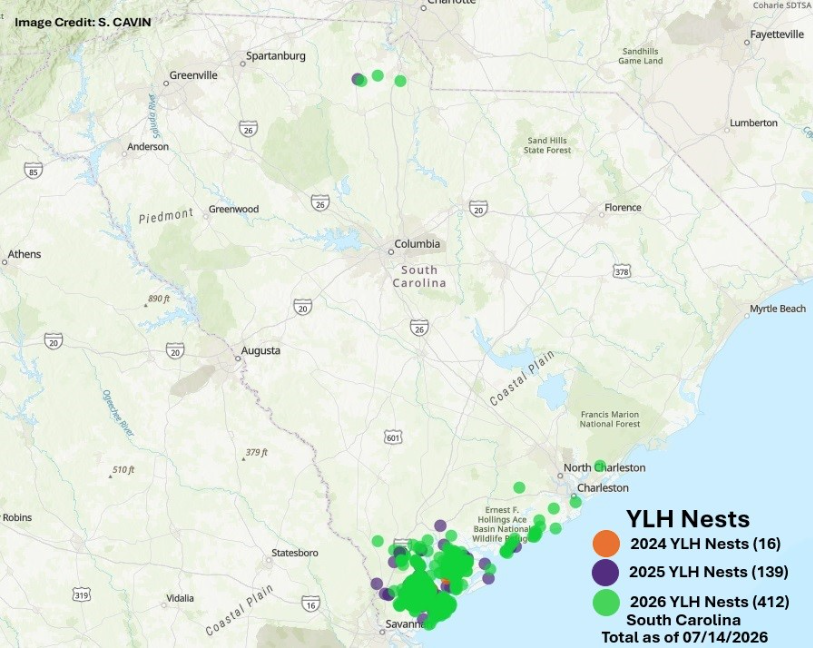

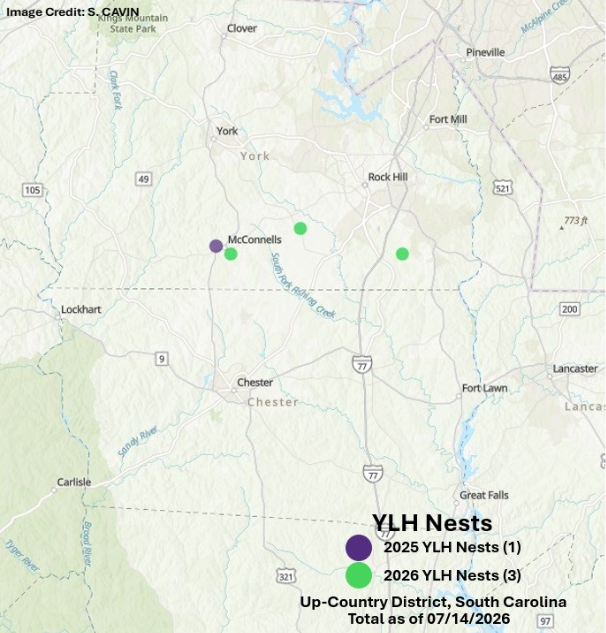
Image descriptions: The above maps reflect YLH nests in 2024, 2025, and 2026. In 2024, 1 Embryo and 15 Secondary nests were removed. In 2025, 13 Embryo, 27 Primary, and 99 Secondary nests were removed. So far in 2026, 199 Embryo, 199 Primary, and 11 Secondary nests have been located in the Low-Country and 2 Embryo nests and 1 Primary nest in the Up-Country. Image credits: CU DPI Brad Cavin
Latest Buzz
The Clemson Department of Plant Industry (DPI) inspectors and USDA personnel in South Carolina have YLH traps placed throughout Allendale, Beaufort, Berkeley, Colleton, Charleston, Cherokee, Chester, Dorchester, Hampton, Jasper, Lancaster, Union, and York Counties of South Carolina. These traps are monitored regularly for hornet activity. The locations have been established near known YLH detections and, where possible, near known honeybee colonies.
It can not be overstated that beekeepers should be familiar with the activity of YLH hawking and report any sightings immediately to the Clemson YLH Reporting Tool.
During the summer season multiple nest stages can be seen, especially “Primary Nests” and “Secondary Nests” within one colony. As the colony size grows the workers will begin building this final nest stage and the “Primary Nest” will be abandoned as the colony moves into this larger nest and continues to expand it.
DPI is currently monitoring traps and removing YLH nests when discovered. Expanding trapping locations and continuing public outreach efforts are also a major component. The public should survey around structures, shrubs, and trees and report nests in any stage. If you believe you have identified a YLH nest, do not attempt to remove it yourself. Please report at the Clemson® DPI’s reporting tool.
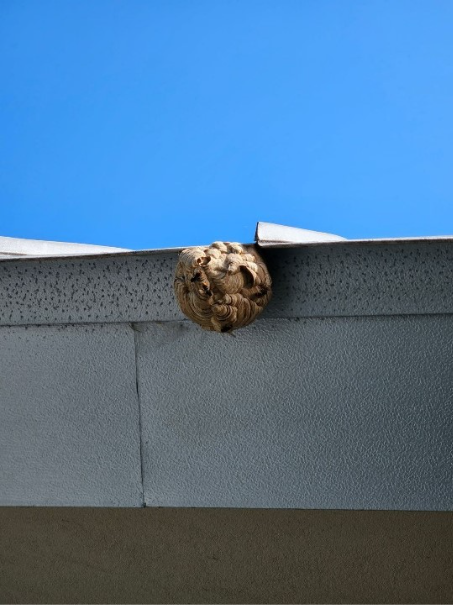
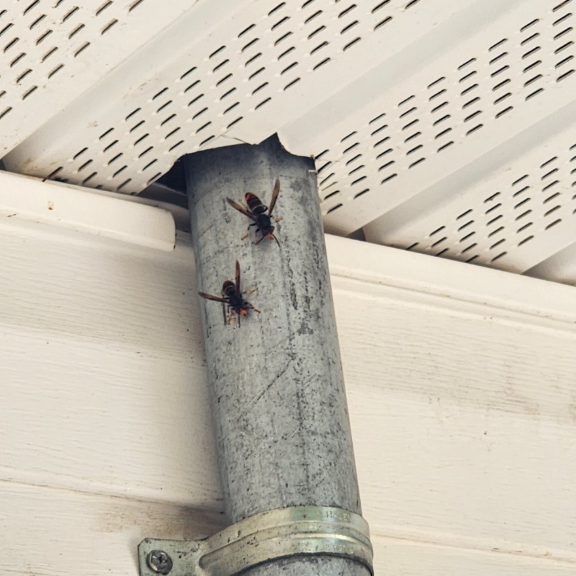
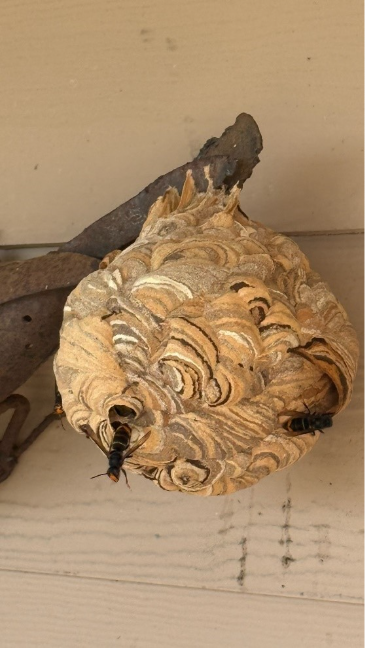
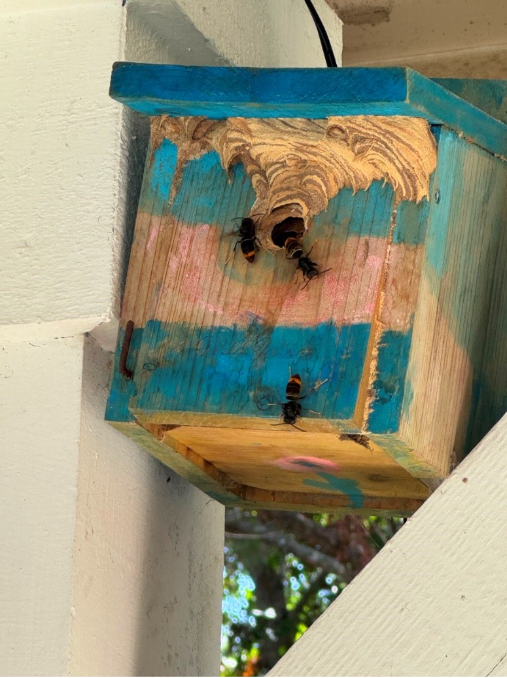
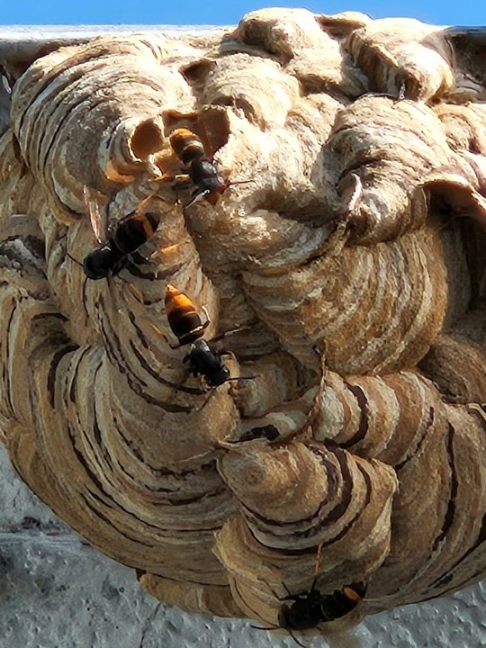
Photo Descriptions: Primary nests of the Yellow-Legged Hornet are small, early-season nests. These nests are often built in sheltered, protected locations such as: sheds, garages, barns, carports, porch ceilings, eaves of buildings, birdhouses, shrubs or hedges, and abandoned structures before the colony expands and relocates to a larger secondary nest later in the season. Photo credits: CU DPI Reporting Tool.
Look-a-like of the Month
European Hornet, (Vespa crabro)
Size:
- Queens: up to ~1.4 inches (35 mm)
- Workers: slightly smaller
Coloration:
- Reddish-brown head and thorax
- Yellow abdomen with black teardrop-shaped markings
Behavior:
- European hornets are primarily nocturnal, which sets them apart from many other wasps
- They are often attracted to lights at night and may be seen flying after dark
- Will defend the nest vigorously if disturbed
- Capable of stinging multiple times (unlike honeybees)
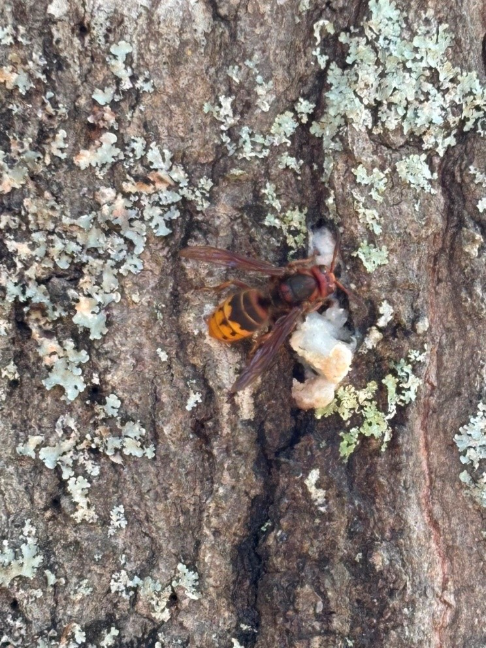

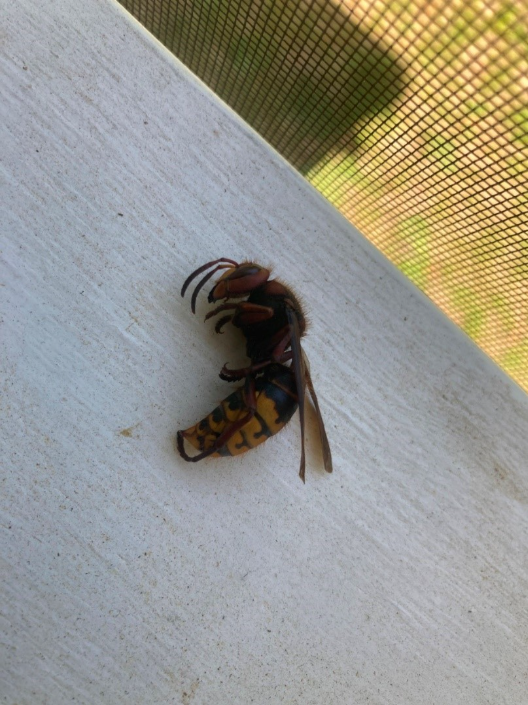
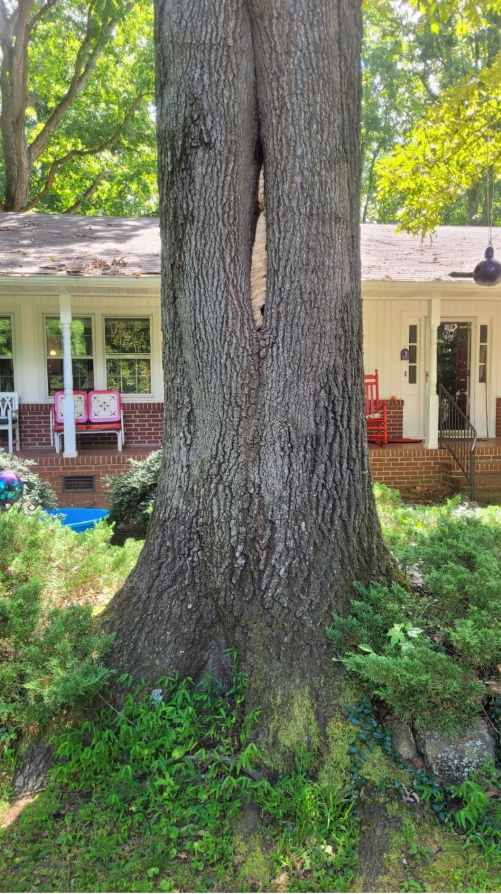

Photo descriptions: European Hornets and European Hornet Nests; Vespa crabro. Photo credits: CU DPI Brad Cavin and CU DPI YLH Reporting Tool.
Nest Description:
- Nest Structure: European hornets build large, enclosed nests made from chewed wood fibers mixed with saliva, creating a paper-like material
- Color: Brown/tan with layered, swirled patterns
- Shape: Oval to irregular
- Size: Can grow to basketball-sized or larger by late season
Nest Location:
- Unlike many aerial hornets, European hornets prefer enclosed or sheltered spaces:
- Hollow trees
- Wall voids in buildings
- Attics or barns
- Occasionally underground cavities
Inside the nest:
- Multiple horizontal combs (layers) stacked vertically
- Each comb contains hexagonal cells for developing larvae
- A single queen initiates the nest in spring, and workers expand it throughout summer
What you can do
- Beekeepers: Beekeepers play a vital role in monitoring apiaries and colonies for YLH activity and reporting YLH sightings to Clemson® DPI’s reporting tool. Reporting activity helps DPI deploy traps if needed and attempt to identify the nest location in a timely manner. Keep an eye out for hawking behavior on honeybee colonies.
- Citizens: All South Carolina citizens can familiarize themselves with hornet and nest identification and assist with reporting. A citizen trapping program for the YLH is now live. The program includes instructions & videos on constructing traps, baits, and reporting YLH findings.
- The Yellow-legged hornet is an invasive species that will move to new areas primarily through human activities such as trade, travel, and tourism, often hitching rides on vehicles and cargo, so please be careful and inspect your items prior to travel especially if you live in a YLH infested area.
- DO NOT attempt to remove a nest on your own. Report it to the YLH Reporting Tool. Someone from the YLH Response Team will contact you and arrange the removal. We will make sure to remove the nest and queen; this will ensure the queen does not fly off and start a new nest location.
- ALL REPORTS ARE REQUIRED TO SUBMIT A PHOTO WITH THE REPORT. AN IDENTIFICATION CANNOT BE MADE OR VERIFIED WITHOUT A PHOTO.
Closing
The mission of Clemson University Department of Plant Industry (DPI) is to protect South Carolina’s agricultural resources and natural ecosystems from the introduction and spread of invasive species and to enhance the efficiency of South Carolina’s agriculture. South Carolina faces major concerns from biosecurity issues and exotic pests. Without federal assistance, South Carolina would not be able to maintain early detection, provide maximum affordable laboratory capability, and maintain a field force to conduct surveys and identify, quarantine, and dispose of introduced pests at effective levels.
Clemson DPI would like to recognize the funding and support received from the USDA, without which YLH trapping efforts would not be possible. We would also like to thank the GA Department of Agriculture for their invaluable expertise and collaboration on YLH eradication in SC.
Helpful Links
- Clemson® DPI Resources
- USDA APHIS on YLH
- Georgia Department of Agriculture on YLH
- Clemson Extension’s Apiculture and Pollinator Program
- Article on Exotic Hornet Threats to Apiculture
- York County Detection Article
- New York Times Article
Want to stay in the loop?
Tune in for our monthly newsletter! Get the newsletter to your inbox each month. To subscribe scan this QR code or follow the instructions below:

1. Create a new email message to listserv@lists.clemson.edu
2. In the body of the message, type the following: subscribe listname First Last
Example: subscribe SCYLHNEWSLETTER Jane Doe
3. If there is an email signature in the body of the message, you must remove it so it does not interfere with Listserv reading the subscription command.
4. Send the email.
5. Subscriber should receive an email confirmation it was successful.
