When South Carolina joined the Great Southeast Pollinator Census (GSePC) in 2022, students and educators across the state were among the first to participate in the two-day event. Designed as a citizen science project that captures data on pollinator populations, the event has become a real-world opportunity for educators across the Southeast to help students build science skills, understand plant and pollinator relationships and explore the natural world. For educators, the teachable moments are endless. Your students can help make every pollinator count by joining the GSePC on August 22 and 23, 2025.

Integrating the GSePC into the learning environment is as simple as visiting the GSePC website’s educator tab. Classroom teachers, homeschool parents, daycare providers, afterschool leaders, or anyone working with youth will find the site brimming with STEAM-based K-12 educational resources and links. A good place to start familiarizing yourself before you introduce the concept to students is the webinar, The Pollinator Census for Educators and Non-Profits https://youtu.be/QFmmuH_tH3M. North Carolina Census Coordinator, Amanda Wilkins Brachter with North Carolina Cooperative Extension, shares her top tips in “What Makes a Successful Great Southeast Pollinator Census Counting Event: A Guide for K-12 Educators (August 22-23, 2025).

To generate excitement about the event, download the PowerPoint “How to Participate in the Great Southeast Pollinator Census for Youth” to start sharing pollinators’ importance and prepare students to identify insects in the 15 minutes they will count during the Census. Students of all ages love learning that carpenter bees have “shiny heinies” and bumblebees have “fuzzy rears”!
In addition to the materials you will need on the counting days, such as the insect counting sheets and insect identification guide, you will also find lessons to use throughout the year, including insect observation, and activities such as the honeybee roles activity, honey tasting, math mania and language arts activity sheets. The downloadable Pollinator Journal offers prompts for writing, drawing, scientific observation and poetry.
To engage young readers, check out the newly released children’s book, The Great Pollinator Count by Susan Edwards Richmond, illustrated by Stephanie Fizer Coleman. The book tells the story of a young girl named Mellie who participates in a community science project to count pollinators in her school garden. For more K-5 pollinator-focused literacy lessons, the Bee Cause Project’s Bee Cause Book Club is the bees’ knees.
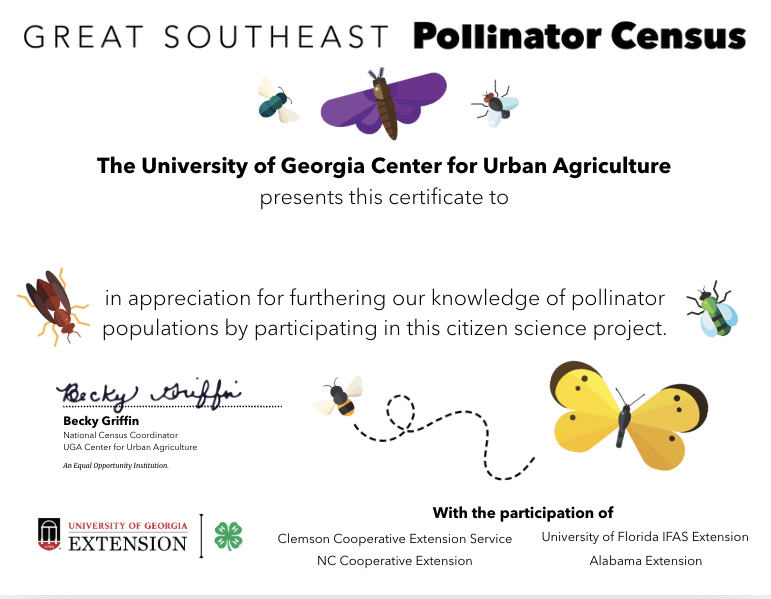
After the counting is over and the data uploaded to the website, celebrate your students’ participation by downloading and printing the 2025 Great Southeast Pollinator Census I Counted Stickers and the 2025 Certificate of Participation.

The Great Southeast Pollinator Census will take place August 22 and 23, 2025. For more information please reach out to the South Carolina Census Coordinator, Amy Dabbs at adabbs@clemson.edu.
Written by Amy L. Dabbs, Clemson Extension School & Community Gardening Coordinator