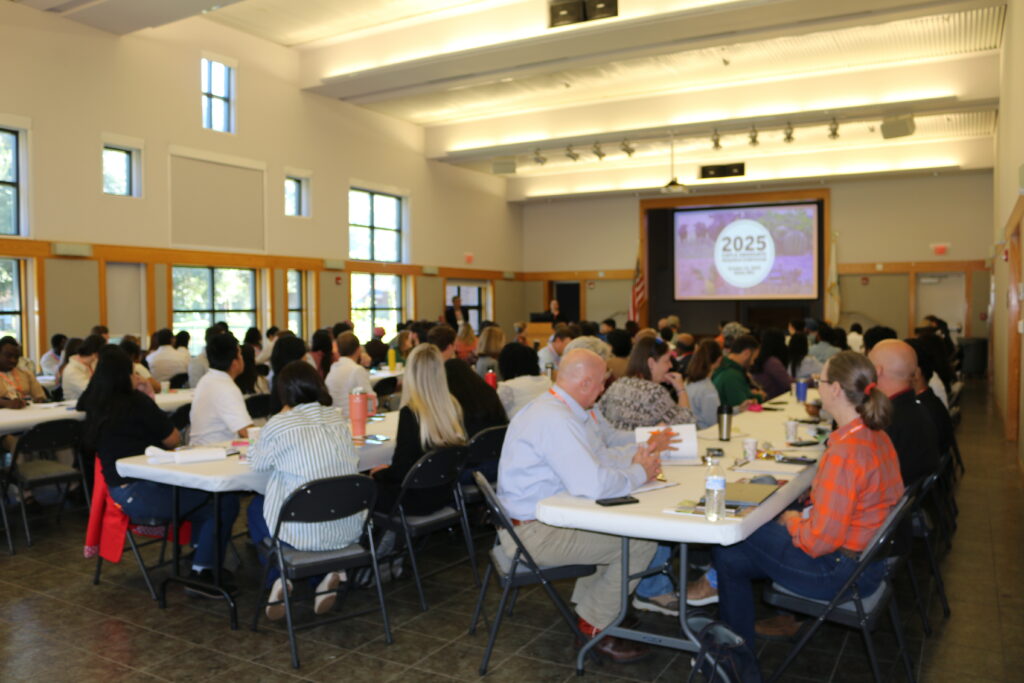
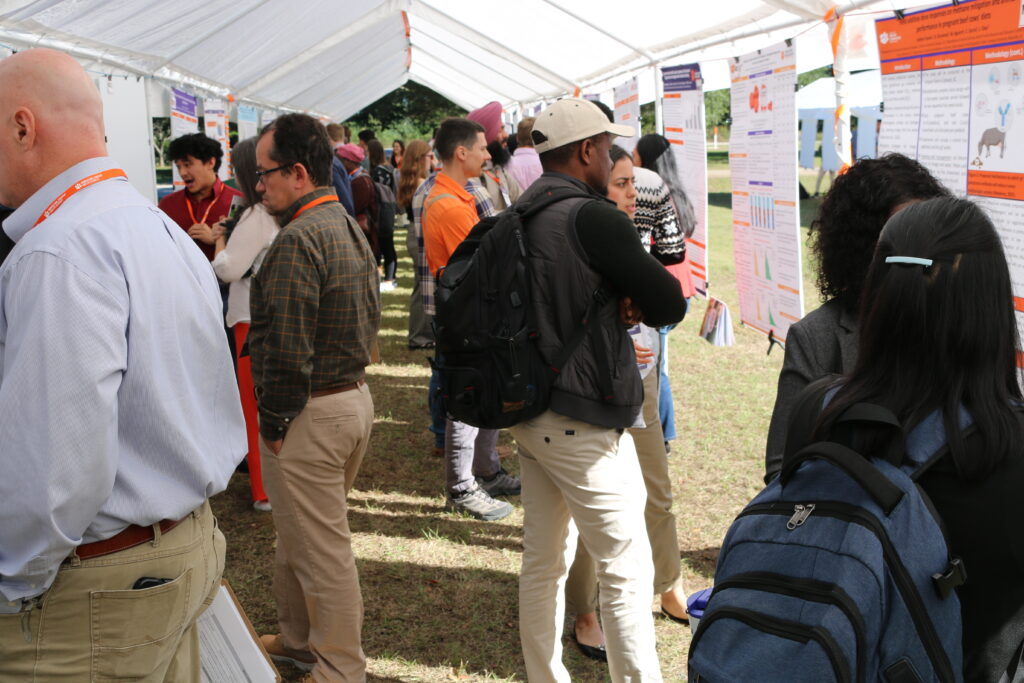
Clemson College of Agriculture, Forestry and Life Sciences (CAFLS) master’s and doctoral students learned valuable communication skills by participating in the 2025 CAFLS Graduate Research Symposium.
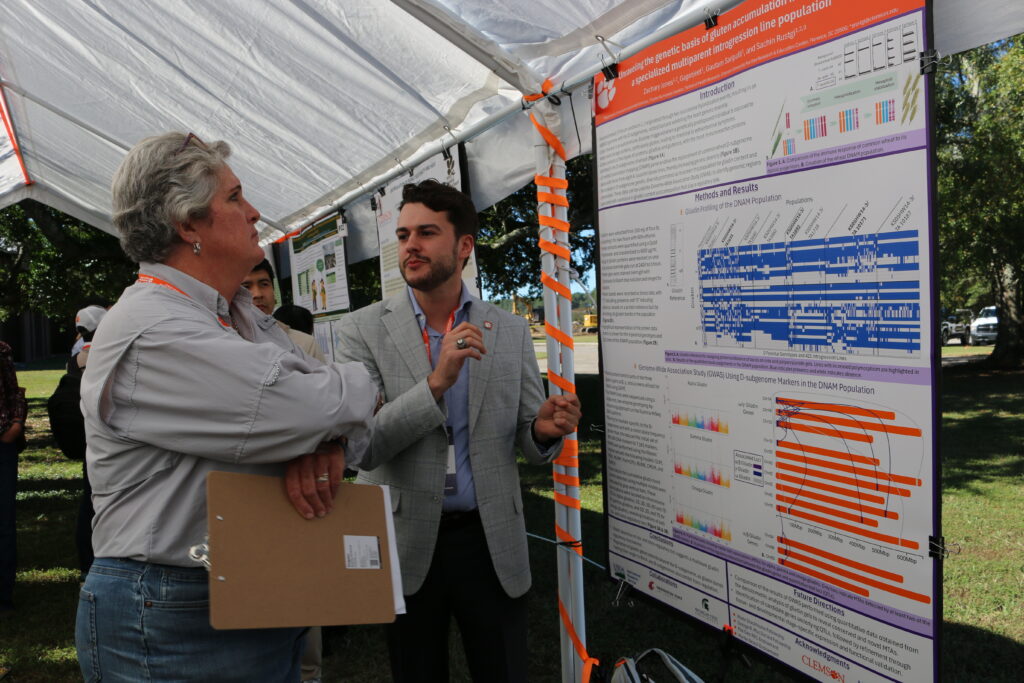
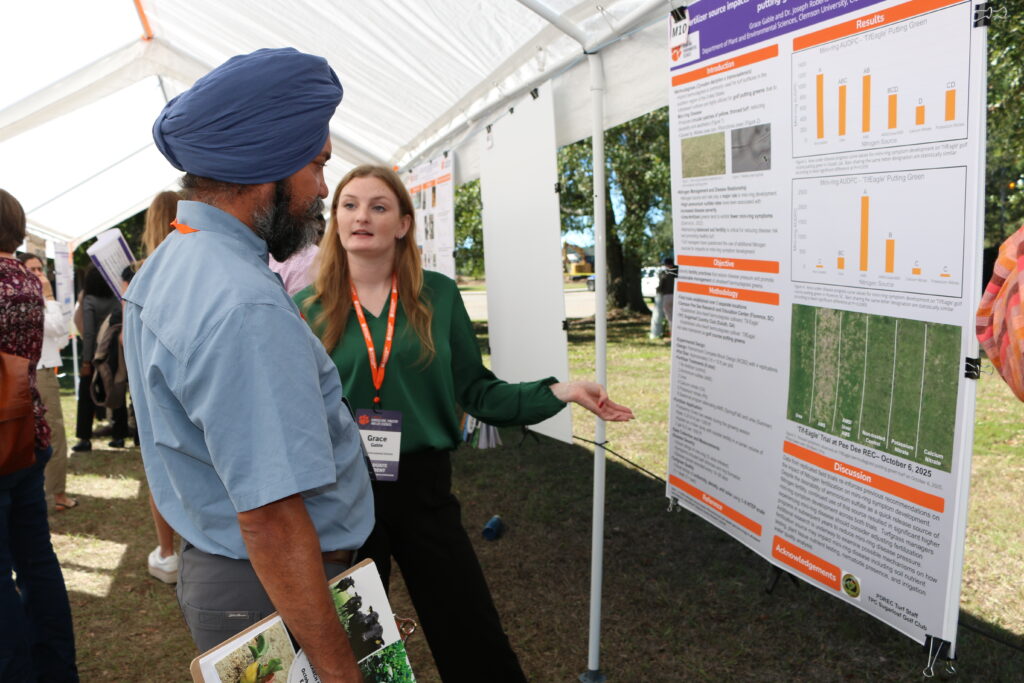
This event was held at the Edisto Research and Education Center (REC) near Blackville, South Carolina, and consisted of 3-minute thesis and poster competitions related to each participating student’s research area. The winners received their awards from CAFLS Associate Dean for Research Paula Agudelo.
The annual symposium, which began in 2022, provides students with opportunities to learn how to adjust messages according to audience needs and understanding. The format is structured so that students can learn how to relay technical information to non-technical audiences.
Agudelo said the symposium was a time to celebrate and share the students’ work.
“A few years ago, we realized we needed an event like this,” Agudelo said. “CAFLS graduate students are our skilled partners in research, carrying out experiments and creating new knowledge. Their ideas and work fuel the engine generating innovation for South Carolina and the world. They are the next generation of researchers and innovators – and the research they conduct responds to pressing state, national and world needs.”
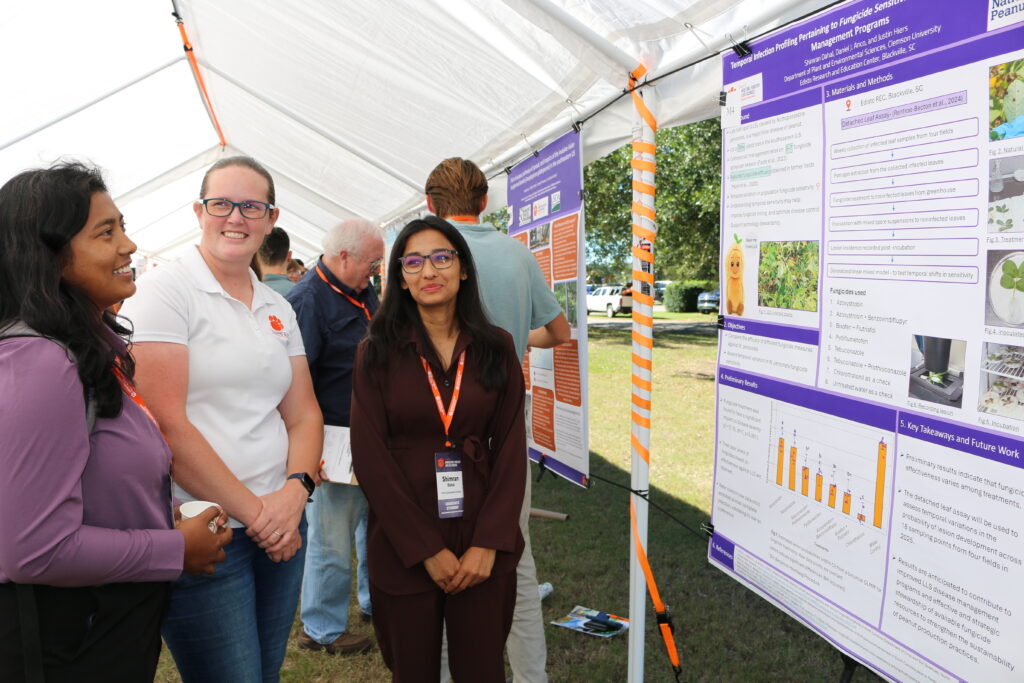
Shimran Dahal is a master’s student in plant and environmental sciences from Bhaktapur, Nepal. This was the first year she participated in the symposium and the first time ever she has presented a poster about her research. Her poster titled, Temporal infection profiling pertaining to fungicide sensitivities for use in late leaf spot management programs, provided information about late leaf spot and how better understanding this disease is important for improving fungicide programs and maintaining sustainability of peanut yields.
“I have learned a lot from my research and from preparing to present my findings to a non-technical audience here at the symposium,” Dahal said. “From my research, learning about detached leaf assay was most interesting. And, by attending and participating in this symposium, I can learn from other researchers. I’m also learning how to present my research to non-scientific audiences so that they can understand what I’m researching and why my research is important.
“Gaining information on how late leaf spot reacts to fungicide applications over time allows farmers to develop more informed and optimal disease management strategies, ensuring better peanut yields while also safeguarding the long-term effectiveness of fungicides.”
This is the third year Linus “Rory” Schmitz, a doctoral student from Bonn, Germany, has participated in the symposium. He provided information about how the fungal-like microorganisms Phytophthora nicotianae are present and transient in U.S. nurseries causing root rots, crown rots and foliage blight on a variety of plant species on his poster – Host specialization among isolates of Phytophthora nicotianae from three important ornamental crops: Lavender, petunia and annual vinca.
“I am presenting about my research that involves helping people make better decisions about disease management and prevent pathogen spread in ornamental crops,” Schmitz said. “This (symposium) is a nice way to meet with other students who are in the program. It gives us an opportunity to meet our peers and see who we will be working with during our careers.”
Award recipients
Students receiving awards for their work presented during the symposium are:
- 3-Minute Thesis
- 1st Place – Luvina Madrid, a plant and environmental sciences major from Nueva Ecija, Philippines, for Interseeded cover crops foster complementarity over competition in organic corn production.
- 2nd Place – Ebenezer Quandoh, a food, nutrition and packaging sciences major from Accra, Ghana, for A comparative approach to study fresh-cut watermelon quality loss.
- 3rd Place – Ashley Williams, a food, nutrition and packaging sciences major from Spanish Fort, Alabama, for Impact of active video games on physiological and psychological outcomes in children and parents.
- Ph.D. Poster
- 1st Place – Sabina Parajuli, a plant and environmental sciences major from Chitwan, Nepal, for Evaluating the impact of winter cover cropping on management of insect pests in organic squash.
- 2nd Place – Atiya Khan, a plant and environmental sciences major from Fargo, North Dakota, for Mining the USDA snap bean association panel (SnAP) for resilience: Heat, salinity and disease tolerance in snap bean.
- 3rd Place – Miah Maye Pormon, a forest resources major from Iloilo, Philippines, for South Carolina forest owners’ perception towards forest certification.
- Master’s Poster
- 1st Place – Sarah Jane Eberhart, an agriculture and applied economics major from Athens, Georgia, for Estimating capitalized agricultural land value by irrigation and homogenous aquifer management.
- 2nd Place – Ada Camila Montoya, a plant and environmental sciences major from La Ceiba, Honduras, for Aero-Floating Treatment Wetland (aeroFTWs) Scaffolds – A non-plastic alternative to conventional FTWs.
- 3rd Place – Virginia Justice, a plant and environmental sciences major from Springfield, South Carolina, for Defining agronomic management practices that produce high-yielding soybean in South Carolina.
Learning from experts
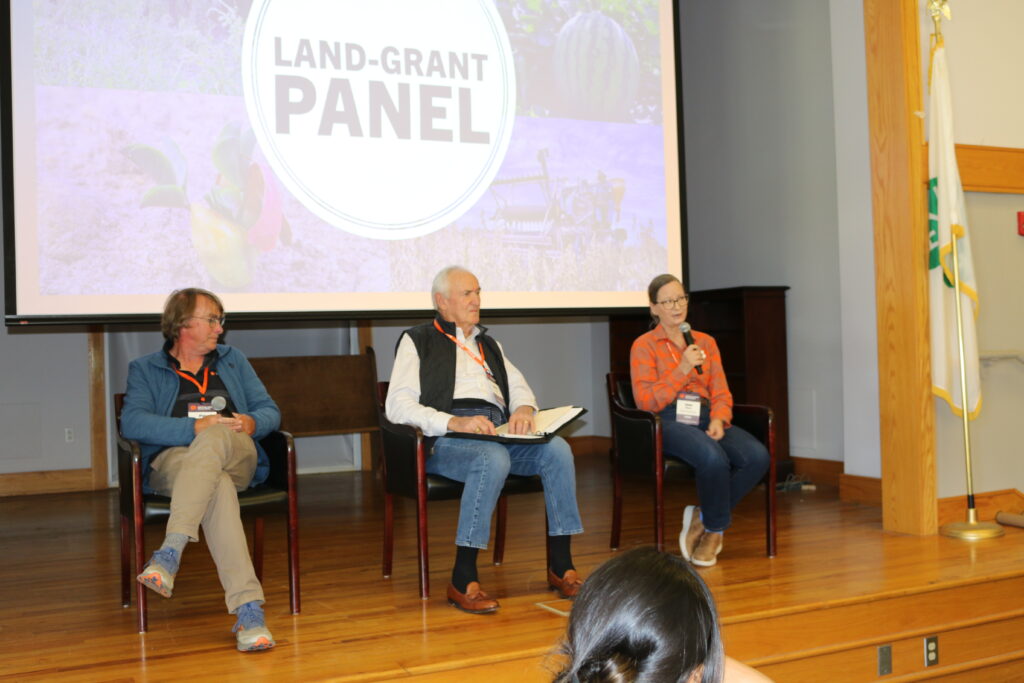
In addition to presenting about their research, the students learned about skills they will need to succeed in today’s world. A panel of industry experts including Jane Dever, Pee Dee REC director; Pat Wechter, Coastal REC director; and John Long, a Newberry County farmer and Clemson graduate, talked with the students about how what they learn today must evolve over the next 25 years to ensure continued relevance and impact.
“One of the most important things you can do is speak ‘farmer’,” Long said. “After you graduate, folks like me will be your customers. The Clemson Extension Service is an important tool for us to use in our day-to-day activities. Providing unbiased information is key. We need folks on the ground who can provide this information to help us provide food and fiber for people across the globe.”
Dever talked about two important practices the students would need to use help them in their careers.
“Flexibility and adaptability will be important,” Dever said. “When industry tells you what they need, you may need to become acquainted with areas outside of your expertise to provide them with the best solution.”
Dever also mentioned having a “Plus One” skill.
“This is the skill you have that sets you apart from others in your field,” she said. “This skill indicates that you have flexibility and adaptability to learn new things. It shows you have a well-rounded background.”
Wechter told the students working in a science-related field is “the best job (he’s) ever had.”
“What you do as a scientist can impact millions of people,” he said. “Put everything you know toward the science you want to do, do good work and people will recognize you.”
The CAFLS Graduate Research Symposium is an annual event bringing together graduate students, faculty and stakeholders across all disciplines in the College of Agriculture, Forestry and Life Sciences.
The symposium aims to support graduate students in:
- Developing thoughtful presentations by clearly and effectively exchanging information and ideas.
- Building professional development skills in science communication by participating in the “3-Minute Thesis (3MT)” or poster competition.
- Receiving and applying constructive feedback
- Establishing rewarding relationships with students, faculty and staff.




Back row: Miah Maye Pormon, Ada Camila Montoya and Virginia Justice.
