The impact of dedicated writing time and faculty writing groups for the advancement of faculty scholarship is well documented. In collaboration with the Pearce Center, our office held a Faculty Writing Retreat May 2, 2025. The retreat was held at the Brook T. Smith Launchpad in downtown Clemson, from 8:30 am- 4:30 pm. The event hosted more than 50 faculty members and included an introduction to writing circles and goal setting by Dr. Arelis Moore, two dedicated writing sessions, and an opportunity to connect with faculty members in writing circles at the end of the day. In addition, Dr. Cameron Bushnell offered a presentation on scholarly resources to elevate scholarship. We would like to share the results of the evaluation of the Faculty Writing Retreat (FWR).
Overall Evaluation
A summary of workshop results highlights the value of these types of sessions in terms of overall satisfaction with the workshop, the progress made in the writing projects, the helpfulness of the sessions and the presentations offered, as well as the effectiveness of the on-site writing circles organized. As it can be observed in the following plot, participants of the retreat were very satisfied with the experience, their progress, and the program offered.

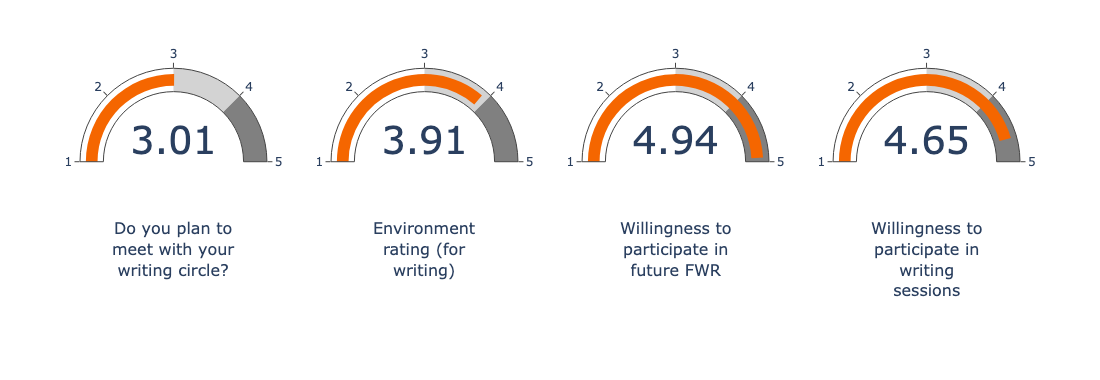
In addition, responses showed that although faculty are reluctant to commit to continue working in their writing circles, they appreciated the space selected for the workshop. While these findings can be related to the inherent interdisciplinary approach to the retreat and the fact that it was open to all faculty across the university, several reports have described the potential advantages of hosting discipline-specific writing activities. Such approach would incorporate specific styles, topics, and formats used by each discipline. Likewise, most of them expressed their willingness to participate in future faculty writing retreats (FWR) and writing session; underscoring the value of the activity and the perceived need for additional opportunities like this one.
An additional aspect to highlight is that despite the flexibility offered in terms of work, most faculty that attended the workshop opted to make progress in research-related tasks, journal articles being the most common option.

Additional Aspects of the FWR
Among other comments received in the survey, faculty expressed appreciation for the dedicated, uninterrupted writing time, which helped build momentum and reduce distractions. Faculty also mentioned that writing circles offered feedback, discussion, and inspiration for potential collaborations. In line with literature reports describing the importance of having a community of people writing (see Noone, Wiebe, or Bonafide), faculty commented that the retreat fostered interdisciplinary interaction and a sense of scholarly community, enabling social networking and the chance to learn about peers’ work. In addition, faculty shared a number of ideas for additional support mechanisms for this work, including:
- Peer editing support for non-native speakers.
- Public speaking or communication workshops.
- Interdisciplinary research “speed-dating.”
- A statistical help desk.
- Mental health support and wellness integration.
In summary, faculty overwhelmingly expressed appreciation for the writing retreat, emphasizing the importance of dedicated time for scholarly work. Many noted the value of collaborating with peers and highlighted a strong desire for more regular opportunities of this kind. There was a shared appreciation for the Office of Faculty Advancement’s support, and participants reported feeling more motivated, connected, and re-energized as a result of the experience.
Need more information?
Faculty who did not get the chance to participate in this retreat can request copies of the presentations and reach out for support to develop their own writing groups. If you have any additional questions regarding this post, feel free to stop by our office (Vickery 212) or contact us via email.
