Eight undergraduate students from universities across the country spent 10 weeks at Clemson this summer exploring how industrial engineering, data science and artificial intelligence can be used to address complex human-centered challenges.
by Kathy Snipes July 8, 2026
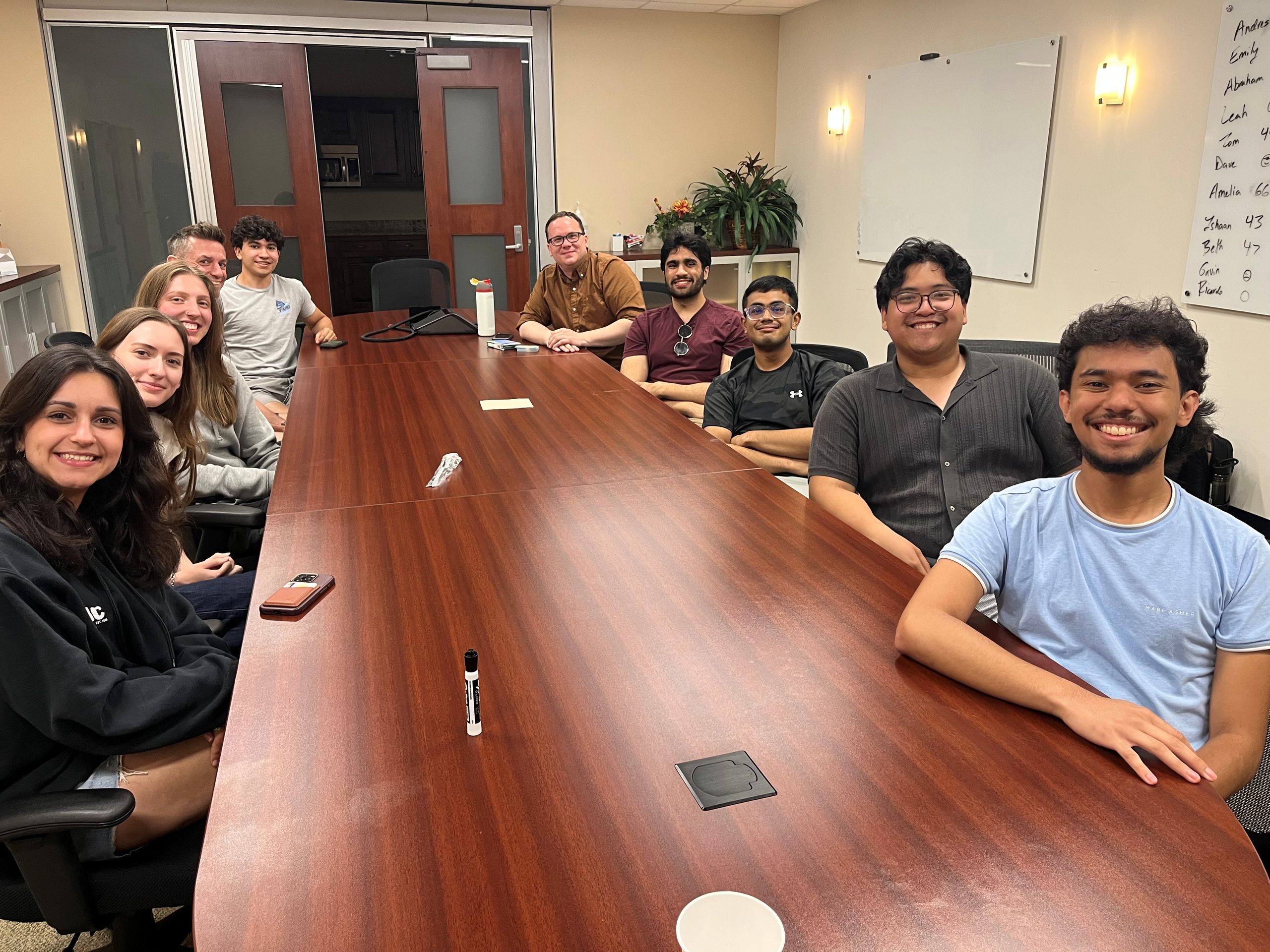
The students were part of the second cohort of Clemson University’s Human-Centered Operations Research and Engineering, or H-CORE, Research Experiences for Undergraduates program. Funded by the National Science Foundation, the 10-week program introduces undergraduate students from a variety of disciplines to research at the intersection of humans, systems and analytics.
This year’s cohort represented a particularly interdisciplinary mix of academic backgrounds, including computer science, industrial and systems engineering, computer engineering, psychology and data science. Students came to Clemson from SUNY–New Paltz, Virginia Tech, Kennesaw State University, Georgia Tech, Clark University, the University of Virginia, the University of Maryland and the University of North Carolina.
That variety of perspectives became an important part of the summer experience.
“The students helped demonstrate how many disciplinary backgrounds can work together to solve problems in AI for healthcare and supporting human trafficking survivors through trauma-informed research,” said Thomas Sharkey, professor of industrial engineering and H-CORE faculty member.
H-CORE is led by Clemson Industrial Engineering faculty members Thomas Sharkey, Jessica Avilés and Emily Tucker. Together, the leadership teams oversees a summer experience that combines faculty-mentored research with professional development, interdisciplinary collaboration and mentoring designed to support students’ research and career development.

Building on H-CORE’s first year
Now in its second summer, H-CORE continued to evolve based on experiences from the program’s inaugural year.
One area of growth was the addition of more research involving artificial intelligence. Two of the three research teams explored applications of AI and machine learning in healthcare, giving students opportunities to work with emerging analytical methods while considering how those technologies affect the people who interact with them.
The program also continued to emphasize community among undergraduate researchers. Students participated in an Industrial Engineering Research Seminar and Clemson’s Undergraduate Research Poster Symposium. Dr. Emily Tucker also organized a World Cup watch party with students from three other Clemson REU programs, creating an opportunity for participants from across campus to connect outside the research environment.
Research centered on people
Students worked alongside Clemson faculty and researchers on three projects throughout the summer, each approaching human-centered research from a different perspective.
One team, working with Dr. David Neyens, examined how people interact with healthcare chatbots. The researchers studied conversations between users and a chatbot designed to provide education about cancer and cancer-related topics. By categorizing how users continued, expanded or clarified topics during those interactions, the team developed a Markov Chain model to better understand patterns in chatbot conversations. The work could eventually help inform the design of more engaging and effective health-education tools.
A second team, working with Dr. Sudeep Hegde, explored how artificial intelligence and machine learning can help healthcare organizations analyze large and complex operational datasets. Using patient feedback reports and hospital incident reports, the researchers applied natural language processing and machine learning techniques to both free-text narratives and structured data. Their work examined not only what insights AI could uncover, but also which analytical approaches may be most appropriate for different healthcare applications.
The third team, working with Sharkey and the HART team, focused on quantifying the long-term health and financial impacts of sex trafficking victimization. The researchers helped develop a secure software tool designed to estimate health and financial losses experienced by survivors. Using trauma-informed design principles, the tool provides calculations and visual outputs that may be used by survivors, legal teams and advocacy organizations.
The three projects reflected one of the central ideas behind H-CORE: technical methods are most valuable when they are developed with the people affected by them in mind.
One of the strengths of H-CORE is giving students the opportunity to apply industrial engineering to human-centered research and see how their own educational backgrounds can contribute to work that benefits society.
— Thomas Sharkey, professor of industrial engineering and H-CORE leadership team member
For the eight students who spent the summer at Clemson, the experience offered an opportunity not only to participate in research, but also to see how their own disciplines could contribute to solving problems that cross traditional academic boundaries.
This research is supported by the National Science Foundation through Award 2348774.
