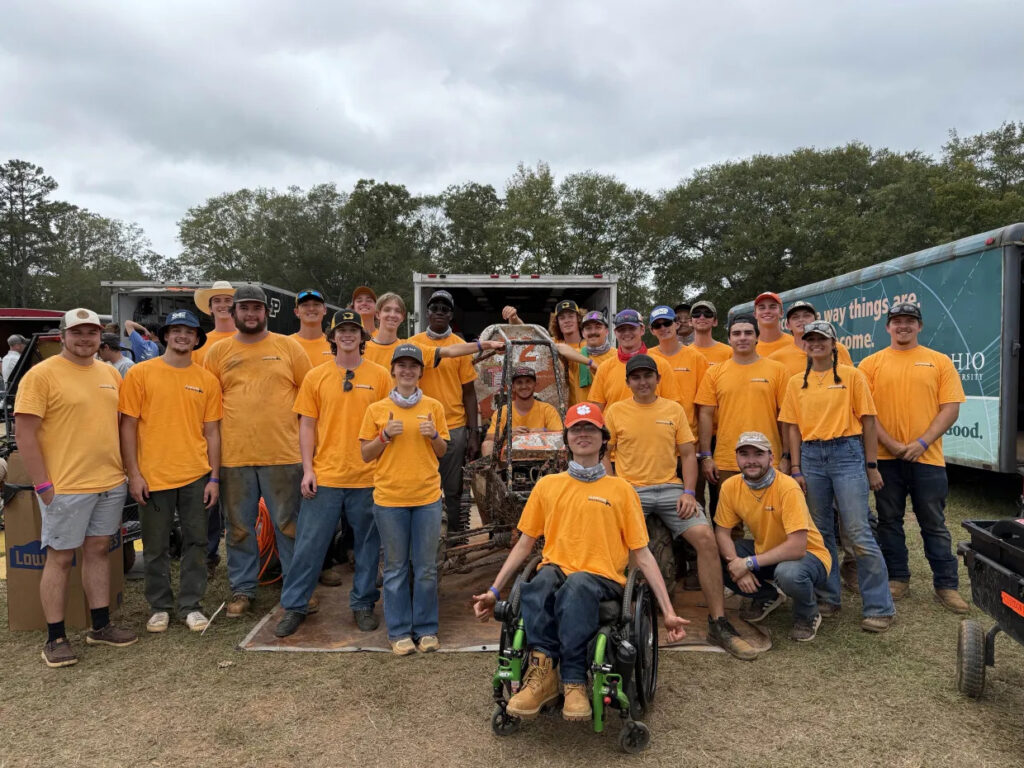
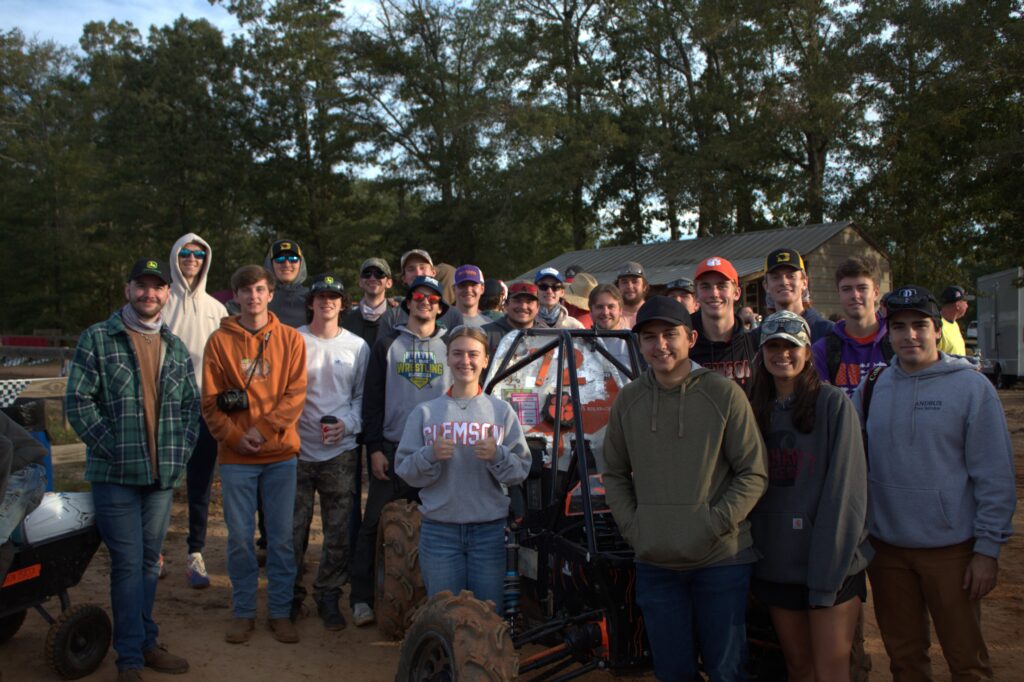
As the semester progresses for Clemson Baja SAE, the team is working towards building its newest vehicle for competition later this year. However, the new vehicle is not the only thing the organization is constructing this semester.
Clemson Baja SAE was founded in 1978 and is a student-run engineering organization that designs and builds custom off-road vehicles to compete in the national Baja SAE Collegiate Design Series. The organization had become dormant following the COVID-19 pandemic, but a group of eight dedicated students were determined to bring the organization back to life in 2023.
Clemson Baja SAE racing on dirt track
Since its revival, Baja has utilized a test track in the woods behind their race shop to ensure their student-built vehicles were primed and ready to compete. Recently, though, the track was cleared and logged, completely destroying the course and making it unusable for the race team. The occurrence left Baja without a way to test their vehicles, meaning they would be unable to be sure that there were no mechanical or safety defects before traveling for competitions. That’s when Blanchard CAT and the Department of Construction Science and Management stepped in.
“This semester, we are partnering with the Construction Science department,” Tyler Odgers, president of Baja SAE, said in an interview. “Right now, they have drone scanned the entire block and they’re designing a track on their computers.”
Odgers added that Blanchard CAT has donated equipment for the construction of the track, something that would have been unfeasible for the team to afford. Just as it does for many professional race teams, funding for Clemson Baja often comes at a premium. With the need for funding, the organization cannot focus solely on engineering and manufacturing their vehicles. Odgers says that the team has begun developing a large business team in order to afford those aforementioned costs.
Team picture with Clemson Baja SAE car
“Obviously, we need funding, right?” Odgers said. “We have a team that is essentially putting together a packet presentation that we can just go out and give to businesses. There’s a very big communications, marketing type of thing trying to get our name out there.”
Odgers went on to say that he sees opportunities for practically any major, and that “there are very few majors that I think can’t do something with us.” As the team continues to prepare for competition and the construction of its new race vehicle and test track, emphasis will still remain on the business and communications side of the organization. Any students interested in joining Clemson Baja SAE can find them on TigerQuest or go to https://cecas.clemson.edu/bajasae/join/
The 2026 NASCAR Cup Series season kicked off in Daytona this past weekend, with the 68th running of the Daytona 500 taking place on Sunday. Among the field of 41 teams was one former Clemson Tiger pursuing a third consecutive Daytona 500 victory.
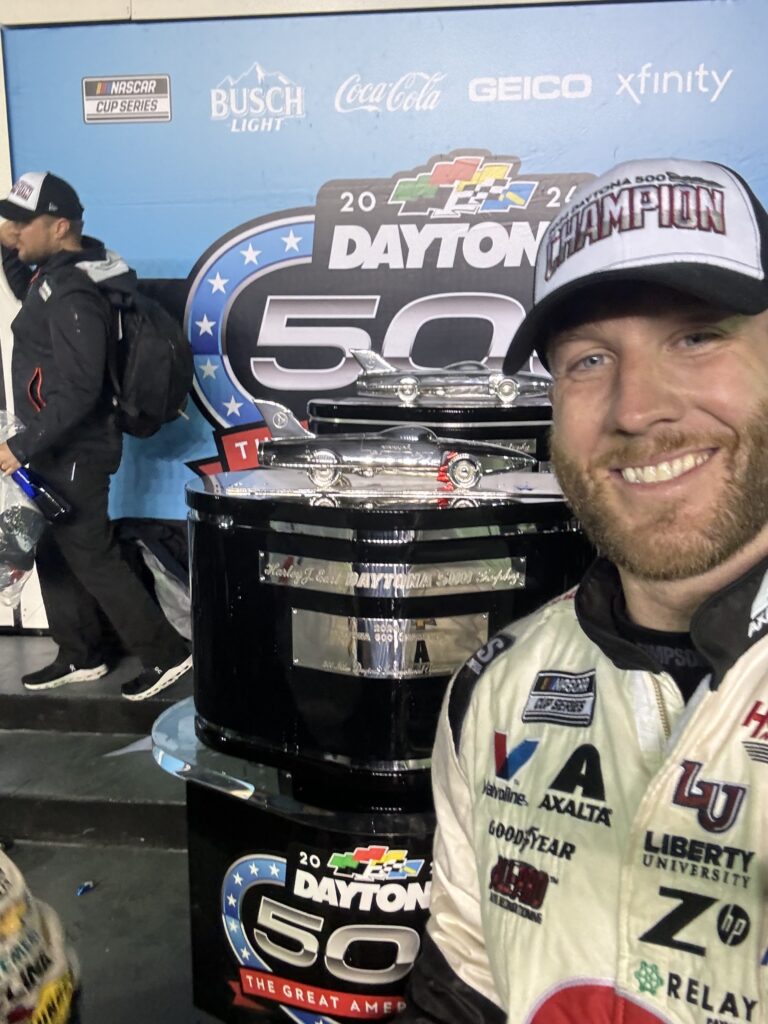
Landon Walker posing next to the Daytona 500 Harley J. Earle trophy
Landon Walker was an offensive tackle for the Tigers from 2008 until 2011 and was part of the 2010 squad that secured Dabo Swinney’s first ACC championship. Throughout his career, Walker played a total of 3,131 snaps, a record at the time, and now sits fifth on the all-time list of Clemson players. Throughout his life, Walker bled Clemson orange, as his father, Gary, was a former Clemson Tiger and part of the 1981 team that won Clemson its first National Championship.
When Walker graduated from Clemson in 2012, he had his sights set on the National Football League and intended to sign with the Cincinnati Bengals as an undrafted free agent. However, a failed physical, uncovering arthritis in his knee, brought his plans to a screeching halt. Walker eventually realized his days of playing football were behind him, but still, he refused to confine himself to a typical desk job. That’s when he received a phone call from Hendrick Motorsports.
Hendrick Motorsports is NASCAR’s most successful race team, with 320 race wins and 15 championships. Walker wasn’t being called to drive a race car – he was being asked to join the pit crew.
In a 2023 interview with The Tiger, Walker said that he was unsure of what to expect when he showed up to the team’s campus in Concord, North Carolina.
“I really had kind of a very mild understanding of what it would be and kind of got into it with the right people at the right time,” Walker said.
Walker learned quickly that the training and preparation for pit crew members was not much different than what he had done his whole life while playing football. As he began his tryouts, he was fully prepared for the tests they threw his way.
“They were doing combines, which you do in football, and testing your running skills and your power skills. Really just an overall test to see how athletic you were.”
Landon Walker and the pit crew celebrating William Byron’s Daytona 500 win
After Walker completed his tryouts, the team decided they liked what they were seeing and offered him a spot on the pit crew as a fueler. He accepted the offer and joined the team in September 2012, and he has been there ever since. Walker has achieved several feats during his 13 years with Hendrick Motorsports. For many years, though, there was one that seemed to slip away from him time and time again: The Daytona 500.
That changed in 2023, when his driver, William Byron, won that year’s running of The Great American Race. A year later, Byron would win the race once again, becoming just the fifth to win the race in back-to-back years.
Landon Walker and William Byron embracing after a Daytona 500 win
“That’s a big win that everybody wants, to put that ring on your finger,” Walker said. “It’s one of the most coveted wins in our sport, kind of our Super Bowl.”
No driver has ever won the race in three consecutive years. Alas, that record still holds after this past weekend, as Byron was unable to defend his crown once more. Still, after over a decade in the sport without a win in the sport’s most coveted race, Walker cherishes the opportunity to have been part of the race-winning team twice over.
As NASCAR revs into high gear and kicks off the 2026 season, Walker hopes to check one last box on his bucket list: becoming a NASCAR champion. There might be nine months until then, but come this November, it’s entirely possible this former Tiger might achieve just that.
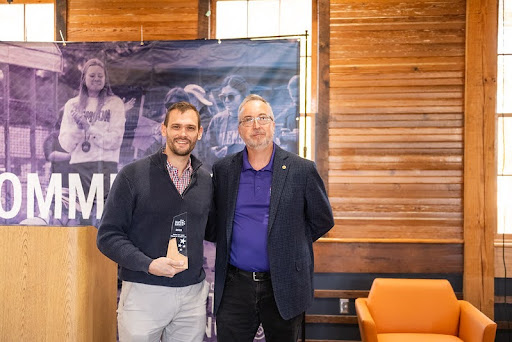
The 2025 GRIT awardees (left to right) Chris Corr, Sarah Stokowski, Felipe Tobar, and Reed Gurchiek, stand with RHBSSI interim director, John DesJardins (center), at the RECESS Friday Finale.
By Katie Gerbasich
At the conclusion of Clemson University’s Research and Creative Endeavors in the Sports Sciences (RECESS) Symposium, hosted by the Robert H. Brooks Sports Science Institute the week of November 10, 2025, four Clemson faculty were honored with 2025 GRIT Awards. These awards recognize nominated individuals or groups who distinguish themselves in various areas of sports science. A trophy was presented to the following winners.
Community and Outreach in the Sports Sciences
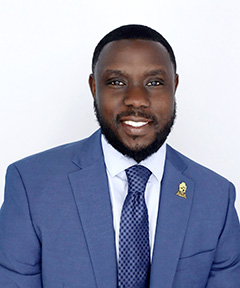
Felipe Tobar, Ph.D. – Department of Parks, Recreation and Tourism Management
Tobar studies the intersection of sport, tourism and heritage. He also serves as the head coach of Clemson’s Paralympic Soccer Program and co-founded the Football Tourism Institute, which aims to understand football tourism at the local and global levels.
Over the summer of 2025, Tobar travelled internationally conducting sports research. In early May, he took a group of students to Germany to study the Culture of Remembrance and Political Activism in German Football. While abroad, he conducted two research studies: one examining stickers in and around stadiums as a form of fan expression and political activism, and another exploring how German soccer clubs suppress or communicate Holocaust history.
Tobar’s inclusive and critical teaching practices earned him the 2025 Junior Tenure-Track Outstanding Teaching Award from Clemson University’s College of Behavioral, Social and Health Sciences. His commitment to experiential learning includes organizing class field trips to venues such as the Bank of America Stadium and the NASCAR Hall of Fame, facilitating networking opportunities with more than 41 sports industry professionals, and supporting undergraduate students as they participate in local sporting events.
For his dedication to both the Clemson and global community, the Institute has awarded Felipe Tobar with the GRIT Award for Community and Outreach in the Sports Sciences for the 2025-26 academic year.
“He is richly deserving of this award,” commended Greg Ramshaw, Ph.D., Tobar’s colleague in the Department of Parks, Recreation and Tourism Management.
Research in the Sports Sciences
Chris Corr, Ph.D. – Department of Educational and Organizational Leadership Development, Athletic Leadership Program
Corr’s scholarly research examines the institutional and organizational settings of collegiate athletics, with attention to the impact and outcomes of participation on various stakeholders. He serves as the executive director of the College Sport Research Institute and is the program manager for the Commission on Sport Management Accreditation.
“Dr. Chris Corr exemplifies the spirit of the GRIT Award in Research in Sports Sciences through his exceptional productivity, interdisciplinary collaboration and measurable impact on the study and practice of sport,” Sarah Stokowski, Corr’s colleague in the College of Education, said.
Over the past three years, Corr has produced an extraordinary body of scholarship, authoring or co-authoring more than 70 peer-reviewed journal articles, multiple book chapters, and numerous presentations at national and international conferences.
Corr’s work has consistently been supported by competitive funding sources, including RHBSSI, the NCAA, the Commission on Sport Management Accreditation (COSMA), and USA Ultimate, demonstrating the quality and applicability of his research.
“Equally important, Dr. Corr’s collaborative spirit enriches Clemson’s research environment,” Stokowski said. “He actively mentors graduate and undergraduate students, co-authors with emerging scholars, and engages in applied projects that extend Clemson’s land-grant mission.”
Student Engagement in the Sports Sciences
Sarah Stokowski, Ph.D. – Department of Educational and Organizational Leadership Development, Athletic Leadership Program
Recognized for her unwavering commitment to student success, Sarah Stokowski, Ph.D., has made an impact on graduate education and student engagement within the Athletic Leadership program. She has supervised more than 75 doctoral students across both the Higher Education and P12 concentrations.
“Dr. Stokowski is unbelievably passionate and committed to student learning and success,” noted her colleague from the College of Education, Chris Corr, Ph.D. “She is tremendously caring and committed to students’ scholarly achievement, and students walk away from her research methods course with a tangible academic publication and, more importantly for their professional development, an in-depth understanding of the research process.
Her commitment to publishing with students has led many graduate students to continue their education by pursuing terminal degrees.
“While Dr. Stokowski is an all-around tremendous scholar and influential member of the campus community, her commitment to student excellence and achievement is to be marveled at,” Corr said.In addition to her mentorship efforts, Stokowski was awarded a 2025 ESPN Research Fellowship by the University of Nevada, Las Vegas International Gaming Institute (IGI). Through this fellowship, she will research how student-athletes perceive and engage with online sports betting content. To learn more about her work, click here.
Friend of the Institute
Reed Gurchiek, Ph.D. – Department of Bioengineering
Gurchiek is the principal investigator in the Human Movement Biomechanics Lab (HuMBL), where his team uses standard motion capture technologies for human movement analysis and biomechanics.
A recent project, funded by RHBSSI, involved developing a passive assistive hamstring device to support muscle recovery. Read more about the work here.
Gurchiek has also been integral in collaborating with the Institute on plans for the University’s new human performance center on the ground floor of the student wellness center, which has recently broken ground.
“The Institute is very appreciative to Dr. Gurchiek for his continued leadership in the development of this new facility that will bring human performance research at Clemson to national prominence,” said John DesJardins, Ph.D., director of the Institute.
Kathryn Kisska-Schulze, J.D., LL.M., a Robert H. Brooks Sports Science Institute Faculty Fellow and the Elliott Davis Associate Professor in the School of Accountancy in The Wilbur O. and Ann Powers College of Business, recently published work on athlete name, image and likeness (NIL) rights that was relied upon by the Tennessee legislature in 2025. Her article, An Evolving Landscape: Name, Image and Likeness Rights in High School Athletes, co-authored by Adam Epstein from Central Michigan University and Nathaniel Grow from Indiana University, was cited as a research reference and practice aid in drafting Tenn. Code Ann. § 47-25-1103, which addresses NIL rights.
The article examines the evolving NIL landscape for high school student-athletes, identifying potential financial risks and proposing a framework to better protect minor student-athletes entering endorsement agreements.
“This honor showcases the impact our research can have on major state legislative interests,” Kissaka-Schulze said.
In spring 2024, Kisska-Schulze launched the School of Accountancy’s first undergraduate sports law course. She also teaches a graduate sports law course for the College of Business’ Master of Science in Sports Business and Analytics program.
Kisska-Schulze has served as chair of the Sports and Entertainment Law Section of the Academy of Legal Studies in Business, represents the College of Business on Clemson University’s Faculty Athletic Council, and was recently named a Brooks Sports Science Institute Fellow.
Individuals who suffer from chronic pain have increasingly come to rely on kratom, a Southeast Asian plant whose principal psychoactive alkaloids, mitragynine and 7-hydroxymitragynine (7-OH), may soon become Schedule I Controlled Substances in the United States. The two compounds bind to, and partially activate, opioid receptors in the brain.
Bryan Denham, Ph.D., Charlie Campbell endowed professor of sports communication, Clemson University Department of Communication
“People in Southeast Asia have long relied on teas brewed from kratom leaves not only to manage pain but to ease the symptoms of opiate withdrawal,” said Bryan E. Denham, Ph.D., Campbell Professor of Sports Communication in the Department of Communication at Clemson. “Although kratom is not entirely safe, it appears to be less hazardous than concentrated, synthetic versions of 7-OH, manufactured by unscrupulous firms. Synthetics are sold at gas stations and vape stores and are packaged to attract the attention of high-school and college-aged individuals.”
Denham’s study appears in the Journal of Substance Use and addresses the extent to which kratom use correlates with health concerns and signs of dependency on other substances. One finding showed that individuals struggling to quit prescription pain relievers were more than four times as likely as others to have used kratom, a substance the Drug Enforcement Administration (DEA) considers “drug of concern.” In July 2025, the Food and Drug Administration (FDA) advised the DEA to add mitragynine and 7-OH to the list of Controlled Substances, and the DEA is currently considering that recommendation.
“It will be interesting to see what the DEA chooses to do in the coming months,” Denham said. “It announced plans in 2016 to ban mitragynine and 7-OH, but it received significant pushback from kratom users. This time, the FDA has made it a point to state plainly that its recommendation does not include the kratom plant itself. It is primarily interested in the two alkaloids and especially the hazardous synthetic products. A trade group, the American Kratom Association, has endorsed the recommended actions on mitragynine and 7-OH.”
Denham studies the media, health, and policy aspects of substance use in sport and society. He said that in sport, athletes have used kratom to increase energy and to recuperate from intense exercise. Some athletes believe it enhances their focus during competition, and some experiment with it for pain relief. Technically, kratom is not a banned substance, but the United States Anti-Doping Agency advises athletes to avoid using it given potential side effects. Athletes and non-athletes alike should appreciate that kratom is a drug, not a dietary supplement, and they should be aware of manipulative labels on synthetic substances.
In addition to his study in the Journal of Substance Use, Denham has examined the agenda-building function of mass media on kratom policy, exploring how coverage in major national news outlets and regional news organizations has impacted regulatory action. Denham said the Tampa Bay Times, in particular, has examined kratom use in depth, and its reporting has impacted coverage elsewhere in addition to policy conversations at the state and national levels.
Division 1 student-athletes already battle the complexities of balancing classes with practices and a social life. When medical conditions emerge, the situation is elevated to a new level. Using funding from the Robert H. Brooks Sports Science Institute (RHBSSI), Department of Communication faculty and RHBSSI fellows, Brandon Boatwright, Ph.D., and Rikishi Simith-Rey, Ph.D., are conducting an exploratory study, hoping to illuminate student-athletes’ challenges as they compete at a high level while managing chronic illnesses and autoimmune diseases.
Brandon Boatwright, Ph.D.
His own journey with an autoimmune disease inspired Boatwright. After a conversation with former Division Ⅰ athlete, Smith-Rey, the idea for the study was born. The two are now working with students Marissa Bennett and Ava Quallen, from the Departments of Communication and Health Science, respectively, to find ways to assist these athletes.
“Life as a student-athlete is complicated and complex already, but to feel like you’re fighting against your own body in the context of being a college student and trying to navigate your schedule builds the stresses of all that,” Boatwright said.
A key point in the research has been identifying what resources are available for these individuals. There is a fluctuation in availability among Division Ⅰ programs, and an even greater disparity when comparing Division Ⅰ to Division Ⅱ.
“When we think about resources here at Clemson, student-athletes have some of the best stuff, but not everyone goes to Clemson,” Smith-Rey said. “Not everyone, even if you are D1, has the same resources, so how can we identify what resources student athletes need? What ways can we assist them in communicating their needs to other stakeholders in their lives?”
Rikishi Simith-Rey, Ph.D.
The study is currently in the data collection process. The team has spoken with different student-athletes across various sports with Type 1 Diabetes, rheumatoid arthritis, and Crohn’s disease, among other illnesses.
“The folks we have spoken with have been incredible people and athletes competing at such a super high level,” Boatwright said. “They are just incredible people for having to deal with the things that they have dealt with and still preserving.”
Smith-Rey commends these interviews for being a space where these student-athletes feel seen. Often, chronic illnesses or autoimmune diseases have an element of invisibility that makes communication a challenge.
After speaking with the team, these athletes feel like someone understands their unique story. Boatwright shared a narrative about an athlete with Rheumatoid Arthritis.
“They would just have to wake up and tell players, teammates, coaches or someone that it’s not gonna happen because I can’t get out of bed,” Boatwright said. “‘I physically just can not sit up enough to get out of bed. It’s just one of those days.’”
Athletic programs and teams can become better advocates by better understanding the challenges these athletes face due to their medical conditions.
“We can be that support button right now,” Smith-Rey said. “Someone is speaking up for you and looking for ways to assist you in this.”
If you are or were an athlete who competed at the Division Ⅰ to Division Ⅱ level, are no more than five years removed from your sport, and were diagnosed with a chronic illness or autoimmune disease before competing in college, click here to set up an interview.
Christopher Pearce graduated from Clemson in 2024 with a B.S. in Mechanical Engineering. He received the Markvan Bellamy Brooks Endowed Scholarship in 2024. During his time at Clemson, he worked at the Clemson University International Center for Automotive Research (CU-ICAR) as a Research Assistant and was an IT Intern at the Watt Family Innovation Center.
How have you utilized your major/concentration in sports to help your career?
I have used my degree to grow my background in the automotive industry both directly and indirectly. While my internships provided me with the opportunity to apply my engineering skills directly, my current role is more focused on managing projects in the engineering realm. Group projects at Clemson and prior industry knowledge helped prepare me for this type of role.
What is your current role, where, and what do you do?
I am currently a project manager at Porsche Cars North America, supporting their engineering and quality teams. I am also responsible for managing the technical review of various escalated field cases.
What was your journey like since graduating from Clemson?
Since graduating from Clemson, I have moved to Atlanta, Georgia, where I continued my internship with Porsche and was soon hired into my current role.
What advice would you give to future Brooks scholars as they approach post-grad?
My advice to all students is to build relationships everywhere you go. These relationships will help you grow and navigate through your industry.
The Robert H. Brooks Sports Science Institute is thrilled to welcome several new Clemson faculty members to its cohort of Faculty Fellows.
SUSAN LIMBER, Ph.D., MLS
Dan Olweus Professor, Department of Psychology
Dr. Limber is an Emeritus Professor in the Department of Psychology. Prior to her retirement in 2025, she was named the Dan Olweus Professor, highlighting her significant contributions to furthering the work of the late Dan Olweus, a pioneer in bullying prevention work. Dr. Limber is a developmental psychologist who also holds a Master’s of Legal Studies. Her nearly 25 years of research focus on psychological and legal issues related to bullying among children, as well as youth civic engagement, and children’s rights. She co-authored the book, Cyberbullying: Bullying in the Digital Age, in 2008. Awarded by the American Psychological Association (APA), she is a recipient of the Early Career Award for Distinguished Contributions to Psychology in the Public Interest. Before coming to Clemson, Dr. Limber was the Associate Director at the Institute for Families in Society at the University of South Carolina. She also provided consultation to the U.S. Department of Health and Human Services on bullying prevention efforts from 2001-2016. Now, she serves as the Graduate Program Director for a PhD in International Family & Community Studies.
KATHRYN KISSKA-SCHULZE, JD, LL.M.
Associate Professor, School of Accountancy
Kisska-Schulze is the Elliott Davis Associate Professor and Associate Director of the Powers College of Business, School of Accountancy. She launched the School of Accountancy’s first Sports Law course in 2024. Her research focuses on the amateur and collegiate sports arena, with particular emphasis given to various tax consequences that could impact the amateur sports industry as it continues to evolve. Kisska-Schulze has published 13 sports-related research articles to date, including one titled “Brute Force (Anti) Federalism,” which won the Holmes-Cardozo Award in 2022. This premier research award is granted by the Academy of Legal Studies in Business. She has been invited to present her research or speak on sports law issues at Oklahoma Law School, UC Irvine Law, and various other schools across the country. Previously, she served for three years as Chair of the Sports and Entertainment Law Section of the internationally recognized Academy of Legal Studies in Business. Additionally, Kisska-Schulze now sits on Clemson’s Faculty Athletic Council.
ETHAN KUNG, Ph.D.
Associate Professor, Departments of Mechanical Engineering and Bioengineering
Kung is an Associate Professor jointly appointed in the Department of Mechanical Engineering and Bioengineering. His interdisciplinary research on aspects of cardiovascular biomechanics intersects with athletic performance and human physiology. Kung was awarded the National Science Foundation CAREER Award to develop an experimental-computational hybrid modeling framework of the cardiovascular system. This framework can be applied to better understand the complex relationship between exercise and body mechanics. His research has gained supportive funding from the American Heart Association, the Children’s Heart Foundation, and Saving Tiny Hearts Society. Additionally, he is an associate editor for the American Society of Mechanical Engineers Journal of Biomechanical Engineering and serves on the Executive Committee of the ASME’s Bioengineering Division.
ALEX CHISHOLM, Ph.D.
Associate Professor, Department of Teaching and Learning
Chisholm is as an Assistant Professor in the Department of Teaching and Learning. He brings over fifteen years of experience teaching various social sciences in K-12, as well as mentorship experience at the University of Georgia. Chisholm’s research primarily focuses on black social studies, race in education, and civic education. His work explores the relationship between sports and societal development. A top journal in his field, The Social Studies Journal, recently published his article titled “Beyond the Standard: Teaching Civic Engagement Through Black Athlete Activism and Resistance.” At Clemson, Chisholm is also the Secondary Social Studies Student-Teaching Coordinator.
Clemson faculty and staff making contributions to the sports field, broadly defined, are invited to apply to become members of the Institute. Fellows meet twice annually, collaborate on multi-disciplinary projects and are eligible to receive additional funding from RHBSSI for their work. Click here to view the full list of fellows and click here to learn more about becoming a Brooks Fellow.
Throughout the 2025 summer, Robert H. Brooks Sports Science Institute Faculty Fellow and Assistant Professor in the Department of Parks, Recreation and Tourism Management, Dr. Felipe Tobar, has been conducting sport research around the world. From Clemson to Germany, Australia and Taiwan, Tobar has taken his passion for soccer and research on the intersection of sport, tourism, history, events, politics, and technology across the world.
Holocaust remembrance connected to German soccer culture
Tobar with members of the Alle zusammen – voran 03! initiative
In early May, Tobar took a group of students from Clemson to Germany to study “the Culture of Remembrance and Political Activism in German Football.” The first stop was Berlin, where they toured the city and its remembrance sites to help students understand that the impact of the Holocaust was not solely confined to concentration camps, but weaved into daily life, including soccer. They also attended the Babelsberg 03 vs. FC Carl Zeiss Jena match and witnessed the “Alle zusammen – voran 03!” initiative (“All Together – Leading 03!”), which is a campaign working to eliminate barriers in the stadium and in the way people think about inclusion in soccer between players with and without disabilities.
The next stop was Bremen, where the group walked around the city learning about the systematic use of forced labor under the Nazi regime and how the local community was fully aware of all crimes, and how political engagement in soccer is a necessity. After the walking tour, they visited Bunker Valentin, which was a Nazi-era submarine bunker, where they reflected on how to understand the victims in the eyes of soccer to present them as fans who never got to support their club again. They also got to tour Werder Bremen and retrace the Nazi-era history. After that tour, they got to witness the Werder Bremen vs RB Leipzig game and interact with locals.
Tobar and hisstudy abroad group at FC St. Pauli
After Bremen, they visited Hamburg, Dortmund, and Cologne, where they visited the FC St. Pauli Museum, HSV Museum, Borussia Dortmund, and the FC Köln Stadium. Not only did they get to experience German culture through soccer matches and stadium and museum tours, but they also gained a deeper understanding of how players, directors, and fans were important in helping build a culture of remembrance.
“Football clubs have the power, and the social responsibility, to remember, speak out, and act.” – Dr. Felipe Tobar
Their last stop was in Munich, where they played street soccer with locals and learned how the game of soccer at any level can teach important values that immigrant youth can take with them throughout their lives and help them adapt to new communities. The group then visited the FC Bayern Museum and reflected on how Bayern players and directors were affected by Nazi ideologies and how Munich played a central role in Hitler’s rise. The students also presented social media campaigns they had created focusing on topics such as racism, religious intolerance, and intersectionality in soccer.
During and after the trip, Tobar initiated two different studies. The first is about stickers. He noticed that around the soccer stadiums, there were stickers everywhere. These can easily be overlooked, but when he looked at these, he saw a version of fan expression, fans communicating their social and political beliefs and how German soccer culture is a vehicle of political activism. The second is a study focused on the benefits of teaching Holocaust history and how German soccer clubs can collaborate with remembrance centers and former concentration camps to attract new audiences and use soccer’s influence to communicate Holocaust history and ensure that it never happens again.
Presentations abroad
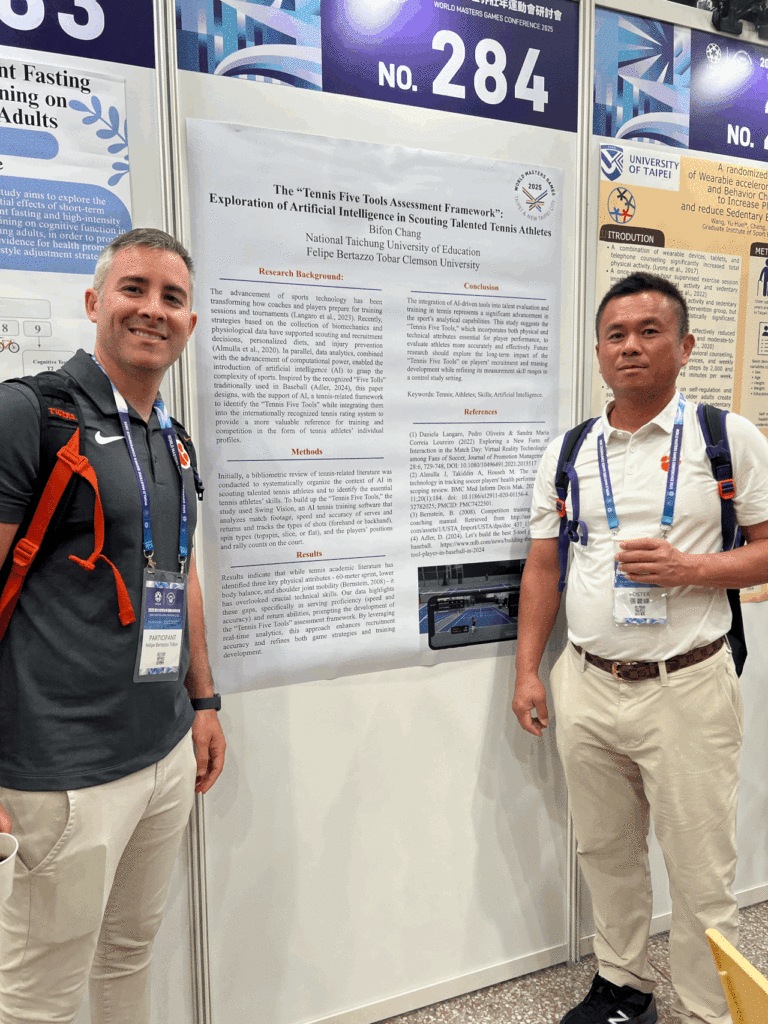
Tobar and colleague presenting research at the National Taichung University of Education
Tobar was invited as a visiting researcher and teacher to the National Taichung University of Education in Taiwan, where he had the opportunity to speak at three different undergraduate courses. He shared his experiences working with Paralympic soccer athletes and the importance of respect. He also presented his teaching philosophy, which is one where it is important to promote kindness and learning to create more engaged and curious students.
In Australia, he presented at the 16th International Conference on Sport and Society at Monash University in Melbourne. He presented his paper about English soccer stadiums, specifically Liverpool FC and how the presence of tourists and their use of mobile phones affect the local supporters’ match-day experiences. Through this study, he found that the presence of football tourists and their online engagement can be disruptive to the local football culture. He plans to share these results with both club and English Premier League teams in the future.
American and European soccer research
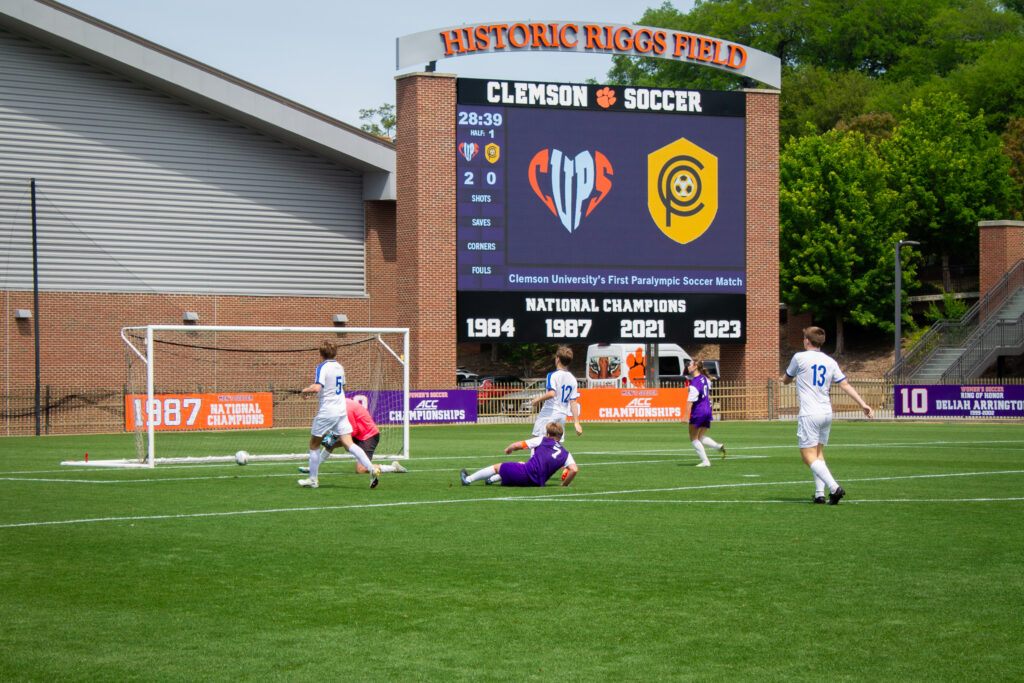
The Clemson Paralympic Soccer team during their first match
During Clemson’s first-ever Paralympic soccer match, Tobar conducted a survey to understand the perception of players with disabilities. He discovered that 84% of participants had changed their opinions positively towards para-athletes. He also surveyed the perceptions and attitudes of long-term volunteers towards people with disabilities.
Additionally, Tobar has two studies where he focuses on soccer and environmental sustainability. The first follows his attendance at the UEFA EURO, where the institution implemented a €29.6 million investment in environmental, social and governance (ESG) initiatives. The tournament achieved a 21% reduction in emissions compared to initial forecasts, largely through measures like encouraging public transport and minimizing flights. This study was focused on whether these changes towards sustainability changed fan behavior after the championship.
The second was focused on the Clemson Women’s Soccer team. In 2024, Tobar accompanied the team to Spain, where they observed how facilities and clubs tackle climate change. Now that a year has passed, he is asking 19 players and two managers if they have changed their behaviors and show that the players can have a voice and help others become more environmentally friendly.
The documentary
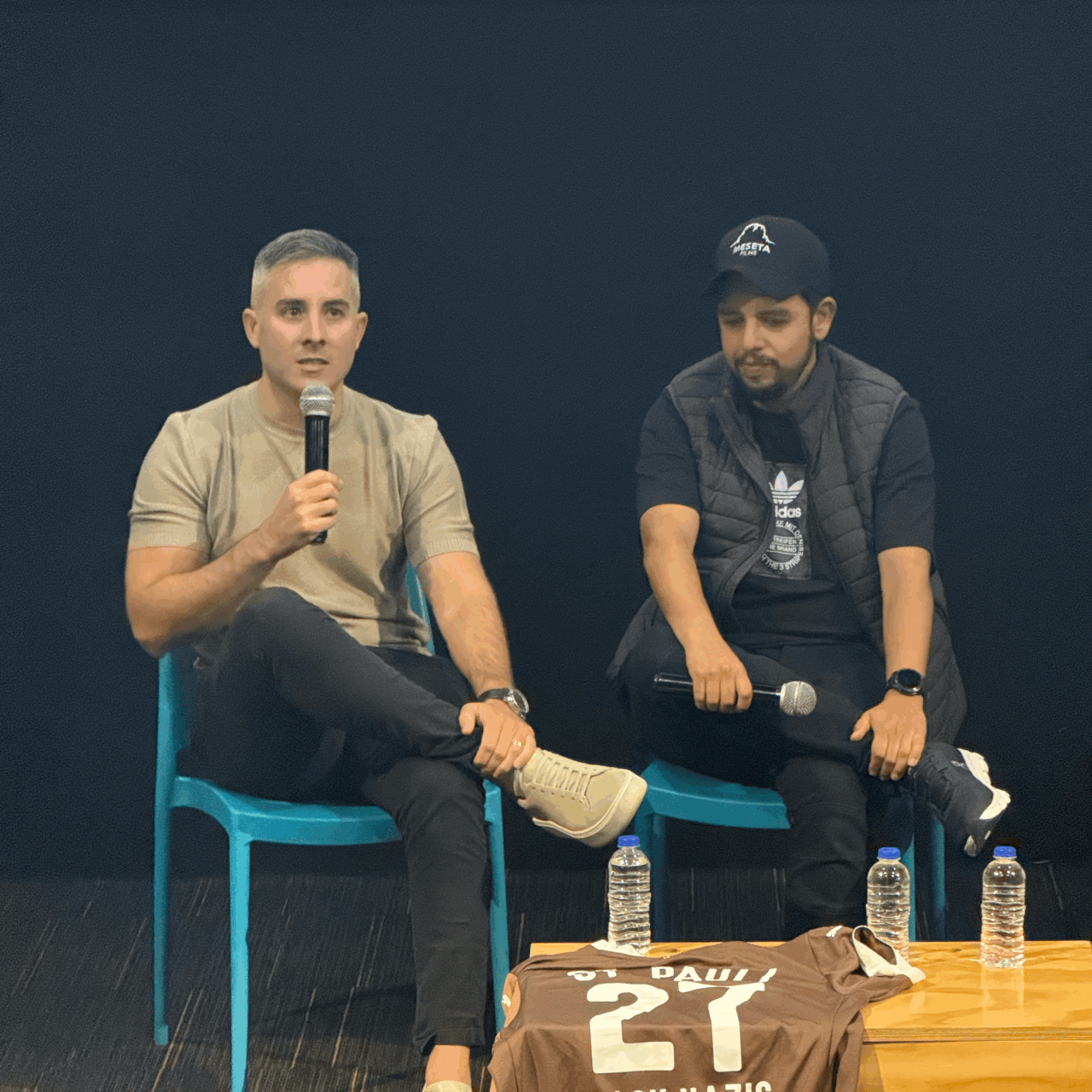
Tobar and colleague speaking on their documentary in Colombia
Tobar has recently launched his documentary called “The Match That Not Every Club Wants to Play.” This documentary takes viewers to Spain, showing the Real Madrid soccer club and how it attempted to keep its role in the Spanish Civil War a secret. It also takes us to FC St. Pauli in Germany, where the club is a symbol of resistance, and where the fans demand accountability for the club’s Nazi-era past.
Just like Tobar, this documentary is making its way around the world. It debuted at the Tercer Tiempo-Festival Mundial de Cine Futbolero in Bogotá, Colombia, where his father is from. There, he received a “Special Mention” for the quality of the production and thought-provoking investigation. Additionally, it was the first film in six years to have a full-house at the viewing.
Soon, the documentary will be shown at the Sports & Entertainment Film Festival in Birmingham, Alabama, the Festigol, Festival de Cine + Futbol, in Santiago, Chile, and at the Paladino D’Oro in Palermo, Italy, which is the world’s oldest sport film festival.
Coming up…
Following his first documentary, Tobar is in the process of developing another around the unspoken functions of Weserstadion in Bremen during the Nazi regime. The Nazis took it and used Eastern European slaves to build military defense structures. The stadium also facilitated the distribution of furniture from Jewish houses, and even today, much of this furniture is still not found.
Additionally, Tobar is studying how cultures influence how coaches coach their players. He plans to interview professional and collegiate coaches to understand how culture shapes play style. His brother is a coach for the most important Division One team in Ecuador, which is inspiring this study.
He is also working with Master’s students and colleagues from Colombia, Spain, and Chile to take a look at paralympic soccer and analyze how countries organize offensively and defensively. They are asking the question, “What is the best way to win games?” Paralympic players expend three times more energy than normal players, so they work to prove that the best paralympic teams play zone, which allows more conservation of energy, versus a man-to-man structure.
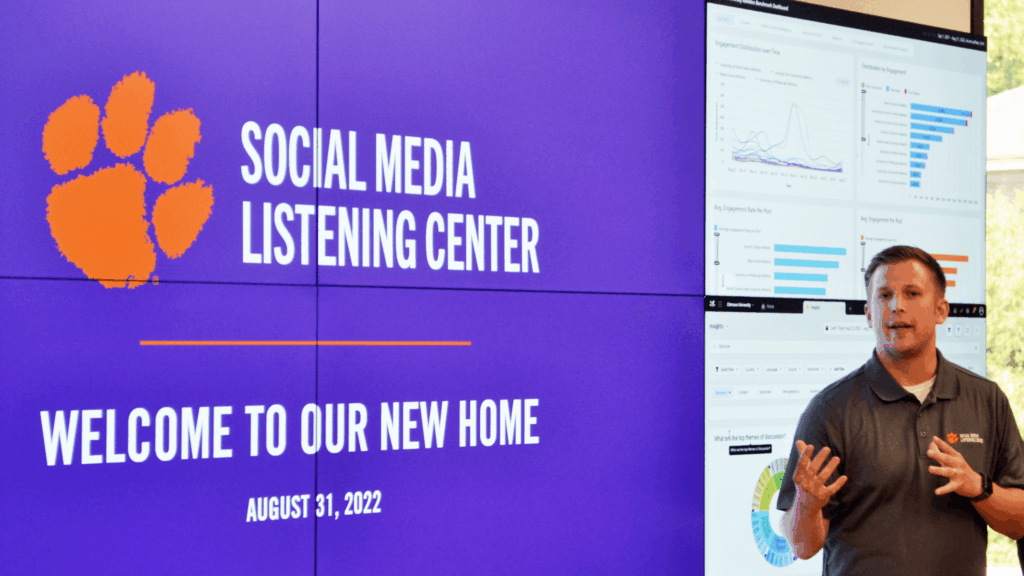
Housed in the Department of Communication and currently led by RHBSSI Faculty Fellow, Brandon Boatwright, Ph.D., the Clemson University Social Media Center (SMLC) is an interdisciplinary lab that utilizes industry-leading social analytics software to harvest, analyze and engage in social media conversations across thousands of sources of digital data. The SMLC is a cutting-edge laboratory that supplies researchers at Clemson with data for a diverse range of topics and projects.
Brandon Boatwright, Ph.D., assistant professor in the Department of Communication and director of the SMLC
Sports researchers at Clemson have utilized the SMLC to advance their studies in the behavioral sciences, such as in sports communication and education. Boatwright has partnered with other fellows in the Department of Communication, such as Virginia Harrison, Ph.D., and fellows Sarah Stokowski, Ph.D., and Chris Corr, Ph.D., from Clemson University’s athletic leadership program in the Department of Educational and Organizational Leadership Development on recent studies that have examined social media trends to collect qualitative data.
Published this year in the journal Communication & Sport, a study by Boatwright, Stokowski, Corr and colleague Marry Holly from the University of Florida, titled The Local Perspective: Regional Television Framing of Name, Image, and Likeness, utilized the SMLC “…to examine the manner in which local television media in the United States framed NIL during news broadcasts,” analyzing television broadcast content across the United States during Fall 2024. Helpful for collegiate athletic administrators, the study revealed that a similar number of comments framed NIL positively, for promotion, and negatively, for its disruption.
Prior to this, in 2023, Harrison and colleagues from her department, as well as from The Pennsylvania State University, announced their study, “Save Our Spikes”: Social Media Advocacy and Fan Reaction to the End of Minor League Baseball, published in Communication & Sport. The team utilized the SMLC to collect “…social media data to extract fan emotions during identity threats” on X (formerly known as Twitter) surrounding the decline of Minor League Baseball during the time of the COVID-19 pandemic. “…the study found that most discussions of contraction were negative in tone and contained emotions like anger” and, overall, made an important contribution to the field “…by bringing advocacy communication into the discussion of sport fandom” and using social media data to shed light on sport fan emotions during a crisis.
The SMLC serves as one of the premier social media laboratories in the nation with the ability to harvest data, only scratching the surface of social media research and application. To that end, the SMLC provides students and researchers with tools and techniques to analyze and make sense out of datasets. The SMLC can support various methodological approaches from content analysis, sentiment analysis, network analysis and more. Click here to learn more about the SMLC.