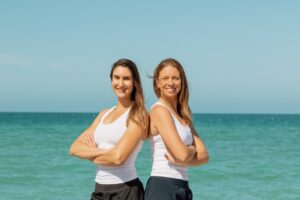
As Clemson wraps up another successful semester, we are excited to highlight the experiences and insights of our two interns this summer. These students have spent the past few months gaining valuable skills and contributing to the Institute, and now they are sharing their personal journeys and offering advice for those who will follow in their footsteps.
Taylor Erdman
Taylor was the Marketing and Communications intern for the Institute this summer. She created and posted content for RHBSSI’s social media channels and wrote for the Sports Insight blog. She was also responsible for creating a content calendar from scratch and continuously updating it throughout the summer.
“One of my favorite things about this position is how versatile it is – every day looks different,” Erdman said. “One day I could be creating a graphic about joining our email database and the next I could be writing a blog post about one of our faculty fellows.”
“Being an intern for the Institute has been one of the most rewarding experiences. My advice would to be to make the most of the time you have there and to learn as much as you can: you don’t have to know everything, you just have to be willing to learn. I’d also advise future interns to use it as an opportunity to network with the faculty fellows, as they are doing incredible research and have a lot of great connections.”
Taylor will be continuing with the Institute in the fall as our Communications Lead. She is very excited to further develop her skills and contribute to impactful projects.
Payton Ober
Payton served as the Graphic Design intern for the Institute this Summer. Throughout her time, she was responsible for creating logos, posters, and graphics in preparation for the Institute’s first ever Research & Creative Endeavors Symposium (RECESS).
“This position has felt so beneficial to me this summer, having the opportunity to work with the Sports Science Institute while getting the chance to put my creative skills to work has been so fulfilling.” Ober said. “I’ve always had a soft spot for design so getting to work with people like John, Kayla, and Taylor, who are all so creative and ready to get involved has just been a really great experience.”
“While being a student can definitely be overwhelming, I completely recommend taking advantage of opportunities like this, especially if they have to do with the RHBSSI. Getting involved on campus through jobs like this is so useful and rewarding.”
This fall, Payton will be working as a Graphic Communications Teaching assistant for 3 different labs while participating in a Flexographic Printing competition/Creative Inquiry course called “The Phoenix Challenge” as the Research Lead.”
The Institute is actively seeking candidates for four part-time intern positions this fall. Applications close August 1 so be sure to apply soon. For information on the positions, check out ClemsonJobLink.
Clemson Olympic Sports Science is seeking two to four candidates to fill internship positions for the Fall 2024 (August through December) semester. Successful candidates will gain knowledge and experience within a Division 1 Collegiate setting by assisting the Director of Sports Science in providing sports science support across Clemson Olympic sports.
Clemson Olympic Sports staff and interns meet on campus at Clemson University
Interns will engage in semester-long sports science curriculum, gain exposure to a wide variety of sports science technology, and participate in networking opportunities with sports science professionals. The internship may fulfill course credit if necessary. Click here for more information on qualifications and responsibilities.
To apply, submit a cover letter, resume and list of references in a single PDF to Jason Avedesian at javedes@clemson.edu. Please title the subject line of the email, “SPORTS SCIENCE INTERNSHIP – FALL 2024.”
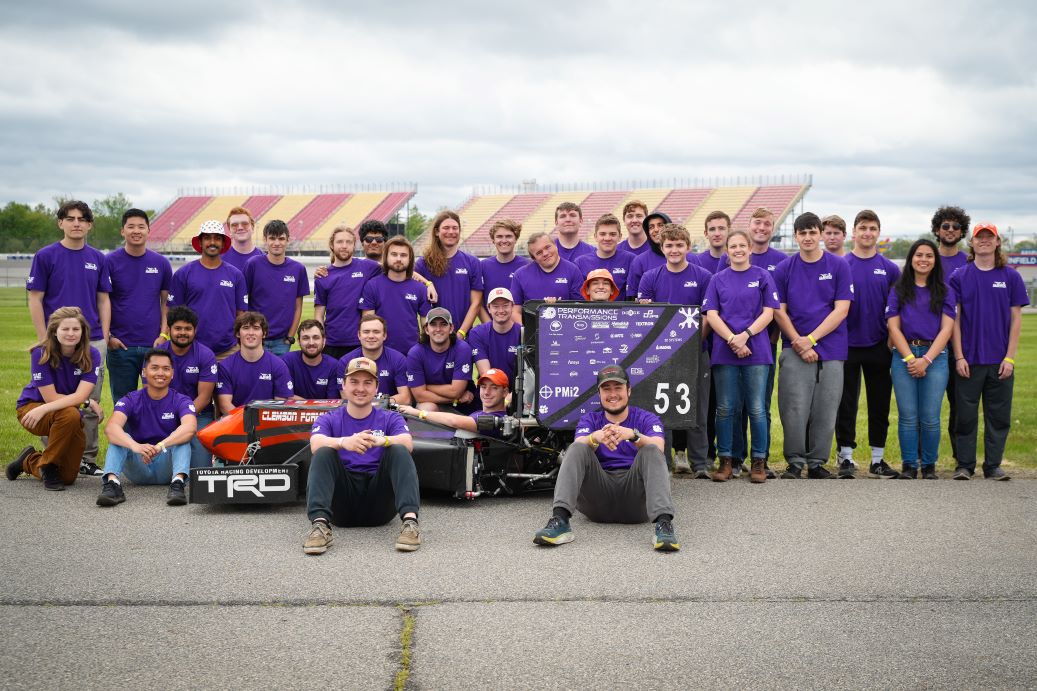
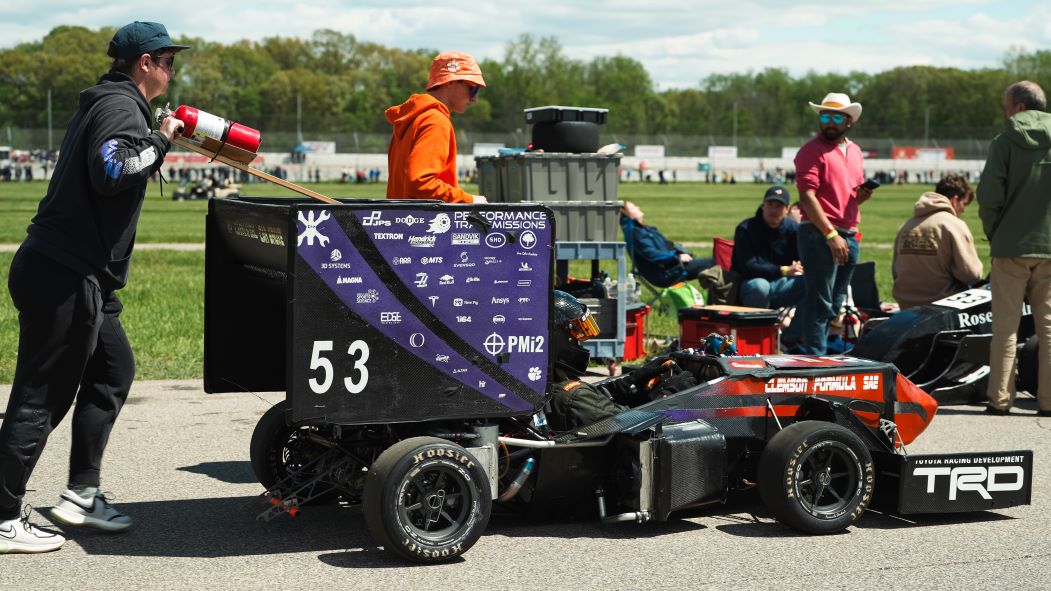
Clemson Formula SAE (CUFSAE) is a student-led organization at Clemson that is focused on designing, manufacturing and competing with a formula-style race car. Each year, they design and build a new vehicle from the ground up that meets competition rules while also pursuing innovation. May 8-11, CUFSAE competed in the Formula SAE Michigan competition with their newest race car, the Tiger 24.
The Clemson Formula SAE team and their formula race car, Tiger 24, compete at the Formula SAE Michigan competition May 8-11, 2024
Michigan FSAE Competition
The Formula SAE Michigan competition was a chance for CUFSAE to showcase Tiger 24’s capabilities and their astounding efforts. 120 cars competed, making this one of the larger competitions CUFSAE has participated in. Of those 120 cars, the Tiger 24 displayed great competitive attributes finishing 20th in design and 60th overall.
In the midst of the competition, the Tiger 24 required an unexpected engine swap leading to some unforeseen challenges the following day. However, this situation led to new opportunities for learning and improvement, allowing the team to focus on future successes and ultimately strengthen their resilience and determination.
Tiger 24 placed 20th in design and 60th overall at the Michigan FSAE competition.
In the Pipeline for CUFSAE
This competition will not be the last chance for the team to display the Tiger 24’s capabilities. They will have the opportunity to further test these abilities in upcoming test days as well as competitions occurring later this year.
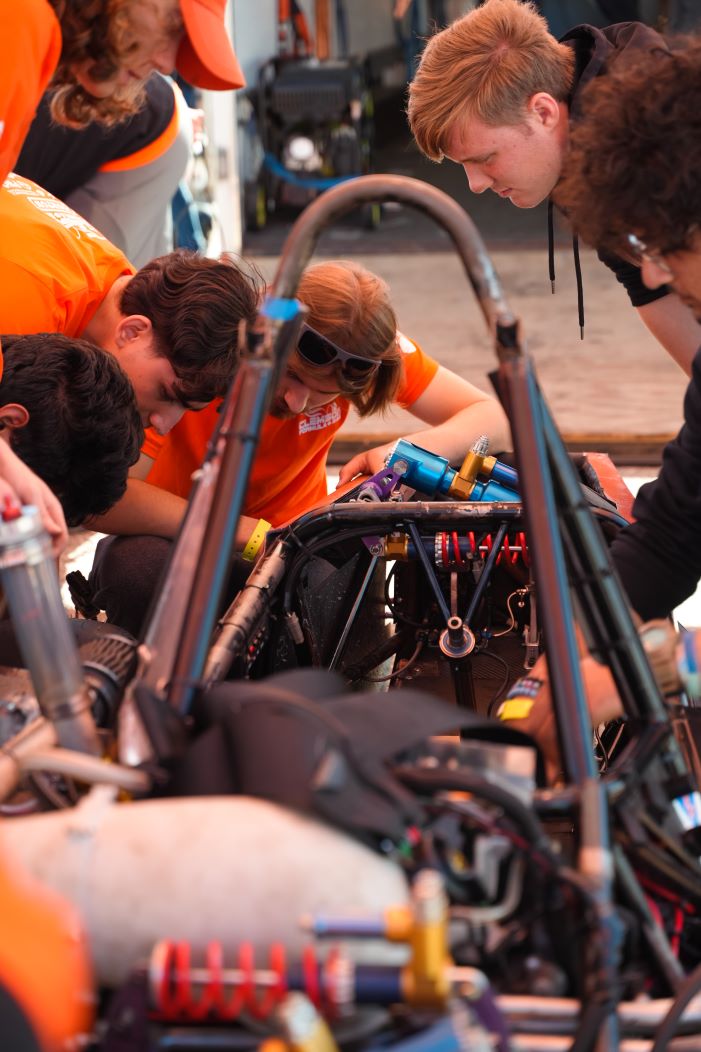
CUFSAE team members working on Tiger 24 before the competition.
Upcoming Competitions:
Pittsburgh Shootout (September)
Michelin LPG Shootout (October)
Barnesville Shootout (November)
There have also been changes to the team, as they have recently elected new team and division leads.
Tier 1 Leaders:
Team Lead – Rajan Chitrao
Chief Engineer – Ryan Bishop
Production Lead – Alec Huber
Finance and Logistics Officer – William Wei
Additionally, Rowen Smith is the new Sponsorship Coordinator for CUFSAE. With these changes to the team, Smith says that they will aspire to focus on reliability, better teamwork and earlier production for next year’s car, the Tiger 25, which will undergo design this summer.
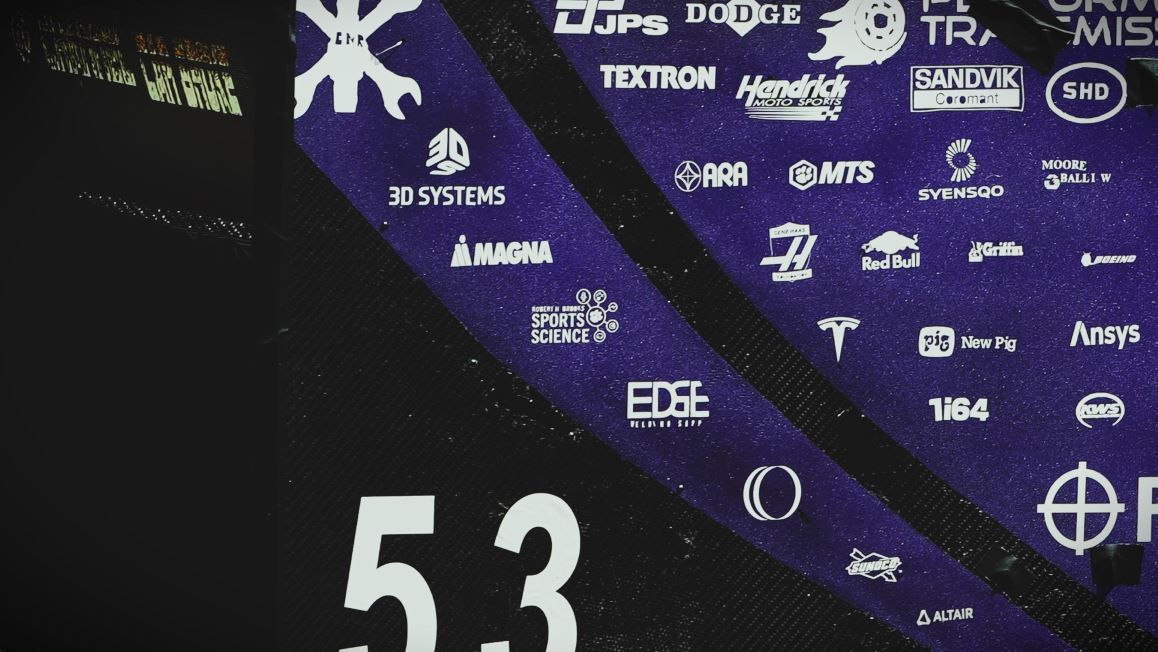
The Robert H. Brooks Sports Science Institute logo is showcased on Tiger 24 alongside other sponsors.
A part of the Tiger 24’s success has been credited to the support of CUFSAE’s sponsors. The team has expressed their unwavering gratitude towards their sponsors, including the Robert H. Brooks Sports Science Institute (RHBSSI), saying that the sponsors’ continuous assistance and investment gives the team added strength to keep pushing creativity and build the most competitive car they can. We at RHBSSI commend the CUFSAE team on all their successes to-date and wish them best of luck in their upcoming competitions this season.
Be sure to follow CUFSAE on Instagram, Facebook, and LinkedIn to stay current on all of the innovative things they are doing.
As we dive head first into summer, the Robert H. Brooks Sports Science Institute is excited to welcome aboard its two newest student interns. Meet Taylor Erdman and Payton Ober, each bringing their own unique talents and fresh perspectives to the Institute.
Taylor Erdman
Taylor Erdman, a senior sports communication major from Eastchester, NY, is the Institute’s marketing and communications intern for the summer. In her role, she will assist RHBSSI staff in procuring, curating, and disseminating Clemson sports science content. She will also develop content for the Institute’s social media accounts as well as the Sports Insight blog.
“I am thrilled about this new and exciting opportunity to work for the Robert H. Brooks Sports Science Institute as their marketing and communications intern,” Erdman said. “This is a chance for me to combine my previous experiences and creative ambitions in a way that I hope will help the Institute thrive. I also look forward to educating not just others, but myself, on the sports science at Clemson provided by our amazing faculty fellows and legacy professors.”
Taylor previously served as a marketing and communications intern for Clemson Computing and IT where she oversaw their social media platforms and created engaging content for the Clemson community. She hopes that her experience in this role will bring more followers and engagement to the Institute’s social media channels.
Payton Ober
Payton Ober, a senior graphic communications student from Fort Mill, SC, is the graphic design intern for the summer. Over the course of the internship, she will be tasked with creating logos, graphics, and polished compositions that assist RHBSSI staff in better reaching their audience. Further, she will create a plethora of designs, merchandise, and signage that advertises the Institute’s upcoming events.
“Getting the chance to assist the RHBSSI team in their User Interface, design assets, and printing capabilities is such a great opportunity,” Ober said. “I am so thankful for the chance to utilize my knowledge of design and printing processes in order to build upon their brand and support the Sports Science program. On top of that, I’m also just thrilled to gain a deeper understanding for the inner workings of the Robert H. Brooks Sports Science Institute.”
Payton has an abundance of experience in graphic design; she has been named lead designer for several Creative Inquiry courses at Clemson and has also interned for companies such as Ricoh USA and Olberding Brand Family. She plans to draw on these experiences in order to help the Institute reach more students, as well as prepare for upcoming events within the department.
Two senior Clemson students joined the Robert H. Brooks Sports Science team for the Spring 2024 semester and made significant contributions to the Institute’s mission while gaining valuable experience they will take with them in their chosen career paths.
Lauren Crumley, Events Intern
Graduating May 2024, Crumley served as the Institute’s events intern. In this role, she helped plan all of the Institute’s events for the spring semester, including the annual Robert H. Brooks Lecture in Sports Sciences with United Row, two former Clemson rowers who spoke on Clemson University campus in March.
“I’ve really enjoyed getting to work with the Robert H. Brooks Sports Science Institute this semester!” Crumley said. “Being able to learn more about event planning and operations has been valuable, and I know I’ll be able to take what I’ve learned here into future roles.
“In addition to our main lecture event, I’ve enjoyed getting to work on other special projects and growing skills in areas such as writing and research. As I get ready to graduate from Clemson, I’m excited to see the Institute continue to grow!”
Crumley was a member of Clemson’s rowing team during her three years at Clemson and has accepted a postgraduate internship in championships operations at the NCAA.
Justin Robertson, Marketing Intern
Also graduating May 2024, Robertson served as the Institute’s marketing intern for the spring semester. He helped create and post graphics for social media and established the Institute’s Instagram page. He also helped develop and distribute promotional items for the Institute’s annual lecture in sports sciences.
“Working for the Institute this semester has taught me so much about marketing, social media and helping grow an organization,” Robertson said. “From creating social media graphics to writing press releases to having a story published on Clemson News, the Institute opened many doors to me that would’ve otherwise been closed.
“Not only was I able to gain extensive experience in these fields, but I also had a great time working with Lauren and the Institute’s staff. Those relationships will be ones I carry with me throughout the rest of my life.”
Robertson served on Clemson University’s student newspaper, The Tiger, all four years as a student. He plans to enter the sports media field after graduation.
The Institute has hired two interns for the summer and is looking to fill five part-time internship positions for the fall 2024 semester. For more information and to apply, click here.
With March marking Women’s History Month, the Clemson Athletics and sports science communities have plenty to celebrate, including several women’s varsity programs at the University, one of which is the rowing team.
Competing in its first-ever season in 1999, the Clemson women’s rowing team has an enriched history and has been a staple of Clemson Athletics for two-and-a-half decades.
After Clemson announced it was adding a varsity women’s program in 1997, two years later, the Tigers were on Lake Hartwell practicing and competing. Since then, the team has accomplished great feats and has even climbed all the way to the mountain top in NCAA competition.
One decade after being established as a program, Clemson’s Varsity 4+ team captured Clemson’s first-ever national championship at the NCAA Rowing Championships in Cherry Hill, New Jersey, in 2009.
That championship helped pave the way for future rowing athletes to attend and compete at Clemson University, two of whom are set to speak at the Robert H. Brooks Sports Science Institute’s (RHBSSI) annual lecture series later this month.
An attempt at a world record
In honor of Women’s History Month, RHBSSI is proud to be hosting Jenny D’Anthony and Anna McLean on March 26 in Freeman Hall for its annual lecture series.
The duo will speak about their ongoing preparation for the estimated 60-day trip from Monterey Bay, Calif., to Kauai, Hawaii, as a part of the World’s Toughest Row competition. From taking two-hour sleeping shifts to burning 10,000 calories a day to desalinating ocean water, D’Anthony and McLean will begin their journey across the Pacific on June 8.
Jenny D’Anthony (left) and Anna McLean (right) are set to row the Pacific Ocean in June but will speak on Clemson University’s campus beforehand in March.
For months, the pair has been training to be the youngest and fastest female athletes to row across the Pacific Ocean. As a part of their mission, D’Anthony and McLean are raising money for the Hear Her Roar campaign, which brings awareness and financial support to Clemson’s female student-athletes.
McLean and D’Anthony were members of Clemson’s rowing team beginning in 2014 until they graduated from Clemson in 2017 and 2018, respectively. In 2022, McLean, from the United Kingdom, and D’Anthony, from the United States, formed United Row.
D’Anthony credits her time at Clemson for the person she is today and her motivation to complete the upcoming row across the Pacific.
“My Clemson experience was nothing short of incredible,” D’Anthony told Iptay. “It transformed me in ways well beyond athletics. Opening my eyes and mind to things I never thought possible. I wear the paw with pride and am grateful for the opportunity to represent and give back to my alma-mater. I am incredibly excited to immerse myself in an all-consuming challenge, where I will test my limits both physically and mentally. There are few, if any, times in life you can entirely devote your attention to one goal. This is one incredible exception.”
As for McLean, her experience as a Tiger already inspired her to row the Atlantic Ocean with her brother in 43 days, 15 hours and 22 minutes in 2019. Now, she’s onto an even bigger challenge with her best friend.
“As a student-athlete at Clemson I was able to meld my love for rowing alongside my passion for business,” McLean told Iptay. “Surrounded by such driven and highly successful students empowered me to ‘never settle’ (but) rather continue striving for more. From mornings on Lake Hartwell to months in the Atlantic Ocean, and now with dreams even bigger, conquering the Pacific, I am beyond grateful for the foundation Clemson laid and humbled to be giving back to my alma mater and supporting future generations to pursue their dreams too.”
Clemson students, faculty, alumni and community members are invited to hear D’Anthony and McLean discuss their upcoming 2,800 nautical-mile rowing competition. The talk with RHBSSI will begin at 6 p.m. EST on March 26 in the Freeman Hall auditorium, followed by a reception with food and refreshments in the Freeman Hall gallery from 7-8 p.m.
After launching the inaugural internship program at the start of the fall 2023 semester, the Robert H. Brooks Science Institute is excited to introduce its two new student interns for the spring 2024 semester.
The institute had a competitive application process for the internship positions, but these two candidates stuck out based on their experience, work ethic and abilities.
Justin Robertson
Justin Robertson, a senior sports communication major from Dayton, Maryland, is the institute’s marketing and communications intern this semester. He will monitor sports-related content on campus, interview students and faculty for content and help oversee the institute’s social media presence and Sports Insights blog.
“I am thrilled to begin this new position and help the institute grow,” Robertson said. “The research and work that the institute’s legacy professors and fellows carry out on a daily basis is nothing short of exceptional. I can’t wait to help share their work with the public and inform people about the impact that the institute has in the sports science landscape.”
Robertson currently serves as the Associate Editor of Clemson University’s student newspaper, The Tiger, where he has gained extensive experience writing and reporting on sports-related content that he hopes will contribute to the institute’s mission.
Lauren Crumley
Lauren Crumley, a senior sports communication major from Haddonfield, New Jersey, is the institute’s events intern this semester. She will aid in event planning and setup, coordinate event operations for the institute’s lecture series and work with faculty on special projects.
“I’m super excited to be working as the events intern for the Robert H. Brooks Sports Science Institute this semester,” Crumley said. “I’ve learned a lot from my previous experiences in the areas of event planning and operations and am looking forward to continuing that with the institute. I look forward to displaying the mission of the institute through the lecture series and more!”
Crumley is a member of Clemson’s rowing team and recently accepted a postgraduate internship in championships operations at the NCAA.
At the start of the fall 2023 semester, the Robert H. Brooks Sports Science Institute launched an internship program for Clemson students with an interest in sports communication. Kayla FitzWilliam, a senior marketing and management double-major from St. Louis, MO, developed and published content for the institute’s social media pages and Sports Insights blog over the course of the semester, among other projects. FitzWilliam shares more about her accomplishments this semester and advice to future students.
FitzWilliam receiving her Clemson class ring in Fall 2022, commemorating the completion of 90 hours.
Describe one project from this semester that was most memorable to you.
One of my most memorable projects this semester was getting to interview Bianca Henline, who is a student doing research in the Clemson Headgear Impact Performance (CHIP) lab. This was my first solo project and I loved getting to craft a story, starting from the interview, and turning that into a final blog piece. I had the opportunity to tour the CHIP lab where she works and talk with Bianca about her story and motivation to work in the sports science field. I left feeling inspired and was amazed at all the work students and faculty at Clemson are doing to improve research initiatives in the sports science field.
Did you learn any new skills this semester?
During this internship, I gained valuable skills in interviewing and copywriting. I had conducted a few informal interviews before this semester, but I really improved my interviewing skills throughout these past few months. Writing blog posts was also something new to me but I became more confident in my voice the more I wrote. I had a lot of freedom in how and where I wanted to take each piece and I enjoyed getting to try different styles with each article. The interview and writing processes really allowed me to hone in on my written and verbal communication skills.
How do you feel this experience has helped prepare you for a career in sports marketing?
One way this internship has helped prepare me for a career in sports is through networking. The Robert H. Brooks Sports Science Institute has a hand in all the sports-related research and events on campus and I had the opportunity to connect with many other sports-minded students and faculty at Clemson. Seeing the work that Clemson is producing in the sports world has shown me just how connected sports is to so many different aspects of our world. Having a more holistic understanding of sports is something I believe will help me standout as I prepare for a career in sports marketing.
After getting the chance to meet new people and learn about their research and activities at Clemson, what is your take on Clemson University’s position in the sports sciences field?
This role has definitely opened up my eyes to how much Clemson does in the sports science field. Being a marketing and management major in the College of Business, I didn’t have much exposure to what other colleges were doing, especially related to sports. I have gotten to see how virtually every department at Clemson has someone doing research related to sports, whether that be testing sports equipment or looking at the relationship between social trends and sports. I would say Clemson is in a very good position in the sports sciences field and I hope they continue to provide students with opportunities to get involved in the sports field.
What advice do you have for future students wanting to participate in this internship?
My advice is to really try to expose yourself to things outside of your field of study. Clemson offers so many opportunities for students and if you make the effort to put yourself out there, you will gain so many skills and experiences that you might not have gotten the chance to experience otherwise. One of my favorite parts of this internship was learning about and getting to highlight the amazing things students and faculty are doing, both inside and outside of the classroom. For anyone that is interested in this internship, have a good sense of the work, related to sports, that people at Clemson are doing. One of the most important jobs of this internship is finding people and stories that you can shine a light on.
Where are you headed in 2024 with classes, your career, etc. and what do you hope for the future?
I will be finishing up my final semester in the spring before I graduate in May, 2024. I am sad but also excited to get to enjoy one last semester at Clemson. Following graduation, I am planning on either going to graduate school to get my MBA or getting a job for a year or two before going back to get my MBA. While my exact plans post-grad are still up in the air, I know that I want to eventually do marketing or advertising for a company in their sports division.
Do you have any final remarks?
I know everyone says this when they graduate, but time really does fly by. My biggest piece of advice is to get involved in as many different things as you can. If there’s one thing that I learned through this internship, it’s that Clemson has so many different things to get involved in. If you have a passion about something, pursue it! If Clemson doesn’t have something that can help you pursue that, start it yourself. All the clubs on campus were started by somebody so don’t be afraid to pursue your interests. Clemson is the perfect place to try new things and explore your interests.
Kayla (right) at her last home Clemson football game as a student
Two students were recently selected to intern with the Robert H. Brooks Sports Science Institute in marketing and events for the Spring 2024 semester. Stay tuned to learn more. Visit Clemson.edu/Brooks-Sports.
In the world of sports, there is a continuous drive to improve human performance. In this field, small improvements can lead to significant advancements. One student at Clemson University hopes that his research will do just that.
Will Mendez is a senior at Clemson who is combining his passion for golf with his degree in Mechanical Engineering to push the boundaries of golf performance. Will’s research is shedding light on the impact that different materials have on golf club performance and hopes to one day make a lasting impact on the sport.
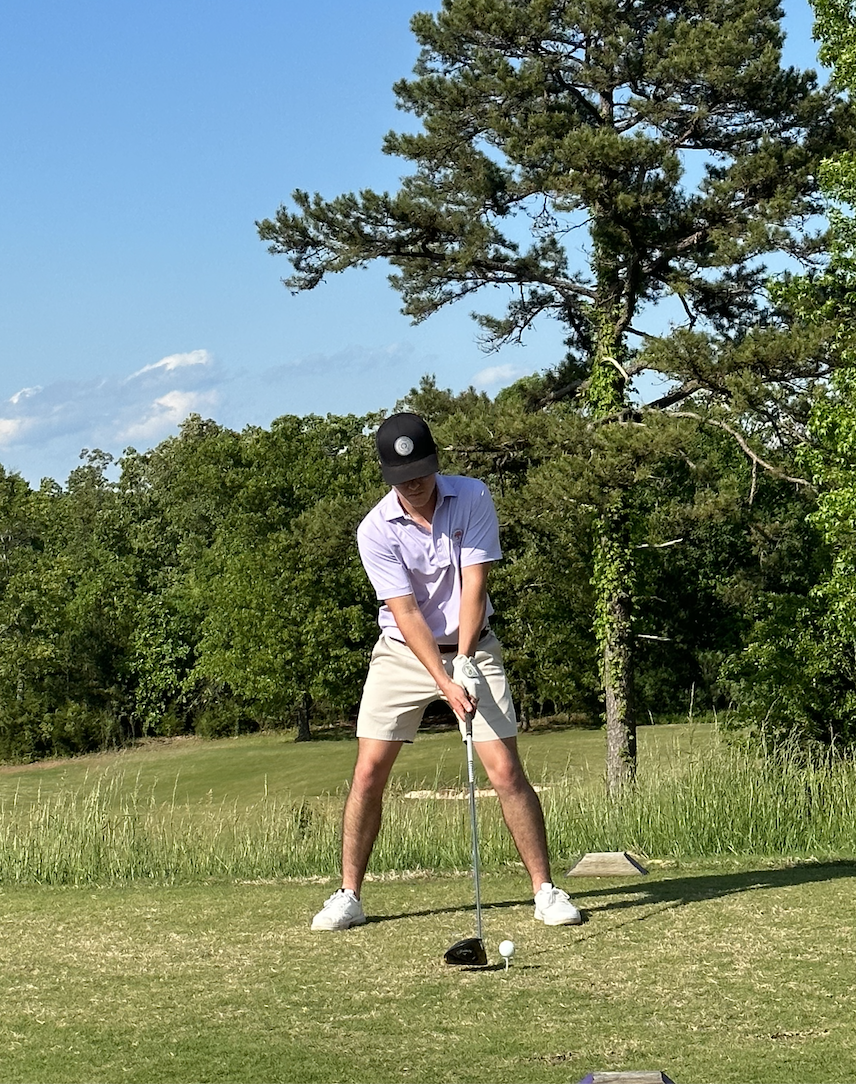
Will Mendez getting ready to drive the ball while playing golf
Growing up, Will was always fascinated by cars and loved playing golf. After spending a summer working at a local golf shop, Will discovered how he could combine his love for golf with his love for engineering and design. The following summer, he got an internship with Callaway Golf where he was able to gain hands-on experience designing golf clubs that are now being sold on their website. One of his favorite parts about product engineering is getting to see a project go from the prototype and testing stages to the final product that consumers can buy.
“It’s rewarding to know that I contributed to a product and now it’s being sold around the world. In product design, I love how you get to take a product, commercialize it, and turn it into something that can have an impact on people”
Will Mendez
Working for Callaway Golf, Will discovered his true passion and woke up excited to go to work every day. Coming back to Clemson this fall, he knew he wanted to continue learning about the intersection of these two fields. After discovering an opportunity through the honors college, Will realized he could do just that, while also gaining credits toward his degree.
Will’s Research
Will was curious about the impact that different materials in golf club heads have on ball performance but could not find any research on the topic online. This sparked Will’s idea and desire to find the answer himself. With the help of Dr. Garrett Pataky, assistant professor in Mechanical Engineering, and undergraduate research grants, Will has begun his research into finding a high entropy alloy that has good energy return properties to determine what would work best in golf clubs. He is using multiple testing methods to evaluate the effectiveness of the materials, including drop testing, gas gun testing, and speed measurement devices. Although the research project is still in the early stages, Will has overcome a few challenges already.
Will, on the left, pictured with two other interns he worked with at Callaway Golf
The main challenge he has faced so far has been having to build this research project by himself, from scratch. Not having much prior research experience, Will has had to learn as he goes. Although it has seemed daunting at times, he knows that it will be even more rewarding in the end. For that, he says he is thankful that Dr. Pataky has given him the freedom to control the direction of his passion project and test something that no one has tested before.
In the process of building his research project, Will has had to get creative with the materials and testing methods. While trying to find a drop testing device, he struggled to find a consistent release mechanism that could drop a golf ball from 20 feet onto a small metal disc. After unsuccessfully trying many different devices, he came up with the creative idea to combine two systems made from a fishing drone company – the first being a release mechanism that typically drops fishing lures out into the ocean, and the second being a golf ball dropper attachment connected to the release mechanism. Together, these two devices are able to drop the golf balls in exactly the same way every time. Will is also using a gas gun to shoot projectiles at his metal disc. A bluetooth photogate laser speed measurement device is used to measure pre-impact speed, and a high-speed camera is used to measure the post-impact speed. Collectively, these tests will show which high entropy alloys will result in greater energy return.
Will firing off the gas gun for testing
Will’s Goals
This research is a year-long project that will be completed when Will graduates this upcoming spring. While he doesn’t know what the outcome of the research will be yet, he hopes that he will be able to take what he learns and use it in his future career. Whether he finds a material that is perfect or one that should absolutely not be used, he wants to bring that knowledge to help his future golf employer. Being an avid golfer himself, Will understands the significance of the impact of materials on golf equipment and wants to be apart of improving performance of the game in the future.
Will hopes to join a company in the golf industry following his graduation in May 2024 and continue his work in product engineering. Will credits Clemson for giving him the foundation and tools to succeed in new and challenging environments and he will take those skills with him in his career. A top engineering program and family-like culture drew Will to Clemson and now, after beginning his final year, he says he “can’t imagine going to school anywhere else.”
DIY golf simulator that Will and his roommates built in their house
Bianca Henline, senior bioengineering student at Clemson University
Bianca Henline is currently a senior bioengineering student at Clemson University. After joining the Clemson Headgear Impact Performance (CHIP) Laboratory in the Fall of 2022, Bianca has been a part of multiple projects within the lab, testing the impact of large forces on protective headgear. The CHIP lab produces research that develops testing methods to understand the effects of impacts to the head and neck in order to aid in the prevention of sports related injuries.
The research Bianca most recently participated in involved using a pneumatic linear impactor to evaluate the effectiveness of commonly worn bull riding helmets. With the help of a grant from the Robert H. Brooks Sports Science Institute, Bianca is starting a new project that is exploring sports-related impacts in order to evaluate the effectiveness of chest protective equipment.
We recently spoke to Bianca about her experience in the CHIP lab and how this research impacts the standard of safety for protective gear across sports.
Why did you choose Clemson University?
I knew Clemson had a good bioengineering program and the sporting aspect was a huge draw for me. Being from Ohio, I felt pushed to go out of state and once I went on a tour here, I fell in love with the school and small-town community.
What made you decide to major in Bioengineering?
I always knew that I wanted to do something in the medical field and for a while I thought I wanted to be a doctor but I also had a love for design. When I took Intro to Bioengineering, I realized I could combine the design aspect with math, physics and the human body and it was the perfect mix for me.
Pneumatic linear impactor stimulates force of impact that occurs during contact in sports
How did you get involved in the Clemson Headgear Impact Performance Lab?
I took Dr. Harvey’s sports engineering class and Dr. Avedesian, the director of sports science at Clemson, came into our class looking for students that were interested in getting involved in sports science. I decided to join and got the chance to analyze the performance of Clemson Olympic sports athletes. We made presentations and pitched our findings to the coaches on how their athletes were performing. During that time, I was paired with Adam Smith and he recruited me to join the CHIP lab. One of the reasons I love my major is because everyone is so supportive and is working toward the same goal.
What projects have you worked on in the Clemson Headgear Impact Performance Lab?
One of the big projects I helped work on involved testing bull riding helmets. A Ph.D. student in the CHIP lab, at the time, was given the project but had other projects he was working on so I worked with a master’s student to help with testing. I got to head the project over the semester and we used mask testing and the linear drop tower to test the durability and protectiveness of the helmets. I’ve also gotten to work on testing for other projects and over the summer, I started looking at other protective equipment like shoulder pads used in different sports protective gear.
Bianca is programming the linear impactor to test the impact of force against a bull riding helmet
Can you explain what you did during these projects?
I used an impact ram and fitted bull riding helmets on a head form that could be manipulated. Then, I impacted the helmet and recorded rotational acceleration and looked at head criterion and damage. Based on the metrics and the damage each helmet had, I categorized the helmets based on their rankings.
Were there any challenges you faced while working on these projects?
While using the linear drop tower, one of the heavy head forms was accidentally dropped, which led to the nose breaking. We tried gluing it, epoxy, etc. and ultimately, we had to order a new head which was expensive and took a while to come in. I also had an issue with the neck of one of the head forms that kept cracking. I didn’t know if it was a location or speed problem but I tried gluing it together to see if it would hold during the testing. I noticed that the times of impact were getting influenced by the glue so I ended up having to order a new neck. One thing about the lab is that everyone is very resourceful and we try to fix the problem ourselves before having to order new equipment.
Is there a specific reason you wanted to study the impact of safety gear?
I grew up playing tennis and freshman year of high school I kept passing out on the court. I was in and out of the hospital and the doctors couldn’t figure out why it kept happening. I eventually got diagnosed with POTS, postural orthostatic tachycardia syndrome, after a family friend was diagnosed with it, sparking my diagnosis. There is still a lot we don’t know about the human body and I know how important research is, especially in sports. I want to contribute to research that helps people so that they don’t have to struggle getting a health diagnosis due to a lack of knowledge and research.
I am also very mechanical in the way I think. Force, velocity and pressure makes sense to me and dealing with armor was easier to understand.
Linear drop tower is used to test the durability of helmets
Your team was recently awarded a new grant by the Robert H. Brooks Sports Science Institute. Can you tell me about the goals of this research?
This project is a holistic approach to body armor instead of just headgear. It provides a great opportunity to explore other parts of the body for research, like chest protectors, elbow pads, etc. I am looking at impacting similarly to the bull riding project and the effects of certain materials and positions of gear on their performance in a sports application.
Right now, we are doing preliminary literature reviews and testing out dummies. Once I have the equipment that I need and have outlined the method of what specifically I want to do, we will begin the actual testing. For this research project, we have three new Creative Inquiry students, one Bioengineering and two Packaging Science majors, and then three people that were already working in the lab that will be assisting in the research.
How has funding from the Robert H. Brooks Sports Science Institute helped in your research?
Using the grant, I was able to get an entire body form to use for the protective gear testing. The body was super expensive but that grant has allowed us to expand our research capabilities to test different sports protective gear, outside of headgear testing. This equipment is a vital component of my current research but will also be used for other projects within the CHIP lab.
How do you think the work being done in the CHIP lab impacts the standards of protective gear in sports?
Bianca presenting her research on the effectiveness of bull riding helmets
I recently presented about the bull riding project and someone came up to me and shared how she wasn’t aware that people were having serious brain damage from the hockey helmets that were used for bull riding. It really puts into perspective that my work is impacting people and there are people that are truly touched. Through my research, I learned about a bull rider that committed suicide due to CTE, chronic traumatic encephalopathy, caused by repetitive impacts to the head. This really emphasized to me the importance of bringing awareness to the need for protective gear improvements and the work being done in the CHIP lab is contributing to that progress.
What are you involved in outside of the classroom?
I volunteer with Clemson Life every week and help with their cooking classes. Working with them is the highlight of my week. I have learned so much from them and I really do look up to them. I am also involved in Tau Beta Pi, the engineering honor society, and two bioengineering organizations on campus. Outside of that, I am also super passionate about working out and running. I recently completed my first marathon and I definitely want to run more of them in the future.
What are your plans after graduating with your undergraduate degree in May?
I am staying at Clemson for my master’s in Bioengineering. I will be continuing my research in the CHIP lab looking into protection gear. After I finish my master’s, I want to go work in the industry, either in orthopedic or sports science.