Sports Insight

From the classroom to the pool: Clemson Psychology major and club swimmer learns valuable skills for a career in sport 

By: Griffin Barfield

Photo by Natalie Bell, Graphic Communications ’25

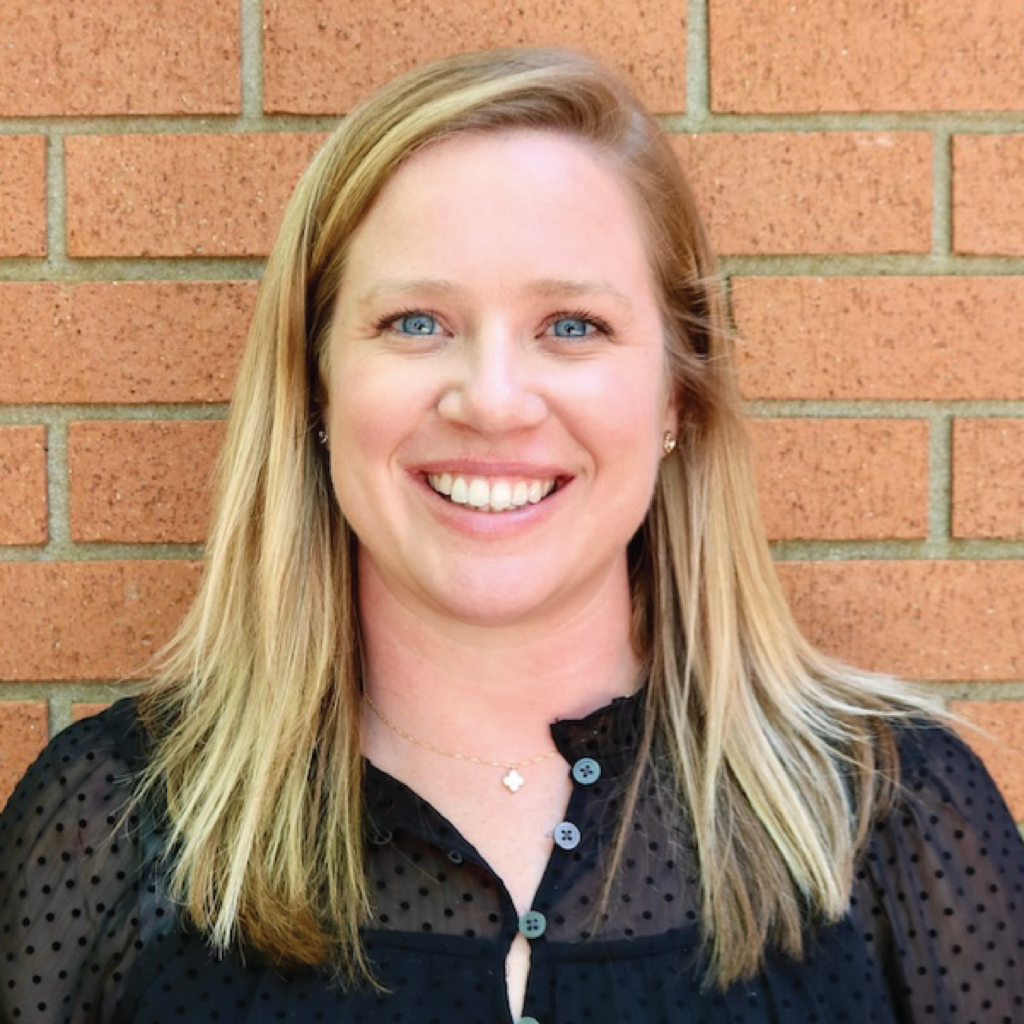
It’s not only the varsity sports on Clemson’s campus that leave lasting impacts on students. Even before stepping foot on campus as a student, senior Psychology major, Sydney Lavin, wanted collegiate swimming to be a part of her Tiger tenure. 

While Clemson does not hold a varsity program for swimming, Lavin knew about Clemson Club Swim – a team that would come to have a lasting impact on her life.

As a freshman looking for things to do outside of class, swim club was the first thing on her mind. From a recreational standpoint, she would be able to continue a passion of hers while connecting with other students on campus.

“I always knew that I wanted to swim during college, but not varsity since it’s so

competitive, so Clemson Club Swim was perfect!” Lavin said. “I remember at Tiger Prowl freshman year, my only goal was to find the club swim table, and I’m so glad I did because it’s seriously been one of the best decisions I’ve made.”

Immediately, she was plugged in. Not even a year into swimming with the club, Lavin found the opportunity to do more: coaching a local club team in the area. 

Lavin is apart of the Foothills Area YMCA’s coaching staff, where she coaches the ages 6-18 of the club swim team.
Lavin, center, coaches a FAY club team at the Seneca YMCA

Now, she serves as the assistant coach for the Foothills Area YMCA’s (FAY) club team, coaching young swimmers in Seneca, South Carolina, where she has been for the last three years. 

“I’ve always thought that coaching would be fun, so it’s been the best job for me!” Lavin said.  “There’s definitely been a learning curve because I had never coached before, but it’s taught me so many lessons and life skills.”

When she first began with FAY, Lavin taught the youngest group, ranging from 6-10 years old. Now, she teaches the level above, ranging from ages 9-13. She describes the job as a “learning experience.”

Her work off campus has translated to the pool at Clemson’s Fike Recreation Center, where she has coached various practices over the years for the club team. In addition to coaching, Lavin has served as Clemson Club Swim’s treasurer for the past two years, managing the club’s budget and finances. 

Photo by Natalie Bell, GC ’25

However, her biggest takeaway from her four years with the team has been the interpersonal skills that she has developed with these positions. 

“I have the best group of friends from this club,” Lavin said, “but I’ve also had to learn how to communicate with University staff and others outside of the University on things like space reservations, banking, and equipment rentals for our home meet.”

These skills are important to Lavin, who is graduating this spring but plans to continue her education. She intends on pursuing a graduate degree in psychology with an Industrial-Organizational (I/O) Psychology concentration. She would like to go into I/O psychology consulting with collegiate athletic programs or institutions. 

Lavin also hopes to continue to coach if her post-graduate studies allow. Nevertheless, this recreational sport has provided her with a skillset that will translate into the real world, and for Lavin, the field of psychology.

“I love club sports because it’s that perfect middle ground of recreation and competition, another reason why Clemson Club Swim has been so good!” Lavin said. “This position has also been helpful in pursuing a career in consulting because of the communication and analytical skills required for the job.”

As part of undergraduate studies in psychology, Lavin works on a Creative Inquiry team with RHBSSI fellow, Marissa Shuffler, Ph.D., on her Institute-funded grant work developing teams in the context of NCAA sports.

RHBSSI welcomes six new Clemson sports faculty to fellows cohort

The Robert H. Brooks Sports Science Institute is thrilled to welcome six new Clemson faculty and staff members to its cohort of fellows beginning Spring 2025.

Marissa Shuffler

Associate Professor, Psychology

Shuffler has over a decade of experience conducting basic and applied research in the areas of team development, leadership and organizational effectiveness. Shuffler is director of Clemson’s DIGITAL (Deriving Innovative & riGorous scIence for Teaming And Leading) Research Lab, supervising a team of graduate and undergraduate students. Her research focuses on the study of scientifically derived, innovative interventions needed to develop, sustain and maximize inter- and intra-team functioning and wellbeing. Shuffler’s work also addresses the challenges of leading and leadership development in high risk and complex environments, including healthcare systems, the military and spaceflight. To date, Shuffler has served as Principal Investigator or Co-Investigator for more than two dozen research projects totaling over $23 million in funding from federal and private entities. In 2017, Shuffler was awarded a prestigious National Science Foundation CAREER grant for her research exploring team development interventions and the use of latent profile analysis as a mechanism for better designing interventions for team effectiveness.

Jessica Aviles

Assistant Professor, Industrial Engineering

Avilés specializes in understanding how people move, why they move the way they move and how to help them move better. Her passions lie in improving mobility by applying innovative training interventions and assistive devices. Her research interests cover industrial athlete rehabilitation, fall prevention and human factors and ergonomics in healthcare. At Clemson, her work revolves are exoskeletal research. With a doctorate in Biomedical Engineering, Avilés has taught senior-level occupational biomechanics and also the design and analysis of work systems. Avilés is a Brooks grant awardee and principal investigator in the PHASE (Pursuing Health through Adaptation, Sports and Ergonomics) Lab at Clemson.

Tyler Harvey

Senior Lecturer, Bioengineering

Harvey received his Ph.D. in Bioengineering from Clemson in 2018. Since then, he has taught undergraduate courses in sports engineering, bioengineering design theory, applied biomedical design, bioengineering ethics and entrepreneurship and more. His research interests involve cognitive impacts of virtual reality sports training, sports biomechanics, computational modeling of living systems and more. Harvey is passionate about increasing access to STEM for underserved and underrepresented groups.

Amy Pope

Principal Lecturer, Physics and Astronomy

Pope combines her passion for physics and sports to create engaging learning experiences for students. She teaches Physics of Sports, a course that uses real-world athletic scenarios to illustrate core physics principles. Her contributions to The Conversation on the physics of breakdancing and ski jumping highlight the physical processes behind these Olympic sports, making complex concepts relatable to a broader audience. As a faculty member in the Department of Physics and Astronomy, Pope leverages the universal appeal of sports to make physics more accessible, relevant and engaging for all learners.

Leona Ransdell

4-H Equine Program Leader

Ransdell received her B.S. in Animal Science with an Equine Business concentration from Clemson in 2012. She has served as a 4-H Agent with both the Clemson Cooperative Extension and Virginia Cooperative Extension as the 4-H Equine Program Director. In Virginia, Leona led educational teams to multiple wins at the Eastern National 4-H Horse Championships and managed one of the largest youth-only horse shows on the East Coast. She also coached the Virginia Tech Western and Horse Judging teams and taught equine science and biomechanics courses. Additionally, she earned her AQHA Level 1 Judging Card. Returning to Clemson in 2024, Leona hopes to build on the past successes of the 4-H program in South Carolina with a special focus on the educational events and programs to help mitigate the lack of large animal veterinarians. She is excited to further the interests of the equine industry and bring together stakeholders to address and build a strong future for the equine industry in South Carolina. 

Christopher Chouinard

Assistant Professor, Chemistry

After briefly working as a project manager for a contract research lab in Massachusetts, Chouinard received Ph.D. in Chemistry from the University of Florida. There, he worked under world-renowned mass spectrometrist Rick Yost and was responsible for integrating drift tube-ion mobility spectrometry (DTIMS) into the Yost lab. Chris’ interests at UF involved IM-MS studies of clinical molecules (steroids, Vitamin D metabolites) and he received grant funding through the Partnership for Clean Competition to develop novel IM-MS methods for improved identification of anabolic androgenic steroids in athletes. Chouinard then engaged in a prestigious post-doctoral position at Pacific Northwest National Laboratory in Richland, WA where he worked with Dick Smith, another world leader in mass spectrometry, designing and developing a Structures for Lossless Ion Manipulations (SLIM) platform that enabled the first integration of LC into the SLIM IM-MS pipeline for improved analysis in phosphoproteomics. Chouinard joined Clemson in 2022 and continues his work in ion mobility-mass spectrometry.


Any Clemson faculty or staff making contributions to the sports field, broadly defined, are invited to apply to become members of the Institute. Fellows meet twice annually, collaborate on multi-disciplinary projects and are eligible to receive additional funding from RHBSSI for their work. Click here to view the full list of fellows and click here to learn more about becoming a Brooks Fellow.