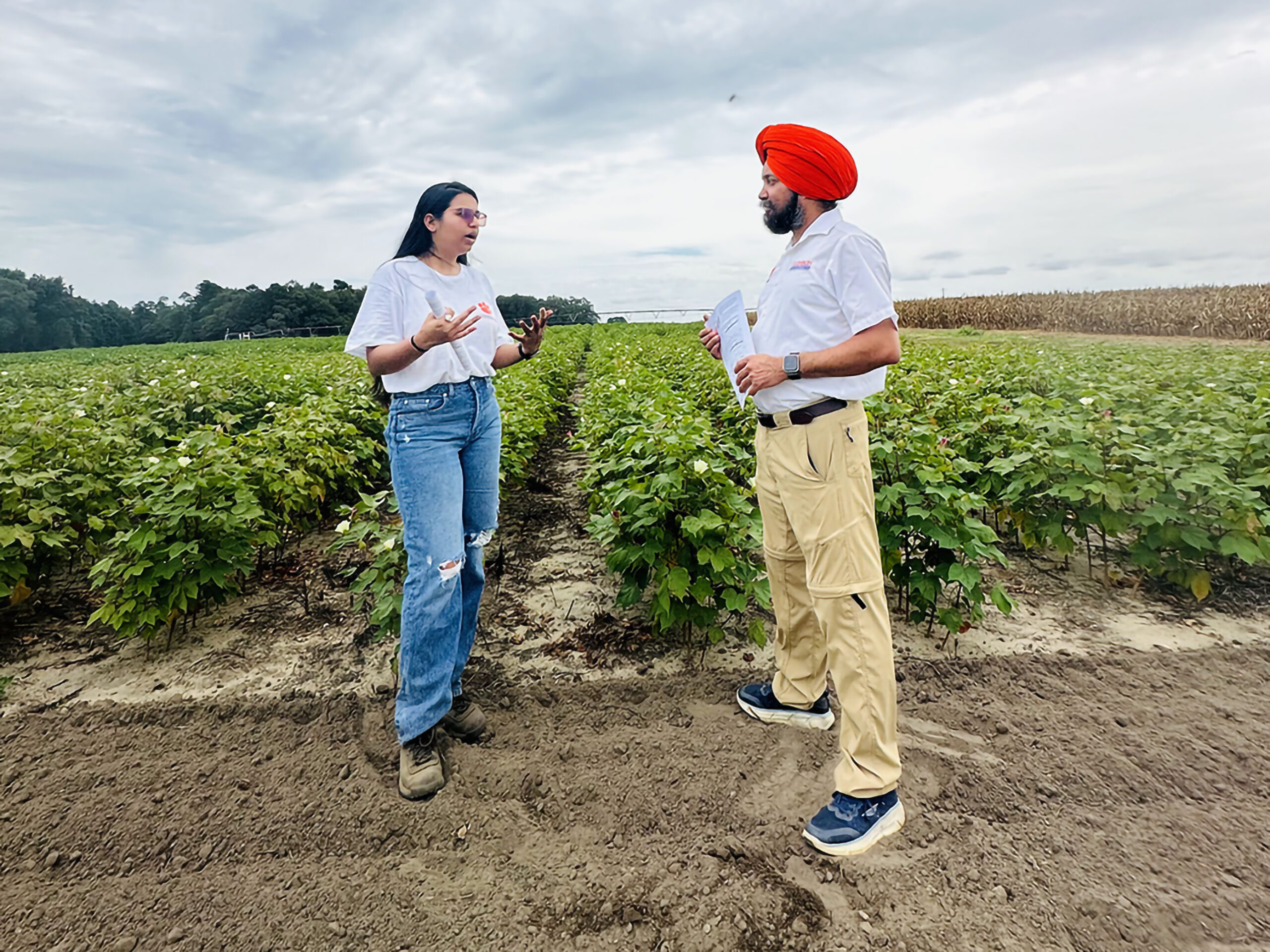
After three years of groundbreaking research that reveals how South Carolina farmers can significantly reduce fertilizer costs through conservation practices, Clemson University Extension Soil Fertility Specialist Bhupinder Farmaha is turning to the state’s agricultural community to help set research priorities for the coming years.
Farmaha is planning soil fertility research and Extension programming across South Carolina for 2026 and beyond. Direct input is needed from farmers regarding their primary challenges with crop nutrition, cover crops, manure management and soil health.
“Farmer feedback is absolutely critical to ensuring our research addresses real-world challenges in South Carolina fields,” said Farmaha, who is housed at the Edisto Research and Education Center in Blackville, South Carolina. “Their input will significantly influence soil fertility research for South Carolina cropping systems over the next 5 to 7 years.”
A brief 5-minute survey has been created to gather feedback on topics including field days, county meetings and on-farm trials. The survey is available at https://bit.ly/4rk03HY. The survey deadline is Dec. 12. Research planning sessions will begin in early 2026.
Farmaha emphasizes that input is needed from farmers across all major cropping systems in the state – including cotton, corn, soybeans, wheat and specialty crops. This feedback will help his research team prioritize studies that can deliver immediate, practical benefits for South Carolina’s farmers while addressing long-term sustainability goals.
“We’ve seen firsthand how conservation practices can reduce input costs while maintaining productivity,” Farmaha noted. “Now we need to hear directly from farmers about what challenges they’re facing and what research would be most valuable for their operations.”
Farmers unable to complete the online survey can share their input through their Clemson Cooperative Extension Service county agent or by emailing Farmaha at bfarmah@clemson.edu or by calling (217) 778-5170.
The request comes on the heels of Farmaha’s recent cotton nitrogen research across 50 sites statewide from 2021 to 2023. The research found that 56% of fields responded to nitrogen fertilizer while 44% did not. This shows farmers using conservation practices could substantially reduce their fertilizer needs without sacrificing yields.
“This work has revealed soil cation exchange capacity as a key predictor of nitrogen needs, offering practical applications that could save farmers thousands of dollars annually,” Farmaha said.
-END-
