By: Daniela Rodriguez, M.S. student
Why cool-season forage diversity matters? In the southeastern United States, annual cool-season forages help us maintain grazing, reduce feed costs, and optimize animal performance. These forages can extend the grazing season while warm-season perennial grasses are dormant. Cool-season forage mixtures such as grasses, legumes, and brassicas, have the potential to improve forage quality and system resilience. Knowledge of the dynamic behavior of mixtures in grazing systems has specific applications in making informed grazing management decisions.
How did we evaluate cool-season forage mixtures at Clemson University? In this 2-year project, different cool-season forage mixtures were established and are being managed under rotational stocking in South Carolina (Figure 1). Forage mass and quality are being determined throughout the grazing season.

Figure 1. Cool-season forage paddocks under rotational stocking at EREC.
Overview of research project: This study is located at the Clemson University Edisto Research and Education Center (EREC) in Blackville, SC. Three cool-season forage mixtures were established in October 2024 and 2025. Beef heifers are rotationally grazing these plots from December through April each consecutive year. Treatments are:
- Grass mixture (Grass): oat, cereal rye, and annual ryegrass
- Grass–legume mixture (GLEg): Grass + white, crimson, and red clover
- Grass–legume–brassica mixture (GLBr): Grass+ clovers, winter pea, and radish
Forage availability and quality: Forage mass varied throughout the grazing season, with lower production in early winter and higher production later in the season (Figure 2). This pattern reflects the natural growth dynamics of cool-season species, which typically reach their peak production in late winter and early spring.
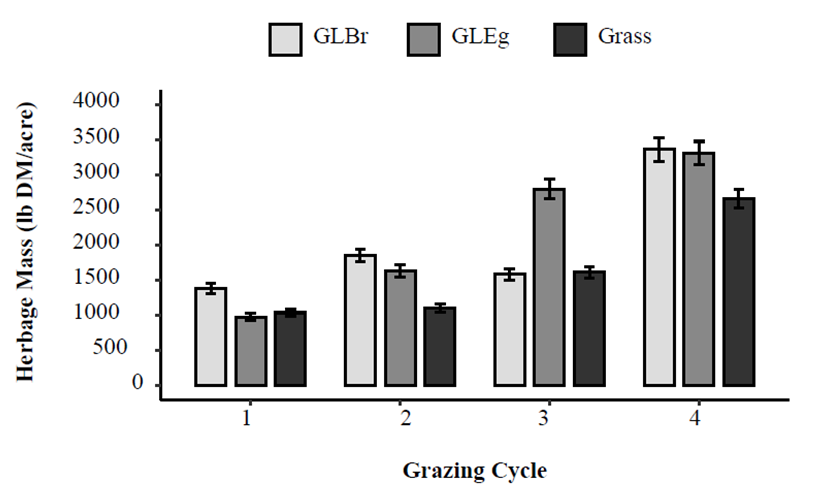
Figure 2. Forage mass of cool-season treatments per grazing cycle in Blackville, SC.
The nutritional value of the forage was influenced by both the species and the maturity of the plants throughout the season; mixtures including legumes and brassicas tended to maintain higher crude protein concentrations at the beginning of the grazing period, which helps meet the nutritional needs of the animals during early winter grazing. Forage quality declined later in the season as the plants mature, with an increase in fiber concentration and a decrease in crude protein concentration. Accordingly, it is important to adjust the timing of grazing to the growth stage of the forage to maximize nutritional benefits.
Take-home message: Cool-season forage mixtures are a valuable tool for extending the grazing season in the region. While forage production depends mainly on seasonal growth patterns, the nutritional value of the forage is closely related to the species used and their stage of maturity. Using these mixtures during the cool season can provide opportunities for early grazing, maintain forage quality, and contribute to more resilient livestock production systems.
