The Parks, Recreation and Tourism Management (PRTM) Blog

PRTM Student Profile: Meet Conner Sweeny

By Nicolle Rebolledo, communications intern

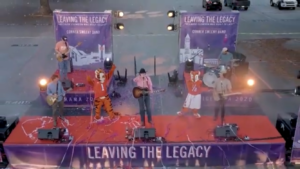
Conner Sweeny is both a Parks, Recreation and Tourism Management (PRTM) undergraduate student at Clemson University and a talented rising country music star. His most recent performance was in Clemson’s very own 2020 Tigerama where his band, The Conner Sweeny band, performed on a live stream for all of our Clemson fans to enjoy. He recently released his five-track EP album named Faith Family Friends in April 2019, and it includes a song called ‘Tiger Town.” Not only is he a part of Clemson’s Talented Hall of Fame, he has a passion for conservation and wildlife and is a bright student in our PRTM program.

Clemson PRTM student Conner Sweeny playing with his band on stage at Clemson's Tigerama.
Clemson PRTM student Conner Sweeny playing at this year’s Tigerama. (image credit: Gwynn Powell)

Why did you choose PRTM for your studies at Clemson University?

I chose PRTM because I am truly passionate about the outdoors, wildlife and conservation. It was an easy decision and I haven’t ever regretted it. 

What’s your favorite experience as a PRTM student so far?

My favorite PRTM experience so far has been taking Intro to PCAM with Betty Baldwin. She opened up my eyes to so many different aspects or the outdoors and gave me opportunities to be hands on with conservation.

Are you originally from Clemson? How does the area shape your music?

I have lived in a lot of places, but my family now lives in Greenville, SC. Ever since I arrived in this town in 2017, It has been shaping my music and shaping me. I love Clemson and everything I have experienced here!

How can people buy your music?

My music can be bought on iTunes, streamed on Spotify (https://open.spotify.com/artist/1J7P9iKA9TGrDpBbtM9k03), streamed on Apple Music (https://music.apple.com/ca/artist/conner-sweeny/1422811725), and you can follow my page on instagram (https://www.instagram.com/connersweenymusic/?hl=en) to find out about music updates and shows! 


Resiliency in the Face of Adversity: Clemson University Paralympic Soccer Program

By Marissa Kuula, a current Community Recreation and Sport Management focused student within the Parks, Recreation and Tourism Management Department (PRTM)

Clemson University Paralympic Soccer (CUPS) team members.

Going into its fifth year under a grant from the United States Department of Veteran Affairs this past spring, the Clemson University Paralympic Soccer Program team headed by Parks, Recreation and Tourism Management faculty member Dr. Skye Arthur-Banning with assistance from Dr. Barry Garst was gearing up for another year of planning and implementing adaptive soccer camps for injured military veterans and professionals across the country. With plane tickets booked and a total of eight camps already under their belt, the team was prepared for a summer focused on delivering ten additional programs around the country in order to improve the quality of life, well-being and independence of military veterans.

Plans, however, were derailed when COVID-19 hit. With the virus rapidly spreading across the world, quarantine and social distancing guidelines went into effect to protect the population, halting all non-essential travel and upcoming gatherings, including the camps.

In the past, a series of camps were held in different American cities, hosting around fifteen veterans and professionals over the course of three days. Participants took part in both classroom and on-field learning and training sessions for two types of soccer – 7-a-side for athletes with Cerebral Palsy, a traumatic brain injury or stroke, and 5-a-side for athletes with visual impairment. They also earned a Mental Health First Aid and a US Soccer Grassroots Coaching certification over the course of the camp.

In addition to these learning and developmental opportunities, participants also had the opportunity to socialize with staff and other participants through group dinners and a planned group activity, such as adaptive foot golf, attending a professional or semi-professional sporting event, adaptive rowing, adaptive golf and adaptive CrossFit.

After the camps, veterans can use their training to become players in adaptive soccer programs, use achieved certifications to help transition back into their communities and pursue coaching opportunities in existing programs. Using skills and certifications gained at camp, participants can also begin to work with community partners to expand adaptive sport participation in their areas and become more active members of their communities overall. The Mental Health First Aid certification gives participants the skills and ability to identify, understand and respond to signs of mental illness.

While new restrictions meant that the traditional camps could not be held in person, Margaret Domka, a Clemson Ph.D. student who works with Dr. Arthur-Banning to manage the program, says that the veterans’ camps may have been even more important to deliver this year than ever.

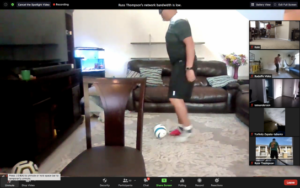
Picture of someone playing soccer in their living room.
Participating veterans took part in several training sessions, including adaptive soccer.

“It has been challenging for many people to find ways to remain physically active and involved in the community this year, and it can be an even greater challenge for veterans with disabilities who may, in normal circumstances, need assistance in finding ways to reintegrate into the community,” said Domka. “Our virtual camps provide an opportunity for veterans to connect with others and become active.”

While COVID-19 has created unexpected challenges, the planning team’s creative thinking and strong work ethic allowed for the virtual style camps to develop and take place. For example, the Mental Health First Aid and US Soccer Grassroots certification portion of the camps took a page out of the book of Zoom classroom sessions Clemson University used to finish its virtual school year after spring break, with certification professionals working their way through instructional PowerPoints and videos. That said, the training sessions and feeling of camaraderie and connectedness that in-person camp offered in the past was harder to facilitate in a virtual setting. In order to combat this obstacle, the undergraduate team that works on these camps came up with ways to engage the participants both physically and socially.

Kirsten Windbiel, a graduate research assistant for the program, said that the team had to be well organized and prepared ahead of time to make the virtual camps work.

“Moving into an online format, our team really needed to be extra organized and creative when it came to executing the camp. Our team met frequently before camp to make sure all the pieces came together in an organized fashion, considering all of the online components, such as who was presenting when, which students were monitoring the Zoom chat boxes, making sure we were communicating effectively to the camp participants and overall, finding a successful way to make the correct adaptations for a variety of disabilities,” Kirsten said.

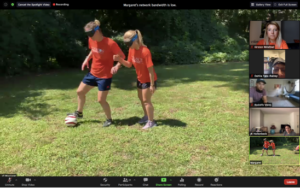
Two women wearing blindfolds playing soccer outside.
CUPS team members lead participants through a blind soccer training session.

On the more physical side of things, camp attendees participated in chair yoga, seated weight training and adaptive soccer training sessions in which they could either practice drills in their living room or outside. Camp participants were shipped the equipment they needed to participate in these sessions in advance of the camp, including a regular soccer ball and a blind soccer ball (with rattles inside so players can hear the movement of the ball). A group Zoom dinner also helped create an environment conducive for social interactions. Team members took participants’ food orders and coordinated food delivery across three different time zones so that every person was able to eat at the same time while on the Zoom call.

According to Kirsten, the experience taught her that it’s important to stay connected and engaged with one’s community and peers, especially during uncertain times.

“Our community resources session at the end of camp allowed the veterans that participated to talk about resources within their communities and ideas for adaptive sports,” Kirsten said. “In general, the camp also really just allowed the group to come together during a difficult time, learn and have some fun doing something new.”

###

Future virtual camps are currently being planned to continue to benefit the veteran population across the United States. Updates regarding the dates and registration of these camps will be posted on the Clemson Paralympic Soccer website. You can also check out Clemson University Paralympic Soccer (@cuparasoccer) on Instagram, Twitter, and Facebook for updates on the program and other adaptive sport happenings.


Recreation partnership provides valuable research, increased opportunity for Clemson students

For nearly half a century, a partnership between two Clemson University departments has provided courses for credit in leisure education and research opportunities to students on campus.

The partnership began when the university started its leisure skills program in 1972, which allows Clemson students to take a leisure or recreational course for one credit, while also helping them explore non-academic hobbies or career options. The program typically offers more than 150 one-credit learning options every semester in subjects such as dance, shotgun and other sports, yoga, fitness, outdoor recreation and first aid. The courses are developed and managed by the university’s parks, recreation and tourism management department, with 24 of the 159 courses offered last fall using campus recreation facilities.

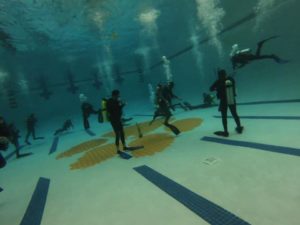
Scuba diving in the pool at Clemson University's Fike Recreation Center last March.
Some of the leisure skills program’s scuba diving training is completed in the pool at Clemson University’s Fike Recreation Center.

Jeff Hallo, interim chair of the department, says that the leisure skills partnership between university departments is an example of working together in the best interests of students, while also furthering new research befitting Clemson’s status as one of the nation’s most active research institutions (Carnegie Basic Classification R1 – Highest Research Activity).

“We’re grateful to campus recreation, and are particularly thankful for Executive Director David Frock, for ensuring Clemson students can participate in learning opportunities in their campus facilities,” Hallo said. “It’s safe to say that these programs, which have provided numerous opportunities for our faculty and graduate students to conduct leisure-focused research while also serving thousands of undergraduate students, make a significant contribution to our university as a whole.”

Leisure Skills Program Director Dan Anderson adds that the program functions as a research lab of its own on campus.

“We have the most prized population to study in the leisure field – college-aged students – right at our fingertips, and we have them actively engaged in active forms of leisure, like sports, and non-active forms of leisure, giving us a unique research opportunity,” Anderson said. “We’ve had several graduate students and faculty members study the impacts associated with student participation in those types of programs, such as on their mental health, their ability to better focus on their studies and on their body image.”

A study led by former Clemson graduate student Katherine Ann Jordan that was published in the Journal of Experiential Education in 2018, for example, found that if college students have leisure education included in their academic schedule and tied to their grade point average, they were more likely to actively participate in healthy leisure activities and begin and maintain positive lifestyle habits.

Another study led by former doctoral student Cindy Hartman and published in the Journal of Student Affairs Research and Practice in 2017 found that leisure education courses are a form of complementary health programming that helps students build adaptive coping skills and positive well-being. In 2013, graduate student Kate Evans used the leisure skills program to explore the impact leisure skills classes have on building student engagement with the university. The study results indicated that leisure education had a marked impact – providing a uniquely positioned environment for building students’ sense of engagement with their institution through an enhanced sense of community, enhanced sense of self and active learning.

Campus Recreation Executive Director Dr. David Frock said that the partnership between the departments aligns with the campus recreation mission to enhance the educational experience and promote lifelong wellness through high quality and diverse recreation programs, services and facilities.

“Hosting courses within the leisure skills program activates and engages students, exposing them to the numerous well-being services offered through campus recreation,” Frock said. “Our staff has collaborated with faculty on research and grants along with collaborations on programs and events throughout PRTM. Campus recreation staff also instruct courses and provide Clemson students the opportunity to develop new skill sets and build their resumes.”

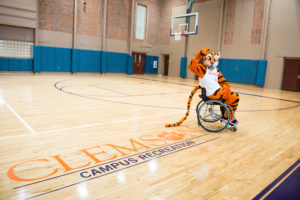
Over the past few years, the partnership has expanded to include research, grants and other campus activities with a focus on diversity. For example, the departments recently worked together to introduce wheelchair basketball as the newest intramural sport.

These activities are part of the university’s Adaptive Sports and Recreation Lab, which was launched last spring in order to further existing efforts to implement high-quality adaptive sport programming and conduct applied research.

Clemson Tiger playing wheelchair basketball in Fike Recreation Center.
The partnership between Clemson University departments has helped diversify campus recreational opportunities, including the creation of a wheelchair basketball intramurals program.

Other opportunities for adaptive sport involvement by students and community members include the Southeast Regional Wheelchair Games and the Clemson Classic juniors wheelchair basketball tournament. All of these programs require campus resources to be successful, of which campus recreation facilities and staff are vital.

These joint efforts demonstrate a commitment to achieve the university’s strategic aims of inclusive excellence and to break down the barriers to sport and recreation access that many students with physical disabilities experience on college campuses.

Hallo said he is hopeful that the partnership can continue to provide opportunities for students and faculty well after it surpasses its 50th anniversary in 2022.

“This partnership has accomplished a great deal over the decades and helped thousands of students,” Hallo said. “We’re aware that many of these programs wouldn’t exist without access to campus recreation facilities and equipment, and we’re thankful for the opportunity to continue to work with them to create new opportunities for our students and community.”

Learn from the best in the community recreation business: meet Tom O’Rourke

“When you are a student in the PRTM Master’s program, you have me for life.”

Clemson PRTM Online MS faculty member Tom O'Rourke.
Clemson PRTM Online MS faculty member Tom O’Rourke.

Over the past 40 years, Tom O’Rourke has spent every day of his working career in the management or administration of parks, recreation and tourism in the Charleston, South Carolina region. Between directing two large park systems and his service as a Board Member of the Charleston Convention and Visitors Bureau, he’s seen and managed it all.

Tom applies that on-the-ground knowledge and expertise to two classes in the Clemson University Master of Science in Parks, Recreation, and Tourism Management (PRTM) program: Innovative and Creative Funding Strategies in PRTM (PRTM 8210) and Enterprise Development in the Public and Nonprofit Sectors (PRTM 8240). He also provides strategic planning support to the department.

Tom recently answered a few questions for us about the program, his experiences in the community recreation field and the future of the profession.

Tell us a bit about what you see as your most significant contribution to the online MS program.

As Executive Director of the Charleston County Park and Recreation Commission I oversaw the agency through its most significant growth. What separated CCPRC’s growth from most others is that we accomplished this with very little reliance on tax subsidies. As our profession advances into the future, it is clear that we will need to create entrepreneurial opportunities and business management principles that will ensure its sustainability. My contribution to the master’s degree program is to work with the students and other faculty members to institute programs and services that can financially sustain themselves into the future.

What knowledge and skills do you feel are most important for our MS students to have in order to advance in the field?

The skills necessary to advance the field of parks, recreation and tourism into the future will be grounded in creativity. A department’s end goal of making communities and the people in them better doesn’t change. What will be completely different is how we do it. Graduates should leave our program understanding how to fund their parks and programs without relying on the government to fund their operations.

The future leaders in parks and recreation will be managing more than doing. Our students learn the contractual skills necessary to protect their community, while controlling the activities that take place in their department.

Our program also focuses on innovation. Government is changing, parks and recreation is changing, and so are people and society. Our students will learn through innovation the skills necessary to lead our profession into the future.

What do you enjoy most about teaching in the MS online program? 

What I enjoy most is my relationship with the students. Most of our MS students are currently working in the field. The personal relationship I have with the students extends far beyond the learning outcomes of each class.

I want to be the type of professor that is always there for the students not only in class, but beyond the class and even after they graduate. Education does not stop after the student leaves Clemson. When they contact me, I don’t want to give answers, I want to ask questions so that the student can reach the answers themselves. When you are a student in the PRTM Master’s program, you have me for life.

What advice do you have for potential students who will be taking this program while working full-time?

I actually think it is better to enroll in the program while working full-time. The advantage is that you have faculty resources for the problems that you are undertaking at your immediate disposal.

Our current method of teaching is designed to consist of discussion topics and group work. This forces students to get to know each other. The other students provide a professional network that will last well beyond graduation. When we discuss current issues, students that are currently working full-time always offer the best and most current examples.

How is this program a good value for students? Or who do you think would benefit most from this credential in your field of expertise?

The knowledge gained in the MS program will benefit a student even if they choose to switch fields. Gaining knowledge in strategic planning, funding and working in political environments is essential, whatever you are doing. Most advanced senior management positions currently require a master’s degree. Having one with an emphasis in innovation, creativity and entrepreneurship separates our program from any other.

###

About the Master of Science in Parks, Recreation and Tourism Management

Clemson University is among the nation’s top universities in graduate education in the fields of parks, recreation, tourism and related disciplines. Research shows that the average annual salary of a person holding a M.S. in the PRTM field is $16,000 more annually or $480,000 more over a 30-year career. The top 25% of people in the field with a M.S. make $88,000 or more annually.

Students learn from a mix of leading university faculty and world-class practitioners and take 10 classes over two years (one class at a time), meeting online in the evening once a week with faculty and fellow graduate students – making sure you can continue to work full-time while earning your Master’s degree.

Visit Clemson Online to learn more about the MS Online (non-thesis) program in Parks, Recreation and Tourism Management, including how to apply for either a spring or fall program start.


Clemson Outdoor Lab takes camps online

Clemson’s Outdoor Lab counsellors have taken their camp activities online to help campers continue to experience the joy of camp while also following the state’s social distancing requirements.

The lab offers several camp programs, including the Jaycee Camp Hope which serves people between ages eight to more than 60 years of age, with many of their campers having cognitive disabilities. Typically, the camp provides a series of daily activities that help campers develop independence as they learn to do things for themselves, including swimming, canoeing, fishing, drama, archery, crafts, pontoon boat rides, nature activities and overnight campouts.

Clemson Outdoor Lab intern Abreigh Youngblood and her supervisor Amanda Whitman are organizing virtual activities for their campers this spring.
Clemson Outdoor Lab intern Abreigh Youngblood and her supervisor Amanda Whitman organized virtual activities for their campers.

Lab Intern Abreigh Youngblood, who is also a genetics major at Clemson, has been coordinating many of the camp’s virtual activities with her fellow counsellors while also leading some sessions herself. She says that the closure of the Clemson University campus, including the Outdoor Lab, has led them to find creative new ways to deliver camp programming during an unprecedented time when it’s most needed.

“We wanted to give our campers, who we love dearly, a taste of camp at a time when most of their normal activities are cancelled,” Youngblood said. “This gives them something to look forward to throughout the week and is a huge benefit to those of us who miss our campers. It’s awesome to see everyone’s smiles while we do something we enjoy together.”

The lab arranges several different activities once or twice a week. One of their camp counselors will volunteer to lead a specific activity and set up a Zoom meeting. They then send their campers the link and instructions about what they may need to in order to participate, such as an ingredient list for baking or supplies for a craft project.

So far, they’ve hosted sessions on everything from playing bingo to baking banana muffins. A typical session is attended by between 15 to 25 campers. Youngblood says the value of the online camp activities keeps revealing itself in different ways.

“These are tough times and it’s wonderful to see how our campers are responding to the sessions,” she said. “After a session we sometimes receive photos of the project we completed together – and we’ve all started to look forward to these sessions as much as they do.”

She added that it’s rewarding to see parents and caregivers get involved with the activities, knowing how much it means to their camper. Beth Allen’s daughter regularly attends the Zoom activities. Allen says that the e-camp gives her daughter something to look forward to while she’s safe at home, especially since all of her other activities have come to a halt. The camp sessions also provide a distraction for her daughter while she must be at her job in a hospital and her husband works from home.

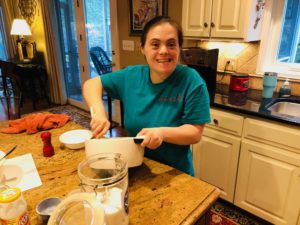
Camper Elizabeth Allen participating in one of the baking activities on Zoom. Photo credit: Beth Allen

“On one of her quiet days she had six Camp Hope Zoom meetings to look forward to and she is loving it,” Allen said. “She also feels very grown up that she has a Zoom meeting like her dad has. These simple activities are making a huge difference in her life right now.”

Leslie Conrad, director of the Clemson’s Outdoor Lab, said she’s been thrilled to see her counsellors’ creativity and ingenuity shine over the past few weeks, and is certain that the virtual camp activities are helping her and her staff just as much as they’re helping campers.

“Our campers are some of the most real and genuine people you will ever meet, so being able to ‘see’ them and interact with them during this time is very encouraging,” Conrad said. “We’re delighted to keep bringing a part of camp into their homes.”

###

Visit the Clemson Outdoor Lab website for details about its summer programs, including opportunities for family-friendly getaways during the summer.

OLLI at Clemson providing virtual opportunities for Upstate SC lifelong learners

Clemson’s undergraduate and graduate students aren’t the only group shifting their learning online this spring. The Osher Lifelong Learning Institute (OLLI) at Clemson University is also moving their classes to a virtual format in response to COVID-19.

OLLI at Clemson is a community of more than 1,400 people that provides member-driven, volunteer-led learning opportunities to its members, which come from a variety of backgrounds and education levels. Although its classes are open to everyone, its members are generally older adults.

Many of the institute’s program options were originally focused on in-person experiences that are difficult to replicate online, such as day-long hiking excursions and craft-making classes. Julie Vidotto, director of the institute, said that emphasis on outdoor experiences posed a challenge when planning virtual programming.

An OLLI member looking at a laptop.
OLLI at Clemson is moving to an online delivery format to meet the needs of its members throughout the upstate. Image credit: OLLI at Clemson

“There were a number of variables we needed to consider, such as which classes could most reasonably shift to an online delivery format and how our members could feel they were given an equal opportunity to participate in class discussions,” Vidotto said. “We started with training sessions and four test classes in early April to gauge how our members might adapt to interacting with us online, and we were blown away by the immediate, positive response.”

After the first classes, several members contacted OLLI staff to thank them for their efforts; one member even called the institute a “vital lifeline” that is keeping them occupied during the pandemic. Members also said they enjoyed seeing other people and that some would be open to other online learning opportunities when social distancing is no longer encouraged.

The test classes provided valuable insight into what resources are needed for OLLI to scale up their online learning, Vidotto said. OLLI is now offering a short, three-week spring mini-term of classes, which they plan to expand over the summer.

OLLI’s pivot to online learning is in line with many of the other OLLIs around the country. The move to online delivery keeps older adults engaged during self-quarantine while offsetting the revenue loss associated with isolation measures brought on by COVID-19.

Chip Stapleton, who serves as the Clemson institute’s board chairman, said the decision to pivot to online learning was an easy one to make.

“We had always considered our face-to-face learning community as part of the appeal to our members, however, we know we can create similar opportunities to connect online,” Stapleton said. “Our members need this programming now more than ever in a time of social distancing, so we’ll do whatever it takes to make sure they’re supported.”

Shortly after the board advised OLLI staff to consider online instruction, they found themselves facing a steep learning curve, but they’re proud of how the OLLI community has risen to the challenge.

“Our challenge, like the university’s, has been to bring both OLLI members and volunteer instructors up to some level of comfort with Zoom technology as soon as possible, while still learning how to use it ourselves,” Vidotto said. “The Osher National Resource Center has been hosting continuous Zoom training, and really creating and modeling best practices, which has been a terrific help.”

Vidotto added that the OLLI board has also helped them to more quickly adopt online delivery than they would have otherwise.

“We always say that OLLI at Clemson is about community, and our board members have gone above and beyond in exemplifying that,” Vidotto said. “We’re so grateful for their – and our members’ – continued support.”

###

To learn more about OLLI at Clemson, including class schedules and how to become a member, visit OLLIatClemson.org.

Clemson PRTM Recognizes Exceptional Undergraduate Students

The Clemson University Department of Parks, Recreation and Tourism Management has recognized four students for outstanding service, leadership, professional engagement and personal qualities of integrity, compassion, service and a positive attitude.

Interim Department Chair Jeffrey Hallo says that the four awards are named after former leaders, faculty and alumni who exemplify qualities the department hopes to instill in its students.

“These four students demonstrate the best of those qualities and then some,” Hallo says. “Hannah, Danielle, Ellerslie and Gabrielle are all exceptional students who have made a lasting impact on this department and are credits to their communities.”

These students were recognized for:

Bert and Johnnie Brantley Outstanding Student Award – Hannah Snider

This award is presented to a PRTM senior who has exhibited outstanding service to the PRTM department, the University and the community during the student’s academic year at Clemson University while maintaining a 3.0 GPA. 

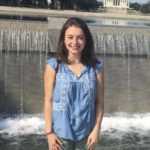
Clemson PRTM senior Hannah Snider.Hannah Snider is a senior at Clemson University, getting a Bachelor’s Degree in Parks, Recreation and Tourism Management with a concentration in Community Recreation, Sport and Camp Management. She is the daughter of Brian and Rebecca Snider and the sister of Rachel Snider. She is also the fiancé of Dillon Gums.

Hannah currently works part-time at both the Clemson Ticket Office and the City of Easley Parks and Recreation Department. She loves animals, especially goats, all things Disney, being outside and going on adventures. She is a follower of Christ and says she owes all of her success to Him. She is currently still in search of a job for after graduation and is looking forward to whatever the future has in store!

Hannah was also recognized for Academic Achievement at the Senior Level.

Greg Shoper Leadership Award – Danielle Rudy

Established to honor a graduate of the department who was killed in action in Vietnam, this award recognizes the department’s most outstanding student leader of the year.  Danielle Rudy - Greg Schoper Leadership Award

Danielle Rudy is a junior Recreational Therapy major with a minor in Business Administration. She currently serves as the Vice President of Clemson’s Recreational Therapy club, fundraising and service chair for the Clemson Triathlon Club, and service chair for a living learning community located on campus, called WAVS. She also has been involved in a creative inquiry that coordinates and directs adaptive soccer camps for veterans across the United States. Outside of school, Danielle works as an ABA therapist at Agapi Behavioral Consultants and as a Fitness Assistant at FIKE Recreation Center.

Lawrence R. Allen Engaged Future Professional Award – Ellerslie McCue

This award is given to an undergraduate PRTM student who has demonstrated a commitment to professional engagement in the PRTM field.

Ellerslie McCue-Lawrence R. Allen Engaged Future Professional AwardEllerslie McCue is a senior majoring in Parks, Recreation and Tourism Management with a concentration in Travel and Tourism and an interest in Agriculture. She is very grateful to all of the professors and administrators in both PRTM and CAFLS for four amazing years and for encouraging her to be the best that she can be. She wishes to thank them (virtually) for going above and beyond for their students and making a huge impact in their lives that continues after they leave Clemson University.

Ellerslie also runs a successful business called Highway Sailor, which she’s grown while earning her degree. Read her story.

Stevenson-Smith-Lovett Award – Gabrielle Wimberly

Established in memory of the families of donors to the PRTM department, this award is presented to a rising senior who exemplifies personal qualities of integrity, love, compassion, service and a positive attitude. Gabrielle Wimberly-Stevenson-Smith-Lovett Award

Gabrielle Wimberly is a junior Recreational Therapy major from Simpsonville, South Carolina. At Clemson, Gabrielle currently serves as the founding Event Coordinator for Clemson CHAARG, a women’s health and fitness organization. She is also a member of the Recreational Therapy Club, the Clemson Dancers and the Pre-Physical Therapy Club on campus. With a love for health and wellness as well as children, Gabrielle hopes to work in pediatrics as a Child Life Specialist or a Pediatric Physical Therapist. She enjoys the opportunities her major provides to strengthen others and improve their quality of life.

###

The parks, recreation and tourism management department at Clemson University is one of the largest and most well-recognized programs of its type in the nation. It offers undergraduate and graduate degrees in  community recreation, sport and camp management, park and conservation area management, PGA golf management, public administration, recreational therapy, travel and tourism, and youth development leadership.

Clemson PRTM Recognizes Honors Graduates

Three Clemson University Parks, Recreation and Tourism Management (PRTM) students have been recognized for completing rigorous, research-based coursework requirements through the university’s Calhoun Honors College as they completed their undergraduate degrees.

Interim Department Chair Jeffrey Hallo says that recipients Ryan King, Bailee Matthews and Emma Leroux are all outstanding students that have worked hard to make the most of their learning experience.

Ryan King - Excellence in CRSCM and Certificate of Recognition for Academic Excellence
Clemson PRTM Honors Graduate Ryan King.

“Departmental Honors give our undergraduate students the opportunity to do advanced, in-depth study and research within their chosen area of study,” Hallo says. “It is a rigorous program, but Ryan, Emma and Bailee more than rose to the challenge. I’m extremely proud of their accomplishments.”

Ryan King, from Greenville, South Carolina, is expecting to graduate in August 2020. He plans to work in public parks and recreation, with a focus in outdoor recreation. In his free time, he enjoys hiking with his chocolate Lab, Colt, and mountain biking. He’s taken a 14-day road trip out west and visited a variety of national parks including Arches, Death Valley and Yosemite. He’s hoping to spend a few years on the job to get an understanding of the field and explore what he might want to study in graduate school. Ryan was also recognized in two other ways: for Academic Excellence and with the Award for Excellence in Community Recreation, Sport and Camp Management.

Emma Leroux - Honors Graduate
Clemson PRTM Honors Graduate Emma Leroux.

Emma Leroux, from Fort Mill, South Carolina, is graduating this spring with a concentration in Recreational Therapy. She is attending Vanderbilt University in the fall to study for her master’s in Special Education. She is very thankful for the support from the PRTM faculty and her family and friends that helped her succeed while at Clemson.

Bailee Matthews, from Lake City, South Carolina, graduated this spring with a concentration in Recreational Therapy. She is a member of Clemson University’s Student Government and the

Clemson PRTM student Bailee Matthews.
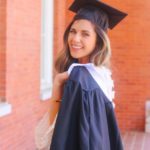
Clemson PRTM Honors Graduate Bailee Matthews.

Recreational Therapy Club. She has been a member of the Calhoun Honors Program since her sophomore year and has been a part of a research team to determine the users, user perceptions, benefits, personal experiences, and outcomes of a cancer survivor park in Greenville, South Carolina.

Throughout her years as a student at Clemson, Bailee has had multiple opportunities to gain hands-on experiences working with different populations, from stroke and traumatic brain Injury to dementia and Autism Spectrum Disorder. She is currently working at the National Health Care of Greenville skilled nursing facility where she is interning with the Recreational Therapy department for her senior internship. After graduation, Bailee plans to attend graduate school in the Fall to pursue Speech Language Pathology.

###

The parks, recreation and tourism management department at Clemson University is one of the largest and most well-recognized programs of its type in the nation. It offers undergraduate and graduate degrees in  community recreation, sport and camp management, park and conservation area management, PGA golf management, public administration, recreational therapy, travel and tourism, and youth development leadership.


Clemson PRTM Recognizes Alumni and Clemson Staff Member for Outstanding Contributions to the Parks and Recreation Field

The Clemson University Parks, Recreation and Tourism Management department recently recognized two of its former students for their impressive contributions to the parks and recreational field throughout their careers to date. A Clemson University staff member was also recognized for her contributions to the department.

Kyle M. Woosnam, Ph.D., Associate Professor of Parks, Recreation and Tourism Management within the Warnell School of Forestry and Natural Resources at the University of Georgia, was recognized for his achievements in academia. Melinda Chappell, Director of the North Myrtle Beach Aquatic & Fitness Center, was recognized as an outstanding practitioner. Casey Kornegay won the department’s Distinguished Service Award, which recognizes a member of the Clemson community who has made outstanding contributions to the PRTM Department.

Interim Department Chair Jeffrey Hallo says that all three winners have focused their careers on building opportunities for other people.

“Kyle’s research track record is extensive and impressive, but he is also widely regarded as an excellent personal and professional mentor to his students,” Hallo said. “Melinda has also focused her career on serving others, with a particular focus on creating sports and recreation opportunities for persons with disabilities. Casey’s work has made a significant impact on our department and our students.”

About Kyle Woosnam
Kyle Woosnam, Ph.D., recipient of the 2020 Outstanding Academic Alumnus Award.

Woosnam completed his Ph.D. in 2008 and focuses his research on sustainable tourism planning and management within rural communities, both with the U.S. and abroad. He has conducted research in 27 countries, secured more than $1.25 million in grants and contracts to support his research, published more than 80 peer-reviewed journal articles and delivered more than 130 conference presentations throughout the globe. He has also received eight teaching awards and two research awards throughout his 11 years serving as a professor, and has graduated 28 Masters students (17 chaired committees) and 16 Ph.D. students (four chaired committees).

He serves as Senior Research Fellow within the University of Surrey’s School of Tourism and Hospitality Management and the University of Johannesburg’s School of Hospitality and Tourism Management, where he teaches courses in community tourism, cultural heritage tourism, social impacts of tourism, research methods, and protected areas management. He sits on seven editorial boards, including the Journal of Travel Research, Journal of Hospitality and Tourism Research, and Sustainability.

About Melinda Chappell
Melinda Chappell, recipient of the 2020 Outstanding Practitioner Alumnae Award.

Chappell holds a BS degree in Recreation Administration with an emphasis in Therapeutic Recreation from Clemson University, and a Master’s degree in Rehabilitation Counseling from the University of South Carolina. A certified recreation therapist, Melinda has spent most of her career serving persons with disabilities. She co-founded Limitless Sports, Columbia S.C. and Coastal Adaptive Sports, and is a long-time member of the Southeastern Regional Wheelchair Sports Association, as well as the meet director for their annual event, the Southeastern Regional Wheelchair Games (SEWSA). She helped bring these games to Clemson University.

Originally from Irmo, South Carolina, Chappell moved to North Myrtle Beach in 2001 to work for the city, and is currently the Director of the North Myrtle Beach Aquatic & Fitness Center, a 64,000 square foot, membership-based facility that she helped build. She also teaches a course about recreation for persons with disabilities as an Adjunct Professor at Coastal Carolina University.

About Casey Kornegay
Casey Kornegay, recipient of the 2020 Distinguished Service Award.

As the Senior Academic Compliance Manager in the Office of Institutional Effectiveness, Casey Kornegay leads and maintains Clemson’s authorization for out-of-state educational activities and learning placements, compliance with university policy and processes, and with federal, state, NC-SARA, and SACSCOC accreditation requirements. In this role, Casey enjoys working with a variety of academic programs across campus to ensure they are meeting compliance requirements and assist them with processes to enhance their efficiencies.

Casey holds an M.S.in Instructional Design and Technology from Western Illinois University. Before her career in higher education, she worked for corporations in a variety of roles from project management, event planning, training management, acquisition team lead, instructional designer, technical writer and marketing management.

###

The parks, recreation and tourism management department at Clemson University is one of the largest and most well-recognized programs of its type in the nation. It offers undergraduate and graduate degrees in  community recreation, sport and camp management, park and conservation area management, PGA golf management, public administration, recreational therapy, travel and tourism, and youth development leadership.

Clemson PRTM Recognizes Exceptional Graduate Students  

Eight Clemson University Parks, Recreation and Tourism Management graduate students have been recognized with department awards for academic, teaching, service and other achievements.

Interim Department Chair Jeffrey Hallo says that all of this year’s award recipients are equally impressive in their own right.

“These students continually demonstrate the best of our graduate program at Clemson, focusing on service, scholarly achievement, professionalism and a demonstrated passion for what they do,” Hallo says. “Every single one of this year’s award winners has the potential to make a great contribution to our field.”

The department’s 2020 award recipients include:

Graduate Student Awards of Excellence

This award recognizes graduate students who are distinguished through academic achievement, scholarship, community service and perseverance.

Cait Henry
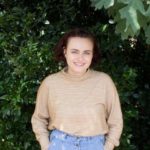
Cait Henry-Outstanding PRTM Graduate StudentCait Henry is a master’s student in the Department of Parks, Recreation, and Tourism Management with a B.A. in Environmental Studies and originates from Saint Louis, Missouri. She works as a Project Coordinator and Master’s Research Assistant in the Parks Solutions Lab, where she has had the opportunity to network with other highly motivated and passionate social scientists. She was accepted into the Ph.D. program at Kansas State University under Dr. Jessica Fefer in the department of Horticulture and Natural Resources, and will move back to the Midwest after graduating this May. Her hobbies include: hiking and backpacking along the Blue Ridge Parkway, reading at coffee shops, discovering new craft breweries and slowly turning her cats into Adventure Cats.

Kaitlin Mueller
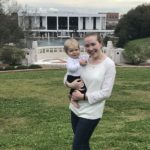
Kaitlin Mueller-Graduate Student Award of ExcellenceKaitlin Mueller is a proud Clevelander with a passion to live in a world where one day all people have access to recreation therapy services. She completed her undergrad in RT at Slippery Rock University and finished her master’s studies at Indiana University in RT. After graduating from Slippery Rock University, Kaitlin worked as a recreational therapist in geriatric, sub-acute rehabilitation in Cleveland for five years. Kaitlin is now a 2nd year Ph.D. student in RT with hopes of becoming a future academic. Kaitlin’s research interest is currently transitional care for older adults when moving into a new senior facility. Kaitlin enjoys all the quality time she can get with her husband and almost one-year-old son, preferably at Clemson baseball or softball games. Go Tigers!

John Nettles
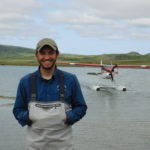
John Nettles - 2 awards CBSHS and PRTMJohn is currently in the final semester of his master’s degree in Parks, Recreation, and Tourism Management at Clemson University where he works as a research assistant for Dr. Matt Brownlee in the Park Solutions Lab. Through his assistantship, he has helped to write four extensive visitor management reports for national parks across the country, conducted visitor surveys in three additional parks, and drafted five research articles for submission to peer reviewed journals this spring. His thesis focuses on integrating emotional affect into bear management and bear safety education. Prior to coming to Clemson, John received his bachelor’s degree in Wildlife Biology and Statistics from the University of Montana. Between programs, John worked as a veterinary technician in Texas, interpreter at a grizzly bear sanctuary in Montana, and a panda behavior intern in China. John and his fiancée, Emma, will get married in May and he hopes to continue on towards a doctoral degree in wildlife biology and work in grizzly bear research and management.

John was also recognized with the Outstanding Masters Student Research Award from the College of Behavioral, Social and Health Sciences.

Suk Oh
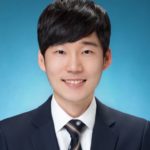
Suk Oh-Graduate Student Award of ExcellenceSuk is a fourth-year graduate (Ph.D.) student in Parks, Recreation and Tourism Management with a research focus on the development of disability sport through corporate social responsibility. He has put forth significant effort to find ways for firms, as well as sport organizations, to make a social impact and address community priorities, especially for the communities of persons with a disability.

Suk has worked closely with Dr. Skye Arthur-Banning (advisor) on several projects. Among his many accomplishments, Suk has assisted in implementing a multi-institutional, short-term study abroad program with 13 students from nine different institutions to the PyeongChang 2018 Paralympic Games. Furthermore, he has been involved in a community service grant project (Clemson Paralympic Soccer Program) funded by the United States Department of Veterans Affairs. As one of the starting members of the project, Suk has devoted ample amount of time in running a total of eight adaptive sport camps including six in Clemson, one in Seattle (in partnership with Seattle Sounders) and one in Arizona (in partnership with Arizona Soccer Association). Besides grant work, Suk was involved in facilitating the first-ever Football 5-a-side (Blind Soccer) Development Think Tank Session in the United States as a researcher with experts from a number of different organizations across the country.

Brian Peterson
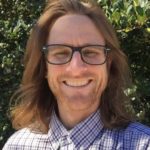
Brian Peterson-Graduate Student Award of ExcellenceBrian completed his bachelor’s degree at the University of San Diego, and he completed his master’s degree at the University of Utah. His doctoral research focuses on advancing spatiotemporal research of visitor travel patterns within parks and protected areas. His dissertation is comprised of research conducted at Theodore Roosevelt National Park in North Dakota, Hawai’i Volcanoes National Park and the Bonneville Salt Flats in Utah.


Francis A. McGuire Graduate Student Teaching Award – Alexsandra (Ali) Dubin

This award is presented to a graduate student who has shown excellence in teaching exemplified by the qualities of caring, passion and engagement with students.
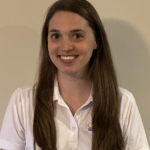
Ali Dubin-Fran McGuire Teaching AwardAli Dubin is a graduate student from East Greenbush, New York. She is working towards her Ph.D. in Community Recreation, Sport and Camp Management. After high school, Ali spent eight summers working at Girl Scout Camps in NY and VA, sparking her interest in camp and camp administration. Her research focuses on issues in camp administration, with a specific focus on children with severe food allergy and the constraints to participation that they face. She has had the opportunity to use her formal education and camp skills to teach many classes at Clemson University including Finding Your Voice, Camp Administration and the Writing Mentor Program. When Ali is not talking or thinking about camp, which is rare, she likes hiking with her dog Ari and spending time by the lake. Her other hobbies include wine tasting, reading cheesy romance novels and crafting: she hopes to have more time to do these things after finishing her dissertation.

Brett A. Wright Award for Graduate Student Achievement – Donna Gregory

This award is presented to an online graduate student who has excelled both academically and professionally while earning their degree.
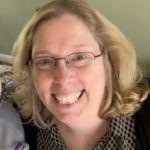
Donna Gregory - Brett A. Wright Award for Graduate Student Achievement - OnlineDonna earned her Bachelor’s degree in Recreational Therapy at the University of Maryland. She earned an MBA from the Pennsylvania State University and is currently working toward her Ph.D. at Clemson University.  She is the Chief of Recreational Therapy at the National Institutes of Health Clinical Center. She has managed interdisciplinary treatment teams and has clinical experience working with a variety of patient populations including individuals who have sustained traumatic brain injuries. Her interests include program development, process improvement, and research related to the health and well-being of at-risk populations.

Marsha A. Ward ’79 Fellowship for Play – Jennifer K. Garcia

The Marsha A. Ward ’79 Fellowship for Play is awarded annually to a Clemson University graduate student in PRTM who demonstrates a commitment to play and the value of play in modern society.
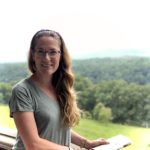
Jennifer Kinch Garcia-Marsha A. Ward'79 Fellow for PlayJennifer Kinch Garcia is finalizing her 2nd year as a doctoral student with the Clemson University Parks, Recreation and Tourism Management program. Her focus lies mostly within Community Recreation, Sport and Camp Management with an emphasis in youth development. Jennifer is working towards the evaluation of nature based free play, and how communities can support the spaces and policies that surround the concept of free play. After graduating with a B.S. in Biology from West Texas A&M University, she began her career within the world of zoos and aquariums at the Amarillo Zoo in Amarillo, Texas. She started her role at the Greenville Zoo as the Education Coordinator in 2012. Since moving to Greenville, South Carolina she has earned her M.Ed. for Curriculum Development and through her work, has been fortunate to be a part of the Association of Zoos and Aquariums Nature Play initiatives along with the Children and Nature Network’s family nature clubs, to encourage communities to get outdoors. Jennifer looks forward to promoting play through more equitable access to parks and community engagement.

###

The parks, recreation and tourism management department at Clemson University is one of the largest and most well-recognized programs of its type in the nation. It offers undergraduate and graduate degrees in  community recreation, sport and camp management, park and conservation area management, PGA golf management, public administration, recreational therapy, travel and tourism, and youth development leadership.