Hannah Pearson, Class of 2019, Clemson University Relations
If you’re looking for Sara Mays, you’ll find her in the basement of Lee II. That’s where the graduate visual arts studios are found.
Mays’ studio features floor-to-ceiling shelves covered in hand tools, art materials, books and completed ceramics. On one of these shelves sits a series of multicolor cubes. Each cube is constructed of pressed layers of clay slabs and are painted in red, yellow and blue. Textured patterns call from their otherwise smooth surfaces.
Sara Mays holds the cube she made for the 2018 CSArt share. She describes the top layer of each cube as having a noodle-like texture, which was created from compressed clay coils. It gives a fun little pop of color and movement to the overall cube form, she said. Image Credit: Clemson University Relations
“I like to make things people can touch but also make things that people cannot touch but feel like they really want to. I want the viewer to really engage with their other senses when they see my work,” Mays said.
This particular artwork was produced as part of Mays’ participation in the Community Supported Art program (CSArt) Spring 2018. Modeled after Community Supported Agriculture — a symbiotic system in which consumers purchase a share of a local farmer’s crop — CSArt produces 15 shares of original, handcrafted art by student artists.
To ensure the quality of the artwork and give students a competitive, real-world experience, each piece is selected by a guest juror like Atlanta gallerist Yu-Kai Lin, who judged in Spring 2018. Shareholders range from Clemson administrators to private art enthusiasts, 15 of whom are now proud owners of one of Mays’ ceramics.
For Mays, CSArt is a win-win for both community members and student artists.
“With CSArt, you get to make what you love, you get paid for it, and other people get to enjoy and share it with others,” she said. “That’s all an artist really wants from life: for someone to appreciate their work as something really important and to be promoted for what they do.”
Department Chair and Associate Professor of Art Valerie Zimany founded the CSArt Creative Inquiry with students like Mays in mind.
“CSArt gives students access to the entrepreneurial and professional side of art,” Zimany said. “Some of these students are art majors. Others have an interest in the arts but envision having a life in a different discipline, so CSArt is a way of keeping a creative practice in their life.”
CSArt is open to all Clemson students. Past majors have included psychology, marketing, architecture and microbiology.
“I once had a student who applied to medical school and wrote their personal essay about CSArt and the importance of connecting communities,” Zimany said.
Hannah Horowitz works on a plaster mold in the ceramics studio in Lee Hall. Image Credit: Clemson University Relations
Like Mays, undergraduate visual arts major Hannah Horowitz is concentrating in ceramics. Unlike Mays, Horowitz hopes her experience as an artist will transfer to her professional goal of working in prosthetics. Horowitz is one of eight undergraduate researchers on the CSArt Creative Inquiry team and served as an alternate for last year’s selection of artists. Her responsibilities on the team include managing social media accounts, communicating with shareholders and running the CSArt website.
“CSArt has helped me develop my professionalism,” Horowitz said. “The Creative Inquiry is run as a small business, so looking professional and staying organized is important.”
Horowitz’s professionalism helped her this summer when she interned with the Greenville Health System Office of Prosthetics and Orthotics.
“I got to experience the business side of prosthetics,” Horowitz said. “Even though I’m an art major, I didn’t feel out of place. It was good to see how CSArt applies to what I want to do in the real world.”
Mays is still trying to find what she wants to do once she graduates. CSArt might help lead the way.
“Originally, I wanted to become an art teacher,” Mays said. “But now I think I might enjoy making work and selling it. I’d like to own my own studio, maybe a gallery.”
Whatever Mays’ career goals, Professor Zimany feels CSArt will help pave the path.
“CSArt offers a glimpse into the dynamic, work-force experience of a contemporary artist. This is something students can use in their professional lives,” she said.
Andy Warhol Portraits & The Everyday January 22 – March 6 2019
“Warhol: Portraits and the Everyday” showcases the artist’s practice through three distinct but related platforms: Polaroid portraits; black-and-white photographs; and his large, colorful, screen-printed portraits. By bringing these three creative pursuits together in one gallery, viewers will get a snapshot of Warhol’s fluid approach to art and life.
Warhol’s Polaroid portraits of celebrities, couples and individuals were created as resource material for his larger commissioned screen prints. The collection of Polaroids in the exhibit present individuals in repeated but slightly different positions as directed by Warhol during their photo sessions. When viewed together, the Polaroids reveal subtle changes of expressions by the sitters. They also provide a thought-provoking counterpoint to the current fascination with selfies and the mediated presentations of identity through social media platforms.
“Warhol: Portraits and the Everyday” will open Jan. 22 and continue through March 6, 2019, at Lee Gallery, the primary exhibition space for Clemson Visual Arts (CVA).
The first gallery exhibition of the spring semester at Clemson University will feature original art from one of the most iconic artists of the 20th century, Andy Warhol.
In conjunction with the exhibition, Jonathan Flatley – the author of “Like Andy Warhol” – will deliver a special presentation about the artist during a guest appearance on Friday, Jan. 25.
“Warhol: Portraits and the Everyday” showcases the artist’s practice through three distinct but related platforms: Polaroid portraits, black and white photographs, and his large, colorful, screen-printed portraits. By bringing these three creative pursuits together in one gallery, viewers will get a snapshot of Warhol’s fluid approach to art and life.
Warhol’s Polaroid portraits of celebrities, couples and individuals were created as resource material for his larger commissioned screen prints. The collection of Polaroids in the exhibition present individuals in repeated but slightly different positions, as directed by Warhol during their photo sessions. When viewed together, the Polaroids reveal subtle changes of expressions by the sitter. They also provide a thought-provoking counterpoint to our current fascination with selfies and the mediated presentations of identity through social media platforms.
“I was most interested in showing Polaroid portraits for what can be discovered by looking closely at the subtle changes taking place within the sitters’ expressions,” said Lee Gallery Director Denise Woodward-Detrich. “In these works, we see Warhol capturing various states of individual transformation through the simple use of repetition. These sittings allowed Warhol to select specific poses, but seen together they provide a portrait of the individual that is more complex than can be captured in one snapshot.”
Warhol’s black and white photographs function as a documentation of the people, places, objects and activities unfolding around him every day. For the viewer, they provide insight into the life of a famous artist, but for Warhol they were a way to collect and record things he liked and might potentially use later as a resource.
Photographs in the exhibition are on loan from the University of South Carolina-Upstate and East Tennessee State University. Both universities were granted original Warhol photographs for viewing and study as part of the Andy Warhol Photographic Legacy Program, organized by The Andy Warhol Foundation for the Visual Arts. The Legacy Program distributed Warhol’s photographic works to colleges and universities across the country to provide greater access to these relatively unknown bodies of work.
Jonathan Flatley’s presentation on his recent book “Like Andy Warhol” will be celebrated with a reception from 5-6 p.m. and with a presentation by Flatley held from 6-7 p.m. in the Lee Hall auditorium (Lee 2-111). Flatley is an associate professor of English at Wayne State University in Detroit. He is the author of “Affective Mapping: Melancholia and the Politics of Modernism” and co-editor of “Pop Out: Queer A follow-up talk will move into the Lee Gallery, where the “Andy Warhol Portraits & The Everyday exhibit is installed.
Flatley’s presentation is made possible through the generous sponsorship of the Humanities Hub at Clemson University.
The “Warhol: Portraits and the Everyday” exhibition is open to visitors 9 a.m.- 4:30 p.m. Monday through Thursday through March 6. All events are free and open to the public.
For more information about the exhibit, contact Lee Gallery Director Denise Woodward-Detrich at woodwaw@clemson.edu.
“A Patient Search: Paintings by Tom Dimond” is the newest exhibit in the Brooks Center for the Performing Arts Lobby exhibition space, on view from Jan. 15 through Aug. 2, 2019.
Tom Dimond’s work is highly detailed with hidden meanings, textural interest and layers of abstraction. Through the manipulation of materials, his work conveys familiarity and nostalgia, as well as a state of ambiguity that allows room for viewer interpretation. This collection features large-scale, abstract acrylic paintings, as well as smaller mixed media collages. His thoughtful titles illuminate the inspiration behind each work and pique viewer’s interests.
Dimond’s career has spanned five decades and he has exhibited work all over the country, in both the private and public sector. More than a decade after being named professor emeritus, we are delighted to showcase his work back at Clemson University.
The exhibition will feature paintings from the late 1980s to the present day, and demonstrate the artist’s development in style from flat, hard-edged shapes to more atmospheric spaces and textured surfaces.
Dimond explained the development of his style in this way:
1970s and 1980s
These decades were typified by compositions based on the manipulation of circular forms on a grid, initially black and white and eventually employing primary and secondary colors. As the paintings moved from paper to canvas, the forms took on the contours of the exterior edges, resulting in shaped and hard-edged paintings. These colorful abstract works were composed of a grid of nine interlocking circles unified by connecting lines, and were accompanied by a series of silkscreen prints.
The grid later expanded to include 77 circles employing radial symmetry as a compositional device. More complex variations followed in watercolor and silkscreen, which were related to the Pattern and Decoration movement.
1980s and 1990s
After artist retreats at the Hambidge Center in Georgia and the Vermont Studio Center, Dimond’s exploration of circles on a grid progressed. He revisited the theme of nine circles on a grid, alternating between watercolor and acrylic paintings. Making references to the natural environment and social interactions, the paintings moved from flat, hard-edged shapes to more atmospheric spaces and textured surfaces. Loose, incidental lines beneath the surface interacted with the geometric shapes, produced more complex shapes.
Early 2000s
Dimond returned to the large canvas format with a series of paintings that incorporated the older nine-circle theme and a new form. On a trip to Venice, Italy, he became fascinated by a marble tile pattern designed by the 15th century Florentine painter Paolo Uccello on the floor of San Marco Basilica in Venice – the stellated dodecahedron. Combining this form with the nine-circle mandala type composition provided further study into the theme of ambiguity of spatial tensions. His titles reference the music he listened to while painting, from a group in Sweden called Hedningarna.
2010s
Artwork by Tom Dimond
Dimond’s most recent series moved away from imagery and techniques of the tile works. It combines gestural watercolor painting with monoprints made on Japanese paper collaged to the surface. The first of these works mimicked earthen walls and were named after the sites of prehistoric cave paintings. Later iterations returned to complex layered surfaces with scans, distressed surfaces and collaged comic book imagery. He said these works are at once autobiographical in chronicling his visual influences, but also an amalgam of 50 years of techniques and studio practices.
Dimond served as the Lee Gallery director from 1973 to 1988 and as a professor for the Department of Art from 1979 to 2006. In 2006, he was named professor emeritus. He earned a Bachelor of Fine Arts degree from Massachusetts College of Art, Boston, Mass. and holds a Master of Fine Arts degree from University of Tennessee, Knoxville, Tenn.
The exhibition will be on view to the public in the lobby of the Brooks Center for Performing Arts at Clemson University from 1–5 p.m. Monday to Friday, Jan. 15–Aug. 2, 2019. An artist talk and reception will be held from 5:30-7 p.m. on Friday, March 1.
For more information on Brooks Center exhibitions, contact Susan Sorohan at sorohan@clemson.edu.
CLEMSON — Valerie Zimany has been named chair of the art department at Clemson University.
“As an outstanding artist/educator and academic administrator, Professor Zimany will be a dynamic leader for the department of visual art,” said Richard E. Goodstein, dean of the College of Architecture, Arts and Humanities. “Her commitment to arts education, career preparation for her students and diversity will be a great asset to the college and university.”An associate professor of art and a nationally known ceramics artist, Zimany had served as the interim chair since May 2017.
Zimany first arrived at Clemson in 2010 as the ceramics area coordinator and lead faculty member in ceramics.
Since then, Zimany has made it a top priority to provide more opportunities for Clemson University students to explore art and their own creative potentials.
“The arts are a way to cultivate creativity and critical thinking and develop resilient students and workers,” said Zimany, a two-time Fulbright Scholar and Japanese Government Scholar.
She believes an education in visual art creates an opportunity for personal growth and professional flexibility in a fast-changing global economy, whether a student is a major or non-major.
“You can’t automate creativity,” Zimany said.
Pictured: Valerie Zimany, an associate professor of art and nationally known ceramics artist, has been named chair of the Department of Art. Photo Credit: Clemson University Relations
The appeal of art
Over the course of an academic year, as many as 500 students take classes in the department of art at Clemson, and students from 56 different academic majors across all seven colleges have participated in the art minor. In addition, about 100 undergraduate and graduate majors are pursuing degrees.
“There is a broad demographic of students across the university with an interest in art,” Zimany said. “We’d like to find ways to expand that access in our academic programs.”
Currently, the department offers two nationally accredited degree programs: a Bachelor of Fine Arts degree with concentrations in ceramics, drawing, painting, photography, printmaking and sculpture; and a Master of Fine Arts in the same concentrations.
“What we can provide for our students is something that has a small, quality art school feel to it with an intense individual studio practice,” Zimany said. “But we’re also able to draw upon the resources of a comprehensive research university.”
In addition to studio classes, the department offers art history and also oversees internships and three innovative, ongoing Creative Inquiry projects that provide professional experience in the arts.
Through Clemson Curates, students gain practical experience in planning and installing exhibitions at Lee Gallery and also at Sikes Hall, the Brooks Center and Strode Hall.
Atelier InSite allows students from across the university to directly participate in the process of bringing public art to Clemson.
“It allows Clemson students the opportunity to leave a lasting cultural mark on campus,” Zimany said.
Every new building on campus has a public art component. Atelier InSite students make recommendations on new art projects and supervise every facet of their installation. Recent public art projects include “Foundation,” an installation at Lee Hall by artists Volkan Alkanoglu and Matthew Au.
“It operates like a community-supported agricultural share, where you buy a share of a farm and then at some point you show up and get a crop of local produce. In the Community Supported Art project, what the shareholder receives is a ‘crop’ of fresh, Clemson student artwork,” Zimany said.
The Clemson program is modeled after a concept begun more than 20 years ago at the Walker Art Center in Minneapolis, and is the first CSArt program originating in an undergraduate setting at a research university.
The CSArt bounty arrives as a crate filled with limited-edition works created by Clemson students. The shares have sold out for six seasons straight.
Each shareholder in 2017-18 received the same professionally juried selection of art, which included three ceramic pieces, two prints and a photograph.
Participating students received experience in communications, social media, sales, packaging and web design – skills they will need as independent artists or to work for a nonprofit, museum or gallery, Zimany said.
Zimany has been encouraged that top university administrators, including Goodstein, Executive Vice President for Academic Affairs and Provost Robert H. Jones and President James P. Clements have been CSArt subscribers.
Exploring East and West
In addition to teaching and leading the art department, Zimany remains active as a professional artist, exhibiting nationally and internationally. Her work is in multiple public and private collections including the Icheon World Ceramic Museum, the American Museum of Ceramic Art and the National Museum of Slovenia.
Zimany spent much of her 20s in Japan, training in traditional and modern ceramics.
She earned an MFA in crafts/ceramics from Kanazawa College of Art in Kanazawa, Japan, after earning a BFA in crafts/ceramics and art education from the University of the Arts in Philadelphia.
Her recent work explores intersections between her American background and the culture she came to know during her extended education in Japan.
“I visually examine relationships between the East and West, nature and technology, and intimate and public worlds,” Zimany said.
“My recent work explores curiosity about hanazume – or ‘packed florals’ – a pattern that incorporates Asian and European botanical patterns into the traditional wares of the region of Japan where I lived,” Zimany said.
“Digital manufacturing tools have created a resurgence in dense, delicate or improbable decorative patterns and forms,” she said. “In my work, details of precisely rendered 3D-printed objects become hazed through the intensive and repetitious process of press-molding by hand. I find the conversion of visual information into digital content intriguing, not for creating perfect replicas, but as an avenue to consider flaws in translating our perceptions and memories.”
Pictured: Valerie Zimany creates delicate and complex porcelain forms by using a variety of techniques, including hand-building, slipcasting, wheel-throwing and 3D printing. Pictured is Zimany’s “Peonies” (2016-17): handbuilt porcelain with hand-cut and modelled florals, glaze, overglaze drawing and raised Kutani enamels.
A vision
Zimany aims to adapt traditional arts practices at Clemson by bringing new technologies into the ceramics studio. She hopes the “inclusive and engaged” research environment at Clemson will allow her to collaborate with other disciplines that are successfully merging digital tools and creative output.
Zimany seeks to expose students and the larger community to ways new technologies are being used in studio art education.
As department chair, Zimany would like to see the visual arts play a larger role in promoting positive dialogue across campus – a primary goal of the university’s strategic plan.
“I see art as a lens through which we can expand the discourse on campus to examine contemporary concerns,” Zimany said.
Art can spark discussions about the environment or race relations, she said. For example, Todd Anderson, a Clemson professor, documents vanishing glaciers in his woodcut prints. And professor Andrea Feeser, who published a history of indigo trade and its effects on colonial South Carolina, addresses land use and race relations in the past and present.
Zimany believes Lee Gallery, the department’s primary exhibition space, can be a crucial player in promoting discussion. “A museum or gallery might be one of the last places where people run into others of diverse background and experiences,” she said.
“We’re looking at new programs that will allow us to expand and connect with more Clemson students,” Zimany said.
One of Zimany’s hopes is to expand the Lee Gallery’s visiting artist series.
“I truly appreciate the art faculty for their confidence that I will be a worthy advocate for them and our students,” Zimany said. “I also appreciate the support of Dean Goodstein and his strong advocacy for the arts at Clemson.”
Clemson University visual art students will be on full display this fall in several of the Clemson Visual Art’s (CVA) gallery spaces.
The second half of the semester features a calendar full of student exhibitions. The public is encouraged to view the talented rising art undergraduate students currently on display through the Portrayed and NextUp Invitational III. Art students in the Creative Inquiry called “Clemson Curates” reviewed all of the submissions and selected the final artworks included in these exhibits.
Both Bachelor of Fine Arts (BFA) and Master of Fine Arts (MFA) graduating students present a comprehensive show of work prior to graduation. These exhibits are a special time for visual arts students, allowing them to reflect on the transformational experience Clemson has provided and choose pieces that best personify the student’s creative achievements.
BFA senior exhibits and MFA thesis exhibits showcase the culmination of year-long research endeavors. Visual Arts students go through a series of critiques aimed at helping build a body of work of the students’ choosing.
Art Student Exhibition
NextUp Invitational III
Currently on display until Jan. 21, 2019
M-F, 8 a.m.-4:30 p.m.
CAAH Dean’s Gallery, 108 Strode Tower
NextUp Invitational III is an exhibition of work selected by the Clemson Curates Creative Inquiry team showcasing twenty three “up and coming” undergraduate art students enrolled in the Department of Art Bachelor of Fine Arts program. On view are works selected from over 230 submissions to the Foundations Review, which took place during the spring semester including drawings, painting and ceramics. Participating artists include: Joseph Alewine, Rachel Bader, Marilyn Baughan, Carrie Bull, Jiawei Deng, Katherine Eaves, Daniella Espinoza, David Gordon, Ethan Hajas, Meghan Hammel, Hannah Horowitz, Cassidy Mulligan, Tiffany Oliver, Emmy Packer, Hannah Rivers, Holly Rizer, Aislinn Rosier, Anthony Santucci-Curci, Ansleigh Sapp, Susan Sorohan, Nicole Stoudemire, Savannah Wood, and Madeline Watkins.
Portrayed
Currently on display until Jan. 28, 2019
M-F, 8 a.m.-4:30 p.m.
Sikes Hall Showcase, Ground Floor
Portrayed is an exhibition examining the ties between self-portrait and self-awareness. Curator Hannah Gardner ’17 invited Clemson University artists to create a self-portrait and choose one work to describe themselves. Artworks within the exhibition have the image created by the artists and the word to describe themselves layered upon each other to represent both the inside and outside of the person simultaneously. Participating artists include: Mariana Aubad, Peter Barry, Hannah Cupp, Anna Davis, Lauren Davis, Zeez Egers, Nicole Embree, Katie Francis, Amanda Hazell, Caroline Herring, Clair Hicks, Geneva Hutchinson, Katherine Kesey, Kara Lerchenfeld, Connor Makris, Wilson Marshall, Mary Jo May, Cassidy Mulligan, Amanda Musick, Holly Rizer, Zoë Rogers, Hannah Sexton, Taylor Staaf, Michala Stewart, Anna Sullivan, Annamarie Williams, and Peden Wright.
Collective kəlCHər – MFA Thesis Exhibit #1
Nov. 12–16
M-F, 9 a.m.–4:30 p.m.
Artist Talks and Reception: F, Nov. 16, 6–8 p.m.
Lee Gallery, 1-101 Lee Hall
The key role of culture is the shaping of values and attitudes of people. Culture is also seen as a moderating factor in the conduct of people, their relationships with others, their disposition to life and their perception of issues and stereotypes. Collective kəlCHər examines why people act as they do based on the influences of their social and cultural group memberships. The Master of Fine Arts Thesis exhibition explores these concepts through the ceramic work of Ashan Pridgon, printmaking by Caren Stansell and paintings by Dustin Massey.
Terra Flux – MFA Thesis Exhibit #2
Nov. 26–30
M-F, 9 a.m.–4:30 p.m.
Artist Talks and Reception: F, Nov. 30, 6–8 p.m.
Lee Gallery, 1-101 Lee Hall
The Master of Fine Arts thesis exhibit, Terra Flux investigates the relationship between people and the natural environment. Humanity’s role in shaping the world around us is foregrounded through the deconstructed landscapes of photographer Amanda Musick, through the hybrid biomorphic industrial forms of ceramicist Conor Alwood, and through the barren forests of printmaker Mandy Ferguson.
Together, these works ask viewers to consider their position in our ever-changing surroundings.
Bachelor of Fine Arts Senior Exhibit
Dec. 5–12
M–F, 9 a.m.–4:30 p.m.
Artist Talks and Reception: F, Dec. 7, 6–8 p.m.
Lee Gallery, 1-101 Lee Hall
The Bachelor of Fine Arts Senior Exhibit showcases work by seniors in the studio disciplines of Ceramics, Drawing, Painting, Printmaking, Photography and Sculpture. Artists include Beth Ayers, Shelby Compton, Hannah Cupp, Taylor DeYoung, Jacob Lehman, Connor Makris, Amiee McShane, Sydney Smith, Anna Sullivan, and Peden Wright.
The public is invited to meet the next generation of artists on display by attending the artist talks and receptions. For more information about these exhibits, contact Lee Gallery Director Denise Woodward-Detrich at woodwaw@clemson.edu.
END
Clemson Visual Arts at Clemson University
The importance of the arts at Clemson University goes back to Thomas Green Clemson’s vision for a “high seminary of learning.” As an accomplished painter, an avid art collector and an arts advocate, Clemson understood the importance of art to our nation and the world. Clemson University continues to carry out his vision by incorporating art throughout its facilities. Visitors are encouraged to engage with the Clemson Visual Arts (CVA) by experiencing the exhibitions in the many gallery and showcase spaces, by viewing the public art found all over campus, and by attending special events. For more information and to access the full calendar of events, please visit clemson.edu/cva.
Exhibitions, artist talks and receptions are free to the public thanks in part to the generous support given to the Center for Visual Arts. To belong to the Friends of the Clemson Visual Arts, visit cualumni.clemson.edu/give/cva.
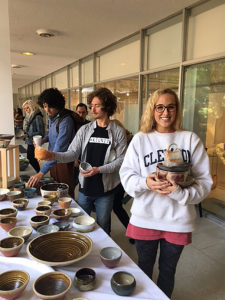
CLEMSON — The ceramics studio in the department of art at Clemson University will hold the annual Fall Ceramics Bowl Sale from noon to 5 p.m. Wednesday, Nov. 14, in the hallway in front of the Lee Gallery in Lee Hall.
All proceeds from this popular annual sale supports student travel to the upcoming National Council on Education for the Ceramic Arts conference as well as other professional activities that help further student research and collaboration.
A selection of bowls and other functional works by ceramics undergraduate and graduate students and faculty will be available in a variety of price points. The Clemson Ceramics Association’s hearty homemade soup will be served free with the purchase of a bowl between noon and 1 p.m. The annual Spring Ceramic Sale will be held April 24, 2019.
For additional information, contact the department of art’s associate professor of ceramics Valerie Zimany, vzimany@clemson.edu.
CLEMSON — “Artists Teaching: Teaching Artists,” a new exhibition highlighting artwork by the faculty of the department of art at Clemson University, will open with a reception from 6-8 p.m. Friday, Sept. 28.
Each iteration symbolically connects the distinctive faculty research and experiences, investigating complementary elements of place, media, technology and visual language. The faculty hold common ground in both the verdant upstate South Carolina location and the collaborative teaching values for all undergraduate and graduate students within the degree programs. This exhibition is an opportunity to share the most current creative research with students, fellow university colleagues and the greater community. The work represents multiplicity in communication, visual modes of practice and systems of materiality. As artists, art faculty voice a broad range of perspectives and are willing to take risks to establish meaningful dialogue on contemporary art-making in the 21st century.
The Department of Art’s award-winning faculty welcomes this occasion to exhibit at the flagship Lee Gallery on Clemson University’s main campus. The Clemson Visual Arts are grateful to the supporters from across the University and state who helped make this exhibition possible — forward-looking friends who inspire a legacy of creativity and value the arts as cultural capital which generates thoughtful discourse in response to the opportunities and challenges of our present day.
Resources from the University over a faculty member’s career provide a unique autonomy for experimental, creative research that is unhindered and profound. The location within a comprehensive, public university also fosters collaboration with other disciplines. Such relationships allow these teaching artists, as well as the art students, to locate important professional connections and new sites of artistic inquiry.
The participating artists include: sculptural ceramicist Deighton Abrams, printmaker Todd Anderson, sculptural ceramicist Daniel Bare, painter Mark Brosseau, sculptor David Detrich, digital media artist David Donar, graphic designer David Gerhard, sculptor Joey Manson, painter Todd McDonald, digital media artist Christina Nguyen Hung, drawing specialist Kathleen Thum, functional ceramicist Denise Woodward-Detrich, photographer Anderson Wrangle and sculptural ceramicist Valerie Zimany.
Guests are invited to interact with the exhibiting artists and hear about the work during the Artist Talk at 2:30 p.m. Oct. 15, at 2:30 p.m. Oct. 16, and 2:30 p.m. Oct. 25. An opening reception will be from 6 to 8 p.m. this Friday, Sept. 28.
END
Clemson Visual Arts The importance of the arts at Clemson University goes back to Thomas Green Clemson’s vision for a “high seminary of learning.” As an accomplished painter, an avid art collector, and an arts advocate, Clemson understood the importance of art to our nation and the world. Clemson University continues to carry out his vision by incorporating art throughout its facilities. Visitors are encouraged to engage with Clemson Visual Arts (CVA) by experiencing the exhibitions in the many gallery and showcase spaces, by viewing the public art found all over campus, and by attending special events. For more information and to access the full calendar of events, please visit clemson.edu/cva. #clemsonarts.
Exhibitions, artist talks and receptions are free to the public thanks in part to the generous support given to the Clemson Visual Arts. To belong to the Friends of Clemson Visual Arts, visit cualumni.clemson.edu/give/cva.
CLEMSON — The Clemson Visual Arts (CVA) at Clemson University is set to host an outstanding season of events this fall. From visiting artists to student exhibitions and seminars, the CVA calendar has unique and transformative experiences for all.
Artwork by Sculpture Faculty, Dave Detrich
LEE GALLERY EVENTS
The Lee Gallery is our flagship exhibit space that provides the university and surrounding community with access to regional, national and international artists through a variety of exhibitions and special events. This gallery is recognized as a significant venue that helps stimulate conversations surrounding contemporary art.
Natural History / Critical Condition
Aug. 30-Sept. 24 • Lee Gallery
M-Th, 9 a.m.-4:30 p.m
Natural History/Critical Condition is a visual compendium of cautionary reflection. The 23 artists included in the portfolio, present a reflection on the natural environment that unveils a growing list of environmental concerns facing humanity. The exhibition points to disruptions in our environment such as ocean acidification, global warming, decline of critical food chain species, melting glaciers, animal extinctions, plastic detritus, and deforestation. Natural History/Critical Condition questions our capacity and willingness to see the changes taking place around us and muses on our ability to reconcile the destruction humanity is causing around the globe. It encourages the viewer to take action before conditions progress beyond our ability to make meaningful change.
Participating artists include: Lynne Allen, Dale Clifford – MFA ’89, Ashley Colangelo, Carmon Colangelo, Sydney A. Cross – Art Faculty in Printmaking Emeritus, Georgia Deal, Margaret Denk-Leigh – MFA ’99, Bill Fisher, Diane Fox, Adele Henderson, Patricia Thomas-Hunsinger, Anita Jung, Cima Katz, Kumi Korf, Robert Lazuka, Pamula Longobardi, Angela Oates ’94, Dennis O’Neil, Cynthia Osborne, Andy Rubin, Joe Sanders, Aaron Wilson and Anderson Wrangle – Art Faculty in Photography. The portfolio exchange was organized by Sydney A. Cross with funding from the Department of Art and the Clemson Advancement Foundation.
Artists Teaching : Teaching Artists
Sept. 28–Nov. 7 • Lee Gallery
M–Th, 9 a.m.–4:30 p.m.
Artist Talks:
M, Oct. 15, 2:30–3:30 p.m.
T, Oct. 16, 2:30–3:30 p.m.
Th, Oct. 25, 2:30–3:30 p.m.
Reception: F, Sept. 28, 6–8 p.m.
The Department of Art Faculty Exhibition “Artists Teaching : Teaching Artists” highlights artwork by Clemson University’s artist-educators. In each iteration, it symbolically connects our distinctive faculty research and experiences, which investigate complementary elements of place, media, technology, and visual language. We hold common ground in both our verdant upstate South Carolina location and our collaborative teaching values for all undergraduate and graduate students within our degree programs. For us this is an opportunity to share our most current creative research with our students, our fellow university colleagues, and the greater community. Our work represents multiplicity in communication, visual modes of practice, and systems of materiality. As artists, we voice a broad range of perspectives, and are willing to take risks to establish meaningful dialogue on contemporary art making in the 21st century.
The Department of Art’s award-winning faculty welcomes this occasion to exhibit at our flagship Lee Gallery on Clemson University’s main campus. We are grateful to our supporters from across the university and state who helped make this exhibition possible – forward-looking friends who inspire a legacy of creativity, and value the arts as cultural capital which generates thoughtful discourse in response to the opportunities and challenges of our present day.
Resources from the University over a faculty member’s career provides a unique autonomy for experimental, creative research that is unhindered and profound. Our location within a comprehensive, public university also fosters collaboration with other disciplines. Such relationships allow us as well as our students to locate important professional connections, as well as new sites of artistic inquiry.
As faculty, we value our role in guiding the next generation of Clemson artists, thinkers, and makers. This exhibition “Artists Teaching : Teaching Artists” provides a glimpse into the active practice of our studio art faculty. We invite your dialogue as a valuable component to build a community of critical inquiry for our programs and students.
GALLERY AND SHOWCASE SPACES
There are several gallery and showcase spaces on and off campus maintained by CVA. These spaces provide the University and regional community with programming that examines contemporary issues, and underscores our academic programs, while serving the broader university mission.
Near and Far: Recent Watercolors by James F. Barker, FAIA
Sept. 3 -Nov. 30, 2018 • Brooks Center for the Performing Arts, Lobby
M-F, 8 a.m.-4:30 p.m.
Artist Talk and Reception: Sept. 11, 5:30–7pm
Near and Far: Recent watercolors by James F. Barker, FAIA juxtaposes three bodies of work exploring landscapes, architecture, and light. The exhibition includes a few of his signature campus works alongside seascapes to never before seen sketchbook pages from a recent trip to New Zealand. By comparing the three bodies of work visitors will witness the creative process through the various ways in which the artist uses watercolor to represents these different landscapes.
NextUp Invitational 3
Sept. 10 – Jan. 21, 2019 • CAAH Dean’s Gallery
M-F, 8 a.m.-4:30 p.m.
Award Ceremony: Oct. 2, 3:30 -4:30 p.m.
NextUp Invitational 3 is an exhibition of work selected by the Clemson Curates Creative Inquiry team showcasing twenty three “up and coming” undergraduate art students enrolled in the Department of Art Bachelor of Fine Arts program. On view are works selected from over 230 submissions to the Foundations Review, which took place during the spring semester including drawings, painting and ceramics. Participating artists include: Joseph Alewine, Rachel Bader, Marilyn Baughan, Carrie Bull, Jiawei Deng, Katherine Eaves, Daniella Espinoza, David Gordon, Ethan Hajas, Meghan Hammel, Hannah Horowitz, Cassidy Mulligan, Tiffany Oliver, Emmy Packer, Hannah Rivers, Holly Rizer, Aislinn Rosier, Anthony Santucci-Curci, Ansleigh Sapp, Susan Sorohan, Nicole Stoudemire, Savannah Wood, Madeline Watkins.
Portrayed is an exhibition examining the ties between self-portrait and self-awareness. Curator Hannah Gardner ’17 invited Clemson University artists to create a self-portrait and choose one work to describe themselves. Artworks within the exhibition have the image created by the artists and the word to describe themselves layered upon each other to represent both the inside and outside of the person simultaneously. Participating Artists include: Mariana Aubad, Peter Barry, Hannah Cupp, Anna Davis, Lauren Davis, Zeez Egers, Nicole Embree, Katie Francis, Amanda Hazell, Caroline Herring, Clair Hicks, Geneva Hutchinson, Katherine Kesey, Kara Lerchenfeld, Connor Makris, Wilson Marshall, Mary Jo May, Cassidy Mulligan, Amanda Musick, Holly Rizer, Zoë Rogers, Hannah Sexton, Taylor Staaf, Michala Stewart, Anna Sullivan, Annamarie Williams, and Peden Wright.
Ink Travels
Currently on display until • CAAH Dean’s Gallery
M-F, 8 a.m. – 4:30 p.m.
“Ink travels” refers to the constant challenge of keeping an active print shop clean. In the context of this exhibition, the term also refers to the wide-reaching influence of Professor Sydney A. Cross’s teaching and mentoring.
Similar to how “ink travels,” this exhibition showcases Cross’s legacy as an educator and illustrates the positive impact she has had on artists across the nation. The exhibition is a thoughtful tribute to the quality of Cross’s teaching and a reflection on the Clemson Family in the Visual Arts.
Again, Then Again
Currently on display until Sept. 12 • Sikes Hall Visual Arts Showcase
A Clemson Curates – Clemson University Creative Inquiry Project
This exhibit showcases recent creative research by Clemson Visual Arts alumni and current BFA and MFA students, examining the human condition through a range of media including drawing, painting, printmaking, and photography. Many of the works included in the exhibition are the newest and hottest pieces created by current MFA and BFA students as well as Clemson Visual Arts alumni. Works in the exhibition explore the echoes of self in relation to others, self-defined through technology, self-manifested through objects, and self-found in the places we inhabit.
Through the Lens
Currently on display until May 30, 2019 • CVA-Greenville Gallery, 5th Floor, ONE Building
M–F, 8 a.m.–5 p.m.
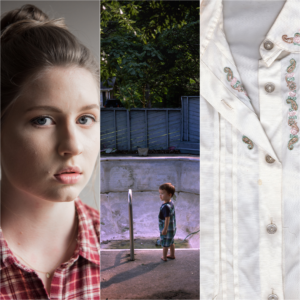
This exhibit is a collection of photography by three Clemson University MFA Alumni artists living and working in the Upstate. Participating artists are Amber Eckersley ‘17, Haley Floyd ‘16 and Zane Logan ’12.
Born and raised in Conway, SC, Eckersley’s work explores themes of memory and residue, utilizing various mediums including photography, scanning, video, and audio. Eckersley received her MFA in photography from Clemson University in 2017 and her BA in History from Coastal Carolina University in 2014. She is currently an adjunct instructor of photography at Greenville Technical College in Greenville, SC and at Lander University in Greenwood, SC.
Floyd has shown in numerous regional juried art exhibitions in the southeast, including the SPE Southeast Exhibition juried by Byron Wolfe as well as several local group and solo exhibitions. She received the Penland Award to attend a workshop with renowned photographer Nicholas Kahn through a special scholarship given by the Art Department at Clemson University. Floyd received her MFA in photography from Clemson University in 2016 where she held positions as Graduate Teaching Assistant and Graduate Teacher of Record. She is currently an adjunct lecturer at Lander University in her hometown of Greenwood, SC.
Logan’swork has been exhibited throughout the United States in both solo and group shows, including at the Columbia Museum of Art, the Riverworks Gallery, the Redux Contemporary Art Center, and the PhotoPlace Gallery, amongst others. He is currently the Southeast chapter chair for the Society for Photographic Education, and lives in Inman, South Carolina. Logan was born in Pickens, SC. He earned his BFA from the Savannah College of Art and Design in 2007. In 2009, while employed as an adjunct instructor of photography, he began his graduate studies. He received his MFA in photography from Clemson University in 2012. He is a faculty member at the Fine Arts Center in Greenville, SC.
SPECIAL SALE EVENT
Annual Ceramic Studio Bowl Sale
Lee Gallery Hallway
Nov. 15, Noon-5 p.m.
This popular annual sale is a fundraiser that supports student travel to the upcoming National Council on Education for the Ceramic Arts conference as well as other professional activities that help further student research and collaboration. A selection of bowls and other functional works by ceramics undergraduate and graduate students and faculty will be available in a variety of price points. The Clemson Ceramics Association’s homemade soup will be served free with the purchase of a bowl between noon and 1 p.m.
About Clemson Visual Arts
The importance of the arts at Clemson University goes back to Thomas Green Clemson’s vision for a “high seminary of learning.” As an accomplished painter, an avid art collector, and an arts advocate, Clemson understood the importance of art to our nation and the world. Clemson University continues to carry out his vision by incorporating art throughout its facilities. Visitors are encouraged to engage with Clemson Visual Arts (CVA) by experiencing the exhibitions in the many gallery and showcase spaces, by viewing the public art found all over campus, and by attending special events. For more information and to access the full calendar of events, please visit clemson.edu/cva. #clemsonarts
Exhibitions, artist talks and receptions are free to the public thanks in part to the generous support given to the Clemson Visual Arts. To belong to the Friends of Clemson Visual Arts, visit cualumni.clemson.edu/give/cva.
Aug. 13–May 30, 2019
M–F, 8 a.m.–5 p.m.
CVA-Greenville Gallery
5th Floor, ONE Building
A collection of photography by three Clemson University MFA Alumni artists living and working in the Upstate.
Born and raised in Conway, SC, Amber Eckersley’s work is strongly influenced by her experiences growing up pulling weeds with her mother, hunting with her father, and canning tomatoes with her grandma in the unrelenting humidity of South Carolina summers. Her work explores themes of memory and residue, utilizing various mediums including photography, scanning, video, and audio. Throughout 2018 and 2019, Eckersley’s will be exhibiting her most recent work, Leftovers, in a solo show at the University of Alabama – Huntsville and in a two-person show at the York County Arts Council Dalton Gallery in Rock Hill, SC and the Bertha Lee Strickland Cultural Museum in Seneca, SC. Eckersley received her MFA in photography from Clemson University in 2017 and her BA in History from Coastal Carolina University in 2014. She is currently an adjunct instructor of photography at Greenville Technical College in Greenville, SC and at Lander University in Greenwood, SC.
Haley Floyd has shown in numerous regional juried art exhibitions in the southeast, including the SPE Southeast Exhibition juried by Byron Wolfe as well as several local group and solo exhibitions. She received the Penland Award to attend a workshop with renowned photographer Nicholas Kahn through a special scholarship given by the Art Department at Clemson University. Floyd received her MFA in photography from Clemson University in 2016 where she held positions as Graduate Teaching Assistant and Graduate Teacher of Record. She is currently an adjunct lecturer at Lander University in her hometown of Greenwood, SC.
Zane Logan’s work has been exhibited throughout the United States in both solo and group shows, including at the Columbia Museum of Art, the Riverworks Gallery, the Redux Contemporary Art Center, and the PhotoPlace Gallery, amongst others. He is currently the Southeast chapter chair for the Society for Photographic Education, and lives in Inman, South Carolina. Logan was born in Pickens, SC. He earned his BFA from the Savannah College of Art and Design in 2007. In 2009, while employed as an adjunct instructor of photography, he began his graduate studies. He received his MFA in photography from Clemson University in 2012. He is a faculty member at the Fine Arts Center in Greenville, SC.
MASTER OF FINE ARTS AT CLEMSON UNIVERSITY
The Master of Fine Arts (MFA) degree is a residential 2 to 2 1/2 year, full-time 60 credit hour interdisciplinary program. An MFA in visual arts is the terminal degree within the studio art discipline. U.S. News and World Report has ranked Clemson University in the top 25 publicly funded institutions for eight straight years, with our MFA program being ranked nationally in the top 25 by GraduatePrograms. com in past years.Students are provided with opportunities to develop a high degree of professional competence in their chosen area of concentration. With 15 to 20 students in this program, the relatively small size of the program encourages students to explore other studio areas as well. Interdisciplinary and collaborative projects are encouraged within the department, resulting in a highly individualized method of instruction.
“The beautiful Arts – the magic bonds which unite all ages and Nations.”
Thomas Green Clemson, Founder of Clemson University




 Aug. 13–May 30, 2019