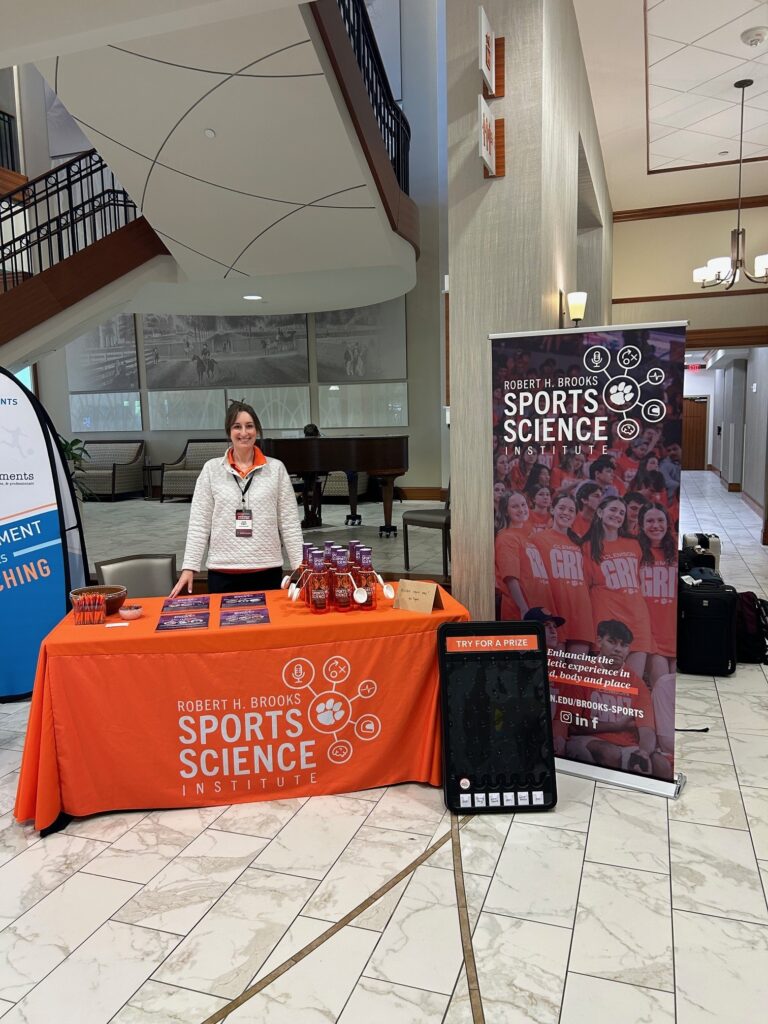
To kick off the fall 2025 semester, the Robert H. Brooks Sports Science Institute welcomes three returning and two new interns. These students enter with impressive skills gained from a variety of experiences to offer innovative ideas that will advance the mission of the Institute.
EVY LANE
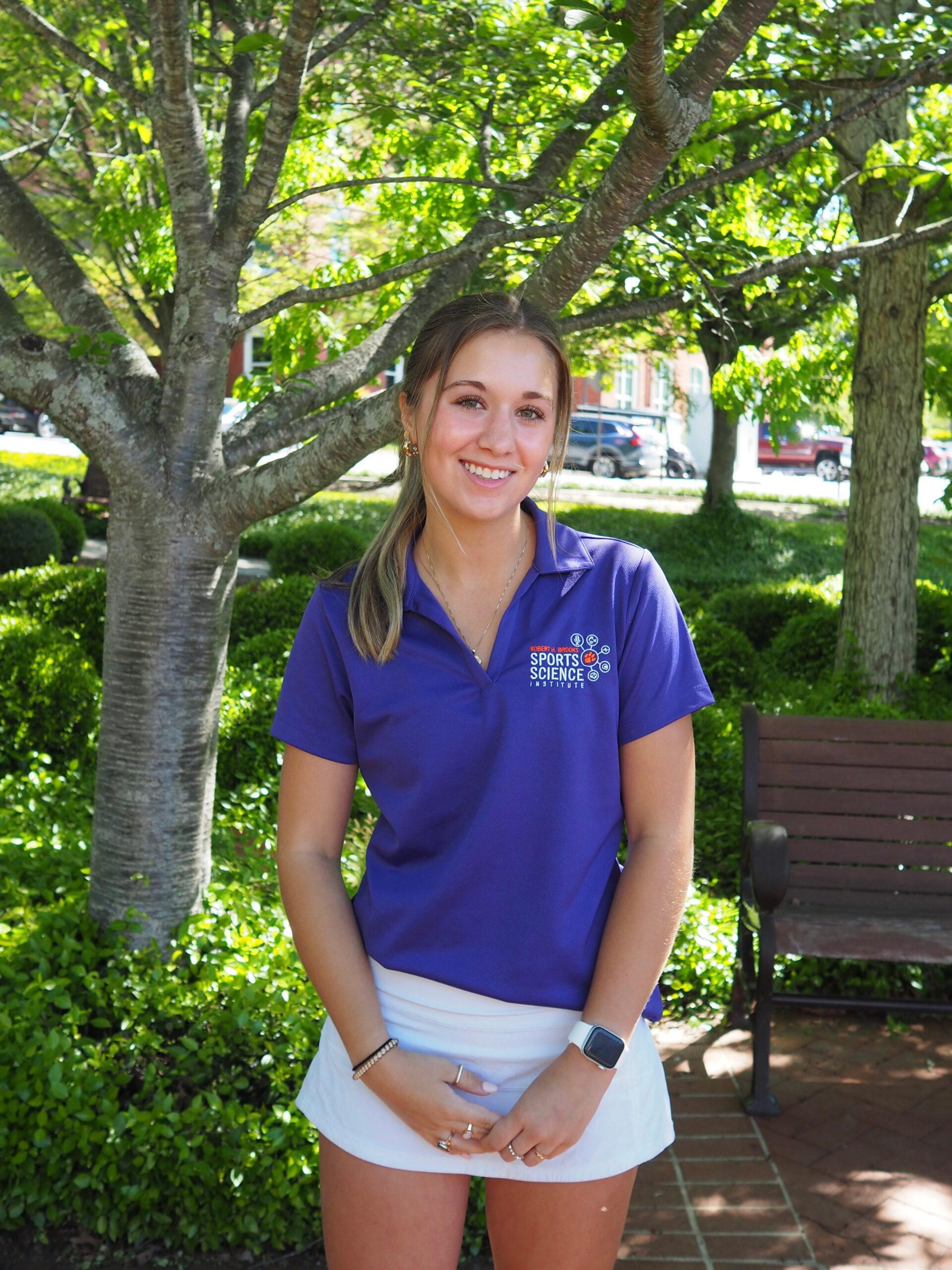
Evy Lane is a senior Marketing major and Spanish minor from Piedmont, South Carolina. In her third semester with the Institute, she will serve as the Communications Lead, which entails creating a content calendar and editing or posting blogs across RHBSSI social media handles.
This past summer, she got the opportunity to write blog posts for the Institute, allowing her to interview faculty and alumni and further explore writing.
“For this semester, I am so excited to be back on campus and create content with our team that will promote the RHBSSI mission, and to learn new skills to help grow our social media,” Lane said.
LUCY HART
Lucy Hart is a senior graduating in December 2025, studying Sports Management with a double minor in Youth Development and Business Administration. From Piedmont, South Carolina, Hart joins the Institute as the Events Lead intern. Her responsibilities will include coordinating the second annual RECESS Symposium and other campus promotional events.
Most recently, she worked as a Destination Experiences Intern with VisitGreenvilleSC, the Destination Marketing Organization for Greenville, South Carolina. In this role, her main project was managing all the volunteers for the SEC Women’s Basketball Tournament hosted in Greenville.
On campus, Hart also serves as the Vice President of CHANGE, Clemson’s student ethics organization. CHANGE creates ethical programming at the University-wide and college-wide levels while exposing students to real-life applications of ethical decision-making and ethical leadership.
“I am an enthusiastic leader who brings positivity and motivation to any team I work with, and I am very passionate about serving my community and working with people,” Hart said. “I hope to encourage others to help bring the community together.”
GRIFFIN BARFIELD
Returning as Writing and Editing Lead Intern, Griffin Barfield is a senior Sports Communication major and Spanish minor from Oceanport, New Jersey. Barfield will work throughout the semester to produce articles highlighting research outcomes from faculty fellows and other important members of the sports science community.
Barfield is also Sports Editor of The Tiger, Clemson’s Student Newspaper. This role involves managing a team of student reporters to cover a variety of Clemson athletics. Additionally, he will be writing for Clemson Tigers on Sports Illustrated, mainly focusing on Clemson football and recruiting.
“I’m so excited to be returning to the Institute for my final semester at Clemson,” Barfield said. “I was able to learn more about our Brooks Faculty Fellows, and I’m looking forward to telling more stories about the advances that happen around campus.”
KATIE GERBASICH
Katie Gerbasich is a senior Sports Communication major and Women’s Leadership minor from Houston, Texas. She will be the Institute’s co-writer for the fall semester, assisting the team in detailing the stories of sports science endavors.
Gerbasich previously worked with the Institute in the fall of 2024 as an Events & Writing Assistant. Here, she helped organize the first-ever RECESS Symposium and curated posts on faculty members for the Sports Insight Blog.
In the spring, Gerbasich worked with Clemson Baseball’s Sports Analytics team and wrote sports articles for Tiger View Media. These experiences allowed her to explore different avenues of college athletics while expanding her communication skills.
“I’ve loved watching the Institute grow so much in the last year,” Gerbasich said. “I’m so excited to be back, joining this amazing team and further promoting the development of sports sciences.”
KATHERINE MANN
Katherine Mann is a junior Graphic Communications major and a Business Administration minor from Fort Mill, South Carolina. As Graphic Design lead, she will assist the Institute in creating visual elements for social media and branding purposes.
Mann is heavily involved in her sorority, Delta Gamma, on campus. Previously, Mann served as Director of Social Media putting her in charge of their Instagram and TikTok accounts. Now, she is Vice President of Programming where she helps plan the calendar, sisterhood events, alumnae relations, and DEI events.
“I am so excited to put my design skills to test and see them featured on the socials,” Mann said. “I am also hoping I can help with growing the social media and gain more engagement.”
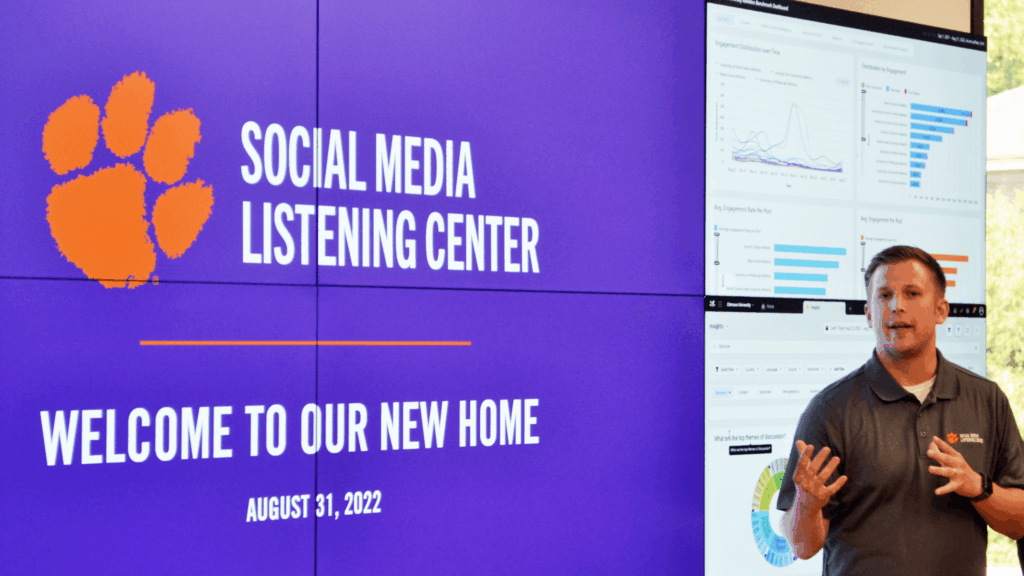
Housed in the Department of Communication and currently led by RHBSSI Faculty Fellow, Brandon Boatwright, Ph.D., the Clemson University Social Media Center (SMLC) is an interdisciplinary lab that utilizes industry-leading social analytics software to harvest, analyze and engage in social media conversations across thousands of sources of digital data. The SMLC is a cutting-edge laboratory that supplies researchers at Clemson with data for a diverse range of topics and projects.
Brandon Boatwright, Ph.D., assistant professor in the Department of Communication and director of the SMLC
Sports researchers at Clemson have utilized the SMLC to advance their studies in the behavioral sciences, such as in sports communication and education. Boatwright has partnered with other fellows in the Department of Communication, such as Virginia Harrison, Ph.D., and fellows Sarah Stokowski, Ph.D., and Chris Corr, Ph.D., from Clemson University’s athletic leadership program in the Department of Educational and Organizational Leadership Development on recent studies that have examined social media trends to collect qualitative data.
Published this year in the journal Communication & Sport, a study by Boatwright, Stokowski, Corr and colleague Marry Holly from the University of Florida, titled The Local Perspective: Regional Television Framing of Name, Image, and Likeness, utilized the SMLC “…to examine the manner in which local television media in the United States framed NIL during news broadcasts,” analyzing television broadcast content across the United States during Fall 2024. Helpful for collegiate athletic administrators, the study revealed that a similar number of comments framed NIL positively, for promotion, and negatively, for its disruption.
Prior to this, in 2023, Harrison and colleagues from her department, as well as from The Pennsylvania State University, announced their study, “Save Our Spikes”: Social Media Advocacy and Fan Reaction to the End of Minor League Baseball, published in Communication & Sport. The team utilized the SMLC to collect “…social media data to extract fan emotions during identity threats” on X (formerly known as Twitter) surrounding the decline of Minor League Baseball during the time of the COVID-19 pandemic. “…the study found that most discussions of contraction were negative in tone and contained emotions like anger” and, overall, made an important contribution to the field “…by bringing advocacy communication into the discussion of sport fandom” and using social media data to shed light on sport fan emotions during a crisis.
The SMLC serves as one of the premier social media laboratories in the nation with the ability to harvest data, only scratching the surface of social media research and application. To that end, the SMLC provides students and researchers with tools and techniques to analyze and make sense out of datasets. The SMLC can support various methodological approaches from content analysis, sentiment analysis, network analysis and more. Click here to learn more about the SMLC.
Did you know that Clemson has a Bicycle Research Team housed in the Department of Parks, Recreation and Tourism Management (PRTM)? Their objective is to conduct research projects pertaining to bicycling knowledge, processes and cycling-related systems.
Since the 2025 Tour de France kicked off on July 5, we connected with Clemson’s Bicycle Research Team to find out more about the latest news and research in cycling.
Charles Chancellor, PRTM associate professor and director of Bicycle Research Team
“Our team of multidisciplinary researchers strives to promote cycling holistically as part of community development and as a contribution to an area’s quality of life,” said Charles Chancellor, Ph.D., associate professor in PRTM and director of the team.
Dr. Chancellor is currently advising PRTM Master’s student, Trevor Romans, who recently presented his research titled, “Exploring Bicycle Commuters’ Experiences Commuting in and Around Clemson.”
Romans asserts that “Every thesis looks to fill a gap in the scholarly literature. I chose to learn about what it is like for Clemson students, staff, and faculty who bicycle commute to work and class. The gap in the literature was about understanding the psychological and behavioral experiences of bicycle commuters. I wanted this study to contribute to that knowledge, but also potentially improve Clemson’s bicycle friendliness.
Trevor Romans, PRTM Master’s student
“I interviewed 13 bicycle commuters, who mostly had positive things to say about their experience of bicycle commuting. They found it efficient, reliable, refreshing, and less stressful than driving, especially when they avoid parking hassles and traffic. Many also valued the health benefits, environmental impact, and opportunities for social interaction.
“However, not everyone had a great experience. Some felt unsafe due to car drivers’ behavior or felt rules of the road were unclear, and that the infrastructure for bicyclists was inconsistent. Despite these challenges, bike commuters were hopeful and willing to improve bicycle commuting in Clemson. This leads me to think that Clemson needs someone to champion making Clemson more bicycle-friendly and bring together all these passionate voices.
“Clemson has the potential to support bicycle commuters by making commuting easier and ensuring their safety. Overall, investment in bicycling and exploring alternative modes of transportation like walking, scootering, and public transportation can improve community health and reduce the number of cars on the road.”
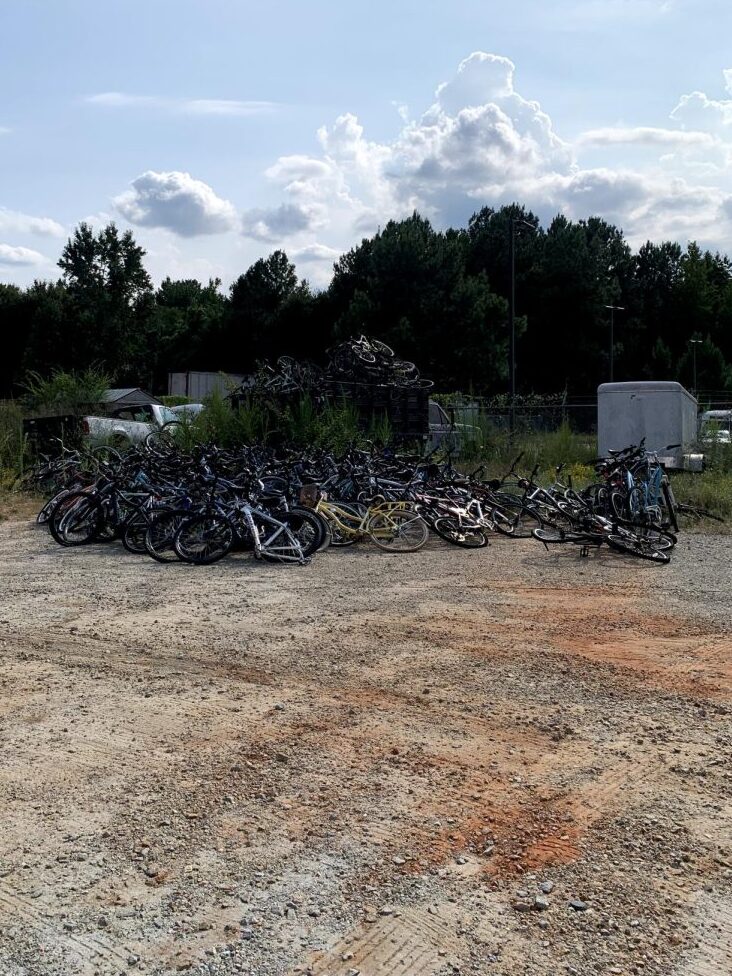
This year, Romans also helped relaunch Clemson’s ReCyclery Club, which aims to find a healthy method of recovering bicycles while also cultivating a community around bike riding.
Photo provided Grace Nammouz, president and co-founder of Clemson ReCyclery
Romans told The Tiger, “My primary goal was to foster a community where students could feel a sense of belonging and share or develop their enthusiasm for bicycling in a safe, judgement free and collaborative space. I wanted to empower students to learn new skills, exchange experiences and contribute to a more environmentally sustainable and active lifestyle.”
In another recent study from 2023, Dr. Chancellor and colleagues examined “…youth bicycle programming through the empowerment-based youth development model.” They evaluated Momentum Bicycle Clubs (MBC) by engaging eight cross-sectional focus groups of MBC youth participants, aged 10-17, through sessions covering the MBC program, the mentors and the bicycle. MBC provides youth with the opportunity to develop mastery over the bicycle and to develop their moral reasoning through relationships with a group of adult mentors.
Click here to learn more about Clemson’s Bicycle Research Team.
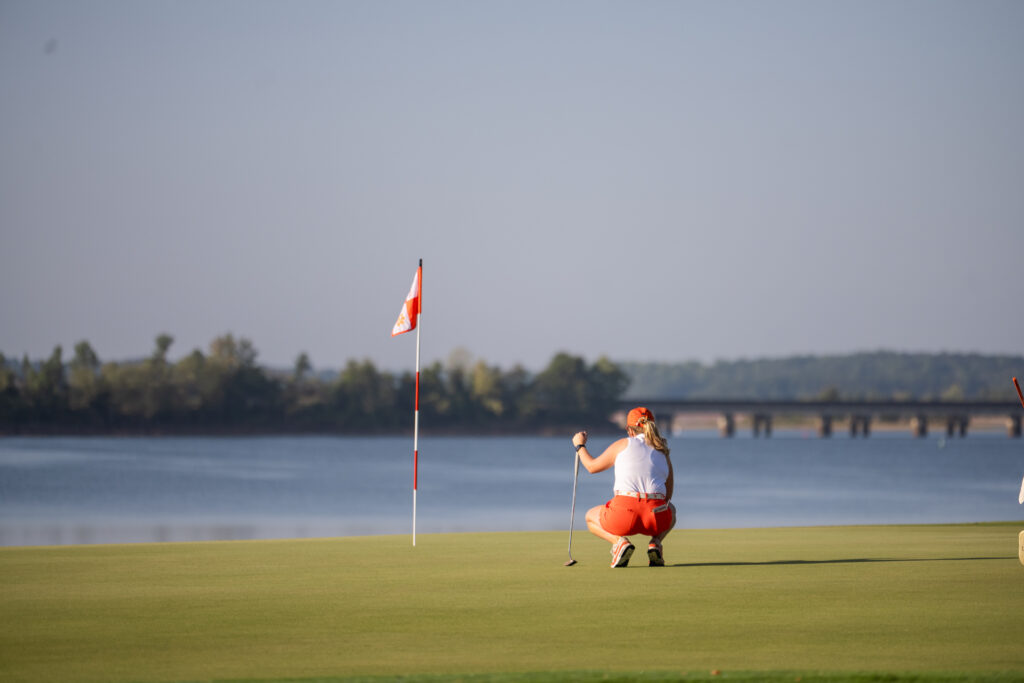
Photos by Josh Wilson, August 2024, Women’s Golf, The Walker Course, Clemson University
Women’s Golf Month is celebrated throughout June each year. This June, we celebrate Clemson Women’s Golf which has a strong history of elite performance and camaraderie with the academics at Clemson University.
Over the years, various faculty at Clemson have studied the science behind the game and its players.
Faculty from Clemson University’s Department of Bioengineering, including Interim Director of the Robert H. Brooks Sports Science Institute, John DesJardins, Ph.D., have studied ‘balance improvements and golf swing kinematic consistency with eight-week balance interventions.’ The purpose of the study, conducted in 2020, was to determine if a training program targeted specifically at balance could enhance players’ overall performance by improving postural stability and swing consistency. After studying eight NCAA Division I players, it was determined that balance training would enhance posture but, while no negative effects were measured, swing consistency did not improve. Another benefit of the study showed the importance of conducting research to help coaches and players understand both the positive and negative effects of their training programs and to potentially make modifications based on that data. While the original study was conducted with male golfers, its conclusions can be applied across teams. Click here to read the full article in the Journal of Sports Research.
Another Clemson faculty member, Gregory Cranmer, Ph.D., from the Department of Communication and fellow of the Robert H. Brooks Sports Science Institute, has studied ‘female golfer’s uncertainty management during their transition into professional golf.’ The 2020 study offers potential strategies for collegiate organizations and professional associations to prepare student-athletes for the uncertain transition into professional golf.
On August 28-29, the Tiger Golf Gathering (TGG) Foundation will host the 2025 Tiger Golf Gathering in Clemson, an annual fundraising event that benefits the Clemson Golf program. The event features a Thursday Open at The Walker Course and Auction Party in the afternoon at the Madren Conference Center and Inn. Friday morning features the Tiger-Am at The Cliffs at Keowee Springs. Meet current and former Tigers and bid on some amazing items to support your Clemson golfers. Sponsorships and online donations are also available.
Click here to learn more about Clemson’s sports science faculty.
In 2025, Clemson’s Headgear Impact Performance (CHIP) Lab continues pushing boundaries in helmet safety research, making significant progress through innovative, student-engaged projects. Led by Dr. John DesJardins, professor of bioengineering and interim director of the Robert H. Brooks Sports Science Institute (RHBSSI), and Dr. Greg Batt, associate professor of packaging science and faculty fellow of RHBSSI, the lab focuses on enhancing how protective headgear is tested and developed, particularly for high-impact sports like football. The goal: bring greater accuracy and real-world relevance to helmet testing systems to better protect athletes from concussions and traumatic brain injuries.
In recent years, the team received a patent for their novel testing method and a Technology Maturation Grant from the Clemson University Research Foundation (CURF), the technology transfer and innovation office for Clemson, to make a benchtop testing machine that they can market. Within just the first few months of 2025, Clemson students achieved the publication of three research articles (featured at the bottom of this post) showcasing this momentum. Much of the content was centered around improvements to testing equipment, especially the crash test dummy.
Anthony Marino working in the CHIP Lab
One significant contribution came from the lab’s involvement in a collaborative, multi-site study comparing two standard neck models used in helmet testing, one produced by Humanetics and the other by Jasti Co., both manufacturers of anthropometric test devices (ATDs). Although both neck forms meet federal safety standards, little has been done to compare their performance under sports-specific conditions. Working alongside the University of Southern Mississippi, Clemson Ph.D. student Anthony Marino conducted impact tests with each neck form and found subtle, yet meaningful, differences in how the head accelerated and moved. These insights are critical, especially for labs that standardize results across different testing setups.
Building on this, the student-engaged team set out to improve how realistic and reliable these test dummies are. Many commonly used models, like the Hybrid III, were initially designed for car crash testing, not the unpredictable, multi-directional impacts seen in sports. To address this, the Clemson group experimented with modifications to the dummy’s neck, adjusting cable stiffness and accounting for asymmetrical design features. Even minor tweaks led to significant changes in how the head moved during impact, offering a deeper understanding of how minor variations can influence helmet safety data. These findings help fine-tune testing protocols to reflect real-world conditions on the field.
Madysn Cardinal (left) and Anthony Marino (right)
Meanwhile, a separate research group took testing innovation even further by designing a new method for future concussion research. Led by Ph.D. student Madysn Cardinal, they developed and validated an inverted testing fixture, essentially flipping the dummy upside down to better simulate the effects of brain fluid movement during impacts. This setup could be especially valuable when using cadaveric specimens to study how cerebrospinal fluid and blood shift in response to trauma. After running a full comparison between the inverted and traditional upright test methods, they found strong alignment in critical measurements like angular velocity and linear acceleration. This confirmed the new system’s reliability and potential to support more advanced brain injury studies.
Now with the Technology Maturation Grant from CURF, the team is working to turn their initial patent claims into a working prototype. They are focused on developing a new testing setup specifically designed to evaluate the safety of faceguards, a critical but often overlooked component of protective sports gear. A new Clemson Master’s students will play a key role in advancing this project, gaining hands-on experience while pushing innovation forward in the field of sports science.
Together, these projects highlight Clemson’s growing role as a leader in sports safety research. By challenging outdated standards, refining testing tools and fostering cross-lab collaboration, the CHIP Lab is redefining how we evaluate helmet performance. The CHIP Lab deeply engages its graduate and undergraduate student members, gaining hands-on experience while directly contributing to the future of athlete protection. With continued leadership from Dr. DesJardins, Dr. Batt and support from the Robert H. Brooks Sports Science Institute, Clemson is helping make sports safer, one carefully measured impact at a time.
Check out these recent publications from Spring 2025:
Marino AP, Jesunathadas M, Landry T, Piland SG, DesJardins JD, Batt GS. Comparison of dynamic performance of Jasti and Humanetics neckforms with an inter-lab validation. Proceedings of the Institution of Mechanical Engineers, Part P: Journal of Sports Engineering and Technology. 2025;0(0). doi:10.1177/17543371241312829
Cardinal MD, Marino AP, DesJardins JD, Batt G. Development and validation of inverted head form orientation for helmet testing using a pneumatic linear impact system. Proceedings of the Institution of Mechanical Engineers, Part P: Journal of Sports Engineering and Technology. 2025;0(0). doi:10.1177/17543371241309998
Marino AP, Cardinal MD, Garrison A, Batt GS, DesJardins JD. Effects of varied stiffness and design asymmetry of neck anthropometric test devices on quasi-static and dynamic loading response to football head impacts. Proceedings of the Institution of Mechanical Engineers, Part P: Journal of Sports Engineering and Technology. 2025;0(0). doi:10.1177/17543371251322217
An early morning photo of the pasture outside of Clemson’s Equine Center from the Center’s website
Leona Ransdell
RHBSSI staff fellow, Leona Ransdell, leads 4-H Equine programming for youth at Clemson University. The South Carolina 4-H Program is participating in and hosting a number of events this summer for equestrians, young and old, from the Special Olympics Equestrian State Show to STEM workshops and more.
Ransdell and the South Carolina 4-H Equine Program work in close partnership with the Clemson University Equine Center. The goal of the Clemson University Equine Center is to be a student-centered, self-sustaining enterprise that serves as a leader in the South Carolina horse industry. The Center caters to the needs of students through various means including:
Animal and Veterinary Science classes and labs
The Clemson Equine-Assisted Therapy (CLEAT) Program
Two IHSA equestrian teams
Student employment
Graduate research opportunities
Boarding
2024 South Carolina 4-H Horse Program Southern Regional Delegation
They also take seriously their responsibility to our community. Current outreach programs include:
Summer riding camps for high school students
Educational seminars and other continued learning opportunities
Applied research on industry-relevant topics
Private sales of young horses
The South Carolina 4-H Program and the Clemson University Equine Center will be hosting and working with the following events this summer:
Special Olympics State Equestrian Show (May 30-June 1)
Hosted at Clemson’s T. Ed Garrison Arena, the Special Olympics State Equestrian Show begins with an Opening Ceremony at 5 p.m. on Friday, May 30 and ends with the Equestrian Competition at 1 p.m. on Sunday, June 1. The weekend also includes a western hoedown, pole bending and barrel competition, trail competition, stall decorating contest and more.
Click here to learn more about the Special Olympics State Equestrian Show for South Carolina.
State 4-H Horse Show (June 10-14)
Hosted by the Clemson University College of Agriculture, Forestry and Life Sciences’ Cooperative Extension program, the State 4-H Horse Show incorporates indoor and outdoor activities for all levels, rookie to senior. The event features a Parade of Counties and Opening Ceremony on Wednesday, June 11 roughly 30 minutes after the morning events.
Click here to preview the tentative schedule for the State 4-H Horse Show.
State 4-H Congress (July 8-11)
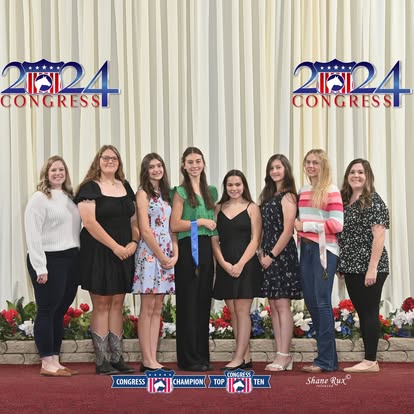
A photo from the 2024 State 4-H Congress
Hosted by the South Carolina 4-H Youth Development Program, qualified 4-H members (see website), aged 14-18 are invited to attend this year’s State 4-H Congress on Clemson University campus. The event is themed, “Beyond Our Time.” Join 4-H members from across the state as you represent your county at State 4-H Congress.
Youth will stay in the dorms, visit campus facilities and see the amazing work being done at Clemson. State 4-H Congress will celebrate the accomplishments and talents of our senior 4-H members, elect next year’s State 4-H Teen Council and provide a platform to engage in the head, heart, hands and health of 4-H through service, learning, connection and more.
Click here to learn more about the State 4-H Congress.
STEM Fest (July 19)
STEM Fest is a three-hour, community-based celebration of science, technology, engineering and math for up to 1,000 students and parents. Attendees participate in 50 hands-on stations, perform experiments, watch demonstrations and meet professionals from all different career backgrounds. Each station is manned by collegiate and professional volunteers. The upcoming event on July 19 will take place in Greenville, SC.
According to Leona, people interested in 4-H and Equine activities locally to them can reach out to their local county offices and most, if not all, offer multiple summer camps.
“For example, Newberry County has engineering camp in June, Crafty clover camp in July, Farm tour camp in July, general 4-H camp in July!” she said. “Pickens County has a Butterfly Habitat Workshop May 31 Horseless Horse Camp June 16!”
Ransdell ’12, is a Clemson Animal Science graduate passionate about horses, her community and education. She returned to Clemson in 2024 to take on her current role, which combines all of her passions into one.
“Everything we do at South Carolina 4-H and the Clemson University Equine Center is near and dear to my heart and I hope you will find one or more event this season that interests you!” said Ransdell.
For more information on youth programming at the Equine Center, contact Leona Ransdell at leona@clemson.edu. Click here to follow the Center on Facebook and click here to follow the South Carolina 4-H Livestock and Equine Program!
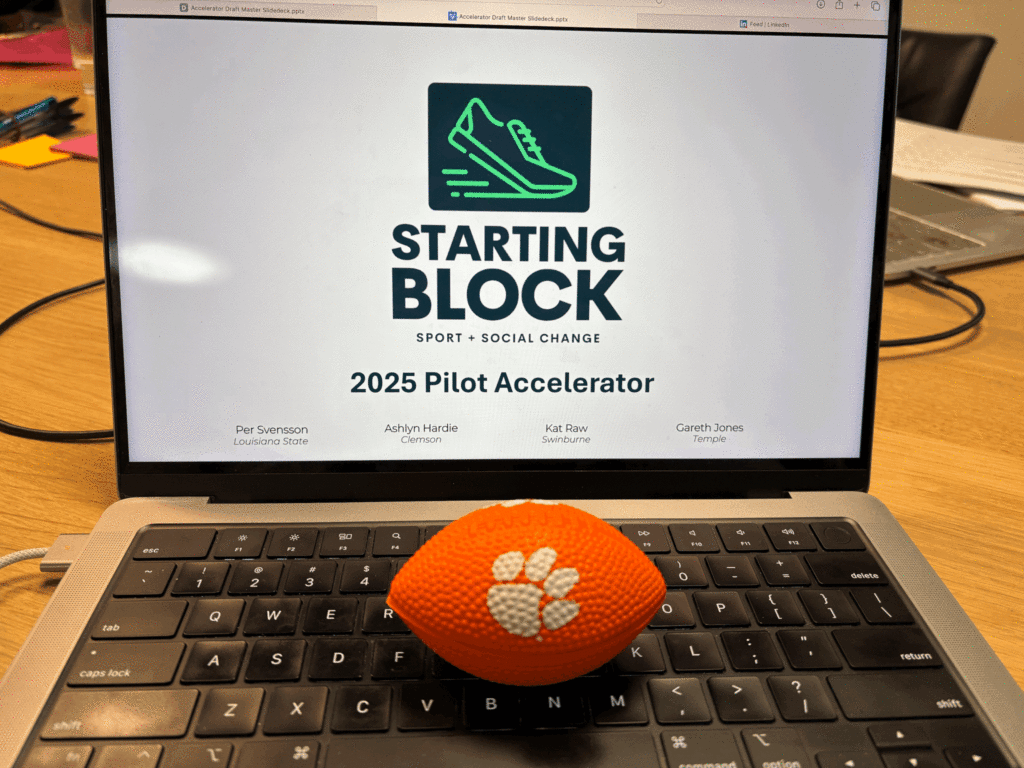
This April, Dr. Ashlyn Hardie, Institute fellow from the Department of Parks, Recreation and Tourism Management, co-led the first-ever Starting Block Accelerator in London, England with Dr. Per Svensson from Louisiana State University. This innovative initiative is the first of its kind, eliciting pioneering research in the Sport for Development and Peace (SDP) sector. Funded by RHBSSI through a seed grant awarded in 2024, this research has already led to notable, practical impacts, scholarly implications and industry partnerships.
The goal of the Starting Block Accelerator is to support nonprofit leaders, and subsequently their SDP organizations and beneficiaries, regarding various aspects of capacity building. The Starting Block Accelerator’s most distinct contribution to the SDP sector and the research within sport management is that the accelerator is entirely evidence-based and designed to bridge the gap between practice and research in SDP.
Five SDP organizations joined Hardie’s crew in London for a four-day intensive workshop where grassroots leaders from around the world were flown in to participate in a research-backed capacity building accelerator. The five organizations selected were invited because they all met the following criteria: their organizations (1) are operating in the late-start-up or early-growth life cycle stages and (2) have diverse geographic locations, cultural contents and/or sports for implementation.
According to Hardie, the goal of the Starting Block is to “bring in these organizations who have been around for a couple of years and are already doing really great things. But, despite how incredible their work is, they struggle to secure resources and make ends meet. Most SDP leaders are coaches and educators in their educational and training background, so we want to support them in developing the managerial and business-oriented skill sets needed to move further into the growth and maturation life cycle stages.”
Meet the team
The SDP organizations, represented by their founders in London, included: X-SUBA, a multi-sport mechanism for youth development based in Uganda; Atoot!, a women and girls empowerment soccer organization based in Nepal; Lwandi Surf, a surf academy for local youth in Mozambique; EmpowerVan, a mobile martial arts and self defense initiative for refugees in Athens, Greece; and Free Movement Skateboarding, a skateboarding initiative for local youth participants, also based in Athens.
Accompanying Hardie, Svensson and these SDP leaders in London, was Dr. Kat Raw from Swinburne University of Technology in Australia. Though unable to attend in London, Dr. Gareth Jones from Temple University is also a research affiliate of the initiative – ultimately demonstrating the vast networking and collaborative efforts of the Starting Block Accelerator. These collaborations are not just with practitioners and industry leaders but have also led to multi-institutional academic partnerships.
The workshop
After the groups arrived in London, the first workshop day focused on foundational concepts of nonprofit management in SDP. Topics included mission statements, programmatic goals and alignment, and analyzing partnerships and surrounding operational environments for their success. Participants engaged in a series of activities to help challenge, support, refine and rewrite organizational aspects as needed. Having this strong foundation in place allowed for deeper work in the following days to ensure optimal outcomes.
“Day one was very foundational stuff, like ‘Let’s go through all these things, let’s break down the structure of your organization and really understand where you might have any gaps, whatever it is, so we can focus on where to build,’” Hardie said.
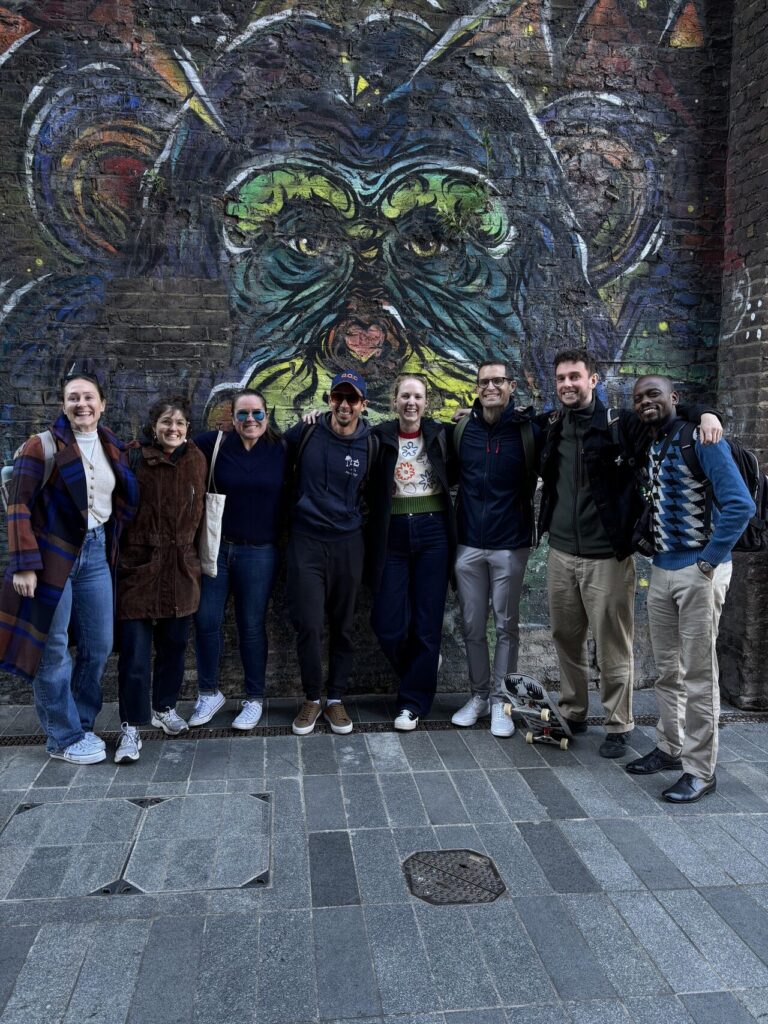
Hardie (far left) with her research team and SDP founders on day two of the workshop
Day two focused on various aspects of monitoring and evaluation, analyzing how each organization collects its data and suggesting how to build strong arguments for potential stakeholders by using data to provide evidence of their outcomes to potential partners and funders. Each organizational leader was prompted through a series of activities to contemplate their own data, access to data and opportunities for data collection that could serve their need to demonstrate effectiveness of their outcomes. Consulting was provided regarding data collection, analysis and, ultimately, the storytelling necessary to turn that data into something accessible for potential partners, funders and others.
The next day involved higher-level managerial concepts, discussing various strategies for securing funding, and practical methods for accessing and digesting evidence-based research in SDP. Given the goal of this initiative is to bridge the gap between research and practice, Hardie stated, “Our aim was to help improve their capacities to conduct their own research through developing skills and knowledge on monitoring and evaluation techniques, but also to help them understand what academic research is open-access and available to them, as well as tactics for making this research digestible for practical use.”
Hardie and her team felt this was an essential part of the accelerator, to ensure their participants knew how to access notable findings on SDP organizations. According to Hardie, so many organizations are using trial and error methods on what works and what does not, because so much of scholarly research is buried behind paywalls or written in academic language that is tough to understand for non-native English speakers.
The group working on strategies for organizational improvement in London
“There’s a massive gap, specifically in sport for development, because of the paywall and then the language barrier to such an international industry,” she said. “So, what we did on that third day was really focus on translating… how are we taking research and providing it to them in a way that has no cost and is easy to access and comprehend.”
The fourth and final day focused on developing capacities for innovation within the SDP sector. The content focused on practical techniques that each group could use to be innovative in its leadership, utilize modern resources like artificial intelligence, and strategically innovative in their brand, positioning and partnerships.
To wrap up the initiative, at the end of day four, Hardie and team hosted a networking event for the five participating founders to meet with a group of industry-leading representatives from various globally renowned funding bodies in SDP.
“We set it up like a speed dating event,” said Hardie. “At the start, each of our five participants were able to give a 5-10 minute ‘elevator pitch’ for their organization to the group of funders. Then, we created a rotation of 15-minute cycles where SDP leaders could get personalized feedback from the attending funders – likely individuals who have reviewed their applications in the past or will review applications of theirs in the future.”
A “massive success”
At the end of it all, the event was a “massive success” according to Hardie. Not only did the research team gain valuable feedback and insight from the co-design element of the pilot accelerator but, practically, there were noteworthy developments seen for each organizational leader and the capacities they developed over the week. Networking across the research team, practitioner participants and industry funders was a key takeaway from the event, as it has led to new collaborations, friendships and future funding, research and applied opportunities.
“It was really collaborative and the participants all became seemingly real friends over the course of a few days. It was really special to watch,” she said. “I think, from a positive culture and facilitation standpoint, it was a massive success. But, also from an outcome standpoint, we were so pleased with the engagement and some of the developments, ideas and next steps that came out of the week.”
Starting Block practitioners, SDP organization founders and potential funders meeting on the final day of the workshop
The organizations have expressed immense gratitude for the support they received over the week in London. Historically, SDP groups desperately look for support, seeking resources, partnerships and/or funding – all of which lead to routine rejection and feelings of defeat. To this end, Hardie noted:
“I think just participating in something like this, on its own – regardless of outcomes – restores faith for people. It heals some of their burnout. It heals some of the trauma that these organizational leaders go through by constantly feeling like they’re just hitting dead end after dead end after dead end, or getting rejected consistently by the same funding groups. It kind of breathes life into people in a way. Just like it did for our research team. It heals some of our burnout, some of our frustrations. It restored heightened levels of inspiration and motivation for our research team and those industry leaders too.”
The future of Starting Block
As for the future, Hardie’s team is collecting follow-up data from the Starting Block in London and will continue collecting longitudinal data on the outcomes from the accelerator over the next year. The cohort format is something that the research team plans to keep, bringing in five new organizations in the next cycle, potentially with the mentorship and support from organizations who participated in the cohort before them. In terms of long-term goals, Hardie hopes to finalize an adaptable curriculum and network that allows the Starting Block to support SDP organizations on a pathway out of their start-up phases, into desired positions of growth and organizational stability.
This pilot for the Starting Block Accelerator is hopefully only the start of a multi-prong initiative with resource-providing platforms, with no barrier to entry for the global community of SDP leaders.
“This type of initiative is so wildly innovative, and something that’s so hard and unprecedented to get funding for, especially in sport for development,” Hardie said. “We are sincerely grateful for the RHBSSI seed funding, because it gives really impactful and powerful initiatives like this a chance! A chance to give proof of concept, to collect pilot data to go for bigger funding and, individually, a chance for those practitioners and our research team to engage in once-in-a-lifetime work. So, for that, I am sincerely thankful.”
March is Brain Injury Awareness Month, a national holiday led by the Brain Injury Association of America each year. Gregory Cranmer, Ph.D., associate professor in the Clemson University Department of Communication, is a scholar passionate about finding ways to provide meaningful and safe experiences for athletes through coaching, health interventions and socialization.
Sport-related concussions, or SRCs, are a significant health risk for athletes – and are generally underreported, increasing the risk for more severe outcomes. Cranmer and colleague Daniel Hartman, graduate teaching assistant in the Department of Communication at the University of Illinois, sought to understand the barriers that high school athletes across 20 sports face to reporting their concussion symptoms and how coaches play a part.
“Coaches play a pivotal role in promoting safety and health,” said Cranmer, “but concussion symptom reporting has been insufficient across the board.”
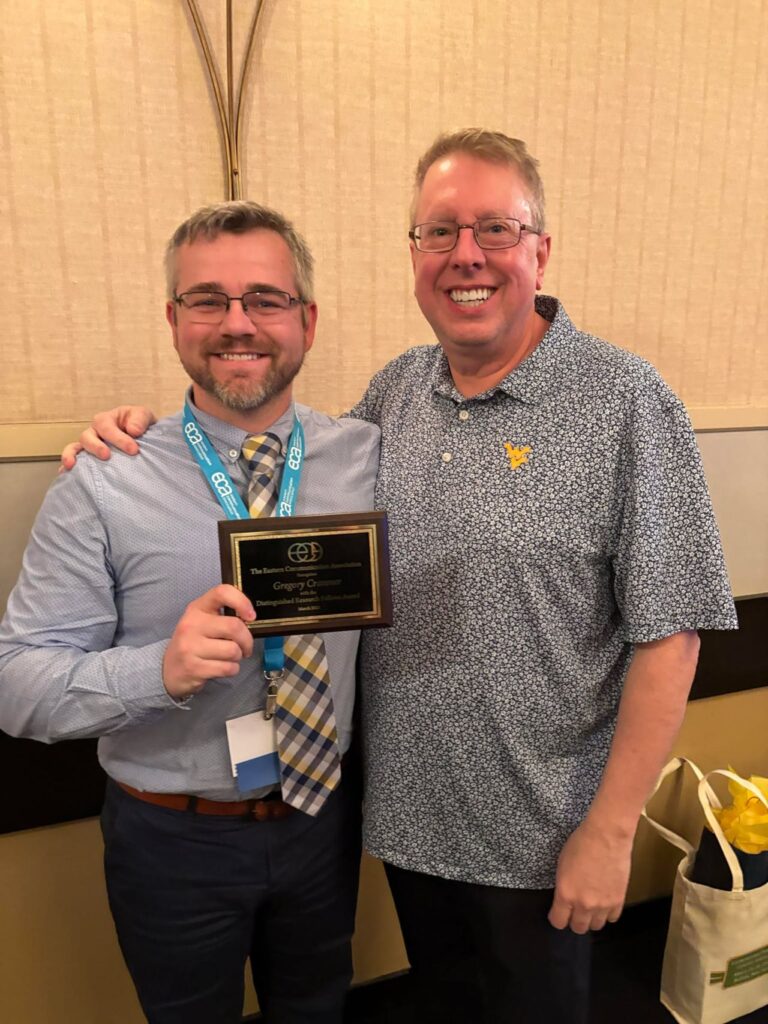
On March 29, Cranmer was honored as a Distinguished Reseach Fellow for the Eastern Communication Association. This means he is now part of the top 1% of researchers for the oldest communication association in the country.
Cranmer has been a faculty fellow of the Robert H. Brooks Sports Science Institute since 2017. Click here to connect with him on LinkedIn.
SunWoo Park, Clemson Ph.D. candidate, presents her research on the college football sport experience at a CSRI poster session
Clemson University’s Robert H. Brooks Sports Science Institute (RHBSSI) recently showcased at the College Sport Research Institute’s (CSRI) annual conference on college sport held March 19-21 in Columbia, South Carolina.
CSRI’s mission is to encourage and support interdisciplinary and inter-university college sport research, serve as the research consortium for college sport researchers from across the United States, and disseminate college sport research results to academics, college practitioners, and the general public.
As a premiere sponsor of the event, RHBSSI contributed to the success of the conference and engaged in meaningful discussions with scholars, practitioners and industry leaders studying college sport. Several RHBSSI faculty fellows and Clemson students attended, gaining valuable insights and sharing their cutting-edge research and innovation in sport. This gathering highlighted the Institute’s commitment to advancing research, education and collaboration on issues in intercollegiate athletics.
Clemson expertise on college sport
Faculty and Ph.D. students from the following Clemson departments attended the conference on behalf of RHBSSI and presented their research on college sport.
Chris Corr, Clemson University / Robert Hoffman, The Pennsylvania State University Abington / Richard M. Southall, University of South Carolina / Christopher Atwater, Troy University
Sarah Stokowski, Clemson University / Alex E. Chisholm, Clemson University / Andrew Rudd, Franklin Pierce University / Michael Godfrey, Clemson University
“‘Thank you to the Institute for supporting me to attend CSRI,” said Sarah Stokowski, associate professor of athletic leadership in the Clemson University Department of Education and Organizational Leadership Development. “I had the best time! It was also nice to see so many of my Clemson colleagues in attendance.”
Sponsorship impact
RHBSSI Assistant Director, Kayla Rogers, at the sponsorship table
“The CSRI conference provided an engaging venue to meet experts from across the country leading the academic study of college sport,” said John DesJardins, interim director of RHBSSI. “Our faculty fellows from Clemson’s College of Education have a rich history of attending, presenting at, and leading the conference, and we were honored to be involved this year and support several faculty and students to attend and present.”
RHBSSI set up a table at the event, providing an established space to meet attendees and talk about potential cross-over.
“Partnering with CSRI was the perfect opportunity to support Clemson faculty in the field and facilitate more cross-collaboration – between our faculty and those at other universities studying intercollegiate athletics,” said Kayla Rogers, assistant director of RHBSSI.
“Brooks helped make the conference be the best that it could be and I’m beyond appreciative and grateful,” said Chris Corr, executive director of CSRI and senior lecturer at Clemson University.
Since 2013, World Tennis Day has been celebrated the first Monday of March each year, kicking off tennis season in North America.
Dr. Angeline Scheinbaum, Department of Marketing
At Clemson, Dr. Angeline Scheinbaum, Dan Duncan Professor of Sports Marketing, has partnered with the United States Tennis Association (USTA) since 2021 to study the perceptions of tennis league play and pandemic impact. Her research explains and predicts linkages among consumer attitude, affect, cognition, behavioral intent and consumer behavior.
A former Clemson women’s tennis player at practice
Her work with the USTA, which engages students at the University, is ongoing. Dr. Scheinbaum is now working with Dr. Sarah Stokowski in the College of Education to study similarities between the USTA’s and USA Ultimate’s post-pandemic concerns about female participation in their respective sports.
Scheinbaum competes for the USTA
“It appears that there may have been a similar decline in the participation among young female athletes in both tennis and Ultimate Frisbee after the COVID-19 pandemic,” noted Scheinbaum. “We have just begun to compare data sets from these national associations to see if we can glean any important information on the decline, and how to reinvigorate participation from this demographic across the nation.”
Celebrate World Tennis Day with the Robert H. Brooks Sports Science Institute this week by picking up a racket and hitting the court, learning about the history of tennis, and staying tuned on Clemson’s research with the USTA.