Since 2013, World Tennis Day has been celebrated the first Monday of March each year, kicking off tennis season in North America.
Dr. Angeline Scheinbaum, Department of Marketing
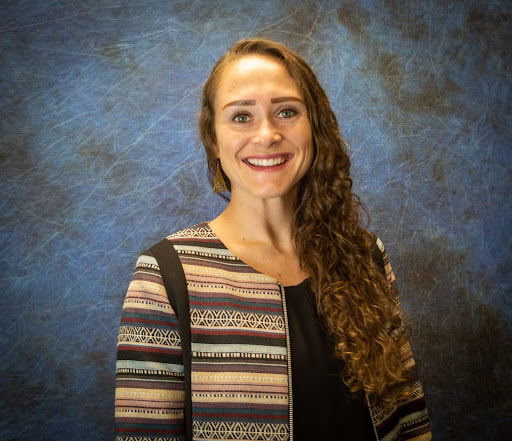
At Clemson, Dr. Angeline Scheinbaum, Dan Duncan Professor of Sports Marketing, has partnered with the United States Tennis Association (USTA) since 2021 to study the perceptions of tennis league play and pandemic impact. Her research explains and predicts linkages among consumer attitude, affect, cognition, behavioral intent and consumer behavior.
A former Clemson women’s tennis player at practice
Her work with the USTA, which engages students at the University, is ongoing. Dr. Scheinbaum is now working with Dr. Sarah Stokowski in the College of Education to study similarities between the USTA’s and USA Ultimate’s post-pandemic concerns about female participation in their respective sports.
Scheinbaum competes for the USTA
“It appears that there may have been a similar decline in the participation among young female athletes in both tennis and Ultimate Frisbee after the COVID-19 pandemic,” noted Scheinbaum. “We have just begun to compare data sets from these national associations to see if we can glean any important information on the decline, and how to reinvigorate participation from this demographic across the nation.”
Celebrate World Tennis Day with the Robert H. Brooks Sports Science Institute this week by picking up a racket and hitting the court, learning about the history of tennis, and staying tuned on Clemson’s research with the USTA.
Drs. Erica Walker and Amanda Bridges’ research discovers different strategies to ensure the University’s brand colors remain consistent on athletic apparel
Most sports fans own at least one t-shirt donning the brand of their favorite team or jersey representing their favorite athlete. When they are preparing to join the crowd at a field, rink or stadium, sports fans expect their regalia to look on-brand.
According to Drs. Erica Walker and Amanda Bridges, Clemson faculty in the Department of Graphic Communications, “Branded athletic apparel is a multi-billion dollar business expanding year over year. Sports teams and their fans expect brand accuracy and durability across all types of textile-based products from clothing to home decor. Color is a vital part of a brand’s identity and printing consistent, durable and accurate brand colors across different materials can be challenging for manufacturers.”
Clemson Orange is printed on different textiles and laundered to see how true-to-brand the color of the Clemson paw remains.
The pair have examined the accuracy and durability of two Clemson brand colors, Clemson Orange and Regalia (purple), “specified by the brand as Pantone and CMYK values and measured as LAB values using a spectrophotometer, and printed on three textiles commonly used for clothing.”
Late in 2024, Walker and Bridges received international recognition for their research presented at conferences in Montreal, Canada (Color and Imaging Conference, October 2024) and Seville, Spain (International Conference of Education, Research and Innovation, November 2024). Additionally, they will present in Boulder, Colorado this March at the Technical Association of Graphic Arts (TAGA) conference.
Walker shared some of the challenges their research aimed to address.
“Orange is an especially difficult color to match in any medium,” she said. “Our eyes are pretty sensitive to variations in this color range so branded content creators have to be especially vigilant to ensure a consistent visual match.
Another challenge is the variety of materials and places that the color appears. We see Clemson Orange on the TV screen, on printed t-shirts, painted on the grass on the athletic fields, on the plastic seat backs, on metal decorative art outside, and so many other surfaces. Each backing material and process must be carefully chosen and controlled to ensure accurate brand color.”
During their investigation, the two provided opportunities for freshmen-level experiential learning with a direct-to-garment (DTG) printer and worked closely with Clemson Athletics to assess how the University’s brand colors are affected by commercial washing processes, looking at color degradation.
Walker shared advice for printers and manufacturers to achieve color accuracy and durability.
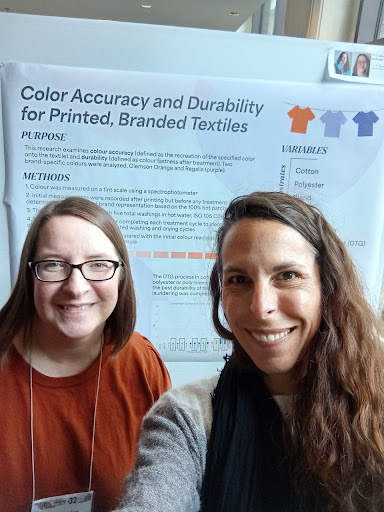
Bridges (left) and Walker (right) attended the CIC Conference in Montreal, Canada last November.
“You can never have too much quality control throughout the process. Everyone who touches the artwork or product from the beginning design to manufacturing to the sales floor has a role in ensuring brand accurate colors,” she said. “This even includes fans! How we launder brand-color products can help the colors stay accurate for longer.
There are definitely some combinations of textiles and processes that will provide more accurate colors both initially and after multiple washes, so manufacturers take that into consideration when developing new products and deciding how to manufacture them.”
At the end of the day, one question remains above all in Walker’s and Bridges’ research: How can the University engage with textile manufacturers, printers and launderers to ensure the brand stays true on apparel and other products?
“This project helped me connect my color work on screen to what the cameras actually record live—the uniforms of the players and the branded fan gear,” Walker said. “The current study attempts to back the solution up further than ColorNet, which fixed the brand colors after they were recorded on camera. Wouldn’t it be great to get the color more closely aligned both on and offscreen to provide a unified, cohesive brand experience?”
Walker has been a faculty fellow at the Robert H. Brooks Sports Science Institute for many years. The proposals she submitted for ‘director’s funding’ were reviewed and approved by RHBSSI leadership, and the Institute was pleased to fund the purchase of the DTG printer and offer financial assistance to participate in the conferences.
“It was a very [special] international conference and the first time either of us had attended it,” Walker said about CIC. “[It] would definitely be a valuable event to visit again and we really appreciate the support which allowed us to go to both CIC and TAGA this academic year.”
The Robert H. Brooks Sports Science Institute is thrilled to welcome six new Clemson faculty and staff members to its cohort of fellows beginning Spring 2025.
Marissa Shuffler
Associate Professor, Psychology
Shuffler has over a decade of experience conducting basic and applied research in the areas of team development, leadership and organizational effectiveness. Shuffler is director of Clemson’s DIGITAL (Deriving Innovative & riGorous scIence for Teaming And Leading) Research Lab, supervising a team of graduate and undergraduate students. Her research focuses on the study of scientifically derived, innovative interventions needed to develop, sustain and maximize inter- and intra-team functioning and wellbeing. Shuffler’s work also addresses the challenges of leading and leadership development in high risk and complex environments, including healthcare systems, the military and spaceflight. To date, Shuffler has served as Principal Investigator or Co-Investigator for more than two dozen research projects totaling over $23 million in funding from federal and private entities. In 2017, Shuffler was awarded a prestigious National Science Foundation CAREER grant for her research exploring team development interventions and the use of latent profile analysis as a mechanism for better designing interventions for team effectiveness.
Jessica Aviles
Assistant Professor, Industrial Engineering
Avilés specializes in understanding how people move, why they move the way they move and how to help them move better. Her passions lie in improving mobility by applying innovative training interventions and assistive devices. Her research interests cover industrial athlete rehabilitation, fall prevention and human factors and ergonomics in healthcare. At Clemson, her work revolves are exoskeletal research. With a doctorate in Biomedical Engineering, Avilés has taught senior-level occupational biomechanics and also the design and analysis of work systems. Avilés is a Brooks grant awardee and principal investigator in the PHASE (Pursuing Health through Adaptation, Sports and Ergonomics) Lab at Clemson.
Tyler Harvey
Senior Lecturer, Bioengineering
Harvey received his Ph.D. in Bioengineering from Clemson in 2018. Since then, he has taught undergraduate courses in sports engineering, bioengineering design theory, applied biomedical design, bioengineering ethics and entrepreneurship and more. His research interests involve cognitive impacts of virtual reality sports training, sports biomechanics, computational modeling of living systems and more. Harvey is passionate about increasing access to STEM for underserved and underrepresented groups.
Amy Pope
Principal Lecturer, Physics and Astronomy
Pope combines her passion for physics and sports to create engaging learning experiences for students. She teaches Physics of Sports, a course that uses real-world athletic scenarios to illustrate core physics principles. Her contributions to The Conversation on the physics of breakdancing and ski jumping highlight the physical processes behind these Olympic sports, making complex concepts relatable to a broader audience. As a faculty member in the Department of Physics and Astronomy, Pope leverages the universal appeal of sports to make physics more accessible, relevant and engaging for all learners.
Leona Ransdell
4-H Equine Program Leader
Ransdell received her B.S. in Animal Science with an Equine Business concentration from Clemson in 2012. She has served as a 4-H Agent with both the Clemson Cooperative Extension and Virginia Cooperative Extension as the 4-H Equine Program Director. In Virginia, Leona led educational teams to multiple wins at the Eastern National 4-H Horse Championships and managed one of the largest youth-only horse shows on the East Coast. She also coached the Virginia Tech Western and Horse Judging teams and taught equine science and biomechanics courses. Additionally, she earned her AQHA Level 1 Judging Card. Returning to Clemson in 2024, Leona hopes to build on the past successes of the 4-H program in South Carolina with a special focus on the educational events and programs to help mitigate the lack of large animal veterinarians. She is excited to further the interests of the equine industry and bring together stakeholders to address and build a strong future for the equine industry in South Carolina.
Christopher Chouinard
Assistant Professor, Chemistry
After briefly working as a project manager for a contract research lab in Massachusetts, Chouinard received Ph.D. in Chemistry from the University of Florida. There, he worked under world-renowned mass spectrometrist Rick Yost and was responsible for integrating drift tube-ion mobility spectrometry (DTIMS) into the Yost lab. Chris’ interests at UF involved IM-MS studies of clinical molecules (steroids, Vitamin D metabolites) and he received grant funding through the Partnership for Clean Competition to develop novel IM-MS methods for improved identification of anabolic androgenic steroids in athletes. Chouinard then engaged in a prestigious post-doctoral position at Pacific Northwest National Laboratory in Richland, WA where he worked with Dick Smith, another world leader in mass spectrometry, designing and developing a Structures for Lossless Ion Manipulations (SLIM) platform that enabled the first integration of LC into the SLIM IM-MS pipeline for improved analysis in phosphoproteomics. Chouinard joined Clemson in 2022 and continues his work in ion mobility-mass spectrometry.
Any Clemson faculty or staff making contributions to the sports field, broadly defined, are invited to apply to become members of the Institute. Fellows meet twice annually, collaborate on multi-disciplinary projects and are eligible to receive additional funding from RHBSSI for their work. Click here to view the full list of fellows and click here to learn more about becoming a Brooks Fellow.
Placed among mini golf holes and poster presentations, live demonstrations and activities representing the sports sciences will be on display at the Institute’s RECESS Symposium on October 24. Located in the Madren Center’s Grand Ballroom, the demonstrations will include:
Headgear Impact Performance: Greg Batt, Ph.D.
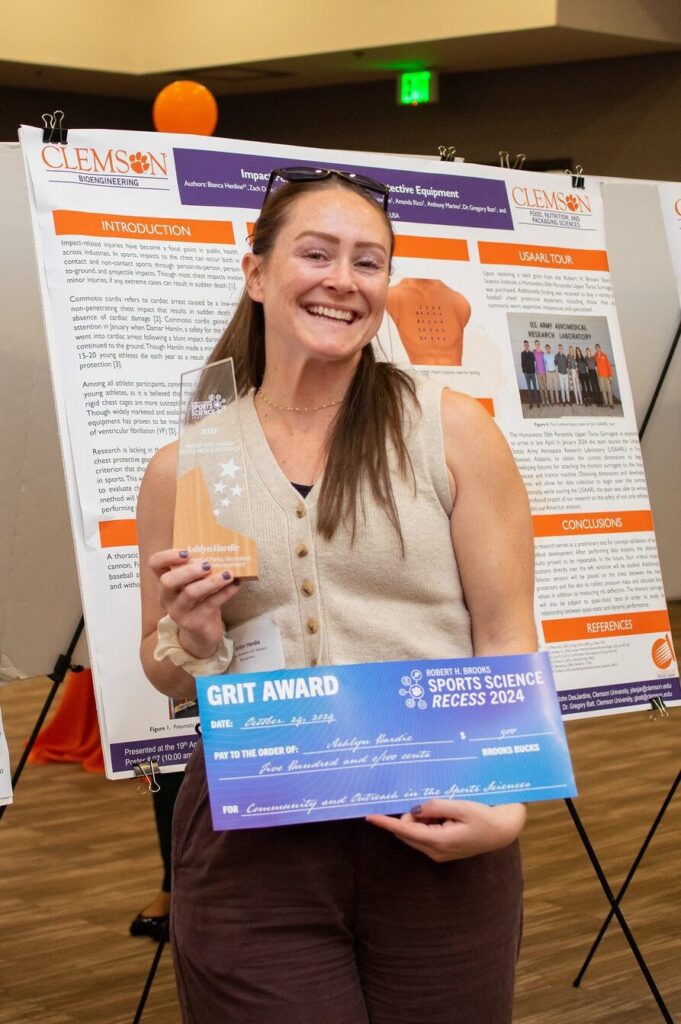
The Clemson Headgear Impact Performance (CHIP) Lab at Clemson tests the strength of sports helmet faceguards. According to Batt, these masks are made to protect players from many injuries but fail more often than one might think. Using a pneumatic canon, the impact on the helmet is recorded. Testing in the lab, done by students, hopes the data collected will one day make sports safer for everyone. The CHIP Lab will demo various equipment at RECESS like helmets, a head and neck form, a hammer and a computer that will be used to acquire acceleration response of the head. The team will be available to discuss more about the outcomes of their testing and answer questions.
Rowing Motion Capture: Anthony Marino and John DesJardins, Ph.D.
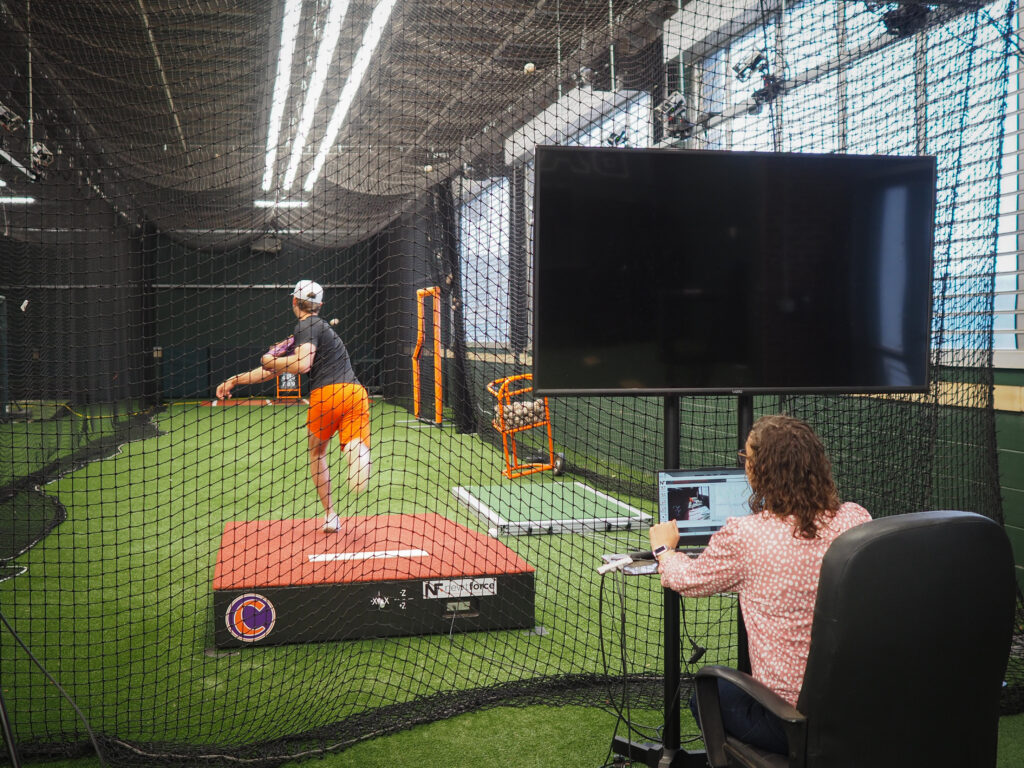
Collegiate rowing is the oldest intercollegiate sport in the United States, and has a prestigious historical tradition among American universities dating back to 1852 (Harvard Magazine). Unfortunately, the sport has long been considered a men’s-only sport it took over 100 years for women gain recognition. A collaboration between Clemson Bioengineering and the Clemson Women’s Rowing program has investigated questions specific to women’s rowing and enhanced the training, health and performance of our athletes. A 3D motion capture technology has been used at Clemson to test novel foot plates during rowing. At RECESS, participants will be able to interact with this system and learn more about the outcomes for rowers.
Virtual Reality Soccer: Felipe Tobar, Ph.D.
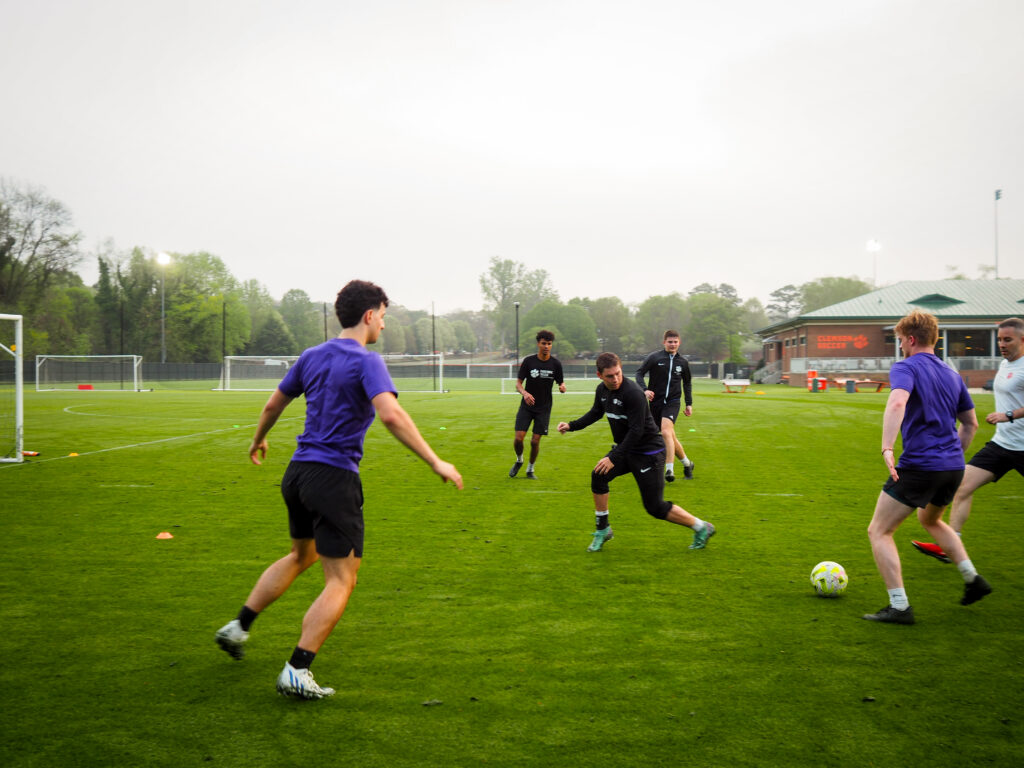
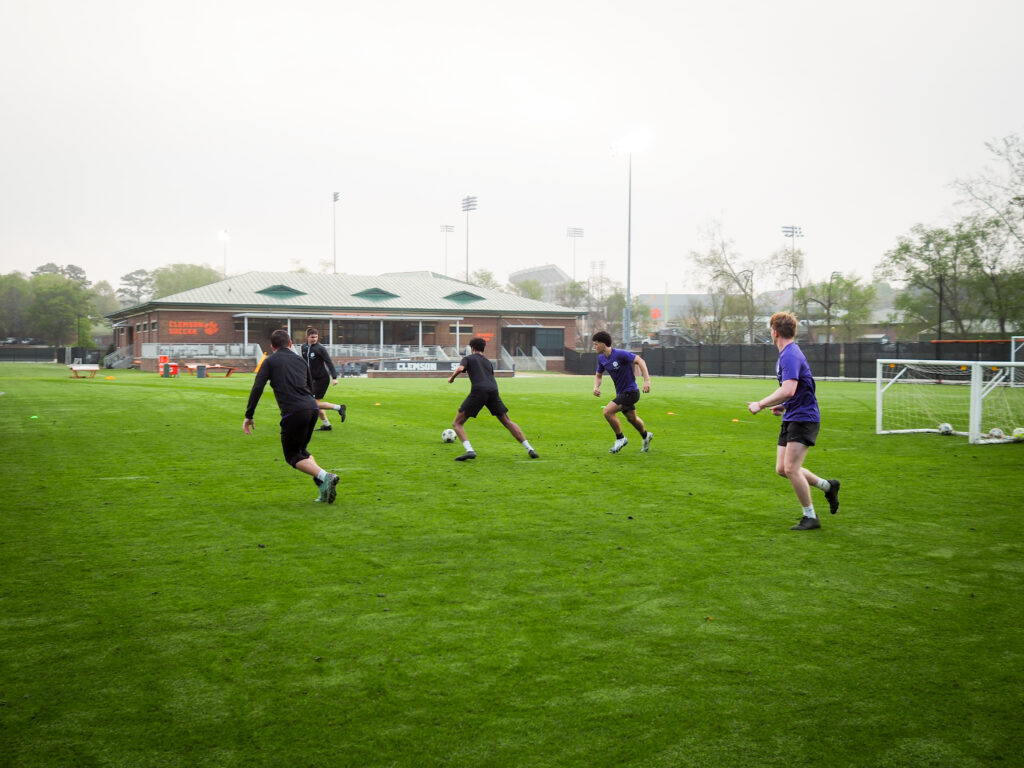
Tobar’s research initiative integrates virtual reality (VR) technology, electroencephalogram (EEG) monitoring, and artificial intelligence (AI) to understand the experiences of Olympic and Paralympic soccer athletes using VR simulators for training purposes. The long-term goals of this project are to develop more effective VR soccer training experiences that enable skill transfer to improve on-field player performance for competitive athletes, and develop more inclusive VR soccer experiences, both as training tools and for recreation, for persons with disabilities. Participants at RECESS will enter a simulation to experience real soccer gameplay by making quick decisions on the field and passing forward. Challenge yourself and enjoy a cutting-edge, sports-based VR technology that merges fun with athletic training.
Exoskeleton Demonstration: Jessica Avilés, Ph.D.
Exoskeletons are devices worn outside the body to assist with movement. They come in a wide variety for the upper and lower body, some powered by batteries and motors, some by hydraulics and some by springs. Avilés’ research aims to help people with spinal cord injuries find the best exoskeletons and training plans so they can participate in sports. Her goal is to turn exoskeleton racing into a Paralympic and collegiate adaptive sport.
Open Cap Makerless Motion Capture for Hamstrings: Reed Gurchiek, Ph.D.
Gurchiek’s makerless motion capture technology, Open Cap, measures an athlete’s hamstring pain. He has developed a wearable device that uses a passive elastic band to assist the hamstring muscles during running. This device is designed to rehabilitate hamstring strain injuries more effectively than is currently possible, addressing a growing and widespread problem as hamstring strains are currently the most prevalent time-loss injury in field-based sports. Currently being tested, the device should reduce hamstring muscle activity without altering running motion. Get familiar with this technology when you attend RECESS.
The Physics of Breakdancing: Amy Pope, Ph.D.
The conservation of angular momentum can be demonstrated using a rotating stool and weights. When a person sits on a frictionless rotating stool with arms extended while holding weights, they start spinning at a certain speed. As they pull the weights inward, their moment of inertia decreases and to conserve angular momentum, their rotational speed increases. This demonstrates how angular velocity adjusts to changes in the moment of inertia when no external torques act on the system, similar to how breakdancers, divers or skaters spin faster by pulling in their limbs. Give it a go at RECESS!
A Demonstration of Force Measurement using Force Plates and Accelerometer: Adam Schiferl, Clemson student
This demonstration presents an interactive approach to understanding introductory kinematics and mechanics by leveraging sports to make physics concepts more relatable. Participants will kick a soccer ball in a controlled way and get force readings. Analysis of this data will explain the force vs. time graph stage by stage illustrating how forces acting on an athlete vary during different phases of exercise.
“Tiger 24,” A Student-Designed Formula One Race Car: Clemson Formula SAE team
The Clemson University Formula SAE (CUFSAE) team is a student-run organization dedicated to designing, manufacturing and competing with a formula-style race car. They aim to provide students with the tools to learn relevant skills while exploring the possibilities of employment in the automotive industry. This year’s student-designed Formula One race car, the Tiger 24, which has been competing in student competitions across the nation, will be on display and the team will be available to answer questions.
To view all these amazing live demonstrations at RECESS, RSVP here.
Paul Buyer, professor of music and director of percussion at Clemson University, has always been influenced by sports and books on leadership, culture, excellence, teamwork, success and program building.
Paul Buyer, music professor and director of percussion at Clemson University
In 2012, his book Working Toward Excellence was published. The book identifies eight values for achieving excellence to assist others. Following the success of his first publication, Buyer is working on a second edition set to be published in 2025.
Buyer’s initial inspiration for his book started after a ‘pretty good but not excellent’ percussion ensemble performance. Leading up to the concert, students were described as apathetic. They were arriving late and not making progress. Afterward, one student confessed his lack of confidence and preparation to Buyer, who then went home and reflected on how this happened.
“It was an uneasy feeling that still sits with me today,” Buyer said. “But it also inspired me to think bigger, creatively, and turn things around. While I couldn’t control what already happened, I could control my response. Working Toward Excellence was that response to what was missing in our culture, actions, and performance.”
Following the initial publication, Working Toward Excellence was gifted to Clemson transfer students and students on academic probation. Buyer was invited to speak at Transfer Orientation, Success Matters Workshops, Bridge Convocations and the Clemson Coaches Council.
Buyer’s first edition of Working Toward Excellence
“My first invitation to speak was for the Clemson University Coaches Council, a meeting with all the coaches from every sport to share ideas on leadership, culture, and success. Clemson’s athletic director at the time, Terry Don Phillips, had a daughter in the Clemson marching band and was a friend and supporter of the band program. When Dr. Phillips asked me to speak to the Coaches Council about my book, I eagerly accepted! I knew being on stage in front of all the coaches would be like entering the lion’s den. What could I, a music professor, possibly have to say about excellence that the coaches didn’t already know? Would I be able to connect with them? Would I be able to hold my own? Although I was experiencing imposter syndrome, there was a reason I was invited to speak. Not only had Dr. Phillips read my book, but he also wrote a testimonial for the back cover and believed his coaches would benefit from what I had to say. He believed in the book, and he believed in me. I wanted to prove him right and did everything in my power to prepare and add value to his coaches.”
-Paul Buyer, an excerpt from the second edition of Working Toward Excellence
Buyer’s work with Ball State University, University of Arizona and Clemson University marching bands over the last 30 years has also allowed him to travel to National Championship games, the College Football Playoffs and multiple bowl games around the country.
The new second edition will feature the latest research, fresh stories, and two new ‘non-negotiables’ for achieving uncommon success: simplicity and sacrifice, according to Buyer.
Buyer and Clemson Percussion ensemble
“I would say I am most looking forward to the second edition reaching a new audience, as well as those loyal readers who read the first edition and are excited about the new book,” said Buyer.
Working Toward Excellence will be on display at RECESS, the Institute’s inaugural sports science research symposium. The event will take place on Thursday, Oct. 24 from 5-8 p.m. in the Madren Center’s Grand Ballroom. To RSVP to this event, click here.
This summer, one of the Robert H. Brooks Sports Science Institute’s newest faculty fellows, Felipe Tobar, Ph.D., traveled Europe to continue his long-term project of studying the transmission or suppression of difficult heritage in European soccer grounds. His findings at Real Madrid (Spain) and FC St. Pauli (Germany) will be included in an upcoming research documentary, “The Match That Not Every Club Wants to Play.” He also traveled to his home country, Brazil, to engage in other sport-related tourism and heritage activities.
Spain
To kick off his European research tour, Tobar traveled with the Clemson Women’s Soccer team to Spain for their study abroad trip. As part of their Parks, Recreation, and Tourism Management (PRTM) 3500 Global Challenges course about soccer, climate change and sustainability, the team visited four stadiums and three training centers for professional Spanish clubs, including Real Madrid, FC Barcelona, Valencia and Atletico Madrid. Tobar and the team watched official matches, toured backstage and even played official friendly matches with the clubs’ first and second teams. At each site, they analyzed and compared how the Spanish soccer clubs were engaged in the ‘green revolution.’
“The cultural and sporting experiences added to the opportunity to meet new people, including staff, students and the organizers. This is something that I will carry forward and soon share in my classroom with new students.”
Felipe Tobar, Ph.D. on his study abroad experience with the Clemson Women’s Soccer team
Germany
After leaving Spain, Tobar traveled to Germany and visited the cities of Frankfurt, Bremen and Hamburg. While there, Tobar engaged in activities related to his upcoming research documentary and a 2025 German study abroad program on football, culture of remembrance, and politics. Some of the incredible experiences Tobar had in Germany included touring Frankfurt and visiting Holocaust memorials and sites related to national socialism, touring the Weser Stadion using Google AI Translator, and checking the new museum exhibition of FC St Pauli on the discovery of a former Jewish player persecuted by the Nazi regime.
“The importance of coming back to Germany after three years since my dissertation data collection to record new footage for my documentary was essential. I confirmed my previous observations and reinforced networking links to bring undergraduate students to Germany next year on a study abroad program. The students will understand better how German society and its soccer clubs have been dealing with the Nazi past.”
Felipe Tobar, Ph.D. on his visit to Germany the summer of 2024
Turkey
The next stop on Tobar’s European excursion was Istanbul, Turkey for a few stadium tours and museum visits.
“Strolling through Istanbul streets and public buildings like the Grand Bazar, you can see a tradition that is part of the city’s cultural and sport heritage after every national championship.”
Felipe Tobar, Ph.D. on his experience in Istanbul, Turkey
He noticed that everywhere he looked, locals were displaying the flag of Galatasaray, the most successful Turkish club in European competitions and the current national champions. Tobar was able to speak with locals to better understand the reasons and history of such a tradition. He also had the opportunity to visit Galatasaray’s home and the clubs that wanted to dismantle Galatasaray’s hegemony.
Tobar’s research agenda on Istanbul’s main soccer clubs started at Fenerbahçe Stadium, where he toured the club museum and researched local fans’ memories linked to former club captain Alex de Souza, who is the only living individual to have a statue in front of the stadium funded and erected entirely by fans.
Tobar later visited Besiktas stadium and its museum observing how this club, alongside the other capital clubs, paid fervent homage to Mustafa Kemal Atatürk, founding father of the Republic of Turkey. Tobar plans to author another paper seeking to understand the approaches each of these clubs employ when linking their images with what is still considered the most important personality in the history of modern Turkey.
The statue of former captain and club legend, Alex de Souza, in front of Fenerbahçe Stadium in Istanbul, Turkey.
In the façades of Besiktas stadium, the club features its Eagle mascot and a tribute to the 100 years of Turkey’s liberation from British control through images and phrases to honor Mustafa Kemal Atatürk.
UEFA EURO 2024
After Istanbul, Tobar traveled back to Germany for UEFA EURO 2024. Throughout the tournament, he traveled to several host cities to engage in two main lines of research: the ‘German Football Culture of Remembrance’, and how the UEFA (Union of European Football Associations) and its partners communicate sustainability efforts to football tourists and locals. Alongside his first line of research, the DFB Cultural Foundation (German Football Federation), in collaboration with the World Jewish Congress and What Matters, introduced the “Football and Remembrance” program aimed at addressing the history of national socialism. Various memorials, places of remembrance and museums across the nation, particularly near the ten host cities, participated in several special events.
Tobar was able to visit the following sites and talk to various experts:
Munich – Dachau Concentration Camp Memorial Site – Football in the Dachau concentration camp | Tour
Cologne – NS-Documentation Centre of the City of Cologne
Hamburg – Foundation of Hamburg Memorials and Learning Centres Commemorating the Victims of Nazi Crimes – Stories of Persecution during National Socialism and the HSV | Tour
Foundation of Hamburg Memorials and Learning Centres Commemorating the Victims of Nazi Crimes – Football in concentration camps | Tour
Bergen-Belsen Memorial – Who against whom? Football under National Socialism | Workshop
Büren-Wewelsburg – Memorial Museum Wewelsburg – More than just a game – football under National Socialism | Exhibition
Football Under the Nazis’ “Sports. Crowds. Power.” | Exhibition
In addition to visiting these sites, Tobar also had the
opportunity to visit the museums and representatives of Borussia Dortmund,
Bayer Leverkusen, and Bayern Munich, as well as the German Football Museum and
the German Olympic Museum. To learn more about his time in Dortmund, click here.
Tobar was also invited by the Red Against Racism initiative from Bayern Munich to visit the club’s headquarters and learn more about their project to tackle antisemitism and other discriminatory practices within German football stadiums and society. Still in Munich, Tobar visited a representative from the Kurt Landauer Foundation named after the former Jewish president, Bayern Munich, persecuted by the Nazis.
“Out of Germany, I intend to share these clubs’ experiences and ways of revisiting (or not) the past with different audiences and societies that often struggle to face their respective histories. Apart from making these stories more accessible as they will be written in English, the book can serve as a meaningful and powerful vehicle of reflection to other traumatic societies on how to come to terms with difficult pasts and potentially promote collective healing”.
Felipe Tobar, Ph.D., on the focus of his research in Germany
Strong messages were featured at Football Under the Nazis’ “Sports. Crowds. Power.” exhibition near Olympiastadion in Berlin reminding that ‘football is never neutral’ and that ‘people choose their actions’ during the Nazi regime.
Tour guides from Hamburg, Germany’s HSV Fan Projekt sharing the stories of persecution during national socialism.
UEFA EURO 2024’s sponsor, Chinese BYD’s electrical manufacturing company, stands at the UEFA EURO FAN FEST in Cologne.
Scotland
Tobar takes a picture of the plaque commemorating the home of Scottish (and, arguably, world) football. Credit: Glasgow Football Tour.
After Germany, Tobar traveled to Scotland for the Leisure Sciences Association Congress hosted by the University of West Scotland. At the conference, Tobar toured the Scottish National Football Museum and the national stadium, Hampden Park. He investigated the tour’s narrative and organization for future studies, and focused on understanding and cataloging how women’s football was depicted in the museum exhibitions. On the last day of his academic trip to Scotland, Tobar experienced the ‘Glasgow Football Tour’ which challenges the authorized heritage discourse from FIFA on who and when association football was invented, and who created the ‘passing game’ known today as ‘tik-taka,’ among other historical anecdotes.
Brazil
Before returning to Clemson, Tobar stopped in Brazil, his home country. Apart from following Grêmio Football Porto-Alegrense in two matches of the Brazilian Cup, in different cities and stadiums, as a sport tourist (just as he teaches in his ‘Sport Tourism and Events’ course in Clemson’s PRTM Department), Tobar visited the Brazilian National Football Museum located at the Pacaembu Stadium. This was once considered a historical landmark in the city of Sao Paulo. There, Tobar analyzed how the museum now remembers the image of the best soccer player of all time, Pelé, who was also responsible for popularizing the sport in the U.S. in the late 1970s. Tobar also dedicated special attention to the promotion and interpretation of women’s football within the museum displays, which will be incorporated in a future publication comparing how the three national football museums he visited during the summer – German, Scottish and Brazilian – promote women’s football.
Marta, the world’s most acclaimed women’s football player, is highly revered across the museum displays.
A match between Grêmio and Corinthians, Copa do Brasil, Aug. 7, 2024.
“Having the opportunity to spend a few weeks in Brazil and engage in sport-related tourism and heritage research activities at such a relevant museum has been extremely rewarding. Also, participating in football matches and living fans’ passion for the number one sport in the country was a much-needed nostalgic experience.”
Felipe Tobar, Ph.D., on his experiences in Brazil
Up Next
Tobar was recently awarded a seed grant by RHBSSI to study more effective and inclusive VR soccer experiences. His research is kicking off this fall semester and he is currently recruiting Clemson students to join a Creative Inquiry course. Students will develop real-world skills relevant to their major, likely from PRTM, Bioengineering, Math or Computer Science. Furthermore, they will be active in helping create the experimental protocols and survey tools, collecting data during research sessions and analyzing results for the project.
To enroll, select one of the following course options in iROAR:
PRTM 3980, 002 (CRN 92089),
PRTM 3981, 002 (CRN 92090)
BIOE 4510 (Sec 051): CI-Sports Science EEG & VR
To learn more about Felipe Tobar’s research and European adventures, follow him on LinkedIn or contact him at ftobar@clemson.edu.
The Robert H. Brooks Sports Science Institute is excited to welcome three new Clemson faculty members to the Institute’s fellows program this fall. Their backgrounds in various areas of the sports sciences are why they have been nominated and chosen to join this cohort of experts and we are excited to have them on the team.
College of Behavioral, Social, and Health Sciences
Felipe Tobar, Ph.D.
Felipe Tobar, Ph.D., is an assistant professor in the Department of Parks, Recreation, and Tourism Management at Clemson University. An international scholar, he first earned his Bachelor of Law and Social Science and a Master’s in Cultural Heritage and Society from Univille University in Brazil. He later obtained a Ph.D. in Parks, Recreation, and Tourism Management from Clemson University.
Tobar’s research interests are centered around sport, tourism, heritage, events and politics. His early academic work has been featured in several international journals including the International Journal of Sport Policy and Politics, Soccer and Society, Journal of Sport and Tourism, and the International Journal of Sport and Society. He also founded the @FootballStudies YouTube channel where academics, professionals, and industry experts debate various aspects of the world of football.
Some of the courses that Tobar has taught at Clemson include:
Profession and Practice in PRTM
Sport Tourism
Heritage Tourism
Recreation Policymaking
Program and Event Planning in Parks, Recreation, and Tourism
College of Engineering, Computing, and Applied Sciences
Julian Brinkley, Ph.D.
Julian Brinkley, Ph.D., is an assistant professor in the School of Computing at Clemson University as well as the director of Design and Research of In-Vehicle Experiences Lab (DRIVE Lab). Brinkley earned his B.A. at the University of North Carolina – Greensboro and his M.Sc. from East Carolina University in Software Engineering. He then went on to earn his Ph.D. from the University of Florida in Human-Centered Computing.
Brinkley’s research focuses on the intersection of user experience, accessibility, and highly and fully automated vehicles. Several notable organizations have funded his research, including the National Science Foundation, the US Department of Transportation, and the National Highway Traffic Safety Administration. His work has made significant contributions in making autonomous vehicles more accessible, more specifically supported by the DRIVE Lab team’s selection as semifinalists in the DOT’s Inclusive Design Challenge.
Here are a few of the classes that Brinkley has taught at Clemson:
Chris Corr, PhD., will be joining the Athletic Leadership program at Clemson University as a Senior Lecturer starting in the fall of 2024. Corr earned his Bachelor’s in Telecommunications Management from the University of Florida followed by his Master’s in Sport Management also from the University of Florida. He then obtained his Ph.D. in Sport and Entertainment from the University of South Carolina. Before coming to Clemson, Corr spent three years as an assistant professor for the Sorrell College of Business at Troy University.
Corr currently studies intercollegiate athletics specializing in organizational development. He has authored or co-authored over 25 referred publications and has been published in some of the top journals in his field, including the Journal of Issues in Intercollegiate Athletics and Sport Sociology Journal. During his time at Troy, Corr received multiple teaching awards at both the program and university levels and also advised a successful NCAA graduate student grant.
While Corr is new to Clemson, some of the classes he has taught at other schools include Governance & Policy in Sport, Sport Finance, The Student Athlete Experience and more.
As the Summer Olympics grow closer, organizers are putting a focus on mental health and adding new accommodations for athletes to rest more than just their bodies. Skye Arthur-Banning, Ph.D., professor of Parks, Recreation, and Tourism Management at Clemson, RHBSSI faculty fellow and co-founder of the U.S. Center for Mental Health & Sport, advocates for athletes’ mental well-being and emphasizes that it needs to become a higher priority while they are still competing in the Olympic games.
“We have seen athletes, either upon retirement or after the event, coming out and talking about their challenges,” offered Arthur-Banning when talking about how the end of the games is often the toughest on the athletes’ mental health. “We do have a lot of research that supports the post-Olympic blues, or post-Olympic depression, and for many athletes it is retirement.”
At the Paris Olympic Games starting July 26, there will be several mental health resources for the athletes, including access to quiet spaces next to workout areas where they can decompress. They will also have full-time mental health staff and a 24/7 help line available. In addition, Arthur-Banning recommends athletes improve their mental health by building a community of support with family members and teammates.
More About Skye Arthur-Banning, Ph.D.
In addition to being co-founder of the U.S. Center for Mental Health & Sport, Arthur-Banning is also the Director of Research and Development for the organization. The center is focused on making sport environments a place where all involved can experience support for their mental health. They provide resources, training and support to help make the sport environment one that is inclusive and provides a positive experience. Arthur-Banning has co-authored or edited five books, published 50+ peer-reviewed manuscripts, delivered 200+ international, national and state-level presentations, and has secured over $1.8 million in research dollars as a principal investigator.
This fall, the Robert H. Brooks Sports Science Institute (RHBSSI) will host Clemson University’s first Sports Science Research & Creative Endeavors Symposium (RECESS). Faculty, staff, students and other Clemson stakeholders interested in the sports sciences are welcome at the event. Attendees will have the opportunity to network, peruse posters, enjoy refreshments and more.
“We are thrilled to welcome you to our inaugural Research & Creative Endeavors Symposium, and hope that all that are engaged in the Sports Sciences, whether that be in Business, Athletics or Engineering can come, share and enjoy,” offered John DesJardins, interim director of RHBSSI. “As the acronym RECESS suggests, we hope to make it fun and engaging.”
The sports science symposium will take place at the Madren Center, Ballroom B on October 24 from 5-8 p.m. EST. Stay tuned for a full agenda of the event.
If you are interested in attending, you can RSVP here. If you are interested in presenting your work at RECESS, email John DesJardins at jdesjar@clemson.edu or fill out the participation form here.
The Robert H. Brooks Sports Science Institute is proud to have as part of its cohort of faculty members one College of Agriculture, Forestry, and Life Sciences representative from the Department of Food, Nutrition, and Packaging Sciences.
Greg Batt, Ph.D.
Having earned his master’s degree and Ph.D. from Clemson University, Batt is an associate professor in the Department of Food, Nutrition and Packaging Sciences.
Greg Batt has been at Clemson University for 23 years and has been a valued RHBSSI Faculty Fellow.
Batt began his work at Clemson in 2001 and has since been the Director of the Sonoco Package Testing Laboratory and Co-Director of the Clemson Headgear Impact Performance (CHIP) Lab at Clemson. Batt’s primary research interests are in the areas of experimental test development and dynamic modeling.
Batt and RHBSSI Interim Director, John DesJardins, recently won a patent at the Clemson University Research Foundation’s (CURF’s) Innovation Awards ceremony on April 17 for their mask/face shield work that is sponsored by RHBSSI. In 2023, the pair conducted a study comparing the head impact mechanics between cadaveric specimens and a synthetic hybrid III model.
Batt has been an engaged fellow for many years and is the co-director of the Clemson Headgear Impact Performance (CHIP) Lab with DesJardins. In the 2021-22 academic year, Batt received funding from RHBSSI for his work with the efficacy of bull-riders’ helmets to prevent face trauma. Preceding that, Batt received funding from RHBSSI for quantifying the impact performance of football helmet facemasks in the 2017-18 academic year.
His CHIP Lab student, Bianca Henline, was featured in RHBSSI’s 2023 Annual Report.