Sports Insight

Meet Jason Avedesian: Director of Sports Science for Clemson Olympic Sports

Jason Avedesian, Ph.D., joined Clemson Athletics in November 2021 as the Director of Sports Science for Olympic Sports. He is a Doctor of Philosophy in Interdisciplinary Health Sciences, Biomechanics (University of Nevada Las Vegas, 2021) with an M.S. in Biomechanics (Ball State University, 2018) and B.S. in Mechanical Engineering and Kinesiology (Michigan State University, 2016).
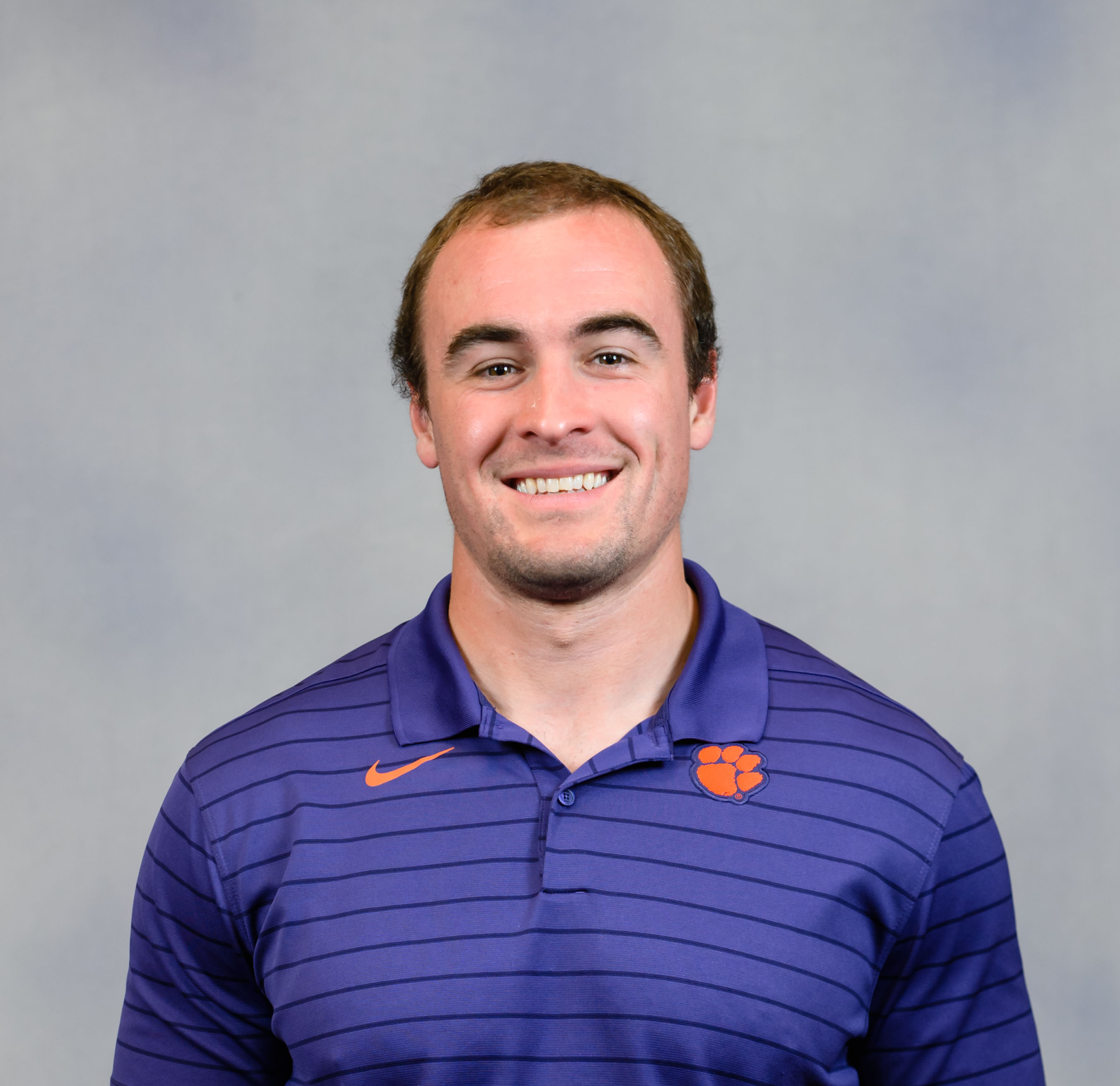
Jason Avedesian, Director of Sports Science for Olympic Sports at Clemson University

Within this role, Avedesian oversees all sports science initiatives across Clemson Olympic Sports, including research and design, athlete monitoring, data analytics, and technology implementation. He also oversees the Clemson Olympic sports science internship program, consisting of a semester-long sports science curriculum. Avedesian has worked to bridge across the university to multiple academic departments through guest lectures, technology demonstrations, and open house events.

We spoke to Jason about his role on campus and the importance of olympic sports at Clemson University. 

Give us an overview of your background and how it has led you to this point.

As an athlete growing up, I idolized my favorite professional athletes and was amazed by how effortlessly they performed their sport. It led me to curiosities related to the “why” behind human movement and performance. To help answers these questions, I obtained undergraduate degrees in Mechanical Engineering and Kinesiology from Michigan State University, followed by a Master’s in Biomechanics from Ball State University and PhD in Interdisciplinary Health Sciences from University of Nevada, Las Vegas. My primary research to date has focused on sports-related concussion and ACL injury mechanisms and risk mitigation strategies in adolescent and collegiate athletes. While I enjoyed my graduate studies and research, I aspired to be an applied sports scientist within the university setting. I believed my research and scientific skills translated to helping student-athletes improve performance and mitigate injury risk. I was fortunate to be selected as the first Director of Sports Science (Olympic sports) at Clemson University and have served in this role since November 2021.

What are your responsibilities at Clemson?

As the Director of Sports Science for Olympic sports, I oversee our sports science initiatives across our Olympic sports. This includes research and development, data analytics, performance science, and technology implementation. My goal is to provide the best knowledge and data to our various high performance groups (sport coaches, performance coaches, sports medicine, nutrition) to better inform the decision-making process.

Additionally, I oversee the Olympic sports science internship program, consisting of a semester-long sports science curriculum. The sports science internship is composed of Clemson undergraduate and graduate students across various fields of study (engineering, mathematics, data science, physics, and computer science). Students are assigned specific teams each semester, completing various projects that are created by our high-performance groups.

What current projects are you working on?

While there are many projects at various stages of completion, a few of our bigger initiatives are listed below.
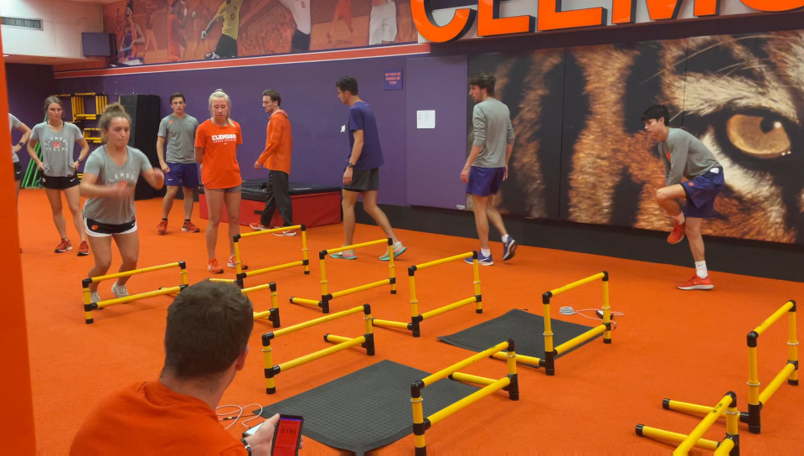
Jason utilizes Ploymats to measure athletes’ ground contact time and flight time during various jump/hop assessments

1) The sports science and sports medicine teams are working on systematically designing return-to-competition protocols for all major injury types. While each sport presents unique injury risk, we are striving to leverage our technology and data to provide more objective measures of a student-athlete’s progress during injury rehabilitation.

2) As sprinting performance is an important key performance indicator across a variety of our Olympic sports, we develop individualized force-velocity and load-velocity profiles for our athletes to develop specific sprint training programs.

Blast motion uses inertial measurement units (IMUs) placed on the knob of the bat to measure speed, power, and rotational characteristics of a batter’s swing

3) Leveraging our database of more than two million NCAA baseball pitches, we are developing predictive models to better understand which pitch characteristics lead to pitcher and hitter success.

Why are these initiatives important at Clemson?

With the increased use of technology and data within collegiate sports, there is a great need for dedicated personnel to leverage these resources for improving student-athlete health, well-being, and performance. Our sports science initiatives help us better understand how a student-athlete is developing during collegiate career, as well as identify any key performance indicators that may require targeted interventions from one or multiple of our high-performance groups. Additionally, these initiatives help us quantify historic performances at the individual and team-level that are useful for determining future indicators of student-athlete and team success relative to the ACC conference and NCAA.

Are there any novel technologies being utilized?

While the technology we utilize is relatively commonplace in professional sports, as well as gaining popularity within the university setting, the novelty is how we integrate our technology across our Olympic sports.

We are fortunate to have an array of technology to quantify various aspects of performance and injury risk. Our team of performance professionals (S&C and sports science) collaborate to interpret the data from this technology to better individualize training and monitor progress. We deem this process our “sports science feedback loop”, consisting of the following components:

1.) Data collection of objective, subjective, and practitioner-informed measures

2.) Data analysis and interpretation to determine normative values, thresholds, trends, and outlier performance

3.) Adjustment of training based upon the presented data relative to the individual athlete, historic information, and time of season

4.) Implement adjustments during training, competition, and recovery
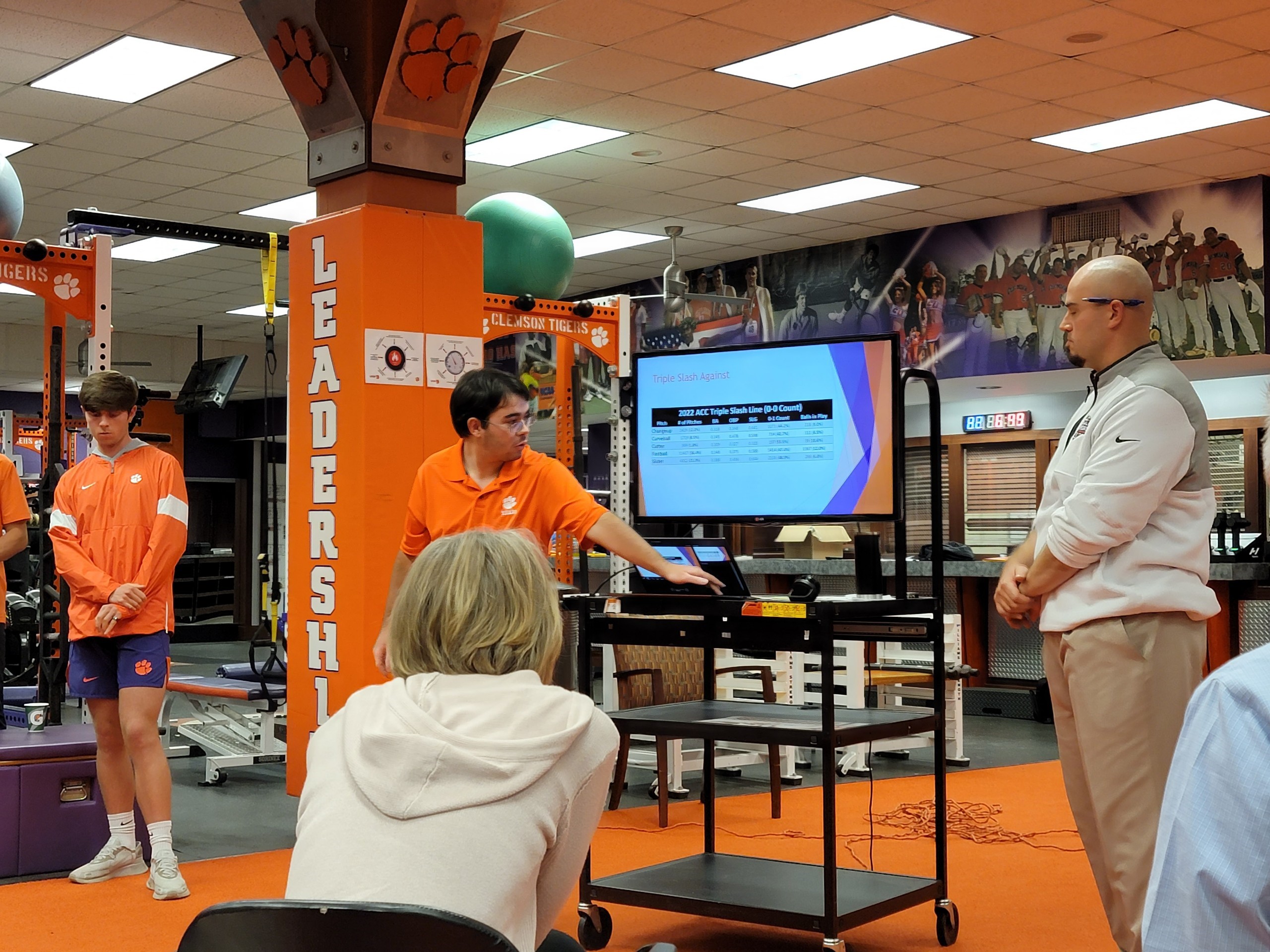
The Olympic Sports Science Program hosts an open house, Fall 2022

How are you bridging the gap between athletics and academics?

The relationship between athletics and academics is paramount for a successful sports science program at the university level. One of my first priorities at Clemson was developing strong relationships with our academic partners. Meeting various faculty members and visiting facilities on campus gave me greater insight into how sports science could “bridge the gap” between athletics and academics. Of our accomplishments so far, I am most proud of our sports science internship program. Clemson undergraduate and graduate students from various departments gain real world sports science experience working with our technology and teams to help provide support across Olympic sports. Students are responsible for data collection, analysis, and knowledge dissemination. In less than a year since starting the program, Clemson Olympic sports science interns have secured positions within MLB and the NCAA. We hope to continue to build our internship program to provide Clemson students with the best opportunities to develop their sports science skillsets. One of my personal goals is for former Clemson sports science interns to occupy positions within every professional sports league.

How is the Robert H. Brooks Sports Science Institute partnering with you?

The Brooks Institute was instrumental in the creation of my position at Clemson. I am very thankful for the support of the Brooks Institute for allowing me the opportunity to fulfill a dream and provide a service to Clemson athletics and our student-athletes.

What do you see as the future of this athletic-academic partnership?

I see the partnership between the Brooks Institute and Clemson Olympic sports science continuing to grow and provide more opportunities for Clemson students to fulfill dedicated sports science roles within our program. I believe this continued partnership will ultimately allow us to provide the best experience to Clemson student-athletes.

To learn more: visit clemsontigers.com/olympic-sports-strength-conditioning
Clemson Paralympic Soccer signs recruits

By Kirsten Windbiel, a Master’s Student in Parks, Recreation and Tourism Management major

Clemson University Paralympic Soccer announces the signing of two additional Fall 2021 recruits, Kevin George McCandlish and Gavin Kohner, who will join Shea Hammond and Tim Huff with the Paralympic Soccer Residential Training Program (RTP). Clemson’s RTP is a unique opportunity for athletes with disabilities and allows players to continue playing collegiate soccer while earning their college degree. Players earn in-state tuition wa iver in the form of an athletic scholarship and will train weekly with the team. Players will seek to excel on the field with team training, personal development training and strength and conditioning, as the program seeks to prepare players for the US Para National team. This distinctive program, the only one in the country, is paving the way for soccer players with disabilities in the United States.

Signing Athlete Bios:

Kevin George McCandlish

Kevin McCandlish signs his intent to join Clemson's Paralympic soccer residential training program.
Kevin McCandlish signs his intent to join Clemson’s Paralympic soccer residential training program.

Kevin comes to Clemson from Virginia and plans to pursue his degree in the Sports Management program. He started playing soccer when he was around 3 years old. In his early years, McCandlish simply enjoyed the sport for fun. He couldn’t imagine where it has led him today. By 9, McCandlish started to take soccer more seriously and joined his first travel team. In 2017, he got the chance to start playing for the U.S. Paralympic National Team (USPNT). Ever since 2017, McCandlish’s view of soccer and life dreams changed drastically. Kevin has Spastic Cerebral Palsy (CP), which affects the right side of his body. The CP affects his speed and ability to use both feet – obstacles McClandlish has overcome in his journey.

He is excited to play for Clemson with players who are similar to him.

“It’s nice to finally be able to train with them every day instead of only being able to for a week every now and then with the national team.,” McClandlish said. “This is going to help us build better chemistry on and off the field.”

Welcome to Clemson University, Kevin!

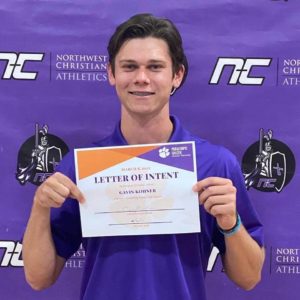
Gavin Kohner

Gavin Kohner is one of two players to recently sign a letter of intent to join Clemson's Paralympic soccer team.
Gavin Kohner is one of two players to recently sign a letter of intent to join Clemson’s Paralympic soccer team.

Hailing from Phoenix, Arizona, Gavin Kohner plans to study Business Accounting at Clemson and later pursue law school. Joining Clemson is a childhood dream for Kohner.

“It has been my dream since 8th grade to attend Clemson and play soccer at the collegiate level through the parasoccer program,” Kohner said. “I am extremely grateful to receive the scholarship and have worked hard to get here. I am excited to join fellow teammates and get out on the field!”

Growing up, soccer was always something Kohner looked forward to playing at the end of the day. Soccer was great stress-relief for him. Kohner also has cerebral palsy, resulting in hemiparesis on his right side. One of the barriers Kohner has overcome — in both life and soccer — is increased injury and discomfort to his body compensating for his disability. As a result, he has dedicated more time and effort into stretching and taking care of his body. In addition, Kohner focuses on intentional training, recovery, and nutrition.

“My goals are to grow and excel both on and off the field and academically,” Kohner said. “One of my dreams is to join the USPNT as both a consistent and strong team player.”

Welcome to Clemson, Gavin!

For more information regarding the Clemson Paralympic Soccer Program, visit http://clemsonparalympicsoccer.org or follow the program on Instagram, Facebook, or Twitter @cuparasoccer for updates.


Participants’ Takes: Clemson Paralympic Soccer

By Marissa Kuula, a senior Parks, Recreation and Tourism Management major, focusing on Community Recreation, Sport and Camp Management

Clemson Paralympic Soccer is a program run through Clemson University to provide soccer programming for various populations with disabilities. Their programs seek to improve the quality of life through their Residential Training Program, VA Adaptive Soccer Camps, Tutor, Talk and Train Program, Additional Adaptive Sport Opportunities such as 5-a-side Blind Soccer, 7-a-side Para Soccer, and adaptive weight training sessions, and continuing research and education. One of the programs from which many of the others have grown from has been funded by the United States Department of Veteran Affairs the last 5 years and supports veterans with disabilities to experience adaptive Soccer.  In partnership with US Soccer, we are able to provide veteran participants with a US Soccer grassroots coaching certification, a mental health first aid certification and provide them with an overview of a number of the adaptive soccer programs growing around the country. We followed up with some of their past participants to see how this camp has impacted their life. 

Christian Gay: U.S. Army Veteran 

Residing in Colorado, Christian previously lived in Mississippi, Louisiana, Georgia, Texas, Kuwait, and Iraq over the course of his service in the Army National Guard. Crossing paths with US Men’s Paralympic Soccer team coach, Stuart Sharp, at the Eastern and Southern Regional TOPSoccer Conference, he was told about Clemson Paralympic Soccer’s veteran

s soccer camps. In regard to his participation in camp, Christian expressed that “I loved learning about new ways to coach players with special needs and being with other veterans.” When asked what he took away from the camp experience, Christian stated, “there is always a way for everyone to be able to play and love soccer.” This sentiment was taken beyond camp. Christian then went on to coach in

Christian Gay
Christian Gay

his community, utilizing a U.S. Soccer Coaching Certification that is provided at camp. One of his astonishing accomplishments has been the role of the TOP Soccer program for Desoto Soccer Association. TOPSoccer is a community-based training program for athletes with intellectual, emotional, and or physical disabilities. The program strives to provide soccer opportunities for players to develop at their own pace in a safe, fun, and supportive/inclusive environment. While working as VP of TOPSoccer in the Desoto Soccer Association, Christian loves working with the kids in the program, stating that “being with the kids was more rewarding than I could have ever imagined.”

Al Marconi: U.S. Naval Reserves Veteran 

Al Marconi
Al Marconi

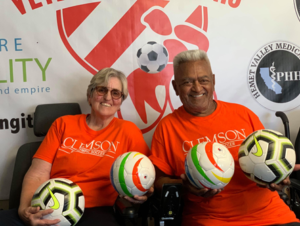
Currently living in California, Al served in the U.S. Naval Reserves for six years and the U.S. Army Reserves for fourteen years. Over the course of his service, he lived all over the continental United States, in multiple Mediterranean Sea ports, and in parts of the Caribbean. Hearing about the Clemson veteran soccer camp program from the physical therapist at his VA hospital, Al enjoyed the “thoroughness of the content taught at camp and the friendly and non-stressful demeanor of the instructors.”

In addition to lessons regarding adaptive soccer coaching, participants also go through Mental Health

First Aid training, which teaches them how to identify, understand, and respond to signs of mental illness and substance abuse disorders. From this training, Al expressed that he “learned to be attuned to the feelings and emotional mind sets of those around me”. Al is now a volunteer with the Recreation Department of the Jerry Pettis memorial VA Medical Center in Loma Linda, California and is a player and coach of an all-veteran Power Soccer team in Hemet, California. In regard to the position of volunteer with the VA Recreation department, AL assists the staff of Recreation Therapists in providing daily activities and community re-entry opportunities for the veterans in the convalescent, rehabilitation, dementia, and palliative care units of the VA hospital. When acting as a player and a coach for the Power Soccer team, Al assists the head coach by helping structure team practices, utilizing knowledge gained from Clemson veteran camp participation to aid in gameplay and practice direction.

Paige McCune: Recreational Therapist, The Center

Paige McCune works at an adaptive recreation facility in Tulsa, Oklahoma, and attended Clemson Paralympic Soccer’s 4th virtual camp in 2020. Clemson Paralympic Soccer VA camps not only cater to veterans, but allow other adaptive recreation professionals that work with veterans to attend. Paige attended one of the recent Zoom online camps hosted by the program and stated that she enjoyed “learning about different styles of adaptive soccer, meeting other professionals in the field, and how that despite being online, the camp was still hands on and active.” Following camp, Paige expressed interest in expanding her facility’s current offering of Power Soccer to include blind and CP soccer. When asked what future goals she had in regard to the program she works with, Paige stated that “In the future I foresee that I will still be the coach (of the power soccer program), will lead practices, and will develop programming accordingly. The program also has goals of reaching out to and connecting with a handful of soccer communities in the area.” A major takeaway from camp for Paige was that “it doesn’t matter where we start, but that we started. Soccer can be for all levels and ages.”

Clemson Paralympic Soccer is so grateful for all of the amazing participants that they get the honor to work with and serve. Whether at an in-person camp or virtual, the camps offer a number of great opportunities and interactive sessions that they hope participants will be able to utilize back in their communities, whether that’s coaching on a soccer team or being an advocate for disability soccer. Clemson Paralympic Soccer will continue to host virtual camps for veterans and professionals through the Spring of 2021, and hope to be back out on the field shortly after!

……

For more information regarding the Clemson Paralympic Soccer Program and VA Adaptive Soccer Camps, visit http://clemsonparalympicsoccer.org or follow the program on Instagram, Facebook, or Twitter @cuparasoccer for updates.

These Athletes #CanPlay: Paralympic Soccer Joined Forces for World CP Day

By: Makenzie Camlin

This is it, your time to shine. You have never touched a soccer ball before but here you are staring at it head on hoping that your dribbling, shooting, and juggling are up to par with those right beside you on Zoom joining from all around the world. Then, you realize that being perfect does not matter at all. Not only are you in a free space where learning and growing is the most important thing, but those around you know exactly what you are going through. It does not matter whether you have never touched a soccer ball or if you have been playing since you were five. All that matters is that you are meeting new people, having a good time, and learning new skills.

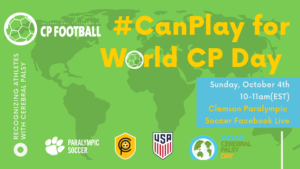
#CanPlay was the theme for this year’s World CP Day.

This is the exact situation that was created for participants on October 4, 2020 during the World CP Day celebration. Regardless of whether participants were lifelong soccer players or had never touched a soccer ball, the program and sport gave them a way to unite with those who have the same disability, cerebral palsy. For these athletes, soccer continuously serves as a way to connect with others in different ways than their CP. Ashley Hammond, co-founder of CP Soccer and commentator of the World CP Day program stated, “being ‘different’ is handled by all of us in different ways – sometimes we choose to be different, but when you are disabled, you don’t get to choose that. This can lead to a sense of helplessness and anger among other things. Doing ‘normal’ things like other kids do is crucial to bridge that gap between doing and can’t or won’t.”

This year, over 75 countries were involved with this worldwide celebration held to recognize and encourage the 17 million people living with cerebral palsy.

With the goal of giving these athletes access to this wonderful sport, Clemson University Paralympic Soccer, directed by Skye Arthur-Banning, a RHBSSI Faculty Fellow, partnered with the International Federation of CP Football (IFCPF), U.S. Soccer, and CP Soccer to host a World CP Day event for athletes with Cerebral Palsy (CP) from different countries. This national celebration began in 2012 and has continued to grow in its efforts to bring awareness to and celebrate those living with CP. This year, over 75 countries were involved with this worldwide celebration held to recognize and encourage the 17 million people living with cerebral palsy.

Athletes practiced dribbling, juggling and shooting.

Clemson University Paralympic Soccer and partners not only brought more awareness to CP through the event, but to adaptive soccer. The event included many guest speakers, an international training session, and a time to come together with athletes with CP to prove they #CanPlay. There were over 200 participants from six different continents on the Zoom feed that followed along and over 7,000 hits on Facebook Live. To market the celebration, each organization that partnered together used their social media platforms to advertise the event internationally to worldwide CP soccer connections with the goal of unifying soccer players from around the world living with CP.

This event included competitions among the athletes that were skill based such as dribbling, shooting, juggling and passing. To make it more exciting, featured coaches from all over the world were on the feed watching participants complete these skills, and they chose players at every level to receive recognition. In addition to the physical training, participants received encouragement through interviews conducted with special guests who also have cerebral palsy. Some featured guests included: Bonner Paddock, Abbey Curran, Shea Hammond, Bryan Kilpatrick Elliot and Tommy Chasanoff. “Our guest speakers added a very special and inspirational element. The speakers were phenomenal an were able to support the athletes by giving them life advice and sharing part of their stories of growing up with CP,” said Kirsten Windbiel, a graduate student with Clemson Paralympic Soccer.

Bonner Paddock was one of the keynote speakers, in which he encouraged the participants to, “love yourself exactly as you are. You’re perfect and you’re beautiful.” Abbey Curran was another guest speaker, who shared her experience in becoming the first contestant with a disability to win a major beauty pageant. After earning the title of Miss Iowa, she went on to compete in Miss USA and later on to write, “The Courage to Compete: Living with Cerebral Palsy and Following My Dreams.”

With the COVID-19 pandemic, many would think that this would stop the annual celebration, but Cerebral Palsy cannot stop these athletes, and neither can COVID-19. The online format of the program presented some challenges, such as the many different time zones and languages, as 31 different countries were represented. However, even with these obstacles, the online format allowed the program to continue. While this year’s participation was much higher than expected, Ashley Hammond says that the goal for next year is to have 50 countries represented. In his words, “Think big!”