SunWoo Park, Clemson Ph.D. candidate, presents her research on the college football sport experience at a CSRI poster session
Clemson University’s Robert H. Brooks Sports Science Institute (RHBSSI) recently showcased at the College Sport Research Institute’s (CSRI) annual conference on college sport held March 19-21 in Columbia, South Carolina.
CSRI’s mission is to encourage and support interdisciplinary and inter-university college sport research, serve as the research consortium for college sport researchers from across the United States, and disseminate college sport research results to academics, college practitioners, and the general public.
As a premiere sponsor of the event, RHBSSI contributed to the success of the conference and engaged in meaningful discussions with scholars, practitioners and industry leaders studying college sport. Several RHBSSI faculty fellows and Clemson students attended, gaining valuable insights and sharing their cutting-edge research and innovation in sport. This gathering highlighted the Institute’s commitment to advancing research, education and collaboration on issues in intercollegiate athletics.
Clemson expertise on college sport
Faculty and Ph.D. students from the following Clemson departments attended the conference on behalf of RHBSSI and presented their research on college sport.
Chris Corr, Clemson University / Robert Hoffman, The Pennsylvania State University Abington / Richard M. Southall, University of South Carolina / Christopher Atwater, Troy University
Sarah Stokowski, Clemson University / Alex E. Chisholm, Clemson University / Andrew Rudd, Franklin Pierce University / Michael Godfrey, Clemson University
“‘Thank you to the Institute for supporting me to attend CSRI,” said Sarah Stokowski, associate professor of athletic leadership in the Clemson University Department of Education and Organizational Leadership Development. “I had the best time! It was also nice to see so many of my Clemson colleagues in attendance.”
Sponsorship impact
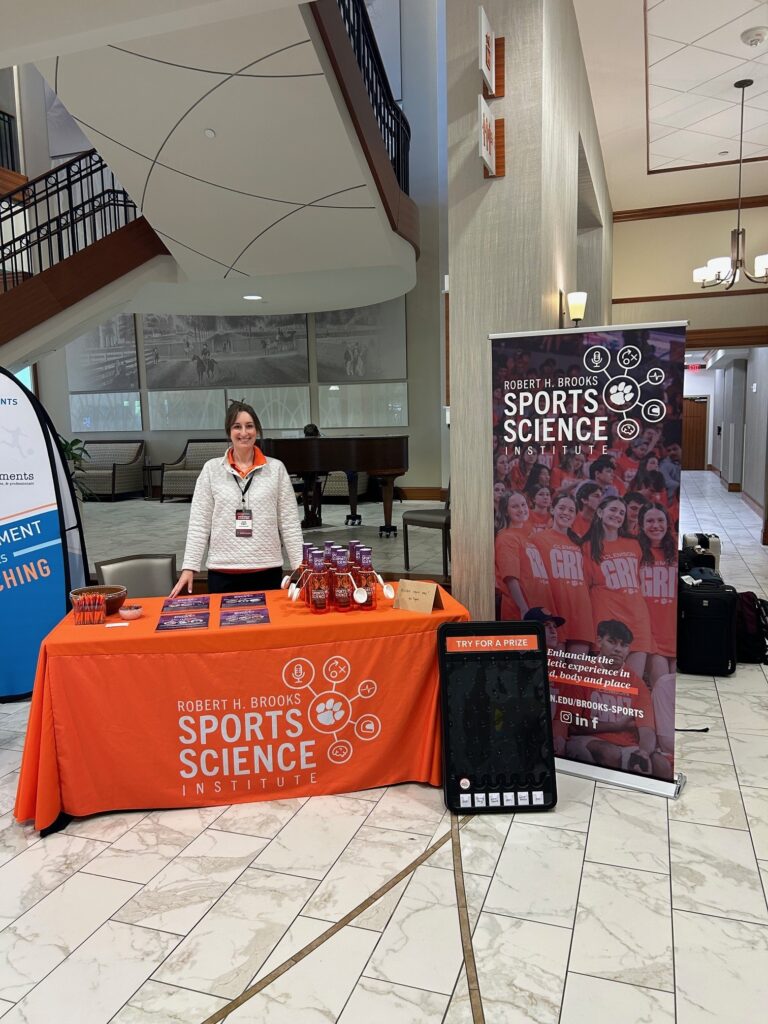
RHBSSI Assistant Director, Kayla Rogers, at the sponsorship table
“The CSRI conference provided an engaging venue to meet experts from across the country leading the academic study of college sport,” said John DesJardins, interim director of RHBSSI. “Our faculty fellows from Clemson’s College of Education have a rich history of attending, presenting at, and leading the conference, and we were honored to be involved this year and support several faculty and students to attend and present.”
RHBSSI set up a table at the event, providing an established space to meet attendees and talk about potential cross-over.
“Partnering with CSRI was the perfect opportunity to support Clemson faculty in the field and facilitate more cross-collaboration – between our faculty and those at other universities studying intercollegiate athletics,” said Kayla Rogers, assistant director of RHBSSI.
“Brooks helped make the conference be the best that it could be and I’m beyond appreciative and grateful,” said Chris Corr, executive director of CSRI and senior lecturer at Clemson University.
A photo from clemsonfae.com featuring a former student-designed car
As the spring semester continues to pick up, so do the actions of the students of Clemson Formula SAE (CUFSAE), who are preparing for important events in April and May.
CUFSAE is a student race team that focuses on design, fabrication and competition of an open-wheeled, formula style race car. The team competes in the Society of Automotive Engineers student design competition.
In addition to the formulation of a race car, students have to work in all other facets of the racing business, including team management, public relations and sponsor procurement. The Robert H. Brooks Sports Science Institute is proud to sponsor CUFSAE for another year.
For Clemson’s team, their sights are on the Michigan FSAE Competition in May for the planning and the creation of the racecar, called Tiger 25, where they will race at the Michigan International Speedway.
Student members of CUFSAE can join five different divisions: aerodynamics, business, chassis, electrical, powertrain and suspension.
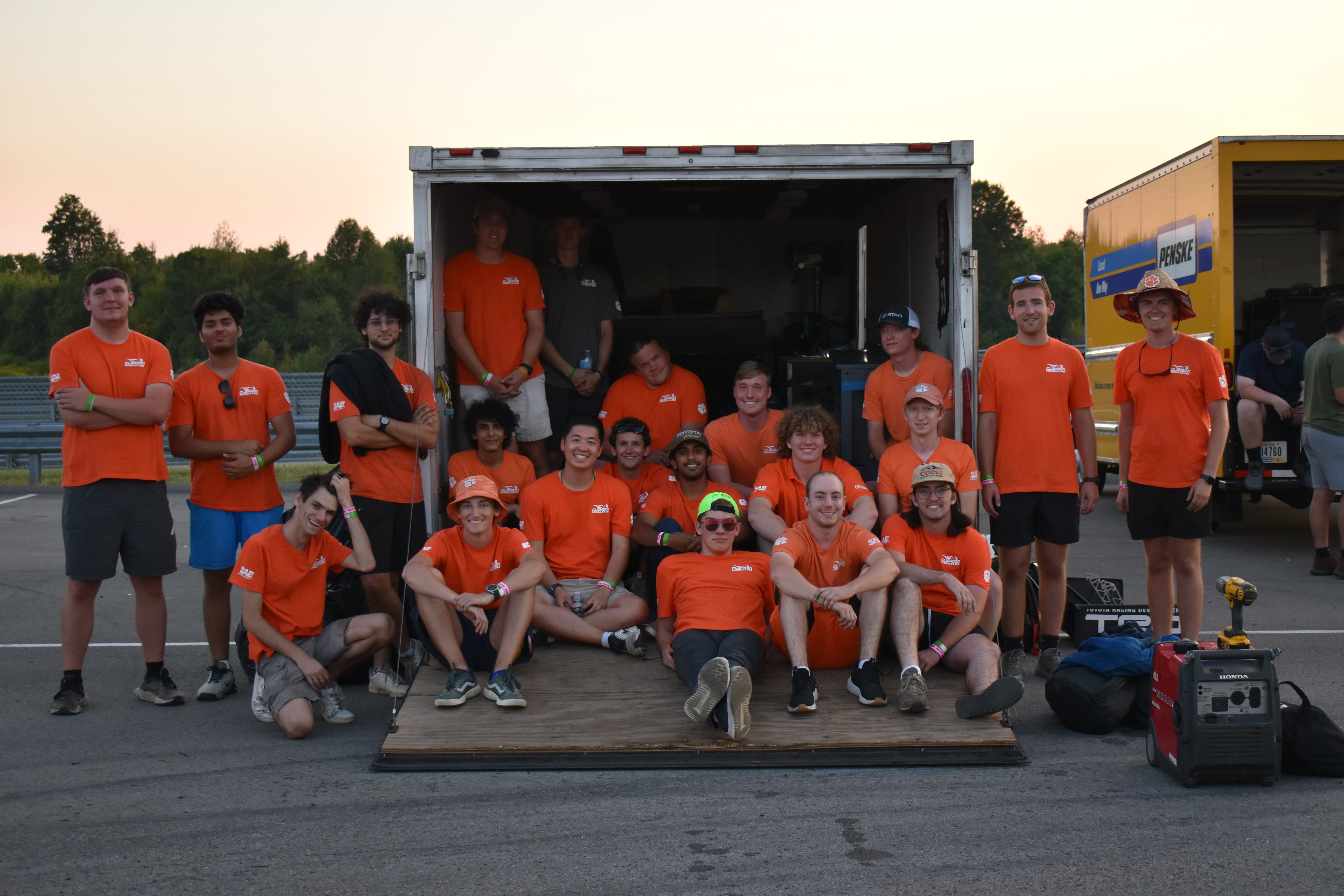
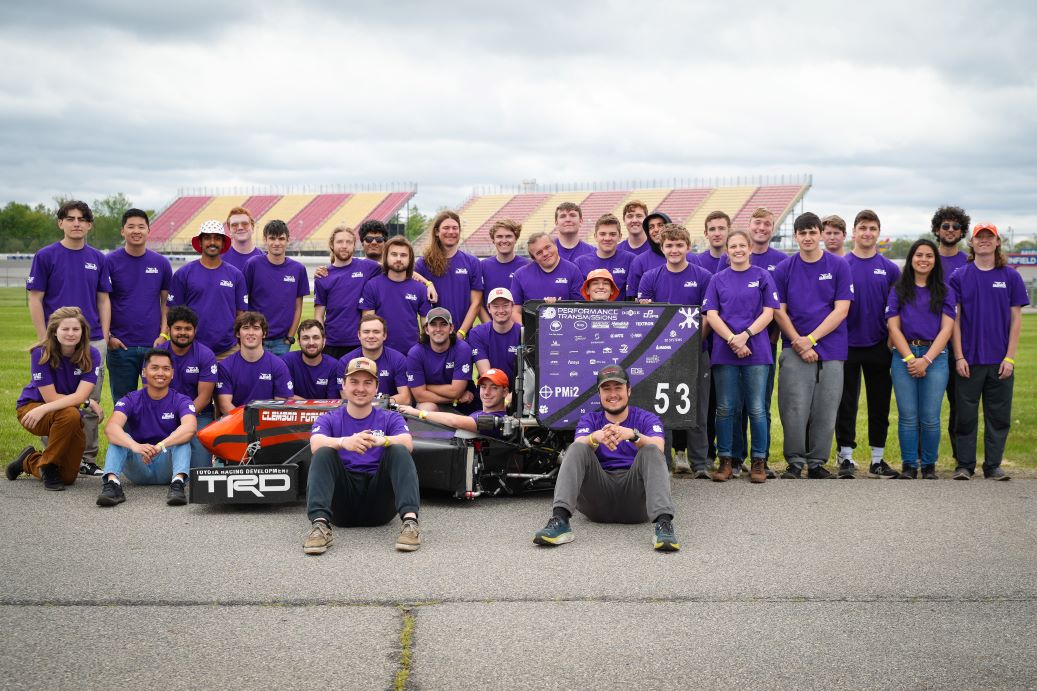
Clemson Formula SAE team, Fall 2024.
The team lead of the group is Grant Harley, who is studying Electrical and Computer Engineering in his first year of graduate school at Clemson. One of Harley’s main focuses is to keep the team focused on the design timeline for the car. In doing so, he sets weekly meetings with the leadership team and remains in contact with the Department of Mechanical Engineering faculty advisor.
“The biggest thing I have to do before our car release is make sure the car is following the necessary production timeline and keeping the entire team on the same page about what needs to be done and when it needs to be done,” Harley said.
A Charleston native, Harley is also a part of the electrical team, where he helps design the brake system plausibility device (BSPD) – a safety component that shuts the car off if the throttle position or brake pressure stop reading.
“This helps protect the driver in the case of a malfunction in the car and protects the car from dangerous operating procedures,” Harley said.
Cameron Boerst, Vehicle Operations Manager.
Harley works closely with Vehicle Operations Manager, Cameron Boerst, a Mechanical Engineering junior with an Electrical Engineering minor. Boerst’s job focuses on test-day operations, planning when the car will run, whether on or off campus.
“This requires communication and planning between divisions to make sure the rear and front wings are ready, the electronics are working, the powertrain is running, and the suspension is tuned for a day of running,” Boerst said.
Another Charleston native, Boerst is also designing the drivetrain of the car, which is what he looks forward to the most out of this project.
“The drivetrain is responsible for delivering power from the engine to the hubs of the rear wheels,” Boerst explained. “This includes a lot of CAD modeling in SolidWorks paired with Finite Element Analysis (FEA) on the forces experienced by the drivetrain.”
Peter Gaspich, Brooks Scholar
No matter how strong the engine may be, suspension is incredibly important to the car’s success. This is led by fellow junior mechanical engineer and recent Brooks Scholar, Peter Gaspich, an inaugural member of the new class of automotive engineers at Clemson. Gaspich and his team focus on manufacturing and testing of the car’s suspension system ahead of the May event.
“In other words, my goal is to ensure that the driver can get optimal performance from the tires and maximize grip throughout each lap, as maintaining grip to the road is the most essential part of a fast lap time,” Gaspich said. “No matter how powerful the engine is, it won’t be going anywhere very fast if it’s just spinning tires.”
The Greenville native also has one of the most important tasks on race day: constantly studying the car’s responses and making needed changes to the car to help the driver with the ride.
At this point in the semester, the suspension team is working on manufacturing all of the suspension parts, something that Gaspich heavily takes part in.
“This includes outlining manufacturing plans, training new members on shop equipment, coordinating with sponsors to outsource the manufacturing of more complex components and spending late nights at the shop with my closest friends!” he said.
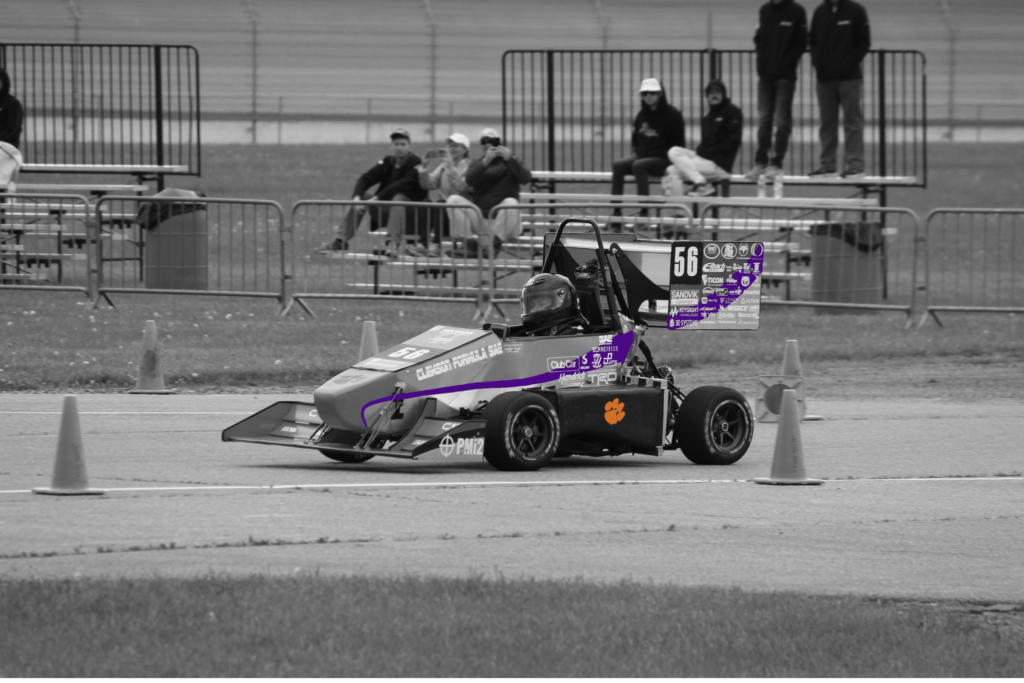
The Tiger 24 racing in the Pittsburgh Shootout
With a project as big as designing and building a formula race car, it’s the little steps that count. For Harley, he is most looking forward to seeing the car run on its own for the first time.
“I am most looking forward to the first time the car runs under its own power,” he said. “It’s an extremely fulfilling moment watching this project that you’ve spent almost a year designing and building culminate into this one moment.”
Every week means the team is one step closer to the first race. With March beginning, it’s crunch time for CUFSAE. The team hopes to see successes similar to, or greater than, last year’s Tiger 24 design.
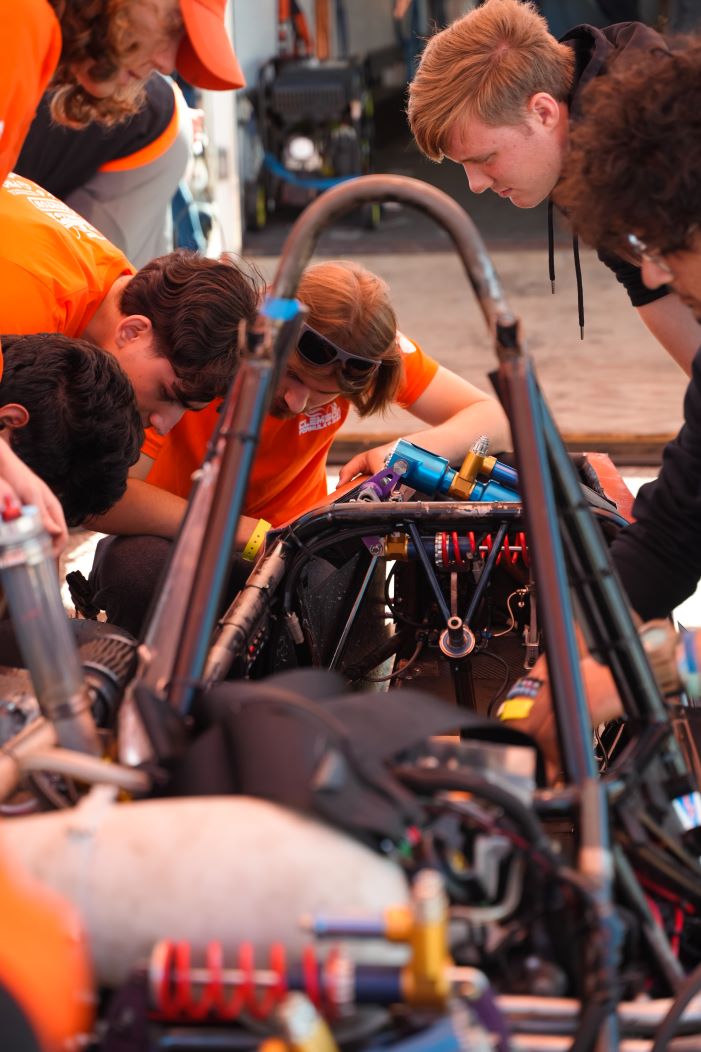
Clemson Formula SAE team member working on the Tiger 25
From Gaspich’s perspective, as well as many others on the team, the opportunity to work on an ongoing project to present it in front of 119 other schools is something that the classroom doesn’t provide.
“I cannot express enough how important being involved in Formula SAE is to anyone interested in a career in motorsports, or even engineering in-general, as engineering is so much more than what you learn in the classroom,” Gaspich said.
Whether participating as a passion project or looking for experience for a future job in the motorsports industry, all eyes look to May where Tiger 25 will be racing on asphalt that has hosted NASCAR and IndyCar events.
On February 21, Clemson University held an engaging event for Tigers of all backgrounds to join the launch of the University’s new capital campaign, Fiercely Forward, the driving force to achieve the bold initiatives of the University’s strategic plan, Clemson Elevate.
Partners of the Robert H. Brooks Sports Science Institute showcased their sports science technologies, research and creative endeavors in a fun-filled display of helmet-hitting, off-road vehicle exploring and exoskeleton viewing.
Bioengineers, packaging scientists, and automotive and industrial engineers from the Institute’s fellows cohort participated in the event, engaging with guests and explaining how their lines of inquiry and new innovations are making an impact in the greater Clemson community and across the globe.
For the Robert H. Brooks Sports Science Institute, this campaign is a launching ground for new initiatives in support of the University’s strategic plan, positioning RHBSSI to become a national leader in sports science and equipping students with the skills, experiences and connections to thrive in a dynamic industry of sports enthusiasts of all backgrounds.
John DesJardins, Ph.D., on Oct. 18 at the Launchpad
The Robert H. Brooks Sports Science Institute (RHBSSI) recently sponsored the Brook T. Smith Launchpad’s first annual Sports Entrepreneurship Symposium on October 18 in downtown Clemson. Interim Director, John Desjardins, participated by speaking on sports science and sports education at Clemson University.
Clemson offers more than 55 courses in sport, spanning colleges and disciplines – everything from the history of sports in the modern world in the Department of History and Geography, to kinesiology in the Department of Biological Sciences. Overall, more than 15 departments participate in sports education at Clemson, spanning 7 colleges.
“It was a pleasure to sponsor and participate in the Brook T. Smith Launchpad’s first-annual Sports Entrepreneurship Symposium. The Robert H. Brooks Sports Science Institute exists at Clemson to work as a platform for the multidisciplinary study of sport. It is great to see so many Clemson alumni going on to work in the sports field – and then return to share their knowledge and experience with Clemson students!”
John DesJardins, Ph.D., interim director of the Institute
The Sports Entrepreneurship Symposium consisted of multiple panel discussions with professional speakers from numerous sports disciplines. Topics ranged from AI’s impact on data analysis to new business opportunities through NIL. Attendees were encouraged to explore opportunities in the sports entrepreneurial ecosystem and learn skills to accelerate their careers.
Click here to learn more about the Brook T. Smith Launchpad, Clemson’s entrepreneurial hub. Click here for a list of courses at Clemson that delve into sport.
Placed among mini golf holes and poster presentations, live demonstrations and activities representing the sports sciences will be on display at the Institute’s RECESS Symposium on October 24. Located in the Madren Center’s Grand Ballroom, the demonstrations will include:
Headgear Impact Performance: Greg Batt, Ph.D.
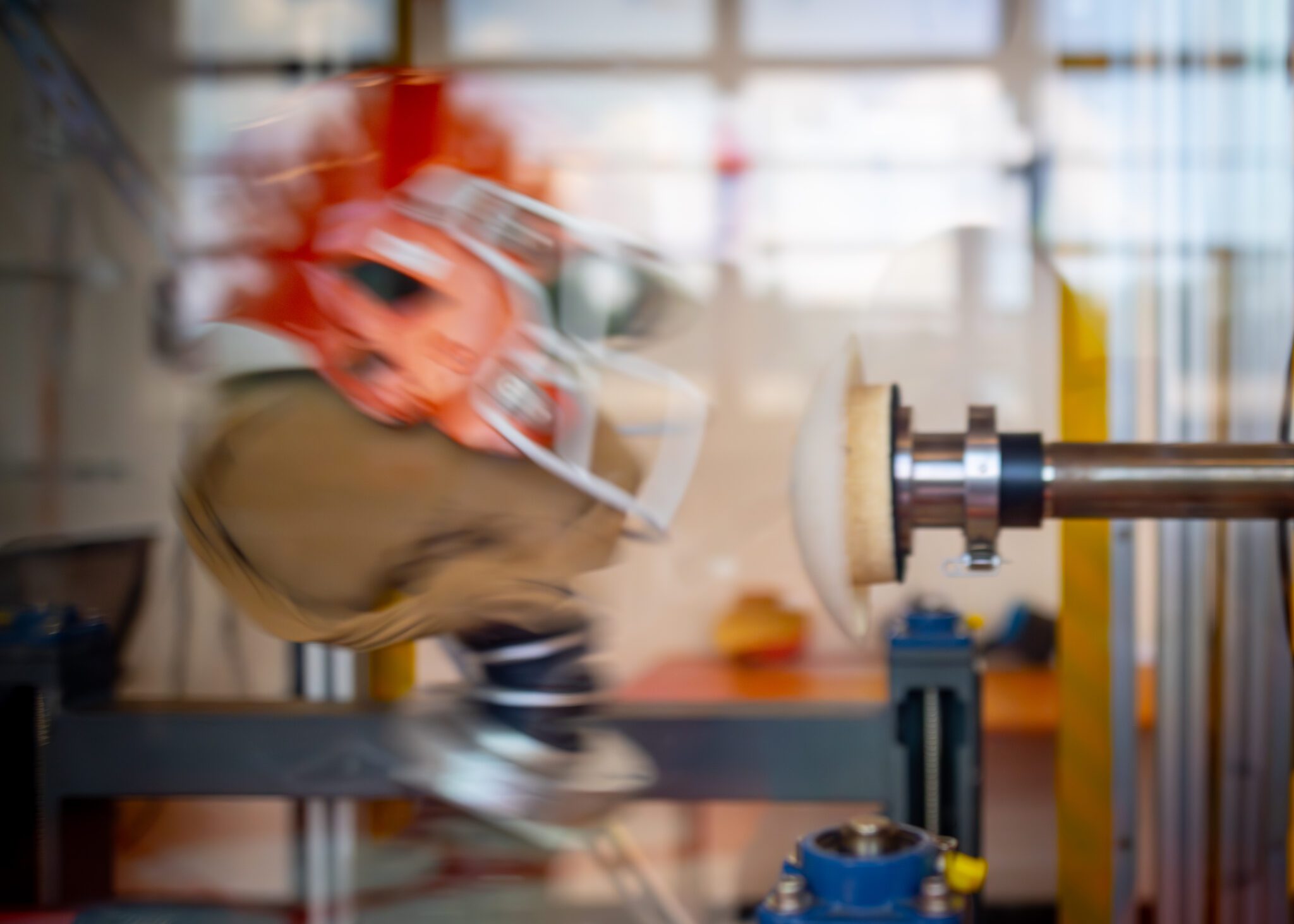
The Clemson Headgear Impact Performance (CHIP) Lab at Clemson tests the strength of sports helmet faceguards. According to Batt, these masks are made to protect players from many injuries but fail more often than one might think. Using a pneumatic canon, the impact on the helmet is recorded. Testing in the lab, done by students, hopes the data collected will one day make sports safer for everyone. The CHIP Lab will demo various equipment at RECESS like helmets, a head and neck form, a hammer and a computer that will be used to acquire acceleration response of the head. The team will be available to discuss more about the outcomes of their testing and answer questions.
Rowing Motion Capture: Anthony Marino and John DesJardins, Ph.D.
Collegiate rowing is the oldest intercollegiate sport in the United States, and has a prestigious historical tradition among American universities dating back to 1852 (Harvard Magazine). Unfortunately, the sport has long been considered a men’s-only sport it took over 100 years for women gain recognition. A collaboration between Clemson Bioengineering and the Clemson Women’s Rowing program has investigated questions specific to women’s rowing and enhanced the training, health and performance of our athletes. A 3D motion capture technology has been used at Clemson to test novel foot plates during rowing. At RECESS, participants will be able to interact with this system and learn more about the outcomes for rowers.
Virtual Reality Soccer: Felipe Tobar, Ph.D.
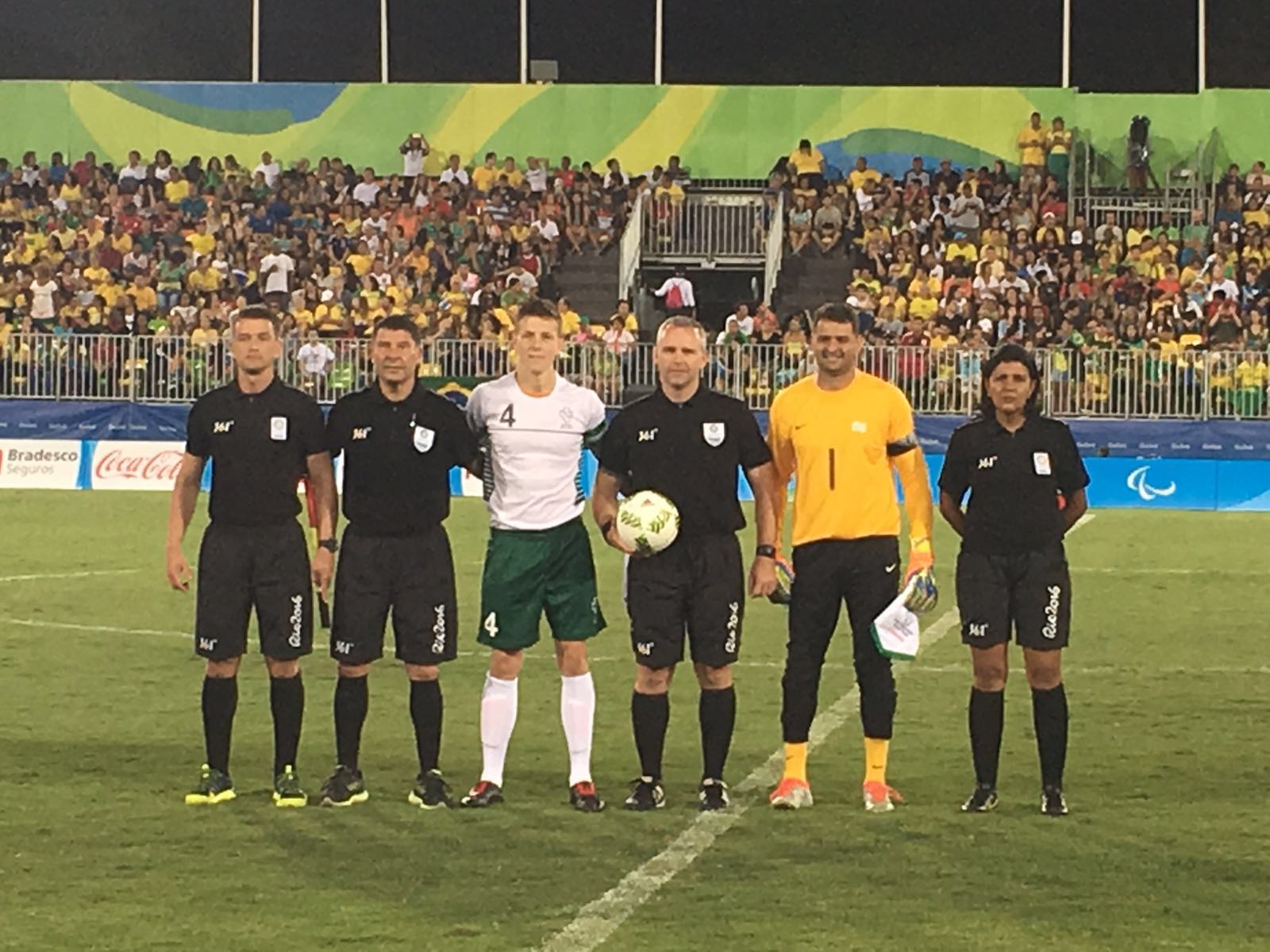
Tobar’s research initiative integrates virtual reality (VR) technology, electroencephalogram (EEG) monitoring, and artificial intelligence (AI) to understand the experiences of Olympic and Paralympic soccer athletes using VR simulators for training purposes. The long-term goals of this project are to develop more effective VR soccer training experiences that enable skill transfer to improve on-field player performance for competitive athletes, and develop more inclusive VR soccer experiences, both as training tools and for recreation, for persons with disabilities. Participants at RECESS will enter a simulation to experience real soccer gameplay by making quick decisions on the field and passing forward. Challenge yourself and enjoy a cutting-edge, sports-based VR technology that merges fun with athletic training.
Exoskeleton Demonstration: Jessica Avilés, Ph.D.
Exoskeletons are devices worn outside the body to assist with movement. They come in a wide variety for the upper and lower body, some powered by batteries and motors, some by hydraulics and some by springs. Avilés’ research aims to help people with spinal cord injuries find the best exoskeletons and training plans so they can participate in sports. Her goal is to turn exoskeleton racing into a Paralympic and collegiate adaptive sport.
Open Cap Makerless Motion Capture for Hamstrings: Reed Gurchiek, Ph.D.
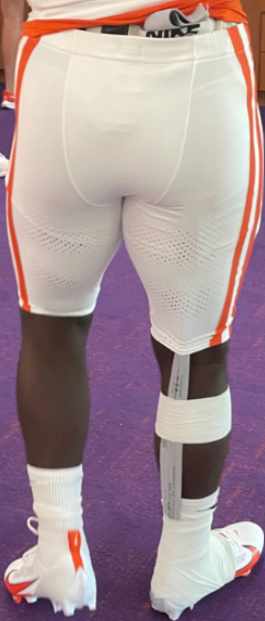
Gurchiek’s makerless motion capture technology, Open Cap, measures an athlete’s hamstring pain. He has developed a wearable device that uses a passive elastic band to assist the hamstring muscles during running. This device is designed to rehabilitate hamstring strain injuries more effectively than is currently possible, addressing a growing and widespread problem as hamstring strains are currently the most prevalent time-loss injury in field-based sports. Currently being tested, the device should reduce hamstring muscle activity without altering running motion. Get familiar with this technology when you attend RECESS.
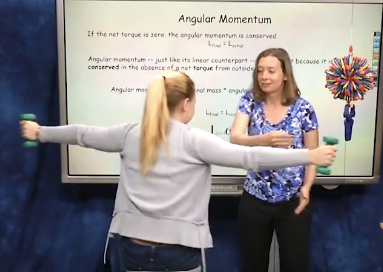
The Physics of Breakdancing: Amy Pope, Ph.D.
The conservation of angular momentum can be demonstrated using a rotating stool and weights. When a person sits on a frictionless rotating stool with arms extended while holding weights, they start spinning at a certain speed. As they pull the weights inward, their moment of inertia decreases and to conserve angular momentum, their rotational speed increases. This demonstrates how angular velocity adjusts to changes in the moment of inertia when no external torques act on the system, similar to how breakdancers, divers or skaters spin faster by pulling in their limbs. Give it a go at RECESS!
A Demonstration of Force Measurement using Force Plates and Accelerometer: Adam Schiferl, Clemson student
This demonstration presents an interactive approach to understanding introductory kinematics and mechanics by leveraging sports to make physics concepts more relatable. Participants will kick a soccer ball in a controlled way and get force readings. Analysis of this data will explain the force vs. time graph stage by stage illustrating how forces acting on an athlete vary during different phases of exercise.
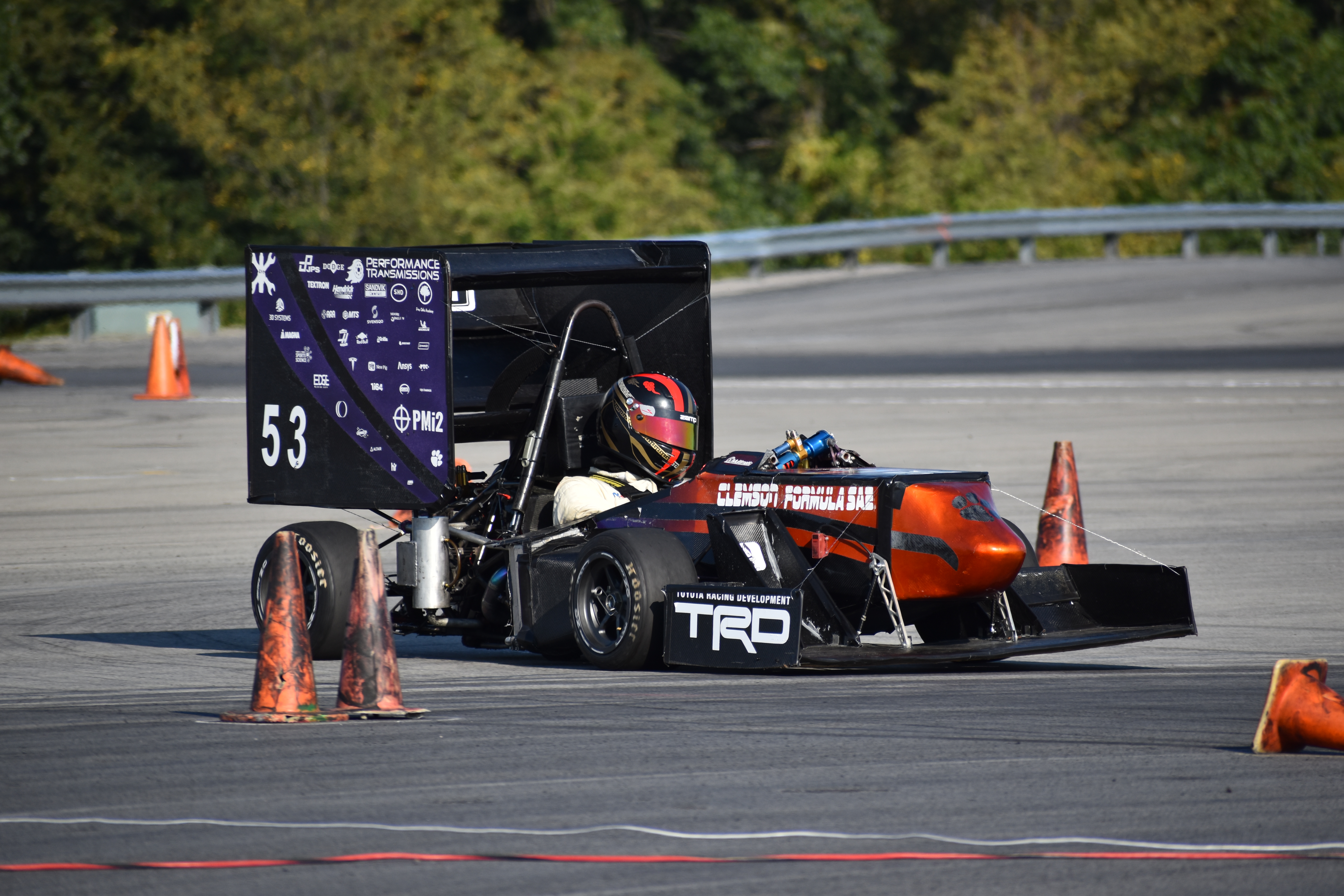
“Tiger 24,” A Student-Designed Formula One Race Car: Clemson Formula SAE team
The Clemson University Formula SAE (CUFSAE) team is a student-run organization dedicated to designing, manufacturing and competing with a formula-style race car. They aim to provide students with the tools to learn relevant skills while exploring the possibilities of employment in the automotive industry. This year’s student-designed Formula One race car, the Tiger 24, which has been competing in student competitions across the nation, will be on display and the team will be available to answer questions.
To view all these amazing live demonstrations at RECESS, RSVP here.
The Clemson University Formula SAE (CUFSAE) team is a student-run organization dedicated to designing, manufacturing and competing with a formula-style race car. They aim to provide students with the tools to learn relevant skills while exploring the possibilities of employment in the automotive industry.
The Fall 2024 CUFSAE team
This past weekend, the CUFSAE team travelled to Pennsylvania to compete in the annual Pittsburgh Shootout. They took their newest formula-style race car, Tiger 24, to the competition and had a great experience.
The team placed an impressive 6th overall out of 23 competing internal combustion (IC) teams. On Friday night, they passed the technical inspection part of the competition and then competed in all three dynamic events – autocross, acceleration and skidpad – placing in the top 10 in each event.
They faced a few difficulties throughout the weekend, but were able to overcome them and perform great. To learn more about their experience in Pittsburgh and what they have coming up, check out their Instagram, Facebook, and LinkedIn.
Tiger 24 competing in Pittsburg the weekend of Sept. 14
CUFSAE has a variety of sponsors that they credit with making their projects possible, giving them the opportunity to apply their education and learn within this unique international competition. As one of their sponsors, the Robert H. Brooks Sports Science Institute (RHBSSI) is thrilled to celebrate this success and wishes the team the best of luck with the rest of their season.
CUFSAE has agreed to showcase one of their Formula One cars at RECESS, RHBSSI’s inaugural sports science research symposium. The event will take place on Thursday, October 24 from 5-8 p.m. in the Madren Center’s Grand Ballroom. To RSVP to this innovative and fun event, click here.
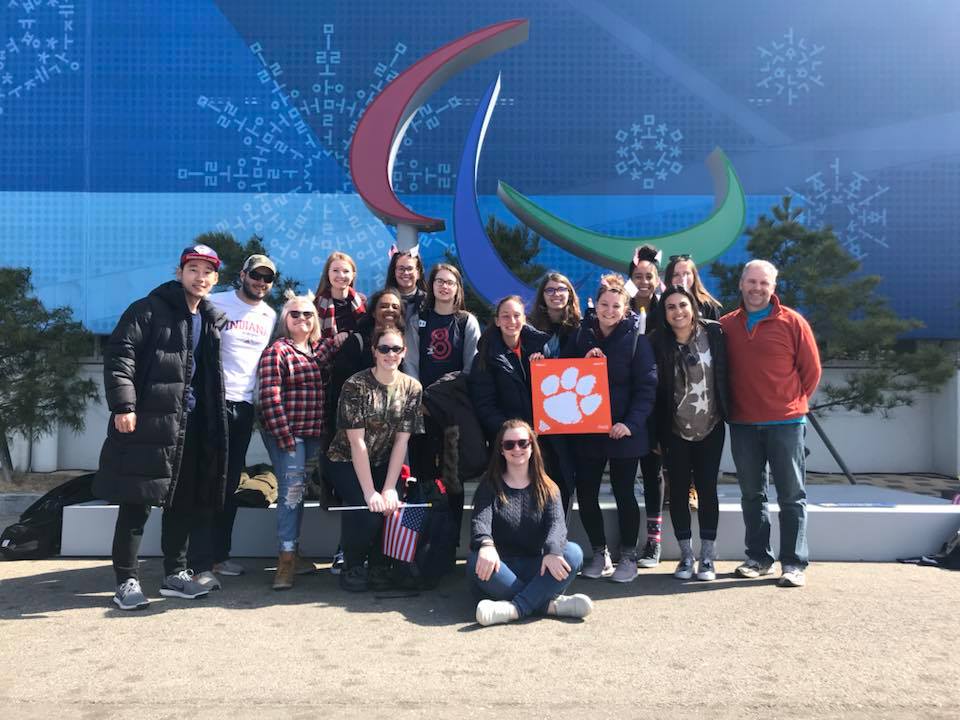
Clemson students are heading to Paris, France this month for the Paralympic Games on August 28 as part of a study abroad course lead by two RHBSSI faculty fellows from Parks, Recreation, and Tourism Management (PRTM), Skye Arthur-Banning, Ph.D., and Jasmine Townsend, Ph.D.
Arthur-Banning and Townsend pose next to the Olympic/Paralympic Torch in Paris this summer.
Students will earn credit watching games played around the Arc de Triomphe or walking the Champs-Elysees in Paris while learning about sport and culture and seeing talented athletes from around the globe compete. The 2024 Paralympic Games in Paris will see over 4,400 athletes compete in 23 different sports.
Clemson students have been attending the Paralympic Games since 2010. This year, they will attend a variety of sporting events, walk through the Olympic stadium and meet with athletes. They will hear from sport designers and organizers to learn how the games are put on, their importance to the people of Paris and how disability awareness is growing within France and around the world. Students will also take in the rich culture of Paris by visiting the world-famous Louvre Museum and Eiffel Tower and eat some of the finest of French cuisine.
“One goal of the course is to expose students to the Paralympic Games as one of the largest international sporting events in the world,” said Arthur-Banning. “Through this experience, they will understand the planning and details, logistics and more that go into a large-scale sporting event.”
A second aim is to encourage students to think about and see the value of Parasport and appreciate all of the different sporting events, as well as the wide variety of people with disabilities that are able to experience sport. Arthur-Banning and Townsend hope that the students’ worldview will be broadened, and they will become advocates for people with disabilities and the programs that serve them.
This fall, the Robert H. Brooks Sports Science Institute (RHBSSI) will host Clemson University’s first Sports Science Research & Creative Endeavors Symposium (RECESS). Faculty, staff, students and other Clemson stakeholders interested in the sports sciences are welcome at the event. Attendees will have the opportunity to network, peruse posters, enjoy refreshments and more.
“We are thrilled to welcome you to our inaugural Research & Creative Endeavors Symposium, and hope that all that are engaged in the Sports Sciences, whether that be in Business, Athletics or Engineering can come, share and enjoy,” offered John DesJardins, interim director of RHBSSI. “As the acronym RECESS suggests, we hope to make it fun and engaging.”
The sports science symposium will take place at the Madren Center, Ballroom B on October 24 from 5-8 p.m. EST. Stay tuned for a full agenda of the event.
If you are interested in attending, you can RSVP here. If you are interested in presenting your work at RECESS, email John DesJardins at jdesjar@clemson.edu or fill out the participation form here.
Clemson Formula SAE (CUFSAE) is a student-led organization at Clemson that is focused on designing, manufacturing and competing with a formula-style race car. Each year, they design and build a new vehicle from the ground up that meets competition rules while also pursuing innovation. May 8-11, CUFSAE competed in the Formula SAE Michigan competition with their newest race car, the Tiger 24.
The Clemson Formula SAE team and their formula race car, Tiger 24, compete at the Formula SAE Michigan competition May 8-11, 2024
Michigan FSAE Competition
The Formula SAE Michigan competition was a chance for CUFSAE to showcase Tiger 24’s capabilities and their astounding efforts. 120 cars competed, making this one of the larger competitions CUFSAE has participated in. Of those 120 cars, the Tiger 24 displayed great competitive attributes finishing 20th in design and 60th overall.
In the midst of the competition, the Tiger 24 required an unexpected engine swap leading to some unforeseen challenges the following day. However, this situation led to new opportunities for learning and improvement, allowing the team to focus on future successes and ultimately strengthen their resilience and determination.
Tiger 24 placed 20th in design and 60th overall at the Michigan FSAE competition.
In the Pipeline for CUFSAE
This competition will not be the last chance for the team to display the Tiger 24’s capabilities. They will have the opportunity to further test these abilities in upcoming test days as well as competitions occurring later this year.
CUFSAE team members working on Tiger 24 before the competition.
Upcoming Competitions:
Pittsburgh Shootout (September)
Michelin LPG Shootout (October)
Barnesville Shootout (November)
There have also been changes to the team, as they have recently elected new team and division leads.
Tier 1 Leaders:
Team Lead – Rajan Chitrao
Chief Engineer – Ryan Bishop
Production Lead – Alec Huber
Finance and Logistics Officer – William Wei
Additionally, Rowen Smith is the new Sponsorship Coordinator for CUFSAE. With these changes to the team, Smith says that they will aspire to focus on reliability, better teamwork and earlier production for next year’s car, the Tiger 25, which will undergo design this summer.
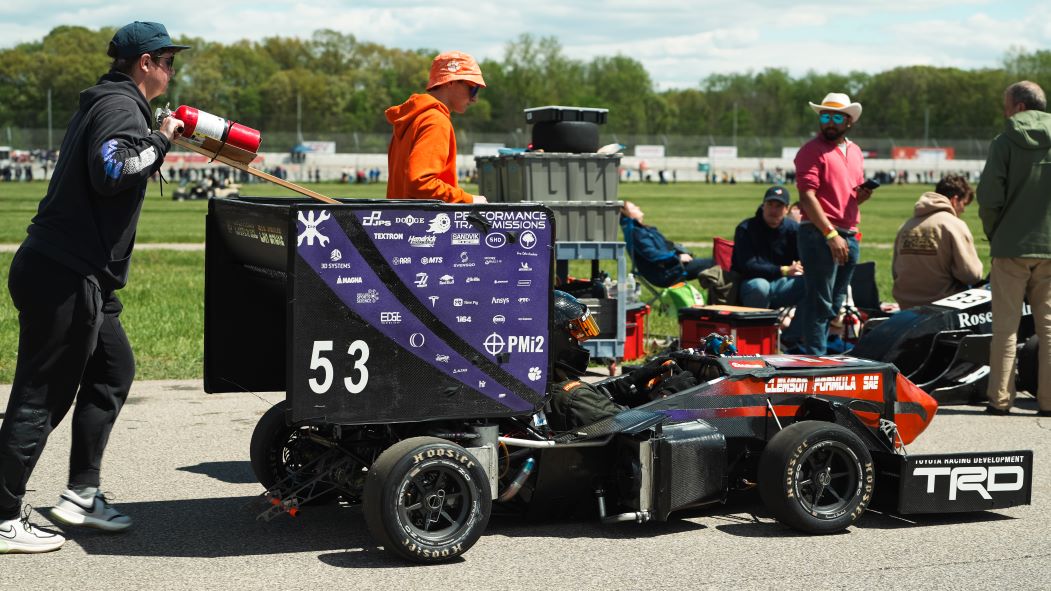
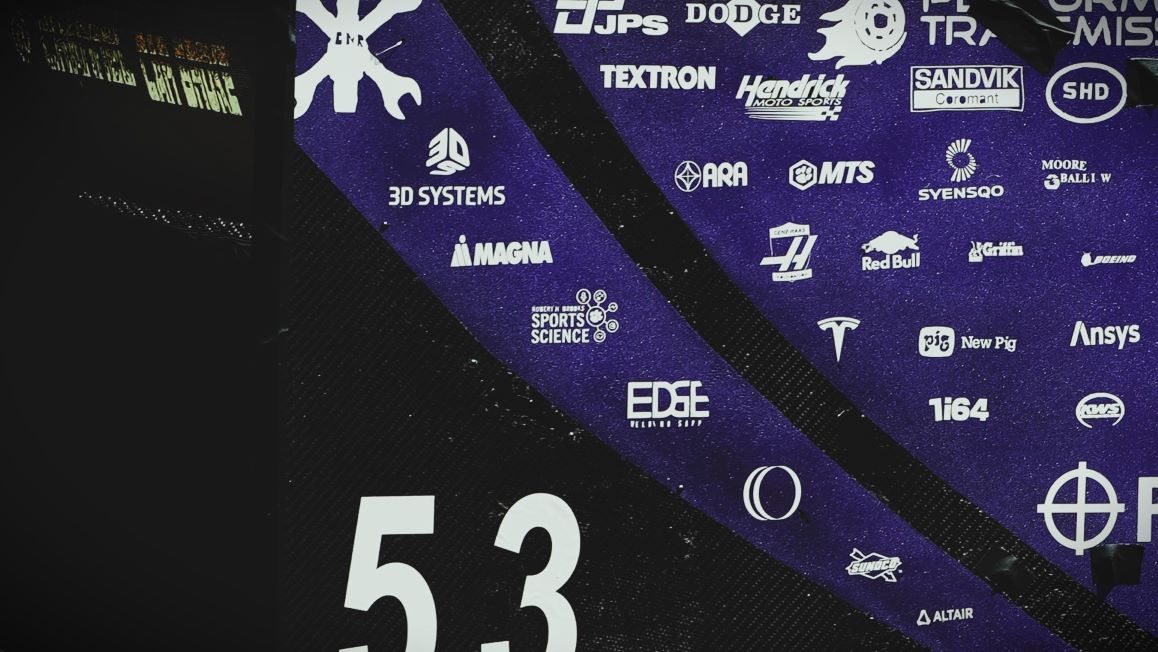
The Robert H. Brooks Sports Science Institute logo is showcased on Tiger 24 alongside other sponsors.
A part of the Tiger 24’s success has been credited to the support of CUFSAE’s sponsors. The team has expressed their unwavering gratitude towards their sponsors, including the Robert H. Brooks Sports Science Institute (RHBSSI), saying that the sponsors’ continuous assistance and investment gives the team added strength to keep pushing creativity and build the most competitive car they can. We at RHBSSI commend the CUFSAE team on all their successes to-date and wish them best of luck in their upcoming competitions this season.
Be sure to follow CUFSAE on Instagram, Facebook, and LinkedIn to stay current on all of the innovative things they are doing.
Anna McLean and Jenny D’Anthony speak to the crowd during the sports science lecture in Freeman Hall on March 26, 2024.
The Robert H. Brooks Sports Science Institute was thrilled to host United Row on March 26 for a sports science lecture in Freeman Hall, where two Clemson alumnae spoke to students, faculty and community members about their upcoming 2,800-mile journey across the Pacific Ocean.
At the lecture, Jenny D’Anthony and Anna McLean, former members of the Clemson rowing team, previewed their row across the Pacific. Attendees of the lecture were able to hear what exactly goes into the estimated 60-day trip and the challenges and thrills that come with it.
Competing in the World’s Toughest Row competition in June, D’Anthony and McLean discussed the equipment they use on their boat, their food and water systems and the mental fortitude it takes to complete the challenge.
“We felt so welcomed and taken care of during our stay and really appreciate everything the Institute did to make it a success,” D’Anthony said. “Everything was well organized and done professionally, really speaking to the nature of work the Institute does.”
Robert H. Brooks Sports Science Institute Interim Director John DesJardins (left) presents a $5,000 check to Anna McLean (middle) and Jenny D’Anthony (right) during the Institute’s sports science lecture on March 26.
At the end of the lecture, RHBSSI Interim Director John DesJardins presented United Row with a $5,000 check to sponsor the team. D’Anthony and McLean have already said that the money will go toward SAT phones and a BGAN device for the June expedition. In return, the Institute will have a sticker on United Row’s boat during the journey across the Pacific.
“The institute was excited to bring to campus two remarkable young alumni, to share their Clemson journey, and engage us in their remarkable challenge to row across the Pacific,” DesJardins said. “Anna and Jenny define the Clemson spirit in their pursuit of excellence, and we are proud to support their cause.”
“We hope to continue to promote and share the great work at the Robert H. Brooks Sports Science Institute,” D’Anthony added. “We are incredibly excited to see where it goes and thrilled to be a part of it.”
Jenny D’Anthony and Anna McLean give audience members the chance to try out the bagged meals they will be eating during the 60-day row across the Pacific Ocean.
Along with students and faculty in attendance, Clemson rowing head coach Stephen Frazier Wong and IPTAY Assistant Director of IPTAY Major Gifts Jordan Roper were also present. Partnered with IPTAY and the Hear Her Roar Campaign, United Row has worked closely with Roper to raise awareness and financial support for Clemson’s women student-athletes.
“As a fund raiser, who’s also a former student-athlete, being able to work with Anna and Jenny and United Row, and them deciding to choose Hear Her Hoar as the campaign that they want to fundraise for, is special,” Roper said at the lecture.
Anna McLean (left) and Jenny D’Anthony (right) join the Clemson Rowing team for practice on Lake Hartwell the morning of March 26.
The morning of the lecture, D’Anthony and McLean visited Clemson rowing practice as the sun rose earlier that day and later partnered with the Clemson Department of Bioengineering for a lunch and learn.
McLean and D’Anthony were members of Clemson’s rowing team beginning in 2014 until they graduated from Clemson in 2017 and 2018, respectively. In 2022, McLean, from the United Kingdom, and D’Anthony, from the United States, formed United Row.
Those interested in supporting United Row may visit the team’s website. Any sponsorship or donation will go directly to supplies for the boat or fundraising efforts for the Hear Her Roar Campaign. D’Anthony and McLean will begin their journey across the Pacific on June 8.